
The restaurant is where the cultural gap between American and Southern European dining shows most clearly, a whole set of habits and expectations that mark the American visitor across Spain, Italy, Portugal, Greece, and the rest of the Mediterranean south. The American walks in with a set of assumptions about how dining works, about timing and service and pace and the bill, that are perfectly normal at home but quite different from how things are done across Southern Europe, and these differences, played out at the table, mark the tourist as clearly as any accent. None of it is rude or wrong, but it is noticed.
Understanding these habits is not about anxiety or shame but about enjoying the Southern European meal as it is meant to be enjoyed, since so much of the pleasure of dining in these countries lies precisely in the customs that differ from the American ones, the slower pace, the different rhythm, the unhurried approach. Learning them lets you relax into the real experience rather than fighting it or revealing your foreignness at every turn. Here are seven restaurant habits that mark Americans as tourists across Southern Europe, and how to dine like a local instead.
Eating Far Too Early
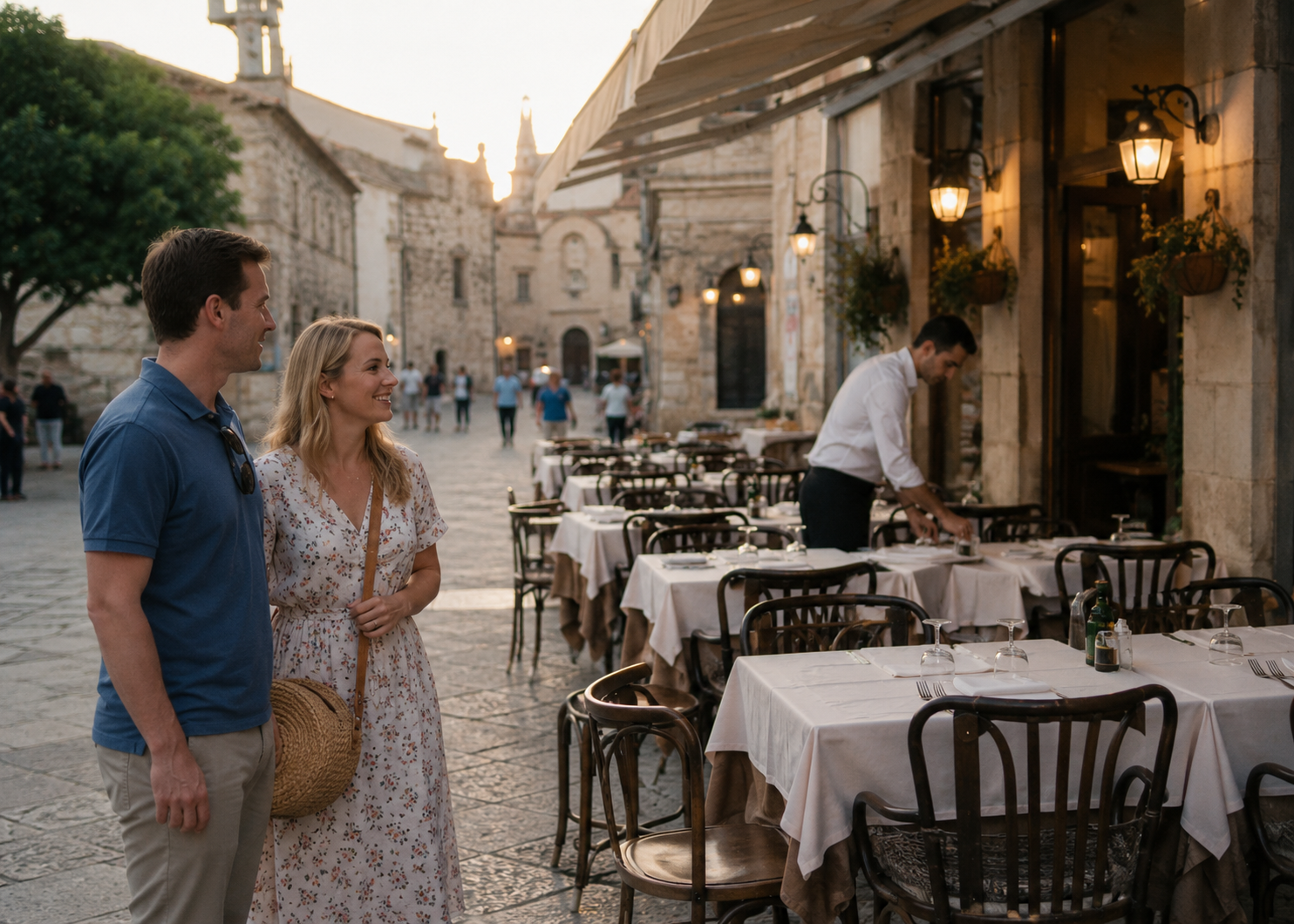
The first and most fundamental tell is the timing of meals, since Americans eat much earlier than Southern Europeans.
The clearest restaurant tell across Southern Europe is showing up to eat at American times, since Americans eat dinner early by Southern European standards, often around six, while Southern Europeans eat much later, dinner in Spain commonly at nine or ten, in Italy and Greece and Portugal also later than the American hour, so the American arriving for dinner at six finds the restaurant empty or not even open and marks themselves instantly. The early American dinner hour is fundamentally out of step with the Southern European rhythm, where the evening meal comes late, so arriving to eat when the locals are still hours from dinner is the most basic and immediate tell, the timing giving the American away before they even sit down. Eating far too early marks the American at once.
The thing to do instead is to adjust to the local dining hours, eating dinner later as the Southern Europeans do, in Spain perhaps at nine or later, elsewhere also later than the American instinct, embracing the late Mediterranean dinner rather than the early American one. This is not just about blending in but about experiencing the real rhythm of Southern European life, the late lively dinner being one of its pleasures, so shifting your dinner later lets you both avoid the empty-restaurant giveaway and enjoy the meal when the locals do, in the proper atmosphere. Adjusting to the late local dinner hour rather than eating at the early American time is the first step to dining like a Southern European.
Expecting Fast Service
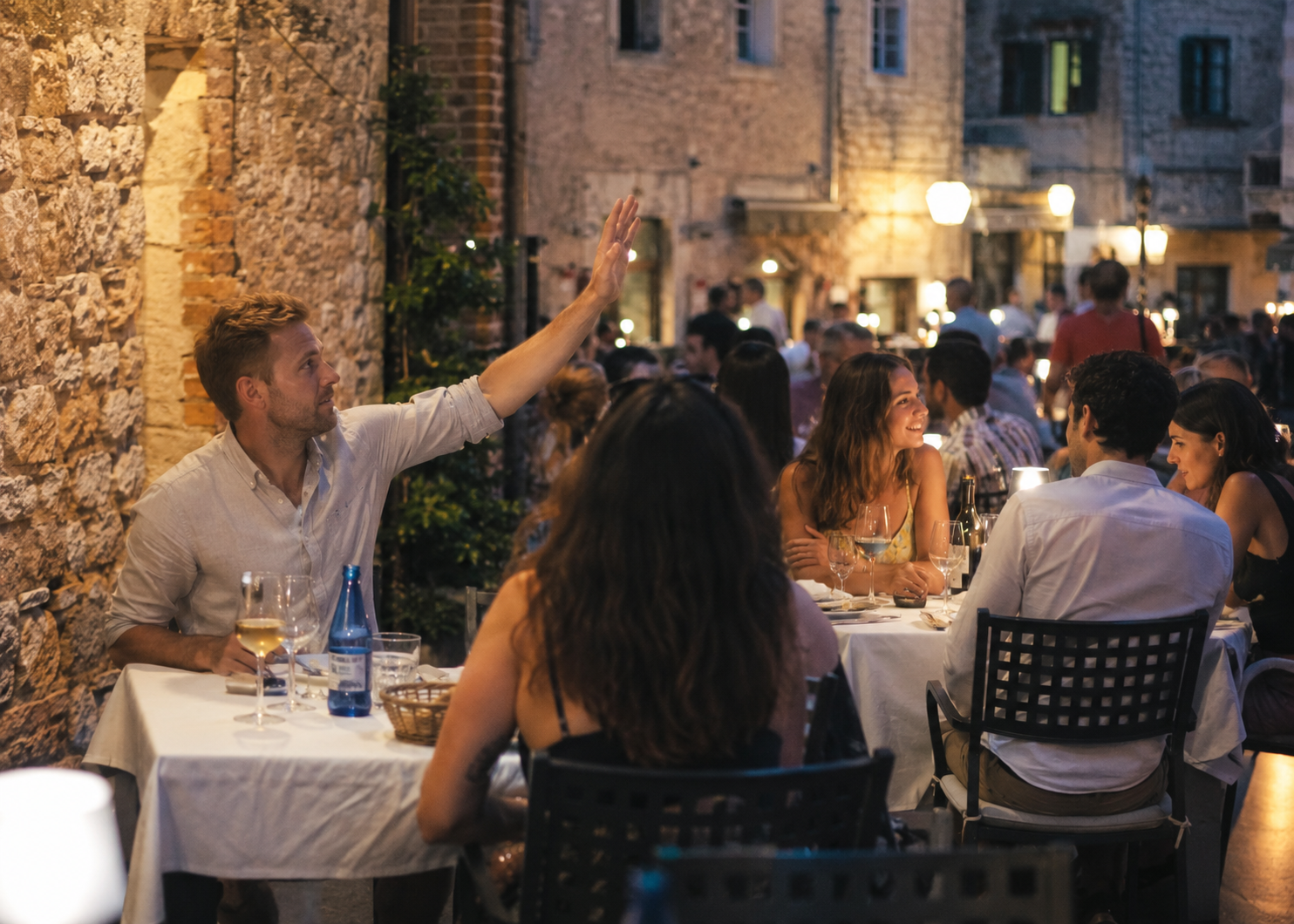
The second tell is expecting fast, attentive, quick-turnover service, which differs from the unhurried Southern European style.
Americans, accustomed to fast attentive service and quick meals, often expect the same in Southern Europe and are marked by their impatience, since the Southern European meal is unhurried, the service more relaxed, the pace slow and leisurely, the meal meant to be lingered over rather than rushed through, so the American expecting quick service and fast turnover reveals the different expectation. The Mediterranean meal unfolds slowly, the courses spaced, the table yours for the evening, the service attentive when needed but not hovering or rushing, so the American impatience for speed marks the foreigner, the expectation of fast service being a clear tell. Expecting fast service reveals the American.
The thing to do instead is to embrace the slow pace, settling in for a leisurely meal, expecting and enjoying the unhurried rhythm rather than fighting it, understanding that the meal is meant to take time and that this is part of the pleasure. The slow pace is not poor service but the proper way of the Southern European meal, so relaxing into it, letting the meal unfold slowly over the evening, is both how to blend in and how to enjoy the dining culture as it is meant to be. Embracing the slow unhurried pace of the meal rather than expecting fast American service is the way to dine like a local.
Asking For The Check Too Early
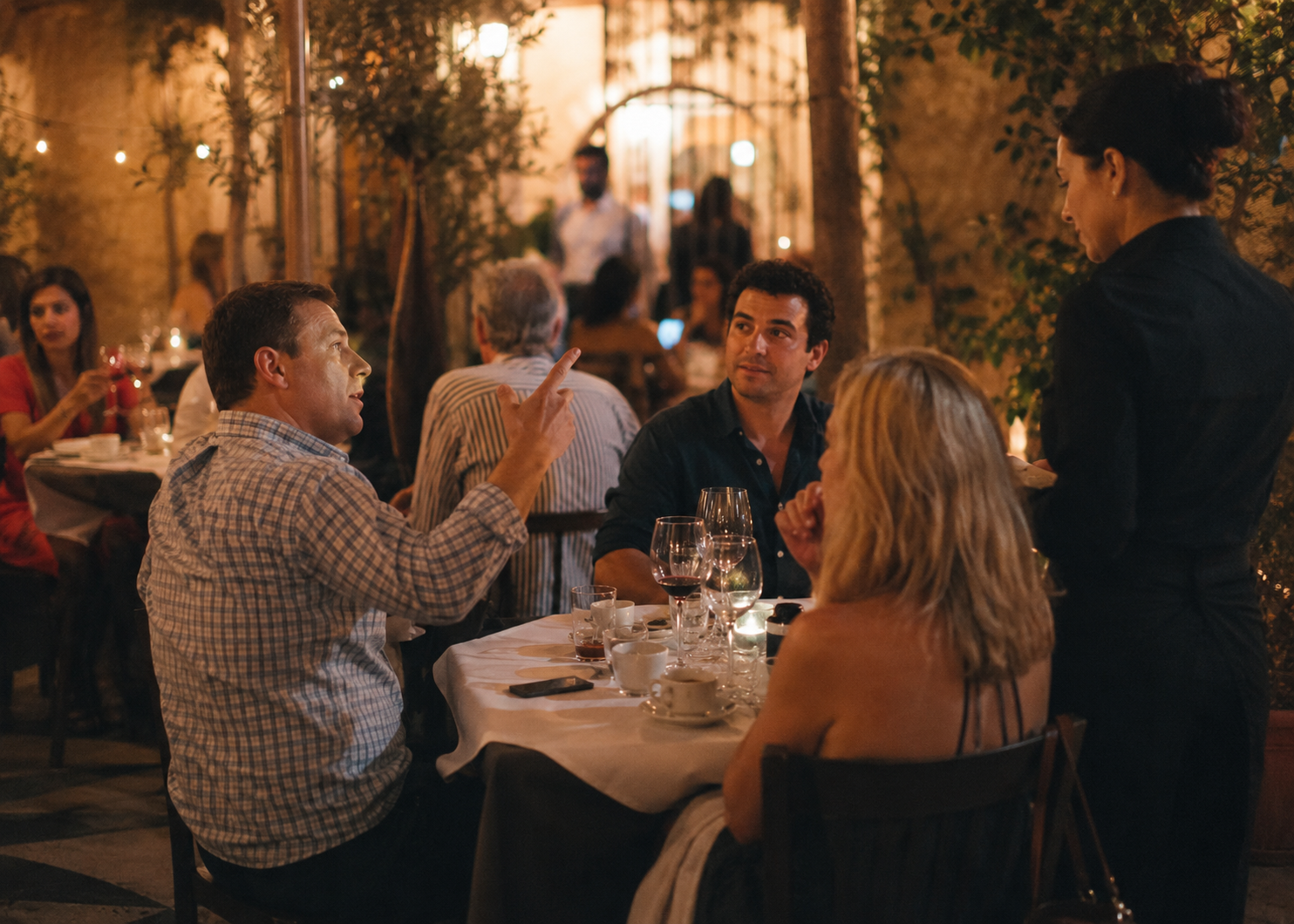
The third tell, closely related, is expecting or asking for the check too early, since the bill comes differently in Southern Europe.
Americans, used to the check being brought promptly and the table turned over, often expect or ask for the bill soon after eating, which marks them, since in Southern Europe the check is not brought until you ask for it, the table being yours to linger at for as long as you like, the bill never rushed upon you, so the American expecting or seeking the prompt check reveals the different custom. In the Mediterranean the meal does not end when the food is finished, the lingering being part of it, and the check comes only when requested, so the American who expects it promptly or seems to want to leave quickly marks the foreigner, the bill expectation being a tell. Asking for the check too early reveals the American.
The thing to do instead is to understand that the table is yours and to linger as the locals do, not expecting the check to come and asking for it only when you are genuinely ready to leave, which may be a good while after the food is done. This lingering is part of the culture, the sobremesa in Spain, the long after-meal sitting and talking, so embracing it, staying at the table and asking for the bill only when ready, is both how to blend in and how to enjoy the full Southern European meal. Understanding that the check comes only when asked, and lingering as the locals do, is the way to handle the end of the meal like a Southern European.
Over-Tipping
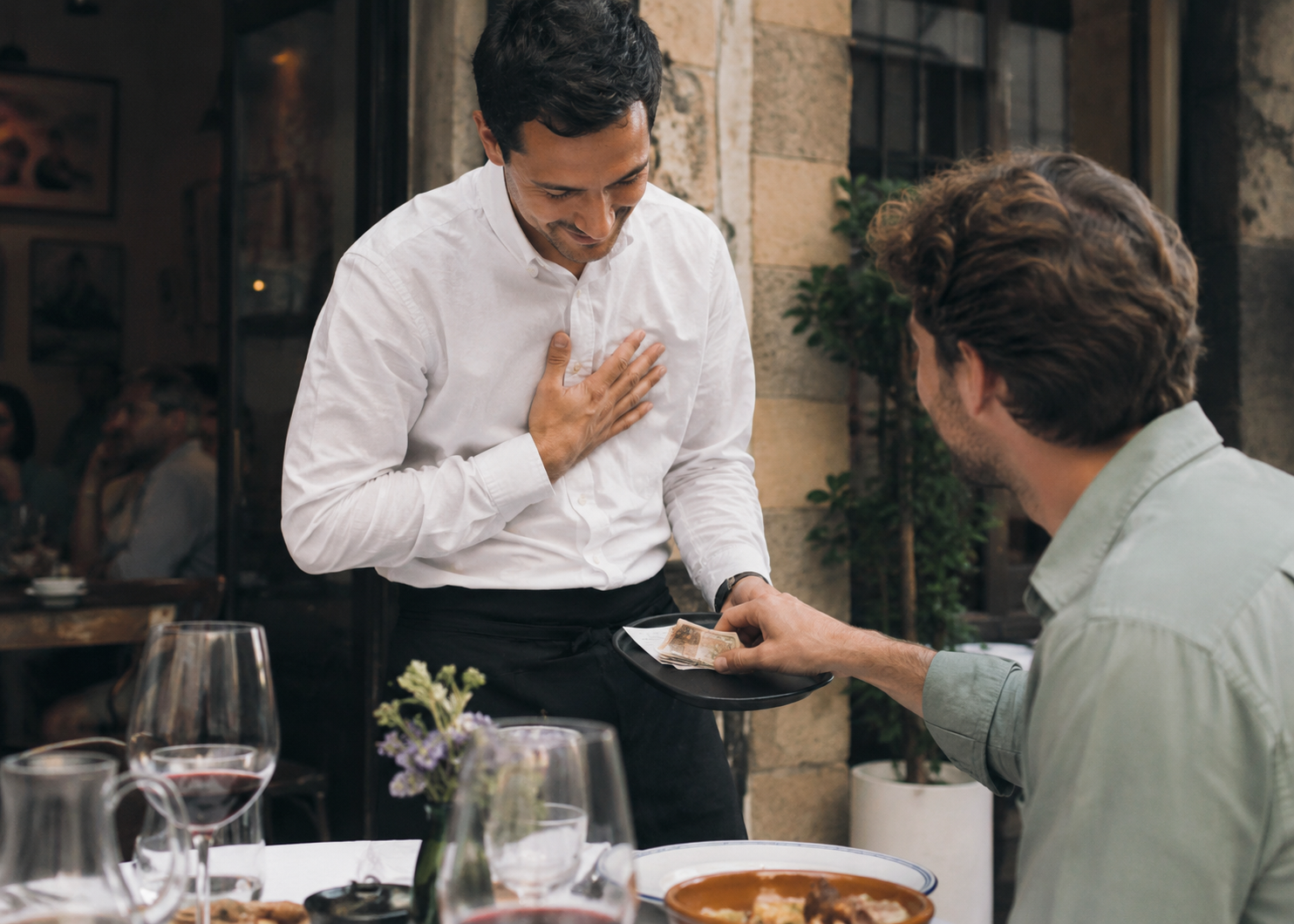
The fourth tell is American-style over-tipping, which is out of step with Southern European tipping customs.
Americans, accustomed to tipping fifteen or twenty percent or more, often tip this way across Southern Europe, which marks them, since tipping customs in these countries are far more modest, often just rounding up or leaving a small amount, the heavy American percentage tip being unnecessary and unusual, so the American who tips American-style reveals the different custom. Across Southern Europe the service is often included or the tipping expectation is small, a modest rounding up rather than the American percentage, so the large American tip marks the foreigner, the tipping habit being a clear tell. Over-tipping reveals the American.
The thing to do instead is to learn and follow the local tipping custom, which is generally far more modest than the American one, often just rounding up the bill or leaving a small amount, rather than applying the American percentage. This varies somewhat by country, so it is worth knowing the specific custom where you are, but the general rule is that Southern European tipping is much lighter than American, so adjusting to the modest local norm is part of dining like a local. Following the modest local tipping custom rather than the heavy American one is the way to handle the bill correctly.
Asking For Substitutions And Customizations
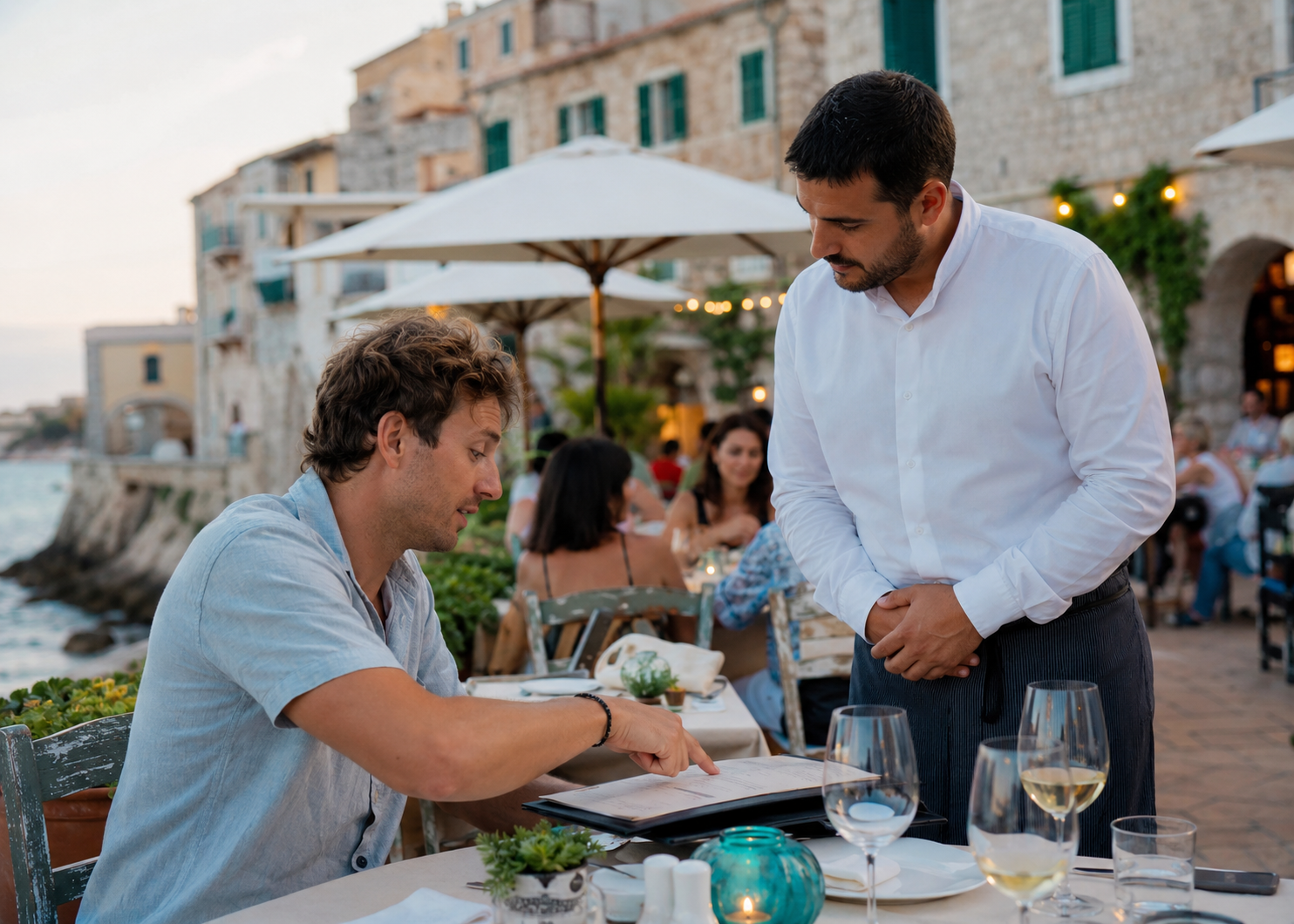
The fifth tell is the request for substitutions and customizations, which is less common in Southern European dining.
Americans, used to customizing their orders freely, asking for substitutions, modifications, dressings on the side, this swapped for that, often do the same in Southern Europe, which marks them, since the dishes there are typically served as the kitchen makes them, the menu less customizable, the expectation being that you order the dish as it is, so the American requesting modifications reveals the different approach. The Southern European kitchen tends to serve its dishes as conceived, with less of the American expectation of customization, so the elaborate substitution request marks the foreigner, the customizing habit being a tell. Asking for substitutions reveals the American.
The thing to do instead is to order the dishes largely as they are offered, trusting the kitchen and embracing the food as it is made rather than seeking to customize it, which both blends in and, often, gets you the dish as it is meant to be. Genuine dietary needs are of course another matter and can be communicated, but the habitual American customization for preference is best set aside in favor of taking the dishes as the kitchen offers them, which is the local way. Ordering dishes as they are offered rather than customizing them is the way to order like a Southern European.
Misunderstanding The Course Structure
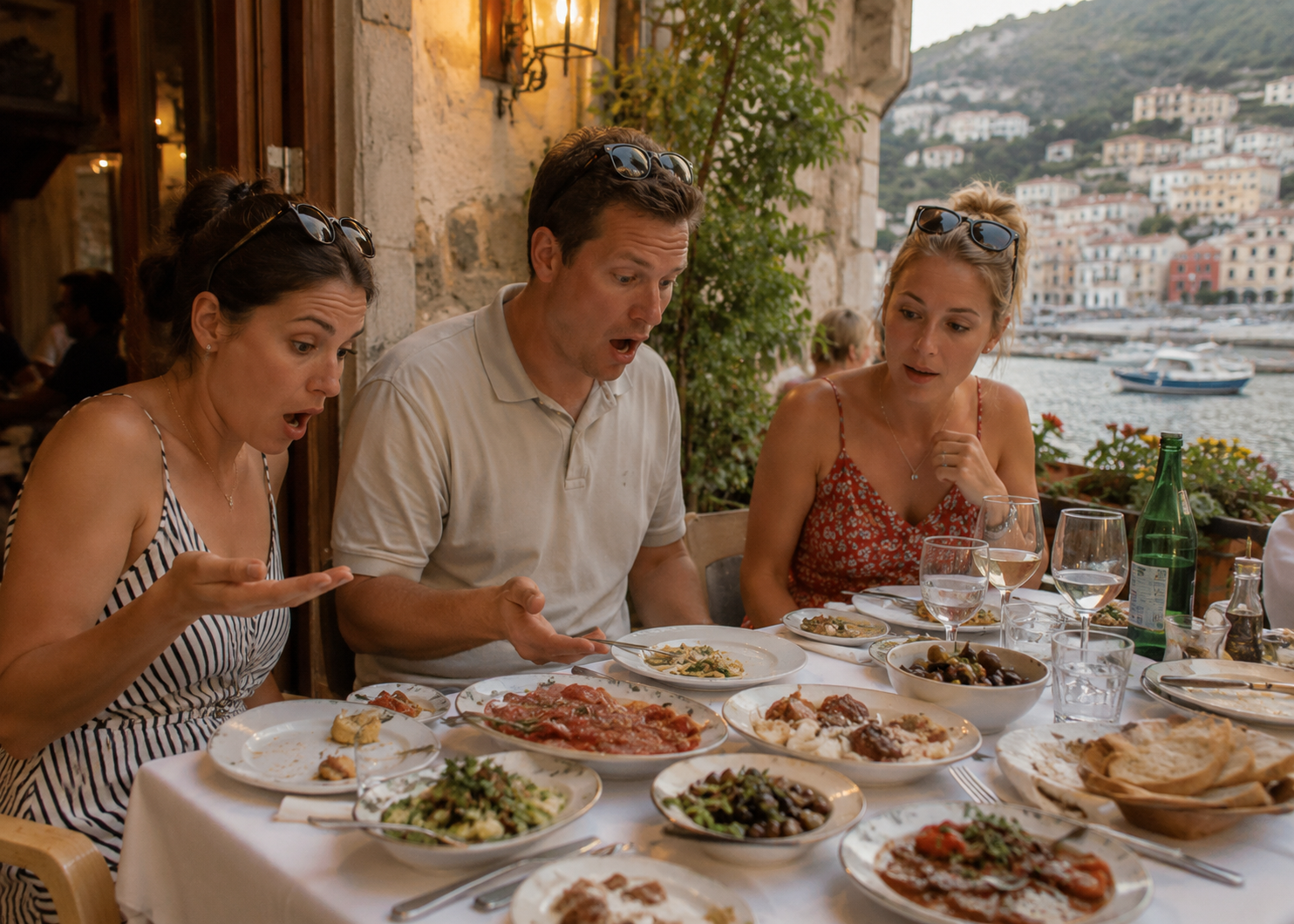
The sixth tell is misunderstanding the structure and timing of courses, which differs from American expectations.
The Southern European meal often has a particular course structure, the Italian sequence of antipasto, primo, secondo, the Spanish progression, the multi-course rhythm, with the courses coming in a certain order and timing, and Americans who misunderstand this, expecting everything at once or misreading the structure or over-ordering by not understanding the courses, reveal themselves. The Mediterranean meal unfolds in its courses at its own pace, each in turn, which is different from the American expectation, so misreading the structure, or being surprised by the pacing, or ordering wrongly for the course system, marks the foreigner, the course confusion being a tell. Misunderstanding the course structure reveals the tourist.
The thing to do instead is to learn the local course structure and order accordingly, understanding the sequence and pacing of the meal, ordering appropriately for the courses rather than expecting the American all-at-once single-plate approach. This lets you experience the meal as it is meant to unfold, the courses in their proper order and timing, which is both how to blend in and how to enjoy the full structured Mediterranean meal, so understanding the courses is worth the small effort. Learning and ordering for the local course structure rather than misreading it is the way to navigate the meal like a local.
Asking For Modifications Like Extra Cheese Or Dressing
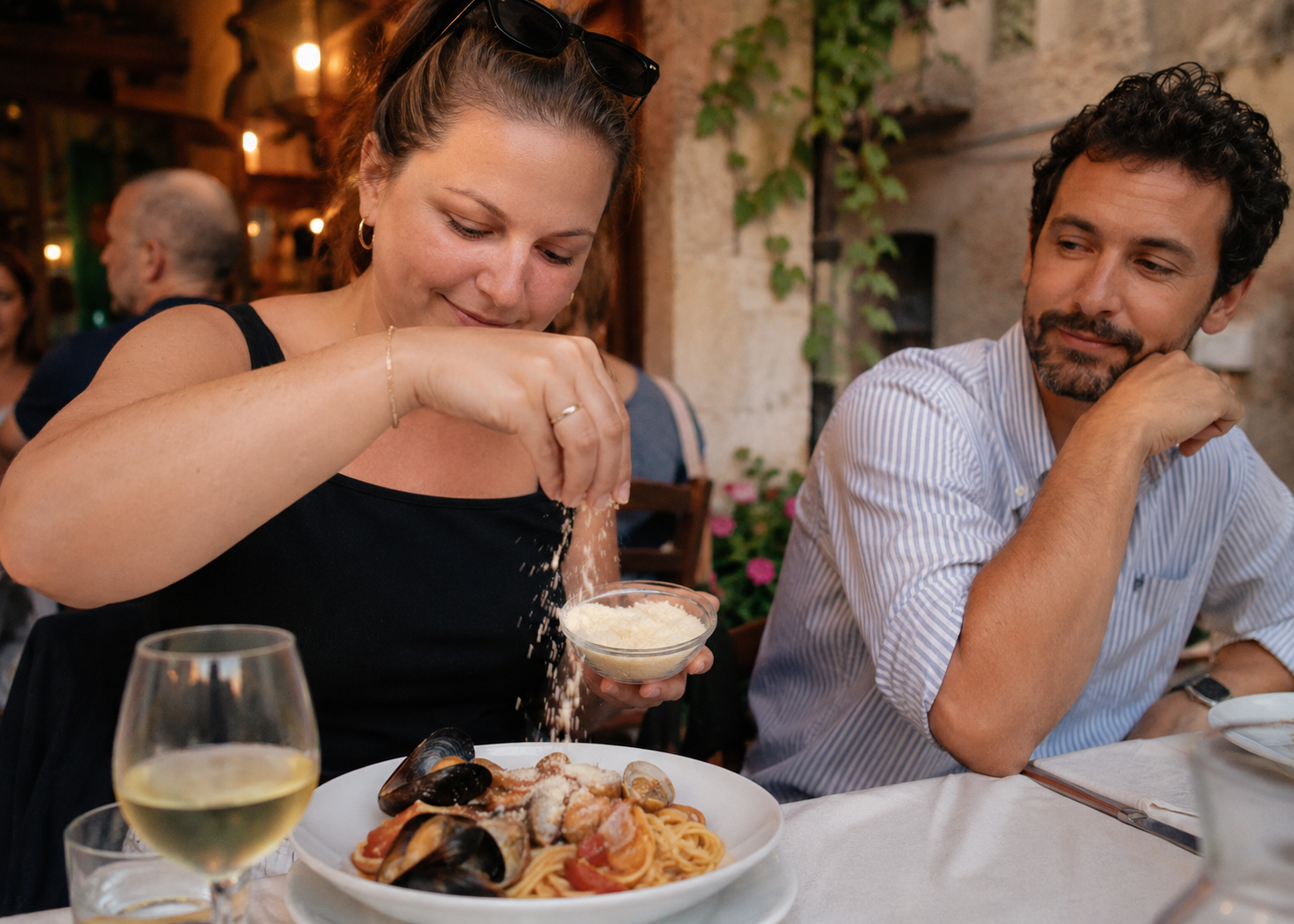
The seventh tell is specific requests that violate local food conventions, like cheese on seafood or unusual condiments.
Americans sometimes make specific requests that quietly break local food conventions, the classic being asking for cheese on a seafood pasta, which is a real taboo in Italy, or wanting particular condiments like ranch or excessive dressings, or other modifications that violate the local sense of how the food should be, marking them instantly to anyone who notices. These specific convention-breaking requests, the cheese on the seafood, the unusual condiment, the modification that offends the local food sense, reveal the foreigner not just as a customizer but as one unaware of the food conventions, the specific taboo-breaking being a clear tell. Asking for convention-breaking modifications reveals the American.
The thing to do instead is to learn and respect the local food conventions, not asking for cheese on the seafood pasta, not seeking the American condiments that do not belong, taking the food according to the local sense of how it is properly eaten. This respect for the conventions is part of appreciating the food culture, so learning the few key taboos and customs, like the cheese-and-seafood rule, and respecting them, both avoids the tell and shows appreciation for the cuisine. Respecting the local food conventions rather than breaking them with American modifications is the way to eat like a local.
The Spirit Behind Dining Like A Local
These habits are finally about enjoying the Southern European meal properly, and that is the spirit in which to take them.
The point of knowing these tells is not anxiety about being noticed but the genuine enjoyment of the Southern European meal as it is meant to be experienced, since dining like a local, the late hour, the slow pace, the lingering, the dishes as made, the proper courses, is not just about blending in but about accessing the real pleasure of Mediterranean dining, which lies precisely in these customs. The slow late lingering structured meal is one of the great pleasures of Southern Europe, and the American habits that mark the tourist are mostly habits that also prevent the full enjoyment of it, so learning the local way is really learning to enjoy the meal properly, the blending in and the enjoying being the same thing. The spirit is enjoyment, not anxiety.
So take these seven tells as a friendly guide to dining well in Southern Europe rather than a list of errors to fear, and use them to relax into the real Mediterranean meal, eating late, settling in for the slow pace, lingering over the table, taking the dishes as they come, respecting the conventions, enjoying the proper courses. Do these things not nervously but happily, to access the genuine pleasure of the Southern European table, and you will find that you both blend in and enjoy the meal far more, the local way being, as so often, the better way. That is the real spirit behind dining like a local, the door into one of the great pleasures of Southern European life, opened by a little understanding and a willingness to slow down.

About the Author: Ruben, co-founder of Gamintraveler.com since 2014, is a seasoned traveler from Spain who has explored over 100 countries since 2009. Known for his extensive travel adventures across South America, Europe, the US, Australia, New Zealand, Asia, and Africa, Ruben combines his passion for adventurous yet sustainable living with his love for cycling, highlighted by his remarkable 5-month bicycle journey from Spain to Norway. He currently resides in Spain, where he continues sharing his travel experiences with his partner, Rachel, and their son, Han.