
Ask an Italian about carbonara and the conversation will, sooner or later, arrive at cream, and the Italian’s face will fall. Because the single most common thing that goes wrong with carbonara outside Italy, the thing that turns a sublime Roman dish into a heavy approximation of itself, is the addition of cream. Americans are taught, by countless recipes and restaurant versions, that carbonara is a creamy pasta, and so they reach for the cream, when the truth is that real carbonara contains no cream at all, its silky richness coming entirely from eggs, cheese, and the starchy pasta water, combined with a technique that, once learned, you will never abandon. Understanding this is the difference between a real carbonara and a pale imitation.
The good news is that authentic carbonara, the real Roman dish, is not only better than the creamy version but actually simpler, made from a handful of humble ingredients and a technique that is easy once understood. There is no cream to buy, no sauce to fuss over, just eggs, cheese, cured pork, pasta, and pepper, transformed by heat and timing into something extraordinary. Here is how to make real carbonara, why Italians never touch cream, and why Americans reach for it.
Why There Is No Cream In Real Carbonara
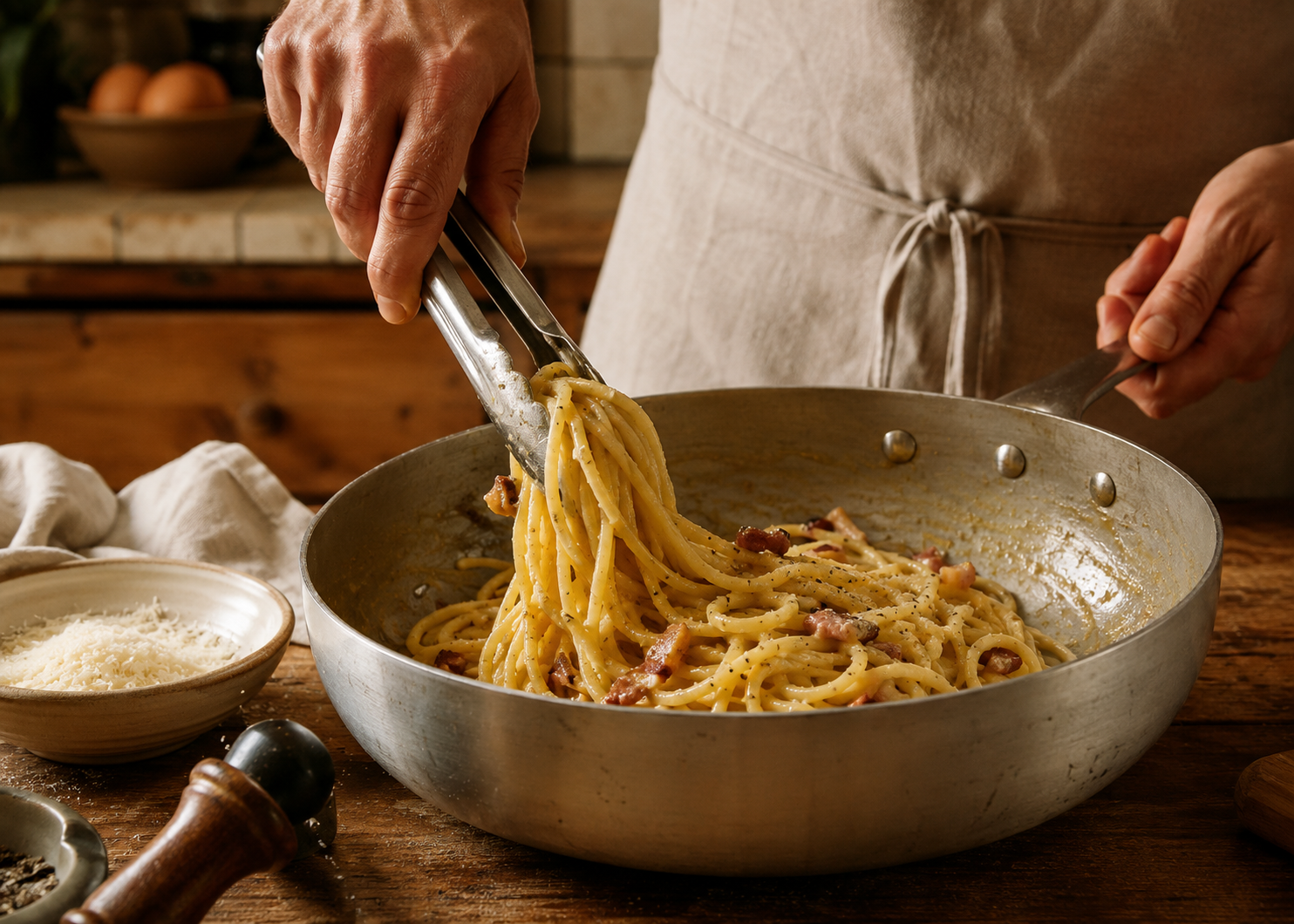
The heart of the matter is understanding why real carbonara contains no cream, since the silky texture that people think requires cream actually comes from somewhere else entirely.
Real carbonara achieves its silky, rich, creamy texture not from cream but from an emulsion of eggs, hard cheese, and starchy pasta water, the beaten eggs and grated cheese combined with the hot pasta and a little of its starchy cooking water forming a glossy, creamy sauce through emulsification rather than through any added cream. This is the crucial insight, that the creaminess of carbonara is created by the technique, the eggs and cheese and starchy water emulsified by the heat of the pasta into a silky sauce, so that cream is not merely unnecessary but actually a crude substitute for the real mechanism, a shortcut that produces a heavier, lesser result than the authentic emulsion. The creaminess comes from the eggs and cheese and pasta water, not from cream, which is why real carbonara needs none.
Understanding this is liberating, since it means the silky carbonara you want is achievable without cream, through the proper technique of emulsifying the eggs and cheese with the hot pasta and its water, the result being lighter, silkier, and more flavorful than the creamy version. The cream in the inauthentic versions actually masks and coarsens the dish, replacing the delicate egg-and-cheese emulsion with a heavy dairy sauce, so that the creamy carbonara is not a richer version of the real thing but a different, lesser dish, the cream covering up rather than enhancing. So real carbonara has no cream because it does not need it and is better without it, the eggs and cheese and pasta water creating a superior silky sauce, which is why Italians, who know this, never touch cream and regard its addition as a kind of culinary mistake.
The Four Real Ingredients
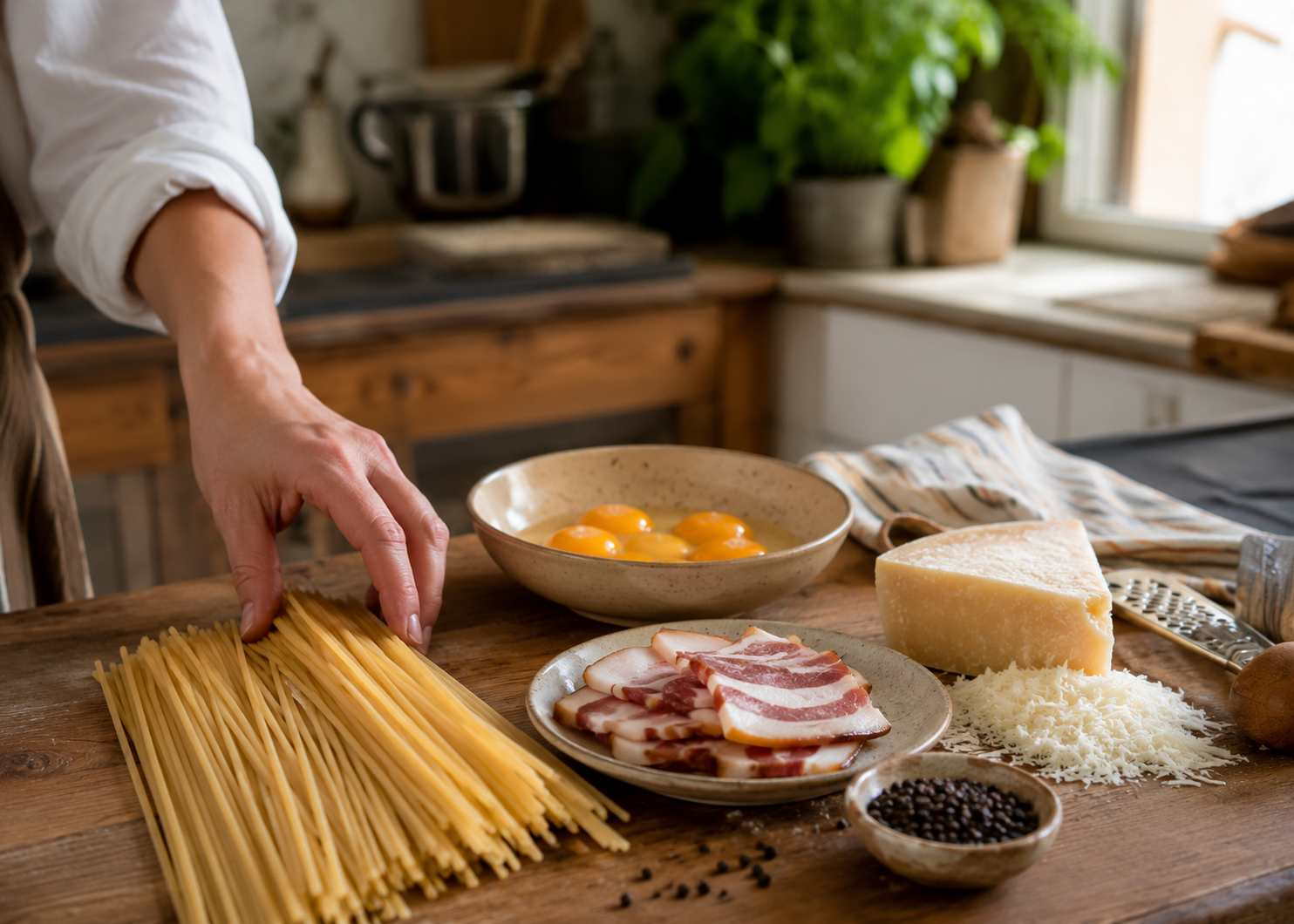
Authentic carbonara is built on just a few ingredients, and knowing the real ones, including the proper cheese and pork, is part of doing it right.
The authentic carbonara is made from just a few core ingredients, the pasta, the eggs, a hard sheep’s cheese, cured pork, and black pepper, with no cream, no garlic, no onion, no peas, no other additions, the dish being a model of Roman simplicity, a few perfect ingredients and nothing more. The proper cheese is Pecorino Romano, the hard salty sheep’s milk cheese of the region, which gives carbonara its characteristic sharp savory depth, though some use a mix of Pecorino and Parmesan, while the cream-and-Parmesan-only versions miss the proper Pecorino character. The proper cured pork is guanciale, cured pork cheek, which is fattier and more flavorful than pancetta or bacon, rendering its fat into the dish and providing the characteristic rich porkiness, though pancetta is an acceptable substitute and bacon a more distant one.
These authentic ingredients matter to the real dish, the Pecorino for its sharp savory depth, the guanciale for its rich rendered fat and flavor, the eggs for the silky emulsion, the black pepper for its warm bite, the pasta for the body, each playing its part in the simple perfect whole. The carbon, the black pepper, gives the dish its name and its characteristic warm spice, an essential rather than incidental element, so the proper carbonara is generous with freshly ground black pepper. Knowing the four real ingredients, the eggs, the Pecorino, the guanciale, the pepper, plus the pasta, and using the proper ones, is part of making authentic carbonara, the simple dish depending on the right few ingredients done well rather than on cream or additions.
The Technique That Makes Or Breaks It
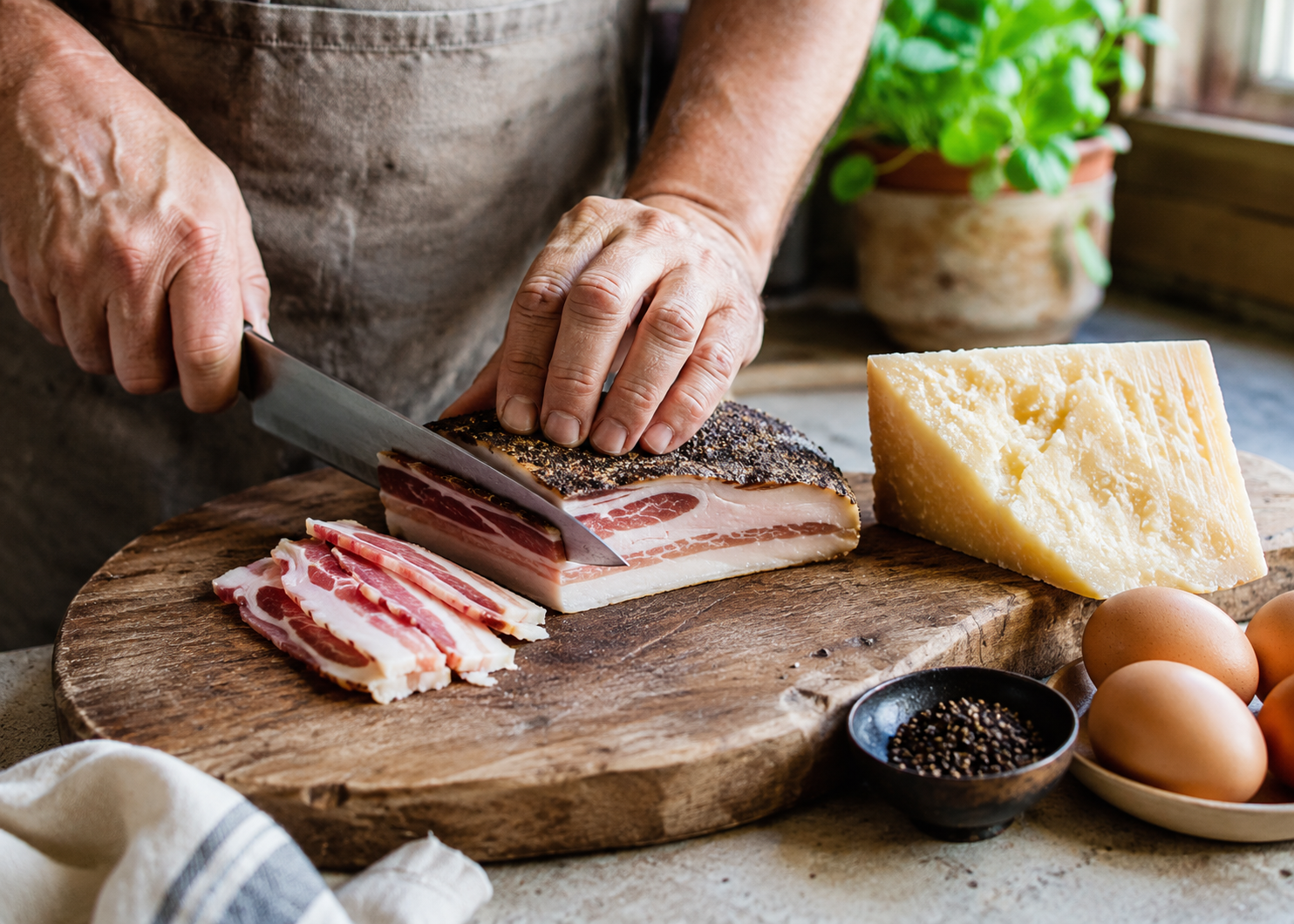
The technique of carbonara is where it is won or lost, since the emulsion must be made correctly to avoid scrambling the eggs.
The crucial technique in carbonara is combining the beaten eggs and cheese with the hot pasta in a way that creates the silky emulsion without scrambling the eggs, which is the step that makes or breaks the dish, since too much direct heat turns the eggs from a silky sauce into scrambled egg, ruining it. The method is to beat the eggs and grated Pecorino together, render the guanciale and reserve its fat, cook the pasta, and then combine off the direct heat or with only gentle residual heat, tossing the hot pasta with the egg-and-cheese mixture and a little reserved starchy pasta water, the residual heat of the pasta cooking the eggs just enough to thicken into a silky sauce without scrambling. The key is the gentle heat and the constant tossing, the eggs warmed into a creamy emulsion rather than cooked into scramble, the pasta water helping create and loosen the silky sauce.
This is the technique that takes practice but, once learned, is reliable, the trick being to keep the heat gentle, to work quickly, to toss constantly, and to use the starchy pasta water to achieve and adjust the silky consistency, the emulsion forming as the egg and cheese and water and fat combine with the hot pasta. The common failure is too much heat, scrambling the eggs, so the wisdom is to combine off the burner or over only the gentlest residual heat, trusting the heat of the pasta itself to do the cooking, tossing all the while. Master this technique, the gentle warming of the egg and cheese with the hot pasta and starchy water into a silky emulsion without scrambling, and you have mastered carbonara, the technique being the real skill of the dish, far more important than any ingredient and entirely independent of cream.
Why Americans Reach For Cream
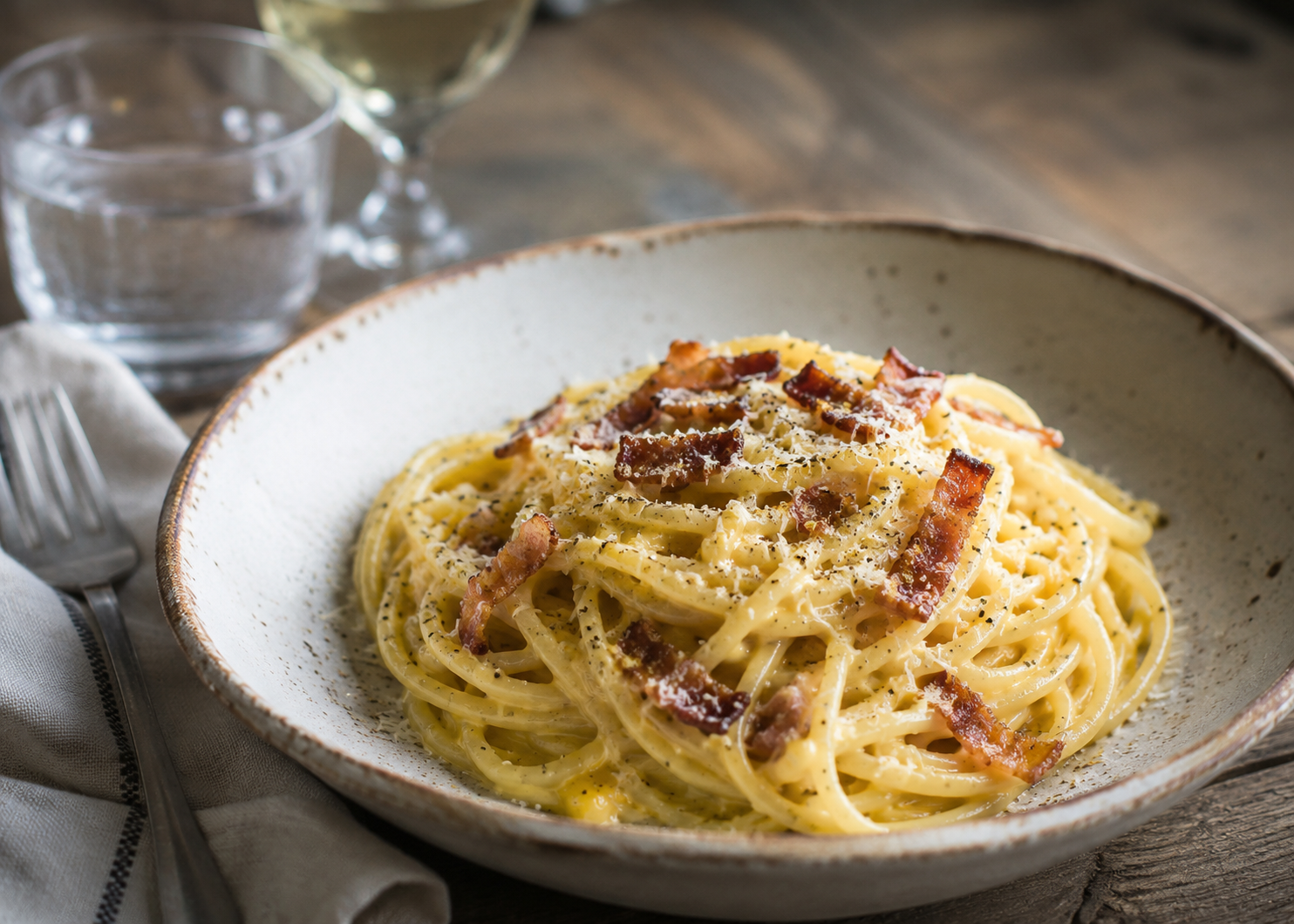
It is worth understanding why the cream version became so entrenched in America, since the reasons illuminate the mistake.
Americans reach for cream in carbonara for a few understandable reasons, the first being that the egg-and-cheese emulsion technique is unfamiliar and a little tricky, so cream offers an easier, more foolproof way to get a creamy sauce without risking scrambled eggs, the shortcut appealing to the cook who does not know the real method. The cream version is simply easier and more reliable for the uninitiated, pouring cream into the pan being far less fraught than emulsifying eggs with hot pasta, so the cream became the default for cooks and restaurants wanting a safe creamy result, the authentic technique being unknown or seeming too risky. So part of why Americans use cream is that it is the easy foolproof path to creaminess, avoiding the trickier real technique.
The other reason is simply the entrenchment of the cream version through repetition, countless American recipes, restaurants, and jarred sauces presenting carbonara as a creamy dish, so that Americans learn carbonara as cream pasta and reach for cream because that is what they have always been taught it is. The cream version became the American understanding of carbonara through sheer repetition, the inauthentic version so widespread that it displaced the real one in the American mind, so people use cream because they genuinely believe that is what carbonara is. Understanding why Americans reach for cream, the easier technique and the entrenched inauthentic tradition, explains the mistake without excusing it, the real carbonara being better and not much harder once the technique is learned, so the cream is a habit worth breaking.
Why The Real Version Is Worth It
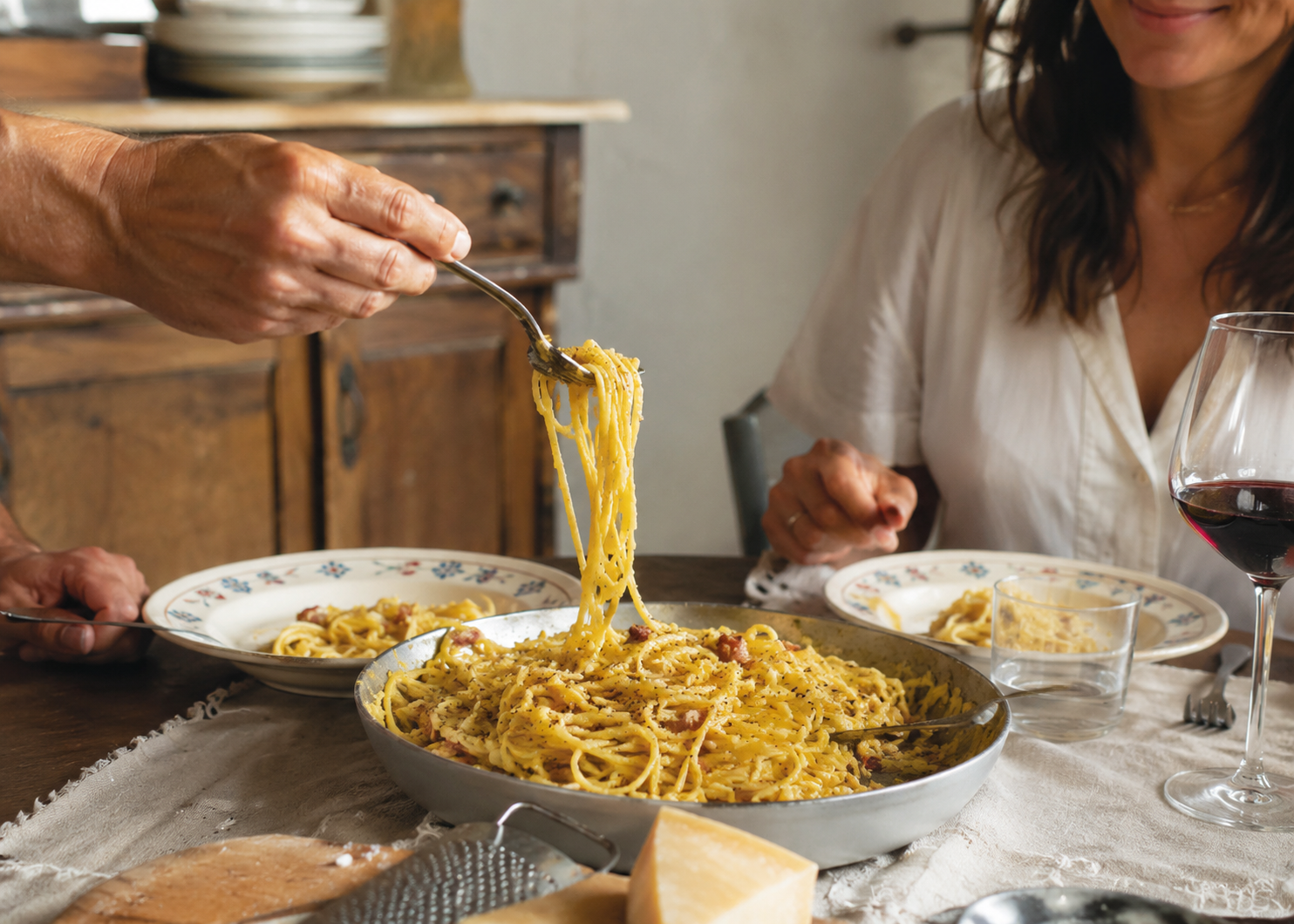
Finally, it is worth affirming why the authentic cream-free carbonara is worth the small effort of learning, since the payoff is real.
The real carbonara is worth making because it is genuinely better than the creamy version, lighter, silkier, more flavorful, the delicate egg-and-cheese emulsion and the sharp Pecorino and the rich guanciale producing a dish of far more finesse and depth than the heavy cream version, the authentic carbonara being one of the great simple pasta dishes of the world. Once you have made and tasted the real thing, the silky egg-and-cheese sauce clinging to the pasta, the sharp cheese and the rich pork and the warm pepper in perfect balance, you understand why Italians are so protective of it and why the cream version is regarded as a travesty, the real dish being simply superior. The authentic carbonara rewards the small effort of learning the technique with a genuinely better dish, which is reason enough to make it properly.
There is also a deeper satisfaction in making the real version, the pleasure of doing a classic dish properly, of mastering the technique, of cooking the authentic thing rather than the bastardized version, the carbonara being a small point of culinary integrity and skill. To make real carbonara is to join the tradition properly, to cook the dish as it is meant to be, to have the skill and the knowledge to do it right, a small but real accomplishment and a lasting addition to your cooking. Learn to make real carbonara, the cream-free authentic Roman dish, and you gain not just a better version of a beloved dish but the satisfaction of doing it properly, the technique and the knowledge being yours for life, the cream left behind where it belongs.
The Common Mistakes Beyond Cream
Beyond the cream, a few other common mistakes trip people up, and naming them helps you avoid them.
Beyond the cream, the most common carbonara mistakes are scrambling the eggs through too much heat, which is the technical failure already discussed and the one most worth guarding against, and using the wrong proportions, too little cheese or pasta water for a properly silky sauce, or too many eggs making it heavy. Another frequent error is adding ingredients that do not belong, garlic, onion, peas, mushrooms, cream of course, the authentic dish being purer than the loaded versions many make, so resisting the urge to add things is part of doing it right. And using bacon in place of guanciale, while an acceptable substitute when guanciale is unavailable, changes the character with its smokiness, so the purist seeks guanciale or at least pancetta.
The other subtle mistake is timing and temperature, since carbonara must be made quickly and served immediately, the silky emulsion being at its best the moment it is made and stiffening if it sits, so the dish should be combined and served without delay, everything ready before the pasta is done. Getting the timing right, having the egg-and-cheese mixture ready, the guanciale rendered, the pasta water reserved, so that the final combining is quick and the dish served at once, is part of the technique, the carbonara being a dish of the moment rather than one to hold. Avoid these mistakes, the scrambling, the wrong proportions, the extra ingredients, the bad timing, along with the cream, and you clear the path to a proper carbonara, the authentic dish emerging once the common errors are understood and avoided.
Real Roman Carbonara
Serves 4. About 10 minutes preparation, 15 minutes cooking. No cream, ever. Have everything ready before the pasta finishes, since the final step is fast.
Ingredients
- 400g (14 oz) spaghetti or rigatoni
- 150g (5 oz) guanciale (cured pork cheek), or pancetta, cut into short strips
- 4 large egg yolks plus 1 whole egg
- 100g (3½ oz) Pecorino Romano, finely grated, plus extra to serve
- Lots of freshly ground black pepper
- Salt for the pasta water
Method
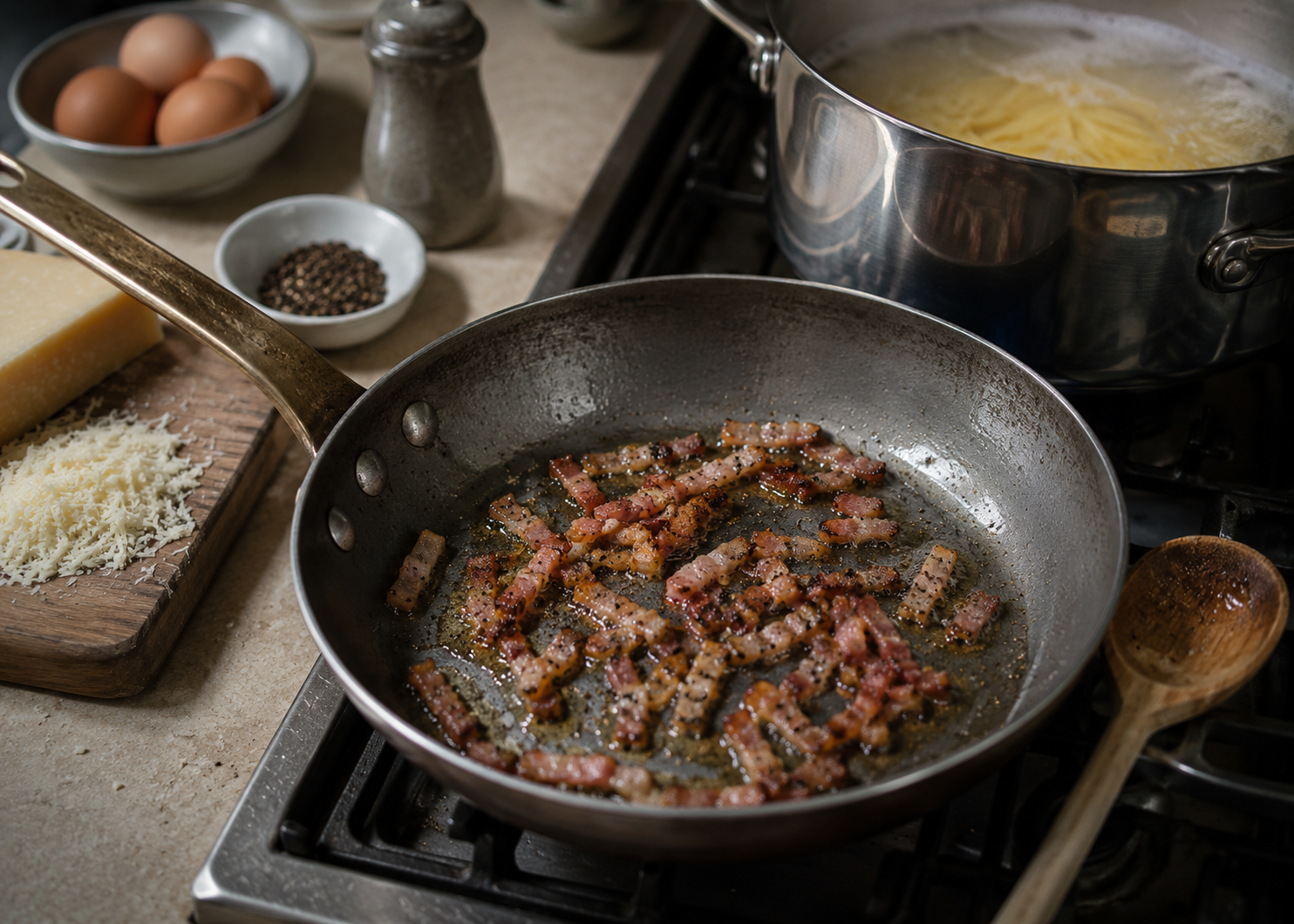
- Bring a large pot of water to the boil and salt it less heavily than usual, since the Pecorino and guanciale are both salty.
- While the water heats, beat the egg yolks and whole egg in a bowl with the grated Pecorino and a generous amount of black pepper until you have a thick paste. Set aside.
- Cook the guanciale in a cold, dry pan over medium heat, letting the fat render slowly until the pieces are golden and crisp. Remove from heat, leaving the fat in the pan.
- Cook the pasta until al dente. Just before draining, scoop out a mugful of the starchy pasta water and reserve it.
- Drain the pasta and add it to the pan with the guanciale and its fat, off the heat, tossing to coat.
- Now the crucial step: with the pan off the heat and the pasta no longer fiercely hot, pour in the egg-and-cheese mixture, tossing constantly and adding splashes of the reserved pasta water, until a glossy, silky sauce forms and coats the pasta. The residual heat cooks the eggs into a creamy sauce; too much heat scrambles them.
- Adjust with more pasta water if it is too thick. Serve immediately with extra Pecorino and more black pepper.
Serving, Tips, And Troubleshooting
Carbonara waits for no one, so serve it the moment it comes together, in warmed bowls if you can, since the silky sauce stiffens as it cools and is at its absolute best straight from the pan. A simple green salad and the rest of a crisp white wine are all it needs alongside.
If your sauce scrambles, the pan was too hot; next time, take it further off the heat and let the pasta cool for a few seconds before adding the eggs. If it is too thick or claggy, you needed more pasta water, which is why reserving plenty matters, add it a splash at a time until it loosens to a glossy coat. If it is too thin, a little more grated Pecorino tightens it up.
And the one rule to carry with you: no cream, not now, not ever. Once you have made carbonara properly a few times, the technique becomes second nature, and you will wonder why anyone ever reached for the cream, the real Roman dish being lighter, silkier, and better in every way, and entirely within your reach.

About the Author: Ruben, co-founder of Gamintraveler.com since 2014, is a seasoned traveler from Spain who has explored over 100 countries since 2009. Known for his extensive travel adventures across South America, Europe, the US, Australia, New Zealand, Asia, and Africa, Ruben combines his passion for adventurous yet sustainable living with his love for cycling, highlighted by his remarkable 5-month bicycle journey from Spain to Norway. He currently resides in Spain, where he continues sharing his travel experiences with his partner, Rachel, and their son, Han.