

There is a particular moment that plays out in Italian cafes every day, when an American walks in, orders in a way that is subtly but unmistakably foreign, and the barista, without a flicker of rudeness, instantly clocks them as a tourist. It is not about language or appearance but about a set of small habits, the things Americans do in cafes that no Italian would, that mark them out as surely as a flag on the back. None of it is wrong exactly, and Italians are far too gracious to say anything, but the habits are noticed, every time, and knowing them is the difference between blending in and broadcasting.
This is not about judgment, since there is nothing shameful about being a tourist, but about understanding, since knowing how the Italian cafe actually works lets you move through it with ease and enjoy it as the locals do rather than fumbling through it as an obvious outsider. The Italian cafe has its own logic and customs, quite different from the American coffee shop, and learning them is part of learning Italy. Here are nine things American tourists do in Italian cafes that locals notice instantly, and what to do instead.
Ordering A Cappuccino After Noon
The first and most famous tell is the cappuccino ordered at the wrong time of day, which Italians notice immediately.
The classic giveaway is ordering a cappuccino, or any milky coffee, after the morning, since for Italians the cappuccino is strictly a breakfast drink, taken in the morning and never after a meal or in the afternoon, the milk being considered too heavy for those times, so the cappuccino ordered at lunch or after dinner instantly marks the foreigner. Italians switch to espresso, the caffe, after the morning, taking the small strong coffee throughout the day and especially after meals, the milky drinks confined to the morning, so the afternoon or after-dinner cappuccino is a clear and immediate tell. This is the most famous of all the cafe giveaways, the milky coffee at the wrong time, noticed instantly by any Italian.
The thing to do instead is simple, to take your cappuccino in the morning if you want one, and to switch to espresso later in the day, especially after meals, ordering a caffe rather than a milky drink in the afternoon and evening as the Italians do. This is not a rigid law and no one will refuse you, but matching the Italian pattern, cappuccino in the morning, espresso after, lets you blend in and also, many would say, enjoy the coffee as it is meant to be taken. Knowing the timing of the cappuccino, and switching to espresso after the morning, is the first step to ordering coffee like an Italian rather than an obvious tourist.
Asking For A To-Go Cup

The second tell is the request for coffee to go, which is alien to the Italian way of taking coffee.
Americans, accustomed to carrying their coffee in a paper cup as they walk and work, often ask for coffee to go in Italy, which immediately marks them as foreign, since Italian coffee culture is built around drinking the coffee on the spot, standing at the bar or sitting at a table, the coffee a brief pause rather than a portable accessory. The Italian takes the espresso quickly at the bar, a small ritual of a minute or two, drunk there and then, not carried away in a cup, so the request for a to-go cup is both unusual and a clear tell, the very idea of portable coffee being foreign to the culture. The to-go cup marks the American instantly.
The thing to do instead is to take your coffee as the Italians do, standing at the bar or sitting at a table, drinking it on the spot in the brief pleasant ritual of the Italian coffee, rather than asking for it to go. This is genuinely part of the pleasure of Italian coffee, the pause to drink it properly, the small civilized break, so adopting it is not just about blending in but about enjoying the coffee culture as it is meant to be experienced. Drinking your coffee on the spot rather than carrying it away is both the way to blend in and, many would say, the better way to enjoy the Italian coffee.
Not Knowing The Bar Versus Table Distinction
The third tell is confusion about the bar-versus-table system, which Italians navigate automatically.
In Italian cafes there is often a price and service distinction between standing at the bar and sitting at a table, drinking standing at the bar being cheaper and the quick local way, while sitting at a table often costs more and involves table service, and Americans who do not know this distinction, who sit without realizing the difference or hover confused, reveal themselves. Italians know the system instinctively, standing at the bar for a quick cheap coffee or choosing a table when they want to sit and pay a bit more for the service and the seat, so the confusion about which to do, or surprise at the table price, marks the foreigner. Not understanding the bar-versus-table distinction is a clear tell.
The thing to do instead is to understand the system and choose deliberately, standing at the bar for a quick, cheap, local-style coffee, or sitting at a table when you want to linger and are happy to pay the table price, knowing which you are choosing and why. Once you understand the distinction it is easy to navigate, and you can choose the bar or the table according to what you want, the quick cheap standing coffee or the leisurely seated one, like an Italian rather than a confused tourist. Knowing and using the bar-versus-table system deliberately is the way to navigate the Italian cafe with confidence.
Over-Customizing The Order

The fourth tell is the elaborate customized coffee order, which is foreign to the Italian simplicity.
Americans, used to the endless customization of the American coffee shop, often order elaborate customized drinks in Italy, the various sizes and milks and syrups and modifications, which marks them instantly, since Italian coffee is simple and standardized, an espresso, a cappuccino, a macchiato, taken as they are, without the elaborate customization of the American chain. The Italian orders a simple standard coffee, a caffe or a cappuccino, without the modifications and customizations, so the request for a particular size or a flavored syrup or a complex modification reveals the foreigner, the over-customization being alien to the simple Italian coffee. The elaborate custom order is a clear tell.
The thing to do instead is to embrace the simplicity, ordering the standard Italian coffees as they come, an espresso, a cappuccino in the morning, a macchiato, without the customization, taking the coffee in its proper simple form. This is not a limitation but a different and arguably better way, the Italian coffees being excellent as they are standardly made, so ordering them simply, without the American customization, lets you both blend in and enjoy the coffee as it is meant to be. Embracing the simplicity of the standard Italian coffee order, without elaborate customization, is the way to order like a local.
Expecting Drip Coffee Or Large Sizes
The fifth tell is expecting American-style drip coffee or large sizes, which do not exist in the Italian way.
Americans often expect a large cup of drip or filter coffee, the big American coffee, and are surprised to find that Italian coffee is small and strong, the espresso a tiny intense shot, with no real equivalent of the big American drip coffee, so the expectation of a large mild coffee marks the foreigner. The Italian coffee world is built on the small strong espresso and its variations, not the large mild American cup, so asking for a big coffee, or being surprised at the small size, or seeking American-style drip, reveals the tourist, the expectation of American coffee formats being a clear tell. The large-coffee expectation marks the American.
The thing to do instead is to embrace the Italian format, the small strong espresso and its variations, understanding that this is what Italian coffee is and enjoying it on its own terms rather than seeking the American large cup. If you want something longer there are options like the caffe lungo or the caffe americano, an espresso with added water, but the point is to work within the Italian coffee world rather than expecting the American one, taking the small strong coffee as the Italians do. Embracing the small strong Italian coffee rather than expecting American sizes is the way to enjoy and blend into the Italian coffee culture.
Tipping As Americans Do
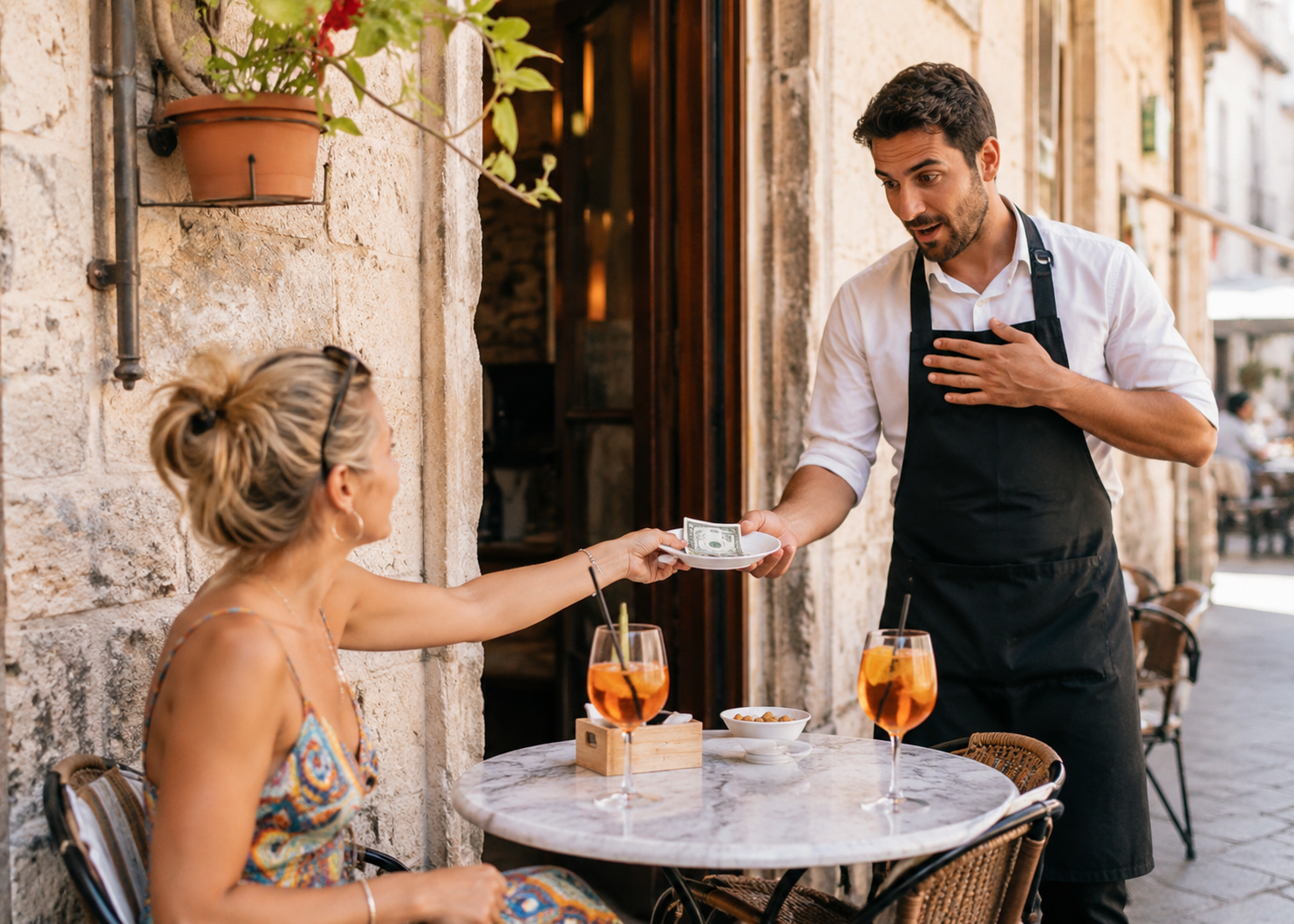
The sixth tell is American-style tipping, which is not the Italian custom and marks the foreigner.
Americans, accustomed to tipping generously and habitually, often tip in Italian cafes as they would at home, which marks them, since tipping is not the strong custom in Italy that it is in America, and certainly not at the cafe bar, where Italians might leave a small coin or nothing at all for a coffee, the elaborate American tip being unnecessary and unusual. The Italian does not tip the barista the way an American would, perhaps leaving small change but not the percentage tip of American custom, so the habitual generous tip marks the foreigner, the American tipping culture being a clear tell. Tipping as Americans do reveals the tourist.
The thing to do instead is to follow the Italian custom, which is far more modest, leaving perhaps a small coin or rounding up at most for a coffee at the bar, rather than the American percentage tip, understanding that the heavy tipping is simply not expected. This is not about being cheap but about following the local norm, which is genuinely different from the American one, so adjusting to the modest Italian tipping custom is part of blending in. Following the modest Italian tipping norm rather than the generous American one is the way to handle the bill like a local.
Lingering Over The Bar Coffee
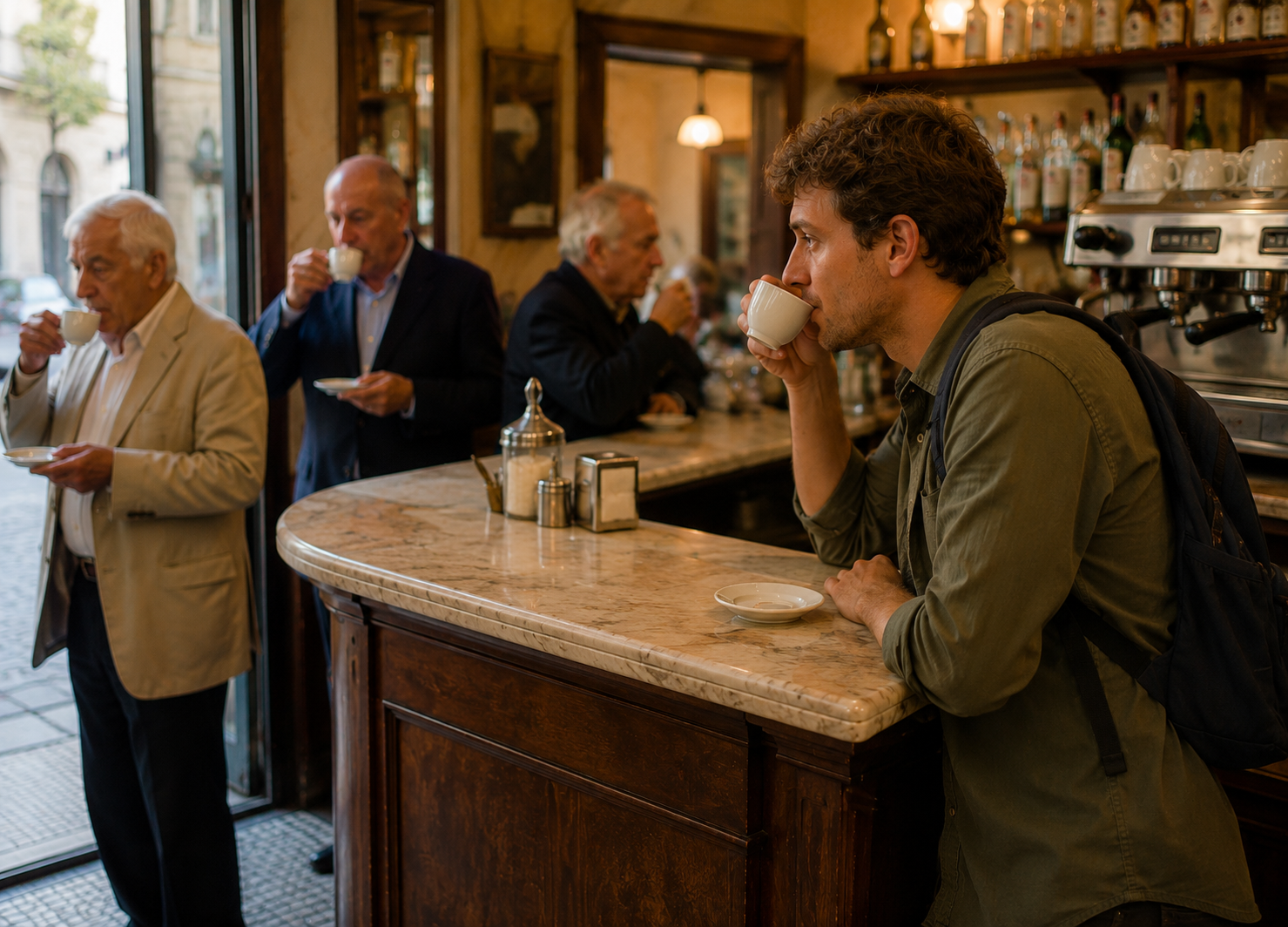
The seventh tell is lingering too long over the coffee at the bar, which differs from the quick Italian bar ritual.
While Italians do linger at cafe tables, the coffee at the bar is typically a quick affair, the espresso downed in a minute or two as a brief pause, so the American who lingers a long time over a coffee standing at the bar, treating it as the extended sit-down experience of the American coffee shop, reveals the different expectation. The Italian bar coffee is quick, a brief intense ritual, while the lingering happens at the table if at all, so the long slow coffee at the bar marks the foreigner, the mismatch of pace being a tell. Lingering over the bar coffee reveals the American expectation.
The thing to do instead is to match the pace, taking the bar coffee quickly as a brief pause as the Italians do, and if you want to linger, sitting at a table where lingering is appropriate, understanding the different rhythms of the bar and the table. This lets you fit the Italian pattern, the quick bar coffee or the leisurely table one, rather than imposing the American coffee-shop expectation of the long slow drink, so matching the pace to the setting is part of blending in. Taking the bar coffee quickly and lingering at a table if you wish, matching the Italian rhythms, is the way to fit the cafe culture.
Misreading The Pastry And Breakfast Customs

The eighth tell is misreading the breakfast and pastry customs, which follow patterns Americans do not expect.
The Italian breakfast is light and specific, typically a coffee and a simple pastry like a cornetto taken quickly at the bar, so Americans who expect a large savory breakfast, or who misread the pastry customs, or who treat breakfast as the substantial sit-down meal of American expectation, reveal themselves. The Italian breakfast is a brief light affair of coffee and a sweet pastry, not the large breakfast of American custom, so seeking eggs and the big breakfast, or misunderstanding the simple pastry-and-coffee pattern, marks the foreigner, the breakfast expectations being a tell. Misreading the breakfast customs reveals the tourist.
The thing to do instead is to embrace the Italian breakfast as it is, a coffee and a simple pastry taken quickly, enjoying the cornetto and the cappuccino in the morning as the light start the Italians take, rather than expecting the large savory American breakfast. This light sweet quick breakfast is part of the Italian rhythm, pleasant on its own terms, so adopting it rather than seeking the American big breakfast is the way to fit in, and to enjoy the morning as the Italians do. Embracing the light Italian coffee-and-pastry breakfast rather than expecting the American one is the way to start the day like a local.
Being Too Loud
The ninth tell is simply volume, since Americans are often louder than the Italian cafe norm.
Americans tend to speak more loudly than Italians in the cafe setting, the American voice and laugh carrying across the room in a way that, while not rude exactly, marks the foreigner, since Italians, for all their reputation for expressiveness, often keep a more moderate volume in the cafe than the boisterous American. The carrying American voice, the loud conversation and laughter, stands out in the Italian cafe, marking the tourist by sheer volume, the louder American register being a clear if unconscious tell. Being too loud reveals the American.
The thing to do instead is simply to be aware of your volume and to moderate it to the local norm, speaking and laughing at the more moderate level of the Italian cafe rather than the louder American register, a small adjustment of awareness. This is not about silence or stiffness but about matching the ambient volume of the place, which is often lower than the American default, so a little awareness of volume helps you blend in. Moderating your volume to the local norm is a simple way to be less conspicuous in the Italian cafe.
The Real Point Behind The Tells
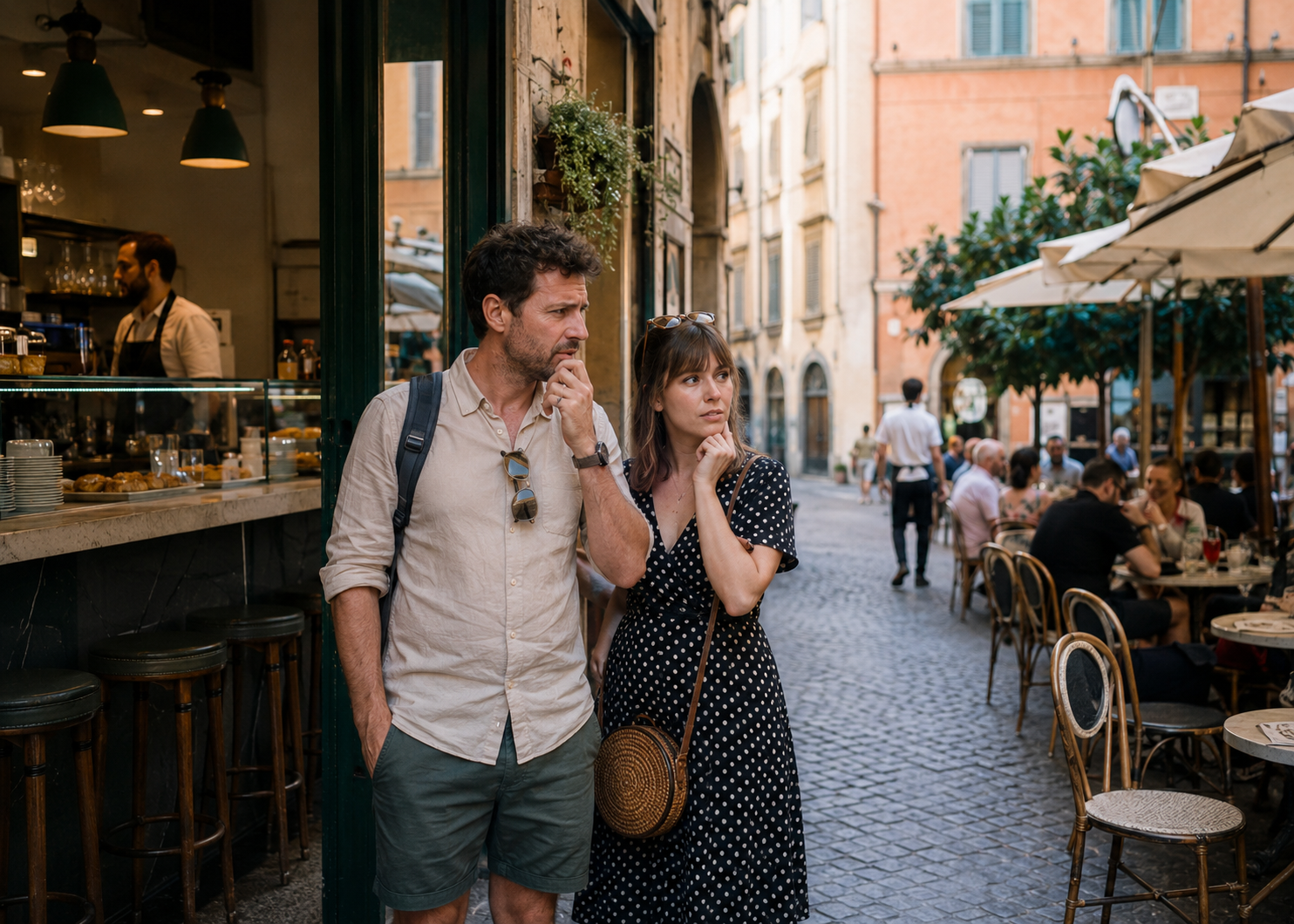
These tells are finally not about shame but about understanding, and that is the spirit in which to take them.
The point of knowing these tells is not to be ashamed of being a tourist, which is nothing to be ashamed of, but to understand how the Italian cafe actually works so that you can move through it with ease and enjoy it as it is meant to be enjoyed, the knowledge being a key to the experience rather than a judgment. Italians are gracious and will never make you feel bad for these habits, but knowing them lets you blend in, navigate confidently, and above all enjoy the Italian coffee culture properly, which is the real reward, so the tells are worth knowing for your own enjoyment as much as for blending in. The real point is understanding and enjoyment, not shame.
So take these nine tells in the right spirit, as a friendly guide to the Italian cafe rather than a list of mistakes, and use them to enjoy the coffee culture as the Italians do, the cappuccino in the morning, the espresso after, the coffee on the spot, the simple order, the modest tip, the right rhythm, the light breakfast, the moderate volume. Do these things not anxiously, to avoid being noticed, but happily, to enjoy the Italian cafe as it is meant to be, and you will find that blending in and enjoying it are really the same thing, the local way being the better way. That is the real point behind the tells, the door into a genuinely lovely part of Italian life, opened by a little understanding.

About the Author: Ruben, co-founder of Gamintraveler.com since 2014, is a seasoned traveler from Spain who has explored over 100 countries since 2009. Known for his extensive travel adventures across South America, Europe, the US, Australia, New Zealand, Asia, and Africa, Ruben combines his passion for adventurous yet sustainable living with his love for cycling, highlighted by his remarkable 5-month bicycle journey from Spain to Norway. He currently resides in Spain, where he continues sharing his travel experiences with his partner, Rachel, and their son, Han.