
There is a menu that exists in tourist Italy and barely exists anywhere else, a collection of dishes that Americans believe to be the height of Italian cooking and that actual Italians regard with a mixture of bafflement and mild horror. The American orders these dishes with confidence, certain they are eating authentically, while the Italians at the next table are eating something else entirely, the real food of their region, the dishes that never make it onto the tourist menu because the tourists do not know to ask for them. The gap between what tourists order and what Italians actually eat is one of the great hidden divides of Italian dining, and crossing it is the difference between eating the tourist fantasy of Italy and eating Italy itself.
None of the tourist dishes are crimes exactly, and some are perfectly nice, but they are not what Italians eat, being either foreign inventions sold as Italian, heavy tourist-trap versions of real dishes, or simply not part of the actual Italian repertoire. After time spent watching the divide play out, here are five dishes that tourists order constantly and Italians never touch, why Italians avoid them, and what the locals are actually eating instead, so you can cross over to the real food.
Fettuccine Alfredo, The Dish That Barely Exists In Italy
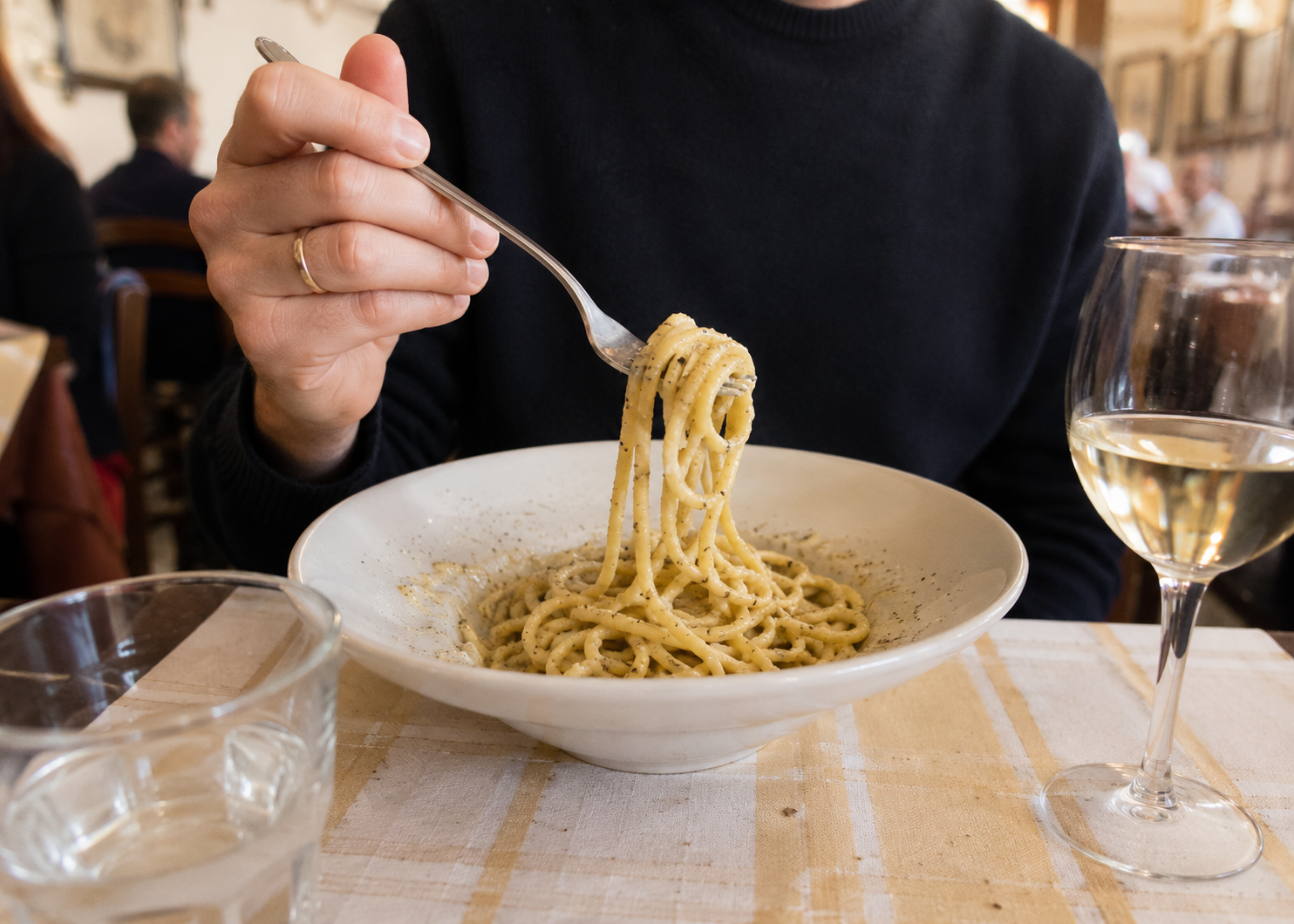
The most famous example, the dish that more than any other marks the tourist, is fettuccine Alfredo, which is essentially not an Italian dish at all.
Fettuccine Alfredo as Americans know it, pasta drowned in a heavy cream and cheese sauce, is essentially an American dish, not part of the real Italian repertoire, and ordering it in Italy marks the tourist instantly, since Italians do not eat it and most Italian restaurants outside the tourist traps do not even serve it. The original, a simple Roman dish of fettuccine tossed with butter and parmesan, exists, but it is a far lighter thing than the American cream-laden version, and even that is not a common menu item for Italians, who regard the heavy American Alfredo as a foreign invention bearing little relation to how they actually eat pasta. The cream-sauce Alfredo is the single clearest tourist tell in Italian dining, a dish Italians neither eat nor recognize as their own.
What Italians eat instead, when they want a simple cheesy pasta, is the real Roman classics that the Alfredo is a bastardization of, cacio e pepe, the sublime dish of pasta with pecorino cheese and black pepper, emulsified with pasta water into a creamy sauce using no cream at all, or carbonara, or the tomato-based amatriciana. These are the actual Roman pasta dishes, far superior to the American Alfredo and genuinely Italian, the cacio e pepe in particular being everything the Alfredo pretends to be but done properly, creamy and rich from cheese and technique rather than from heavy cream. Order cacio e pepe instead of Alfredo, and you have crossed from the tourist fantasy to the real Roman thing, the authentic dish that Italians actually eat and love.
Spaghetti And Meatballs, An American Invention
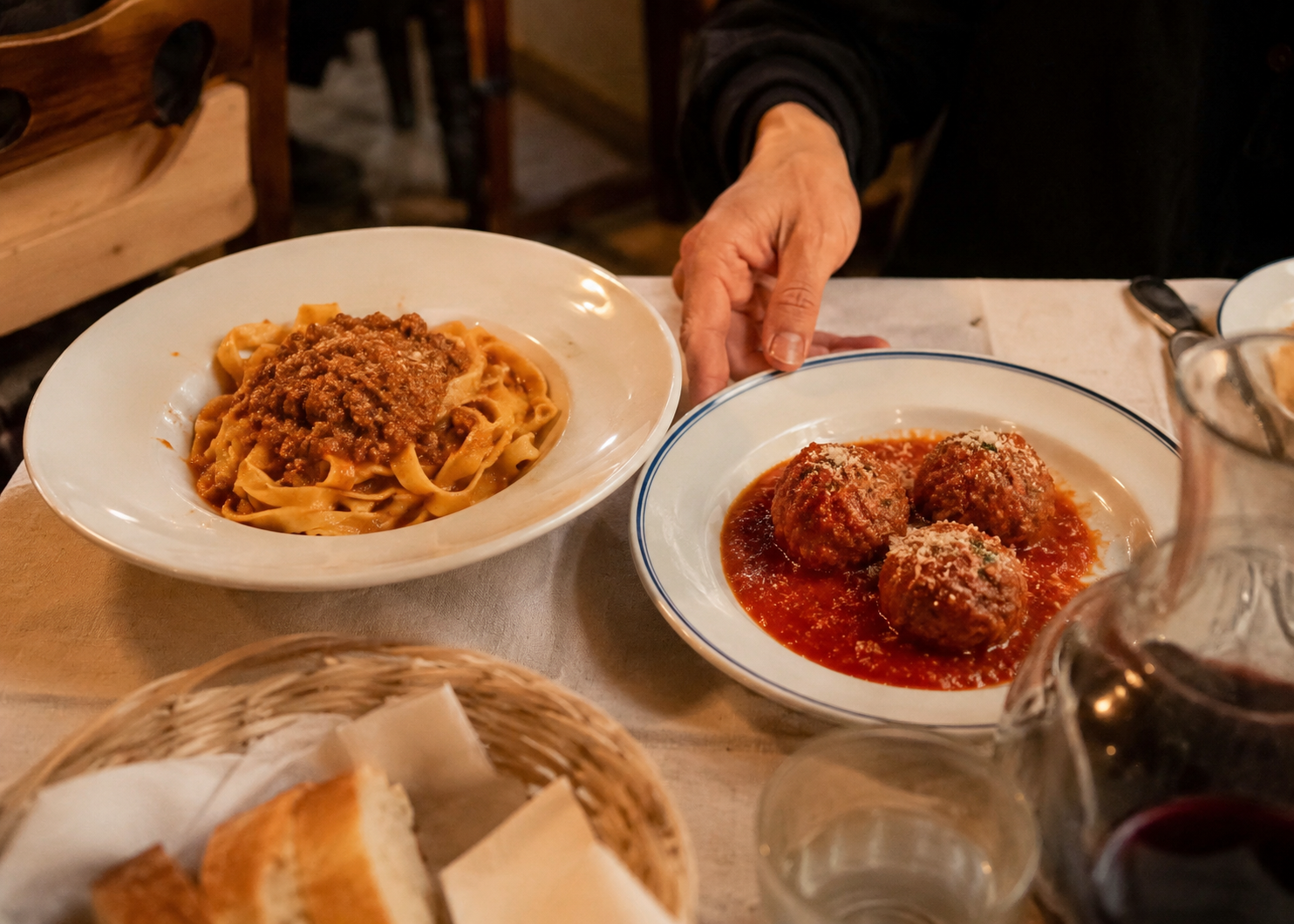
The second great tourist dish that Italians do not eat is spaghetti and meatballs, which is an Italian-American creation rather than an Italian one.
Spaghetti and meatballs, that staple of the American idea of Italian food, is essentially an Italian-American dish, born among Italian immigrants in America with access to cheap meat, not a dish of Italy itself, where you will not find the giant meatballs piled on spaghetti that Americans expect. Italians do eat meatballs, polpette, and they do eat pasta, but not together in the American manner, the polpette typically being eaten as their own course or in a different preparation, and the combination of large meatballs heaped on a tangle of spaghetti being a foreign invention that Italian restaurants serve only to tourists who expect it. Ordering spaghetti and meatballs in Italy is ordering an American dish in the country it was wrongly attributed to, another clear tourist marker.
What Italians actually eat reflects their different way of structuring a meal, the pasta as its own first course, the primo, dressed with a sauce, and the meat as a separate second course, the secondo, the two not combined on one plate. So an Italian might eat a pasta with a meat ragù, the meat flavoring the sauce, followed separately by a meat dish, or eat polpette in tomato sauce as their own thing, but never the American pile of meatballs on spaghetti. To eat as Italians do, order a pasta with a proper ragù as a first course, then a meat second course if you want it, following the Italian meal structure rather than the American one-plate combination, and you eat the real way rather than the immigrant-invented tourist version.
Chicken Parmesan And Chicken Pasta, Not Italian Either
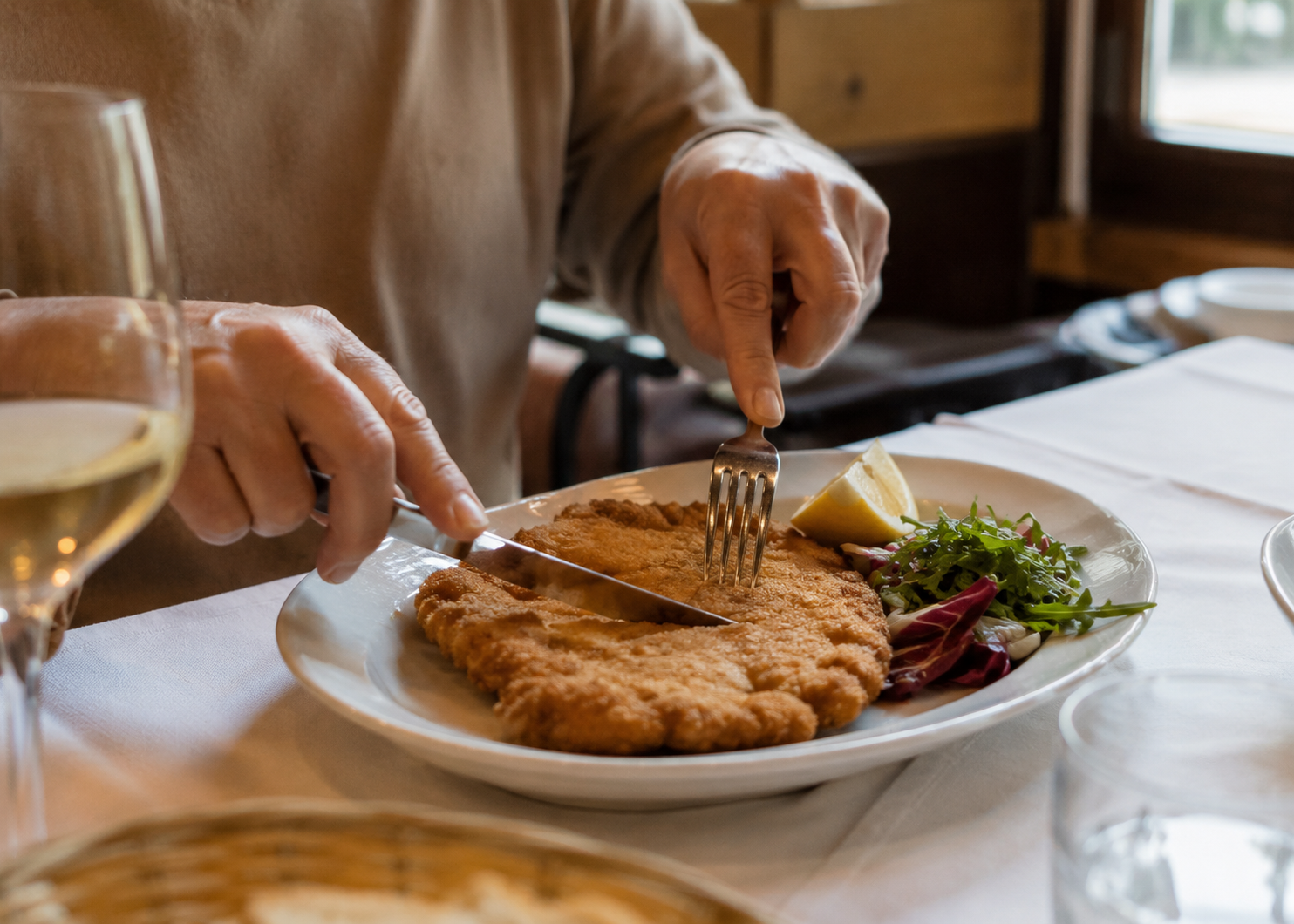
The third tourist favorite Italians avoid is the whole category of chicken-with-pasta and chicken parmesan, which violates Italian culinary logic.
Chicken parmesan, the breaded chicken cutlet smothered in tomato sauce and cheese and often served with pasta, is another Italian-American dish, not Italian, and the broader American habit of putting chicken on or with pasta is something Italians simply do not do, regarding chicken and pasta as belonging to different courses and the combination as foreign. Italians eat chicken, and they eat the cotoletta, the breaded veal or chicken cutlet, but not drowned in sauce and cheese and piled with pasta in the chicken-parm manner, and the idea of chicken pasta, chicken pieces tossed through pasta as a main dish, runs against the Italian understanding of how these foods are eaten. Ordering chicken parmesan or chicken pasta marks the tourist clearly, the dishes being American inventions or violations of Italian culinary structure.
What Italians eat instead keeps the elements separate and traditional, the cotoletta served simply as a second course, perhaps the famous cotoletta alla milanese, with the pasta eaten separately as a first course dressed in its own sauce, never chicken and pasta combined. If you want the breaded cutlet, order it as the Italians do, as its own dish, the cotoletta milanese being a wonderful thing eaten on its own, and if you want pasta, eat it dressed in a proper traditional sauce as a first course, the two kept separate in the Italian way. Keep the chicken and the pasta apart, order each as its own proper course, and you eat the real Italian way rather than the sauced-and-combined American version.
Heavy Garlic Bread And Garlic-Drowned Everything
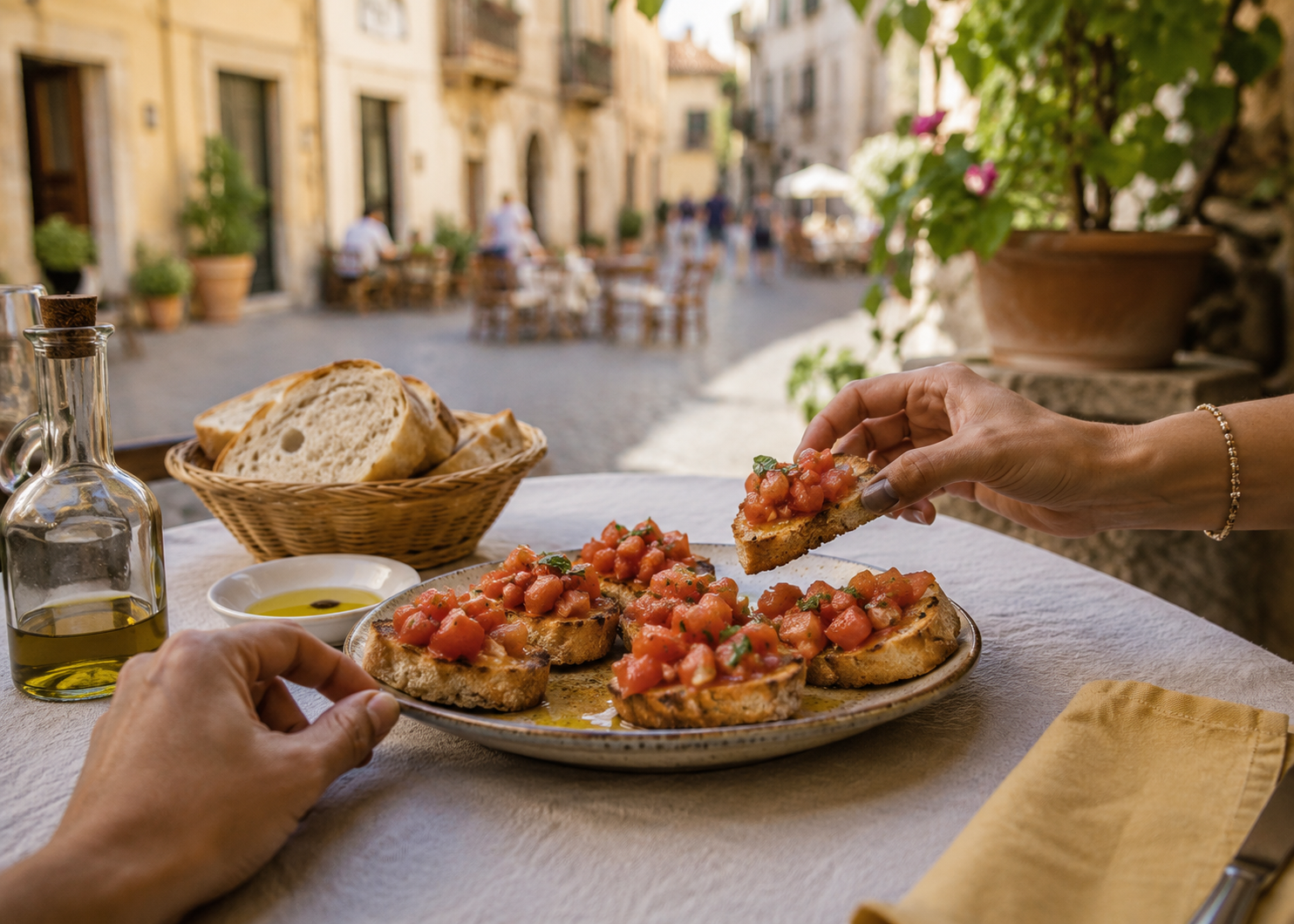
The fourth tourist expectation Italians do not share is the American obsession with heavy garlic, the garlic bread and the garlic-drowned dishes that Americans associate with Italian food.
Garlic bread as Americans know it, bread heavy with garlic and butter, is not really an Italian dish, and the broader American assumption that Italian food is drenched in garlic is a misunderstanding, since Italians use garlic with restraint and subtlety, often just a clove to flavor oil and then removed, rather than the heavy garlic-everything of the American imagination. The American who expects and orders heavy garlic bread, or who thinks authentic Italian food means a strong garlic punch in everything, has misunderstood the Italian use of garlic, which is judicious and restrained, the flavor present but not dominating, a seasoning rather than a main event. Italian cooking is more subtle with garlic than Americans expect, and the garlic-drowned tourist version misrepresents it.
What Italians actually eat is bread served plain or as bruschetta, good bread perhaps rubbed lightly with a cut garlic clove and dressed with good olive oil and maybe tomato, a far more restrained and elegant thing than the butter-and-garlic American garlic bread. And in their cooking generally, Italians let the quality of the ingredients show through with restrained seasoning, the garlic a subtle background note rather than an aggressive foreground, the food tasting of its components rather than of garlic. To eat as Italians do, enjoy the good plain bread and the simple bruschetta, appreciate the subtle restrained use of garlic in real Italian cooking, and let go of the expectation of garlic-drowned everything, and you taste the real elegance of Italian food, which is about balance and quality rather than the heavy garlic of the tourist version.
Bottomless Cappuccino And Coffee With The Meal
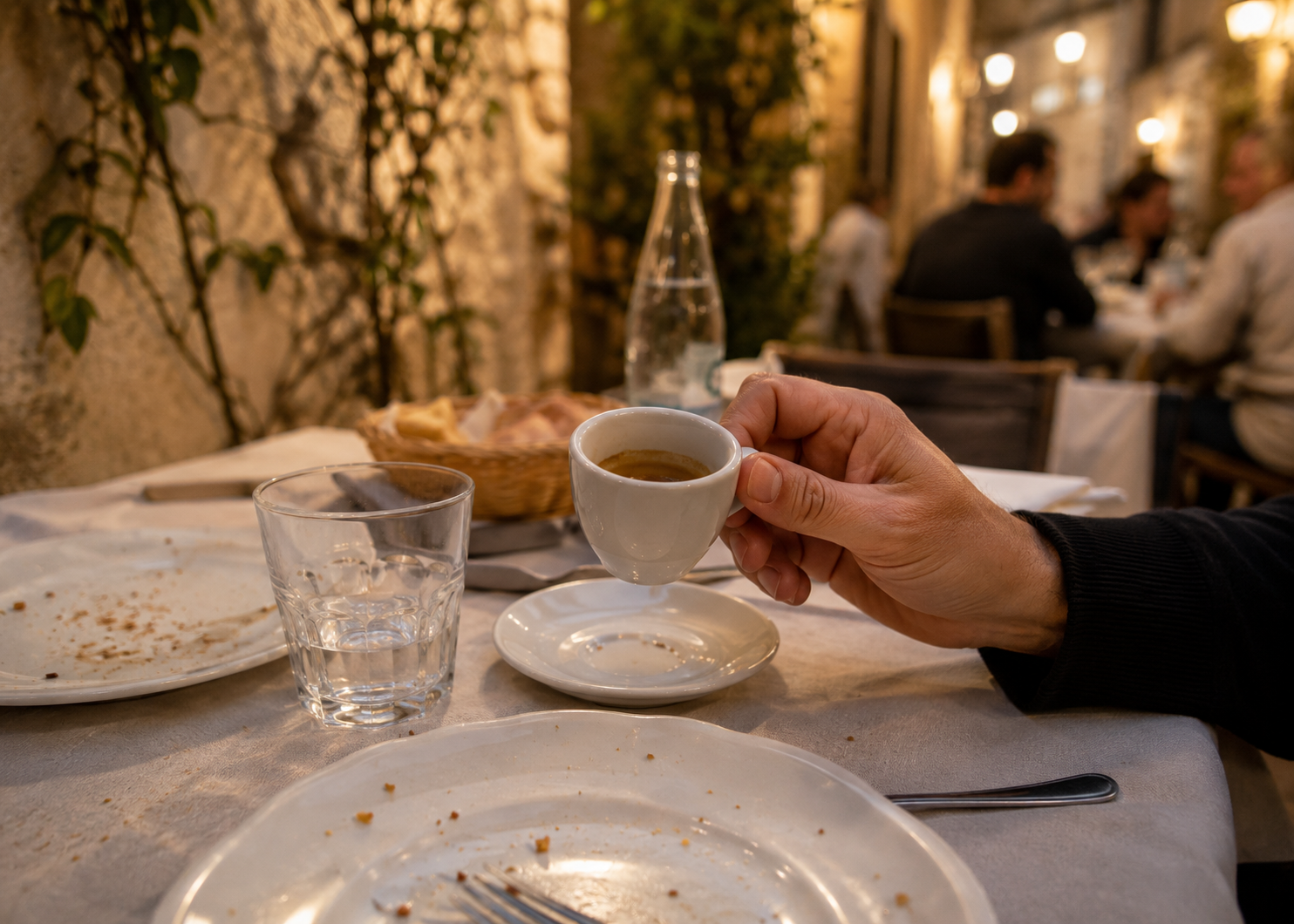
The fifth thing tourists order that Italians never would is coffee done the American way, the cappuccino with or after a meal and the large milky coffees throughout the day.
The cappuccino after lunch or dinner, or worse with the meal, is one of the most recognizable tourist behaviors in Italy, since Italians drink cappuccino only in the morning, considering the milk too heavy to take later in the day or after food, so the tourist ordering a cappuccino to finish a dinner marks themselves instantly as foreign. The broader American coffee habits, the large milky coffees throughout the day, the coffee taken with the meal, the elaborate customized drinks, all run against the Italian coffee culture of the small strong espresso, taken quickly, at the right times, and the tourist importing American coffee habits stands out sharply. Coffee, more than almost anything, marks the divide between tourist and Italian at the table.
What Italians actually drink is the espresso, taken after the meal not with it, a small strong shot to finish, never a milky cappuccino later in the day, and during the day the quick espresso at the bar rather than the large American milky coffee carried around. After dinner an Italian takes an espresso, perhaps a digestivo, never a cappuccino, and the whole rhythm of Italian coffee, milky only in the morning, small and strong the rest of the time, taken at the right moments, is one of the clearest markers of eating and drinking as an Italian. Take your coffee the Italian way, espresso after the meal, cappuccino only at breakfast, and you cross the final divide from tourist to local, drinking coffee as Italy does rather than as America imagines.
The Deeper Lesson About Eating Real Italy
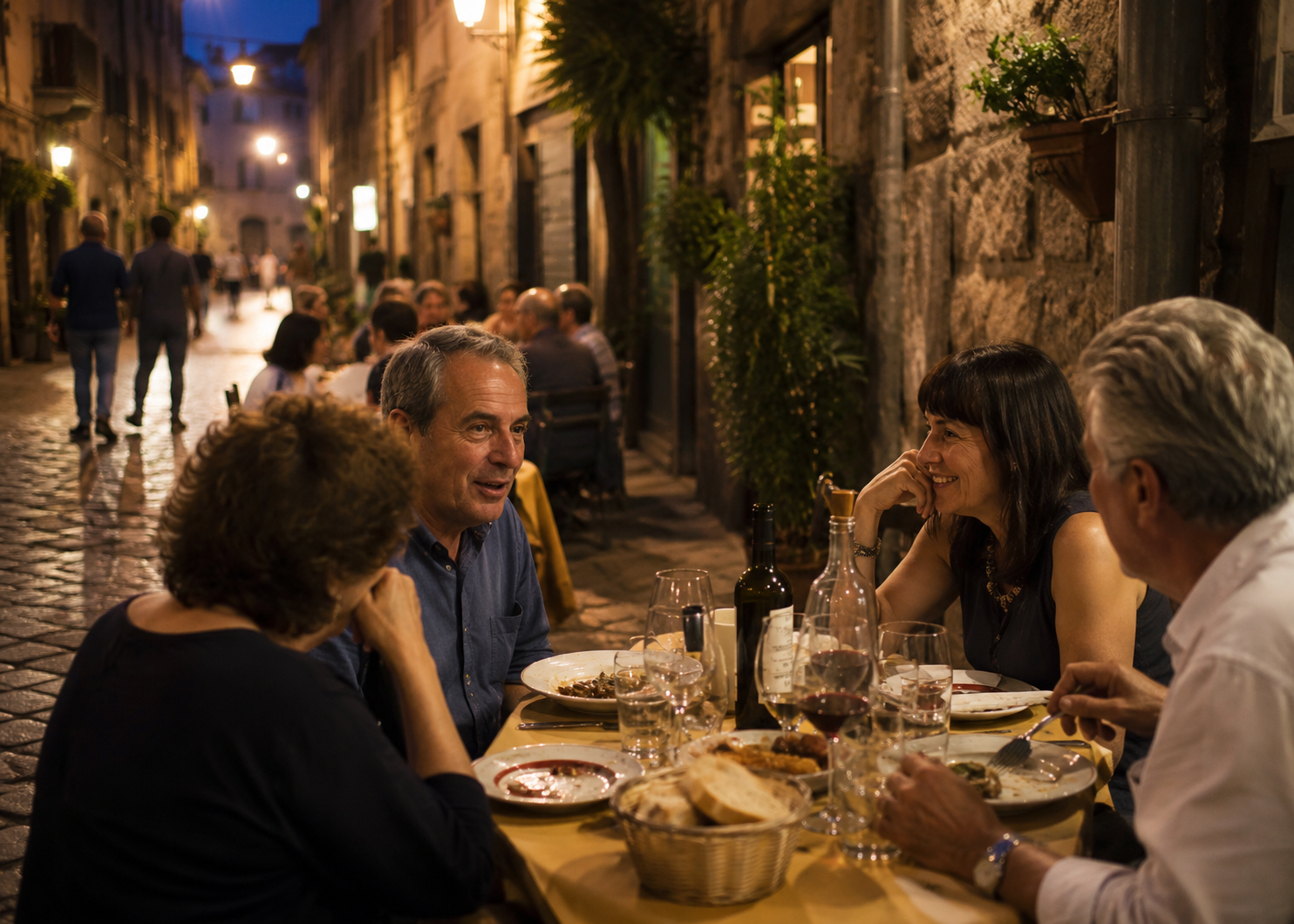
Behind these five dishes lies a larger truth about how to eat the real Italy rather than the tourist version, worth drawing out.
The pattern across all five is that the tourist dishes are either foreign inventions wrongly sold as Italian, the Alfredo, the spaghetti and meatballs, the chicken parm, or American misunderstandings of Italian food, the heavy garlic, the wrongly-timed coffee, while the real Italian food, the cacio e pepe, the proper course structure, the cotoletta, the restrained garlic, the correct coffee, is different, better, and largely unknown to the tourist who orders from the fantasy menu. Eating real Italy means getting past the tourist dishes to the actual regional food that Italians eat, which requires knowing that the famous tourist items are not the real thing and seeking out instead the genuine local dishes, the regional specialties, the food the Italians at the next table are eating. The tourist menu is a trap, and the real food lies just beyond it.
The way to eat real Italy is to favor the places where Italians eat over the tourist traps, to order the regional specialties rather than the international tourist dishes, to follow the Italian meal structure and customs, and to be guided by what the locals eat rather than by the fantasy of Italian food that the tourist menu sells. Look for the dishes of the specific region you are in, since real Italian food is intensely regional, eat where the Italians eat, order as they order, and you leave the tourist fantasy behind for the real thing, which is far better and genuinely Italian. The five tourist dishes are worth knowing precisely so you can avoid them and eat instead the real food of Italy, which is one of the great cuisines of the world and almost entirely different from the tourist version that bears its name.
How To Find What Italians Actually Eat
Knowing the tourist traps is half the battle, but the positive skill of finding the real food is worth spelling out, since it is what lets you eat well.
The single best guide is to eat where Italians eat, which means avoiding the restaurants on the main tourist squares with the multilingual menus and the photos of the food and the staff beckoning you in, and seeking instead the places a little off the tourist track, full of locals, with menus in Italian, often smaller and plainer, where the food is cooked for Italians rather than for tourists. These local places, the trattorias and osterias where Italians actually eat, serve the real regional food, and finding them, by walking a few streets away from the tourist center, by looking for where the locals are, by asking Italians where they eat, is the key to eating real Italy rather than the tourist version. Where you eat determines what you eat, and choosing the local place over the tourist trap is most of the battle.
The other key is to eat regionally, since Italian food is intensely local, each region and even each town having its own specialties, and the real pleasure of eating in Italy is eating the specific dishes of wherever you are, the Roman dishes in Rome, the different food of Bologna or Naples or Sicily, the regional specialties that are the true Italian cuisine. Ask what the local specialty is, order the regional dishes rather than the generic international-Italian items, and you eat the real and varied and wonderful food of Italy’s regions rather than the homogenized tourist menu. Eat where the locals eat, order the regional specialties, follow the Italian customs, and the whole real world of Italian food opens up, far richer and more delicious and more genuine than the tourist dishes that most visitors never get beyond, the actual Italy on the plate at last.

About the Author: Ruben, co-founder of Gamintraveler.com since 2014, is a seasoned traveler from Spain who has explored over 100 countries since 2009. Known for his extensive travel adventures across South America, Europe, the US, Australia, New Zealand, Asia, and Africa, Ruben combines his passion for adventurous yet sustainable living with his love for cycling, highlighted by his remarkable 5-month bicycle journey from Spain to Norway. He currently resides in Spain, where he continues sharing his travel experiences with his partner, Rachel, and their son, Han.