
The French bistro has a reputation among Americans for hostility, the rude waiter, the cold welcome, the sense of being judged and found wanting. The reputation is mostly wrong, but it grows from something real, which is that the American walks into the bistro breaking a series of small rules without knowing it, and the French response to those breaches, a certain cooling, a formality, gets misread as rudeness when it is actually the bistro telling the American, in its own language, that they have not observed the courtesies. Learn the courtesies and the famous French rudeness mostly evaporates, replaced by the warmth that was always available to those who knew how to ask for it.
The rules are not difficult and they are not snobbery, they are the grammar of how the French eat and interact in a bistro, and breaking them marks the American instantly while observing them opens the door. After time spent watching Americans stumble at exactly the same points, here are the seven French bistro rules most often broken in the first ten minutes, why each one matters so much in France specifically, and how to get them right and turn the famous coldness into the warmth underneath.
First, The Greeting That Everything Depends On
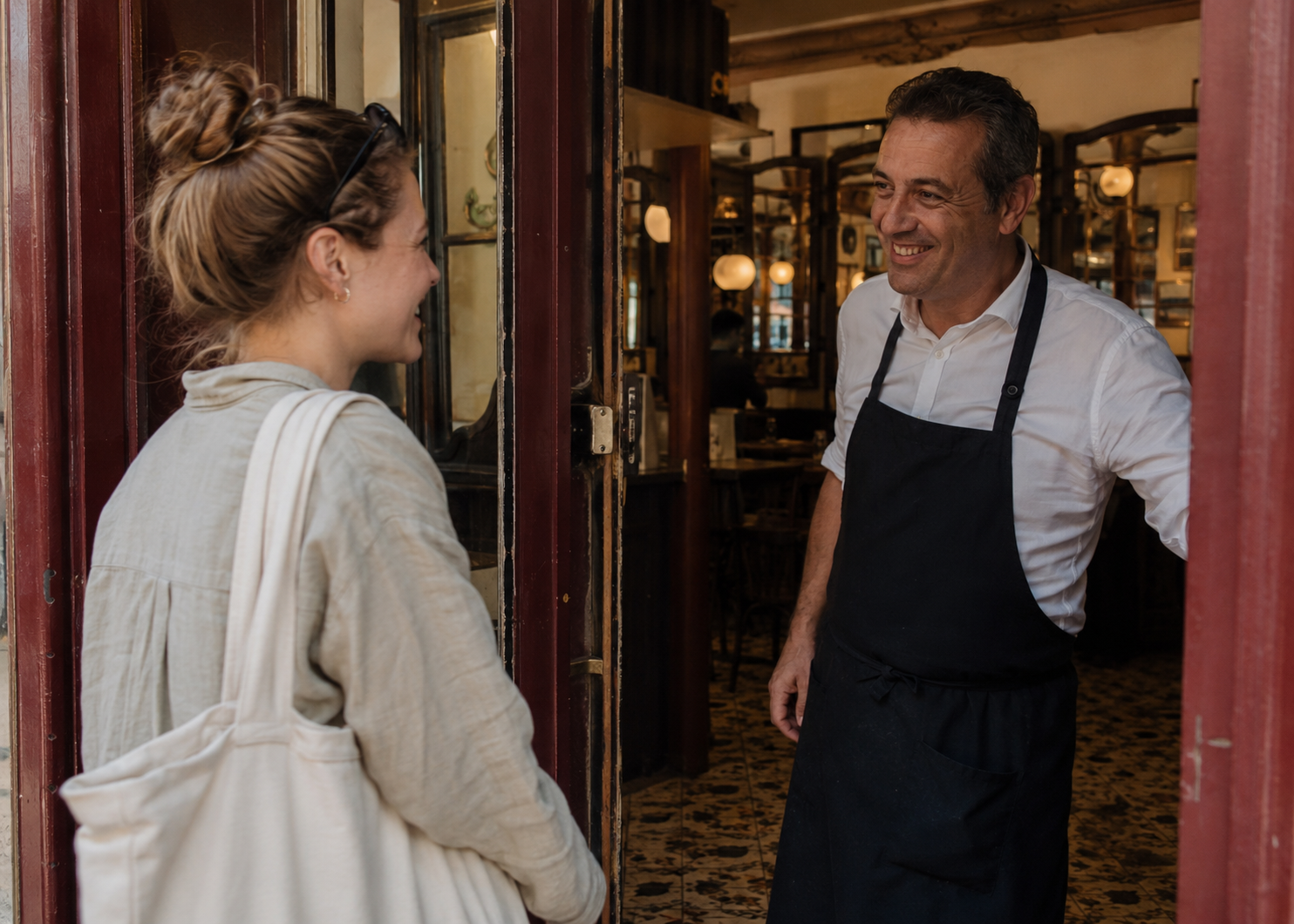
The single most important rule, the one that governs all French interaction, is the greeting, and the American who skips it has lost the room before sitting down.
In France you do not simply walk in and start making requests, you greet first, a clear bonjour madame or bonjour monsieur to the staff on entering, before anything else, because in French culture the greeting is the foundational courtesy that must precede every interaction, and skipping it to launch straight into a question or a request is experienced as genuinely rude, the omission that more than anything else triggers the famous French coldness. The American habit of breezing in and immediately asking for a table, or worse asking a question in English without any greeting at all, breaches the most basic rule of French social interaction, and the cool response it produces is not French rudeness but the French reacting to what they correctly perceive as the American’s rudeness, the missing bonjour. This single omission, more than any other, is the source of the bad encounters Americans blame on French hostility.
The fix is the easiest and most powerful in this whole piece, simply to greet, always, a warm clear bonjour madame or bonjour monsieur on entering and before any request, and bonsoir in the evening, the greeting that unlocks French courtesy in return. Master this one thing, greeting properly before every interaction, and a large share of the famous French rudeness disappears, replaced by the genuine warmth that the French extend to those who observe the basic courtesy, since the French were never hostile, only responding to a breach the American did not know they were committing. The greeting is the key to France, and the American who learns to lead with bonjour has solved most of the problem before reaching the table.
Second, Speak A Little French, Or At Least Try
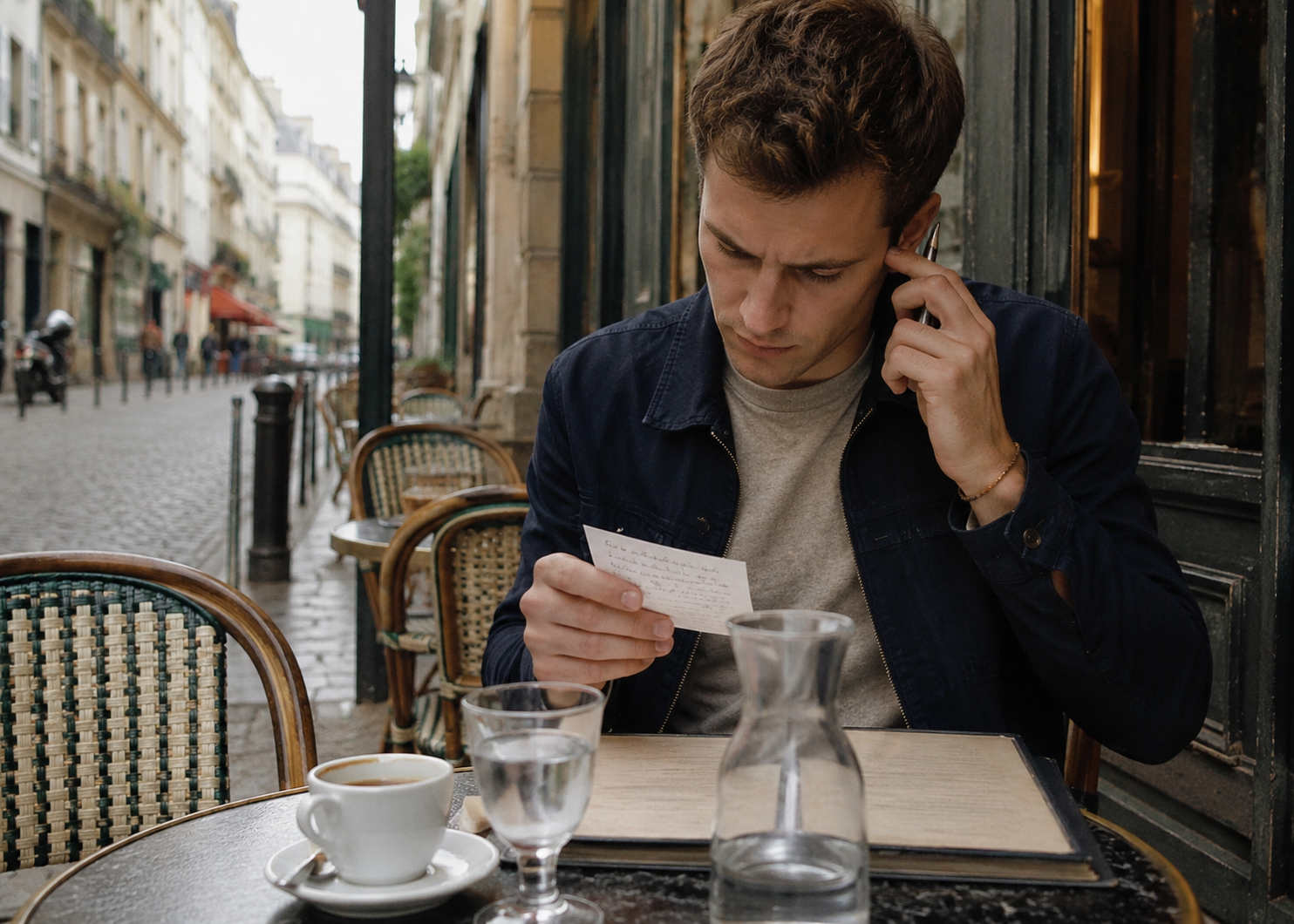
Connected to the greeting is the matter of language, where a small effort is rewarded richly and its absence is noted sharply.
The French do not expect tourists to be fluent, but they deeply appreciate the effort to speak even a little French, the basic courtesies of bonjour, merci, s’il vous plaît, and at minimum the asking, in French, whether the person speaks English, parlez-vous anglais, rather than the American assumption of launching straight into English as though the whole world must accommodate it. The American who barrels in speaking English with no attempt at French, no greeting in French, no asking permission to switch, comes across as presumptuous and entitled, and this triggers the cool French response, whereas the American who makes even a small, halting effort at French before switching to English is met with warmth and helpfulness, the effort itself being the courtesy that matters more than the fluency. It is not about being able to speak French but about showing the respect of trying.
The fix is to learn the few essential phrases and lead with them, the greeting, the please and thank you, and the polite request in French to speak English if needed, before relying on English, which transforms the interaction. This small effort signals respect for the country and the language, and the French, far from being the language snobs of legend, generally respond to it with genuine warmth and a willingness to help, often switching happily to English once the courtesy of the attempt has been made. The American who makes the small effort at French is treated as a respectful guest, while the one who assumes English is treated as a presumptuous tourist, and the difference in the warmth of the response is large, bought cheaply by a few phrases and the willingness to try.
Third, Do Not Rush, And Understand The Meal Is The Event
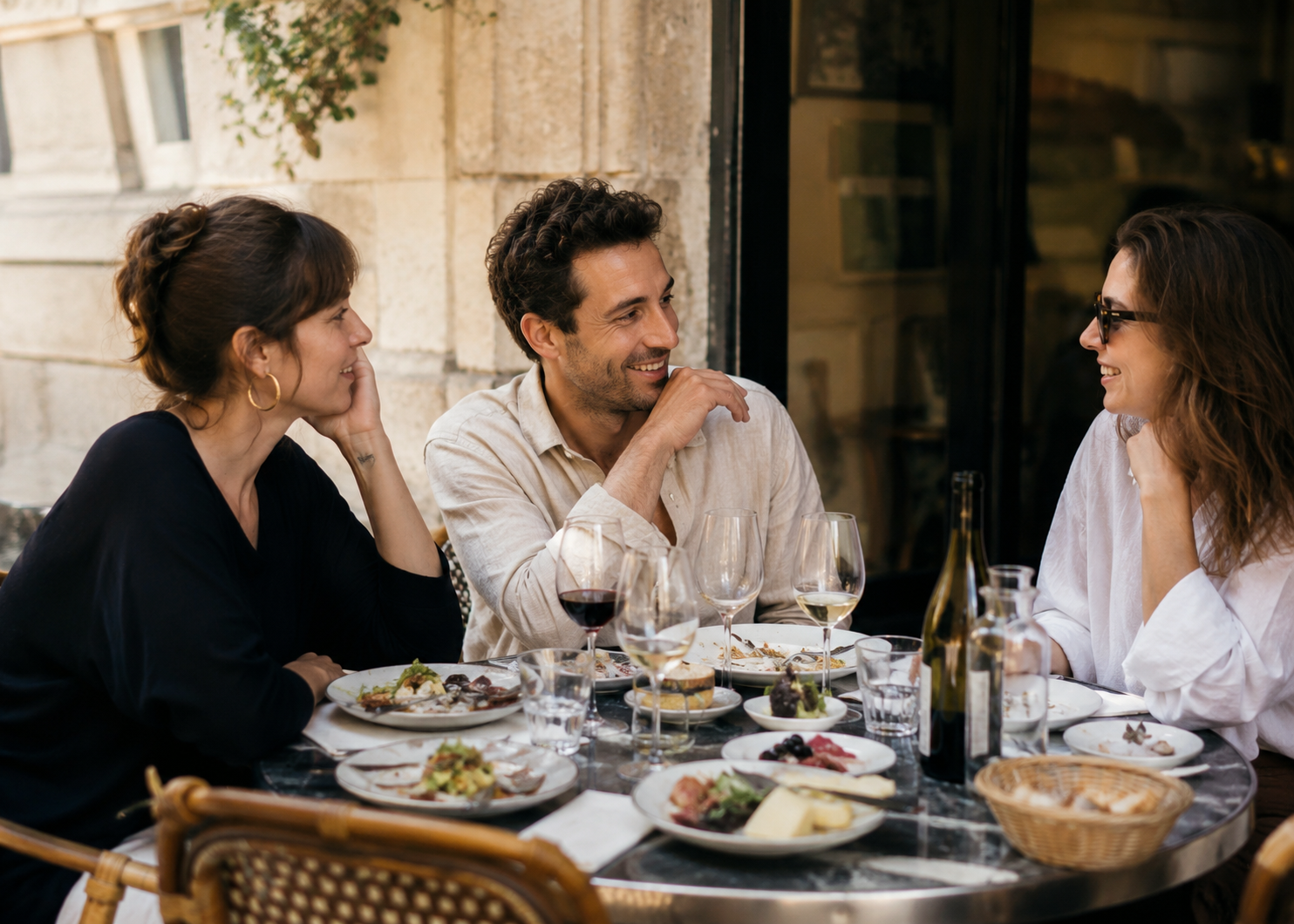
The American pace collides with the French meal immediately, since the French bistro meal is a leisurely event and the American treats it as a transaction.
The French meal, even a casual bistro lunch, is an unhurried affair to be savored, courses and conversation unfolding over a leisurely stretch, the meal being a pleasure to inhabit rather than a task to complete, and the American instinct to rush, to order quickly, eat fast, and get the check, clashes with this and reads as a failure to understand what a meal is for. The French waiter paces the meal to the leisurely French rhythm, not hovering, not rushing, leaving diners to enjoy their time, and the American who wants everything fast, who is impatient for the order to be taken and the food to arrive and the check to come, is both frustrated by the French pace and marked by their impatience with it. The meal is meant to take time, and fighting that is both unpleasant for the American and a clear tourist tell.
The fix is to surrender to the French pace, to settle in and treat the bistro meal as the leisurely pleasure it is meant to be, ordering without hurry, savoring the courses, lingering over the conversation, accepting that the meal will take a couple of hours and that this is the point rather than a problem. The American who slows to the French rhythm not only stops marking themselves as an impatient tourist but discovers the actual pleasure of the French meal, the unhurried savoring that is the whole point, the leisurely civilized eating that the rushed American approach misses entirely. Slow down, let the meal be the event, and both the experience and the way the bistro treats you improve at once, the leisurely pace being a gift to accept rather than an inefficiency to fight.
Fourth, The Water And The Bread Are Not What You Think
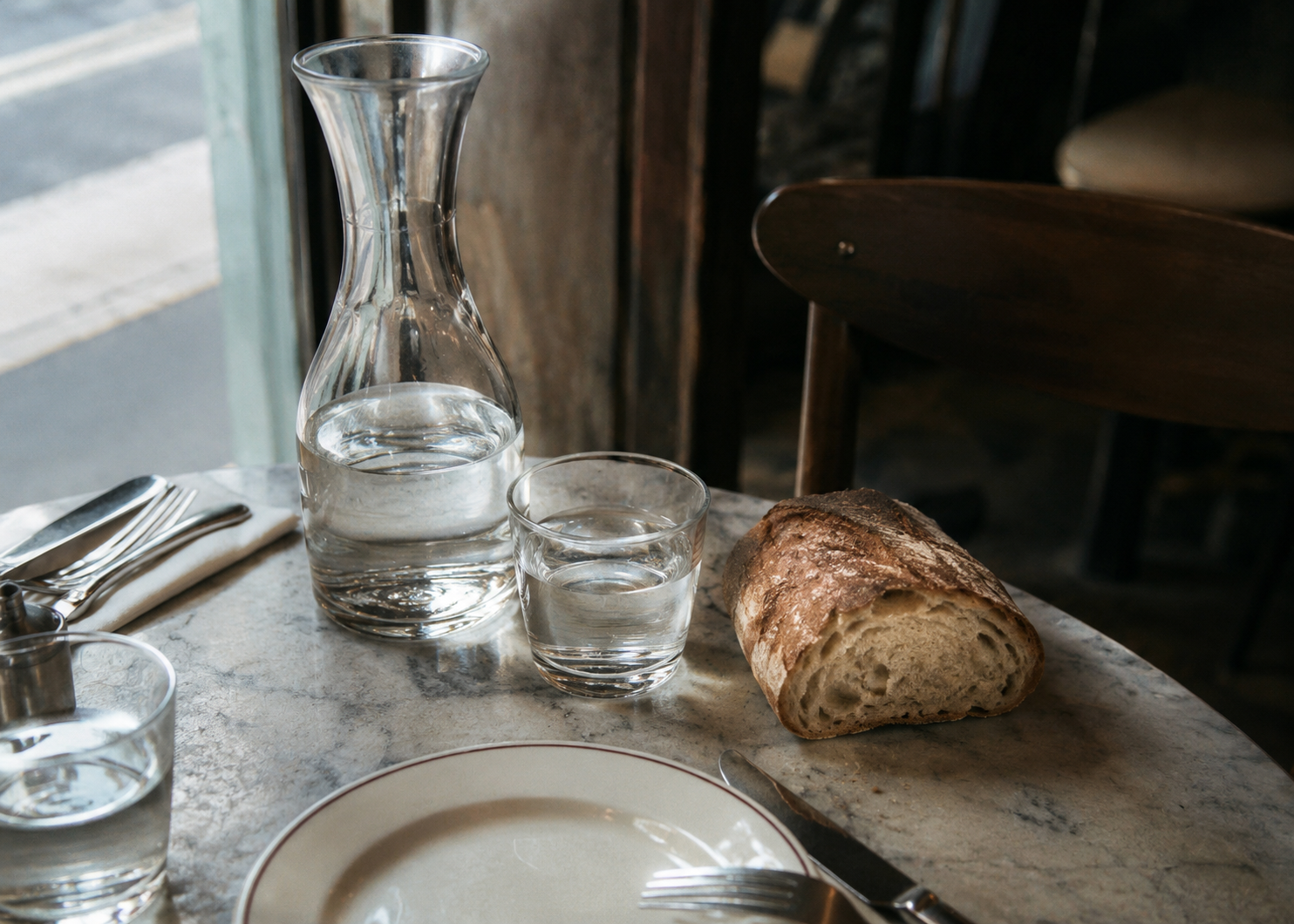
Two small table matters trip up Americans immediately, the water and the bread, each working differently than the American expects.
On water, the French custom is that you can ask for une carafe d’eau, a free carafe of tap water, which is perfectly normal and acceptable, but Americans often either do not know this and order expensive bottled water unnecessarily, or fail to ask properly, and the American expectation of a glass of ice water arriving automatically with lots of ice does not match the French reality, where water comes when requested and ice is minimal. On bread, the French bread that arrives is placed often directly on the table, not on a plate, and is meant to accompany the meal, eaten with the food, not as a pre-meal course with butter in the American style, and the American looking for butter or treating the bread as a starter misunderstands its role. These are small things, but they are the kind of small things that mark the American as unfamiliar with how a French table works.
The fix is to know the small customs, to ask for une carafe d’eau if you want free tap water, to not expect ice, and to treat the bread the French way, as an accompaniment to the meal eaten directly from the table, used to help eat the food and to enjoy with the meal rather than slathered with butter beforehand. These are minor adjustments, but knowing them smooths the interaction and marks the American as someone familiar with the French table rather than someone fumbling through it, and they are easily learned. The water and the bread are small matters, but getting them right is part of the competence that distinguishes the guest who understands the bistro from the tourist who does not, the accumulation of small correct behaviors that adds up to belonging.
Fifth, Mind Your Volume
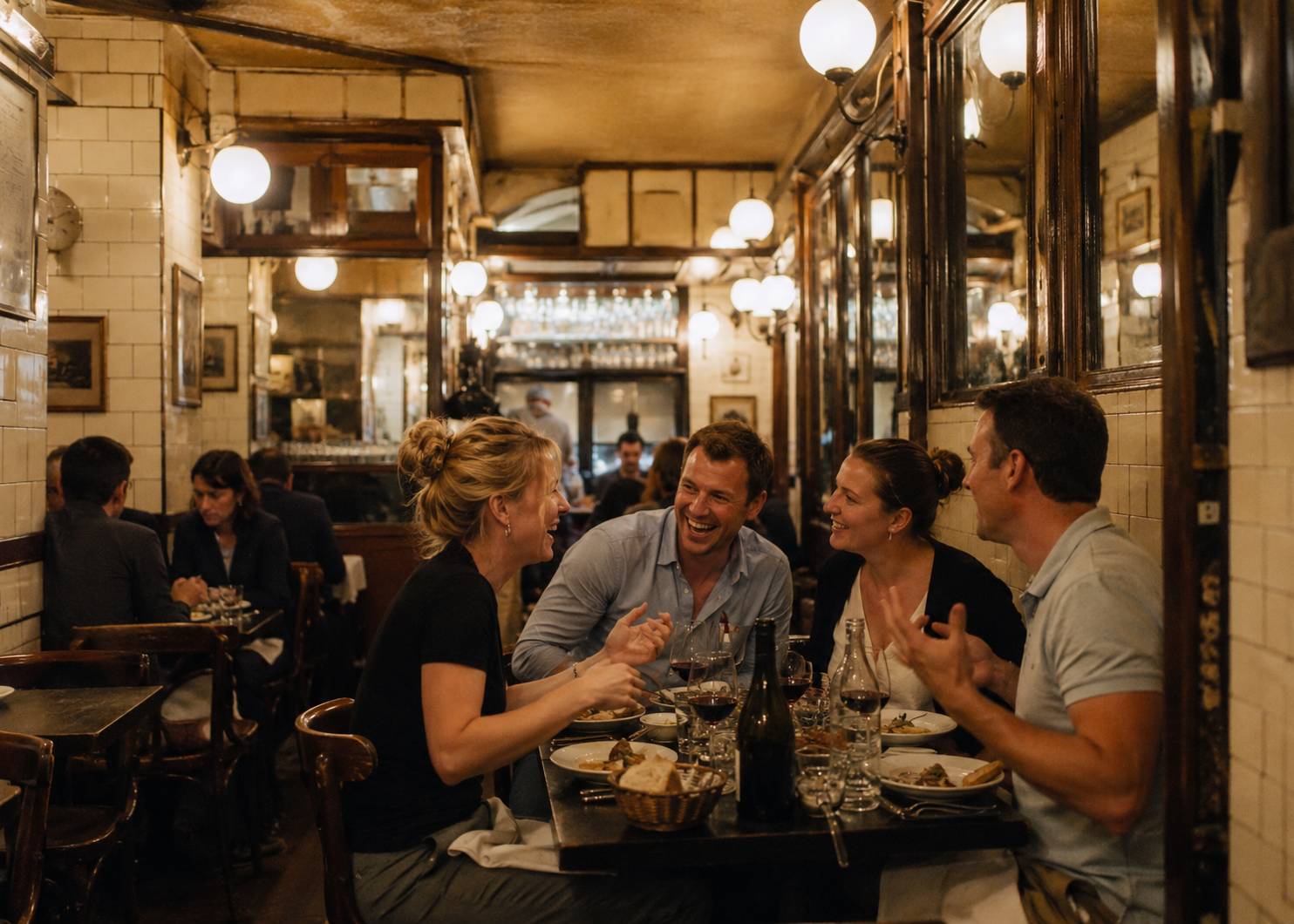
The American voice, once again, is a tell, since the French bistro operates at a lower volume than the American restaurant and the American party stands out.
Americans are loud by French standards, the American speaking voice pitched louder than the French norm, the American conversation carrying across the room, and in the relatively intimate French bistro this volume marks the American party instantly, the loud American table audible across a room where French conversations are kept quieter and more contained. The French bistro, even when busy and lively, operates at a more moderate volume than its American equivalent, conversations kept more to their own tables, and the American party laughing and talking at full American volume disrupts the more contained French soundscape and marks itself as foreign, however friendly and normal the same volume would be at home. This is one of the most reliable and least conscious of all the tells, the simple matter of how loud the table is.
The fix is awareness and a modest adjustment, noticing the volume of the room and matching it, keeping the conversation more to your own table, pitching the voice to the quieter French level, which once noticed is easy to do. The French are not silent or stiff, the bistro is sociable and warm, but it runs at a lower volume than Americans are accustomed to, and matching that volume removes one of the clearest tourist signals and lets the American blend into the room rather than dominate it. Lower the volume to match the French level, and the American party stops announcing itself across the bistro, blending into the convivial but contained French soundscape rather than overwhelming it, a small adjustment with a real effect on how the table is perceived.
Sixth, Do Not Ask To Customize The Food
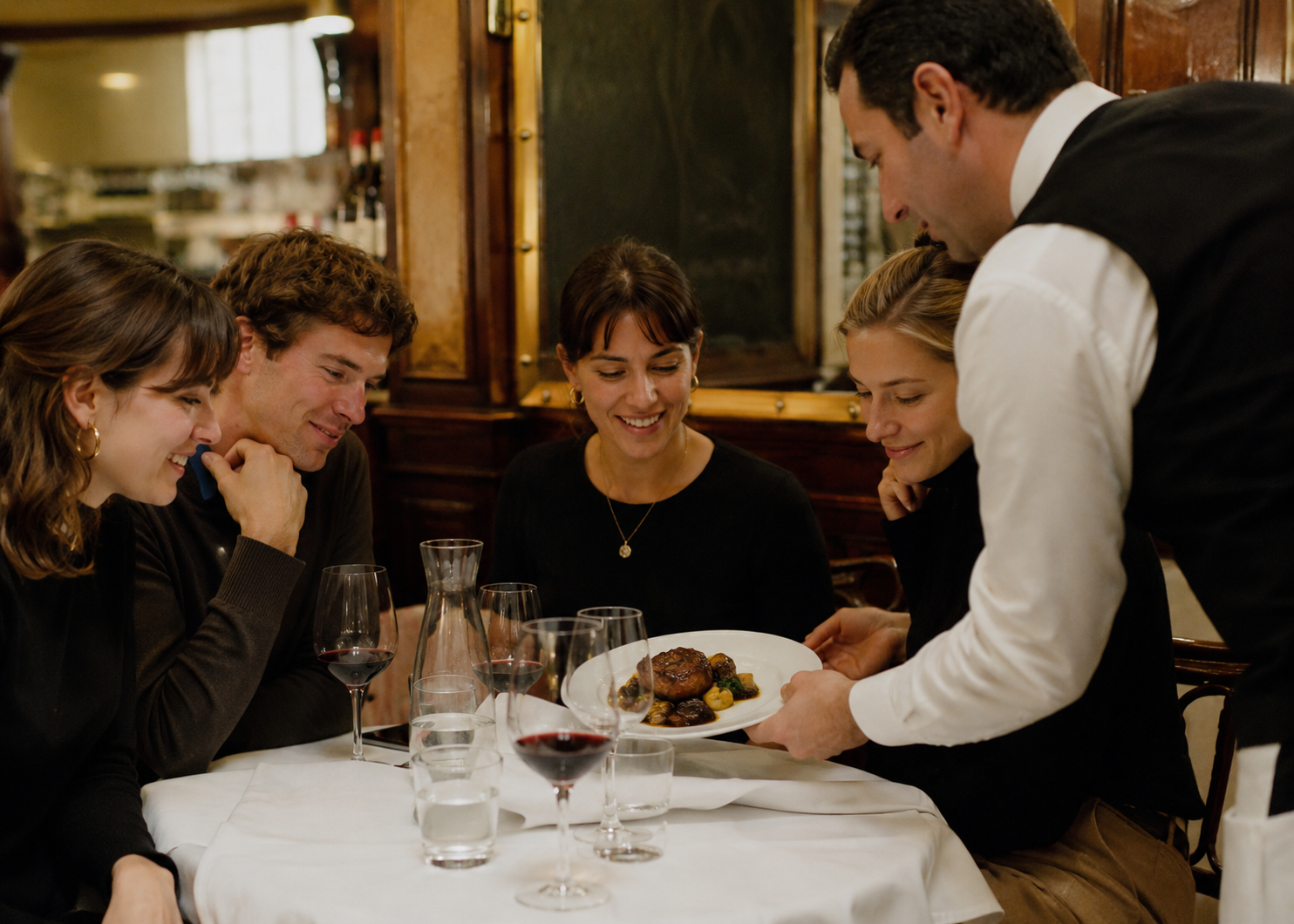
The American instinct to modify dishes runs straight into French culinary pride, and the request to customize lands as an insult to the kitchen.
French cuisine is a matter of serious pride and the dishes are composed precisely as the chef intends, so the American habit of asking for substitutions, modifications, sauce on the side, ingredients removed or swapped, the meal assembled to personal preference, runs directly against the French understanding that the dish arrives as the kitchen made it, and the request to alter it suggests a distrust of the cooking that the French find genuinely offensive. The French chef has composed the dish with care and intention, and the American who immediately asks to change it communicates that they think they know better than the kitchen, a small insult that the French, proud of their cuisine, do not take lightly, the customizing instinct being one of the faster ways an American gives offense in a French restaurant. The dish is the chef’s, and in France that is taken seriously.
The fix is to order dishes as they are presented and trust the kitchen, saving the modifications for genuine dietary needs like real allergies, which any restaurant will accommodate, and otherwise accepting the dish as the chef composed it. This trust in the cooking is both the respectful posture and the one that produces the best experience, since the French dishes are composed as they are for good reasons and are usually better as intended than as an American would modify them, and the willingness to eat the chef’s food as the chef made it is appreciated and marks the diner as someone who understands and respects French cuisine. Order it as written, trust the kitchen, and both the food and the bistro’s regard for you are better for it, the customizing instinct being one worth leaving at home when dining in France.
Seventh, Tipping Works Differently, So Relax About It
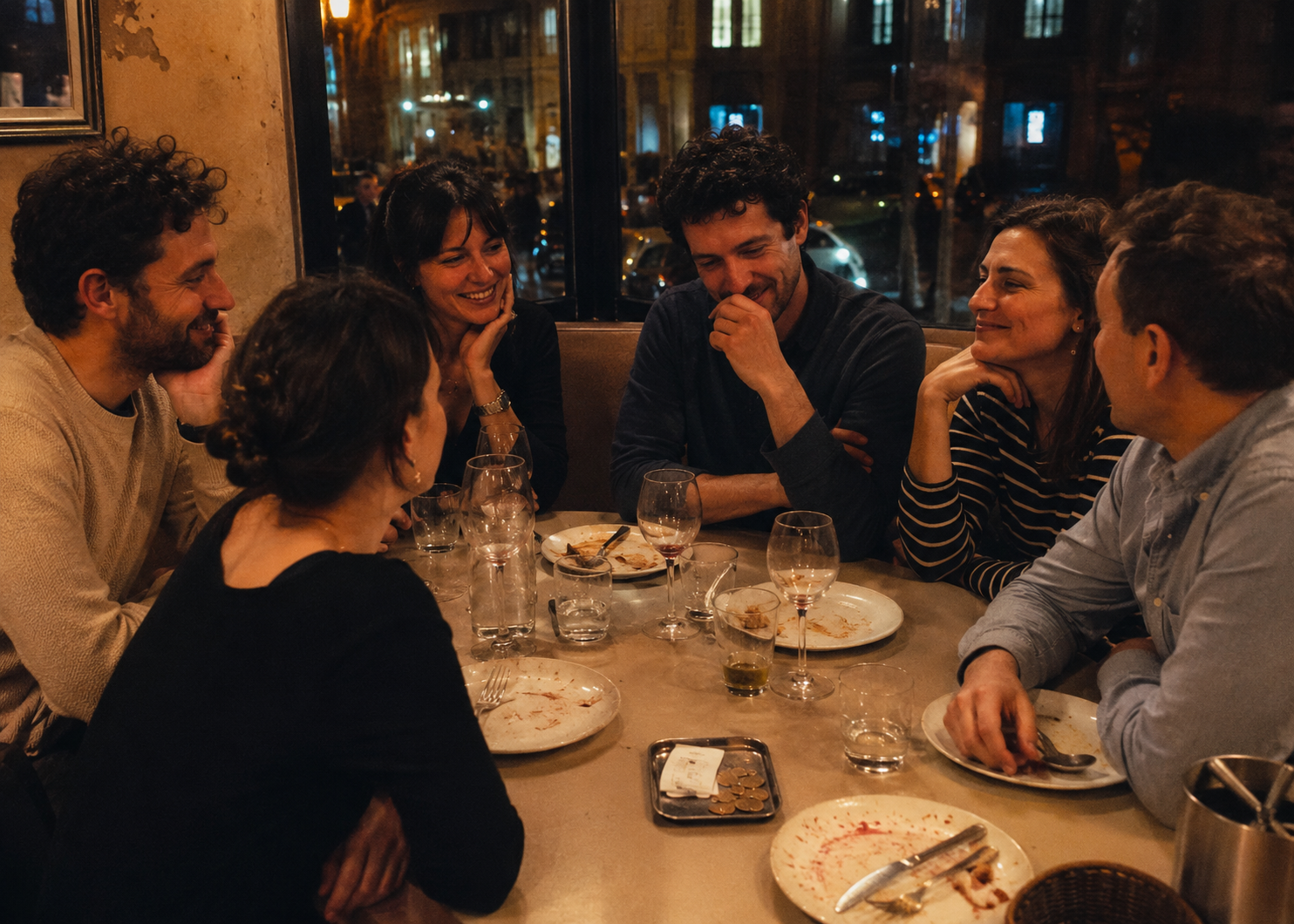
The American tipping anxiety is both unnecessary and slightly off-key in France, where service works differently and the American approach misfires.
In France, service is included in the bill, service compris, by law, so the elaborate American tipping calculation simply does not apply, and the most that is customary is to round up or leave a small amount of change for good service, a few euros, nothing like the American percentage. The American who agonizes over the tip, who tries to leave a large American-style gratuity, who is anxious about the whole thing, is operating on rules that do not exist in France, and the towering American tip, far from being appropriately generous, marks the American as foreign and misunderstanding the system, since the service is already included and the small rounding-up is all that is expected. The tipping anxiety that shapes so much American restaurant behavior is simply unnecessary in France, the system having already handled it.
The fix is to relax entirely about tipping, knowing that service is included, that no large tip is expected or necessary, and that rounding up the bill or leaving a small amount of change for genuinely good service is all that is appropriate. Let go of the American tipping anxiety and the calculations and the guilt, since France has structured the whole thing differently, and enjoy the freedom of a system where the service is included and the small gesture suffices, which removes one more source of the friction and uncertainty that mark the American diner. Understand that French tipping is minimal and relaxed, leave the American percentage and anxiety behind, and the last of the bistro rules is handled, the American free to enjoy the meal without the tipping worry that does not even apply.

About the Author: Ruben, co-founder of Gamintraveler.com since 2014, is a seasoned traveler from Spain who has explored over 100 countries since 2009. Known for his extensive travel adventures across South America, Europe, the US, Australia, New Zealand, Asia, and Africa, Ruben combines his passion for adventurous yet sustainable living with his love for cycling, highlighted by his remarkable 5-month bicycle journey from Spain to Norway. He currently resides in Spain, where he continues sharing his travel experiences with his partner, Rachel, and their son, Han.