

An American spending their first summer in Europe notices it within days and finds it slightly alarming. The windows are open. Everywhere, all the time, in the heat of summer, Europeans fling their windows wide and let the outside in, where an American would seal the house and crank the air conditioning. To the American, conditioned by a lifetime of sealed, chilled, climate-controlled summers, the open window in the heat seems almost perverse, an invitation to swelter. To the European, the American instinct to seal and chill seems equally strange, an unnatural and wasteful way to live. The open window is a small thing that opens onto a large difference in how two cultures relate to heat, air, and the outdoors.
Neither approach is simply right, but the European way has real logic and real advantages that the air-conditioned American has mostly forgotten, and understanding it is worth doing, both to live more comfortably in Europe and to reconsider the sealed-and-chilled American default. The open window is not backwardness or the mere absence of air conditioning but a different and often better strategy for living with summer heat. Here is why Europeans sleep with their windows open, why Americans seal up and chill instead, and what each approach gets right.
The European Logic Of The Open Window

The European open-window habit is not just the absence of air conditioning but a positive strategy, with real logic behind it, for managing summer heat through ventilation.
The core of the European approach is using the natural day-night temperature cycle to cool the home, opening the windows at night and in the cool early morning to let the cooler air flow through and bring the temperature down, then closing the windows and the shutters during the hot day to keep the cool air in and the heat out. This is a genuine and effective cooling strategy, the night ventilation flushing out the day’s heat and filling the home with cool night air, the daytime closing-up trapping that coolness, the whole cycle working with the natural temperature swing to keep the home comfortable without mechanical cooling. It is not a passive failure to cool but an active strategy of cooling through ventilation and the management of air and shade, refined over generations of living with summer heat without air conditioning.
The European home is often built and equipped for this strategy, with the external shutters or blinds that are standard across much of Europe and largely absent in America, the persianas of Spain, the shutters of Italy and France, which are closed during the hot day to block the sun and keep the interior cool, then opened with the windows at night. The combination of night ventilation and daytime shading is the whole system, the windows open to the cool night and closed and shuttered against the hot day, and it works remarkably well in the European climate, keeping homes comfortable through summers that, while hot, typically cool down at night. The open window is one half of this system, the night ventilation, and understanding the whole strategy, ventilate by night, shade by day, is understanding why Europeans live with their windows open in summer.
Why Americans Seal Up And Chill Instead

The American approach is the opposite, sealing the home and cooling it mechanically, and understanding why illuminates the cultural difference.
The American summer strategy is built entirely around air conditioning, the home sealed tight against the outside heat and cooled mechanically to a constant comfortable temperature, the windows kept closed to keep the cool conditioned air in and the hot outside air out, the whole approach being to create an artificial cool indoor climate sealed off from the natural heat outside. This developed because air conditioning became cheap, universal, and culturally central in America in a way it did not in Europe, the American summer becoming an air-conditioned one, the sealed chilled home the norm, the open window an anomaly that would only let the precious cool air escape and the heat in. Where the European works with the natural air and temperature cycle, the American seals it out and replaces it with a mechanical one, the two approaches being fundamentally opposed, ventilation versus sealing, natural versus mechanical.
The American climate is part of the explanation, since much of America has summers more extreme than Europe’s, hotter, more humid, and crucially staying hot at night in many regions, so the European night-ventilation strategy that works where nights cool down does not work where they stay hot, making air conditioning more necessary. In the humid heat of the American South, where the night brings little relief, the European open-window strategy genuinely would not keep a home comfortable, so air conditioning is more of a real necessity there than in much of Europe, the climate driving the different approach. But the American sealed-and-chilled habit extends well beyond the climates that require it, becoming a cultural default even where European-style ventilation would work, the air conditioning reflexive rather than always necessary, which is part of what the European contrast reveals.
What The European Approach Gets Right

The European way has real advantages beyond mere tradition or the absence of air conditioning, and they are worth understanding as a genuine case for the open window.
The most obvious advantage is the saving, since the European ventilation strategy uses little or no energy, costing nothing to open a window and close a shutter, where the American air conditioning consumes enormous amounts of electricity and money, the sealed chilled home being expensive to run in a way the ventilated shaded home is not. This energy difference is large, air conditioning being one of the biggest summer energy costs, and the European approach, achieving comfort through ventilation and shade rather than mechanical cooling, is far cheaper and far less energy-intensive, an advantage that matters more as energy costs and environmental concerns rise. The open window is, among other things, the cheap and low-energy way to manage summer heat, a real advantage over the costly air-conditioned alternative.
Beyond the cost, there are advantages of comfort and health that the air-conditioned American may not appreciate, the fresh air and natural ventilation of the open-window home, the connection to the outdoors, the avoidance of the stale sealed air and the sometimes jarring artificial chill of the air-conditioned environment, the gentler more natural climate of the ventilated home. Many people find the naturally ventilated home, cooled by night air and shaded by day, more pleasant than the sealed chilled box, the fresh air and the natural temperature feeling better than the artificial cold, and some find the extreme air conditioning of American summers, the chilled indoor air in the heat, genuinely unpleasant. The European approach, then, offers not just savings but a more natural, fresher, often more pleasant way of living with summer, the open window connecting the home to the air and the season rather than sealing it off.
What The American Approach Gets Right
Fairness requires acknowledging what the American air-conditioned approach genuinely gets right, since it is not simply wrong and has real advantages of its own.
The American approach wins decisively in extreme heat and humidity, since where summers are brutally hot and humid and stay hot at night, the European ventilation strategy simply cannot keep a home comfortable, and air conditioning becomes a genuine necessity, even a matter of health and safety in dangerous heat. In the deep heat of an American summer in the South or Southwest, air conditioning is not an indulgence but a real need, making homes livable and protecting health in conditions that ventilation alone could not manage, and the American mastery of air conditioning is a real and valuable adaptation to a genuinely harsher summer climate than much of Europe faces. Where the heat is extreme, the American approach is right, and the European open window would simply fail.
Air conditioning also offers a consistency and control the European approach cannot match, the constant reliable comfort of a set temperature regardless of the conditions outside, where the ventilation strategy depends on cooperative weather, cool nights, and active management, opening and closing windows and shutters at the right times. The air-conditioned home is comfortable automatically and consistently, no management required, no dependence on the night cooling down, a reliability and ease that the more hands-on ventilation strategy lacks, and for those who value that constant controlled comfort, the American approach delivers it. So the American way is not simply wrong but a real adaptation with real advantages, decisive in extreme heat and offering effortless consistent comfort, and the honest view sees the merits of both rather than romanticizing the European open window over the American air conditioning in all conditions.
How To Use The European Approach Yourself

For anyone wanting to adopt the European strategy, whether living in Europe or applying it at home, the method is simple and worth knowing.
The basic technique is the day-night cycle, opening the windows wide at night and in the cool early morning to flush the home with cool air, then closing the windows and drawing the shades, blinds, or shutters during the hot day to keep the cool in and the sun and heat out, working with the natural temperature swing rather than against it. The key details are to ventilate when the outside is cooler than the inside, typically night and early morning, and to seal and shade when the outside is hotter, typically the middle and late part of the day, and to block the sun specifically, since much of the daytime heat comes through windows as sunlight, making the daytime shading as important as the nighttime ventilation. Done right, ventilate by night, shade by day, the strategy keeps a home remarkably comfortable through a hot but night-cooling summer, at little or no energy cost.
This works best in climates like much of Europe’s, where summers are hot but nights cool down, and less well where nights stay hot, so the American in a cooler-nights region can adopt it effectively while the one in the humid hot-night South will still need air conditioning, the strategy suiting the climate it evolved in. Even in air-conditioning country, though, the European approach can supplement and reduce the cooling, ventilating on the cooler nights and shading by day to lessen the air-conditioning load, a hybrid that captures some of the savings and freshness without abandoning the air conditioning for the genuinely extreme days. Learn the ventilate-by-night, shade-by-day method, apply it where the climate allows, and you can live more cheaply, freshly, and naturally with summer heat, borrowing the European wisdom of the open window wherever it works, whether in Europe or at home.
The Bigger Picture On Living With Heat
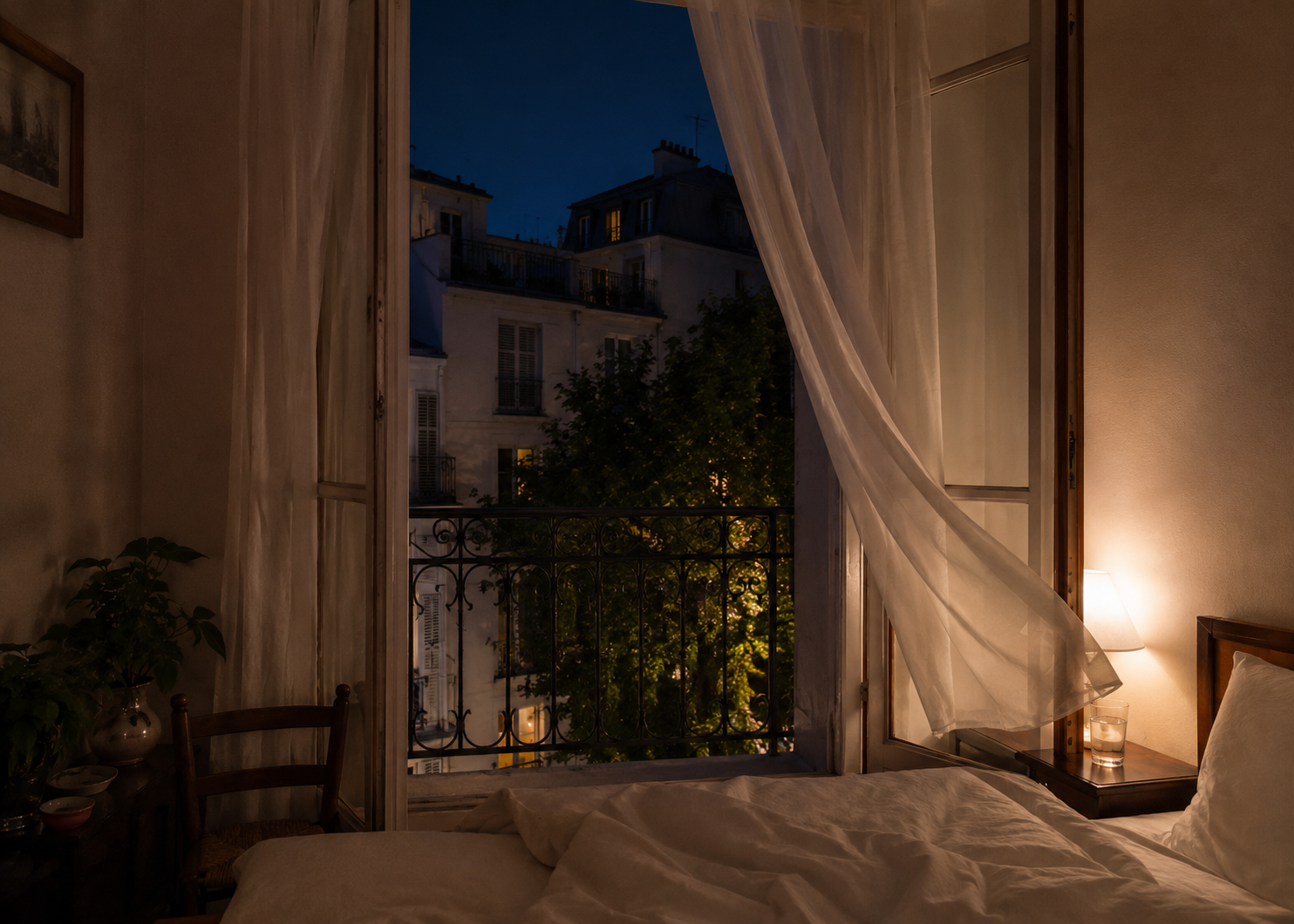
The open window is finally a small window onto a larger difference in how cultures live with nature, and the contrast is worth drawing out.
The European open window reflects a broader way of living more with the natural environment rather than sealing it out, working with the seasons and the climate and the natural rhythms rather than overriding them with technology, a difference visible across many aspects of European versus American life. The American sealed-and-chilled summer is one instance of a wider American tendency to control and conquer the environment with technology, to create artificial comfort sealed off from nature, where the European tendency is more often to adapt to and work with the natural conditions, the open window and the shutters being a small expression of that larger difference in stance toward the natural world. Neither is simply better, but the contrast is illuminating, two ways of relating to nature and comfort.
For the American, the European open window offers not just a cooling strategy but a small invitation to reconsider the sealed, controlled, energy-intensive default, to live a little more with the natural air and rhythms and a little less sealed off from them, where the climate allows. There is something to be gained from the European way beyond the energy savings, a closer connection to the season and the air and the natural world, a gentler and more adapted way of living with summer that the air-conditioned American has largely lost, and rediscovering it, opening the window to the cool night, shading against the hot day, living with the season rather than sealing it out, is a small pleasure as well as a practical strategy. The open window is a small thing, but it opens, quite literally, onto a different and in some ways better way of living with the heat of summer, worth borrowing wherever the climate and the will allow.

About the Author: Ruben, co-founder of Gamintraveler.com since 2014, is a seasoned traveler from Spain who has explored over 100 countries since 2009. Known for his extensive travel adventures across South America, Europe, the US, Australia, New Zealand, Asia, and Africa, Ruben combines his passion for adventurous yet sustainable living with his love for cycling, highlighted by his remarkable 5-month bicycle journey from Spain to Norway. He currently resides in Spain, where he continues sharing his travel experiences with his partner, Rachel, and their son, Han.