

The American steps into the spa at a Portuguese hotel or a Lisbon wellness center expecting the familiar routine, the swimsuit, the modest American spa etiquette, the quiet separateness, and encounters instead a set of customs that gives them pause, the different relationship to the body, the rules about what to wear and not wear, the communal warmth where they expected reserve. It is one of those small cultural surprises that travel reliably provides, harmless and interesting, the discovery that something as simple as how a sauna works carries different assumptions in a different country, and the American first-timer is briefly, charmingly, at sea.
None of it is shocking once understood, and all of it makes sense within its own logic, but the first visit can genuinely surprise the American used to the particular conventions of the American spa, and knowing what to expect turns the surprise into ease. The Portuguese and broader Continental approach to the sauna and the spa carries its own etiquette, its own relationship to the body and to hygiene and to communal space, and learning it is part of learning the culture. Here is what surprises Americans about the Portuguese sauna custom, why it works the way it does, and how to navigate it comfortably as a first-timer.
The Hygiene Rule That Surprises Americans First

The first surprise is often about cleanliness and ritual, the requirement to shower before entering that Americans treat casually and Continentals treat seriously.
In Portuguese and broader European spa culture, the pre-sauna shower is not the optional rinse Americans often treat it as but a real and expected part of the ritual, a thorough washing before entering the communal heat, rooted in a serious approach to shared hygiene that treats the sauna as a clean space to be entered clean, not a place to bring the day’s grime. This matters more in the Continental approach than Americans expect, the shared sauna being treated as a communal space where everyone’s cleanliness is everyone’s concern, the pre-entry shower a courtesy to the others sharing the heat as much as a personal preparation, a small ritual of respect for the shared space and the people in it. The American who treats the shower casually or skips it may be quietly breaching an etiquette that the locals take seriously, the shared cleanliness being part of the communal contract of the sauna.
The deeper point is that the Continental sauna is a more ritualized and hygiene-conscious institution than its American equivalent, with established customs around how one enters, prepares, and conducts oneself, a whole etiquette that the American, used to a more casual approach, may not realize exists. Learning and observing the hygiene customs, the thorough pre-shower, the respect for the shared clean space, is the first step in navigating the Portuguese sauna comfortably and respectfully, marking the visitor as someone who understands the ritual rather than someone breaching it unknowingly. The hygiene rule is the gentlest of the surprises, easily learned and easily observed, but it signals the larger truth that the Continental sauna operates by its own considered customs, which reward the visitor who learns them.
The Towel Custom And What It Is Really About
The second surprise concerns the towel, which in the Continental sauna has a specific and practical role that Americans do not expect.
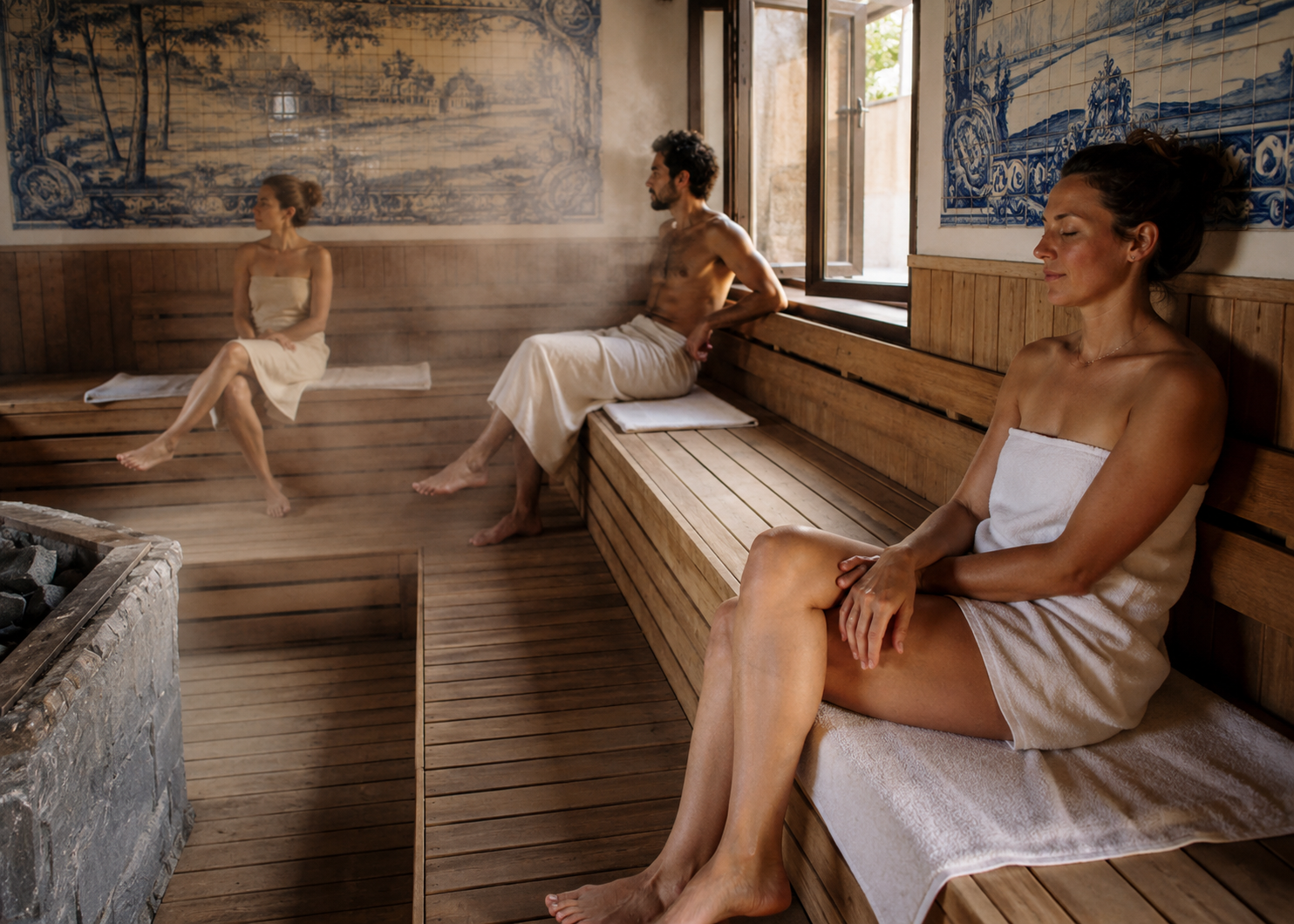
In much of Continental sauna culture, there is a strong custom around sitting on a towel, the rule being that bare skin should not directly touch the wooden benches, a towel placed underneath the body so that you sit on your own towel rather than directly on the shared wood, a hygiene practice that is taken seriously and expected. This towel custom surprises Americans who are used to sitting directly on spa benches, and the rule is fundamentally about shared hygiene, the towel protecting the communal bench from direct skin contact and protecting the next person from yours, a practical and considerate custom that keeps the shared space clean. The visitor is generally expected to bring and use their own towel for this purpose, sitting on it throughout, and the American unaware of the custom may sit directly on the bench and quietly mark themselves as not knowing the etiquette.
This towel rule connects to the broader Continental seriousness about sauna hygiene and etiquette, the shared space governed by considerate customs that everyone observes for the comfort and cleanliness of all, the towel being one of the central such customs. Understanding it, bringing your own towel and sitting on it, is a simple matter once you know, and it is part of the basic competence of using a Continental sauna properly, the kind of small knowledge that lets the visitor participate comfortably rather than fumble. The towel custom, like the pre-shower, is easily learned and easily observed, another piece of the considered etiquette that governs the shared sauna, and the American who learns it navigates the space with the ease of someone who belongs rather than the uncertainty of someone guessing.
The Question Of What To Wear

The surprise that gives American first-timers the most pause concerns dress, since Continental sauna conventions about clothing differ from American expectations, and the rules vary by place.
Continental European sauna culture has a more relaxed relationship to the body than American culture, and conventions about what is worn in the sauna vary considerably by country, by establishment, and by whether the facility is mixed or single-sex, ranging from swimwear-required to swimwear-optional to, in some traditional Continental settings particularly in the Germanic tradition, textile-free conventions in certain saunas. Portugal is generally more modest and swimwear-oriented than the famously textile-free German and Austrian sauna traditions, so the American in Portugal is less likely to encounter the most surprising conventions than they would farther north, but the broader Continental relationship to the body in the spa is still more relaxed than the American one, and the conventions still differ enough to give pause. The key is that the rules are specific to each place, and the visitor should simply learn the convention of the particular establishment rather than assume the American default.
The sensible approach for the American first-timer is to find out the specific convention of the specific place before assuming, since the rules genuinely vary, checking whether swimwear is required, optional, or not the custom in that particular sauna, and then simply following the local convention comfortably, whatever it is. This is easily done by asking, by observing the signage, or by noting what others do, and the American who takes a moment to learn the specific dress convention rather than assuming avoids both the discomfort of being over- or under-dressed and the awkwardness of breaching an unspoken rule. The relationship to the body is more relaxed in the Continental tradition, and the conventions vary, so the rule is simply to learn and follow the local custom of the particular place, which removes the surprise and lets the visitor relax into whatever the local norm is.
Why The Continental Approach Is The Way It Is
Understanding the cultural logic behind the Continental sauna makes all the surprises make sense, and shows the American approach as the cultural variant rather than the norm.
The Continental sauna tradition grows from a different and generally healthier cultural relationship to the body and to communal space, one less freighted with the body anxiety and the privacy-obsession of American culture, treating the body as ordinary and unshameful and the shared space of the sauna as a clean, communal, healthy institution to be enjoyed together. This is why the customs feel surprising to Americans, not because the Continental approach is strange but because the American relationship to the body and to communal nakedness or near-nakedness is unusually anxious by comparison, so the relaxed Continental conventions read as surprising to the American eye precisely because American culture is the more buttoned-up outlier. Seeing this reframes the surprise, the Continental sauna is not doing something odd but simply operating from a more relaxed bodily culture, and the American discomfort is a product of the American culture rather than anything actually strange in the Portuguese custom.
This more relaxed relationship to the body is, many would argue, the healthier one, the same easier relationship with the physical self that shows up across Continental life, and the sauna is one place an American can encounter and even adopt it, the chance to relax into a less anxious relationship with the body and communal space. The whole experience, once the surprises are understood, is an invitation into a gentler bodily culture, the Continental sauna offering not just heat and relaxation but a small lesson in a less shame-bound way of inhabiting a body in shared space, which the American can take or leave but is worth experiencing. Understanding the cultural logic turns the surprises from awkwardness into interest, the Portuguese and Continental sauna revealed as the expression of a relaxed and considered bodily culture rather than a set of strange rules, and the visitor who grasps this navigates it not just competently but appreciatively.
The Etiquette Inside The Sauna
Beyond the preparation and the dress, there is an etiquette to conduct inside the Continental sauna itself, and the American first-timer benefits from knowing it.
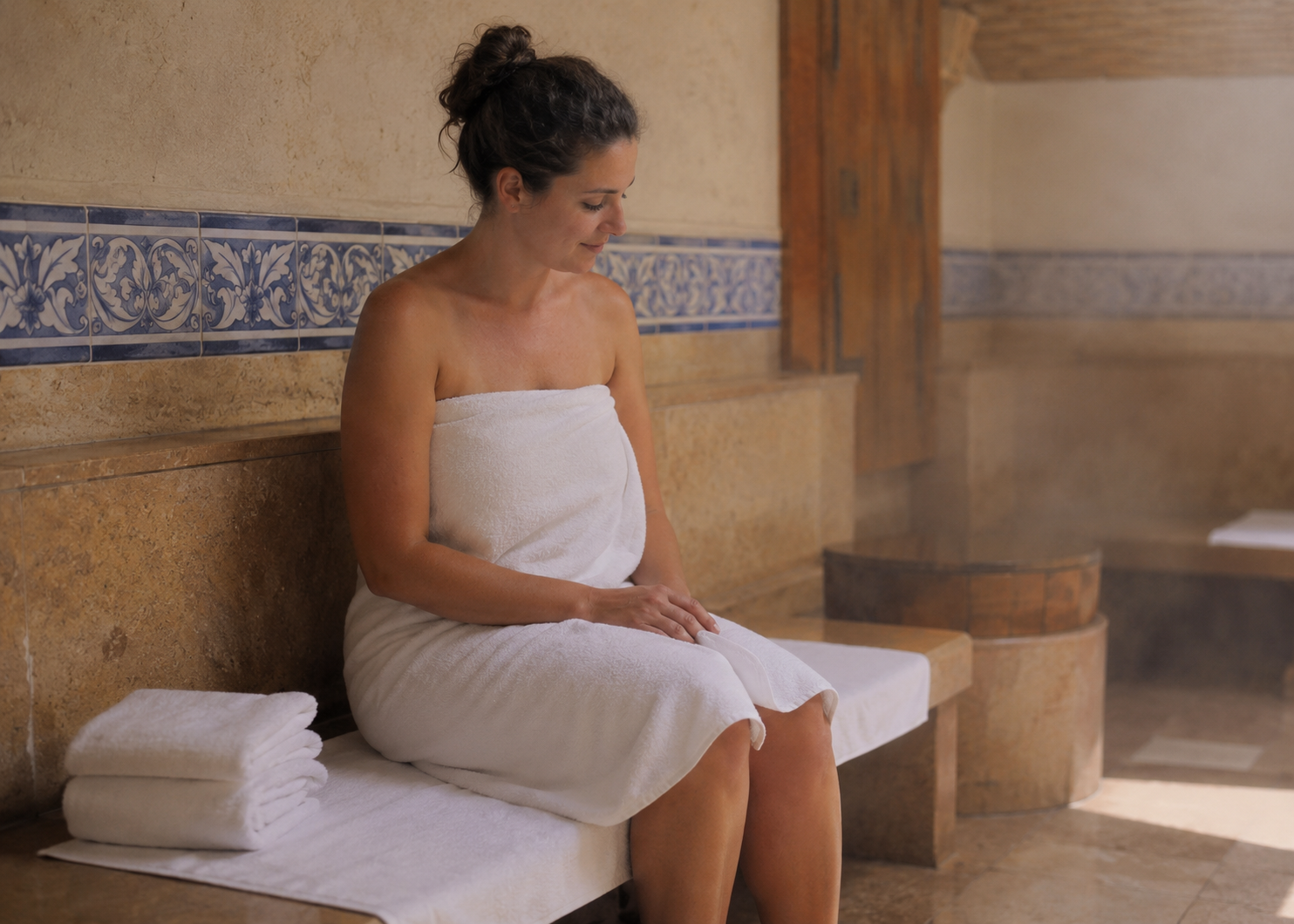
The Continental sauna tends to be a quieter, more contemplative space than Americans might expect, conversation kept low or absent in many traditional saunas, the experience treated as a calm restorative ritual rather than a social chat, so the American who enters talking at normal volume may breach the contemplative quiet that others are enjoying. There is also an etiquette around the heat and the steam, in some traditions a ritual of pouring water on the hot stones, which may be governed by custom about who does it and when, and the visitor should observe rather than assume, following the lead of the regulars rather than taking liberties with the shared heat. The general principle is restraint and observation, entering quietly, conducting oneself calmly, watching what others do, and following the established rhythm of the space rather than imposing a more casual or social American manner on a more ritualized Continental institution.
The movement between hot and cold is another element that can surprise, since the full Continental sauna experience often involves a cycle, the heat followed by a cold plunge or cold shower, then rest, then repeat, a deliberate ritual of contrast that is central to the tradition and that the American treating the sauna as simply a hot room may not know to follow. Learning this rhythm, the cycle of heat and cold and rest, is part of experiencing the sauna as the Continentals do, the contrast bathing being the point rather than just the heat, and the visitor who follows the full cycle gets the real experience rather than a partial one. The etiquette inside the sauna, the quiet, the observation, the heat-and-cold rhythm, completes the picture of how to use the Continental sauna properly, and the American who learns it participates fully and comfortably in a richer ritual than the American spa offers.
How To Enjoy It As A First-Timer
Pulling it together, the way to approach the Portuguese sauna as a first-timer is simple once the surprises are understood, and the experience is genuinely worth having.
The approach is to go in informed and relaxed, knowing the customs in advance, the thorough pre-shower, the towel to sit on, the specific dress convention of the particular place, the quiet contemplative conduct, the heat-and-cold rhythm, so that none of it surprises you and you can simply participate comfortably from the start. Find out the specifics of the particular establishment, whether by asking, observing, or checking, since the conventions vary, and then follow the local custom with ease rather than anxiety, treating the whole thing as the pleasant restorative ritual it is meant to be rather than a minefield of unfamiliar rules. The customs are easily learned and easily observed, and the visitor who learns them in advance trades the first-timer’s uncertainty for the comfortable participation of someone who understands the ritual, which is the difference between an awkward first visit and a genuinely enjoyable one.

About the Author: Ruben, co-founder of Gamintraveler.com since 2014, is a seasoned traveler from Spain who has explored over 100 countries since 2009. Known for his extensive travel adventures across South America, Europe, the US, Australia, New Zealand, Asia, and Africa, Ruben combines his passion for adventurous yet sustainable living with his love for cycling, highlighted by his remarkable 5-month bicycle journey from Spain to Norway. He currently resides in Spain, where he continues sharing his travel experiences with his partner, Rachel, and their son, Han.