
The damage is usually done before the menus arrive. An American walks into an Italian restaurant, and within the first ten minutes, often the first ten seconds, has broken three or four unwritten rules without the faintest idea, while the staff exchange the small glance that means tourists, and the evening settles into the polite, slightly distant register reserved for people who do not know how things work here. None of it is hostile. Italians are warm. But there is a way things are done, and the breaking of it is instant and visible, and it happens fast.
The good news is that the rules are easy, and once you know them you stop tripping the wire in the first ten minutes and start being treated like someone who belongs. After years of watching American friends and tourists make the same entrance mistakes, here are the nine an American is most likely to break right at the start, the ones that announce you before you have ordered a thing, and the small adjustments that change how the whole evening goes. Get these right in the first ten minutes, and everything after is easier.
Walking In At Six For Dinner
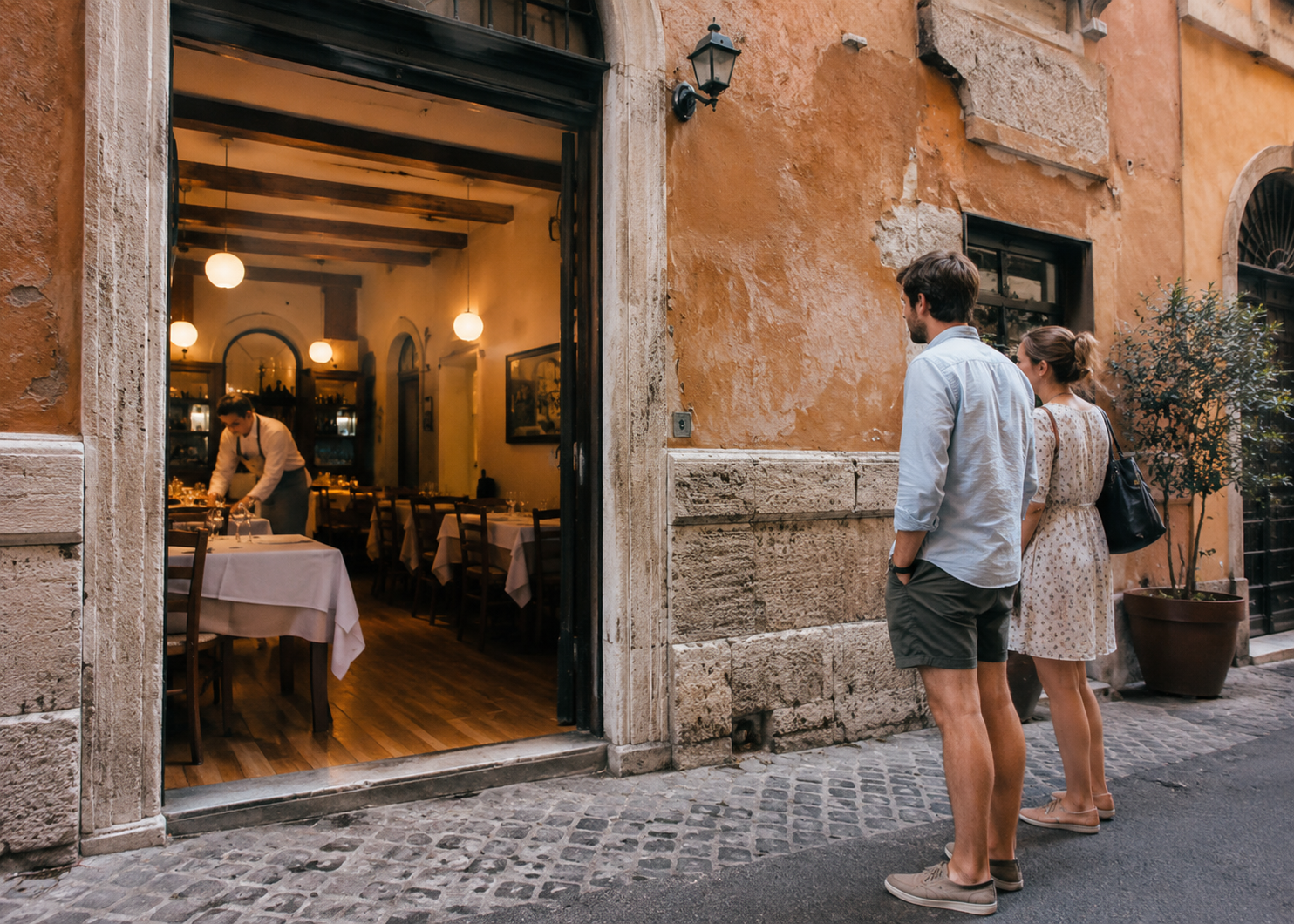
The first mistake is often the timing, since an American who turns up wanting dinner at six in the evening has already marked themselves before saying a word.
Italians eat late, dinner starting around eight at the earliest and often nine or later, and a restaurant that serves dinner does not generally open its kitchen until then, so the American arriving at six or six thirty finds either a closed restaurant or an empty one staffed by people who know exactly who eats at this hour. Turning up for dinner at six is the most basic tourist tell there is, the sign of someone running on an American clock in a country that runs on its own, and while a place used to tourists will seat you, you will be eating alone in an empty room while the staff prep for the real service, the Italian one, that starts hours later. The early dinner marks you instantly as someone outside the rhythm of the place.
The fix is to shift your whole clock later, since eating at the Italian hour is not just about avoiding the tourist label but about being there when the restaurant is alive, full of Italians, running at its best, the kitchen in full swing, the atmosphere electric. Have a late lunch, take the evening aperitivo with a drink and a snack around seven as Italians do, and come to dinner at eight thirty or nine when the place fills with locals and the night really begins. Eat when Italy eats, and you are immediately in the flow of the place rather than rattling around its margins hours early, which is the difference between watching the evening and being part of it.
Asking To Be Seated Wherever You Want
The second early mistake is the American instinct about tables, the wandering toward a preferred spot or the request to sit somewhere specific, which lands differently here.
In an Italian restaurant you wait to be seated and you take the table you are given, since the seating is the host’s domain, managed for the flow of the kitchen and the service, and the American who walks in and heads for a window table or asks to be moved to a better spot is overstepping a boundary that Italians respect instinctively. It reads as a small presumption, a failure to understand that the restaurant is run by people who know what they are doing and will place you appropriately, and while they will usually accommodate a polite request, the wandering and the demanding mark you as someone who does not grasp the etiquette. The table is offered, not chosen, in the Italian way.
The fix is simply to wait, to let yourself be seated, and to accept the table graciously, since this small act of trust in the host signals that you understand how things work and respect the people running the room. If you have a genuine need, a quieter spot, somewhere out of a draft, you can ask politely, and it will usually be granted, but the default posture is to be seated rather than to seat yourself, to receive the table rather than claim it. This deference is a small thing, but it is noticed, the difference between the guest who understands the room is run by professionals and the tourist who treats it like a cafeteria, and getting it right in the first minute sets a good tone for everything after.
Ordering A Cappuccino To Start
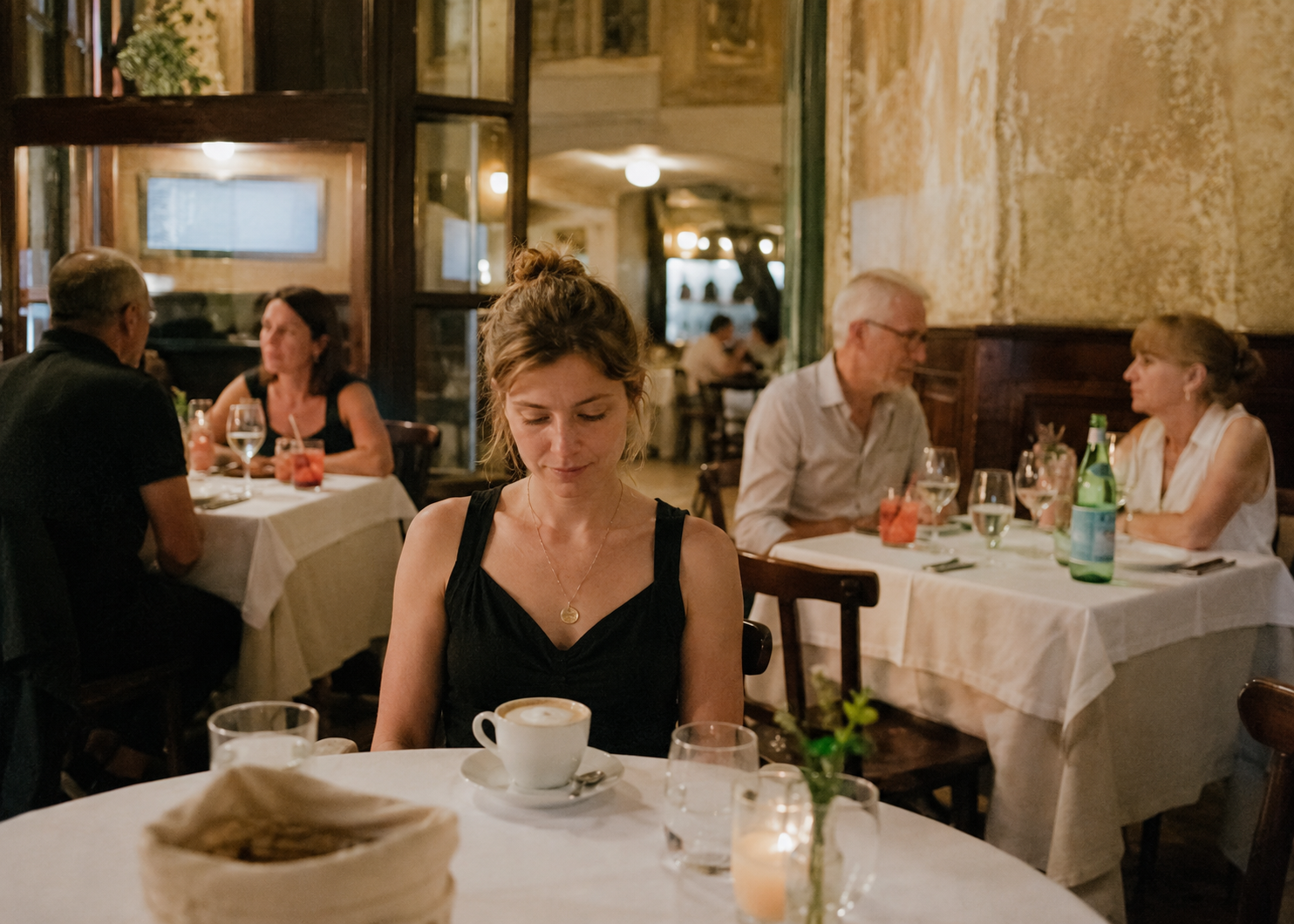
Within the first few minutes of sitting down, the drink order arrives, and it is a minefield, with the cappuccino the most famous mine of all.
Ordering a cappuccino at the start of a meal, or worse with the meal, is one of the most recognizable tourist moves in Italy, since milky coffee is strictly a morning drink to Italians, never taken with or after food later in the day, the milk considered too heavy for a full stomach, so the cappuccino at dinner is a small cultural alarm bell. The same applies to ordering coffee to drink alongside the food, since coffee in Italy comes firmly at the end, after the meal, an espresso to close, never a drink to accompany the eating as Americans treat it. The early or accompanying coffee order, cappuccino or otherwise, is a classic first-ten-minutes tell, instantly marking the American clock and palate.
The fix is to learn the Italian drink rhythm, which is simple, water and wine with the meal, coffee strictly at the end and an espresso not a cappuccino, the cappuccino reserved for breakfast where it belongs. Start your meal with water, still or sparkling, and wine if you are having it, order coffee only when the food is finished, and make it an espresso or a macchiato, and you have navigated the drink minefield like a local. This is among the easiest rules to follow once you know it, and among the most instantly revealing when you do not, so getting the opening drink order right is a quick early win that sets you apart from the tourists at the next table reaching for their lunchtime cappuccinos.
Expecting Bread And Butter
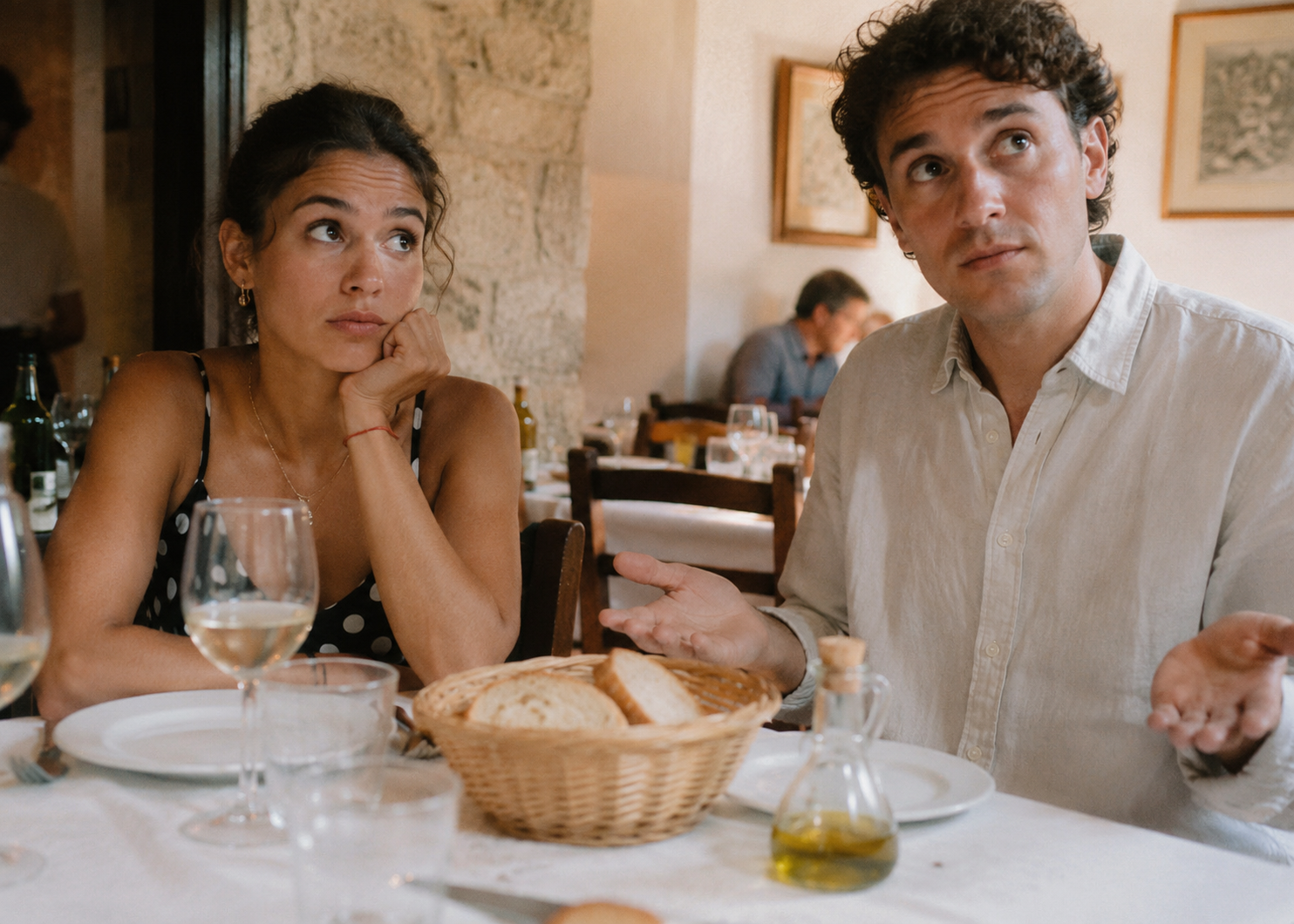
As the bread arrives, another American expectation trips, since the bread comes with rules that differ from the American ones in ways that show immediately.
Italian bread arrives plain, without butter, because butter is not the Italian accompaniment to bread, and the American looking around for the butter dish, or asking for it, reveals an expectation imported from a different food culture. The bread, pane, is there to accompany the meal, to be eaten with the food, and above all to perform the scarpetta at the end, the mopping of the sauce, not to be slathered with butter as a pre-meal course in the American style. Asking for butter is a small but clear tell, the request for something that simply is not part of how Italians eat bread, marking the American table early in the meal.
The fix is to take the bread as it comes and use it the Italian way, eaten with the meal, dipped in good olive oil if oil is offered though even that is less universal than Americans assume, and saved for the glorious scarpetta at the end, dragging a piece through the last of the sauce on your plate, which Italians do with relish and which marks you as someone who knows. Do not look for the butter, do not ask for it, and do not treat the bread as a starter course to fill up on before the food, since in Italy the bread serves the meal rather than preceding it. Understanding the bread is a small thing that signals you grasp the wider grammar of how Italians eat, right there in the first minutes.
Trying To Order A Coffee-Shop Drink Order
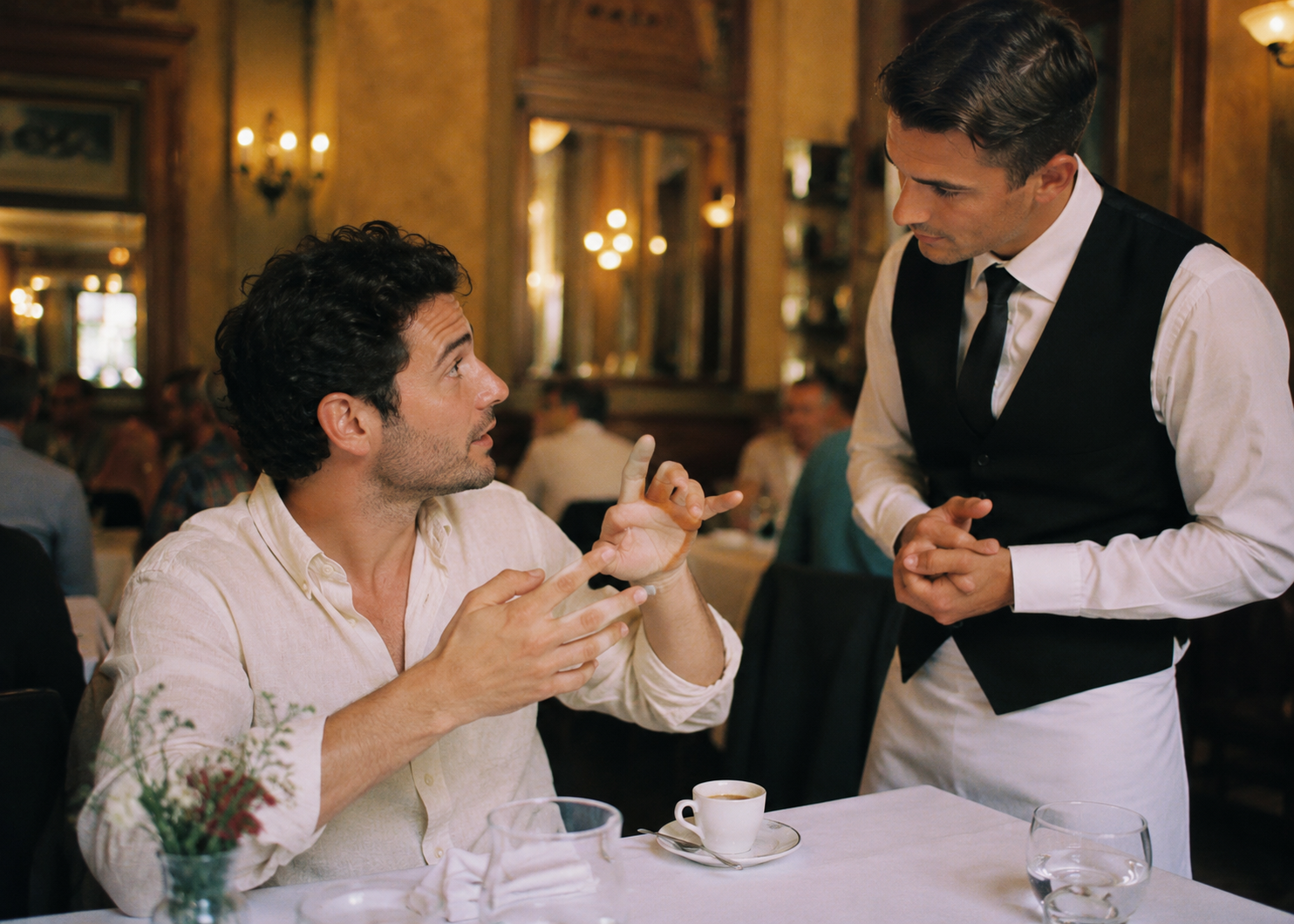
The American habit of customizing every drink, so natural at home, surfaces immediately in Italy and lands as bafflement, since the Italian drink world does not work that way.
The American who tries to order a large coffee, a coffee to go, a complicated milky modified drink, or who treats the Italian bar like an American coffee chain, hits a wall of incomprehension, since Italian coffee is a small set of classic preparations, the espresso, the macchiato, the cappuccino for morning, taken quickly, usually standing at the bar, with none of the customization, sizing, and elaboration of American coffee culture. The request for a venti anything, a coffee with a list of modifications, or a large drink to carry around, marks the American instantly, since it imports a whole coffee culture that does not exist in Italy and reveals a fundamental unfamiliarity with how Italians drink coffee.
The fix is to embrace the simplicity, ordering the classic Italian preparations as they are, an espresso when you want coffee, a cappuccino in the morning, taken the Italian way, small, quick, often standing, without modification or sizing. There is a real pleasure in the Italian coffee ritual once you stop fighting it, the quick perfect espresso at the bar, no decisions, no customization, just the thing done right, and the American who learns to drink coffee the Italian way rather than demanding the American version has crossed an important line. Stop trying to recreate your home coffee order, learn the few classic Italian drinks, and you have removed one of the most reliable tourist tells from your repertoire.
Asking For Substitutions And Modifications
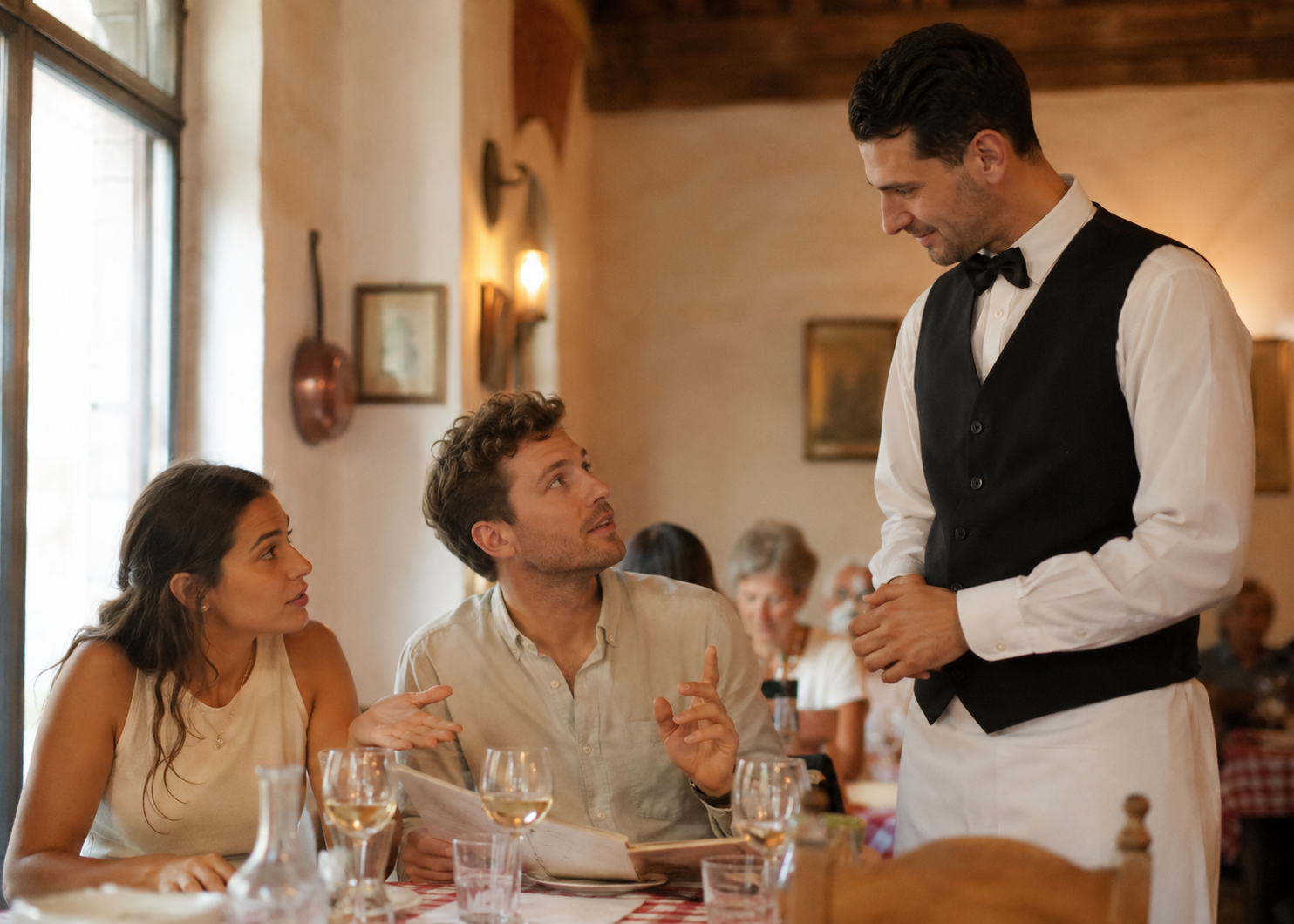
Once the menu is open, the American instinct to customize the food appears, and in Italy it lands as something close to an insult to the kitchen.
The American restaurant culture of substitutions, dressing on the side, hold this, swap that, extra of the other, the meal assembled to personal specification, runs directly against the Italian understanding that dishes are composed as they are for good reasons and arrive the way the kitchen intends. The American who opens the menu and immediately starts modifying, asking to remove ingredients, swap components, alter the preparation, signals a distrust of the cooking that Italians find genuinely off-putting, since the chef made the dish a certain way and the request to rebuild it suggests you think you know better. This customizing instinct, so normal in America, is one of the faster ways to mark yourself in an Italian restaurant, and it often happens the moment the menu opens.
The fix is to order dishes as they are offered, trusting the kitchen to know its own food, and to save the modifications for genuine needs like real allergies, which any restaurant will accommodate seriously. The dishes are traditional, balanced, made with intention, and the right posture is to choose what appeals and let it come as the kitchen makes it, rather than treating the menu as a set of components to be reassembled to your preference. This trust in the cooking is deeply appreciated and immediately legible, the difference between the guest who came to eat the chef’s food and the tourist who wants Italian ingredients rearranged into something American. Order it as written, and the kitchen, and the staff, warm to you at once.
Rushing The Whole Thing
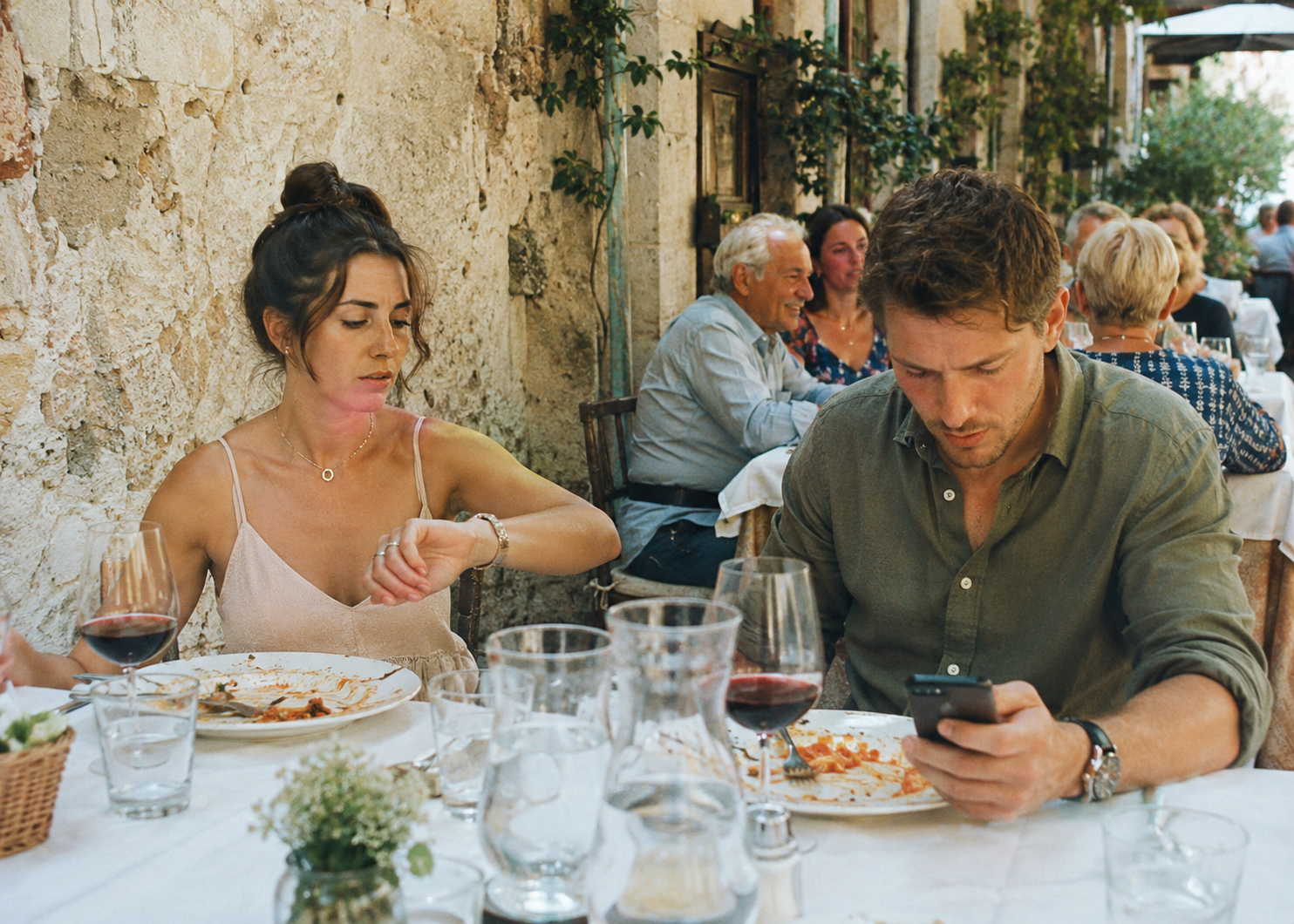
Even in the first ten minutes, the American pace announces itself, the wanting of everything fast, which clashes with the entire Italian idea of a meal.
The American who sits down and immediately wants to order everything at once, get the food quickly, and move efficiently through the meal has misunderstood what an Italian dinner is, since it is not a refueling to be completed but an evening to be inhabited, unfolding in courses over a couple of hours with pauses between, the whole leisurely structure being the point rather than an obstacle. The early signs of the American pace, the impatience for the order to be taken, the wanting of all the food together, the visible hurry, register immediately with staff who pace the meal to the Italian rhythm, and they mark the table as one running on a different and faster clock. The rush is felt in the first minutes, before the food even arrives.
The fix is to slow down and settle in, understanding that the Italian meal is a long unhurried affair, ordered in courses, eaten with pauses, conducted at the pace of conversation rather than efficiency, and that surrendering to that pace is most of the pleasure. Order an antipasto, then a primo, then a secondo, let the courses come in their time, talk between them, let the evening stretch, and do not signal hurry, since the leisurely pace is not poor service but the correct service, the meal as the Italians intend it. The American who arrives ready to spend the whole evening at the table, in no rush, has aligned with the deepest rhythm of Italian dining, and the staff feel it immediately, relaxing into the easy hospitality reserved for those who understand that here, dinner is not a task but a pleasure to be taken slowly.
Mishandling The Water Question
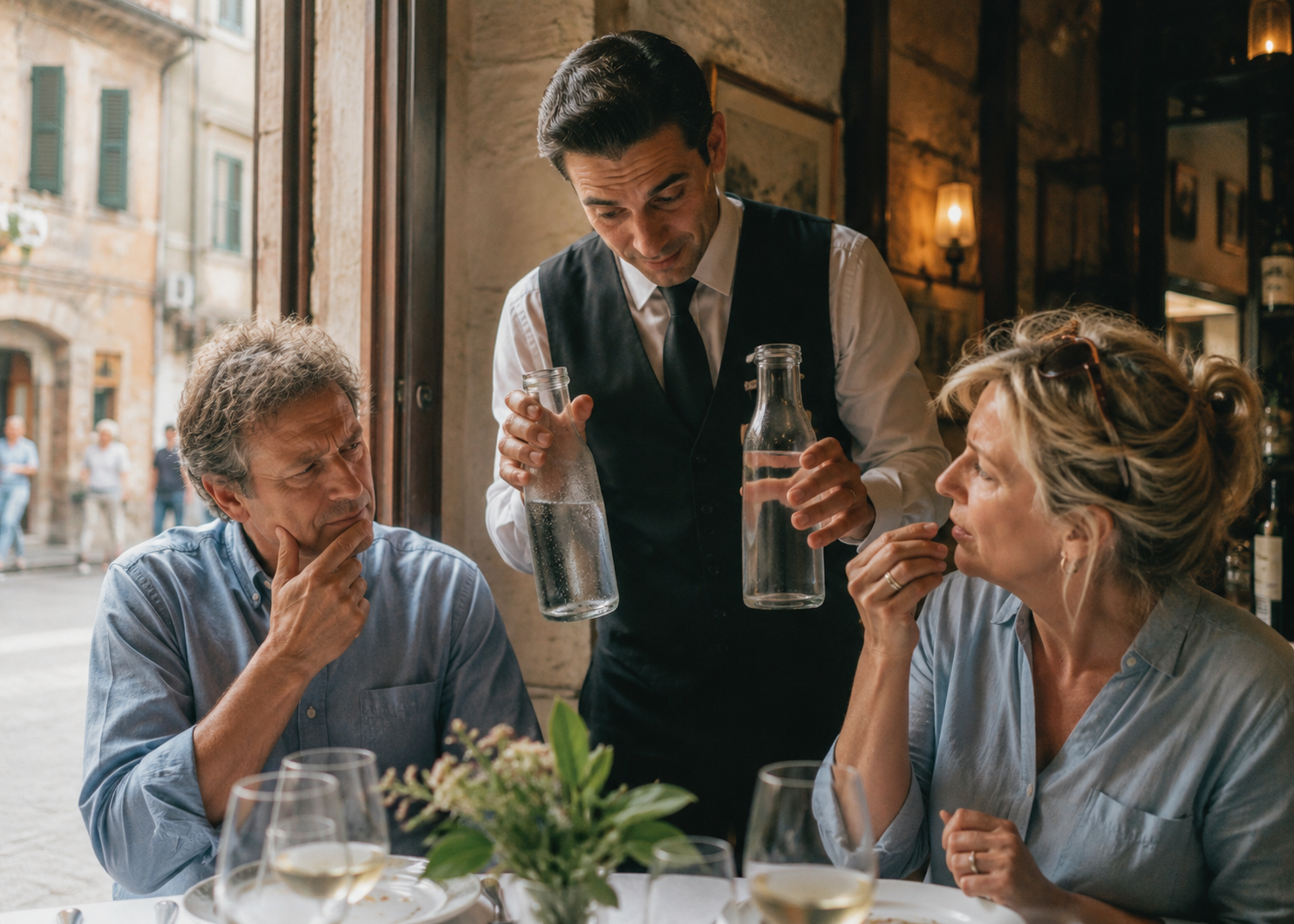
Soon after sitting, the water question arrives, and the American instinct fumbles it in a small but telling way.
When the staff ask about water, the American often asks for tap water or a glass of ice water in the American style, which lands oddly, since Italians drink bottled water with meals, still or sparkling, naturale or frizzante, and the question is which of those you want, not whether you want the American tap-and-ice version. The request for tap water, while not offensive, marks the American instantly, since it is simply not how Italians take water at the table, and the demand for lots of ice, that most American of expectations, doubly so, since Italian drinks come with little or no ice by habit. The water moment is a small early fork where the American instinct diverges visibly from the Italian norm.
The fix is to order bottled water as Italians do, answering the water question with naturale for still or frizzante for sparkling, and to let go of the ice expectation, since the Italian way is water at cool cellar temperature rather than American ice-cold. This is a tiny adjustment, but it is one of those small early moments where knowing the local way smooths the interaction and marks you as someone familiar with how things are done, rather than someone importing American habits onto an Italian table. Order the acqua frizzante, skip the ice, and another small tourist tell disappears, the water arriving the Italian way and the meal continuing without the little friction that the tap-and-ice request introduces.
The Tip Calculation At The End, Started Too Early
The ninth tell technically lands at the end, but the American anxiety about it often surfaces early, and it is worth heading off from the start.
Americans carry deep tipping anxiety, the constant mental calculation of the twenty percent, and it shapes their behavior throughout the meal in ways Italians find puzzling, since Italy does not tip the American way at all, service being structured differently and a small rounding-up or a couple of euros being entirely sufficient where anything is left at all. The American agonizing over the tip, asking about it, leaving a towering American gratuity, reveals an imported anxiety that simply does not apply, and while generosity is never offensive, the American-scale tip and the visible worry about it mark the table as foreign. Often a coperto, a small per-person cover charge, already appears on the bill, which Americans misread as a service charge and then tip on top of, compounding the confusion.
The fix is to relax about the whole thing, understanding that Italy is not a tipping culture in the American sense, that the coperto is a standard cover charge not a tip, and that rounding up the bill or leaving a couple of euros for good service is generous and appropriate, with no need for the American percentage at all. Let go of the tipping anxiety from the start, since it shapes the meal more than you realize, and enjoy the freedom of a dining culture where the price is the price and the elaborate gratuity calculation simply does not apply. Understanding the tip, or rather the near-absence of it, removes the last of the American tells and lets you move through the whole meal, beginning to end, with the ease of someone who knows how an Italian restaurant actually works.

About the Author: Ruben, co-founder of Gamintraveler.com since 2014, is a seasoned traveler from Spain who has explored over 100 countries since 2009. Known for his extensive travel adventures across South America, Europe, the US, Australia, New Zealand, Asia, and Africa, Ruben combines his passion for adventurous yet sustainable living with his love for cycling, highlighted by his remarkable 5-month bicycle journey from Spain to Norway. He currently resides in Spain, where he continues sharing his travel experiences with his partner, Rachel, and their son, Han.