
They arrived in Cádiz at sixty with a hundred and twenty-eight thousand dollars, which every retirement calculator in America had pronounced a failure. Seven years later they are still there, the money is still there, and on Tuesday afternoons they pick up a small Spanish granddaughter from a school three streets from the Atlantic. Nobody planned the granddaughter. The story is worth telling for what actually happened, in the order it actually happened, because the order is the lesson.
Why Cádiz, Of All Places

Cádiz is the oldest city in Western Europe and one of the cheapest beautiful places left on its coast, and almost no American has ever considered it.
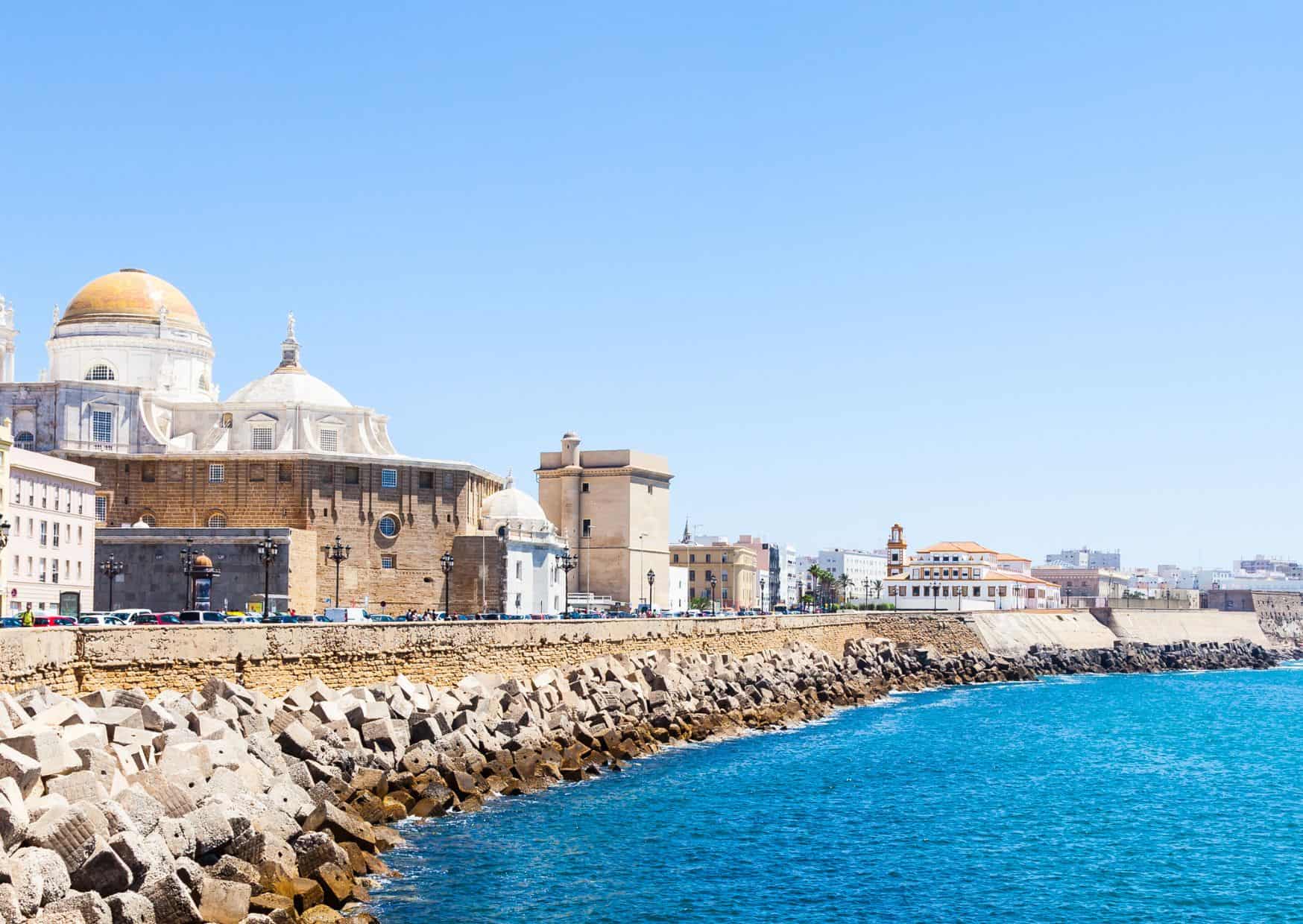
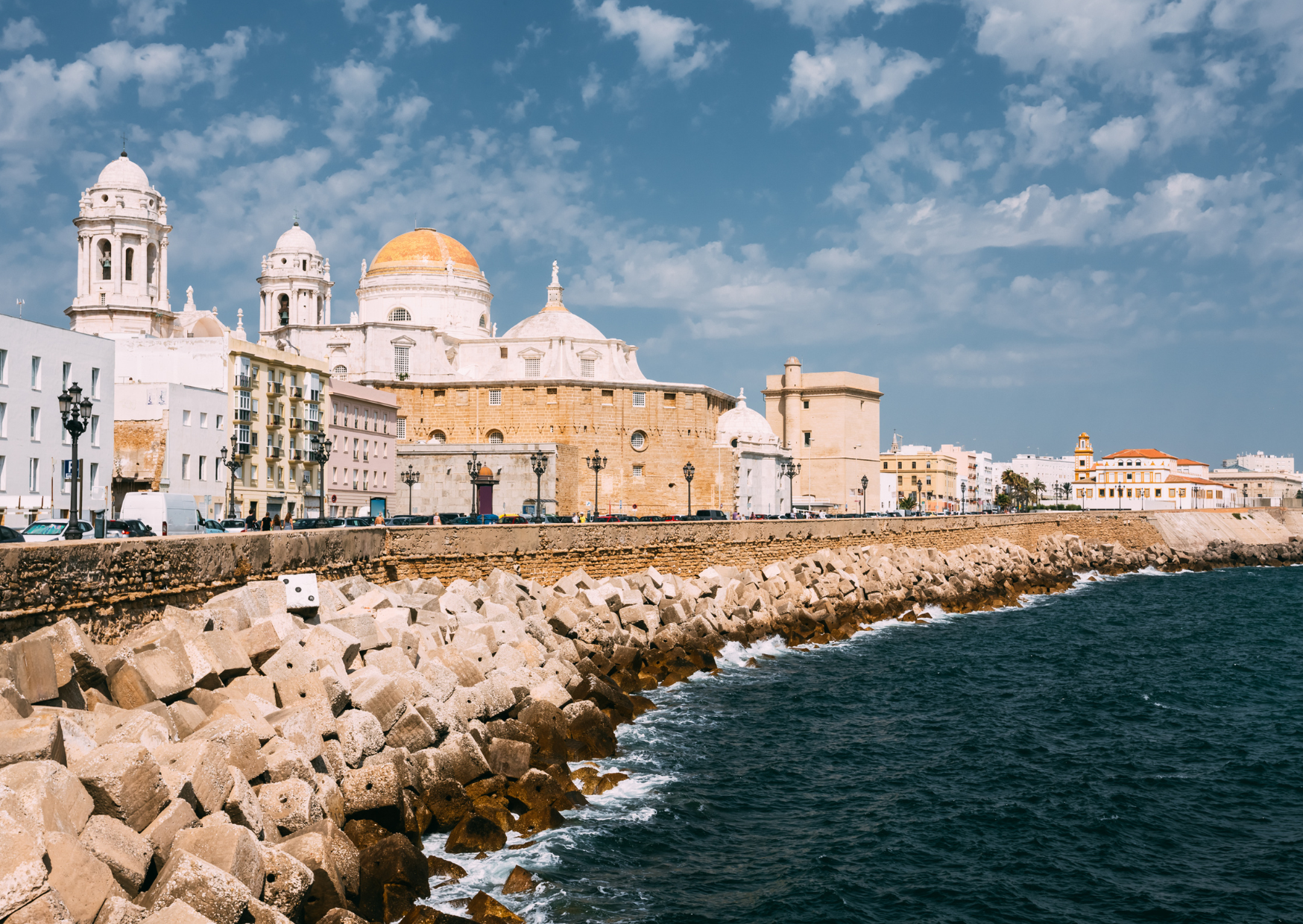
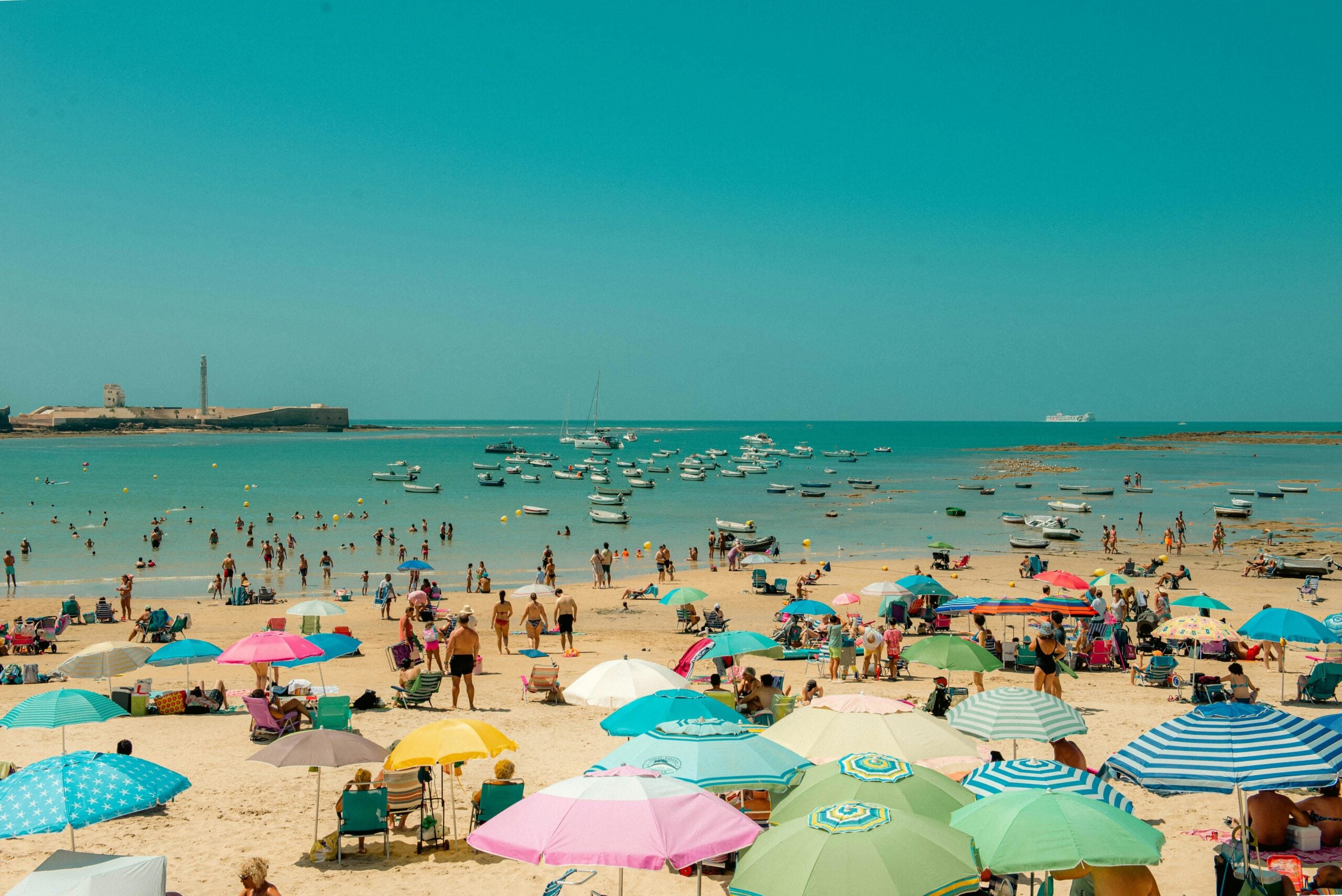
It sits on a thin peninsula in the Atlantic, a small city of silver light, crumbling watchtowers, and streets so narrow the sea wind threads through them like a pickpocket. The beach, La Caleta, is in the middle of town, framed by two old fortresses, full of gaditano families until midnight in summer. Rents run far below the famous coasts. A good apartment in the old town or the working neighborhoods costs a fraction of Málaga, let alone Barcelona, and the daily life around it, the markets, the freidurías selling paper cones of fried fish, the menú del día, costs less still. The levante wind blows hard some weeks. The locals consider it a personality test.
What Cádiz is not is international. There is no expat scene to fall into, English thins out fast beyond the cruise-day cafés, and the city’s famous humor, the carnival wit the rest of Spain both envies and fears, operates entirely in Andalusian Spanish. The couple chose it anyway, partly for the prices, mostly because they visited in February and the city was still alive, which is the test most pretty Spanish towns fail.
The Money, Told Straight
Here is the part where similar stories usually start lying, so let us be exact about what the headline means and does not mean.
The honest version is not that moving to Spain multiplied their savings, because moving abroad multiplies nothing. The honest version is that Cádiz costs so little that their ordinary retirement income, Social Security plus a small pension, covered their entire life, the rent, the markets, the long lunches, the granddaughter’s ice creams, with room to spare. So the hundred and twenty-eight thousand sat almost untouched for seven years, a cushion instead of a fuel tank, and a cushion left alone in ordinary investments can hold its value or drift upward through nothing more mysterious than time. Whether any particular couple ends up with more, the same, or somewhat less depends on their income, their markets, and their luck, and no relocation guarantees the direction.
What the move did guarantee, and what the American version of their retirement could not, is that the money stopped draining. In the United States, the same income against American rent and American healthcare meant eating the principal alive, a countdown. In Cádiz the countdown stopped. That is the whole financial miracle, and it is enough. Sustainability, not multiplication. Anyone who promises you the second is selling something. The first is just arithmetic, and it is available to anyone willing to move to where the arithmetic works.
The Granddaughter Nobody Planned
The strangest and best part of their story arrived four years in, and it should be told as the accident it was.
Their daughter, thirty-one when they moved, visited the first summer. Then the second, for longer. On the third visit she met a gaditano, an engineer with the city’s permanent half-smile, at a friend’s birthday in the Barrio de la Viña, and the visits stopped being visits. They married at the ayuntamiento. The granddaughter was born at the Puerta del Mar hospital two years later, a small Spanish citizen with an American grandmother who now argues with the fishmonger in functional Andalusian and a grandfather who has strong opinions about which churrería is correct.
Tell this honestly or not at all. A move abroad does not come with a granddaughter, and a couple relocating in the hope of importing their family will usually be disappointed, because adult children have their own lives and most stay in them. What the move actually did was change the family’s center of gravity. The parents built a real, rooted, attractive life, the kind of life a visiting daughter could see a future inside, and the door they opened, she walked through on her own. The granddaughter is not a feature of the program. She is what sometimes grows in the soil of a move done well, and the soil, not the harvest, is the only part anyone can plan.
What Made The Whole Thing Hold
Strip out the luck and the love story and a machinery is left underneath, and the machinery is transferable.
They went in prepared. The visa was the non-lucrative route, done properly with a lawyer. The taxes were planned before the move, not discovered after, the timing of withdrawals, the treaty, the accounts, all the unglamorous cross-border work this blog has covered piece by piece, done in advance, which is why year three contained no horrible letter. The healthcare was private cover at first, the public system later, arranged rather than assumed. None of this is romantic. All of it is why the romantic parts had somewhere to live.
And they integrated like it was a job, because for the first year it is. Spanish classes twice a week, the same bars until the bars knew them, the neighborhood association, the feria, showing up and showing up and showing up. Cádiz is warm but it is not instant, no real place is, and the couple who waits to be discovered waits forever. By the time their daughter came for that third visit, her parents were not two Americans camping in Spain. They were vecinos, with a fishmonger and a churrería and opinions, and that, more than the beach or the prices, is what she saw a future inside.
A Week In Their Cádiz
Texture is evidence, so here is the shape of an ordinary week, seven years in.
Monday and Thursday are the Mercado Central, the nineteenth-century iron market where the fish comes off the boats at Cádiz prices, and where the couple’s order has not needed stating aloud since 2022. Tuesday is the school gate. Wednesday he plays dominoes badly with three retired dockworkers who have stopped letting him win, which he correctly understands as acceptance. Most evenings end at La Caleta or on the Alameda, the seafront gardens, with the paseo crowd, an hour of walking and greeting that costs nothing and is worth more than anything in the week that costs something.
February is Carnival, the city’s great annual explosion of costumes and satirical choirs, when Cádiz sings cruel, brilliant songs about politicians for two weeks and the couple’s daughter first decided these people were her people. August is the family month, the beach until ten at night, the granddaughter brown as a nut, dinner at midnight like everyone else. The week costs almost nothing because the city’s pleasures, the light, the water, the talk, the singing, were never for sale in the first place. That is the part no calculator could see, and the part that explains why seven years in, nobody has mentioned leaving.
The Numbers On The Table
Their budget, in round honest figures, for anyone who wants to check the arithmetic.
Rent, 850 euros for a two-bedroom with a balcony in a real neighborhood, more than a white village, far less than the famous coasts, and old-town Cádiz can run cheaper or dearer depending on the street and the reform. Food, around 450 for two, built on the market and the season, with the fried-fish cones and the menú del día doing the restaurant work at 12 to 15 euros a head. Utilities and internet, 140, with no real heating season to speak of. Private health insurance in the early years, around 300 for the couple, later replaced for most needs by the public system they paid into through the convenio especial. No car. Cádiz is two kilometers long and the train runs to Sevilla and Jerez, so the American budget’s second-biggest line simply does not exist.
Call it 1,900 to 2,200 euros a month, lived generously, against an income that covers it with margin. That margin is the entire story of the untouched savings. There is no trick in it anywhere, no investment move, no side hustle, just a city where the income exceeds the life, month after month, for seven years and counting. The same income in their old American suburb ran a four-figure monthly deficit. Geography did what no portfolio strategy could.
Who Should Not Copy Them
Honesty about fit matters more in a composite than anywhere, so here is who Cádiz would disappoint.
Anyone who needs an English-speaking world ready-made should look elsewhere, because Cádiz does not have one and is not building one, and the couple’s first year of twice-weekly Spanish classes was not optional enrichment, it was the price of admission. Anyone allergic to wind should visit during a levante week before deciding, because the east wind is real, it blows for days, and gaditanos themselves blame it for everything from headaches to divorces. Anyone who wants four distinct seasons will find instead a long warm year with a damp, grey-edged winter, mild but humid, when the Atlantic gets into the walls of the old houses and a dehumidifier becomes a household member.
And anyone whose retirement plan secretly depends on the family following should reread the granddaughter section, because the move has to work on its own terms first. Cádiz repaid this couple because they would have been happy there childless and visitorless, with the dominoes and the market and the wind. The daughter came because the life was real, and the life was real because they built it for themselves. Move for your own life. Anything that follows you is a gift, and gifts cannot be budgeted.
The Detail That Makes It Cádiz
Every affordable Spanish city this blog covers has its version of the arithmetic. What it does not have is this particular city, and the difference deserves a paragraph.
Cádiz is poor by Spanish standards, proud beyond all reason, funnier than anywhere else in the country, and almost untouched by the international retirement industry that has reshaped the coasts to its east. Nobody is marketing Cádiz to Americans. There are no seminars. The city goes about its three-thousand-year-old business, frying fish, singing satire, raising children on a beach between two fortresses, and a foreign couple willing to join that business on its own terms gets something the marketed places can no longer sell, a place that was never arranged for them. The granddaughter at the school gate is, among other things, a gaditana, and her grandparents earned the word that describes them around the neighborhood, which is not extranjeros anymore. It is los abuelos americanos, said with the article of belonging. Seven years, one hundred and twenty-eight thousand dollars, still intact, and that.
One practical footnote for anyone whose interest survived the honesty. The couple’s sequence is copyable even if their luck is not, and it runs: visit in winter, not summer, because February tells the truth about a place. Rent before any thought of buying. Do the visa and the cross-border tax work with professionals before the move, in that order, since the tax timing around residency is where the expensive mistakes live. Budget from real local prices, not from articles, including this one. And book the Spanish classes for week one, not someday, because every good thing in this story, the dominoes, the fishmonger, the wedding, the school gate, happened in Spanish.
None of this is financial advice, and individual outcomes depend entirely on personal income, spending, health, and circumstances. The cost-of-living arithmetic of an affordable city is real, but whether savings hold, grow, or decline is individual, and anyone planning such a move should run their own numbers against current local prices and take proper visa and cross-border tax advice before committing, since the couples for whom this works are reliably the ones who did the unglamorous preparation first.

About the Author: Ruben, co-founder of Gamintraveler.com since 2014, is a seasoned traveler from Spain who has explored over 100 countries since 2009. Known for his extensive travel adventures across South America, Europe, the US, Australia, New Zealand, Asia, and Africa, Ruben combines his passion for adventurous yet sustainable living with his love for cycling, highlighted by his remarkable 5-month bicycle journey from Spain to Norway. He currently resides in Spain, where he continues sharing his travel experiences with his partner, Rachel, and their son, Han.