
The Americans who research an Italian retirement almost all start in the same handful of places. Rome, Florence, Tuscany, the Amalfi Coast, the names that everyone knows and that every other retiree is also considering. And almost all of them eventually discover the same problem, that the famous places are expensive, crowded, and increasingly hostile to the very newcomers who want to buy in, with the short-term rental crackdowns and the housing pressure that the headlines keep describing.
From Spain, watching the same pattern play out in both countries, the smarter move is obvious and underused. Italy is full of mid-sized cities that deliver everything a retiree actually needs, walkability, good healthcare, real community, a genuine Italian life, at a fraction of the cost and none of the tourist crush of the famous names. These are not undiscovered villages with no services, which are a trap of their own, but real working cities of a manageable size. Here is how to think about them, and several worth knowing.
What A Retiree Actually Needs
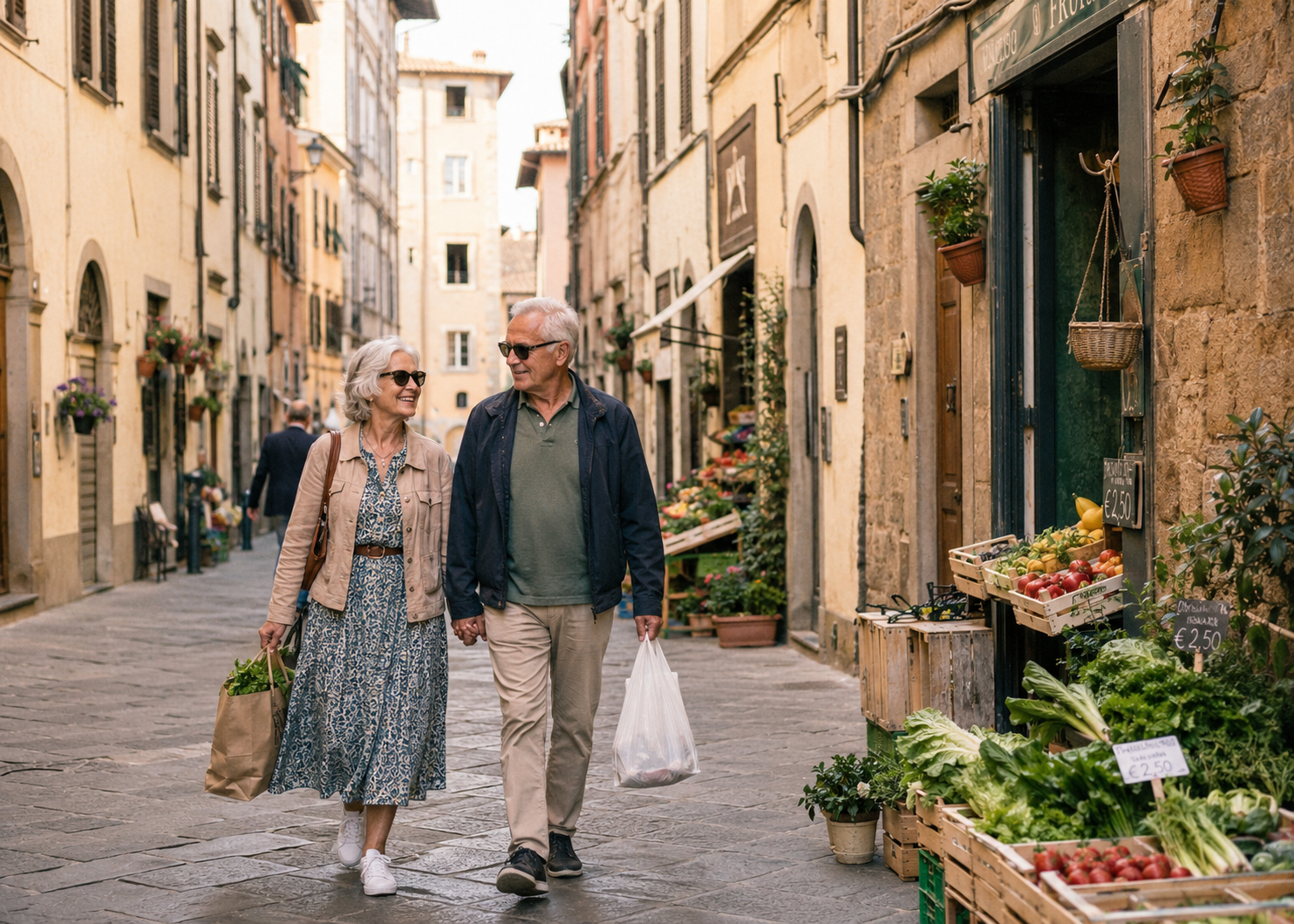
Before naming places, it helps to be clear about what genuinely matters for a retirement abroad, because it is not what the fantasy focuses on.
The fantasy focuses on beauty and charm, the view, the picturesque square, the romantic image of Italian life. Those things are real and they matter, but they are not what determines whether a retirement actually works. What determines that is a less glamorous list, walkability so you can live well without driving as you age, access to good healthcare within easy reach, a real community you can become part of rather than a tourist backdrop that empties in winter, reasonable cost of living, and decent transport links to the wider world. A place can be stunningly beautiful and fail every one of these tests, which is how retirees end up isolated in a gorgeous hilltop village with no doctor, no community of their own age, and a car-dependent life that becomes a prison the moment driving gets hard.
The mid-sized Italian city is the sweet spot precisely because it satisfies the unglamorous list while still delivering plenty of the beauty. Large enough to have a proper hospital, a real local population, services, and transport, small enough to be walkable, affordable, and human in scale, and Italian enough to deliver the actual culture rather than a tourist simulation of it. The retiree who optimizes for the boring list rather than the beautiful one tends to build a life that lasts, and the mid-sized city is where that boring list gets satisfied without giving up the Italy they came for.
Walkability As A Retirement Strategy

The first quality worth understanding deeply is walkability, because it matters far more in retirement than younger people realize.
A walkable city is one where daily life, the market, the pharmacy, the doctor, the café, the friends, happens within walking distance, without the need to drive for every errand. For a retiree this is not a lifestyle preference but a long-term strategy, because the ability to drive is not guaranteed forever, and a life that depends entirely on a car becomes precarious exactly when mobility starts to decline. The walkable city keeps a person independent and engaged into advanced age, able to maintain a full life on foot long after driving would have become difficult, which is one of the quiet reasons older Europeans in walkable towns stay active and connected later than their car-dependent American counterparts.
Italian cities are, almost by their nature, far more walkable than the American suburbs most retirees are leaving, built before the car around compact historic centers where everything clusters within a short stroll. This is one of the great structural advantages of an Italian retirement, the simple fact that the cities were designed for people on foot, and the mid-sized ones combine that walkability with enough size to have everything a person needs within the walkable core. Choosing a city for its walkability is choosing a retirement that ages well, and it is the single most important and most overlooked criterion on the list.
Healthcare Within Reach
The second quality is healthcare, which moves from background concern to central priority as a retirement progresses.
Italy has a strong public healthcare system, consistently ranked among the better ones in the world, and the cost of care is a small fraction of the American equivalent, which is a large part of the financial case for retiring there at all. But the national quality of a system matters less to an individual than the local access, the specific question of whether there is a good hospital and good doctors within easy reach of where you actually live. This is where the mid-sized city beats both the famous metropolis and the remote village, large enough to have a proper hospital and a real range of medical services, without the congestion of the big city or the medical desert of the isolated countryside.
For a retiree this should be near the top of the criteria, the presence of solid healthcare within a short and reliable distance, because it is the thing most likely to be needed and most consequential if absent. The romantic hilltop village an hour from the nearest hospital is a genuine risk for an older person, however beautiful, while the mid-sized city with a good hospital a ten-minute walk or short drive away offers real security. Optimizing a retirement location for healthcare access is not pessimism. It is the basic prudence of planning for the years when the system will actually be needed, and the mid-sized Italian city tends to deliver it.
Real Community Versus Tourist Backdrop

The third quality is community, and it is the one that most determines whether a retirement is happy rather than merely functional.
The famous Italian destinations have a hidden problem for anyone wanting to live there rather than visit, which is that their centers have hollowed out into tourist zones, the local population pushed out by the short-term rentals and the cost, leaving a beautiful stage set that fills with visitors and empties of actual residents. A retiree who settles in such a place can find there is no real community to join, only a rotating cast of tourists and a handful of other expats, which is a recipe for isolation dressed up as paradise. The mid-sized working city is the opposite, a place with a real local population living real lives, where a newcomer can actually become part of something rather than floating on the surface of a tourist economy.
This matters enormously because loneliness is the great hidden risk of retirement abroad, and a real community is the only durable protection against it. A city where Italians actually live, work, shop, and gather is a city where an American newcomer can, over time and with effort, build genuine local friendships and a real social life, woven into the fabric of the place. The famous destination offers beauty and the company of other tourists. The working city offers the harder but far more valuable thing, the chance to belong somewhere, which is ultimately what makes a retirement abroad a life rather than an extended holiday.
The Cost Difference Is Enormous

The fourth quality is cost, where the gap between the famous and the mid-sized is large enough to change what kind of retirement is possible.
Property and living costs in the famous Italian destinations have climbed to levels that price out many retirees, driven by the global demand for a piece of Tuscany or a view of the Amalfi Coast, while the mid-sized cities away from the tourist spotlight remain dramatically more affordable. The same retirement budget that buys a cramped apartment in a tourist town buys a comfortable home with room to spare in a fine mid-sized city, and the lower daily costs stretch a fixed income far further. For a retiree on a defined budget, which is most of them, this difference is not marginal, it is the difference between a comfortable life and a constant financial squeeze.
The affordability compounds across everything, the housing, the food, the services, the daily life, all cheaper away from the tourist economy, so that a modest American retirement income that would feel tight in Florence feels genuinely comfortable in a less famous city. This is the practical heart of the case for the mid-sized city, that it converts the same money into a substantially better life, and the retiree who lets go of the famous name in favor of the affordable reality tends to live better on less. The view from the Amalfi Coast is magnificent, but it is not worth a retirement of financial anxiety when a fine life is available for a fraction of the cost an hour inland.
Some Cities Worth Knowing
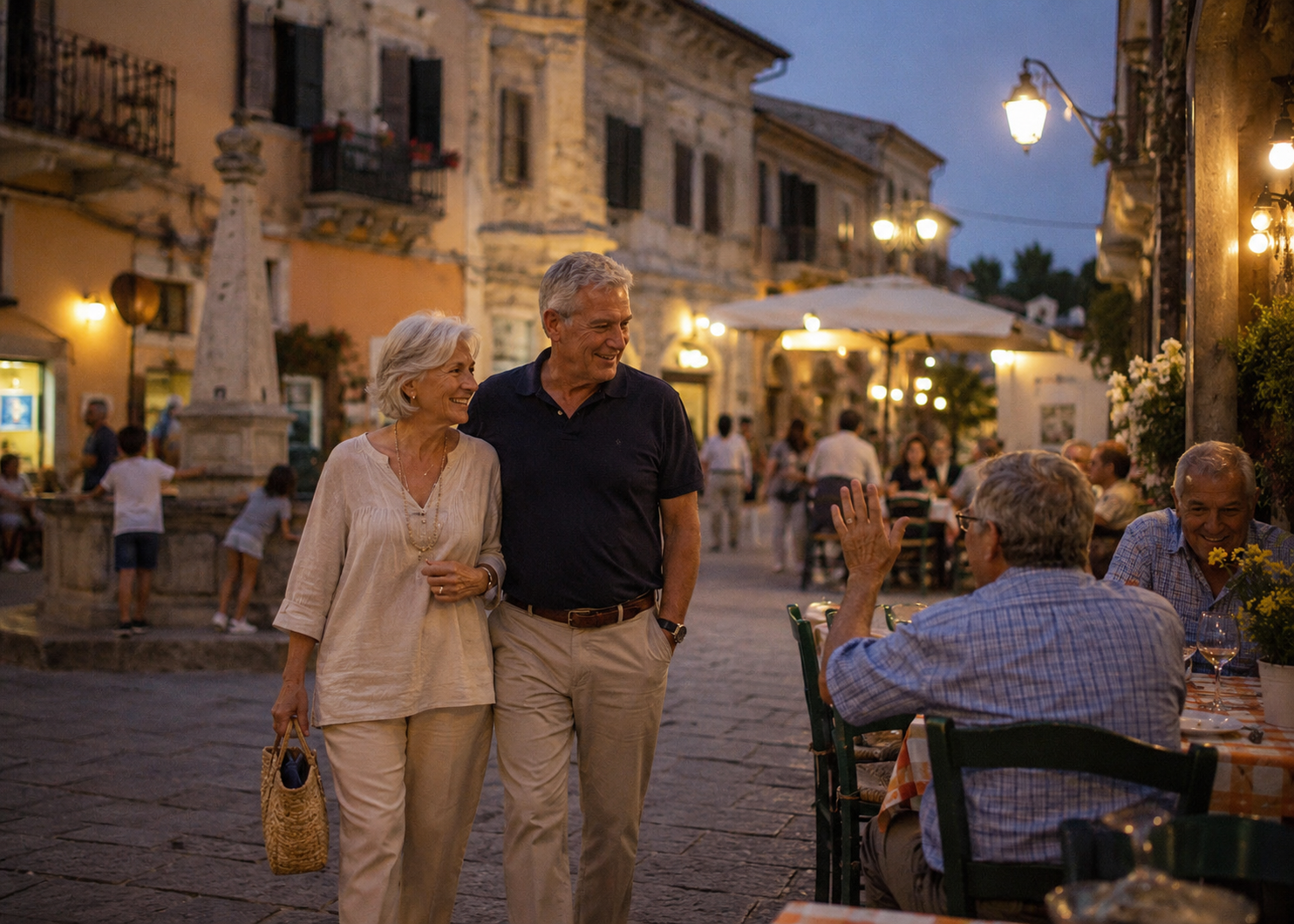
With the criteria clear, it is worth naming the kind of places that satisfy them, framed as the types of city to look at rather than a definitive ranking.
The mid-sized cities of the center and north, places like Bologna with its great food culture and university energy, Parma and Modena in the rich food country of Emilia-Romagna, Lucca with its walls and its walkable charm, Verona and Vicenza in the prosperous northeast, offer wealth, services, healthcare, and walkability with a strong local identity. The cities of the south and the regions like Puglia, places such as Lecce with its baroque beauty or the working cities of the region, offer dramatically lower costs and a warmer, slower pace, though with the trade-off of a less wealthy region and sometimes thinner services. The point is not the specific list but the pattern, that across Italy there are cities of fifty to two hundred thousand people that combine the things a retirement actually needs.
The right choice among them depends entirely on the individual, on budget, on climate preference, on whether the priority is the prosperous well-serviced north or the cheaper warmer south, on the specific texture of life that appeals. What they share is the mid-sized-city sweet spot, real but manageable, Italian but affordable, served but walkable. A retiree doing this seriously should visit several, ideally in different seasons including the summer heat and the winter quiet, and weigh them against the real criteria rather than the romantic ones. The famous names will always call loudest, but the better retirement is usually one name down the list, in a city the tourists have not discovered and the locals never left.
How To Actually Evaluate A Place
The final piece is method, because choosing well requires testing a place against the criteria rather than falling for it at first sight.
The honest evaluation involves spending real time in a candidate city, not a charmed long weekend but a longer stay that reveals the ordinary texture, ideally across more than one season so the summer heat and the winter emptiness are both visible. It involves checking the practical things directly, walking the distances from a potential home to the hospital, the market, the station, and the café, confirming the healthcare is genuinely accessible, gauging whether there is a real community and whether a newcomer could plausibly enter it, pricing the actual cost of the life rather than the fantasy of it. This is unromantic work, and it is exactly the work that separates a retirement that lasts from one that disappoints.
The deepest advice is to lead with the life and let the beauty follow, rather than the reverse. A retiree who chooses a place for its walkability, healthcare, community, and cost, and then finds it is also beautiful, has built something durable. A retiree who chooses for beauty and hopes the rest works out has gambled on the part that matters least. Italy is generous enough that the practical choice is almost always beautiful too, because even its working cities are lovely by any normal standard, so the trade-off is far smaller than it sounds. The mid-sized Italian city is the best-kept secret of an American retirement not because it is hidden, but because everyone is looking at the famous names instead, and the better life is sitting quietly one step off the tourist trail.
The Visa And Residency Reality
One practical layer sits underneath the choice of city, and a retiree needs to understand it because no amount of perfect-city research matters if the residency math does not work.
Americans cannot simply move to Italy and stay, the way they might relocate between US states. A stay beyond the short tourist window requires a visa, and for retirees the relevant route is generally the elective residence visa, designed for people who can support themselves from stable passive income such as pensions and investments without working in Italy. This visa has real financial requirements, demanding proof of substantial reliable income, and it is deliberately aimed at people who can fund their own retirement rather than draw on the Italian system. Anyone serious about an Italian retirement needs to confirm they can meet the current income thresholds before falling in love with a specific city, because the visa, not the property listing, is the real gatekeeper.
The financial planning extends well beyond the visa itself, into tax and healthcare arrangements that are genuinely complex and change over time. The interaction of American and Italian taxes, the question of how pensions and investments are treated, the path from private health cover as a new arrival toward access to the public system, the eventual route to permanent residency, all of these are real and consequential and beyond what any general article can settle. The mid-sized city may be cheaper to live in, but the legal and financial framework for living there at all is the same demanding structure regardless of which city is chosen, and it deserves professional advice rather than guesswork.
None of this is legal or financial advice, and the rules and thresholds shift from year to year. A retiree genuinely planning this move should confirm the current visa requirements, income thresholds, and tax treatment with a qualified Italian immigration lawyer and a cross-border tax advisor before committing, because these details decide whether the move is even possible and are exactly the kind of thing that changes between one year and the next. The dream of the perfect mid-sized city is worth having, but it rests on a foundation of residency and financial reality that has to be confirmed first, not assumed.

About the Author: Ruben, co-founder of Gamintraveler.com since 2014, is a seasoned traveler from Spain who has explored over 100 countries since 2009. Known for his extensive travel adventures across South America, Europe, the US, Australia, New Zealand, Asia, and Africa, Ruben combines his passion for adventurous yet sustainable living with his love for cycling, highlighted by his remarkable 5-month bicycle journey from Spain to Norway. He currently resides in Spain, where he continues sharing his travel experiences with his partner, Rachel, and their son, Han.