
When a heat wave hits Europe, it does not hit every city equally, and the difference is not random. Some European cities turn into ovens during a heat event while others a few hundred miles away stay merely warm, and the reasons come down to geography, architecture, and infrastructure that a traveler can actually understand and plan around. After the record-shattering heat of late May 2026, the useful question is not which cities to avoid forever, which would be alarmist and wrong, but which cities are most vulnerable to heat and how to handle a summer trip to each.
From Spain, where the heat is a fact of life rather than a novelty, the pattern of which cities suffer most is familiar. This is not a map of places to cross off a list, because a heat-vulnerable city is perfectly pleasant most of the time and entirely manageable even in heat if you know how to handle it. It is a guide to understanding which European cities run hottest in a heat event and what to do about each, so that a traveler can plan with open eyes rather than either fear or ignorance.
What Makes A City Hot
Before naming cities, it helps to understand why some cities suffer far more than others in a heat event, because the factors are predictable and they let you assess any city for yourself.
The first factor is the urban heat island effect, the well-documented phenomenon by which cities run significantly hotter than the surrounding countryside because their stone, concrete, and asphalt absorb heat all day and release it slowly all night, while the lack of vegetation and water removes the natural cooling that open land provides. A dense city of hard surfaces can run several degrees hotter than the green land around it, and crucially it stays hotter at night, denying residents and visitors the overnight cooling that makes heat bearable. The bigger, denser, and more paved a city, the stronger this effect, which is why a sprawling stone capital suffers more than a smaller town in the same region.
The second factor is location, the simple geography of latitude, distance from the cooling sea, and altitude. An inland city far from the moderating influence of the ocean bakes in a way a coastal city of the same latitude does not, because the sea acts as a vast thermal buffer that keeps coastal temperatures from reaching the extremes of the interior. A low-lying city in a basin or valley traps hot air, while a city at altitude enjoys cooler nights. The third factor is architecture and infrastructure, whether the buildings were designed to cope with heat through thick walls and shutters and shade, and whether air conditioning is common, which in much of Europe it is not. Put these together and you can assess any city’s heat vulnerability without a list, simply by asking how big and paved it is, how far from the sea, how low-lying, and how well built for heat.
The Inland Southern Capitals

The cities that suffer most in a European heat event are the large inland cities of the south, and understanding why makes them manageable rather than forbidding.
Madrid is the clearest example, a large, dense capital sitting on a high plateau in the dead center of Spain, far from any sea, which means it reaches summer extremes that the coastal Spanish cities never see. Seville, in the southern interior, is famously one of the hottest cities in Europe, regularly topping the continental temperature charts in summer. These inland southern cities combine every heat-amplifying factor, southern latitude, distance from the sea, urban density, and they reach genuinely extreme temperatures in a heat event. They are not cities to avoid, because they are among the greatest cities in Europe and are pleasant for much of the year, but they are cities to handle with real respect in a summer heat event.
The way to handle them is the way their own residents do, which is the entire secret. These cities built their whole culture around surviving heat, the shuttered windows, the shaded streets, the long midday pause, the late evening life, and a visitor who adopts that rhythm finds the city entirely livable even in extreme heat. See the sights early, retreat through the worst of the afternoon, come out again in the cool of the evening when the city truly lives. The mistake is to visit an inland southern capital in summer and try to sightsee through the midday heat in the American style, which is genuinely miserable and can be dangerous. Visit them on their own terms and they remain magnificent. Fight their heat and they punish you.
The Great Stone Tourist Cities

A second category of heat-vulnerable cities is the dense historic tourist cities whose very fabric amplifies heat and whose tourist nature makes the heat harder to escape.
Rome, Florence, Athens, and the other great stone cities of the south combine the urban heat island effect at its strongest, dense historic centers of stone and marble with little greenery, with the particular problem that they draw enormous summer crowds into exactly the exposed, walkable sightseeing that heat makes punishing. The classic visit to one of these cities involves hours of walking through sun-struck streets and squares to see the monuments, which is the single most heat-exposed way to spend a hot day, and the crowds and queues add their own heat and exhaustion. These cities are not dangerous in some special way, but they concentrate the heat challenge, the hard surfaces, the walking, the exposure, the crowds, into the very activity that brings people there.
The handling is similar but with extra attention to the sightseeing itself. In these cities the trick is to do the major outdoor sights in the early morning before the heat and the crowds build, and to fill the brutal afternoon hours with the indoor attractions, the museums and churches and galleries, which are both cooler and abundant in exactly these cities. Athens in July is hard if you climb to the Acropolis at noon and easy if you climb at eight in the morning. The cities reward the traveler who front-loads the day, and they punish the one who saves the big outdoor sight for a hot afternoon. Plan the timing around the heat and these remain among the world’s great trips even in summer.
The Cities That Stay Cooler
The other half of the picture, and the genuinely useful part for a flexible traveler, is which European cities stay relatively comfortable even when the south bakes.
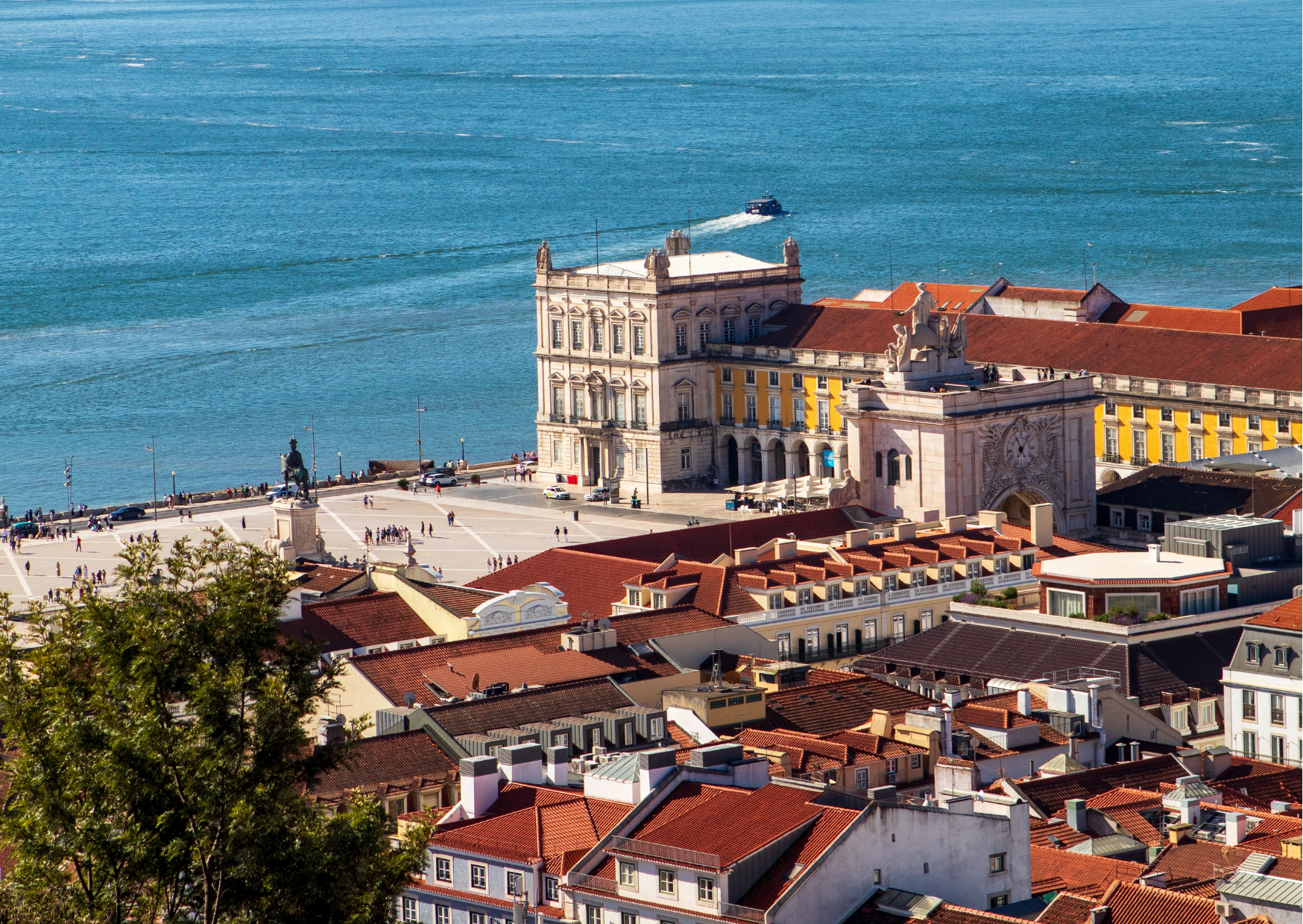
The coastal cities, even in hot countries, run substantially cooler than their inland counterparts because the sea moderates their temperature, so Barcelona on the Mediterranean coast stays more bearable than inland Madrid, Lisbon on the Atlantic catches ocean breezes, and the coastal cities generally offer the southern European experience without the inland furnace. The northern European cities, by latitude alone, run cooler in most summers, so the great cities of the north, Amsterdam, Copenhagen, Edinburgh, the German and Scandinavian capitals, offer a European city break with far less heat risk, though even these can catch a heat event as the late-May heat reaching London showed. And the cities at altitude or near mountains enjoy cooler nights that make the heat recoverable.
For a traveler genuinely worried about heat, this is the real planning lever, the freedom to choose a cooler city rather than to brave a hot one. A summer trip built around the cooler coasts and the northern cities sidesteps most of the heat challenge entirely, while still delivering a rich European experience, and the traveler who is flexible about destination can almost always find a comfortable version of the trip they want. This is not to say avoid the hot cities, which are wonderful and manageable with the right approach, but to point out that anyone for whom heat is a genuine concern, the elderly, those with health conditions, those who simply hate being hot, has the option of choosing the map’s cooler corners rather than enduring its hotter ones.
How To Assess Any City Yourself
The deepest value of understanding the factors is that it frees you from any list, letting you assess the heat vulnerability of any European city you are considering, including ones no article happens to mention.
Ask the four questions that the factors imply. How large and dense is the city, since bigger and more paved means a stronger heat island effect and hotter nights. How far is it from the sea, since coastal cities are moderated and inland cities are not. How far south and how low-lying is it, since southern latitude and trapped basins amplify heat. And how is it built and equipped, whether the architecture copes with heat and whether air conditioning is common, which in southern Europe it generally is not. A city that is large, inland, southern, low-lying, and un-air-conditioned will be brutal in a heat event, while one that is coastal, northern, or built for heat will be far gentler, and you can place any city on that spectrum yourself.
This self-assessment matters because the specific cities that suffer in any given heat event vary, and a static avoid-list is both alarmist and unreliable, wrong as soon as the weather shifts. What does not vary is the physics, the factors that make some cities hotter than others, and a traveler who understands those can evaluate their own itinerary intelligently rather than relying on someone else’s list of cities to fear. The goal is not to memorize which cities are hot but to understand why cities get hot, which lets you plan any trip, to any city, with a clear sense of the heat risk and how to handle it.
The Night Heat Nobody Warns You About
One dimension of urban heat deserves its own treatment because travelers consistently underestimate it, and it is often the part of a hot city trip that actually breaks people.
The daytime peak is what everyone pictures when they imagine a heat wave, the blazing afternoon, the sun-struck square, but the part that genuinely wears a traveler down is the failure of the night to cool. In open countryside the temperature drops substantially after dark, giving bodies a chance to recover, but in a dense city the stone and concrete that soaked up heat all day release it slowly through the night, keeping the air warm long past midnight. This is the urban heat island at its most punishing, and it means that in a real heat event a city can stay uncomfortably hot at two in the morning, denying the cool night that makes the hot day survivable. The cumulative effect of several nights without proper cooling is what turns a hot trip from unpleasant into genuinely exhausting.
This is precisely why the air conditioning question matters so much in a hot city, and why it is about sleep more than daytime comfort. A traveler can escape the daytime heat in museums, shaded cafés, and the cool of the morning, but the night is spent in the accommodation, and if that room does not cool down, neither does the traveler. A sleepless, sweltering night undoes the recovery the body needs, and several in a row compound into real fatigue and even health risk for vulnerable people. In the hot inland cities especially, confirming that your accommodation can actually deliver a cool night, through real air conditioning or at least good shutters and cross-ventilation, is the single most important booking decision, more important than the location or the view, because it determines whether you sleep.
The practical rule that follows is to treat the night, not the day, as the real test of a hot-city stay. When assessing a trip to a heat-vulnerable city in summer, the question is less whether you can handle the hot afternoons, which you can with the right rhythm, and more whether you can sleep at night, which depends entirely on where you stay. Book for the night, in other words, choosing the accommodation that will be cool enough to sleep in over the one that is charming but stifling, and the hot city becomes manageable. Ignore the night, and even the best-planned days cannot compensate for the exhaustion of not sleeping, which is the quiet way that hot-city trips most often go wrong.
The Real Bottom Line
After all the analysis, the practical conclusion is reassuring and worth stating plainly, because the framing of cities to avoid gets the truth backwards.
There are no European cities to permanently avoid because of heat, only cities to handle thoughtfully in a heat event, and the difference matters. Every one of the hot cities is a wonderful place that is pleasant for most of the year and entirely manageable even in summer heat if you adopt the local rhythm, front-load your days, seek the indoor and shaded options through the afternoon, confirm your accommodation has cooling, and respect the heat as a health matter rather than fighting it. The inland southern capitals and the great stone tourist cities are not danger zones, they are simply cities that demand the heat-smart approach their own residents have used for centuries.
The genuinely useful takeaway is the combination of two freedoms. The freedom to visit any city, even the hottest, by handling it intelligently, and the freedom to choose a cooler city instead if heat is a real concern for you. A traveler armed with the understanding of what makes cities hot, how to handle the hot ones, and which ones stay cool, can plan a European summer with complete confidence, neither frightened away from the great hot cities nor caught off guard by their heat. That is worth far more than any list of cities to reroute around, because it is knowledge that applies to every city, every summer, rather than a snapshot that expires the moment the weather changes.

About the Author: Ruben, co-founder of Gamintraveler.com since 2014, is a seasoned traveler from Spain who has explored over 100 countries since 2009. Known for his extensive travel adventures across South America, Europe, the US, Australia, New Zealand, Asia, and Africa, Ruben combines his passion for adventurous yet sustainable living with his love for cycling, highlighted by his remarkable 5-month bicycle journey from Spain to Norway. He currently resides in Spain, where he continues sharing his travel experiences with his partner, Rachel, and their son, Han.