
There is a moment in a lot of Italian restaurants when the waiter’s face does something small and polite when a tourist orders. It is not contempt. It is the particular patience of someone watching a person pair a sauce with a shape that no Italian would ever put together, the culinary equivalent of wearing socks with sandals. The pasta will arrive, it will be fine, and it will also be slightly wrong in a way the whole table around you understands.
From Spain, where Italian food is as beloved and as frequently mangled as it is everywhere else outside Italy, the pattern is easy to spot once you know it. Italians do not pair pasta shapes with sauces by accident or preference. There is a logic, centuries old and deeply held, about which shape carries which sauce, and getting it right is one of the quiet markers that separates someone who eats Italian food from someone who understands it. Here are five shapes worth knowing, and what actually belongs with each.
Why The Shape Matters At All
Before the specific shapes, it helps to understand the principle underneath all of them, because once it clicks the individual rules stop feeling arbitrary and start feeling obvious.
Pasta shapes are not decorative. Each one is a tool, engineered over generations of home cooks to deliver a particular kind of sauce to your mouth in the best possible way. A long smooth strand, a ridged tube, a cupped little disc, each solves the same problem differently, the problem of how to get pasta and sauce into a single forkful in the right proportion. The Italians who developed these shapes were not thinking about elegance. They were thinking about which shape held the local sauce best, and the answers became tradition.
This is why the pairings feel so fixed to an Italian. A sauce and a shape that evolved together in the same region are not a suggestion, they are a solved problem, the best answer arrived at over a very long time. Putting a sauce on the wrong shape is not a crime, but it is a little like using the wrong tool for a job, it works, just not as well as the thing designed for it. Hold that idea, that shape is function rather than decoration, and every pairing rule below follows from it naturally.
Spaghetti, And The Meatball Problem
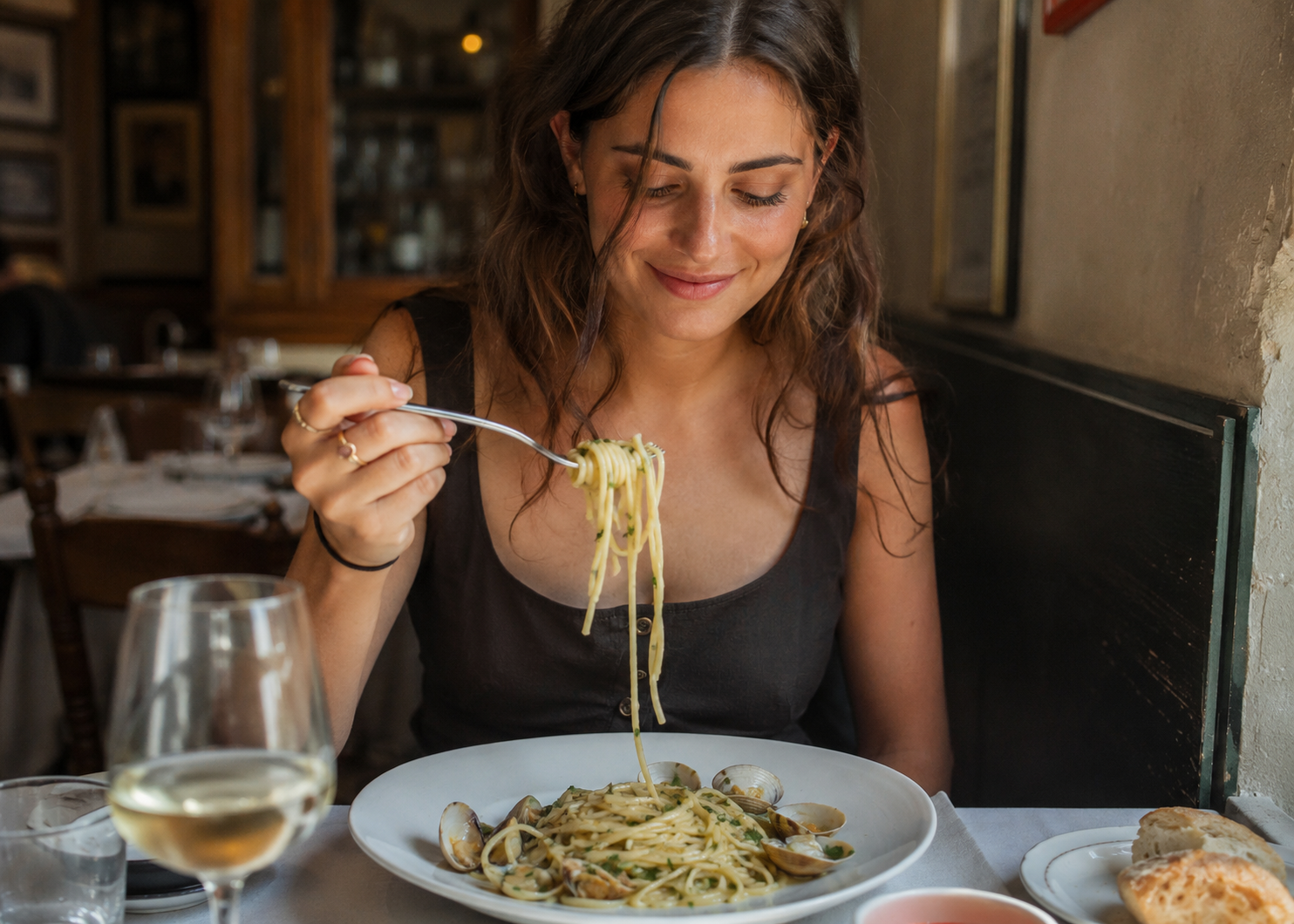
Start with the most famous shape and the most famous mistake, because spaghetti and meatballs is the dish that announces an American at the table more than any other.
In Italy, spaghetti is for smooth, oil-based, or lightly clinging sauces. The long, round strands are built to be coated, not loaded, which is why the classic Roman pairings work so well: spaghetti with garlic and oil, spaghetti alle vongole with clams, spaghetti cacio e pepe with cheese and pepper, spaghetti with a simple tomato sauce. The sauce wraps the strand and you twirl it cleanly. The shape and the sauce are designed for each other, the slick surface of the strand carrying a thin sauce evenly along its whole length.
What spaghetti is not built for is large chunks of meat. Spaghetti and meatballs as a single plated dish is an Italian-American invention, not an Italian one. In Italy, meatballs, polpette, are typically a second course eaten on their own or with bread, smaller than their American cousins and served after the pasta rather than on top of it. The pairing that baffles Italian waiters is not that you like meatballs, it is that you have put them on spaghetti, where they roll off the slick strands and force you to chase them around the bowl. Italians watched immigrants in America combine the two when meat was suddenly cheap and plentiful, a luxury the old country had rarely allowed, and the dish became a beloved American classic that simply never came home. It is a genuinely good dish. It is just not an Italian one.
Bolognese Belongs On Tagliatelle, Not Spaghetti
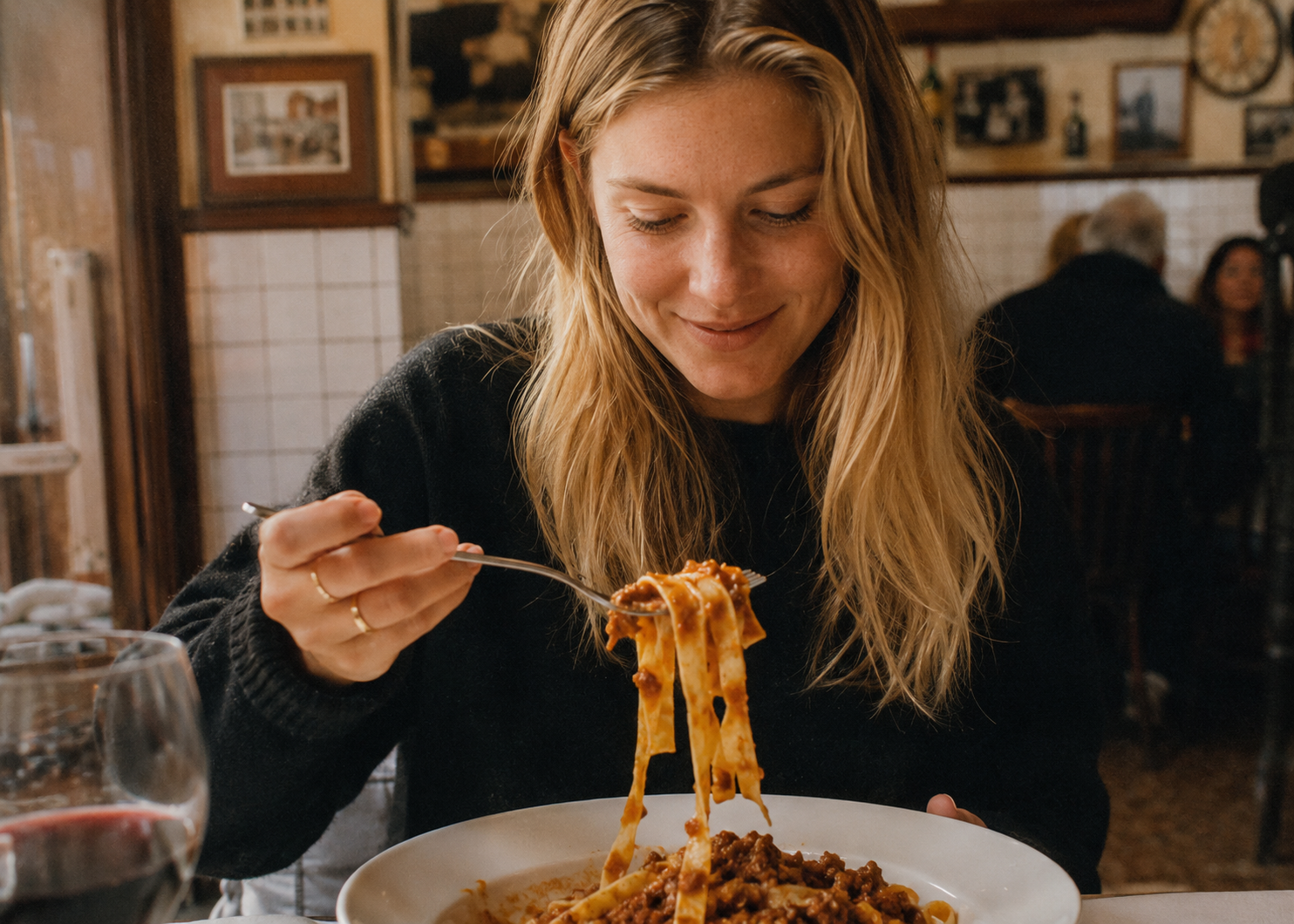
The second great mistake follows directly from the first, and it is the one Italians feel most strongly about, because it gets the country’s most famous meat sauce wrong.
The rich, slow-cooked meat sauce the world calls Bolognese, which Italians call ragù, belongs on tagliatelle, the flat, ribbon-shaped fresh egg pasta from the same region of Emilia-Romagna that gave the sauce its name. The reason is physical. The wide, slightly rough, porous surface of tagliatelle catches and holds the chunky meat sauce, so every forkful carries pasta and ragù together in balance. The sauce and the shape come from the same place and evolved together over generations, which is exactly why they fit.
Put that same ragù on spaghetti, as the global “spaghetti Bolognese” does, and the meat slides off the smooth round strands and pools at the bottom of the bowl, leaving you twirling bare pasta and then spooning up sauce separately. In Bologna, the city that owns the sauce, spaghetti Bolognese is regarded as a foreign curiosity that has little to do with the local dish, so much so that the city has at times formally objected to the global version bearing its name. The flat ribbon grips, the round strand sheds. If you order ragù in Italy, expect it on tagliatelle, on the broad sheets of lasagne, or layered into baked pasta, and never on spaghetti.
The deeper point is that the egg-based fresh pasta of the north, tagliatelle and its relatives, was made for exactly these rich, meaty, often butter-touched sauces, while the dried durum-wheat pasta of the south, spaghetti among it, was made for the brighter oil-and-tomato-based sauces of a different climate and a different economy. The ragù-on-tagliatelle rule is really a rule about matching northern pasta to northern sauce, and it is the clearest single example of the shape-as-function principle in all of Italian cooking.
Penne And The Question Of Texture
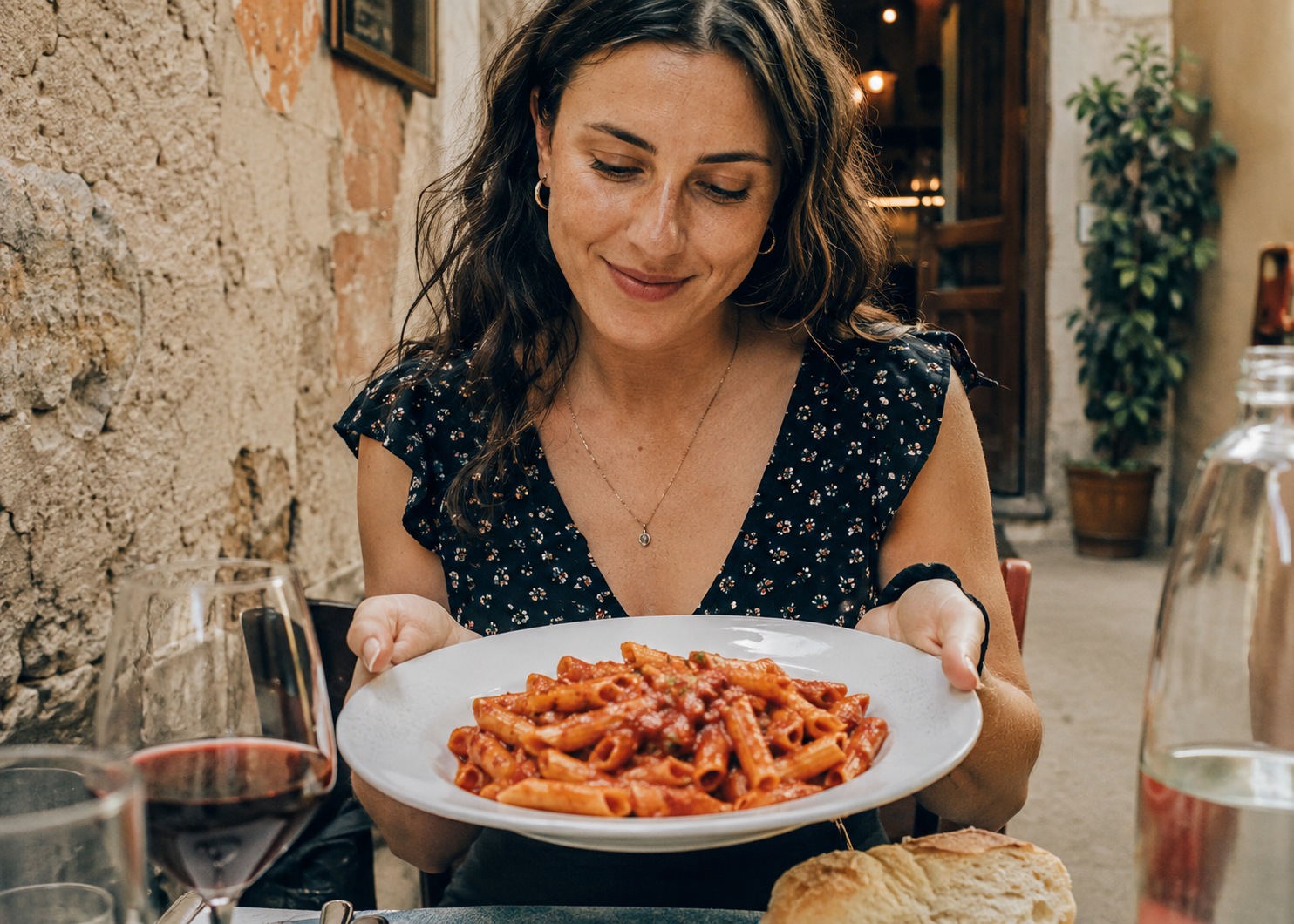
Moving to the short shapes, penne is where the logic shifts from clinging to catching, and where the ridges on the surface start to matter.
Penne is built for chunkier sauces and for catching sauce inside the tube. The diagonal-cut cylinders, especially the ridged version called penne rigate, are designed to trap sauce both in their hollow centers and against the grooves on their surface. This makes penne the right shape for arrabbiata, the spicy tomato sauce whose name means angry, and for hearty vegetable sauces, baked dishes, and anything where you want little reservoirs of sauce in each bite. The shape is essentially a tool for holding chunky sauce in place, scooping it up and trapping it where a smooth strand would let it slide away.
The mismatch with penne is delicate, oil-based sauces meant for long pasta. Penne with a sauce designed for spaghetti wastes the tube’s catching ability and leaves a light sauce sliding straight through without ever lodging anywhere. The Italian instinct is that short, sturdy, ridged shapes go with robust sauces that have texture and body, while long smooth strands go with sauces that coat. Penne sits firmly on the robust side, which is why you find it with bold tomato sauces, with chunks of vegetable, and baked in the oven under cheese, rather than tossed lightly in oil and herbs where a long strand would serve better.
This is also where the difference between rigate and lisce, ridged and smooth, earns its keep. The ridged version exists specifically because the grooves give the sauce more surface to grip, which is why most cooks reach for penne rigate when the sauce is the point. The smooth version has its defenders for certain creamy preparations where it slides more elegantly, but for the everyday robust tomato or vegetable sauce, the ridges are doing real work, not just adding texture for its own sake.
Orecchiette, The Shape That Catches On Purpose
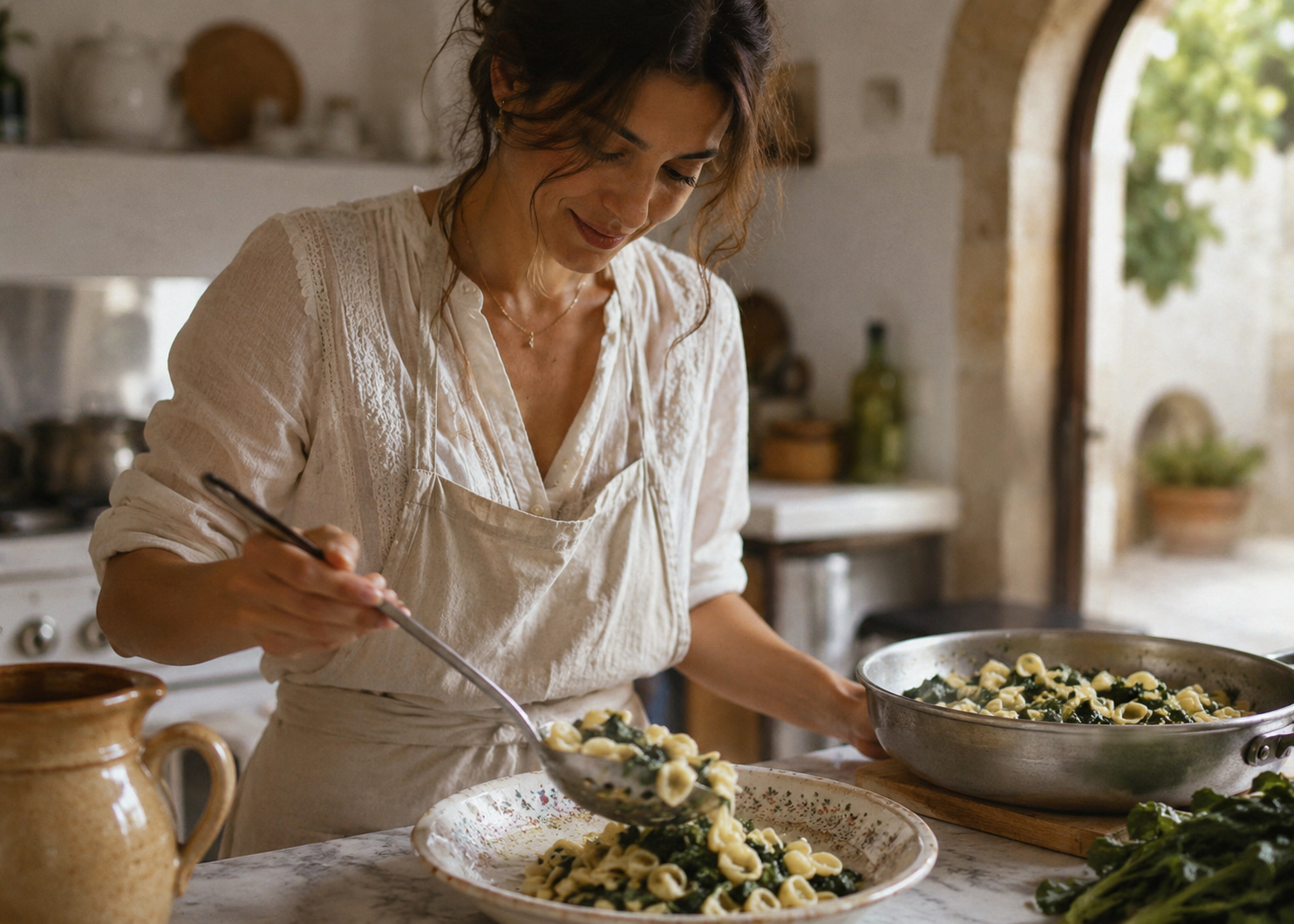
For a shape most tourists have never deliberately ordered, orecchiette teaches the pairing logic better than any other, because its design is so obviously purposeful.
These small “little ears” from Puglia, in Italy’s southern heel, are concave discs with a slightly rough surface, traditionally pressed out by hand with a thumb against a board, and they exist to catch. The classic and almost inseparable pairing is orecchiette with cime di rapa, broccoli rabe, where the little cups scoop up the bitter greens, the garlic, the chili, and the olive oil so each forkful is complete and balanced. The shape and the dish are so bound together in Puglia that ordering one essentially means ordering the other, and watching the local women press the shapes by hand in the streets of Bari is one of the enduring images of the region.
The lesson orecchiette teaches is that the cup is doing a job. Where spaghetti coats and penne traps in a tube, orecchiette scoops, which makes it ideal for sauces with small bits, greens, crumbled sausage, vegetables cut small, that nestle into the concave shape and ride up on the fork together with the pasta. A smooth, thin sauce would simply pool and slide off, wasting the design entirely. Once you understand orecchiette, the whole system clicks: every Italian shape is a different solution to the same problem of getting sauce and pasta into your mouth together, and the regional pairings are the accumulated wisdom of which solution fits which sauce, written into the shapes themselves.
Carbonara Is A Roman Thing, And The Cream Is A Lie
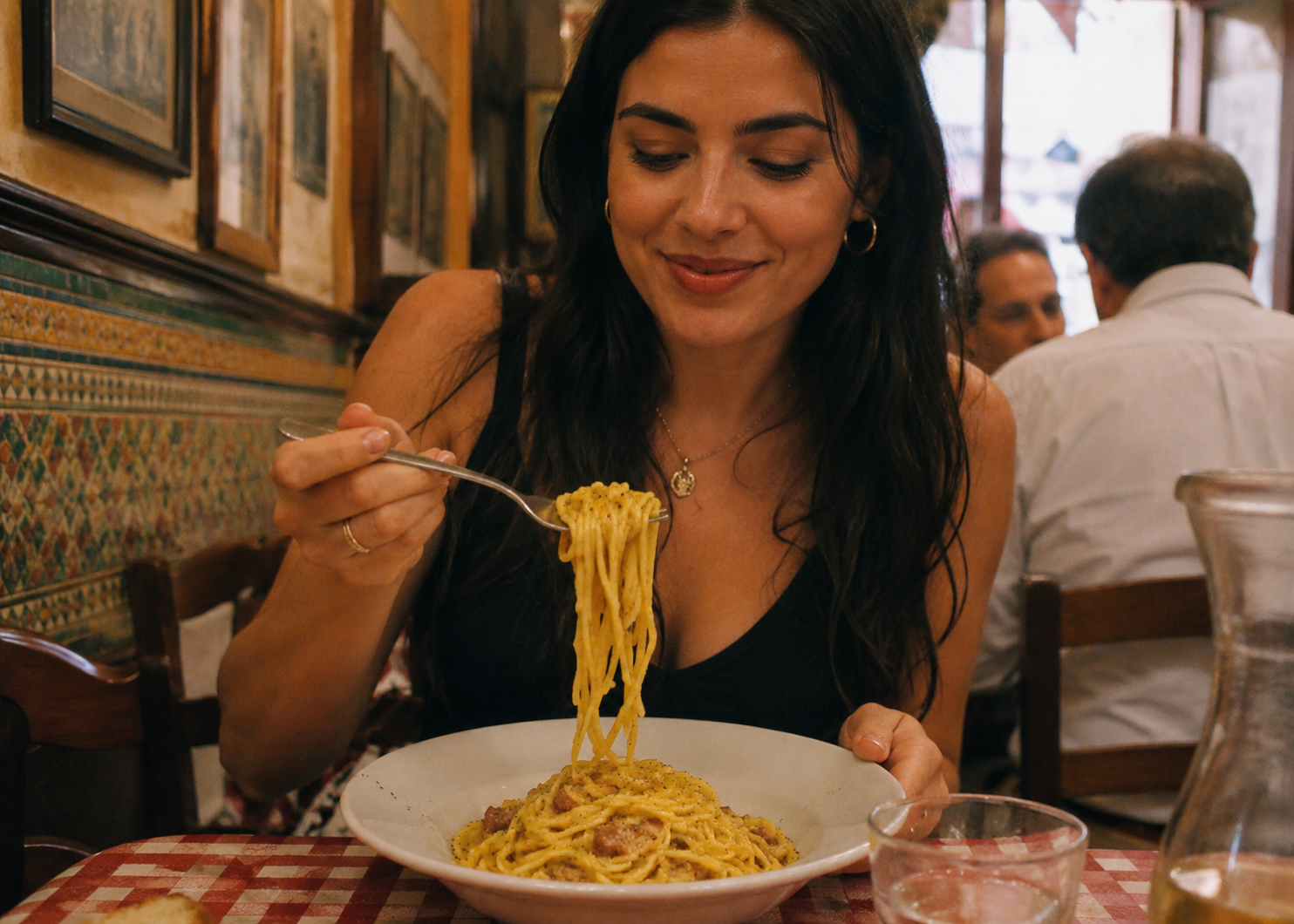
The last entry is less about shape and more about the single most mangled Italian sauce abroad, because tourists get carbonara wrong before they even choose the pasta.
Authentic carbonara, a Roman dish, is built from eggs, hard pecorino cheese, cured pork, specifically guanciale from the pig’s cheek, and black pepper, and no cream whatsoever. The silky texture that people abroad try to achieve by pouring in cream comes, in the real version, from eggs and cheese emulsified with a little starchy pasta water off the heat, a technique rather than an ingredient. The Italian view of cream in carbonara is roughly the view a French chef takes of ketchup on a fine steak. It is not a variation. It is a different and lesser dish wearing the name, and the substitution of cream is the single thing that most marks the foreign version.
As for the shape, carbonara traditionally goes on spaghetti, or on the hollow rigatoni or the hollow-strand bucatini, long strands or sturdy tubes that the egg-and-cheese coating clings to and slides into. The mistakes tourists make with carbonara are reliable and stack on top of one another: adding cream, adding garlic, adding onion or peas, using bacon instead of guanciale and parmesan instead of pecorino. Each substitution drifts a little further from Rome until the dish on the plate shares only a name with the original. The real thing has a short list of ingredients and no cream, and tasting it made correctly, glossy and rich from egg rather than heavy from dairy, is usually the moment a visitor realizes how much the exported version had quietly changed over the years.
Carbonara belongs to a family of four Roman pasta dishes worth knowing as a set, because they share a logic. Cacio e pepe is the simplest, just pecorino and pepper emulsified with pasta water. Add guanciale and you approach gricia. Add tomato to gricia and you get amatriciana. Add egg instead of tomato and you have carbonara. They are variations on a theme, built from the same handful of Roman pantry staples, and none of them contains cream. Learn the four and you understand Roman pasta better than most tourists ever will.
How To Order Like You Belong

You do not need to memorize a chart to order pasta well in Italy. You need to understand the single principle underneath all of it, and then a few habits follow naturally.
The principle is that the shape and the sauce are chosen together, by people who have been refining the match for centuries. When a menu lists a pasta dish, it almost always names both the shape and the sauce as a fixed pair, tagliatelle al ragù, spaghetti alle vongole, orecchiette con cime di rapa, because the pairing is the dish, not a shape with a sauce poured over it. The single most reliable way to order well is therefore the simplest: order the pairing as the menu gives it to you, rather than asking to swap the shape, which is the move that produces the patient waiter face.
If you are cooking at home, the rule of thumb carries the logic. Long smooth pasta for sauces that coat, oil, light tomato, seafood, cheese. Short ridged or tubular pasta for chunky robust sauces with texture and body. Cupped and rough shapes for sauces with small bits that need catching. Fresh egg ribbons for rich northern meat sauces. Match the sauce to what the shape is physically built to do, and you will land on pairings an Italian would recognize even if you have never seen the traditional combination, because you will be solving the same problem the same way they did.
The deeper pleasure in all of this is that it is not snobbery, whatever it can look like from outside. It is a country’s accumulated knowledge about how to make a simple, cheap food taste as good as it possibly can, encoded in a thousand small rules that each have a physical reason behind them. The waiter is not judging you. He is quietly hoping you will discover what the dish is supposed to taste like when the shape and the sauce belong together. Learn five of these pairings and the next plate of pasta tastes a little different, because you finally understand what the shape was trying to do all along.

About the Author: Ruben, co-founder of Gamintraveler.com since 2014, is a seasoned traveler from Spain who has explored over 100 countries since 2009. Known for his extensive travel adventures across South America, Europe, the US, Australia, New Zealand, Asia, and Africa, Ruben combines his passion for adventurous yet sustainable living with his love for cycling, highlighted by his remarkable 5-month bicycle journey from Spain to Norway. He currently resides in Spain, where he continues sharing his travel experiences with his partner, Rachel, and their son, Han.