
There is a particular sight in a Portuguese town on a warm evening. Older couples, well past sixty, walking together without hurry, stopping to talk, sitting over a small coffee or a glass of wine as the light goes. They are not killing time. They are doing the thing that has held them together for forty years, and they show no sign of stopping just because the children are grown.
From Spain, where the rhythm of evening life runs along the same Iberian lines, the contrast with the American pattern is hard to miss. In the United States, a great many couples quietly drift once the children leave, the shared routines having been built entirely around the kids and never replaced. Portuguese couples tend not to let that happen, and the reason is a set of small evening habits they simply keep doing, year after year, long past the age when American couples have stopped. Here are eight of them.
The Evening Walk Together
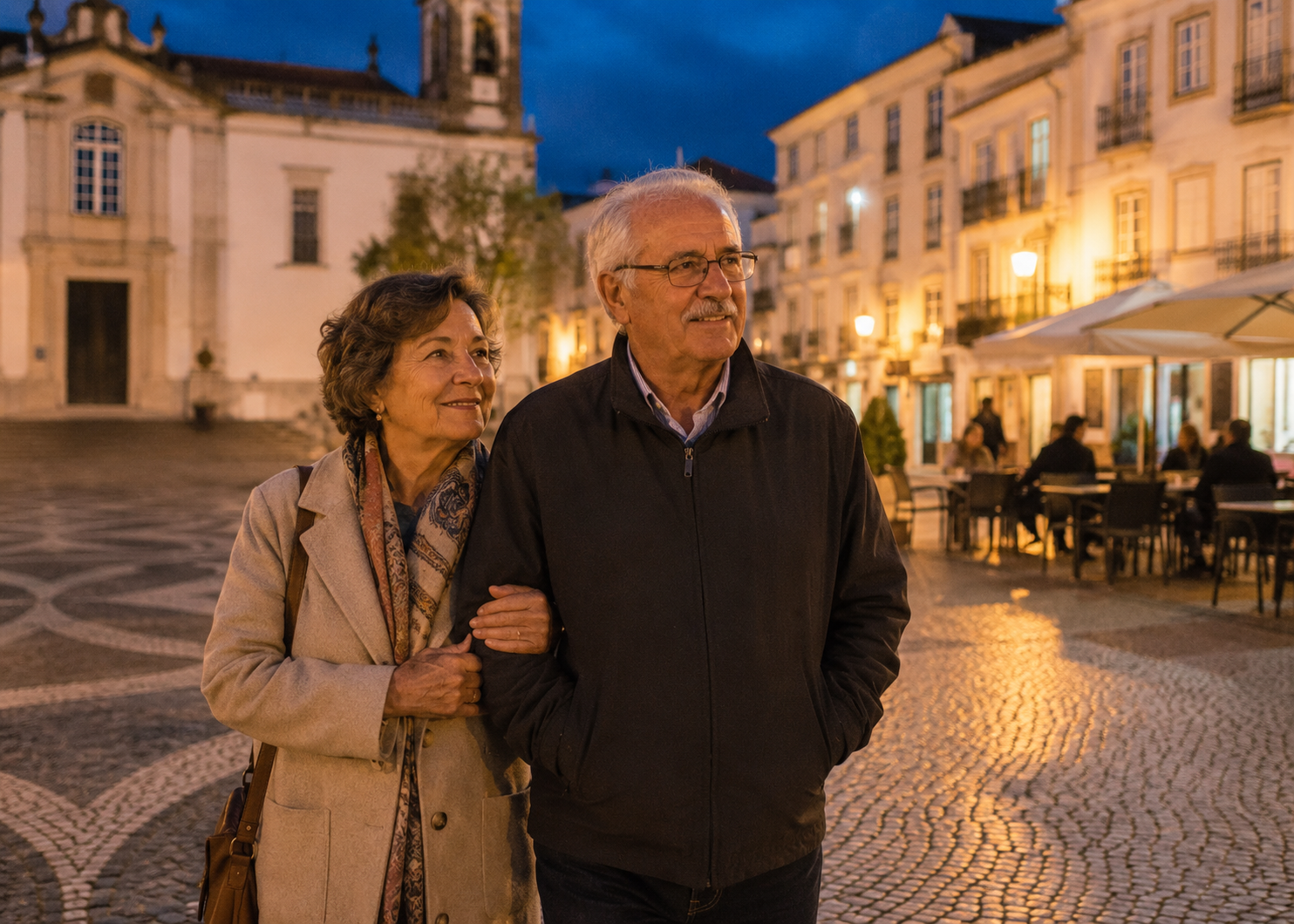
Start with the most visible habit, because it is the one a visitor notices first and the one that does the most quiet work.
The evening stroll, the passeio, is a fixture of Portuguese life, and older couples keep doing it together long after retirement. They walk the same streets, the same waterfront or square, often at the same hour, not for exercise in the American sense but for the shared movement and the shared looking-at-the-world that walking together provides. It is time side by side with nothing to accomplish, which turns out to be exactly the kind of time a long marriage runs on.
The American equivalent, where it exists at all, tends to be solitary and goal-driven, a walk for steps and heart rate, headphones in, done alone. The Portuguese version is companionable by default, two people moving through their town together, and the difference matters more than it looks. A couple that walks together every evening has a built-in hour of low-stakes shared presence, the conversational equivalent of keeping a fire banked, and they have it whether or not anything needs discussing. The habit outlasts the children because it was never about the children.
The Long Evening Meal
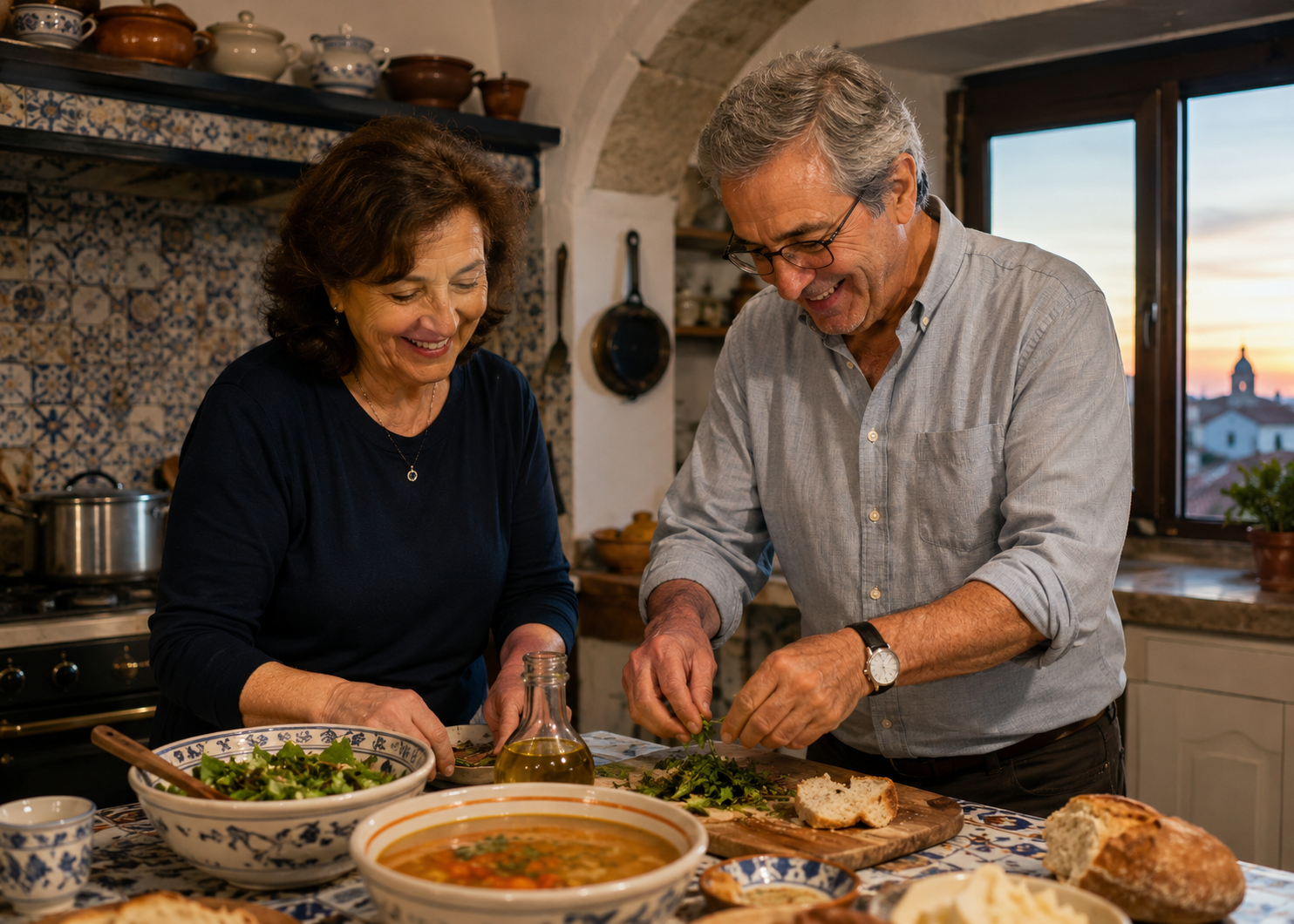
The second habit is about the table, and it is the heart of the Portuguese evening.
Dinner in Portugal is unhurried, eaten late by American standards, and treated as the gathering point of the day rather than a refueling stop. For an older couple, the long evening meal remains the anchor of the day even after the household has shrunk to two, a stretch of time set aside to sit, eat slowly, and talk. The food matters, but the duration matters more, the simple fact of an hour or two spent at the table together without the television deciding the pace.
American dinner culture, by contrast, has compressed over decades into something fast and often separate, eaten in front of a screen or at different times as schedules diverge, and when the children leave, the shared meal frequently goes with them. The Portuguese couple keeps the long table because it was always the point, not a logistics exercise built around feeding kids. Two people who sit down to a real meal together every night have a daily appointment with each other that the empty nest does nothing to cancel.
The Coffee Ritual

The third habit is small, daily, and deceptively important.
Portuguese couples keep their coffee rituals, the shared morning coffee, the small cup taken together at a café in the afternoon or evening, the bica that punctuates the day. These are tiny pockets of shared time, a few minutes each, but they recur reliably, and a marriage is built far more from the small reliable moments than from the occasional grand ones. An older couple stopping for a coffee together is performing a ritual they have performed thousands of times, and the familiarity is the comfort.
The American pattern treats coffee as fuel, grabbed individually, drunk on the move or at a desk, rarely a shared sitting-down moment between partners. The loss is subtle but real, the absence of those small recurring appointments that give a day its shared punctuation. The Portuguese couple’s coffee together is not about the coffee. It is about the reliable few minutes of sitting across from each other, repeated daily until it becomes part of the architecture of the relationship.
Staying Woven Into The Community
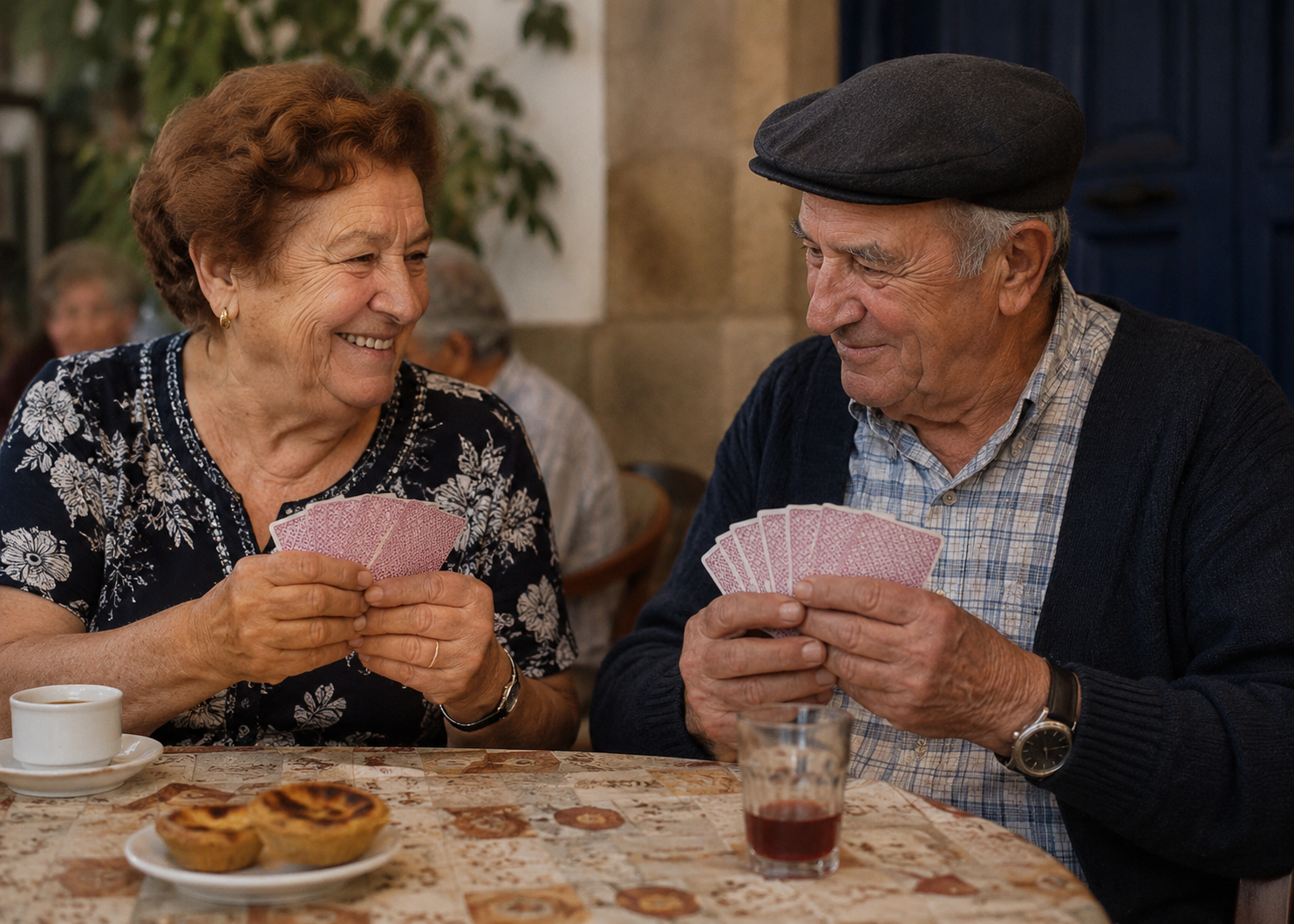
The fourth habit looks outward, and it protects the couple by keeping them embedded in something larger.
Older Portuguese couples stay socially connected, to neighbors, to extended family, to the regulars at the café and the people in the square, and they do it together as a pair moving through a shared social world. The evening is when this happens, the hours when a town’s social life takes place in its public spaces, and a couple that participates stays woven into a web of relationships that supports them both. They are not a sealed unit of two, they are two people held inside a community.
The American pattern, especially in retirement and especially in car-dependent suburbs, tends toward isolation, the couple increasingly alone together with their wider social ties thinning as work ends and friends scatter. A couple isolated to just each other puts enormous weight on the relationship, every need met by one person, while a couple embedded in a community shares that load across many relationships. The Portuguese habit of staying socially connected together is, among other things, a way of not asking a spouse to be everything.
Sitting Outside As The Day Ends
The fifth habit is about place and pause, and it is one of the most distinctive of all.
Portuguese couples sit outside in the evening, on a doorstep, a balcony, a bench, a café terrace, watching the day wind down and the town move around them. This is time spent together doing very little, present in the same place at the same slow pace, and it is precisely the unstructured shared time that long relationships need and that busy lives squeeze out. The evening sit is not an activity. It is a deliberate pause taken together.
Americans, culturally inclined to fill time with activity and to retreat indoors to private screens, often lose this kind of shared idleness entirely, each partner absorbed in separate entertainment in separate rooms. The Portuguese couple sitting outside together as the light fades is doing something that looks like nothing and functions as connection, the shared experience of an ordinary evening, repeated until it becomes one of the strongest threads between them.
Keeping Up Appearances For Each Other

The sixth habit is about care and respect, and it persists in a way Americans sometimes let slide.
Older Portuguese couples tend to keep up a certain presentation, dressing with care to go out together in the evening, maintaining the small courtesies and the effort that signal continued respect and continued interest in each other. This is not vanity. It is the daily practice of treating the relationship and the partner as worth the effort, of not letting the long marriage slide into the comfortable neglect where two people stop bothering for each other.
The American pattern more easily permits a slide into the purely comfortable, the sweatpants-and-separate-routines version of a long partnership where the effort has quietly drained away. The Portuguese instinct to dress for the evening walk, to maintain the courtesies, is a way of keeping the relationship from becoming merely habitual cohabitation. Continuing to make an effort for each other, decades in, is itself a form of saying the other person still matters.
Shared Faith And Tradition
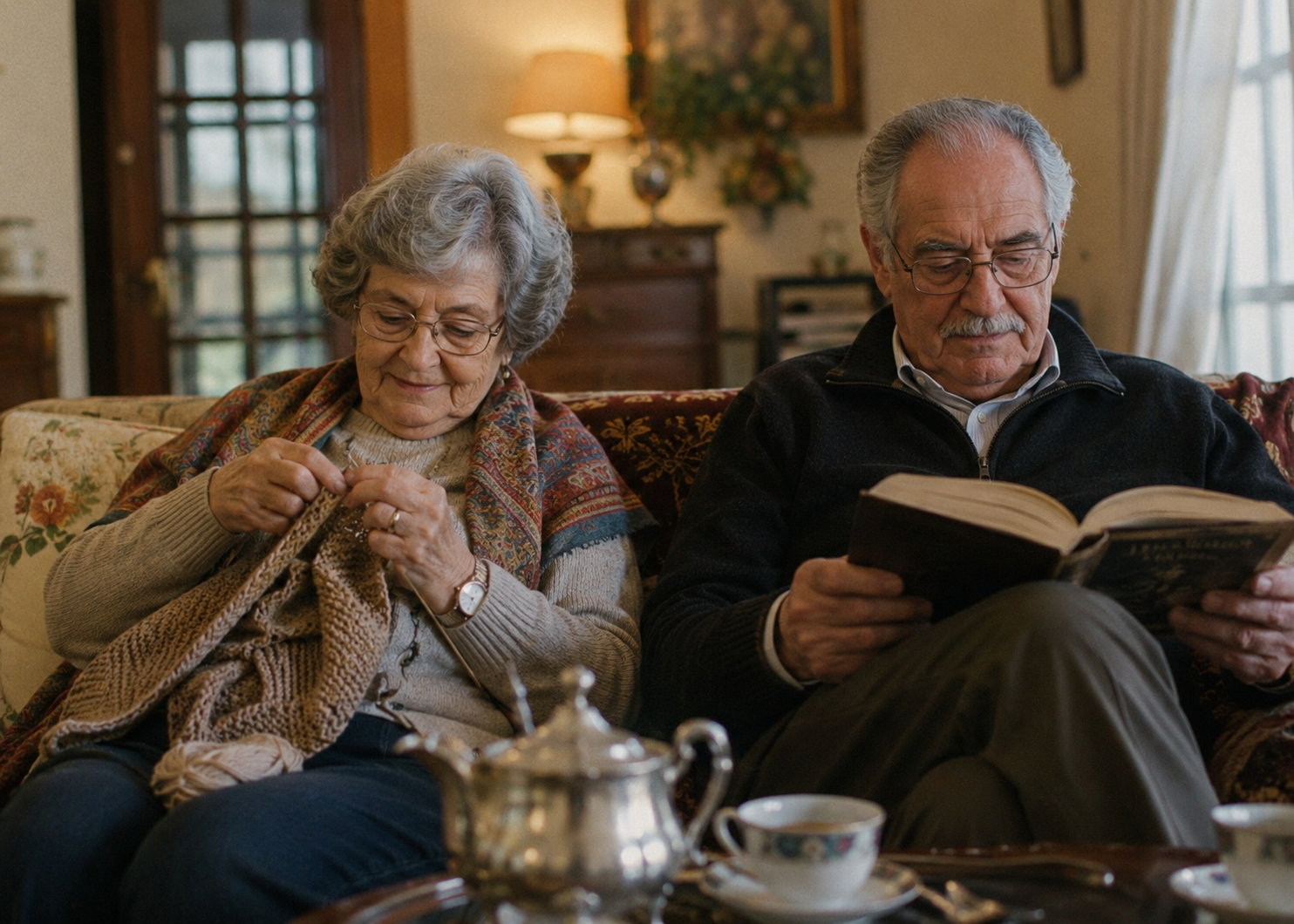
The seventh habit is about the framework that holds the week together.
Many older Portuguese couples share religious and traditional observances, the rhythms of the church calendar, the festivals, the rituals that mark the year, and they participate in these together as a couple within a community. Whatever one makes of the faith itself, the shared participation provides a common framework, a set of recurring shared experiences and a calendar of things done together, that gives the relationship structure and continuity across the years.
American couples, more secular and more individualistic on average, often lack this shared external framework, leaving the relationship to generate all its own structure from within. The Portuguese couple’s shared tradition supplies a scaffolding the couple does not have to build themselves, a reliable set of shared occasions and shared meaning that recurs year after year. It is one more thread that does not depend on the children, and so one more thread that does not break when they leave.
Talking, And Still Listening
The eighth habit is the simplest and the most fundamental, and it underlies all the others.
Portuguese couples keep talking, across the long meal, on the walk, over the coffee, on the bench outside, the steady conversation that is the actual substance of a marriage. The other habits all create the conditions for this one, the shared time in which two people keep telling each other the small things, keep listening, keep staying current with each other’s inner life rather than becoming strangers sharing an address. The talk is the point, and the rituals exist to make room for it.
The American empty-nest drift is, at bottom, a drift out of conversation, two people who organized their shared talking around the children and never rebuilt it around each other, gradually falling silent across the dinner table or the living room. The Portuguese couple, having kept all the shared time alive, keeps the conversation alive inside it. They still have things to say to each other after forty years, because they never stopped creating the occasions to say them.
What This Means For The Rest Of Us
The pattern across all eight habits is a single thing, and naming it is the useful part for anyone watching from outside.
Every one of these habits is a structure for spending unhurried time together as a default rather than an effort, built into the ordinary shape of the day and the year rather than scheduled as a special occasion. The Portuguese couple does not have to plan connection, because connection is woven into the walk, the meal, the coffee, the bench, the festival, the conversation that fills them. The American couple, by contrast, often has to consciously arrange time together against a culture that pulls toward separate activity and private screens, and arranged connection is fragile in a way that habitual connection is not.
The lesson the Portuguese couples offer is not about Portugal. It is that a long relationship survives on small, reliable, shared rituals far more than on grand gestures or good intentions, and that the couples who keep these rituals through the empty-nest years are the ones who never built their whole shared life around the children in the first place. The evening walk, the long table, the coffee, the bench outside, these are not quaint old-world customs. They are the daily maintenance of a marriage, done out of habit until the habit becomes the thing that holds two people together long after the house has gone quiet.
The Empty Nest That Never Empties The Same Way
It is worth looking directly at the difference the empty nest makes, because this is where the two cultures diverge most sharply and where the Portuguese habits earn their keep.
In the American pattern, the departure of the children is often a quiet crisis dressed up as a milestone. A couple that spent two decades organizing every evening around school runs, homework, sports, and family dinners suddenly finds the scaffolding gone, and underneath it, sometimes, very little. The shared activities were the children’s activities. The conversations were about the children. With the kids gone, the couple discovers they have to rebuild a shared life from scratch at exactly the age when rebuilding anything feels hardest, and a significant number simply do not, drifting instead into parallel lives under one roof, which is part of why later-life separation has become more common in the United States than it once was.
The Portuguese pattern softens this transition because the couple’s shared life was never wholly built on the children to begin with. The evening walk happened before the children and continues after them. The long table predates them and outlasts them. The coffee, the bench, the festivals, the conversation, all of it existed as the couple’s own shared rhythm into which the children were folded for a couple of decades, rather than a rhythm that the children created and then took with them when they left. When the house goes quiet, the Portuguese couple still has its own life intact, because that life was always theirs first.
This is the real insight underneath the eight habits, and it reframes them as something more than charming customs. They are, collectively, a marriage that maintains its own identity independent of its parenting, a relationship that remains a relationship and not merely a co-parenting arrangement. The children pass through it. They do not constitute it. And a couple whose bond does not depend on the presence of children in the house is a couple for whom the empty nest is a change of scenery rather than a loss of foundation.
A Caution Against Romanticizing It
None of this is to paint Portuguese marriages as uniformly happy or American ones as doomed, which would be both false and unfair. Plenty of Portuguese couples are unhappy, plenty of American couples thrive into old age, and a culture’s habits are tendencies rather than guarantees. The point is narrower and more useful than a sweeping claim about which country loves better.
What the Portuguese pattern offers is a set of transferable habits, things any couple anywhere can choose to do, that happen to support a relationship through the decades. The walk, the unhurried meal, the small daily rituals, the refusal to let the social world shrink to two, the continued effort for each other, the protected time for conversation. None of these requires Portugal, a particular faith, or a Mediterranean climate. They require only the decision to build connection into the ordinary shape of a day and to keep it there after the obvious reason for togetherness, the raising of children, has passed. That decision is available to anyone, which is exactly why the Portuguese couples on their evening walk are worth watching.

About the Author: Ruben, co-founder of Gamintraveler.com since 2014, is a seasoned traveler from Spain who has explored over 100 countries since 2009. Known for his extensive travel adventures across South America, Europe, the US, Australia, New Zealand, Asia, and Africa, Ruben combines his passion for adventurous yet sustainable living with his love for cycling, highlighted by his remarkable 5-month bicycle journey from Spain to Norway. He currently resides in Spain, where he continues sharing his travel experiences with his partner, Rachel, and their son, Han.