
A Spanish family sits down to lunch at 2:30pm. The meal includes patatas, prepared in one of the dozen traditional ways Spanish cooking handles potatoes. The potatoes are not the enemy here that American nutrition culture has made them. The Spanish eat substantial amounts of potato and maintain some of the lowest rates of type 2 diabetes in the developed world. The American who has been told that potatoes are a blood-sugar disaster looks at this with confusion.
The confusion dissolves when you look at how the Spanish actually eat their potatoes rather than just whether they eat them. The same potato produces dramatically different blood sugar responses depending on how it is prepared, what it is eaten with, when in the day it is consumed, and how quickly it is eaten. The Spanish potato schedule, which is not a deliberate health strategy but simply the traditional way potatoes appear in Spanish meals, happens to align with nearly everything the science says about keeping blood sugar stable. The American potato pattern, by contrast, aligns with nearly everything that produces the spike-and-crash cycle.
This piece walks through how the Spanish actually eat potatoes, what the science says about why these patterns matter for blood sugar, what the American potato pattern does differently, and what individual adults can adopt. Anyone with diabetes or blood sugar conditions should work with their physician on dietary changes. The patterns here are observed across populations and are not medical advice for any specific individual.
How The Spanish Actually Eat Their Potatoes
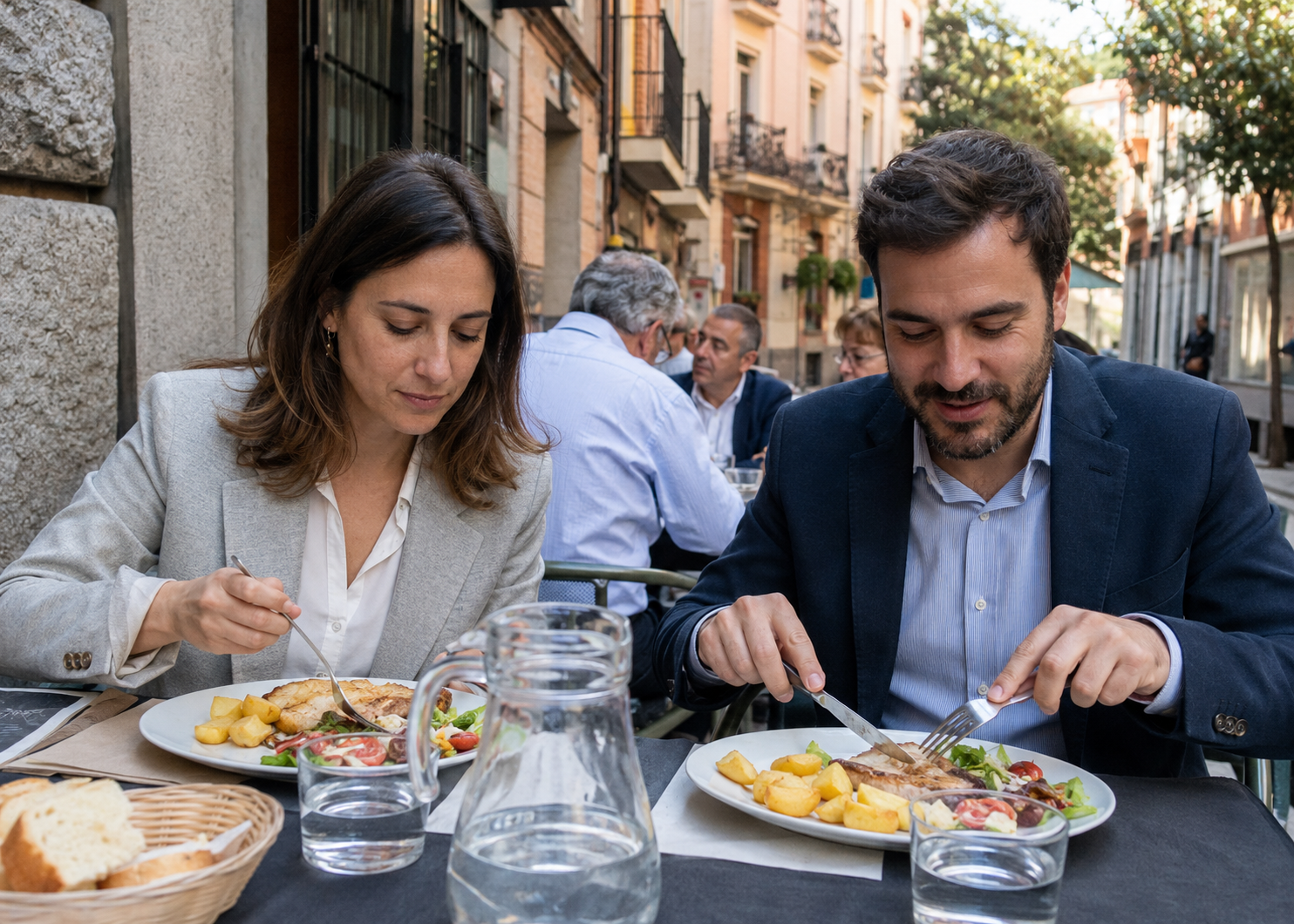
The Spanish relationship with potatoes has specific features that affect how the body processes them.
Potatoes are eaten as part of composed dishes, not as isolated starch. The Spanish potato appears in patatas a la riojana with chorizo and peppers, in a tortilla española with eggs and onions, in potaje with legumes and vegetables, alongside protein and vegetables in countless preparations. The potato is never the entire plate. It arrives integrated with fat, protein, fiber, and acid, all of which slow the absorption of its carbohydrate.
Potatoes are frequently cooked and cooled before eating. Many traditional Spanish potato preparations involve cooking potatoes and then serving them at room temperature or cool. The classic ensaladilla rusa uses cooled boiled potatoes. The cooking-then-cooling process changes the potato starch in a way that matters enormously for blood sugar, a mechanism the science calls resistant starch formation.
Potatoes are eaten with olive oil. Spanish potato dishes are saturated with olive oil, the foundational fat of Spanish cooking. The fat slows gastric emptying and reduces the glycemic impact of the potato. The American baked potato eaten plain or the American french fry eaten fast does not carry the same protective fat integration.
Potatoes appear at lunch, the day’s largest meal, not at dinner. The Spanish eat their substantial potato dishes at the 2:00 to 4:00pm lunch, when the body’s insulin sensitivity is at its daily peak. The same potato eaten at midday produces a flatter blood sugar response than the same potato eaten in the evening.
Potatoes are eaten slowly across a long meal. The Spanish lunch develops across 60 to 90 minutes. The potato consumed across a slow multi-course meal produces a gentler blood sugar curve than the same potato consumed quickly.
Potatoes are followed by a walk. The Spanish post-lunch paseo means the body moves after the meal. The post-meal walk improves glucose uptake by the muscles and flattens the postprandial blood sugar spike.
The combined Spanish potato pattern integrates the potato with fat, protein, fiber, and acid, frequently uses the cooling process that creates resistant starch, places the potato at the metabolically optimal time of day, paces the eating slowly, and follows it with movement. Every one of these features reduces the blood sugar impact of the potato.
What The Science Says About Why These Patterns Matter
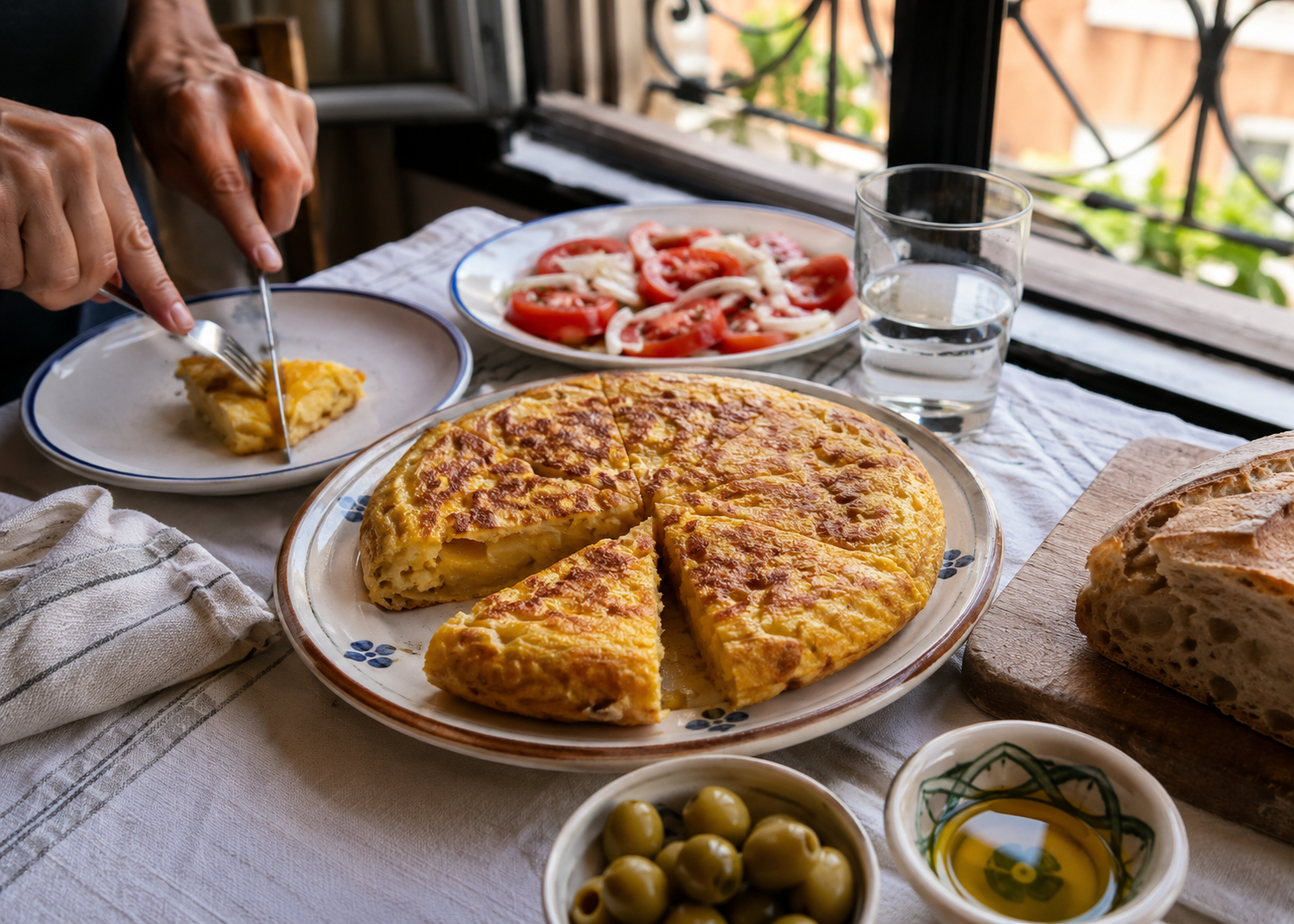
The research on potato preparation and blood sugar response has produced specific findings that explain why the Spanish pattern works.
Resistant starch dramatically changes potato glycemic impact. When potatoes are cooked and then cooled, some of their starch converts to resistant starch, which the body does not digest as simple carbohydrate. The cooled potato produces a substantially lower blood sugar spike than the same potato eaten hot. Reheating gently preserves much of this benefit. The Spanish preference for room-temperature and cool potato dishes captures this effect.
Fat slows carbohydrate absorption. Eating fat alongside carbohydrate slows gastric emptying and reduces the rate at which glucose enters the bloodstream. The olive oil integrated into Spanish potato dishes flattens the glucose curve. The plain American potato lacks this protection.
Protein blunts the glycemic response. Eating protein alongside carbohydrate reduces the blood sugar spike. The Spanish potato eaten with eggs, chorizo, fish, or meat produces a gentler response than the isolated potato.
Fiber slows glucose absorption. Eating fiber alongside carbohydrate slows the digestion of the carbohydrate. The Spanish potato eaten with vegetables and legumes carries fiber that the plain American potato lacks.
Meal timing affects glucose handling. The body’s insulin sensitivity is higher at midday than in the evening. The same carbohydrate load produces a lower glucose spike at lunch than at dinner. The Spanish lunch timing aligns the largest potato consumption with the best metabolic window.
Eating speed affects glucose response. Fast eating produces sharper glucose spikes than slow eating. The slow Spanish meal flattens the curve relative to fast American eating.
Post-meal movement lowers glucose spikes. Walking after a meal improves muscle glucose uptake and reduces the postprandial spike. The Spanish post-lunch walk captures this effect.
The cumulative effect of all these features is that the same potato, eaten the Spanish way, produces a dramatically flatter blood sugar response than the same potato eaten the American way. The potato is not the problem. The pattern around the potato is what determines its blood sugar impact.
What The American Potato Pattern Does Differently
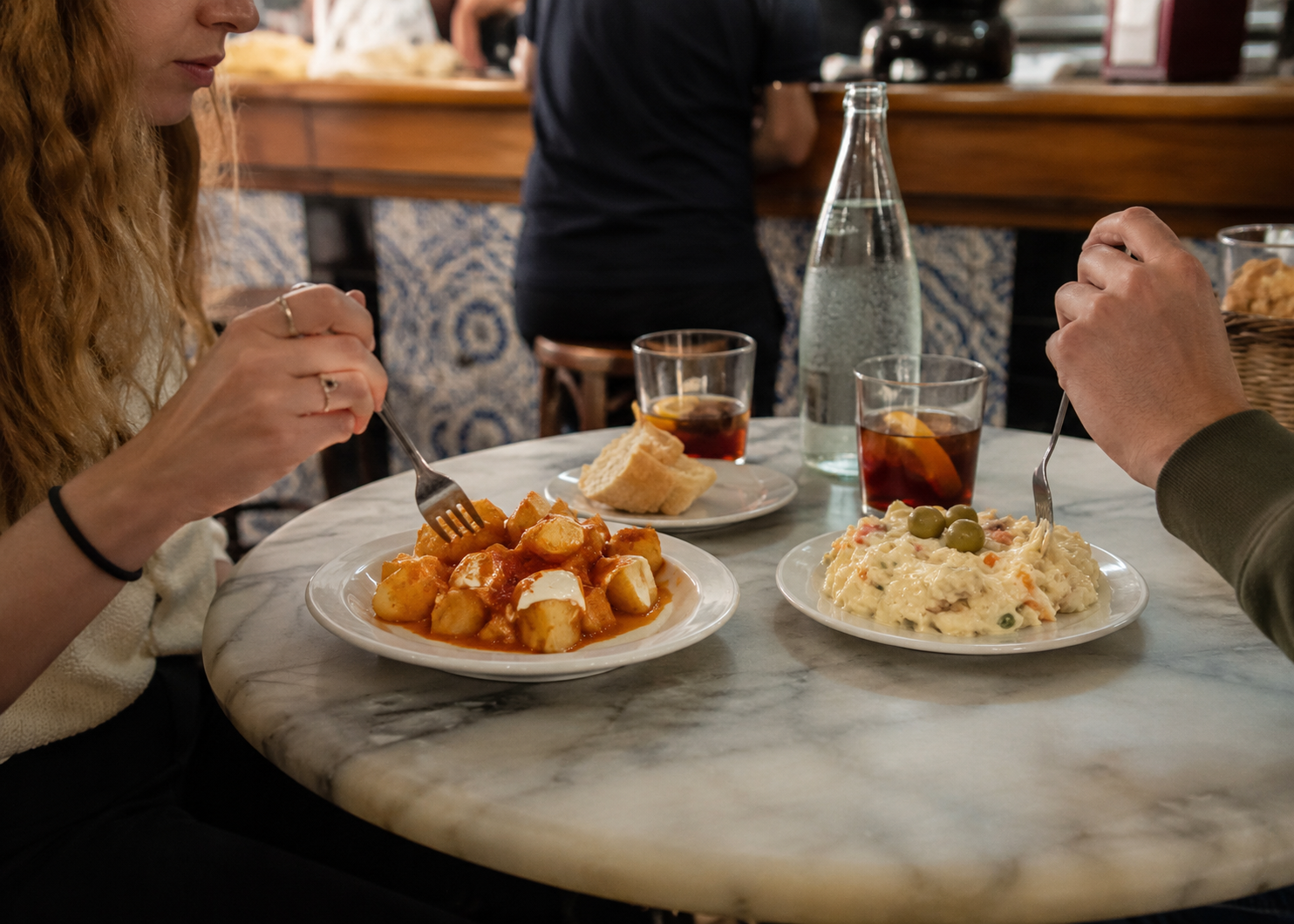
The American potato pattern differs from the Spanish pattern in nearly every feature that affects blood sugar.
Potatoes are eaten as isolated starch. The American baked potato, the side of mashed potatoes, the order of fries. Often the potato arrives without the integrated fat, protein, fiber, and acid that slow its absorption. The isolated potato produces the sharpest glucose response.
Potatoes are eaten hot, freshly cooked. The American potato is rarely cooked and cooled. The hot freshly cooked potato lacks the resistant starch that the cooling process creates. The full glycemic impact of the starch is delivered.
Potatoes are often eaten as fast food. French fries consumed quickly, often while doing something else. The fast eating produces sharper spikes than slow eating.
Potatoes frequently appear at dinner. The American dinner is the largest meal, eaten in the evening when insulin sensitivity is lower. The evening potato produces a higher glucose response than the same potato at midday.
Potatoes are followed by sitting. The American pattern of eating dinner and then sitting on the couch. The post-meal sedentary behavior produces higher glucose spikes than post-meal movement.
Potatoes are often heavily processed. Instant mashed potatoes, frozen fries, potato chips, processed potato products. The processing further increases the glycemic impact beyond what whole potatoes produce.
The combined American potato pattern strips away every protective feature of the Spanish pattern. The isolated, hot, fast, evening, sedentary, processed potato produces the spike-and-crash cycle that American nutrition culture then blames on the potato itself. The potato is taking blame for a pattern problem.
What Individual Adults Can Adopt
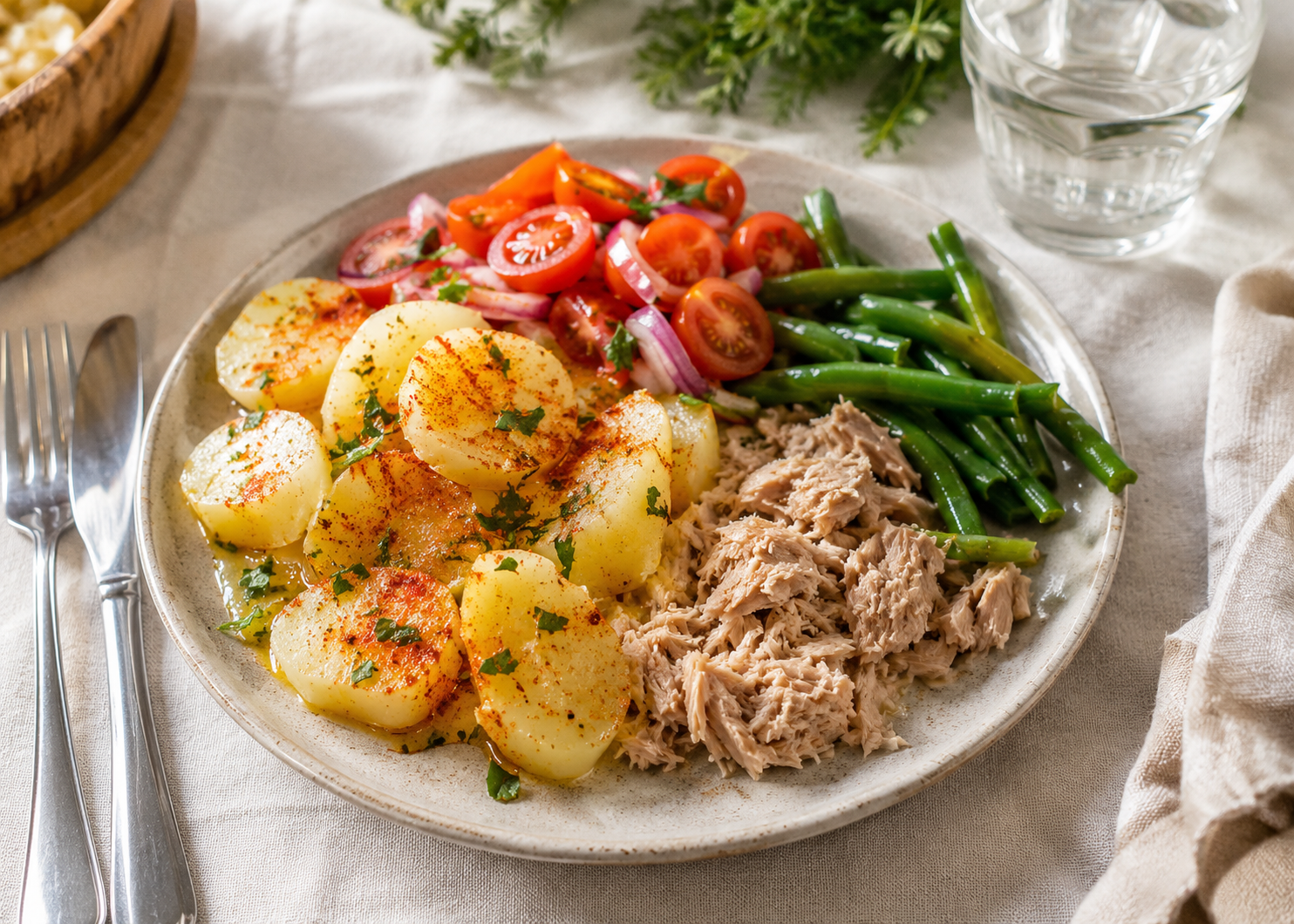
For adults who want flatter blood sugar responses while still enjoying potatoes, the Spanish pattern offers specific adoptable features.
Cook potatoes and cool them before eating. Make potato salad, cook potatoes ahead and refrigerate them, eat them cool or gently reheated. The cooling creates resistant starch that substantially reduces the blood sugar impact. This single change is one of the highest-return adjustments.
Eat potatoes with fat, protein, and vegetables. Never the isolated potato. Add olive oil, eggs, fish, meat, vegetables. The integration slows absorption and flattens the curve. The Spanish tortilla and the Spanish potato-and-legume dishes model this.
Eat your largest potato portions at lunch rather than dinner. Shift the carbohydrate-heavy meal to midday when insulin sensitivity is higher. The timing shift reduces the glucose response to the same food.
Eat potatoes slowly. Part of a relaxed meal rather than a fast consumption. The slow eating flattens the curve.
Walk after meals that include potatoes. A 15 to 30 minute walk within 30 minutes of finishing. The post-meal movement reduces the spike.
Choose whole potatoes over processed potato products. Whole cooked potatoes over instant mash, frozen fries, and chips. The whole food produces a gentler response than the processed versions.
Add acid to potato dishes. Vinegar, lemon, the acid in many Spanish preparations. Acid slows gastric emptying and reduces the glycemic response. The Spanish patatas dishes often carry this acid.
For adults with diabetes or blood sugar conditions, these patterns can support blood sugar management, but should be implemented in coordination with the physician managing the condition. The patterns reduce glycemic impact but do not replace medical management for diagnosed conditions.
What The Spanish Potato Schedule Reveals
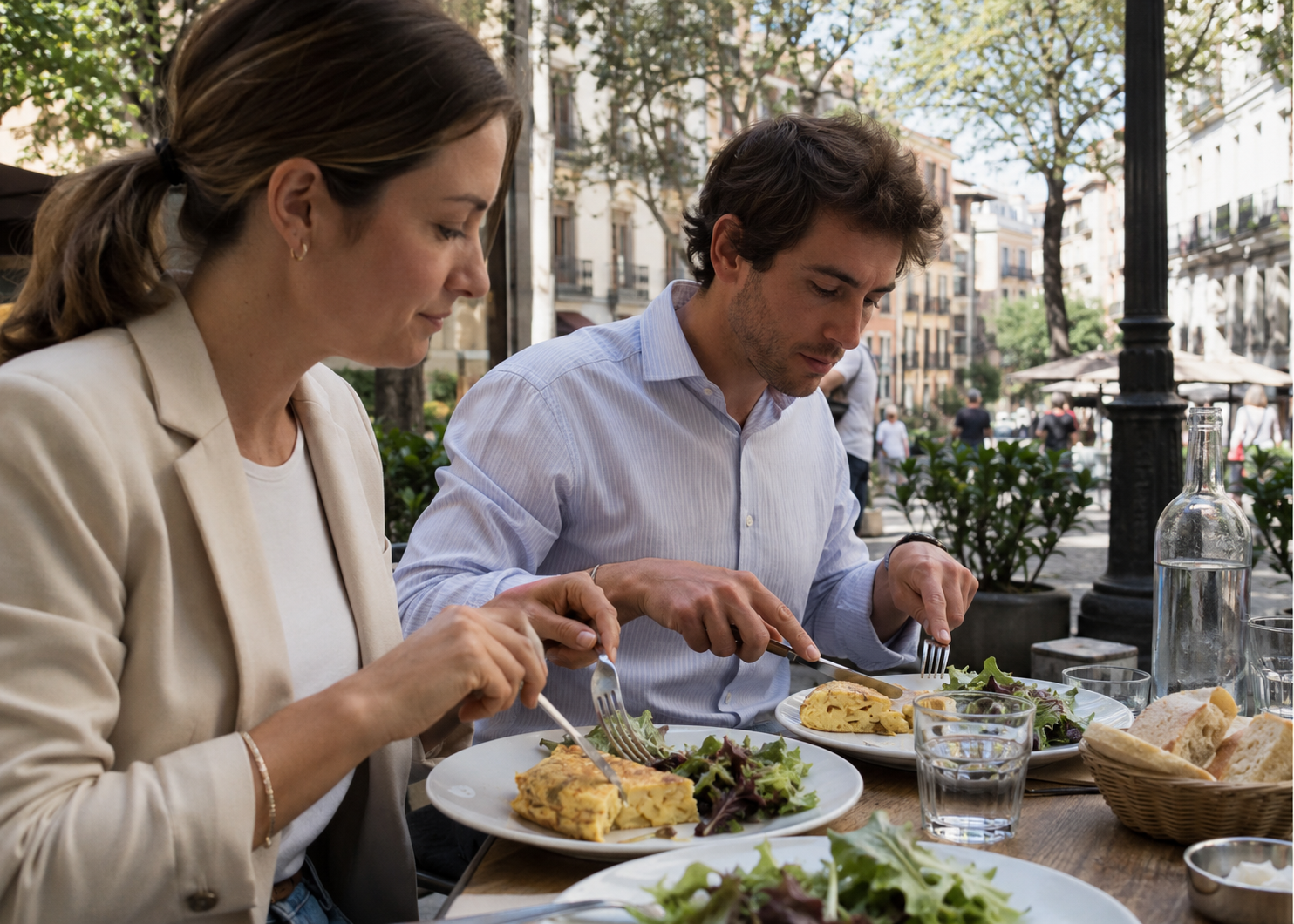
The Spanish eat substantial amounts of potato and maintain low rates of type 2 diabetes. The American nutrition culture has demonized the potato while maintaining high rates of type 2 diabetes. The difference is not the potato. The difference is everything around the potato.
The Spanish pattern integrates the potato with the fat, protein, fiber, and acid that slow its absorption, frequently uses the cooling process that creates resistant starch, places the potato at the metabolically optimal time, paces the eating slowly, and follows it with movement. The American pattern strips away each of these protections and then blames the resulting blood sugar spike on the potato.
For American adults, the recognition is that the potato is not inherently a blood sugar disaster. The potato eaten the Spanish way produces a flat blood sugar response. The potato eaten the American way produces the spike and crash. The food is the same. The pattern determines the outcome.
The Spanish family eating their patatas at 2:30pm is not following a blood sugar optimization strategy. They are eating lunch the traditional Spanish way. The traditional way happens to align with nearly everything the science says about keeping blood sugar stable. The American who adopts the Spanish potato patterns can enjoy potatoes while producing the flat blood sugar response that the Spanish pattern reliably produces, rather than the spike and crash that the American pattern reliably produces.
The potato was never the problem. The pattern was the problem. The pattern can be changed.

About the Author: Ruben, co-founder of Gamintraveler.com since 2014, is a seasoned traveler from Spain who has explored over 100 countries since 2009. Known for his extensive travel adventures across South America, Europe, the US, Australia, New Zealand, Asia, and Africa, Ruben combines his passion for adventurous yet sustainable living with his love for cycling, highlighted by his remarkable 5-month bicycle journey from Spain to Norway. He currently resides in Spain, where he continues sharing his travel experiences with his partner, Rachel, and their son, Han.