
A Portuguese couple in their late sixties in a small town outside Évora goes to bed at 11:15pm on a Tuesday. They have been doing approximately this version of this routine for 42 years.
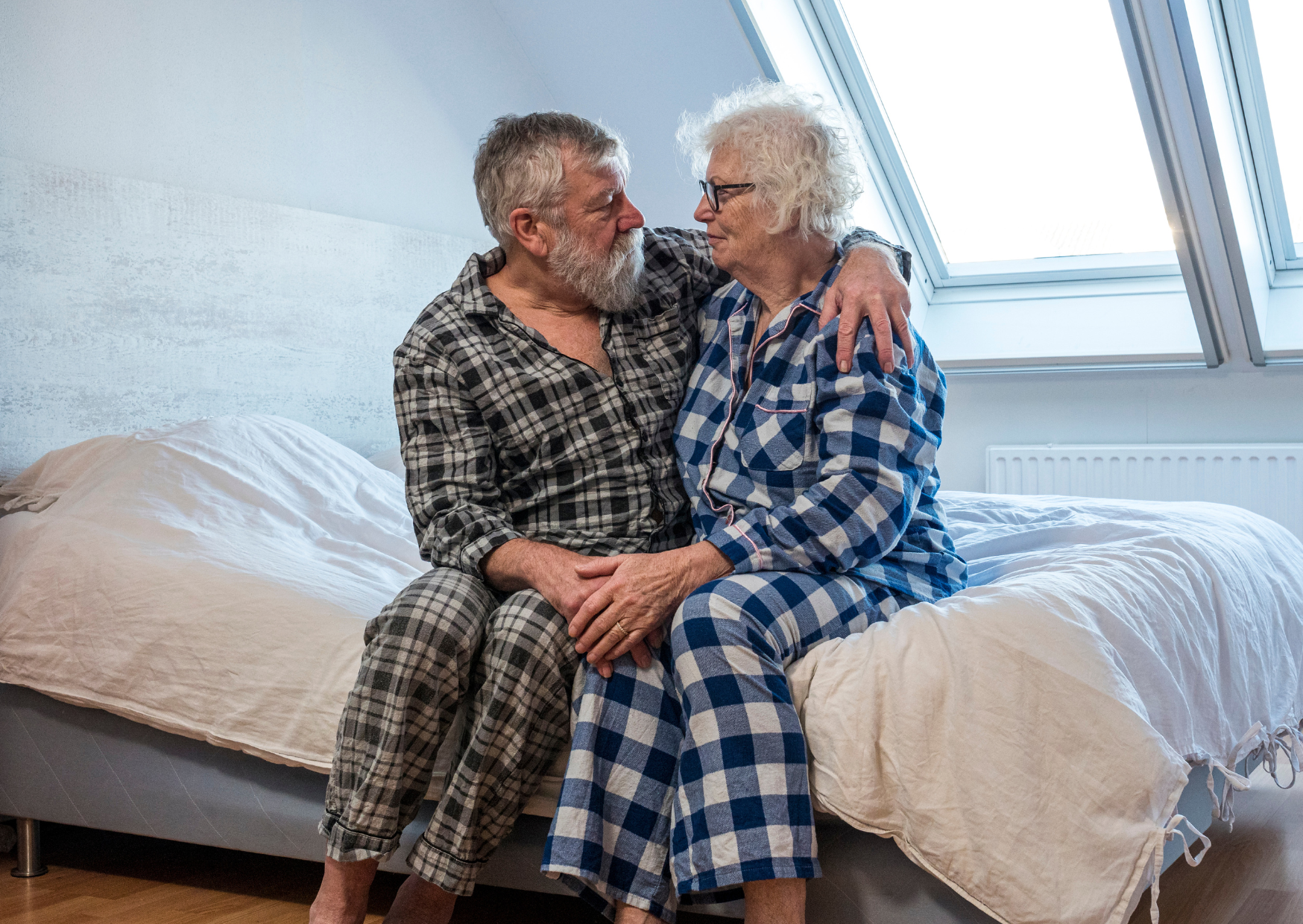
The lights go off at 11:30pm. They sleep in the same bed they have shared throughout their marriage. They speak briefly before sleep about the day, the children, the weather. They reach for each other physically through the night in the small unconscious ways that long marriages produce. They wake together at 7:00am.
A demographically similar American couple in suburban Atlanta has a different evening pattern. The husband fell asleep on the living room couch at 9:45pm with the television still on. The wife went to the bedroom at 10:30pm with her phone, scrolled until 11:45pm, took a melatonin gummy, and turned off her light. They have slept in the same bed for 31 years but the room is functionally divided. They do not touch in sleep. They do not speak before sleep. They wake separately.
This piece walks through seven specific bedroom habits that Portuguese couples typically maintain through their sixties and seventies that American couples typically abandon by their fifties. The implications extend beyond sleep quality into relationship satisfaction, cardiovascular health, cognitive function, and longevity. The patterns are observable. The mechanisms are increasingly documented in research. The implications for American couples currently in their forties and fifties are practical.
1. Going To Bed At The Same Time

Portuguese couples past 60 typically go to bed within 15 to 20 minutes of each other. This is not an automatic feature of long marriage. It is a deliberate pattern that has been maintained across decades despite the various pressures that would naturally pull couples toward different bedtimes.
The American pattern frequently involves one spouse going to bed substantially earlier than the other. The early sleeper is often the wife. The late sleeper is often the husband. The gap can run 90 minutes to 3 hours in households where television, computer use, or work patterns produce divergent sleep timing.
The mechanism of the synchronized Portuguese bedtime involves several specific factors.
The Portuguese evening structure makes synchronized bedtime natural. Dinner happens at 8:30 or 9:00pm. The evening conversation, the brief television, the reading, the winding down all happen together. By 11:00 or 11:30pm, both spouses are naturally ready for sleep at approximately the same time. The structure produces the synchronization.
The American evening structure produces desynchronization. Different dinner times. Different television preferences. Different work demands extending into evening. Different phone and computer patterns. Each of these pressures pulls couples apart in the evening hours, and the cumulative effect produces the divergent bedtimes.
The research on synchronized bedtime. Couples who go to bed together report higher relationship satisfaction. They have more frequent intimate connection (conversational and physical). They wake feeling more emotionally connected. The synchronization itself produces benefits independent of total sleep time.
For American couples currently in their forties and fifties, the synchronization is more achievable than it appears. The shared bedtime is not about discipline but about evening structure. Couples who deliberately structure their evenings around shared dinner, shared conversation, and shared winding-down produce synchronization naturally. Couples who structure their evenings around individual television, individual phone use, and individual schedules produce desynchronization naturally.
2. Conversation In Bed Before Sleep

Portuguese couples past 60 typically have brief but real conversation in bed before sleep. The conversation might run 5 to 20 minutes. The content is daily, ordinary, relational. It is not problem-solving conversation. It is the closing connection of the day.
The American pattern frequently involves no bedtime conversation. One spouse is already asleep when the other arrives. Both spouses are on phones or watching television until the moment of sleep. The pre-sleep window that Portuguese couples use for connection is filled with screens for many American couples.
The mechanism of the Portuguese pattern involves the cultural framing of bed as a shared space for connection rather than as parallel individual rest.
Portuguese couples talk to each other in bed about the day. “The neighbor came by today asking about the lemon tree.” “My back was bothering me at lunch.” “Maria called and the grandchildren are coming Sunday.” Small content. Shared awareness of each other’s daily experience.
The American pattern often involves separate processing. Each spouse has had their day. Each spouse is mentally processing it alone. The bed becomes the location of parallel solitude rather than shared connection.
The research on pre-sleep conversation. Couples who have brief positive conversation before sleep show better sleep quality, better next-day mood, and better relationship satisfaction across years of measurement. The mechanism likely involves both the social connection effect and the cognitive closure that processing the day together produces.
For American couples wanting to recover this pattern, the implementation is straightforward but requires the no-screens commitment. Phones charging in another room. Television off 30 minutes before bed. The conversation that emerges in the resulting space is often surprisingly satisfying for couples who had not realized they were missing it.
3. Physical Contact Through The Night

Portuguese couples past 60 typically maintain some physical contact through the night. This is not necessarily sexual contact. It is the small unconscious touches of long partnership: a hand on a shoulder, a foot against another foot, a head on a chest, the back-to-back contact that marks shared sleep.
The American pattern frequently involves separate sleep with no physical contact. Some couples sleep in separate beds. Some sleep in the same bed but with substantial separation. The “starfish” pattern where one or both spouses spread across as much of the bed as possible produces minimal contact.
Couples in long marriages who maintain physical contact through sleep show specific physiological patterns. Lower nighttime cortisol. More synchronized heart rate variability. Better quality of deep sleep. The mechanisms involve oxytocin release from skin-to-skin contact and the autonomic nervous system effects of perceived safety from a partner’s presence.
The Portuguese cultural framework treats physical contact in long marriage as a continuous feature rather than a feature that fades with age. The aging Portuguese couple still touches. The aging American couple often does not.
The mechanism of the divergence appears to involve American cultural assumptions about aging and physical intimacy. Many American couples interpret the natural changes of aging as the end of physical relationship. Portuguese couples interpret the same changes as adaptations within continued physical relationship. The framing produces different behavior.
For American couples in their forties and fifties wanting to maintain this pattern across the decades ahead, the practical recommendation is to maintain physical contact deliberately in current life. The habits of contact in the forties continue into the sixties if they are maintained. The habits that disappear in the forties usually do not return spontaneously in the sixties.
4. Same Bed Without Hesitation

Portuguese couples past 60 sleep in the same bed. This is not unusual or remarkable in Portuguese culture. It is the default that continues from young marriage through old marriage.
The American pattern increasingly involves separate sleep arrangements as couples age. Sleep divorce (deliberately moving to separate bedrooms) has become a recognized phenomenon in American marital advice literature. The reasons cited include snoring, different temperature preferences, different schedules, restless sleeping, and various other accommodations.
The Portuguese approach handles these issues through different means. Snoring is addressed with sleep position adjustment, pillows, occasionally medical evaluation. Temperature is managed with different bedding weights on each side. Different schedules are managed through reduced movement and gentler awakening. The bed remains shared even as the accommodations evolve.
The research on shared sleep specifically. Couples sharing a bed in long marriage show some sleep architecture disruption (more awakenings, slightly less deep sleep on EEG measurement) but report higher subjective sleep quality, better relationship satisfaction, and better next-day mood. The trade-off favors shared sleep for most couples on quality of life metrics, even when objective sleep measurements show modest disruption.
The Portuguese framing treats the shared bed as the relationship infrastructure that the marriage operates within. Removing the shared bed removes a structural element of the marriage. The accommodations are made to preserve the shared bed rather than the shared bed being sacrificed to accommodate other preferences.
For American couples considering sleep divorce, the Portuguese pattern suggests that working through the issues that produce the consideration may preserve something more valuable than separate sleep would provide. The decision is individual. The framing matters for the decision.
5. Open Bedroom Window Year Round
Portuguese couples past 60 typically sleep with the bedroom window open or partially open year round. The Portuguese climate accommodates this in ways the climates of much of America do not, but the practice extends through Portuguese winters that involve genuine cold.
The fresh air during sleep produces specific physiological effects. Slightly lower nighttime body temperature. Better oxygen availability. Reduced exposure to accumulated indoor air pollutants. The combination produces measurably better sleep architecture in research comparing fresh-air sleeping with closed-room sleeping.
The American pattern frequently involves sealed climate-controlled bedrooms. Central heating in winter. Central air conditioning in summer. Windows closed throughout the year. Air filtration systems running. The bedroom is an enclosed environment that the body adapts to but that produces different sleep patterns than fresh-air sleeping.
The mechanism of the Portuguese pattern involves both the direct physiological effect of cooler fresh air and the cultural relationship with the outdoors. Portuguese culture maintains continuous connection with outdoor air through open windows, balcony use, and outdoor activity. The bedroom is not separated from this broader pattern.
The American cultural relationship with outdoor air has shifted toward separation across the past 60 years. Most American homes built since 1980 are designed for sealed climate control rather than natural ventilation. The bedrooms in particular are designed as climate-controlled enclosures.
For American couples wanting to adopt some of this pattern, the practical implementation depends on climate and home structure. In moderate climates, the window can be opened partially through most of the year. In severe climates, the bedroom can be kept at lower temperatures than the rest of the house. The principle of cooler sleeping temperatures (60-65°F is ideal for adult sleep) can be implemented even without fresh outdoor air.
6. Earlier Dinner That Doesn’t Disrupt Sleep

Portuguese couples past 60 typically eat dinner between 7:30pm and 9:00pm and complete eating by 9:30pm. The 2 to 3 hour gap between dinner completion and sleep onset allows for digestion to substantially complete before lying down.
The American pattern increasingly involves eating closer to bedtime. Dinner at 6:30 or 7:00pm followed by evening snacking that extends to 10:00 or 10:30pm. The actual last-bite time often runs within an hour of attempted sleep onset.
The physiological implications are real. Lying down with substantial undigested food in the stomach produces reflux risk, blood sugar elevation that affects sleep architecture, and digestive activity that interferes with the autonomic nervous system shifts required for sleep onset.
Research on meal timing and sleep. Earlier dinner with longer pre-sleep gap produces better sleep quality, lower next-day blood sugar, and better metabolic markers. The 3-hour gap is the threshold where benefits become measurable. The 4-hour gap produces additional benefits with diminishing returns beyond that.
The Portuguese pattern emerged from cultural and culinary structures rather than from sleep optimization research. The Portuguese dinner is meant to be the closing of the day rather than the beginning of evening eating. The structure naturally produces the 2-3 hour gap before sleep.
The American pattern emerged from work schedule pressures and television-watching culture that shifted American dinner earlier and then extended evening snacking later. The combination is structurally hostile to sleep quality in ways that the schedule changes were not designed to be.
For American couples wanting to recover this pattern, the practical recommendation is to move dinner later (to 7:30-8:00pm) and eliminate evening snacking after 8:30pm. The 2-hour gap before bedtime produces meaningful sleep improvements within 2 to 4 weeks of consistent practice.
7. The Bedroom As Bedroom Only

Portuguese couples past 60 typically use the bedroom for sleep and intimate connection only. The bedroom does not contain a television in most Portuguese homes. The bedroom does not function as an office, a gym, a reading room, or an entertainment space. It is the room for sleep.
The American pattern frequently involves multi-purpose bedrooms. Television. Work-from-home space. Exercise equipment. Bookshelves and reading chairs. The bedroom serves multiple functions across the day.
The physiological implications of bedroom-as-sleep-only versus bedroom-as-multipurpose are increasingly documented in sleep research. The single-purpose bedroom produces stronger sleep cues through environmental association. The body learns that entering the bedroom means preparing for sleep. The brain begins shifting toward sleep mode upon entry.
The multi-purpose bedroom blurs these cues. The same room that means sleep also means working, exercising, watching television, scrolling phones. The environmental signals are mixed. The body does not receive clear sleep cues from entering the space.
The Portuguese cultural framework treats the bedroom as a specific space with a specific function. Other functions belong in other rooms. The structure produces the single-purpose pattern naturally.
The American cultural framework increasingly treats the bedroom as a flexible space that serves whatever functions the occupants want. The flexibility is appealing in principle. The sleep cost is meaningful in practice.
For American couples in their forties and fifties wanting to maintain bedroom function across the decades ahead, the practical recommendation is to remove non-sleep functions from the bedroom. Television out. Work materials out. Exercise equipment out. The bedroom becomes the bedroom. The sleep that emerges in the resulting space is measurably better than the sleep that emerged in the multi-purpose version.
What These Seven Habits Reveal About Long Marriage And Sleep
The seven habits cluster around a specific principle: the bedroom is a shared relational space that supports both individual sleep and continued partnership across decades.
The Portuguese cultural framework treats the bedroom as the most intimate shared space of the marriage. The shared bedtime, the conversation, the physical contact, the same bed, the fresh air, the earlier dinner that doesn’t disrupt sleep, the single-purpose room. All of these maintain the bedroom as a space where the marriage operates.
The American cultural framework increasingly treats the bedroom as individual sleep space that two people happen to share. The divergent bedtimes, the screen-mediated wind-downs, the reduced physical contact, the consideration of separate beds, the sealed climate-controlled environment, the late dinner with evening snacking, the multi-purpose room. All of these treat the bedroom as individual rest space rather than relational space.
Neither framework is right or wrong in some absolute sense. Both produce sleep and produce marriages. They produce different versions of both.
The Portuguese couples in their late sixties and seventies who have maintained these habits show specific outcomes that the American couples typically do not show. Better cardiovascular markers from synchronized sleep with physical contact. Higher relationship satisfaction scores from shared bedtime conversation. Better cognitive function from improved sleep quality. Better sexual relationship satisfaction continuing into the seventies and eighties.
The American couples who have abandoned these habits show specific outcomes that the Portuguese couples typically do not show. Higher rates of marital dissatisfaction reported in surveys. Higher rates of separate sleeping arrangements. Higher rates of sleep aid use. Lower reported physical intimacy in marriages past 50.
The causation runs in both directions. Couples who maintain physical intimacy probably maintain shared bedtimes more easily. Couples who develop divergent bedtimes probably reduce physical intimacy as a consequence. The patterns reinforce themselves.
What This Means For American Couples Currently In Their Forties
The Portuguese pattern is not specifically Portuguese. It is the pattern that most cultures historically maintained before modern American innovations in television, computers, work-from-home, and 24-hour climate control disrupted it. The Portuguese couples are not exceptional in global terms. They are typical of pre-disruption cultural patterns.
For American couples currently in their forties and fifties, the question is whether the disruption can be reversed in their own marriages. The decade between 40 and 50 is when the patterns typically establish that continue across the rest of the marriage. Couples who maintain physical intimacy, shared bedtimes, single-purpose bedrooms, and the broader relational use of the bedroom in their forties continue these patterns into their sixties. Couples who abandon these patterns in their forties typically do not recover them later.
The cost of maintaining the patterns is small. The phones charge in another room. The dinner moves to 7:30. The bedtime synchronizes. The television leaves the bedroom. The conversation happens before sleep. None of these changes is dramatic.
The cost of abandoning the patterns is large but invisible. The cumulative effect across 20 to 30 years of marriage is a different version of marriage than the version that maintains the patterns. The aging Portuguese couple who reaches into the dark to find each other’s hand at 4am is participating in a continuous version of marriage. The aging American couple sleeping in separate rooms with white noise machines and individual sleep aids is participating in a different version.
Neither version is wrong. The choice is real. The choice is being made daily by couples who do not necessarily recognize that they are making it.
For American couples currently making the choices that will determine which version of marriage they have at 70, the seven habits provide a recognizable map. Maintain them and produce one version. Abandon them and produce another. The current decisions about bedtime, dinner timing, phones in bed, television in the bedroom, and the various other small choices produce the marriage that exists 20 years from now.

About the Author: Ruben, co-founder of Gamintraveler.com since 2014, is a seasoned traveler from Spain who has explored over 100 countries since 2009. Known for his extensive travel adventures across South America, Europe, the US, Australia, New Zealand, Asia, and Africa, Ruben combines his passion for adventurous yet sustainable living with his love for cycling, highlighted by his remarkable 5-month bicycle journey from Spain to Norway. He currently resides in Spain, where he continues sharing his travel experiences with his partner, Rachel, and their son, Han.