
The Lisbon math stopped working around 2023. Lisbon rents had doubled in some neighborhoods. The grocery bills had crept up. The promised cheap European retirement was getting expensive fast. Meanwhile Mexico City was sitting there, four hours from Houston, with two-bedroom apartments in Roma Norte renting for what a one-bedroom in Lisbon now costs, and almost nobody in the American retirement industry was talking about it.
The Americans who noticed this and made the move between 2022 and 2025 are the ones I want to write about. The financial math is real. The trade-offs are real. And anyone choosing between European and Latin American retirement in 2026 should look at what these Americans actually did, what it actually cost them, and how it has actually worked out.
This is not a Mexico City versus Lisbon piece in some abstract sense. Both are great cities. The point is narrower: at modest American asset levels, between roughly $400,000 and $600,000 in combined savings with Social Security coming, Mexico City has been quietly working in ways Lisbon increasingly has not.
How Mexico City Got Considered At All

Most Americans planning retirement abroad in 2022 and 2023 had Portugal on the brain. The relocation YouTube channels, the retirement magazines, the consulting firms, the Facebook groups, all of it pointed at Portugal. Spain and Italy were secondary alternatives. Mexico had been around as a retirement option for decades but the marketing focused on beach towns. Puerto Vallarta. Playa del Carmen. Mazatlán. Mexico City was not part of the conversation for the urban-European-retirement crowd.
The Americans who eventually picked Mexico City over Lisbon did not start there. Most started looking at Portugal, did the math, and then either visited Lisbon and got priced out or saw the math going the wrong direction and started looking around. Mexico City came up usually through one specific chain: someone in their network had visited, sent back pictures, mentioned the cost of living. Then a research trip. Then a longer visit. Then the decision.
What they kept finding was a cost structure that worked at their asset level. A couple living comfortably in Roma Norte or Condesa in 2024 was running about $2,200 to $2,800 a month for everything. The Lisbon equivalent was $3,500 to $4,500. That’s $1,300 to $1,700 a month, $15,000 to $20,000 a year, $400,000 over a 25-year retirement before you account for any compounding on the money you didn’t spend. At a $500,000 asset level, that differential is the difference between a retirement that holds together and one that drains.
Then there was the proximity. Mexico City to most US cities is 4 to 6 hours direct, $200 to $500 round trip. Lisbon is 8 to 12 hours and $600 to $1,200. For anyone with grandchildren in Texas or California or anywhere south of New York, the proximity is not abstract. It is the difference between being at the school play and not.
The visa was easier too. Mexico’s Temporary Resident Visa wants about $2,500 to $3,000 a month in passive income for a single applicant, slightly more for couples. No language requirement. No civic test. No integration interview. Four years later it converts to Permanent Resident. The process from US consulate appointment to actually living in Mexico is usually three to five months. The Portuguese D7 is comparable on paper but slower in practice, and after May 2026 the citizenship endgame stretched from five years to ten.
Mexico City Mexican private healthcare turned out to be the surprise for most. Hospitals like ABC Medical Center and Médica Sur run at quality levels comparable to good US hospitals, at 60 to 80 percent below US costs. Private insurance for a 60 to 70 year old couple runs $200 to $500 a month for comprehensive coverage. Doctor visits without insurance run $40 to $80. Specialist consultations $80 to $150. Major procedures cost what an American hospital charges for a single overnight stay.
The combination of all these factors is what got Mexico City on the table. None of them are secret. The retirement industry just was not pointing at them.
What The First Year Actually Looked Like
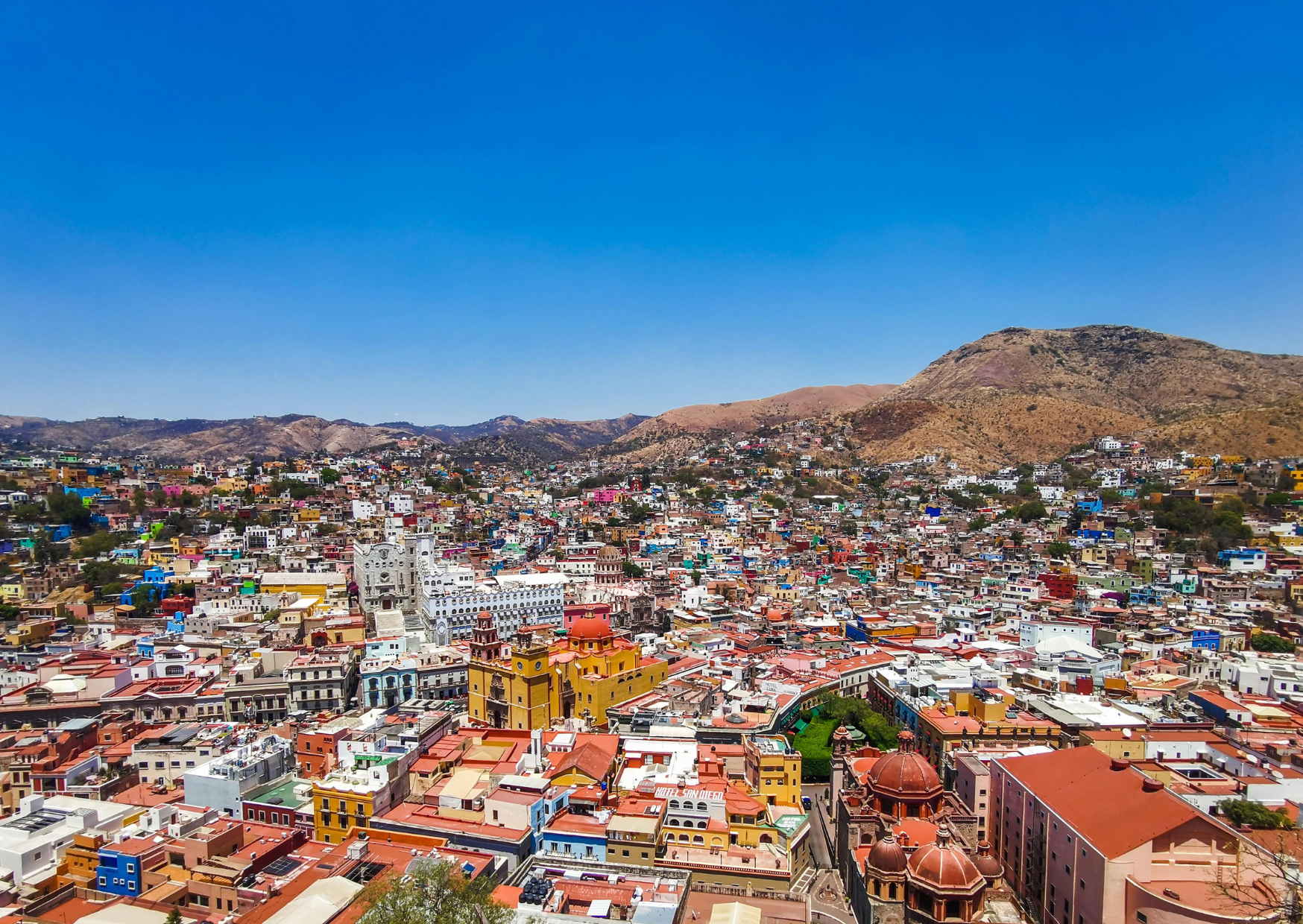
For most Americans who made this move, the first year followed a recognizable shape.
It started with visits. Almost everyone who eventually moved had spent 30 to 90 days in Mexico City before applying for the visa. They walked Roma Norte. They had coffee in Condesa. They talked to expats who were already there. They visited hospitals. They looked at apartments. Then they went home and applied.
The visa process took 2 to 4 weeks at the US Mexican consulate, much faster than European equivalents. Then 6 months to enter Mexico and finish residency at the local immigration office. Roughly $4,000 to $8,000 pesos in fees per person to complete the residency card.
The first apartment was the hardest part. Mexico City landlords want a Mexican guarantor (a fiador) for most rentals. American retirees do not have one. The workarounds are paying 6 to 12 months of rent in advance, paying for rental insurance designed for foreigners (1 to 2 months of rent in fees), or going through real estate agents who handle expat clients and provide the guarantor function themselves. Most picked one of these and moved on.
Banking, phone plans, internet, all of that took longer than expected but was doable. The major banks like BBVA Mexico and Santander serve foreigners once you have the residency card. Most kept their US bank accounts running alongside Mexican ones for the first few years.
Healthcare integration took some figuring out. Most kept their US Medicare and Medigap coverage for emergencies during US visits, then added Mexican private insurance for routine care in Mexico. The combined healthcare cost for a couple ran $400 to $800 a month. That sounds like a lot until you remember it is replacing a US system that was charging two or three times that for worse outcomes.
The Spanish came slower than expected. Most reached functional daily Spanish within 6 to 12 months. Mexico City Spanish is generally clearer and slower than Spain Spanish, which helps. Language schools are everywhere and cheap. Private tutors run $15 to $30 an hour. The Americans who put in real time on Spanish ended up much happier than the ones who tried to stay in the English bubble.
How It Has Gone At The Two To Four Year Mark

Most of the Americans who made this move between 2022 and 2025 are now two to four years in. The pattern is clear enough to describe.
Money has worked out. Monthly costs for a couple living comfortably in Roma Norte or Condesa have settled at $2,500 to $3,200, slightly higher than the original $2,200 to $2,800 because Mexico City has had its own modest cost increases. That is still 35 to 45 percent below equivalent Lisbon spending. A couple with $500,000 in starting assets and $4,000 a month in combined Social Security is preserving capital rather than drawing it down. The same couple in Lisbon at current costs would be pulling $500 a month or more from the portfolio, plus dealing with euro-dollar exchange exposure.
Healthcare has worked out. Several Americans in this group have now been through major medical events in Mexico City. Cancer treatment, cardiac procedures, orthopedic surgery, complicated dental work. The quality has held. The cost has held. Most have stopped second-guessing the healthcare decision.
The social side has built. The first year is the lonely year. Most reported feeling more isolated in months 3 through 8 than they expected. By month 18 to 24 the social fabric had built. The Roma-Condesa-Polanco expat circuit provides the soft landing. The deeper Mexican connections come later and require Spanish.
Family visits have been the biggest win for almost everyone. Couples with grandchildren report 4 to 8 US visits per year compared to 1 to 2 visits per year that they would have managed from Lisbon. That difference shows up in the relationships. Grandchildren grow up knowing the grandparents who moved to Mexico City. The grandparents who moved to Lisbon become the ones who come for Christmas.
What They Got Right
A few patterns are worth flagging because the Americans who got these right reported much better outcomes.
They visited first. The 30 to 90 day pre-move visit is the single biggest predictor of whether the move works. Mexico City is genuinely different from what most Americans imagine before they see it. The Americans who showed up sight-unseen had harder first years and more regret about specific choices.
They learned Spanish. Functional daily Spanish at the 6 to 12 month mark transformed everything. The Americans who stayed in the English bubble were fine but not happy in the way the Spanish learners were happy. The investment is real, but the return is significant.
They chose neighborhoods carefully. Roma Norte, Condesa, Polanco, Coyoacán, Del Valle, and San Miguel Chapultepec all work for American retirees. The neighborhoods outside that circle generally do not work, either for safety reasons or for distance from the infrastructure expats need. The first apartment in the right neighborhood is much easier than relocating after a year in the wrong one.
They took the altitude seriously. Mexico City sits at 2,240 meters. Most people adjust within 4 to 8 weeks. Some don’t, particularly with cardiovascular conditions. The Americans who took altitude seriously evaluated it before committing. The ones who dismissed it sometimes had to leave.
They got cross-border tax help early. US citizens abroad still file US taxes. Mexico taxes residents on worldwide income after 183 days. The interaction is complex. Cross-border tax specialists charge $1,500 to $3,000 a year and are worth every dollar. The Americans who tried to figure this out themselves spent more on amended returns and penalties than they would have on a specialist.
What They Got Wrong
A few patterns of regret are worth knowing too.
Some did not budget for safety adjustments. Mexico City is generally safer than its US reputation suggests, particularly in the expat neighborhoods. But specific situations require awareness that Americans coming from suburban US life have not had to develop. Ride-hailing apps rather than street taxis. Awareness of which streets and which times. Not everything carries the same risk profile as American expectations would predict.
Some maintained too much US life. The proximity that makes US visits easy also makes maintaining a US-centered life easy. Some retirees ended up effectively living between two countries without ever fully landing in Mexico. The Americans who committed to building a Mexican life had better outcomes than the ones who treated Mexico as a long extended visit.
Some underestimated political and economic uncertainty. Mexico has its own political and economic dynamics. Currency movements, regulatory shifts, security situation changes. Most years are uneventful. Some years are not. The retirees who built in some flexibility for uncertainty handled it better than the ones who assumed Mexico would be as stable as their US suburb.
Some did not handle the altitude well. Already mentioned but worth repeating. Some Americans with cardiovascular conditions, sleep issues, or specific health profiles found Mexico City harder than they had anticipated. The options at that point are usually lower-elevation Mexican cities like Mérida or Guadalajara, or returning to the US.
How It Compares To Lisbon At The Same Mark

For the specific Mexico City versus Lisbon question, the comparison at the two to four year mark shows meaningful differences.
Money. The Mexico City retirees have $50,000 to $150,000 more in remaining portfolio assets than the equivalent Lisbon retirees at the same starting position. The lower monthly cost compounded. That money matters at $500,000 starting capital. It is most of a Tesla Model Y or a year of additional retirement runway.
Healthcare. Both work. The Mexico City system accessed through private insurance plus cash is comparable to the Lisbon system accessed through public coverage plus private supplementation. The total costs are similar. The access patterns differ.
Family. Mexico City wins on this clearly. The 6 to 8 US visits per year versus 1 to 2 is a real difference in family relationships, particularly for grandparents of young children.
Lifestyle. Different rather than better or worse. Lisbon offers European urbanism, Atlantic light, Portuguese cultural texture. Mexico City offers Mexican urbanism, high-altitude clarity, Mexican cultural texture. Both are real. Both are good. Pick the one that fits your taste.
Future-proofing. Mexico City is more settled. Permanent Resident status comes at four years and is functionally similar to citizenship for most practical purposes. Mexican citizenship after five more years is achievable for those who want it. Lisbon now requires 10 years to citizenship after May 2026, with realistic timelines of 13 years counting AIMA delays. The Americans who picked Lisbon for the fast citizenship path now have a slower citizenship path. The Americans who picked Mexico City have a clear and shorter path if they want it.
Sustainability. Mexico City wins for couples at the $400,000 to $600,000 asset level. The lower monthly burn rate means the retirement actually works without major portfolio drawdown. Lisbon at the same asset level has been getting harder.
What The Lisbon Retirees Are Saying Now
Some of the Americans who picked Lisbon are looking across at the Mexico City results and quietly regretting the choice. Not all of them. The Lisbon retirees who genuinely love Portugal and built their lives around the country are happy with their choice. The ones who picked Lisbon primarily for the cheap European retirement math are the ones running the numbers again now.
What they tend to do is recommend Mexico City to friends and family who are still in the decision phase. The pattern is “we love Lisbon but if we were doing it again with current information we might choose Mexico City.”
This is not really about regret. It is about updated information. The 2022 decision was made with 2022 information, when Lisbon was cheaper and the Portuguese citizenship path was five years. By 2026 both of those facts have changed. The Lisbon retirees did not get the decision wrong. The conditions they were deciding under have shifted.
For Americans currently in the decision phase, the practical takeaway is that the same shift makes Mexico City look better than it did three years ago, and Lisbon look harder than it did three years ago.
What To Actually Do If You Are Deciding Now

If you are an American currently choosing between Lisbon and Mexico City for retirement, here is what matters.
Run the cost comparison at current prices. Use today’s Lisbon rents, not 2020’s. Use today’s grocery bills. Compare honestly to today’s Mexico City costs. The math is what determines whether the retirement is sustainable, and the math has shifted.
Factor in proximity to US family if you have any. This is not a small thing. If you have grandchildren or aging parents, the difference between 6 visits a year and 1 visit a year shapes the next decade of your life.
Take the visa pathway seriously. The Mexican Temporary Resident pathway is simpler and faster than the Portuguese D7. After the May 2026 Portuguese citizenship changes, the comparison has tilted further.
Evaluate the language. Spanish is meaningfully easier than Portuguese for most Americans. The investment is smaller and the return is faster.
Visit Mexico City before deciding it is not for you. Mexico City is genuinely different from Mexican beach destinations. The Americans who actually visit usually find it bears little resemblance to the stereotypes. The Americans who dismiss it based on stereotypes miss what is actually there.
Run the financial math honestly. If the European destination requires meaningful portfolio drawdown that the Latin American destination would avoid, the financial argument is decisive. At modest asset levels, sustainable retirement and unsustainable retirement are the actual stakes.
Then pick based on what you actually want. The Lisbon retirees who love Portugal are happy. The Mexico City retirees who love Mexico are happy. Both work for the right person. Neither works for the wrong person. The question is which one is the right fit for your specific situation, with your specific assets, with your specific family considerations, with your specific cultural preferences.
The Quiet Alternative
What Mexico City represents for American retirement is the option that the industry has not been marketing. The marketing focuses on European destinations. The Mexican beach towns get their own marketing. Mexico City, sitting in the middle, gets dismissed by both audiences.
Americans who looked past the marketing and ran the numbers found a city that delivers good quality of life at meaningfully lower cost than Lisbon, with proximity to US family that Lisbon cannot match, with a healthcare system that works, with a cultural infrastructure that compares well to European capitals, with a visa pathway that is simpler than European equivalents.
This is not an argument that everyone should pick Mexico City. It is an argument that Mexico City should be on the list of options being seriously considered. The Americans who put it on the list have generally been satisfied with what they found. The Americans who did not put it on the list often did not know enough about Mexico City to evaluate it properly.
For the next American couple making this decision, the practical advice is to visit. Spend a week in Roma Norte and Condesa. Eat at the markets. Walk in Chapultepec. Look at apartments. Talk to expats who are already there. Then decide. The decision should be based on real information about the city, not on the marketing that has been shaping the conversation.
The Lisbon math stopped working for some Americans in 2023. The Mexico City math has been working for the Americans who tried it. The next person making the choice has the benefit of seeing both outcomes. The information is available. The decision is yours.

About the Author: Ruben, co-founder of Gamintraveler.com since 2014, is a seasoned traveler from Spain who has explored over 100 countries since 2009. Known for his extensive travel adventures across South America, Europe, the US, Australia, New Zealand, Asia, and Africa, Ruben combines his passion for adventurous yet sustainable living with his love for cycling, highlighted by his remarkable 5-month bicycle journey from Spain to Norway. He currently resides in Spain, where he continues sharing his travel experiences with his partner, Rachel, and their son, Han.