
The problem is rarely the wine itself. It is the moment when a diner sounds expensive to manage, cheap to serve, and likely to misunderstand the whole meal before the bread has arrived.
The order usually comes too fast.
Two Americans sit down in Paris, barely look at the menu, and ask for “a bottle of your house red.”
The words are not rude. They are not unforgivable. But in the wrong restaurant, at the wrong hour, in the wrong tone, they tell the room something useful: this table will probably need managing.
And in Paris, a managed table rarely gets the best corner.
“House Red” Is Not The Paris Shortcut Americans Think It Is
In the United States, “house red” can sound practical.
It says the diner is relaxed, not fussy, and not trying to turn dinner into a financial crime scene. In many American restaurants, it is a normal way to ask for the cheapest drinkable wine without making the server perform a whole conversation.
In Paris, it lands differently.
Not everywhere. A casual café near a train station will not faint because someone asks for house wine. A neighborhood bistro may pour something simple without drama. But in many Paris restaurants, especially places with a real wine list, the phrase “your house red” can sound like the diner has not read the room.
The French version is usually not about a mystery jug hiding behind the bar. Wine is often listed by region, producer, appellation, color, glass, carafe, half-bottle, or bottle. Even simple wines carry some geography. Côtes du Rhône, Beaujolais, Loire, Bourgogne, Bordeaux, Languedoc, Alsace, Jura, Provence, and other regions do work in the sentence that “house red” does not.
The issue is not that the diner wants value.
Paris understands value. Paris has built entire eating lives around the difference between a €6 glass that works and a €14 glass that only pays rent for the terrace.
The issue is that the phrase can sound vague and tourist-coded. It can also suggest the diner is asking the restaurant to choose the cheapest red while pretending a decision has been made.
That is not how better ordering works.
A more useful sentence is simple: “Quel vin rouge au verre irait avec ça?” Which red by the glass would go with this?
Or in English, said plainly: “Which red by the glass works with the duck?” “Do you have a light red for the chicken?” “Is there a good 50-centiliter carafe for the table?”
That tells the server the table is not trying to impress anyone.
It also tells them the diner is paying attention to the meal.
That is a better signal than “house red,” which often means, “Please solve my wine anxiety cheaply while I pretend I am being casual.”
The Worst Table Is Usually About Timing, Not Punishment
Paris restaurants are not running a morality court behind the host stand.
A bad table is usually assigned for boring reasons: booking order, party size, service flow, kitchen pacing, regulars, walk-ins, terrace demand, staff sightlines, and whether the table seems likely to turn efficiently.
Still, first impressions matter.
A table that arrives without a reservation, wants a prime seat, asks immediately for the cheapest wine, does not order food with any clarity, and starts comparing portions to America has made itself easy to place badly.
The table by the toilets is not always revenge.
Sometimes it is restaurant math.
The better tables go to diners who booked, arrived on time, ordered like they understand the meal, and do not make the staff guess whether they are staying for dinner or nursing one drink while occupying four seats through the rush.
That last part matters.
In Paris, a restaurant table at dinner is not always treated as a casual holding pen for drinks. A café terrace can function that way. A wine bar may welcome grazing. A brasserie can absorb a lot. But a small dining room with 34 seats has to protect the night.
If two Americans sit down at 8:15 p.m. and immediately order only a bottle of house red before looking seriously at food, the restaurant has to wonder what kind of table this is.
Are they eating?
Are they sharing one starter?
Are they going to order steak well done after 25 minutes of negotiation?
Are they going to ask why the free water was not bottled?
Are they going to tip like the U.S. service charge system applies?
Are they going to finish quickly or turn the table into a two-hour language project?
This sounds harsh only if someone imagines restaurants as hospitality clouds.
They are not. They are small businesses with chairs.
A table that seems easy, pleasant, and clear gets treated differently from one that seems like work. The wine order is often the first clue.
The Better Order Starts With Food
French restaurant wine logic is not complicated.
The food leads.
That does not mean everyone is doing high ceremony with pairings and vocabulary. It means the wine is normally part of the meal, not a separate performance that starts before anyone knows what they are eating.
Americans often reverse this because U.S. restaurant culture makes the drinks order happen immediately. The server arrives, asks for drinks, and the table feels pressured to produce a choice before opening the menu. Wine becomes the first decision.
In Paris, especially in a small restaurant, it is often better to slow down.
Order water. Read the menu. Choose the food. Then ask for wine.
The useful phrase is “On va choisir les plats d’abord”, meaning they will choose the dishes first. Even in English, the idea works: “We’ll look at the food first, then choose wine.”
That one sentence makes the table easier.
It tells the server the diners are not trying to rush into alcohol, not trying to occupy the table with drinks only, and not expecting the restaurant to operate like an American chain where every visit begins with a beverage script.
Once the food is chosen, the wine question becomes natural.
“We’re having the beef and the roast chicken. What would you suggest by the glass?”
“We’ll share the pâté and then fish. Is there a white from the Loire that works?”
“We’d like a red, not too heavy, around €35 to €45.”
That last sentence is golden.
A budget stated calmly is not embarrassing. It is helpful. A Paris server or sommelier would rather hear “around €40” than watch someone pretend not to care and then flinch when the bottle arrives.
Americans sometimes think naming a price makes them look cheap.
In Paris, naming a price often makes them look competent.
The Carafe Is Not Shameful, But Ask For It Correctly

A carafe is one of the best ways to drink wine in Paris without turning dinner into a bill-management exercise.
A 25-centiliter carafe gives about two small glasses. A 50-centiliter carafe gives about four. A full bottle is 75 centiliters. This is basic, but it matters because a couple can drink enough to enjoy the meal without automatically committing to a whole bottle.
The phrase to look for is “vin au pichet”, “vin en carafe,” or simply wine listed in 25 cl, 50 cl, or 75 cl measures.
But do not assume every good restaurant has carafe wine.
Some do. Some do not. Some have wine by the glass and bottle only. Some offer a small selection by carafe. Some list origin clearly because wine sold by the glass or carafe must identify where it comes from.
The bad American version is asking, “Do you have house wine?” with a tone that suggests the restaurant is hiding the cheap stuff.
The better version is: “Vous avez du vin en carafe?” Do you have wine by the carafe?
Or in English: “Do you have any wine by the carafe?” “Is there a 50 cl red that works with this?” “Would you suggest the glass or the carafe for two people?”
That sounds normal.
It also protects the diner from one of the sillier Paris traps: ordering a bottle because it feels more elegant, then drinking more than wanted because the bottle is there.
A 50 cl carafe can be the pensioner’s friend, the jet-lagged traveler’s friend, and the person-who-wants-to-walk-back-to-the-hotel-without-regret friend.
The point is not to look local.
The point is to order the amount that fits the meal.
The Tourist Mistake Is Asking For Cabernet Like Paris Is A Steakhouse In Dallas
A lot of Americans order wine by grape.
Cabernet. Merlot. Pinot Grigio. Chardonnay. Sauvignon Blanc.
This is normal in the U.S. It is not wrong. It is just not the main grammar of many French wine lists.
In France, wine is often organized by region, appellation, or producer. The grape may be implied rather than shouted. A red Burgundy is Pinot Noir. A white Sancerre is Sauvignon Blanc. A Chablis is Chardonnay. A Beaujolais is Gamay. A Northern Rhône red is Syrah. But the menu may not hold the diner’s hand through that.
So when an American asks, “Do you have Cabernet?” in a small Paris restaurant, the answer may be technically yes, practically no, or emotionally tired.
The staff may hear: this diner wants a familiar U.S. wine category, may not like French structure, and may need translation for every bottle.
That is not fatal.
But it does not help.
A better move is to describe the wine style rather than forcing a grape. “Something light and fresh.” “A red that is not too tannic.” “A dry white with the fish.” “A fuller red, but not too heavy.” “Something local and simple.”
That gives the server room to suggest a Beaujolais, Loire red, Côtes du Rhône, Bourgogne, Languedoc, or Bordeaux depending on the list and the food.
It also avoids the tourist rhythm of trying to pull France into American categories.
This matters because the goal is not to prove knowledge.
The goal is to let the restaurant do its job.
A diner who says, “I usually like Pinot Noir, but I’m open,” sounds easy.
A diner who says, “I need a California-style Cab,” in a Paris bistro has made the night harder before the steak arrives.
Do Not Perform Expertise You Do Not Have
Paris is good at punishing fake confidence.
Not because everyone is mean. Because small dining rooms run on compression. A server has too many tables, too many languages, too many dietary negotiations, and too little patience for someone swirling a glass like a judge while clearly not knowing what they are judging.
The wine-tasting ritual is often misunderstood.
When a bottle is opened and a small pour is offered, the point is not to decide whether the diner personally enjoys the wine. The point is usually to check that the bottle is sound: not corked, oxidized, or otherwise faulty.
The American performance version is sniffing, pausing, looking grave, tasting, and then saying, “Actually, do you have something smoother?”
That is not tasting. That is sending back a correct bottle because the diner ordered poorly.
If the wine is flawed, say so calmly. If it is merely not the style desired, that should have been handled before ordering.
The better approach is humility.
“I’m not an expert. We’d like something light with the food.”
“We don’t know the list well. What would you drink with this?”
“We usually prefer dry whites. Nothing sweet.”
Those sentences are not embarrassing. They are efficient.
Fake expertise creates more distance than honest ignorance. Paris restaurants can work beautifully with a diner who admits they need guidance. They work less beautifully with a diner who tries to dominate a list they cannot read.
There is also a practical safety issue here.
For wine by the glass, the drink should be poured in front of the customer from the bottle. That helps the diner see what is actually being served. It is not rude to notice. It is not rude to ask politely if the glass appears from nowhere and the wine matters to the bill.
That does not mean treating every café like a crime scene.
It means staying awake.
The Water Order Tells On People Too
The wine order is not the only signal.
Water causes its own little Paris drama because many Americans do not know the words.
If the diner asks vaguely for water, they may be offered bottled still or sparkling water. That can be fine, but it costs money. If they want tap water with the meal, the phrase is “une carafe d’eau, s’il vous plaît.”
That is normal. It is not cheap. It is not rude. It is part of restaurant life in France.
The problem starts when Americans act surprised, suspicious, or offended after ordering bottled water because they did not understand the question. Or when they assume the restaurant is scamming them because they said “water” and received Evian.
Paris restaurants can absolutely upsell. Tourist-heavy places can be opportunistic. But sometimes the diner simply failed to ask for the thing they wanted.
The better table orders clearly:
“Une carafe d’eau, s’il vous plaît.”
Then wine.
Then food.
Or food, then wine, then water. The order can vary. The clarity cannot.
This is also where tipping confusion enters the room. In France, menu prices include service. A small extra tip for good service is appreciated, but the American 20% reflex does not work the same way. A diner who asks whether service is included in a suspicious tone can sound like they are about to import the whole U.S. restaurant system to a Paris table that did not ask for it.
A calm diner does not overperform.
They read the bill. They leave a modest extra if service was good. They do not make the tip a scene.
That helps the whole table feel less tourist-frantic.
The Best Table Often Goes To The Diner Who Books Like An Adult
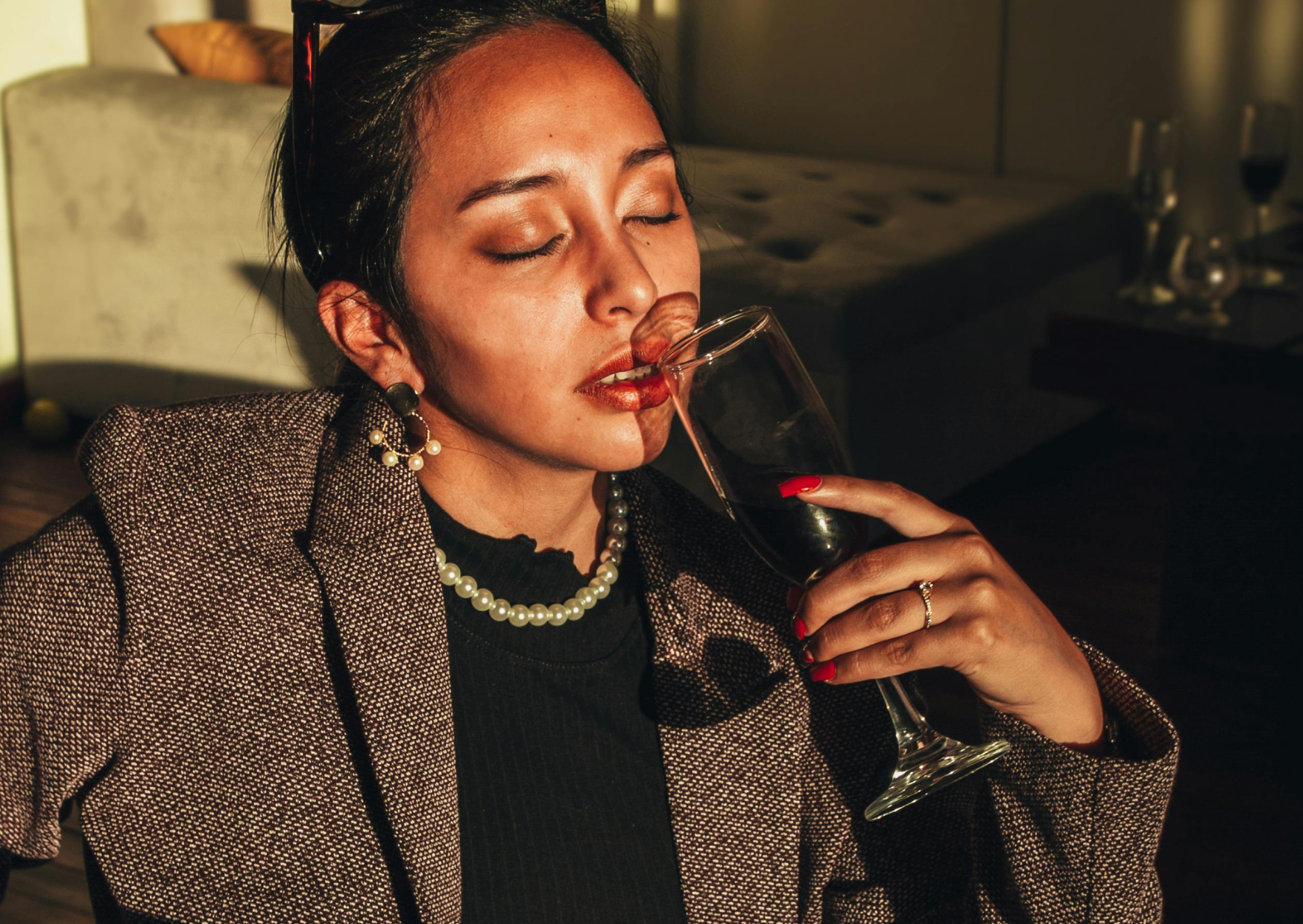
The wine order cannot fix a bad reservation strategy.
Americans sometimes expect Paris restaurants to reward charm at the door. Sometimes they do. More often, they reward planning.
A person who books for 7:30 or 8:00, confirms, arrives on time, and orders a full meal has already done half the work. A person who walks in at 8:45, asks for “your best table,” rejects the first offer, and then orders only drinks has not earned the room’s affection.
Paris has plenty of casual places, but the best small restaurants manage their seatings carefully.
This does not mean every dinner needs a month of planning. It means the diner should understand what kind of place they are entering.
A neighborhood wine bar may welcome flexible ordering. A café terrace may be fine for drinks. A brasserie may take walk-ins because that is part of the machine. A tiny restaurant with a short menu and a serious wine list probably expects dinner.
The tourist mistake is treating them all the same.
The better approach is to match the order to the room.
At a café, a glass of wine and a snack may be fine.
At a wine bar, ask what is open by the glass and order a small plate.
At a bistro, choose food first and ask for a wine that fits.
At a restaurant with a tasting menu, do not try to hack the list with “house red.”
That last one seems obvious. Apparently it is not.
The table improves when the diner fits the place. This is not about acting French. It is about not making the staff fight the concept of the restaurant.
What To Say Instead Of The Order That Marks You
The easiest fix is language.
Not perfect French. Useful French.
A diner does not need an accent. They need a few sentences that show respect for how the meal works.
For a red wine:
“Un vin rouge léger, s’il vous plaît.”
A light red, please.
For a dry white:
“Un vin blanc sec, s’il vous plaît.”
A dry white, please.
For help:
“Qu’est-ce que vous conseillez avec ce plat?”
What do you recommend with this dish?
For price:
“Autour de quarante euros.”
Around €40.
For by the glass:
“Vous avez quoi au verre?”
What do you have by the glass?
For a carafe:
“Vous avez du vin en carafe?”
Do you have wine by the carafe?
For tap water:
“Une carafe d’eau, s’il vous plaît.”
A carafe of water, please.
These lines are not magic.
They simply remove the worst signals.
They show the diner knows wine belongs with food. They show the diner can name a budget without panic. They show the diner is not trying to make the restaurant translate the entire evening from scratch.
Even in English, the same structure works.
“We’re choosing the food first, then we’ll ask you for wine.”
“We’d like something simple and dry, around €35.”
“Is there a good red by the glass for this dish?”
That is enough.
The goal is not to sound Parisian.
The goal is not to sound like a problem.
The Paris Wine Bill Does Not Have To Be A Trap
A reasonable Paris wine spend depends on the restaurant.
At a casual place, a glass may sit around €6 to €10. In a better bistro or wine bar, it may be €9 to €15 or more. A simple bottle may start around €28 to €45, while a more serious list can climb quickly. Carafes, where offered, can be the best middle ground.
These are not fixed laws.
They are working expectations.
The diner should look before ordering. If the wine list is unclear, ask. If a glass costs €14, do not order three and complain that Paris is expensive. If a bottle is €62, do not pretend it was forced.
The avoidable mistake is ordering vaguely and then resenting the bill.
Paris does not require expensive wine to eat well. It requires attention.
A couple can have a satisfying dinner with a 50 cl carafe, tap water, two mains, and maybe one shared starter. They can also spend absurdly on a bottle because they got nervous and nodded at the wrong suggestion. Both outcomes are available in the same city.
The best sentence is still the simplest:
“Something good with this, around €40.”
That gives the server a target. It also gives the diner cover. If the server points above the range, the diner can smile and say, “A little less, please.”
This is normal.
Adults are allowed to have budgets.
A budget stated clearly is less awkward than a diner quietly panicking through the wine list like it is a tax audit.
A 7-Day Paris Restaurant Reset Before The Trip
Day one: stop saying “house red.”
Replace it with three working choices: by the glass, by the carafe, or bottle around a stated price. Practice the words out loud once so they do not arrive at dinner sounding like a hostage note.
Day two: learn the water phrase.
The phrase “une carafe d’eau” saves money and confusion. Bottled water is fine when wanted. Paying for it by accident is not a Paris experience. It is just poor ordering.
Day three: read three Paris menus online.
Do not study them like homework. Just notice how wines are listed. Region, glass, bottle, carafe, color, and price will start looking less mysterious.
Day four: choose food first at dinner, even at home.
This sounds silly. It is not. The habit of ordering drinks before understanding the meal is deeply American. Break it before the trip.
Day five: set wine price comfort zones.
For two people, decide what feels normal for a glass, carafe, and bottle. A calm range prevents panic-ordering. It also prevents the fake-rich behavior that ruins budgets.
Day six: book restaurants that fit the traveler’s actual style.
If the couple wants casual wine and small plates, book a wine bar. If they want a full meal, book a bistro. If they want only drinks, choose a café or bar, not a dinner room trying to survive the service.
Day seven: practice one humble sentence.
“We don’t know the list well. What would you suggest with this?”
That sentence does more for a Paris meal than pretending to understand Burgundy after reading two articles and buying one Pinot Noir in Oregon.
Humility travels better than performance.
The Table Changes When The Diner Stops Acting Like A Tourist Category
The worst Paris table is not always near the toilets.
Sometimes it is the table where the diner spends the whole meal feeling managed, overcharged, rushed, or slightly disliked without knowing why.
That experience often begins before the first sip.
The wine order tells the restaurant whether the table understands the meal, wants guidance, respects the room, and has a reasonable budget. It also tells the restaurant whether the evening is about to become a small international incident involving water, tipping, steak temperature, and why the salad came after the main.
No one has to become French to eat well in Paris.
They just have to stop ordering like Paris is a themed American restaurant with better butter.
Choose the food. Ask for wine that fits. Name the budget. Use the carafe when it makes sense. Ask for tap water properly. Do not perform expertise. Do not treat the staff like translators for a fantasy version of France.
The table may not become the best one in the room.
But it is much less likely to become the table everyone silently assigned before the coats came off.
And in Paris, that is already a better dinner.

About the Author: Ruben, co-founder of Gamintraveler.com since 2014, is a seasoned traveler from Spain who has explored over 100 countries since 2009. Known for his extensive travel adventures across South America, Europe, the US, Australia, New Zealand, Asia, and Africa, Ruben combines his passion for adventurous yet sustainable living with his love for cycling, highlighted by his remarkable 5-month bicycle journey from Spain to Norway. He currently resides in Spain, where he continues sharing his travel experiences with his partner, Rachel, and their son, Han.