
The airfare may look normal. The hotel may look survivable. Then the 2026 trip starts collecting smaller charges, buffer nights, entry steps, city taxes, and baggage decisions that a 2024 spreadsheet would have missed.
The old Europe budget had a simple rhythm.
Flights, hotels, trains, food, museums, maybe one taxi after a long day.
The 2026 version has more little traps. Not always huge. Not always unfair. Just easy to miss until the card machine appears, the hotel bill grows, or the airport line moves like it has given up on the concept of time.
For two Americans, the new money is rarely one dramatic fee.
It is €20 here, €80 there, one extra hotel night, one baggage charge, one city tax, and suddenly the “same trip as 2024” costs several hundred euros more.
The Border Line Now Has A Price Even When It Has No Fee

The biggest 2026 change is not a tourist tax.
It is time.
Europe’s Entry/Exit System became fully operational in April 2026, replacing the old passport-stamp routine for non-EU short-stay travelers with a digital record that can include passport data, facial image, and fingerprints.
For Americans, this does not mean paying a fee at the counter.
It means the first entry into the Schengen Area may take longer, especially at airports, ferry ports, and land borders still learning how to process real summer crowds through the new system.
That time becomes a cost.
A traveler with a tight connection may need a longer layover. A couple landing in Paris before connecting to Nice may decide the cheap 80-minute connection is not worth the risk. Someone flying into Madrid before catching a train to Seville may need to stop pretending immigration always takes 20 minutes.
The new cost is the buffer.
That may mean:
- a later train
- a missed first lunch reservation
- a pricier direct flight
- an extra airport hotel
- a taxi instead of public transport after a delayed arrival
- one fewer same-day connection
For older travelers, the cost is also physical. Standing in a slow border line after an overnight flight is not a charming European arrival ritual. It is fatigue with fluorescent lighting.
In 2024, many Americans could still build tight arrival days with mild overconfidence. In 2026, that is riskier.
The smarter budget assumes the first Schengen airport may take longer than memory says.
Do not stack immigration, baggage, train transfer, hotel check-in, and a prepaid evening tour into the same fragile arrival day.
That is not efficiency.
That is a refund request waiting to happen.
ETIAS Adds A Small Fee And A New Way To Make A Dumb Mistake

ETIAS is not the same as EES.
The names are ugly enough to confuse people, which is already part of the problem.
EES is the border registration system. ETIAS is the travel authorization system for visa-exempt travelers entering many European countries. Americans will need it once it starts operating, and the EU says ETIAS will begin in the last quarter of 2026.
The fee is €20 per application for most adult travelers. Some people are exempt from the fee, including travelers under 18 and over 70, but that does not mean every older traveler can ignore the authorization itself once it applies.
For a couple, the fee itself may be small.
The bigger hidden cost is getting it wrong.
Third-party sites will almost certainly crowd search results. People will overpay. People will apply too late. People will type passport information incorrectly. People will assume because they visited Europe in 2024 without it, they can do the same in 2026 or 2027.
This is how a tiny fee becomes a travel problem.
A late-2026 or early-2027 Europe trip needs a new preflight habit: check whether ETIAS applies before booking the non-refundable pieces. Do not leave it for the week before departure. Do not use a random website because it looks official. Do not assume the airline will untangle the issue at the check-in counter while the couple behind you silently judges your life choices.
The practical budget line is tiny: €20 per person where applicable.
The practical planning line is larger: one more document step before the trip is real.
In 2024, Americans could mostly think of Europe as passport plus ticket.
That era is ending.
Venice Now Charges For The Bad Version Of Visiting
Venice’s access fee is not aimed at every traveler.
That is the first thing to understand.
It generally targets day visitors entering the old city on selected high-pressure dates during set hours. Overnight guests already pay accommodation-related taxes and usually fall under a different category. The access-fee calendar, hours, exemptions, and payment steps matter because Venice has turned the most careless version of tourism into an appointment.
For 2026, the fee applies on selected dates from spring into July, generally during the 8:30 a.m. to 4 p.m. day-visitor pressure window.
The fee itself may be €5 or €10, depending on timing and booking conditions.
That is not financially devastating.
It is psychologically useful.
Venice is telling travelers that the four-hour stampede version now has friction. Cruise-style behavior, late planning, and day-tripping during the busiest hours are no longer treated as invisible pressure on the city.
For two Americans, the hidden cost is not only the access fee.
It is the itinerary correction.
The cheaper version of Venice used to be: sleep somewhere else, train in, hit San Marco, eat something overpriced near a bridge, leave.
In 2026, that version may come with a fee, a reservation step, more crowd pressure, and a worse experience. The better version may mean staying overnight, which costs more but gives the city back its best hours.
That is the trade.
Pay a small fee to enter at the worst time, or pay for a night and see Venice when the day-trippers are gone.
The cheap version is still cheaper.
It is just less obviously the better value.
Barcelona’s Hotel Bill Got Meaner

Barcelona is not sneaking anymore.
The city has become much clearer about the cost of being one more visitor in a place struggling with housing pressure, cruise arrivals, short-term rentals, and peak-season crowding.
From April 2026, Barcelona’s tourist-tax structure became much harder to ignore. In the city, the combined regional rate and municipal surcharge can reach €12 per person per night for five-star and similar high-end accommodation, with lower but still meaningful charges for four-star hotels, tourist apartments, and other categories.
For two travelers, this can add real money.
Four nights in a hotel category charged at €8.40 per person per night means €67.20 before thinking about VAT treatment or other booking details. Four nights at €12 per person per night means €96.
That is dinner money.
Or museum money.
Or the taxi fund after someone’s knee decides the metro stairs are no longer charming.
In 2024, a traveler might have noticed Barcelona’s tourist tax but treated it as background noise. In 2026, it belongs in the budget.
The hidden part is that hotel search results do not always make the final tax feel real. A room may look like €185 a night. Then local taxes, VAT handling, breakfast decisions, and city fees make checkout feel like a small lesson in urban policy.
The better move is not necessarily avoiding Barcelona.
It is staying fewer nights, avoiding peak summer, booking legal accommodation, reading the tax line before clicking, and not acting shocked when one of Europe’s most pressured cities charges visitors more.
Barcelona still works.
It just does not work well for people building a budget from old prices and wishful memory.
Dutch Hotels Got A Tax Shock That Makes Amsterdam Hurt More

Amsterdam was already expensive.
In 2026, the Netherlands made short-stay accommodation more expensive by raising VAT on overnight accommodation from 9% to 21%. That applies to hotels, holiday homes, B&Bs, guesthouses, hostels, platform rentals, and other short-stay lodging, while camping remains under a different rate.
Amsterdam also has its own tourist tax of 12.5% of the overnight price, excluding VAT.
That combination is ugly for visitors.
It does not mean every hotel bill increases by exactly the same amount because pricing, tax display, contracts, and hotel revenue decisions vary. But the direction is clear: sleeping indoors in Amsterdam is more expensive in 2026 than a 2024 traveler might expect.
For two Americans, the hidden cost appears during hotel search.
A room that looks barely acceptable at €210 may now sit inside a larger tax environment. A three-night stay can start feeling like a financial argument with a canal view.
Cruise passengers do not escape the message either. Amsterdam lists a €15 day tourist tax per passenger for cruise day visits.
The city has been pushing against nuisance tourism, cruise pressure, and overcrowding for years. The money now matches the mood.
The smart retiree move is to stop treating Amsterdam center as mandatory.
Haarlem, Leiden, Utrecht, Delft, The Hague, or even a carefully chosen outer Amsterdam neighborhood can make more sense, depending on the trip. Trains are good. The country is compact. There is no prize for overpaying to sleep beside the loudest part of the city.
Amsterdam is still worth visiting.
But in 2026, the hotel tax stack needs to be priced before the flight is booked.
Greece Added Climate And Cruise Costs That Change The Island Math

Greece used to feel simple in the budget.
Hotel, ferry, taverna, beach chair, maybe a museum or two.
Now the small charges around Greek travel deserve more attention, especially on islands.
Greece increased accommodation-related climate resilience fees for 2025, and those higher charges continue to matter for 2026 planning. The amount depends on season and accommodation type, with higher charges during the main tourism season from April through October.
For hotels and short-term rentals, the nightly fee can range from modest to meaningful. In high season, a short-term rental can carry €8 per night, and higher-category hotels or villas can climb further.
Then there is the cruise levy.
Greece approved visitor charges on cruise arrivals, including a higher fee for Santorini and Mykonos during peak season. The headline number travelers need to notice is €20 per cruise passenger at those most pressured islands in the highest-demand period, with lower charges elsewhere or outside the peak structure.
This does not affect every traveler.
A couple sleeping in a simple hotel on Naxos is not the same as a cruise passenger stepping off in Santorini. But the broader message is clear: Greece is pushing more of the cost of climate pressure, overtourism, and island strain onto visitors.
For two Americans, the hidden cost depends on trip style.
A 10-night Greek island stay in a short-term rental during high season may add around €80 in climate fees before anything fun happens. A cruise itinerary that touches the most pressured islands may add per-passenger levies. A hotel upgrade may raise the nightly charge.
The money is not necessarily outrageous.
The surprise is the problem.
The practical fix is simple: check the accommodation fee before booking, ask whether it is paid on arrival, and stop treating island taxes as rounding errors.
Greece can still be good value.
Just not if the traveler prices it like 2024 and books it like an influencer reel.
Lisbon’s Small Tax Became A Real Line Item
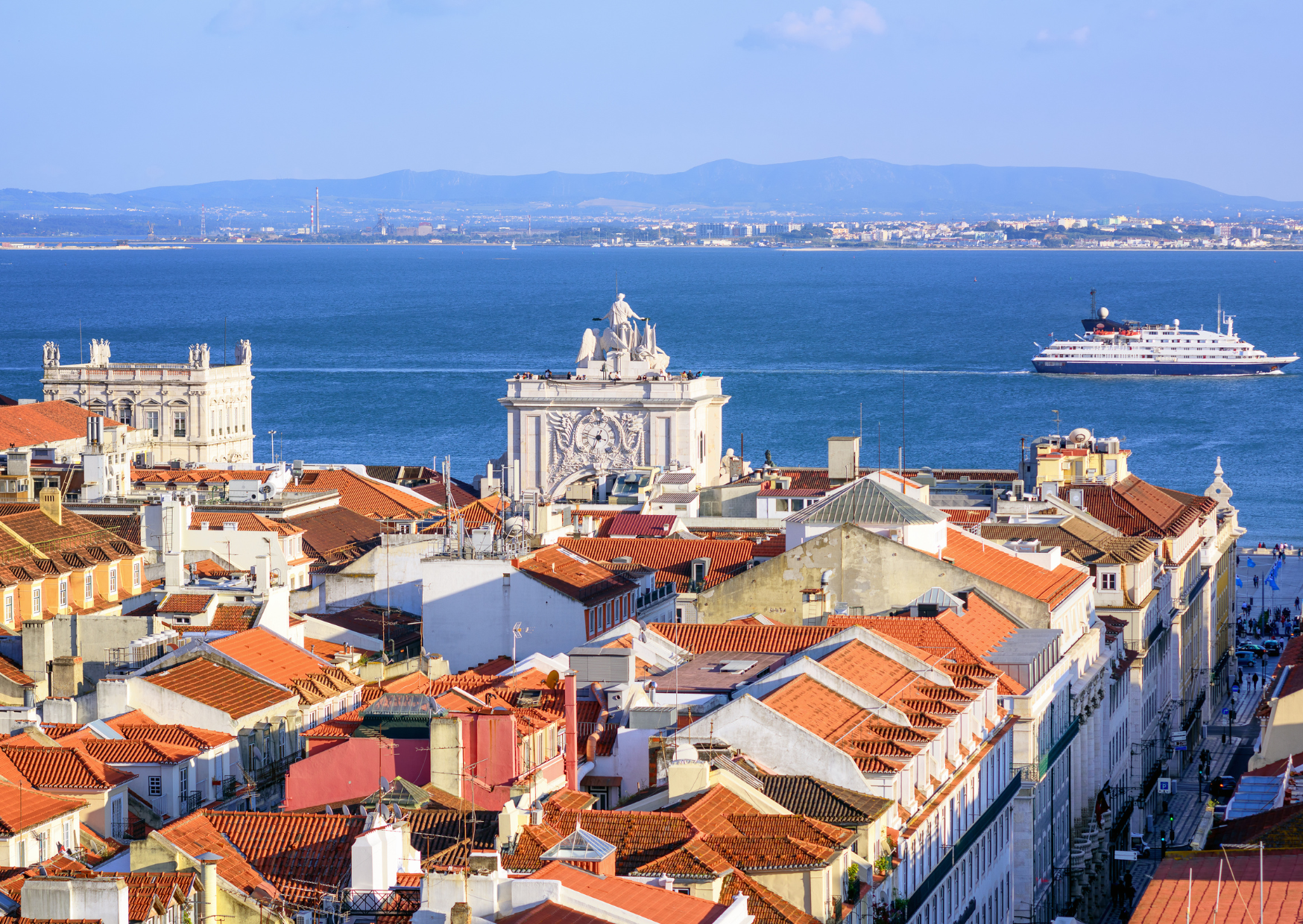
Lisbon’s tourist tax doubled from €2 to €4 per person per night starting in September 2024.
So technically, this one arrived at the edge of 2024.
But for many American travelers who planned from older articles, older trips, or old cheap-Portugal advice, the 2026 bill feels new. The increase is now fully baked into the trip, and the bigger problem is that it sits on top of Lisbon’s broader price shift.
For two travelers staying seven nights, the Lisbon overnight tax can add €56.
That is not a crisis.
It is also not nothing.
The deeper issue is that Lisbon is no longer the easy bargain Americans keep describing as if time stopped somewhere before remote workers, cruise crowds, short-term rentals, and global attention found it.
The tax is simply one visible line in a city where rooms, restaurants, and central accommodation have become less forgiving.
Porto also charges a municipal tourist tax, and other Portuguese municipalities may have their own rules. The details vary, which is exactly why 2026 Portugal budgets need city-specific checking instead of one lazy “Portugal is cheap” line.
For retirees, Lisbon’s hidden cost is often the combination: hills, taxis, tourist tax, higher rooms, restaurant traps, and the temptation to stay too centrally because the map looks walkable.
Lisbon is walkable in the way a staircase is technically a path.
That matters after 60.
The smarter plan is fewer Lisbon nights, a better-located room, a real transport plan, and time in places like Coimbra, Évora, Braga, Guimarães, Tomar, or Setúbal if the trip is about Portugal rather than just Lisbon’s light.
The city is still beautiful.
It is just no longer priced like a secret.
The Carry-On Confusion Can Still Cost More Than The Ticket

Baggage fees are not new.
The 2026 problem is the confusion around what is changing and what has not changed yet.
European lawmakers have been pushing on passenger rights, including cabin-baggage questions, family seating, and clearer airline rules. At the same time, low-cost airlines still make much of their money from add-ons, and travelers still get caught by personal-item dimensions, overhead-bin fees, gate-check charges, and seat-selection costs.
The result is a stupidly modern travel problem: people hear that Europe is cracking down on baggage fees, then book a cheap fare as if the problem has already vanished.
It has not vanished for practical trip planning.
A cheap intra-Europe flight can still become expensive if two retirees need overhead bags, seats together, priority boarding, printed boarding help, or checked luggage because medication, shoes, jackets, and normal human belongings do not fit in a tiny underseat backpack.
The hidden cost is the fare class that actually works.
A €39 flight may become €89 or €129 once the bags and seats are chosen. For two people, that can turn a short hop into a rail-price comparison very quickly.
The other confusion is airport security.
Some European airports now have advanced CT scanners that allow larger liquids through certain lanes, while conventional lanes still use the 100 ml rule. The rollout is not uniform. A traveler may depart from one airport with relaxed liquid rules and return through another airport where the old bag-and-mini-bottle routine still applies.
That can become a small cost if full-size toiletries are confiscated, checked bags become necessary, or the couple buys everything twice.
The safe 2026 rule is boring: pack for the strictest airport and the stingiest airline on the itinerary.
That rule saves money because it removes hope from the baggage calculation.
Hope is not a baggage policy.
How To Budget These Costs Before They Ambush The Trip
A careful couple should add a new 2026 line to every Europe budget.
Call it the friction fund.
Not emergency money. Not shopping money. Friction money.
For two Americans on a two-week trip, the fund should usually be €250 to €600, depending on itinerary. More if the trip includes Venice, Amsterdam, Barcelona, Greek islands, multiple low-cost flights, tight connections, or late-2026 ETIAS timing.
The friction fund covers:
- arrival buffer after EES checks
- ETIAS fees when applicable
- local tourist taxes
- climate or accommodation charges
- day-visitor fees
- baggage upgrades
- airport transport after delays
- one taxi when public transport is no longer worth the suffering
- toiletries or small airport-rule mistakes
- an extra night if the itinerary was too tight
The old budget question was “Can we afford the hotel?”
The 2026 question is “Can we afford the hotel after the trip behaves normally badly?”
That is the more useful standard.
Europe is still worth the money. The food, trains, museums, neighborhoods, beaches, markets, churches, pharmacies, ferries, cafés, and long evening walks are still there.
The change is that cities and border systems are no longer absorbing every inconvenience for free.
Overtourism has a price. Climate pressure has a price. Digital border control has a price. Cheap flights have a price. Staying in the most famous places at the busiest times has a price.
Sometimes the price is a fee.
Sometimes it is a line.
Sometimes it is an extra night near the airport because nobody should trust a same-day ferry and transatlantic flight combination in 2026.
The best travelers will not be the ones who find every loophole.
They will be the ones who budget honestly, move slower, and stop expecting 2026 Europe to behave like the cheaper, looser trip they remember from 2024.
The Cheapest Fix Is Fewer Fragile Plans
The easiest way to avoid most of these costs is not clever hacking.
It is building a less fragile trip.
Do not enter Schengen and book a same-day train that depends on perfect border processing. Do not day-trip Venice on the worst dates and act surprised by the fee. Do not sleep in Amsterdam center if Haarlem gives a better room and a calmer bill. Do not treat Barcelona as a casual summer add-on. Do not book Greek islands without checking accommodation fees. Do not assume Lisbon is cheap because someone said so in 2018. Do not buy the lowest airfare and pretend luggage is a personal failure.
The 2026 Europe trip rewards people who leave space.
Two nights instead of one. One country fewer. A direct train instead of a bargain flight with baggage traps. A legal hotel with the taxes visible. A city outside the worst crowd zone. A morning arrival with nothing prepaid except the room.
That kind of trip may look less efficient.
It usually feels better.
The hidden costs are not all avoidable, and they are not all unfair. Some pay for infrastructure. Some are attempts to slow crowd pressure. Some are climate money. Some are the real cost of cheap flights finally showing themselves.
The mistake is pretending they are surprises.
They are only surprises if the budget is still living in 2024.
Build the 2026 trip with more buffer, fewer assumptions, and fewer trophy stops, and Europe can still feel generous.
Build it like the old trip, and the small charges will teach the lesson one receipt at a time.

About the Author: Ruben, co-founder of Gamintraveler.com since 2014, is a seasoned traveler from Spain who has explored over 100 countries since 2009. Known for his extensive travel adventures across South America, Europe, the US, Australia, New Zealand, Asia, and Africa, Ruben combines his passion for adventurous yet sustainable living with his love for cycling, highlighted by his remarkable 5-month bicycle journey from Spain to Norway. He currently resides in Spain, where he continues sharing his travel experiences with his partner, Rachel, and their son, Han.