
The useful part of this experiment is not that Europe has magic food. It is that a stricter grocery cart can quietly remove the foods that make Americans eat past hunger, snack without noticing, and treat every normal afternoon like a blood sugar emergency.
A person can lose 23 pounds in 45 days and still learn the wrong lesson.
The useful lesson is not “Europe fixed his body.” The useful lesson is that for 45 days, the food environment stopped doing part of the eating for him.
Two medications came off the routine only after the numbers changed enough for a clinician to make that call. That part matters. The grocery cart did not prescribe anything. It only changed the inputs.
And the inputs had been doing more damage than he realized.

European-Legal Does Not Mean Healthy
The phrase sounds cleaner than it is.
European-legal food includes butter, chocolate, cured meats, pastries, wine, potato chips, mayonnaise, and plenty of things nobody should pretend are wellness products. A croissant does not become a multivitamin because it was bought near a tram stop.
But the phrase still points to something useful.
In this experiment, “European-legal” meant eating foods that could sit comfortably inside the stricter European approach to additives, labeling, and everyday supermarket norms. It meant fewer neon snacks, fewer candy-colored breakfast foods, fewer shelf-stable dessert bars pretending to be fuel, and fewer products built to make a person keep reaching back into the bag.
That is a very different grocery cart.
It was not a diet in the usual American sense. There was no calorie app, no macro spreadsheet, no weighing chicken breast in a plastic container, no pretending cauliflower rice is emotionally satisfying.
The rule was simpler: eat food that looked like it belonged in a normal European supermarket basket.
That usually meant bread with a short ingredient list. Yogurt without candy crushed into it. Cheese that tasted like cheese. Eggs. Lentils. potatoes. olive oil. fruit. vegetables. fish. chicken. beans. coffee. mineral water. plain dark chocolate.
It also meant cooked meals.
Not perfect meals. Not influencer meals. Just meals.
A plate with protein, starch, fat, and vegetables behaves differently from a “healthy” snack drawer that needs six products to feel like lunch. Real meals reduce grazing because the body knows something actually happened.
The big change was not moral. It was mechanical.
When hyper-palatable packaged food disappeared, eating became less noisy. There were fewer “just one more” moments. Fewer handfuls. Fewer drinks with dessert-level sweetness. Fewer foods that somehow made hunger worse 30 minutes later.
That is where the 45 days started to matter.
The Medication Part Has To Be Handled Carefully
“Off two medications” is the line everyone notices first.
It is also the line most likely to be misunderstood.
A person does not stop medication because a label looks cleaner. A person does not taper a prescription because lunch got more Mediterranean. A person does not turn a good week of eating into a private medical experiment with a pill bottle.
Medication changes belong to the clinician.
In this story, the diet change was the condition that improved the numbers. The clinician made the medication decision after seeing the numbers. That is the only responsible way to frame it.
That distinction may sound boring, but it is the difference between useful and dangerous.
Some medications should not be stopped suddenly. Some need tapering. Some are there to protect against risks the person cannot feel. Blood pressure can feel fine until it is not fine. Blood sugar can improve and still need monitoring. Reflux can calm down and still come back hard if medication is stopped too quickly.
Food can change the body’s workload. It can reduce weight, improve meal timing, lower sodium intake, stabilize appetite, and make some readings easier to manage.
But food does not replace medical judgment.
The interesting part is that the food change was strong enough to make a doctor look again.
That is the practical takeaway.
Not “eat like Europe and throw away your prescriptions.”
More like this: if a person removes the ultra-processed American default for 45 days, cooks most meals from ordinary ingredients, eats enough protein and fiber, stops drinking calories, and tracks actual health readings, the doctor may have better options.
That is less viral.
It is also much more useful.
The First Ten Days Were Not About Weight Loss
The first change was not the scale.
It was the absence of food drama.
The American grocery environment is very good at creating little eating events all day. A sweet coffee that acts like breakfast. A snack that behaves like dessert. A protein bar that eats like a candy bar with better branding. A sauce that turns a normal lunch into a salt-sugar-fat delivery system.
Remove enough of that and the day gets quieter.
The first 10 days of this kind of experiment usually feel less like discipline and more like withdrawal from constant stimulation. The person may still eat plenty. He may eat bread, cheese, potatoes, olive oil, yogurt, eggs, fish, rice, fruit, and dinner at a normal hour.
The difference is that the food stops shouting.
A bowl of lentils does not beg to be finished the way a family-size bag of flavored chips does. Plain yogurt with fruit does not create the same loop as a dessert cup with syrup, crunch, and artificial sweetness. Bread with butter can be satisfying in a way that a sweet breakfast bar rarely is.
That is not purity. It is design.
The appetite signal gets cleaner when the food is not engineered to override it.
This is where people often get the experiment wrong. They think the benefit comes from restriction. In practice, the benefit often comes from relief.
The person is not fighting the pantry every night.
The pantry is less manipulative.
That is a different kind of willpower because it barely feels like willpower. It feels like not having to negotiate with 14 snack options after dinner.
And for a lot of Americans, that alone is a shocking change.
The Actual Grocery Cart Did Most Of The Work
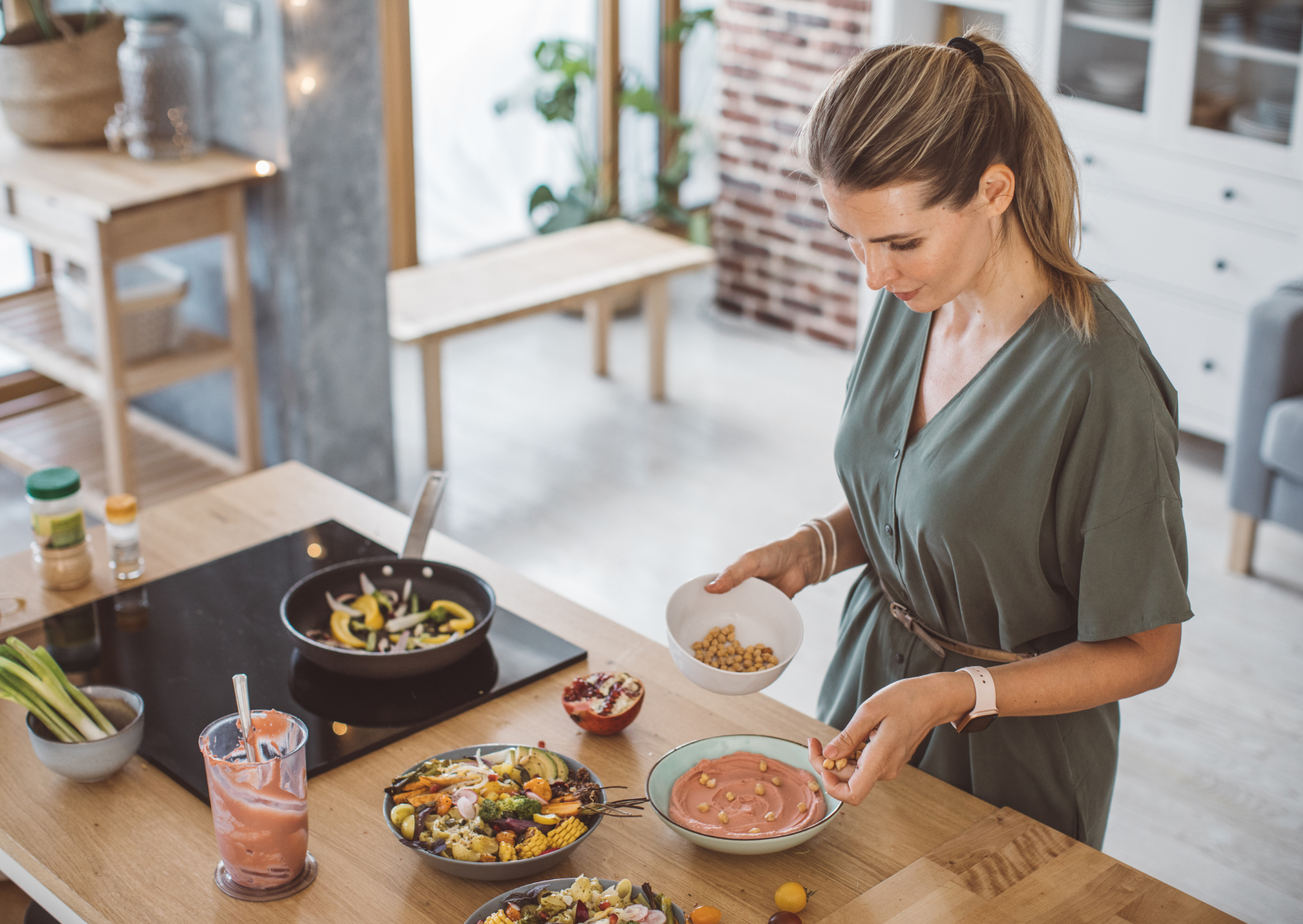
The 45-day version works best when the grocery cart gets boring in the right way.
Not joyless. Boring.
The person is not choosing from 200 packaged promises every week. He is mostly rotating the same ordinary categories until his meals start to assemble themselves.
A practical basket looks something like this:
- eggs
- plain yogurt or kefir
- chicken, turkey, fish, sardines, or beans
- lentils, chickpeas, or white beans
- rice, potatoes, oats, or real bread
- tomatoes, peppers, onions, greens, carrots, courgettes, mushrooms
- apples, oranges, berries, bananas, pears
- olive oil
- cheese
- nuts
- dark chocolate
- coffee, tea, mineral water
There is nothing exotic there.
The difference is what is missing.
No fluorescent breakfast cereal. No snack cakes. No giant sweetened coffees. No “healthy” bars with dessert logic. No low-fat products that replace fat with starch, gums, sweeteners, and sadness. No sauces that turn every meal into a laboratory for appetite.
The missing foods matter as much as the included ones.
A person eating this way can still make satisfying food. Scrambled eggs with tomato and olive oil. Lentils with carrots and sausage. Chicken with potatoes and salad. Sardines on toast. Greek-style yogurt with walnuts and fruit. Rice with vegetables and eggs. Beans with tuna and peppers. A plate of cheese, tomatoes, olives, and bread when cooking feels impossible.
It does not require counting because the structure handles a lot of the counting.
Protein appears at most meals. Fiber shows up without a powder. Fat is present enough to satisfy. Starch is not treated like a crime. Dessert becomes smaller because the day is not built from disguised desserts.
This is why the experiment works better as a shopping rule than as a diet rule.
At home, people eat what is available.
Change what is available and the person changes before the personality speech even begins.
The Weight Loss Was Fast Because The Old Diet Was Expensive To Carry
Twenty-three pounds in 45 days is a lot.
For many people, that would be too fast to treat as a casual goal. Body size, starting weight, water retention, sodium intake, activity, medication, sleep, alcohol, and medical conditions all change the pace.
But rapid early weight loss can happen when the previous diet was doing several things at once.
It may have been high in sodium. It may have been heavy in refined carbohydrates. It may have included frequent liquid calories. It may have encouraged late-night eating. It may have created enough appetite noise that the person was eating more often than he thought.
Remove those triggers and the first drop can be dramatic.
Some of it may be fat. Some of it may be water. Some may come from less food sitting in the digestive system. Some may come from better meal timing. Some may come from reduced alcohol or less restaurant food, even if alcohol was never the official villain.
The scale does not explain itself.
That is why the better measurement is not just pounds lost. It is the whole pattern.
Was he sleeping better?
Was he hungry all day or mostly fine between meals?
Did blood pressure change?
Did glucose readings change?
Did reflux calm down?
Did joint pain improve because weight came down or inflammation triggers changed?
Did he stop needing snacks every two hours?
Did his waist shrink?
Did his doctor reduce medication because the actual clinical numbers improved?
That is the difference between a crash diet and a food environment correction.
A crash diet produces a scale drop and a rebound plan.
A better food environment produces fewer decisions, steadier meals, and a body that is not constantly being pushed around by snacks pretending to be normal.
The 23 pounds get the click.
The quieter appetite is the more important result.
The European Part Is Mostly About Defaults
Europe is not a clean-eating fantasy.
People smoke outside cafés. They eat fries. They drink beer. They buy packaged cookies. They eat late. They love mayonnaise more than some Americans are prepared to witness.
But the everyday defaults are different enough to matter.
Portions are often smaller. Sweetness is often lower. Walking is built into normal errands in many cities. Lunch still has cultural weight. Bakeries sell actual bread. Yogurt does not always arrive as dessert in a plastic cup. Children are less likely to be offered candy-colored breakfast as a normal weekday meal.
That does not make Europe morally superior.
It means the default setting often creates less metabolic chaos.
A person trying to eat better in the U.S. usually has to swim against the grocery store. Better choices exist, but they are often framed as special, expensive, premium, or lifestyle-coded. In many European supermarkets, the boring decent option is easier to find.
The default is the intervention.
That is why “European-legal” works as a useful shortcut, even though it is not scientifically perfect. It pushes the shopper toward ordinary ingredients and away from the American packaged-food circus.
The person still has to cook.
That part cannot be skipped.
A European-style grocery cart does not help much if it turns into cheese, pastries, chocolate, and wine with a salad leaf for decoration. Legal is not the same as balanced. Traditional is not the same as portionless.
The working version is not “eat anything Europe allows.”
It is closer to this:
Eat food that a normal European household could build meals from, with packaged products playing a supporting role instead of running the day.
That is less romantic.
It is also the part that works.
The Foods That Quietly Disappeared
The most powerful part of the experiment may be the removal list.
Not because every removed food is poison. That is lazy thinking.
The issue is frequency.
A person can eat a bright candy once and be fine. A person can drink a soda at a barbecue and survive. A person can eat chips on a road trip without needing a moral tribunal.
But daily exposure is different.
Many American diets are not built from one dramatic bad food. They are built from hundreds of tiny engineered nudges. Sweetened drinks. Flavored coffee creamers. Breakfast cereal. Snack bars. Frozen entrées. Shelf-stable pastries. Sauces. Dressings. Protein snacks. Candy at checkout. Crackers with flavor dust. Drinks with colors louder than fruit has ever been.
Each one looks small.
Together, they create a day where hunger is constantly negotiated.
During the 45 days, the person’s food choices likely became less stimulating because these categories shrank:
- sweetened drinks
- artificially colored candies and desserts
- ultra-processed snack foods
- breakfast products built like dessert
- low-fiber refined packaged carbs
- sauces and dressings with long ingredient lists
- “healthy” bars that behave like sweets
- frozen meals designed for speed over satiety
The boring swap is powerful because it does not require a personality transplant.
Water instead of sweet drinks.
Fruit and yogurt instead of dessert snacks.
Eggs or oats instead of sweet cereal.
Potatoes or rice instead of chips.
Bread with cheese or tuna instead of a protein bar.
A cooked dinner instead of a frozen entrée.
These swaps sound almost too plain to be interesting. That is why they are useful. The person can repeat them without needing a new identity.
The point is not to fear every ingredient.
The point is to stop letting packaged foods decide the appetite curve.
Why Counting Was Not Necessary
Counting can work.
Some people like it. Some need it. Some do better with numbers because numbers remove guesswork.
But this experiment worked without counting because the food structure reduced the need for constant accounting.
That does not mean calories stopped mattering. They still mattered. Human bodies did not suspend physics for 45 days because the cheese was European.
It means the person likely ate fewer calories without forcing the issue.
That is what happens when meals become more filling, snacks become less engineered, drinks stop carrying sugar, and the day contains more protein, fiber, water, and chewing.
Satiety did the accounting.
A plate of beans, tuna, tomatoes, olive oil, and bread has more staying power than a sweet bar eaten in the car. Eggs with potatoes and peppers do more work than cereal that dissolves in 40 seconds. Plain yogurt with walnuts and fruit asks the body to participate in digestion in a way a dessert drink does not.
The texture matters.
The chewing matters.
The protein matters.
The fiber matters.
The fact that the meal looks like a meal matters.
This is also why the experiment should not become a new form of food anxiety. The goal is not to inspect every label like a detective who has lost the plot. The goal is to move most eating back toward foods that are hard to overeat by accident.
People can still overeat bread, cheese, nuts, olive oil, and chocolate.
Europe did not repeal appetite.
But overeating plain ingredients usually requires more intention than overeating snack products designed to disappear quickly.
That difference is enough to change a month.
The Part Americans Can Actually Copy

No one needs to move to Europe to try the useful version.
The American food environment is harder, but not impossible. The point is to build a smaller, stricter grocery world inside it.
For 45 days, the person would shop as if most ultra-processed food simply did not exist.
Not forever. Not as a religion. Just long enough to see what changes when the pantry stops arguing.
The practical rules are simple:
- buy mostly single-ingredient or short-ingredient foods
- cook most meals at home
- drink water, coffee, tea, or plain sparkling water
- eat protein at breakfast or lunch, not only dinner
- include beans, lentils, potatoes, oats, fruit, and vegetables
- use olive oil, butter, cheese, and nuts like food, not decorations for a binge
- keep dessert small and obvious
- avoid products that are basically candy with better branding
The best test is repeatability.
Can the person eat this way on a Tuesday when work is annoying?
Can the meal be made in 20 minutes?
Can the ingredients sit in the fridge without needing a wellness influencer to explain them?
Can lunch be packed?
Can dinner happen without ordering something because the plan was too precious?
That is where most diets fail. They are designed for motivation, not ordinary life.
A European-style approach works better when it is unglamorous. Lentils on Monday. Eggs on Tuesday. Chicken and potatoes on Wednesday. Sardines and toast when nobody wants to cook. Yogurt and fruit when breakfast needs to be finished in four minutes.
The body does not need novelty at every meal.
Marketing does.
A 7-Day Start That Does Not Turn Into A Diet Cult
Start with the kitchen, not the scale.
For the first week, the goal is to make the environment easier before asking the person to become disciplined.
Day one is the removal day. Put sweet drinks, snack cakes, candy bowls, flavored chips, dessert cereals, and “healthy” bars out of the normal eating path. They do not need a farewell ceremony. They just need to stop being the easiest option.
Day two is the basic shop. Buy eggs, plain yogurt, fruit, beans, lentils, chicken or fish, potatoes, rice or oats, salad vegetables, olive oil, coffee, tea, and one small dessert that is clearly dessert.
Do not buy diet food.
Day three is breakfast stabilization. Eat something with protein before the day becomes a snack hunt. Eggs, yogurt with nuts, oats with milk, or toast with cheese all work better than a sweet product eaten while standing.
Day four is the drink reset. Remove liquid calories for one week. Water, coffee, tea, and plain sparkling water are enough. This one change can expose how much “hunger” was actually sweetness on a schedule.
Day five is the emergency meal. Pick one meal that can be made when tired: eggs and potatoes, tuna and beans, rice and vegetables, lentils with sausage, or yogurt with fruit and nuts.
Day six is the label check. Look at the packaged foods that remain. If the ingredient list reads like a product development meeting, make it occasional instead of daily.
Day seven is measurement day. Check weight if useful, but also note waist, sleep, cravings, energy, digestion, and any monitored readings already used with a clinician.
For anyone on medication, the doctor stays in the loop. If blood pressure, glucose, reflux, or other health numbers change, those numbers become part of a medical conversation. They are not an invitation to improvise with prescriptions.
That is the adult version of the experiment.
Less dramatic, more effective.
The Real Win Was Not The 23 Pounds
The 23 pounds are impressive.
They are also the least portable part of the story.
Another person may lose 8 pounds. Another may lose 14. Someone else may lose very little on the scale but see better blood pressure, less reflux, steadier energy, or fewer cravings. A smaller person may not have 23 pounds to lose safely in the first place.
The more useful result is that the person learned what his body did when the food got simpler.
That is the point worth copying.
Not European purity.
Not fear of every additive.
Not pretending the continent has no junk food.
Not treating weight loss as a moral achievement.
The better lesson is that food rules can work when they change the environment instead of demanding constant self-control. A pantry with fewer engineered foods is easier to live with. A breakfast with protein is easier to trust. A cooked dinner is easier to stop eating than a snack spiral that never quite becomes a meal.
The body got fewer mixed messages.
That is why the medication piece, the weight loss, and the appetite change belong in the same story without being collapsed into one miracle claim.
The food changed. The numbers changed. The clinician adjusted the medications. The scale moved. The appetite quieted.
Those are connected events, not proof that one simple trick cured anything.
For an American reader, that distinction is not a buzzkill. It is the part that makes the experiment usable.
The 45 days did not require counting everything.
It required removing the foods that made counting necessary.

About the Author: Ruben, co-founder of Gamintraveler.com since 2014, is a seasoned traveler from Spain who has explored over 100 countries since 2009. Known for his extensive travel adventures across South America, Europe, the US, Australia, New Zealand, Asia, and Africa, Ruben combines his passion for adventurous yet sustainable living with his love for cycling, highlighted by his remarkable 5-month bicycle journey from Spain to Norway. He currently resides in Spain, where he continues sharing his travel experiences with his partner, Rachel, and their son, Han.