
The Paris-to-Nice flight on a budget carrier costs around 90 euros, takes ninety minutes in the air, and uses up most of a day once you account for airport transit on both ends.
The same trip on the TGV costs around 70 to 90 euros if booked a few weeks out, takes six hours, and drops you in the middle of Nice within walking distance of your hotel. The math, before considering anything else, already favors the train. Once you account for the days you can fit into a multi-stop train trip versus the days a multi-stop flying trip costs you, the gap widens significantly.
This is not a romantic argument for train travel. The romantic version is real but it is doing the work of obscuring the practical version, which is more compelling. Slow train travel through France is faster, cheaper, and produces more usable trip days than flying for any itinerary that involves more than two cities. The romance is just a bonus on top of the math.
What follows is the actual case for why a week of train travel through France works better than the standard fly-into-Paris approach, and what a working seven-day itinerary looks like.
The Math That Most Americans Miss
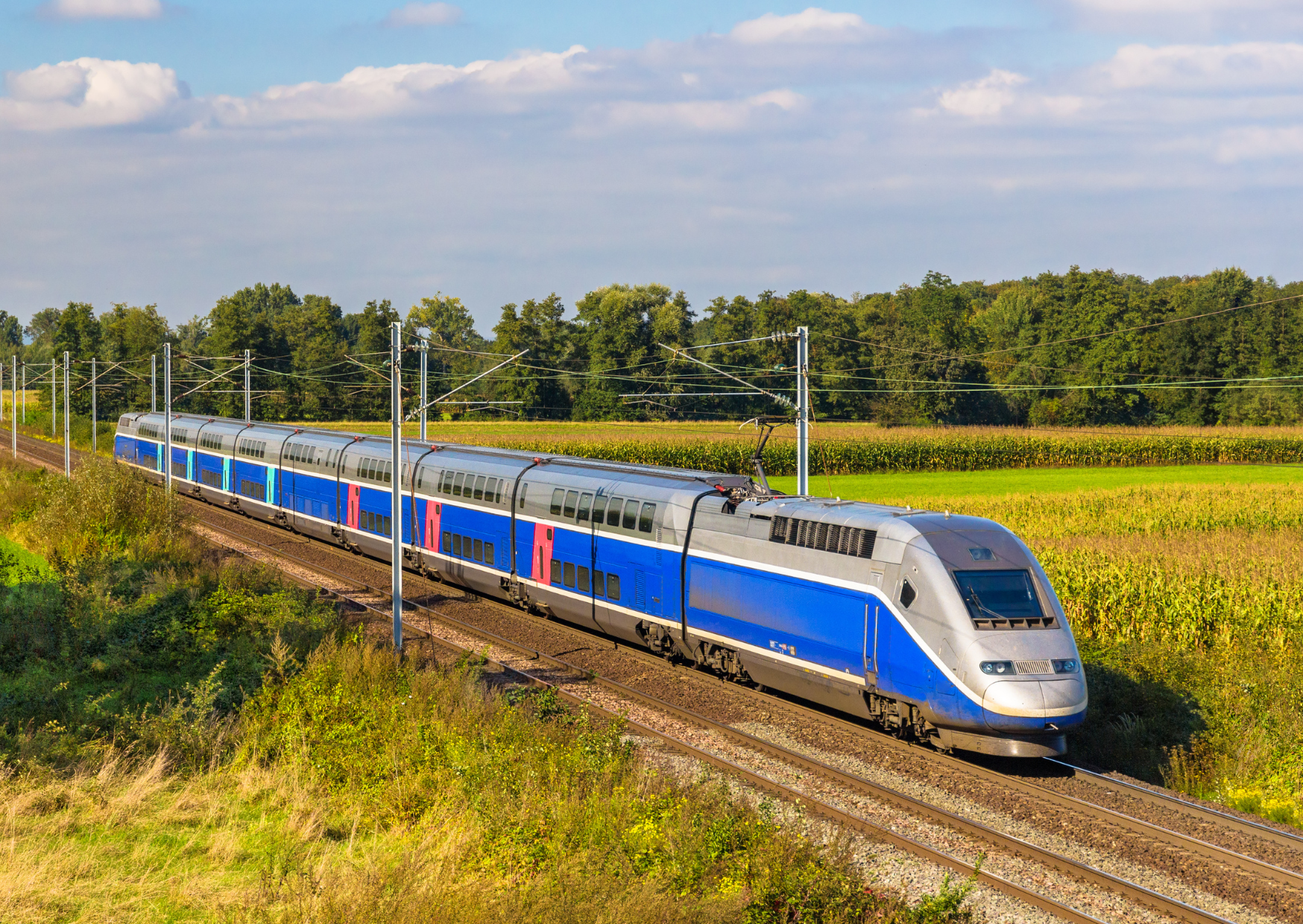
The American comparison usually runs flight cost versus train cost on a single leg, and concludes that flying is cheaper or roughly equivalent. This comparison misses three things.
It misses the airport tax on each flight day. A flight day is not just the flight time. It is the two hours before for security and check-in, the flight itself, the time to retrieve baggage, the transit from the airport to the city center, and the buffer for any delays. A 90-minute flight typically eats five to six hours of a travel day. A train ride is closer to its stated duration, with maybe 30 minutes of station logistics on each end.
It misses the multi-leg compounding. A trip with three cities involves two travel days at airport pace. The same trip on rails involves two travel days at train pace, which means the travel days are also potential sightseeing days. The TGV from Paris to Lyon takes two hours. The traveler arrives at lunch and has the afternoon. The flight from Paris to Lyon costs more, takes longer overall once airport time is factored in, and produces a half-day rather than a full afternoon on arrival.
It misses the booking flexibility. Train tickets in France are competitively priced when booked a few weeks ahead, and the system is straightforward enough that itinerary changes can be made without major financial penalties. Flight bookings on budget carriers carry significant change fees and luggage upcharges that often double the headline price.
The total trip cost for a one-week multi-city French trip on trains versus flights, when honestly accounted for, comes in 20 to 40 percent lower on rails. The trip also includes one to three additional usable hours per travel day, which over a week adds up to a full extra sightseeing day.
What The TGV Actually Is
The TGV is the French high-speed train system. It runs on dedicated tracks at speeds up to 320 kilometers per hour. The major routes connect Paris to all of France’s significant cities in two to four hours. Paris to Lyon is two hours. Paris to Marseille is three hours twenty minutes. Paris to Bordeaux is two hours fifteen minutes. Paris to Strasbourg is one hour forty-five.
The trains are comfortable. Not luxury comfortable. Functional and quiet comfortable. Seats with reasonable legroom. Tray tables. Power outlets at every seat. Bar car serving coffee, wine, sandwiches. WiFi on most routes, with variable speed.
Booking is done through SNCF Connect, which is the official French rail booking system. Prices vary based on demand and how far in advance you book, similar to airlines but with a less aggressive yield management system. Booking three to four weeks ahead typically captures the lower fares. Booking the morning of can occasionally produce reasonable prices but is not reliable.
A second tier of trains, the Intercités and TER (Transport express régional), runs slower routes and connects smaller cities. These are often more interesting trains than the TGV because they pass through countryside rather than racing across it. Burgundy, the Loire Valley, the Dordogne, and most of rural France are accessed primarily through Intercités and TER.
The TGV connects the cities. The slower trains let you stop at the places between them. A good French train itinerary uses both.
What A Week On Rails Actually Looks Like

A working seven-day train itinerary that demonstrates why this format works:
Day 1: Arrive Paris. Fly into CDG or Orly. Take the RER B or the Orlyval into central Paris. Settle into a hotel in the Marais, the Latin Quarter, or near Gare de Lyon (the station you will leave from on day 2). Walk the neighborhood. Eat dinner. Sleep.
Day 2: Paris to Lyon. Morning train from Gare de Lyon, departing around 9 or 10am, arriving Lyon around lunchtime. Two hours of TGV. Take a taxi or walk to your Lyon hotel in Vieux Lyon or the Presqu’île district. Afternoon walking the old town, the traboules, the Croix-Rousse silk weaver district. Dinner at a bouchon. Lyon is one of France’s strongest food cities and worth a full day at minimum.
Day 3: Full day Lyon. Markets in the morning. The Musée des Confluences or one of the other cultural stops in the afternoon. Long lunch and dinner. Walk the riverbanks at sunset. The third day is when Lyon stops feeling like a stopover and starts feeling like a city you are getting to know.
Day 4: Lyon to Avignon. Mid-morning TGV, about an hour and a half. Arrive in time for lunch. Avignon is small enough to walk. The Palais des Papes, the bridge, the medieval walls, the cafes in the central square. Day trip option to the surrounding countryside if energy permits, otherwise walking the town and eating well.
Day 5: Avignon to Aix-en-Provence. Short trip, around 30 minutes. This is the day to slow down. Aix is a smaller, quieter city. Cours Mirabeau in the morning. The Cézanne workshop or the Granet museum. Long Provençal lunch. The pace shift from Lyon to Aix is the point. A full week of bigger cities would have produced fatigue. The mid-week slowdown in Provence is what makes the rest of the week work.
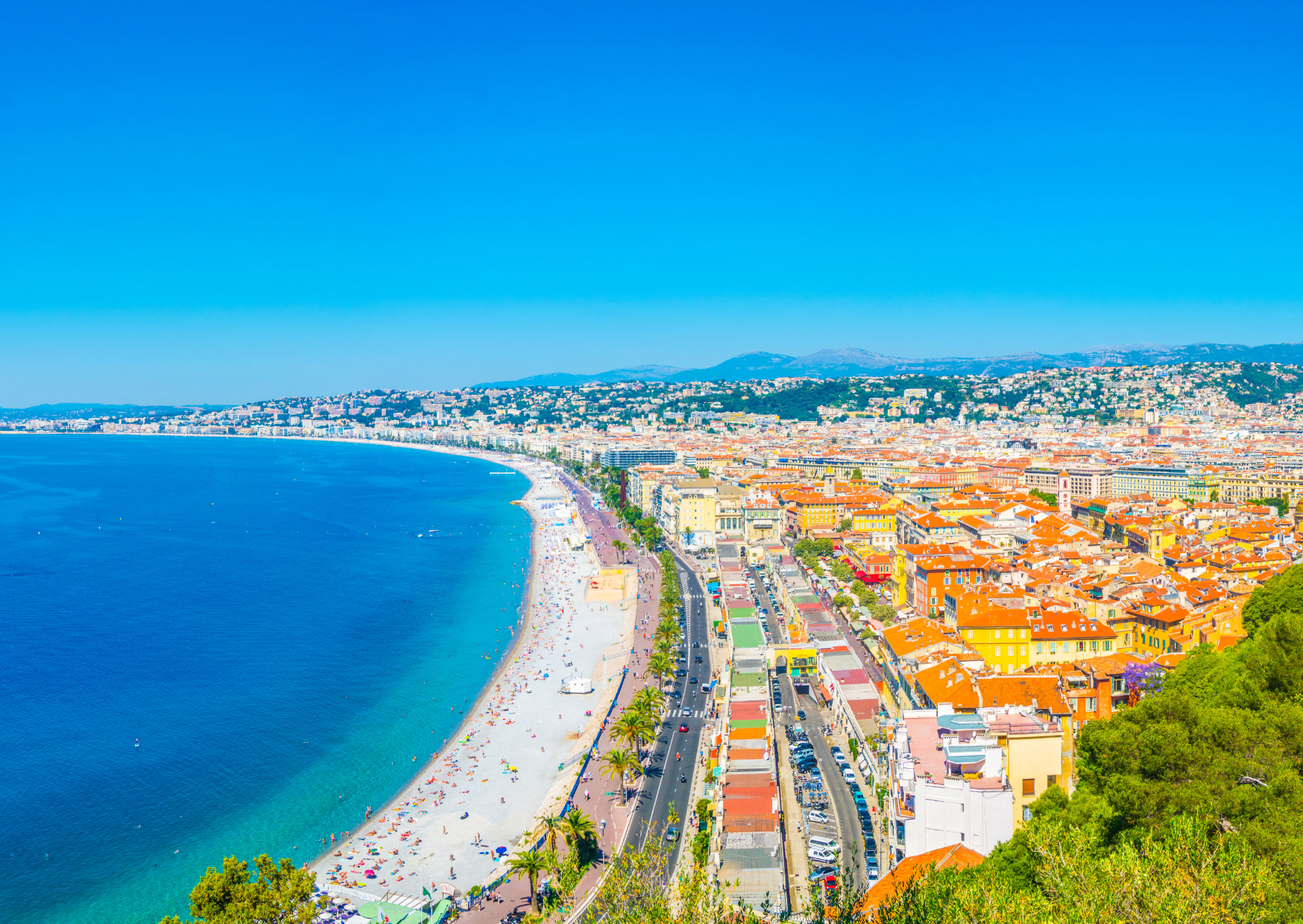
Day 6: Aix to Nice. Train about three hours. Arrive afternoon. Walk the Promenade des Anglais. The Old Town. The Cours Saleya market. Dinner at a niçoise restaurant. Sleep within sight of the Mediterranean.
Day 7: Nice and return to Paris. Morning in Nice. Visit the Matisse museum or the Chagall museum. Lunch by the water. Afternoon TGV from Nice to Paris (about five and a half hours, but workable as a long travel afternoon with food, a book, and the Mediterranean coast through the window for the first hour). Evening Paris dinner. Fly home next day.
This itinerary covers Paris, Lyon, Avignon, Aix-en-Provence, and Nice in seven nights, with five distinct cities and meaningful time in each. The same itinerary done by flights would require either dropping cities or accepting two-night stays that feel like rushed transits. The train format produces longer ground time in each location.
What The Total Cost Actually Comes To
The headline number for this seven-day itinerary, all-in for one person, with reasonable but not luxury accommodation:
International flight US to Paris round trip: 600 to 900 dollars.
Trains across the week: 280 to 350 euros total. Paris to Lyon (70 to 90 euros), Lyon to Avignon (50 to 70), Avignon to Aix (15 to 25), Aix to Nice (40 to 60), Nice back to Paris (90 to 120 if booked early enough).
Accommodation: 100 to 180 euros per night across six nights, totaling 700 to 1,100 euros. Mid-range hotels or small boutique places, not budget but not luxury.
Food: 70 to 110 euros per day across seven days, totaling 500 to 800 euros. This assumes one good restaurant meal per day, casual cafes for breakfast and lunch, and reasonable wine.
Activities, museums, miscellaneous: 200 to 350 euros across the week.
Local transit, taxis, occasional Uber: 100 to 200 euros across the week.
Total ground costs: roughly 1,800 to 2,800 euros per person for the week.
Adding the international flight, the all-in cost lands between 2,500 and 3,800 dollars per person. This is the real comparison number for a French train week.
The same itinerary, attempted with internal flights between cities, runs about 200 to 400 euros higher on transport alone, plus the additional accommodation cost from the days lost to airport transit (typically one extra night needed to fit the same five cities), plus the extra meal and ground transport costs from the lost time. The all-in for a flight-based version of this itinerary is roughly 400 to 700 dollars more per person.
The train version is cheaper, more comfortable, and includes more sightseeing time. The math is not romantic. It is just the math.
What You Notice On A French Train You Do Not Notice On A Plane
The Paris-Lyon stretch passes through Burgundy. Vineyards, slow rivers, small towns with church spires, fields that change color depending on the season. None of this is visible from a plane.
The Lyon-Avignon stretch follows the Rhône valley south. The landscape shifts from northern French to Mediterranean across the two-hour ride. Olive trees start appearing. The light changes. The architecture in the towns flashing past starts using terra cotta and shutter colors that do not exist in the north.
The Aix-Nice stretch hugs the Mediterranean coast for the second half of the ride. You pass Cassis, Bandol, Saint-Raphaël, Cannes, and a dozen smaller coastal towns, with the sea sometimes thirty meters from the train window. This is one of the more beautiful stretches of Mediterranean coastline, and it is essentially a free addition to the ride.
The Nice-Paris return follows the same coast in reverse for the first hour, then climbs through Provence, then runs north through the Rhône valley as evening light falls. The five and a half hours is long but the window is doing real work.
The plane gives you the city you left and the city you arrived in, with nothing in between. The train gives you the geography of France as a continuous experience. Travelers who do this once usually want to do it again because the country starts feeling coherent rather than like a set of disconnected destinations.
The Practical Things That Matter

A few logistics that experienced French train travelers know and most American visitors do not:
Book through SNCF Connect, not third-party aggregators. The aggregators add fees and sometimes mislabel ticket flexibility. Direct booking is straightforward in English and produces the cleanest experience.
Print or save tickets as PDF. The SNCF mobile app works but the WiFi at stations can be unreliable, and a downloaded PDF or printed ticket is foolproof.
Get to the station 20 to 30 minutes before departure, not earlier. French train stations do not have airport-style security. You walk in, find your platform on the departure board (usually announced 20 minutes before departure), and board. The system is fast.
Reserved seats matter on TGV. All TGV tickets include a specific seat assignment. Find it. The trains are full on most routes.
Single tickets vs Eurail passes. For a week with five legs, single tickets are usually cheaper than a pass if you book ahead. Passes make sense for two-week-plus trips with many short legs. Run the math both ways before deciding.
Lunch on the train is a real option. The bar car has decent sandwiches, wine, and coffee. A casual lunch at a window seat watching France pass by is one of the underrated travel meals.
Carry your luggage. French stations do not have porters, and most do not have working elevators between platforms and street level. Pack accordingly. A bag you can carry up two flights of stairs is the right bag.
Pickpockets exist at major stations. Gare du Nord, Gare de Lyon, and Marseille Saint-Charles in particular. Standard precautions, nothing to be paranoid about.
What Falls Off This Itinerary
The seven-day Paris-Lyon-Avignon-Aix-Nice route is one of several strong French train weeks. It is not the only one and it has trade-offs.
It does not include Bordeaux or the southwest. A different week could run Paris-Bordeaux-Toulouse-Carcassonne-Avignon, with Atlantic coast and Cathar country instead of Provence and the Riviera.
It does not include Brittany or Normandy. A northern variation could run Paris-Rouen-Caen-Saint-Malo-Rennes, with World War II history, oysters, and Celtic French coast.
It does not include Strasbourg or the Alsace. An eastern variation could run Paris-Strasbourg-Colmar-Lyon, with the German-influenced eastern France that gets little American attention.
The Paris-Lyon-Provence-Riviera route is the most accessible for first-time travelers and the most varied across cuisines, climates, and architectures. The other routes work for travelers who have done the standard one and want something else.
When Flying Still Makes Sense
The case for trains is strong. The case for flights is not zero.
Flights make sense for trips over four hours of train time between two cities and only those two cities. Paris to Marseille on the TGV is three hours twenty. Paris to the Côte d’Azur is closer to six. If the trip is one return leg from Paris to Nice and back, with all the time spent in Nice, the flight saves three hours each way and does not cost the multi-city benefit because there is no multi-city itinerary.
Flights make sense for tight schedules. A traveler with three days in France who wants to see Paris and Nice should fly. The train cuts a full day from a three-day trip. The trip is not long enough to absorb the loss.
Flights make sense from peripheral airports. Some smaller French airports (Lille, Nantes, Toulouse) are well-connected to the rest of Europe but require connections through Paris when traveling by rail. Flying directly out from these airports can be more efficient than training back to Paris first.
For most multi-city trips of five days or longer, the train wins. The longer the trip and the more cities, the bigger the train advantage.
A Note On Pace
The pace of this itinerary is moderate. Five cities in seven nights is not a slow trip. It is also not a forced march.
A slower variation would be Paris (3 nights), Lyon (2), and Aix or Nice (2). Three cities, more depth in each, less travel time. Good for travelers who want to settle in.
A faster variation would add Bordeaux or Strasbourg in place of Aix, producing a six-city itinerary. Aggressive but doable for energetic travelers.
The decision is personal. The train system makes both pacings work. What does not work well is a faster pacing on flights. The airport time consumption breaks the math.
Why The Train Trip Sticks

Travelers who do a French train week tend to come back and do another one within a year or two. The pattern is consistent enough to mention.
The reason is partly practical. Once you know the system, planning the next trip is easy. SNCF Connect is the same site you already used. The booking pattern is familiar. The packing rules are figured out.
The reason is partly experiential. The format produces a different kind of trip than flying does. More continuous. More geographic. More time at street level in each place. Travelers come back and realize they remember the train rides themselves as part of the trip, not just the cities. The Lyon-to-Avignon ride is a memory, not just a transit.
This is the part that makes the math case look small in retrospect. The train is cheaper. The train is faster across a multi-stop trip. The train fits more cities into the same number of days. The train also produces a different relationship with the country. The geographic continuity that flights interrupt is preserved on rails, and travelers register that without always being able to articulate it.
For a 2026 first-time French train trip, the Paris-Lyon-Avignon-Aix-Nice route is the strongest entry point. Book the trains four weeks out. Pack a manageable bag. Get to the stations twenty minutes before departure. Eat lunch on the train. Watch the country pass by. Arrive in the next city ready to walk to dinner.
The math is the math. The country does the rest.

About the Author: Ruben, co-founder of Gamintraveler.com since 2014, is a seasoned traveler from Spain who has explored over 100 countries since 2009. Known for his extensive travel adventures across South America, Europe, the US, Australia, New Zealand, Asia, and Africa, Ruben combines his passion for adventurous yet sustainable living with his love for cycling, highlighted by his remarkable 5-month bicycle journey from Spain to Norway. He currently resides in Spain, where he continues sharing his travel experiences with his partner, Rachel, and their son, Han.