
Last updated on August 12th, 2026 at 11:14 am
The bowl of harira at a small place near the Bab Doukkala gate has fourteen ingredients in it that the American palate cannot identify. The American eats it anyway, and by the third spoonful starts to understand that the cookbook version of Moroccan food at home has been wrong the entire time.
This is the central lesson of a week eating in Marrakech. Not that Moroccan food is more complex than Americans realize, though it is. The lesson is that the American relationship with spice is structurally different from the Moroccan one, and the difference is not solvable by buying better spices or following recipes more carefully. The whole framework is different. A week of eating in Marrakech makes that visible in a way a cookbook cannot.
Americans who cook Moroccan food at home tend to use spices the way they use any other ingredient. Measured into the dish at a specific point, in specific quantities, with the spice mixture treated as a flavor input that gets adjusted by tasting. This is the cooking-school framework, and it produces dishes that taste like a competent American cook’s interpretation of Moroccan food.
The Moroccan framework is different. Spices are not ingredients in the dish. They are the substrate the dish is built on. The cooking starts with spice and builds the dish around it, not the other way around. This sounds like a small distinction. After a week of eating in Marrakech, it becomes visible as a large one.
The Spice Souk Is Not What Americans Think It Is
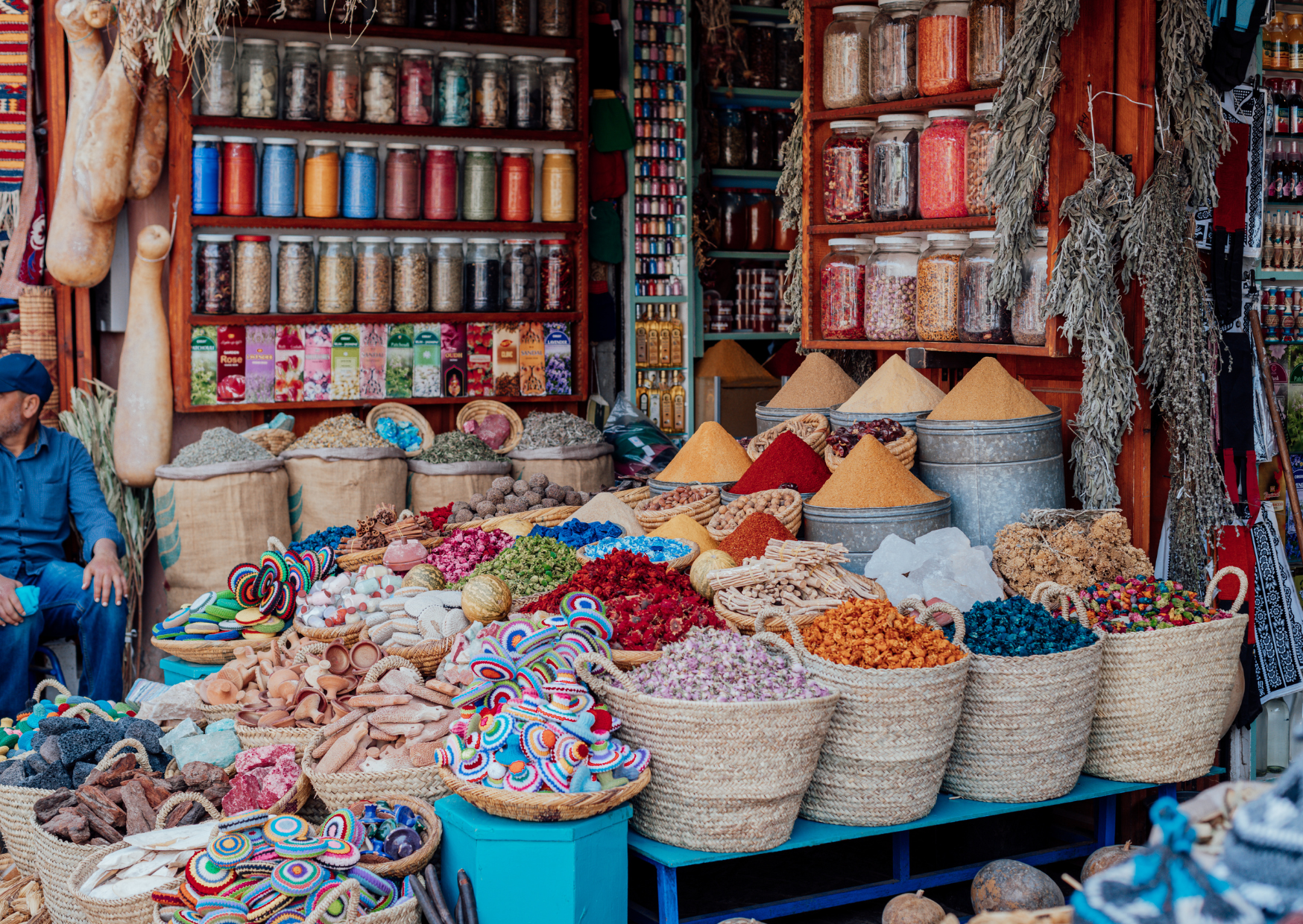
The Marrakech spice market is one of the standard tourist stops, and most American visitors leave with a small bag of ras el hanout, a tin of saffron, maybe some preserved lemons. They take it home, use it in two or three recipes, and notice that the food does not taste like what they ate in Marrakech.
The reason is not the spices. The same spices are available in good American spice shops at comparable quality. The reason is what the spice merchant was actually doing when he sold them.
A Moroccan spice merchant does not sell spices the way an American grocery store does. He blends them, in front of you, for the specific dish you are going to make. You tell him you are making tagine with chicken and preserved lemon. He builds the spice mixture for that specific tagine, in that quantity, with the ratios he knows work for that combination. You leave with a custom blend that goes into the pot and produces the dish.
The American who buys ras el hanout in a tin in the United States is buying a generic version of a blend that was supposed to be specific to a dish. The customization is the point. Without it, the dish is starting from a generic foundation, and the American cook has to compensate with adjustments that the Moroccan cook never had to make because the spices arrived already calibrated to the dish.
This is the part the cookbook cannot teach. The cookbook lists ras el hanout as an ingredient. The Moroccan cook knows that ras el hanout for a chicken tagine is not the same blend as ras el hanout for a beef tagine, and that the spice merchant calibrated each one. The cookbook flattens this distinction. The week in Marrakech makes the distinction visible because the traveler watches the merchant do the blending.
Spice As Foundation, Not Seasoning
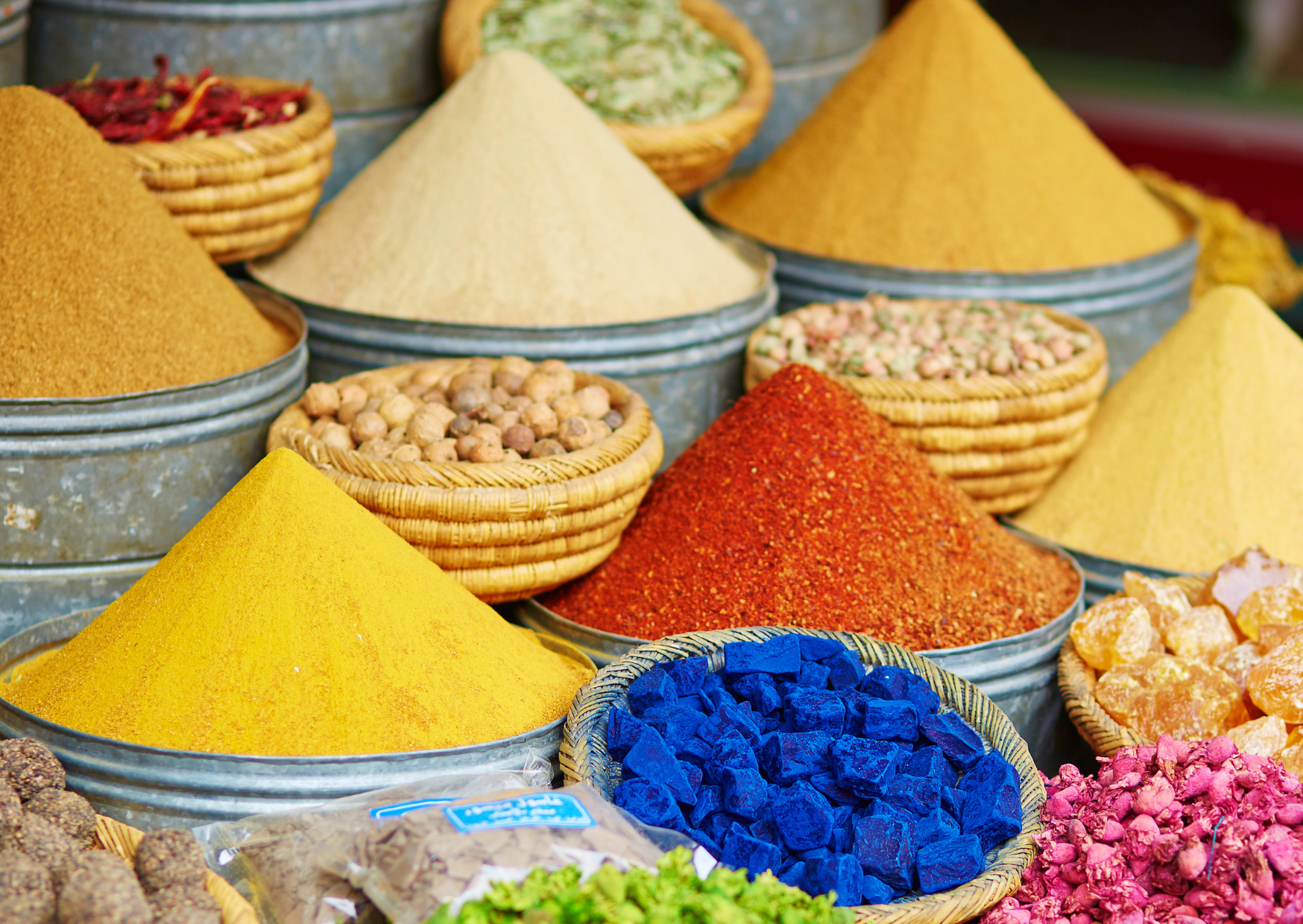
The structural difference shows up most clearly in how Moroccan dishes are built.
A typical American approach to Moroccan-style chicken: brown the chicken, add aromatics, add spices, add liquid, simmer. The spices go in at a specific moment as a flavor addition.
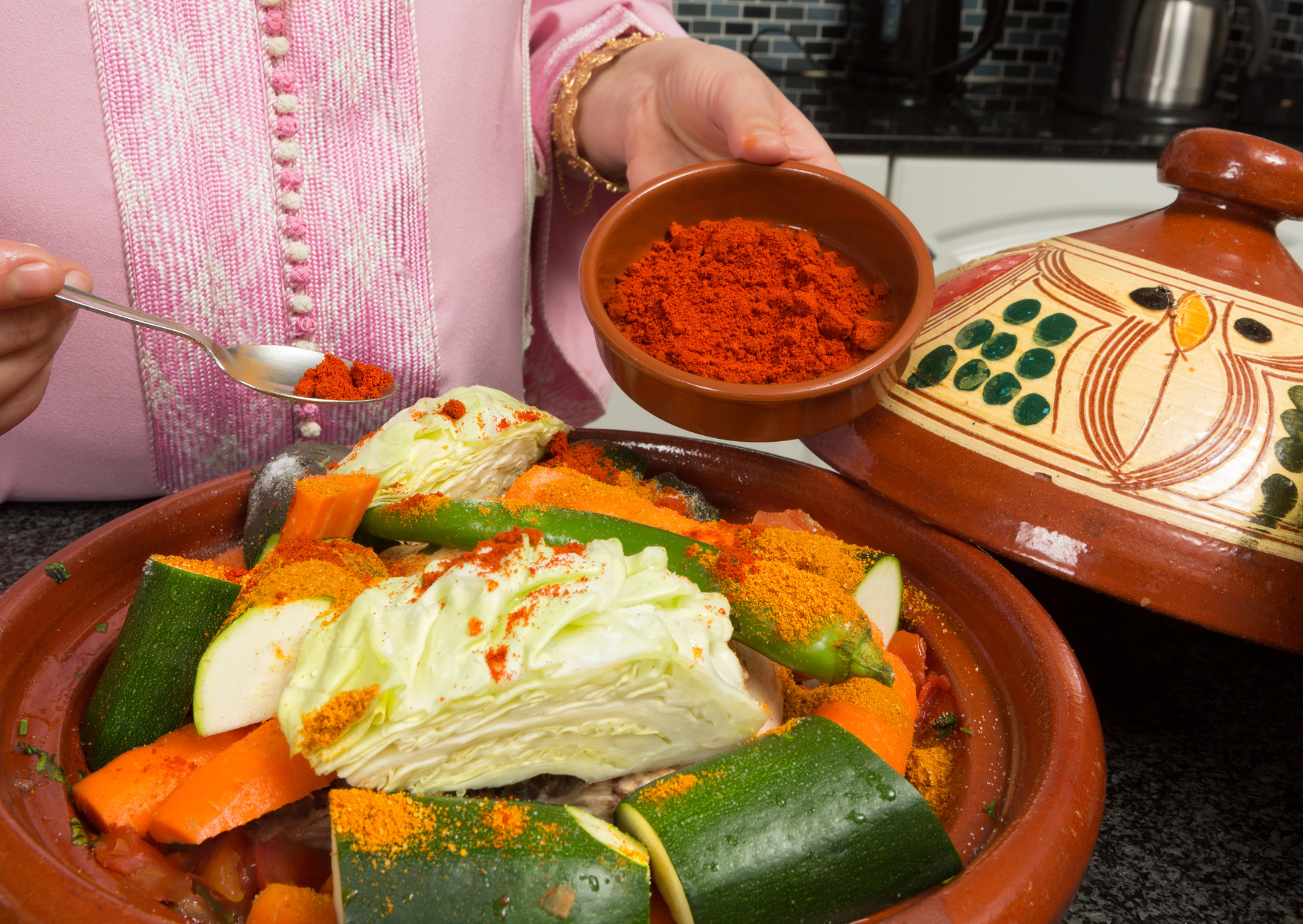
The Moroccan approach: start with the spices and aromatics in oil, cook them until the oil itself has taken on the spice character, then build the dish on that base. The chicken goes into a pan that is already deeply spiced. The spices are not added to the dish. The dish is added to the spices.
This sounds like a small reordering. In practice it produces a fundamentally different result. The American version has a chicken with spices on it. The Moroccan version has a dish where the chicken and the spices are integrated at every level, because the chicken cooked inside the spice mixture rather than being seasoned with it.
A week of eating in Marrakech reveals this through repetition. The harira at one place tastes specifically of cumin and coriander cooked together until they bloomed in the oil. The tagine at another place tastes specifically of saffron and ginger that started the dish and shaped everything that followed. The mechouia salad has its char-grilled vegetable character built on a base of cumin and garlic that was bloomed first, not sprinkled on at the end.
The American cook can replicate this by changing the order of operations. The cookbook usually does not emphasize the change because the cookbook is written for an audience that thinks of spices as seasoning rather than as foundation. The week of eating teaches the framework that the recipe assumes.
Heat Is Not What Americans Think Either
Americans expect Moroccan food to be moderately spicy in the chili-heat sense. Most of it is not. The heat dimension in Moroccan cooking is largely absent compared to Mexican, Thai, Indian, or Chinese cuisines that Americans associate with spice.
What Moroccan cooking has instead is spice depth. A tagine can have ten or twelve different spices in significant quantities and produce a dish that is not chili-hot but is layered, warming, complex, and unmistakably spiced. The American expectation of “spicy” focused on heat misses what Moroccan food is actually doing.
The clearest example is harissa, which exists in Moroccan cuisine but plays a different role than the heat-forward chili pastes Americans know. Moroccan harissa is added to taste at the table, not built into the cooking. The dish itself is depth-spiced, and the harissa lets each diner add the heat dimension they want. The two systems are separate.
This is structural. A week of eating in Marrakech produces meal after meal of food that is unmistakably and complexly spiced without being chili-hot, and the American palate gradually recalibrates. By the third or fourth day, the traveler stops asking whether the dish is going to be spicy and starts noticing what kind of spiced.
The framework shift matters because American “Moroccan-inspired” recipes often add heat to compensate for lack of depth. The dish gets chili flakes or jalapeño because the cook is reaching for the spicy register and can only access it through heat. The Moroccan original would not have had heat. It would have had depth. The substitution produces a dish that is not authentic in the failure mode that the cookbook does not flag.
The Smell Of Marrakech Is The Lesson
Within thirty minutes of arriving in the Marrakech medina, the traveler’s nose has cataloged twenty distinct spice profiles. Not because the medina is unusually fragrant, though it is. Because the spices are not contained the way they are in American kitchens.
Open spice barrels in the souk. Spice merchants blending in the open air. Restaurants with their spice prep visible from the street. Cafes grinding cumin and coriander on the spot for the day’s cooking. The whole atmosphere is spiced, and the traveler’s olfactory system does what it does when surrounded by stimuli, which is to start distinguishing.
By the end of a week, an attentive traveler can usually identify cumin, coriander, ginger, cinnamon, paprika, turmeric, saffron, fennel, anise, cardamom, allspice, cloves, nutmeg, and white pepper by smell alone. Some have started to identify ras el hanout variations and can tell a chicken-tagine blend from a beef-tagine blend.
This recognition is the part that no cookbook can produce. The cookbook lists the spices. It cannot make the cook know what each one smells like in isolation, what it smells like blooming in oil, what it smells like in combination, what it smells like dominant in a dish versus subtle in a dish. The week of being surrounded by these smells in their working context produces a sensory database that takes years to build through home cooking alone.
The American who returns from a week in Marrakech and makes a tagine cooks differently than the American who has only read about it. The smell knowledge is the difference, and it is not transferable through text.
The Spice Pantry Reorganization
Many Americans who spend a serious week in Marrakech reorganize their home spice pantry within a month of returning.
The standard American spice rack is set up alphabetically or by frequency of use. Spices are kept in small quantities, replaced when empty, and used in the small measured doses that recipes specify. The Moroccan-influenced reorganization is different.
The cumin, coriander, ginger, cinnamon, and paprika, which are the workhorses of Moroccan cooking, get bought in larger quantities. They get kept in larger jars. They get used more aggressively, with the recipe quantities revised upward because the previous quantities were producing thin versions of the dishes. The saffron, the cardamom, the cloves, the lesser-used aromatics, get treated as supplementary rather than central.
The pantry shifts from “ingredient storage” to “working foundation.” A jar of cumin that holds 50 grams gets replaced with one that holds 250. The cumin gets used in dishes that were not previously cumin dishes. The whole spice approach moves from cautious to confident.
This reorganization is not a tourist affectation. It reflects the structural framework shift. Once a cook understands that spice is foundation rather than seasoning, the working pantry changes to support that framework. The cumin in the small jar made sense in the seasoning framework. In the foundation framework, the small jar runs out in a week.
The Bread Lesson
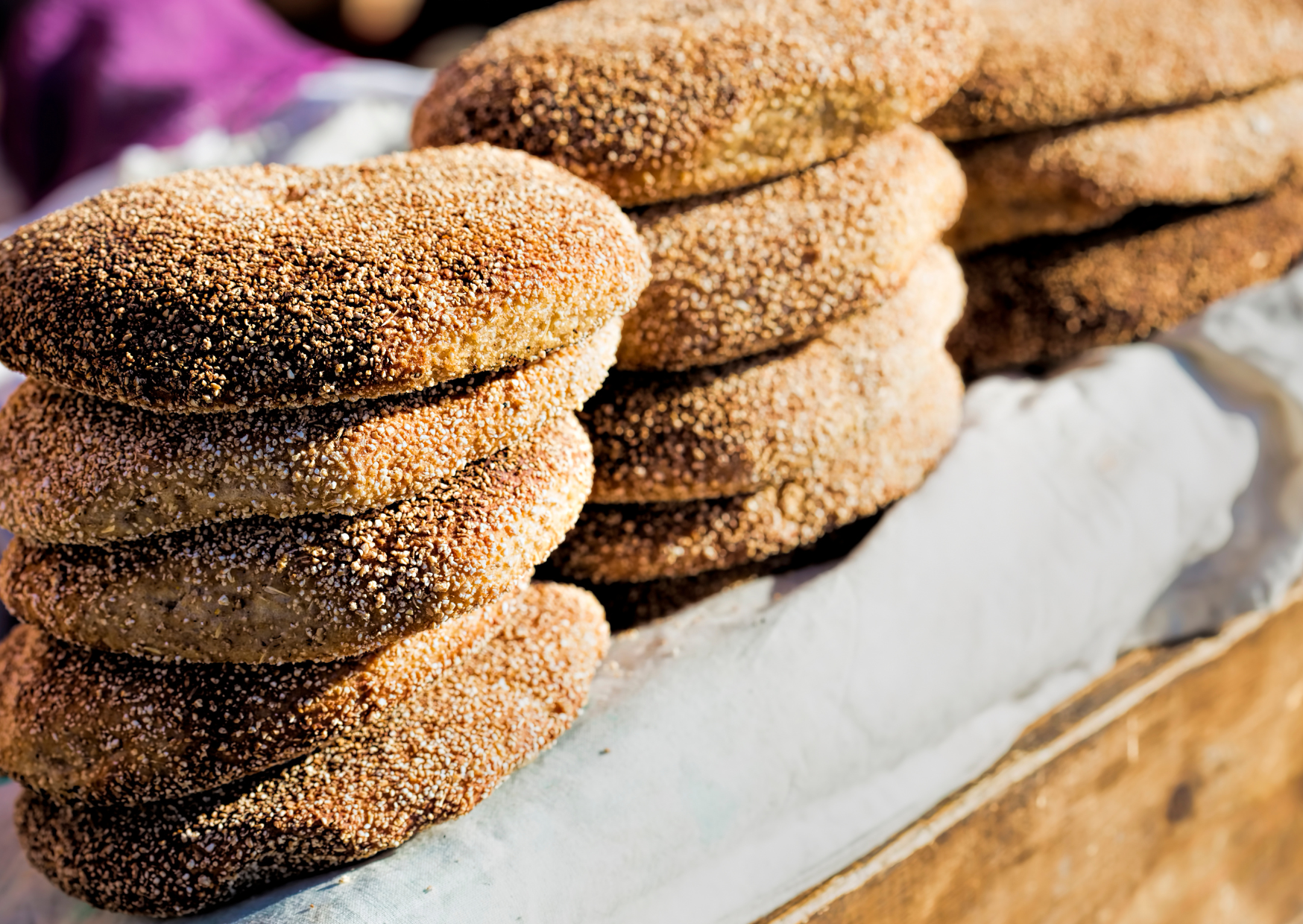
A surprise of the week in Marrakech is what bread teaches about spice.
Moroccan bread, khobz, is everywhere. It is baked daily in neighborhood ovens. It is sold from baskets on the street. It is the primary utensil at most meals, used to scoop tagine, salad, and dip. It is mostly plain, with the spice expression coming from the dish it is paired with.
But some Moroccan breads are spiced. The msemen, which is a folded griddle bread, sometimes contains anise or fennel in the dough. Certain festival breads are heavily spiced. And the experience of eating these spiced breads alongside the spiced dishes teaches an important lesson about layering.
The plain bread next to the spiced tagine creates a contrast that lets the tagine’s spice depth come forward. The spiced bread next to a milder dish lets the bread’s spice depth come forward. The Moroccan meal is structured around contrast, with each element calibrated to make the others readable.
The American Moroccan-themed dinner often has every element trying to be the spiced element. The bread is plain because the cook did not think about it. The salad has cumin and coriander because the recipe said so. The tagine has its full spice loadout. The result is a meal that is monotonously spiced, with no contrast for the spices to play against.
The week in Marrakech reveals the structural rule: spice is a relationship, not a property. A dish is spiced relative to the other dishes at the table. Adjusting the spice of one dish without considering the others produces a meal that has the right ingredients but the wrong architecture.
What The Week Recognizes
The week of eating teaches what the cookbook cannot.
The framework shift from spice as ingredient to spice as foundation. The order-of-operations difference between adding spices to a dish and building a dish on spices. The sensory database that comes from being surrounded by working spices in their cultural context. The understanding that depth and heat are different dimensions and that Moroccan cooking specializes in the first. The architectural awareness that spice is relational across a meal.
None of these are individually surprising. All of them are absent from most American cookbooks because the cookbook assumes a cooking-school framework that does not match the Moroccan one. The cookbook can describe a tagine recipe in detail. The cookbook cannot describe the framework that makes the recipe work.
This is the structural problem with cookbook-based ethnic cooking generally, and it shows up clearly in Moroccan food because the framework gap is wide. American Italian cooking has narrowed that gap considerably over the past forty years through immigration, restaurant exposure, and home cooking integration. American Mexican cooking has narrowed it through similar mechanisms. American Moroccan cooking has not had the same exposure pressure, and the framework gap remains wide.
The week of eating in Marrakech is the fastest way to close the framework gap. Not because Marrakech is the only good Moroccan food destination, though it is one of the better ones. Because the immersion produces the framework recognition that the cookbook cannot deliver.
What The Cook Does Differently After Returning
The American who has spent a serious week eating in Marrakech and pays attention typically changes a few cooking practices within the first month back.
Spices get used in larger quantities. The recipe says one teaspoon of cumin and the cook uses one tablespoon, because the week of eating revealed how much cumin Moroccan cooking actually uses.
Spices get cooked first, in oil, before other ingredients enter the pan. The blooming step that American recipes often skip becomes standard.
Spice combinations get customized to the dish rather than reached for in pre-mixed form. The spice merchant’s principle becomes a home practice. Different tagines get different blends.
The chili-heat dimension becomes optional rather than default. The cook stops reaching for jalapeño or red pepper flakes to make a dish “spicy” and instead reaches for cumin, coriander, and ginger to make it spiced.
Whole meals get planned with spice contrast in mind. The bread, the salad, the main, and the side are calibrated against each other rather than each going for maximum spice independently.
These changes are not exotic. They are the cooking-school framework being replaced by the Moroccan framework. The change is a framework shift more than a technique acquisition, and once it has happened, the cook’s Moroccan dishes start producing the flavors that the cookbook had been promising and the kitchen had been failing to deliver.
A Practical Note On What To Eat And Where
For the American traveler with a week in Marrakech, the food layout that produces the framework shift is roughly this.
Day 1, eat harira at a casual local restaurant. Notice the depth.
Day 2, eat a chicken tagine with preserved lemon at a restaurant inside the medina. Notice how the saffron and ginger anchor the dish.
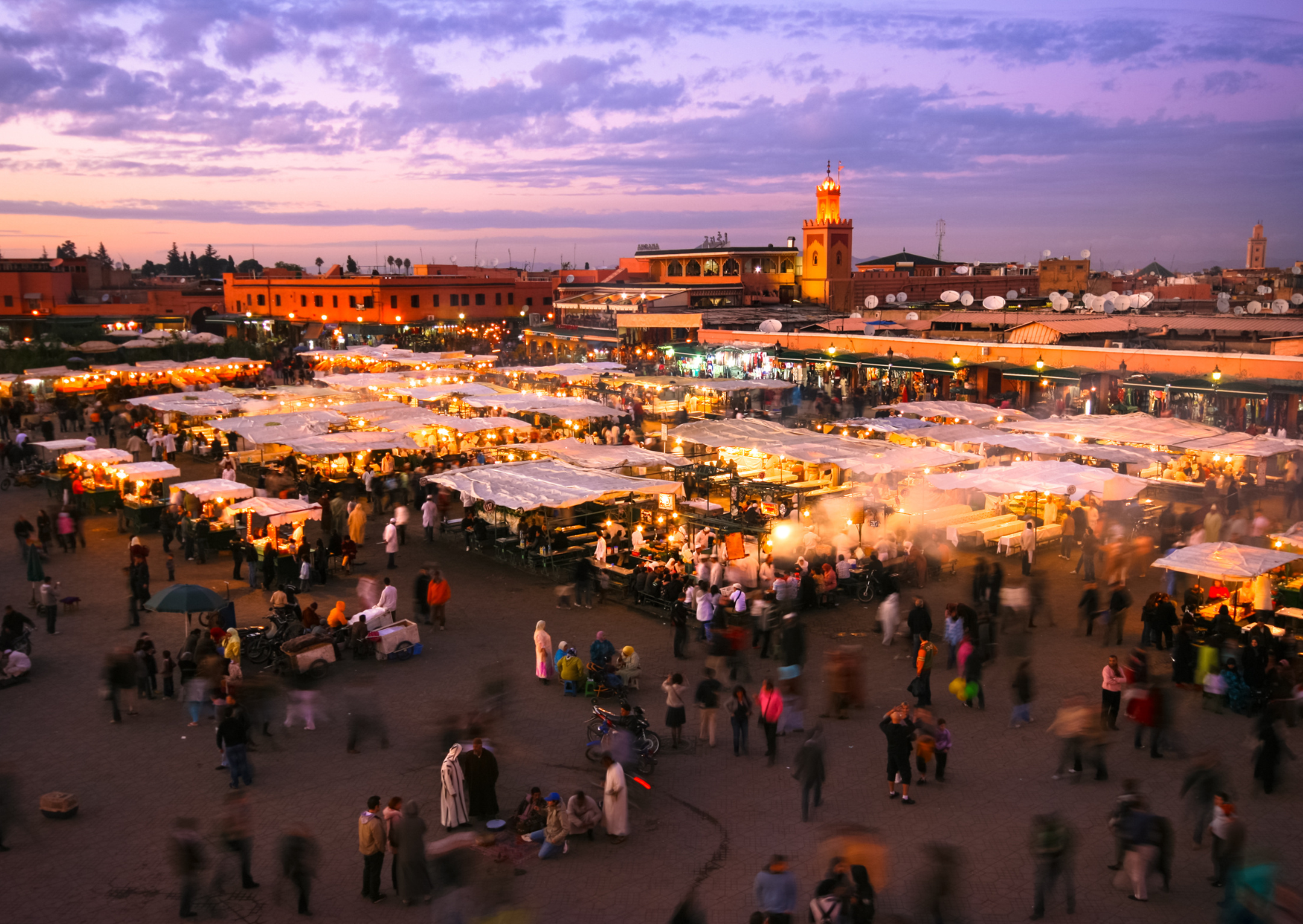
Day 3, eat at a street food stall in the Jemaa el-Fnaa square in the evening. Notice the casual confidence with spice quantities.
Day 4, take a cooking class. The good ones include a market visit and explain the spice framework directly. This is the day where the framework click usually happens.
Day 5, eat at a higher-end restaurant that does refined versions of traditional dishes. Notice how the spice work is more precise but the framework is the same.
Day 6, return to a casual place from earlier in the week. Notice how the food reads differently now that the framework is visible.
Day 7, buy spices from a merchant who blends to order. Specify the dishes you want to make at home. Take notes on the ratios.
This layout produces, for most attentive travelers, the framework shift. The cookbook becomes useful at home in a way it was not before. The Moroccan dishes start tasting Moroccan rather than tasting like American Moroccan-inspired food.
The week is not a culinary education in the technical sense. It is a framework recognition exercise. The framework, once recognized, transfers home and stays. The cookbook, once read against the framework, becomes useful. The dishes start working.
The traveler who comes back from Marrakech and does not change how they cook either did not pay attention or did not cook before. The traveler who pays attention typically cooks differently for the rest of their life. The week of eating is the cause.
The fourteen ingredients in the harira at the small place near the Bab Doukkala gate are not the lesson. The framework that allowed the cook to use fourteen ingredients in a casual lunch dish, without a recipe, with the spice merchant’s blend already calibrated, on a base of bloomed aromatics, in a tradition that treats spice as foundation rather than seasoning, is the lesson. The harira is just where the lesson lands.

About the Author: Ruben, co-founder of Gamintraveler.com since 2014, is a seasoned traveler from Spain who has explored over 100 countries since 2009. Known for his extensive travel adventures across South America, Europe, the US, Australia, New Zealand, Asia, and Africa, Ruben combines his passion for adventurous yet sustainable living with his love for cycling, highlighted by his remarkable 5-month bicycle journey from Spain to Norway. He currently resides in Spain, where he continues sharing his travel experiences with his partner, Rachel, and their son, Han.