
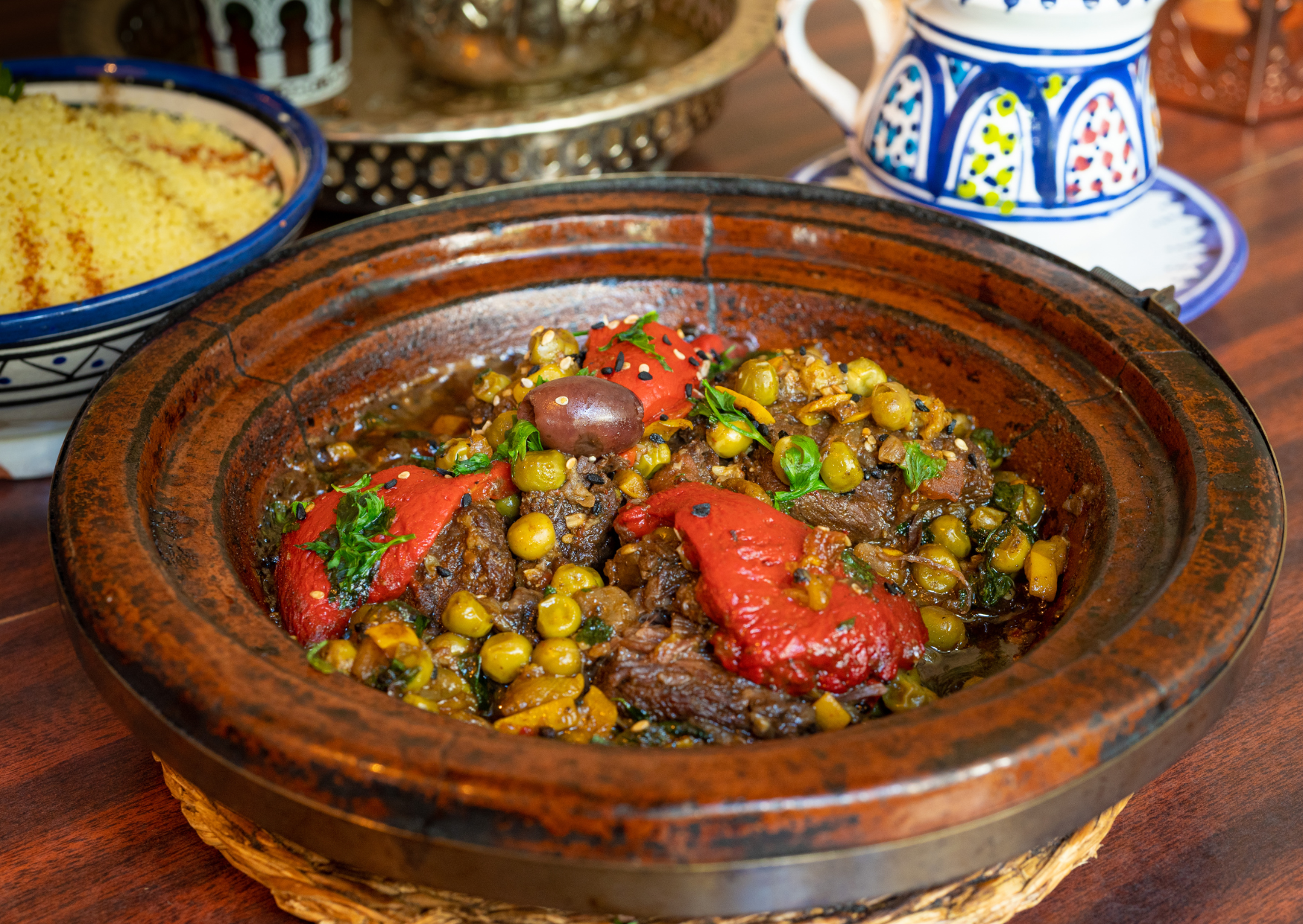
The chicken tagine with preserved lemon and olives is the dish most American home cooks have attempted from a Moroccan cookbook and gotten wrong. The recipe in the cookbook is usually accurate. The cook’s framework is usually wrong, and the result is a dish that has all the right ingredients in roughly the right quantities and tastes nothing like what the cook ate in Marrakech.
The fix is not better spices. The fix is the order of operations and the ratios. The cook is treating spices as seasoning. The Moroccan version treats them as foundation. This single distinction accounts for most of the gap between the home-cooked tagine and the Marrakech tagine.
Below is the dish, written for a home cook who wants the Marrakech version rather than the American adapted version. The recipe yields four servings, takes about twenty minutes of active prep and ninety minutes of mostly hands-off cooking, and uses a Dutch oven if you do not have an actual tagine pot. The ingredient logic, the spice framework, and the method come first. The cultural and technique context follows.
The Recipe
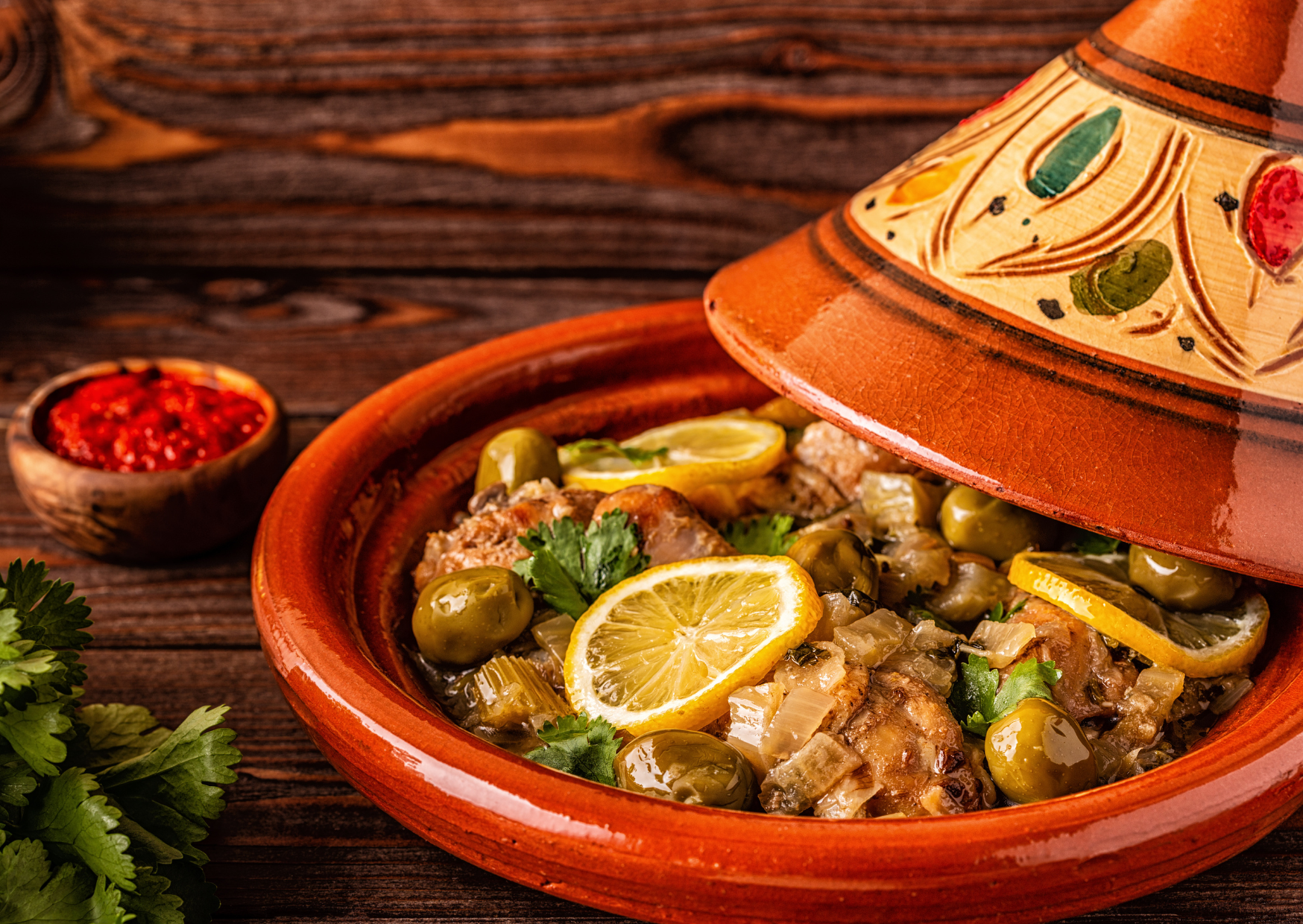
Yield: 4 servings
Active time: 20 minutes Total time: 1 hour 50 minutes
Ingredients for the spice base:
- 2 tablespoons ground cumin
- 2 tablespoons ground ginger
- 1 tablespoon sweet paprika
- 1 tablespoon turmeric
- 1 teaspoon ground cinnamon
- 1 teaspoon ground white pepper
- 1 teaspoon saffron threads, crumbled
- 4 cloves garlic, minced
- 4 tablespoons olive oil
Ingredients for the tagine:
- 4 bone-in, skin-on chicken thighs (about 1.2 kilograms)
- 2 medium yellow onions, sliced thin
- 2 preserved lemons, rinsed, pulp removed, peel sliced thin
- 200 grams green olives, pitted (cracked Moroccan olives if available, otherwise Castelvetrano)
- 250 milliliters water or unsalted chicken stock
- 1 small bunch cilantro, chopped
- 1 small bunch flat-leaf parsley, chopped
- Salt to taste
Method:
- Combine the cumin, ginger, paprika, turmeric, cinnamon, white pepper, saffron, garlic, and olive oil in a small bowl. Stir into a thick paste. This is the spice base, and it is the dish. Let it sit for at least 15 minutes.
- Pat the chicken thighs dry with paper towels. Rub half the spice paste into the chicken, getting it under the skin where possible. Reserve the other half. Let the chicken sit for 30 minutes at room temperature, or up to 4 hours refrigerated.
- Heat a Dutch oven or tagine over medium-low heat. Add the remaining spice paste and cook, stirring, for 2 to 3 minutes until the oil takes on the color and smell of the spices. The kitchen should smell strongly Moroccan at this point. If it does not, the heat was too low or the cooking time too short.
- Add the sliced onions to the spice base. Cook over medium-low heat, stirring occasionally, for 8 to 10 minutes until the onions soften and start to take on color. The onions should be coated in the spice mixture throughout.
- Push the onions to the sides of the pot. Place the chicken thighs skin-side down in the center. Increase the heat to medium and cook for 5 minutes without moving them. Turn the chicken and cook 3 minutes on the other side.
- Add the preserved lemon peel, the olives, and the water or stock. The liquid should come about a third of the way up the chicken. Bring to a gentle simmer, cover, and reduce heat to low.
- Simmer for 50 to 60 minutes, until the chicken is tender and the sauce has thickened and reduced. Check at 30 minutes and adjust liquid if needed. The sauce should be thick enough to coat a spoon, not soupy.
- Taste the sauce and adjust salt. Preserved lemons are salty so this often needs less salt than expected. Stir in the chopped cilantro and parsley.
- Serve directly from the pot, with bread for scooping. The traditional accompaniment is khobz or another flatbread, not couscous.
Why This Recipe Works When Cookbook Versions Often Don’t
Three things in the method above are different from most American cookbook versions of this dish, and the differences are why this one tastes Moroccan and most adapted versions do not.
The spice quantities are larger. Most American recipes for chicken tagine call for one teaspoon each of cumin, ginger, paprika, and turmeric. The recipe above uses two tablespoons of cumin and ginger, and full tablespoons of paprika and turmeric. That is roughly six times the spice load of the typical American recipe. This is not excess. This is the actual quantity Moroccan cooks use, and it is the reason the dish tastes spiced rather than seasoned.
The spices are cooked first, separately, before any other ingredient enters the pot. The American method usually calls for browning the chicken, then adding aromatics, then adding spices toward the end. This order produces a chicken with spices on it. The Moroccan order produces a dish where the spices have been integrated into the fat, the aromatics have been cooked into the spice mixture, and the chicken has cooked inside that environment from the start. The chicken does not have spices on it. The chicken is part of a spiced dish. This is the structural difference.
The chicken is rubbed with half the spice paste before cooking. The American method usually treats the spice mixture as a single application, added to the cooking pot. The Moroccan method splits it. Half goes onto the chicken to penetrate the meat. Half goes into the cooking environment. The two integrations produce a depth that single application cannot match.
If you make the recipe as written, with the larger spice quantities, the spice-first order, and the split application, the dish tastes meaningfully different from what most home cooks produce when they follow a generic Moroccan tagine recipe. The shift is structural, not in the ingredients.
On Preserved Lemons
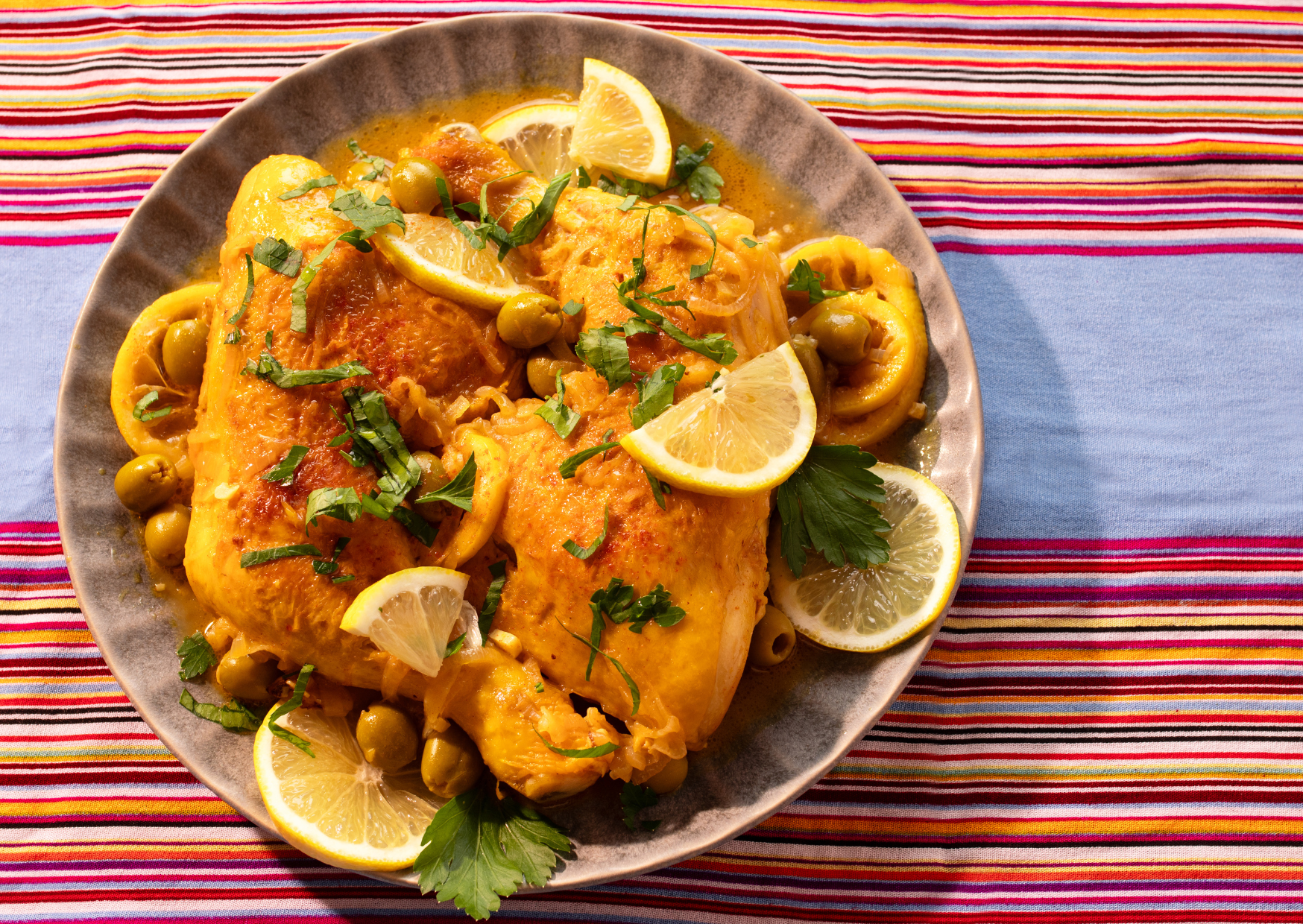
Preserved lemons are non-negotiable for this dish, and the version sold in jars at most American grocery stores is acceptable. Moroccan-made preserved lemons (look for “doqq” or “boussera” varieties) are better but not required.
If you cannot find preserved lemons, you can make them at home. Quarter four small lemons, leaving them connected at the bottom. Pack salt into the cuts, push them into a clean jar, cover with lemon juice, and let sit at room temperature for at least three weeks. Three weeks minimum is real. The salting and fermentation produces the specific flavor that fresh lemon does not approximate.
Do not substitute fresh lemon for preserved lemon. The fresh version tastes acidic. The preserved version tastes umami, salty, slightly funky, and softer than acid. The dish depends on the preserved character, and fresh lemon makes a different dish.
When using the preserved lemon, rinse it briefly under cold water, scrape out and discard the pulp, and slice the peel thin. The peel is what goes into the dish. The pulp can be saved for other uses (it is good in dressings) but does not go in the tagine.
On Saffron
Saffron is expensive and worth it for this dish. One teaspoon of saffron threads is the right quantity for four servings. Less than that and the saffron is doing no work. More than that and it overpowers the cumin and ginger.
To get the saffron working, crumble the threads with your fingers before adding them to the spice paste. They release more flavor crumbled than whole. Some cooks bloom the saffron in a tablespoon of warm water for 10 minutes before adding it to the spice base. This is a marginal improvement and not worth doing if you are short on time.
Buy saffron from a spice merchant or a specialty shop, not from a grocery store. The grocery store version is often old and has lost most of its potency. Iranian and Spanish saffron are the two reliable sources. The label should say where it is from.
On Olives
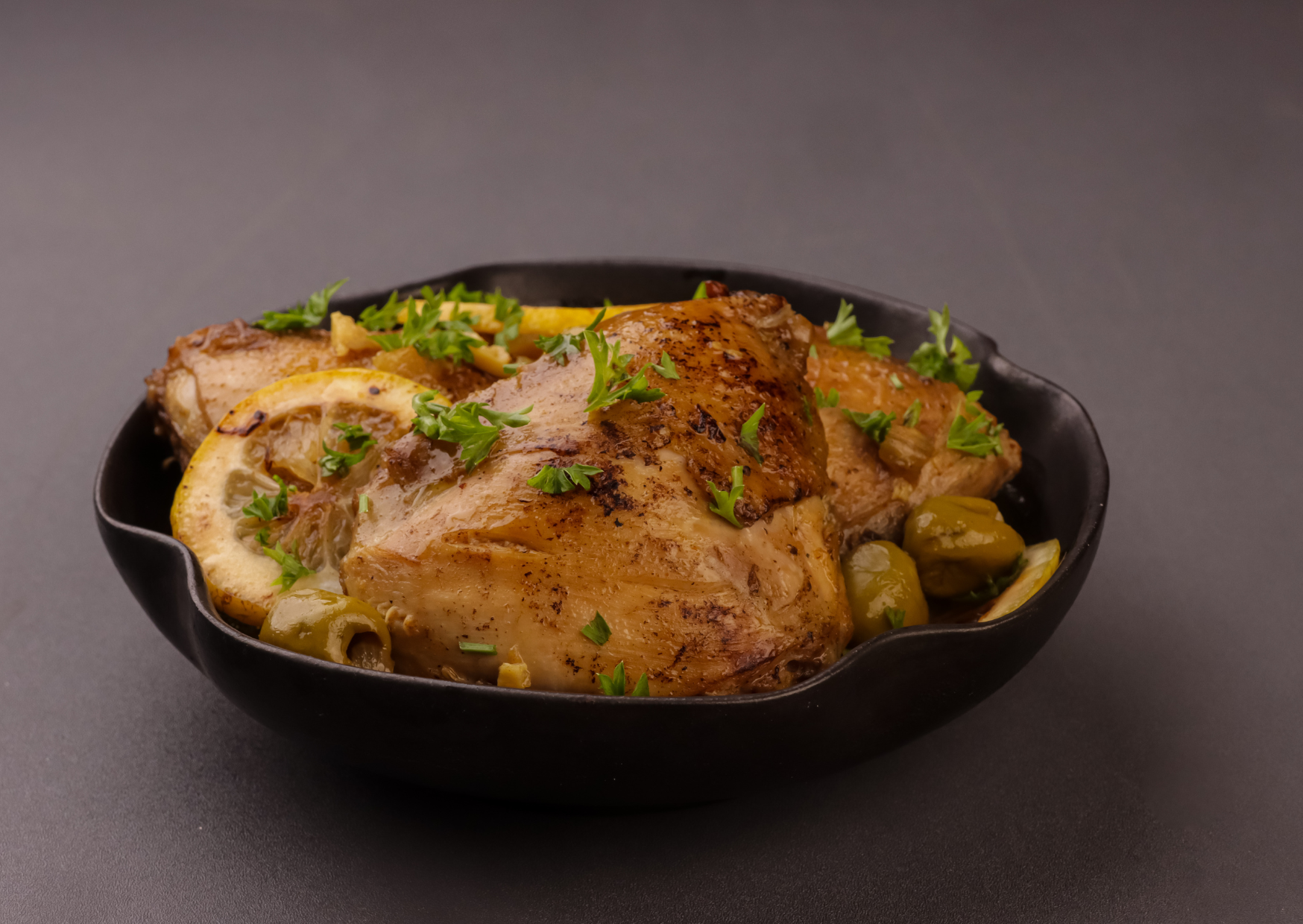
The olives in the recipe are doing real work, not garnishing. Use cracked green olives if you can find them, ideally Moroccan picholine or beldi olives. These are the olives the dish was designed around.
If you cannot find Moroccan olives, Castelvetrano olives from Italy are the best widely-available substitute. They are not authentic but they have the right size, color, and meatiness. They will not introduce flavors that fight the dish.
Do not use canned black olives. Do not use Kalamata. The first is too bland to register, the second is too dominant and shifts the dish toward Greek territory.
The olives go in pitted. If you bought them with pits, smash each one with the flat side of a chef’s knife to crack it open, and remove the pit. The slight crushing improves the integration.
On The Pot
A real Moroccan tagine pot is a clay vessel with a conical lid. The cone shape circulates the steam and produces the specific moist-and-concentrated cooking environment the dish was designed around.
For home cooks without a tagine, a Dutch oven works. Le Creuset, Staub, or any heavy enameled cast iron pot with a tight lid produces a similar enough result that the difference is subtle. The cooking time may be slightly different (Dutch ovens hold heat more aggressively), so check the chicken at 50 minutes rather than 60.
A regular saucepan with a lid will not work as well. The lid does not seal as tightly, the heat distribution is less even, and the dish ends up either watery or scorched. The pot matters, but it does not have to be a tagine.
If you do buy a tagine for this dish, get one made for cooking, not the decorative kind sold in tourist shops. The cooking tagines are usually unglazed clay or low-fire glazed. They need to be soaked in water before first use and seasoned with oil. Check the manufacturer’s instructions.
What To Serve It With
The traditional accompaniment is bread. Moroccan khobz is the right bread. A round, flat-ish loaf with a slightly chewy interior, eaten by tearing pieces and using them to scoop the chicken and sauce.
If you cannot find khobz, a good rustic country bread with a tight crumb works. Pita and naan are wrong textures. Sliced sandwich bread is wrong on every dimension.
Couscous is sometimes served with tagine in restaurants, but at home in Morocco, bread is more common. The dish is designed to be eaten with hands and bread, not with a fork on top of a starch. This is a small cultural shift but it changes the eating experience.
A simple cucumber and tomato salad with cumin and olive oil is the standard side. Add a small bowl of harissa for diners who want heat. Mint tea after the meal.
The Cost Breakdown
For four servings, made at home, with reasonably priced ingredients:
Chicken thighs: 8 to 12 euros depending on quality. Spices (used over multiple dishes): 3 to 5 euros amortized for this batch. Saffron (used over multiple dishes): 4 to 6 euros amortized. Preserved lemons: 2 to 3 euros (one jar lasts months). Olives: 3 to 4 euros. Onions, garlic, herbs: 2 to 3 euros. Stock or water: negligible.
Total for four servings: roughly 22 to 33 euros, or 5.50 to 8.25 euros per person.
The first time you make the dish, the spice and saffron costs are higher because you are buying the full quantities. After that, the per-batch cost drops to around 15 to 20 euros total because the spices and saffron are amortized across multiple dishes.
Storage And Leftovers
Chicken tagine reheats well. The flavor often improves overnight as the spices continue to integrate. Store leftovers in the refrigerator for up to four days, or freeze for up to two months.
To reheat, warm gently on the stovetop with a splash of water if the sauce has thickened too much. Do not microwave on high power. The spices can take on a metallic edge if reheated aggressively.
Leftover chicken tagine is also good shredded into a wrap with harissa and lettuce. Or pulled off the bone and stirred into rice. Or eaten cold with bread for breakfast, which is the way Moroccan home cooks usually finish leftovers.
A Repeatable Week Plan
If you want to integrate this dish into a regular cooking rotation, the practical pattern is:
Make a double batch every two weeks. Use it as Sunday dinner, then leftover lunches twice during the week, then a final dinner repurposed (shredded into a wrap or stirred into a grain bowl).
Buy preserved lemons in a jar, since one jar lasts months. Buy spices in larger quantities than usual. Cumin and ginger especially.
Get comfortable with the spice paste step. Once you have made it three or four times, you can adjust the ratios to your preference and the variations stop intimidating.
Try the same method with lamb shoulder instead of chicken thighs. Same spice base, same order of operations, longer cooking time (about 2.5 hours). The framework transfers.

About the Author: Ruben, co-founder of Gamintraveler.com since 2014, is a seasoned traveler from Spain who has explored over 100 countries since 2009. Known for his extensive travel adventures across South America, Europe, the US, Australia, New Zealand, Asia, and Africa, Ruben combines his passion for adventurous yet sustainable living with his love for cycling, highlighted by his remarkable 5-month bicycle journey from Spain to Norway. He currently resides in Spain, where he continues sharing his travel experiences with his partner, Rachel, and their son, Han.