
Rome in August hits forty-one degrees Celsius and the Pantheon line takes ninety minutes.
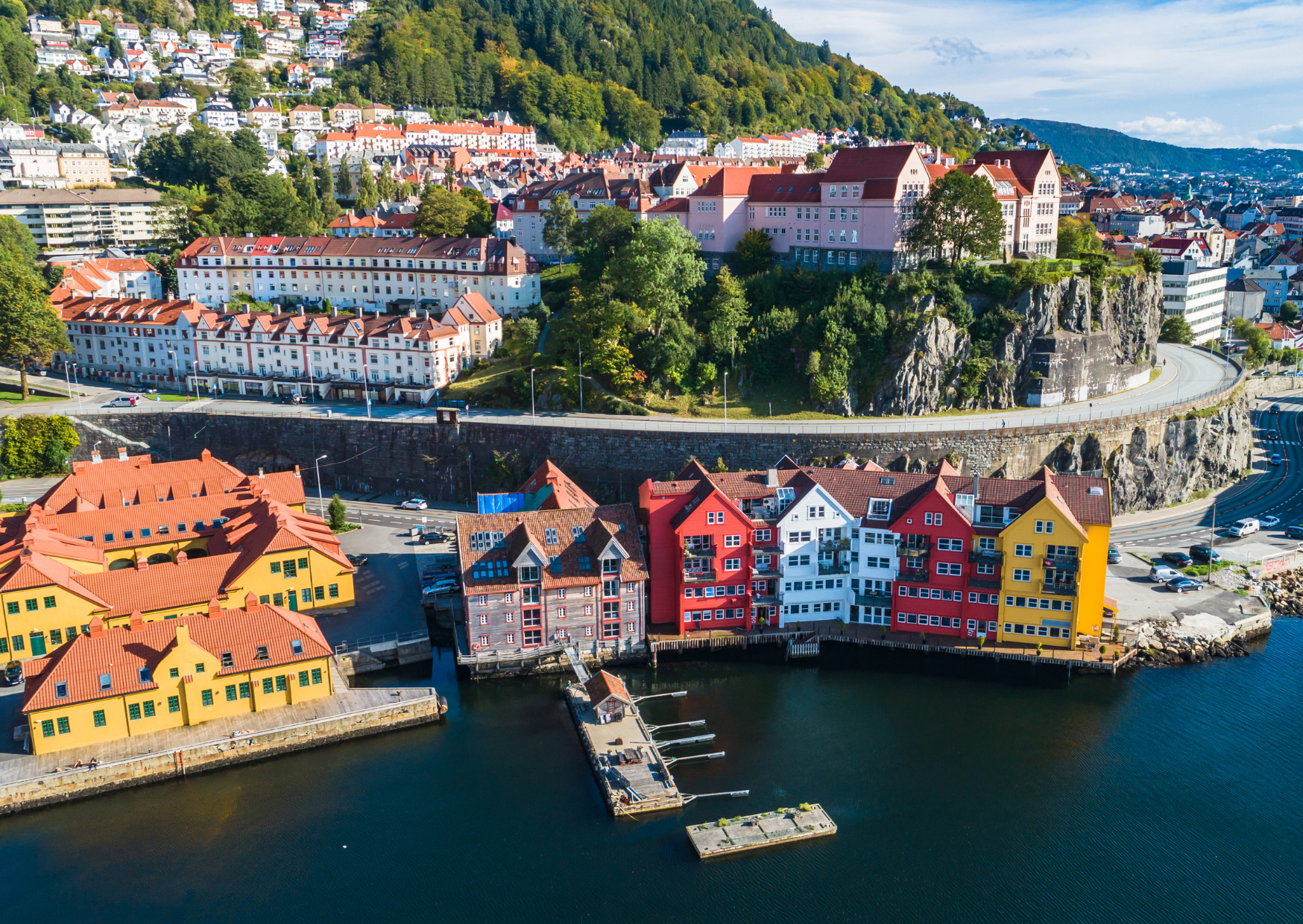
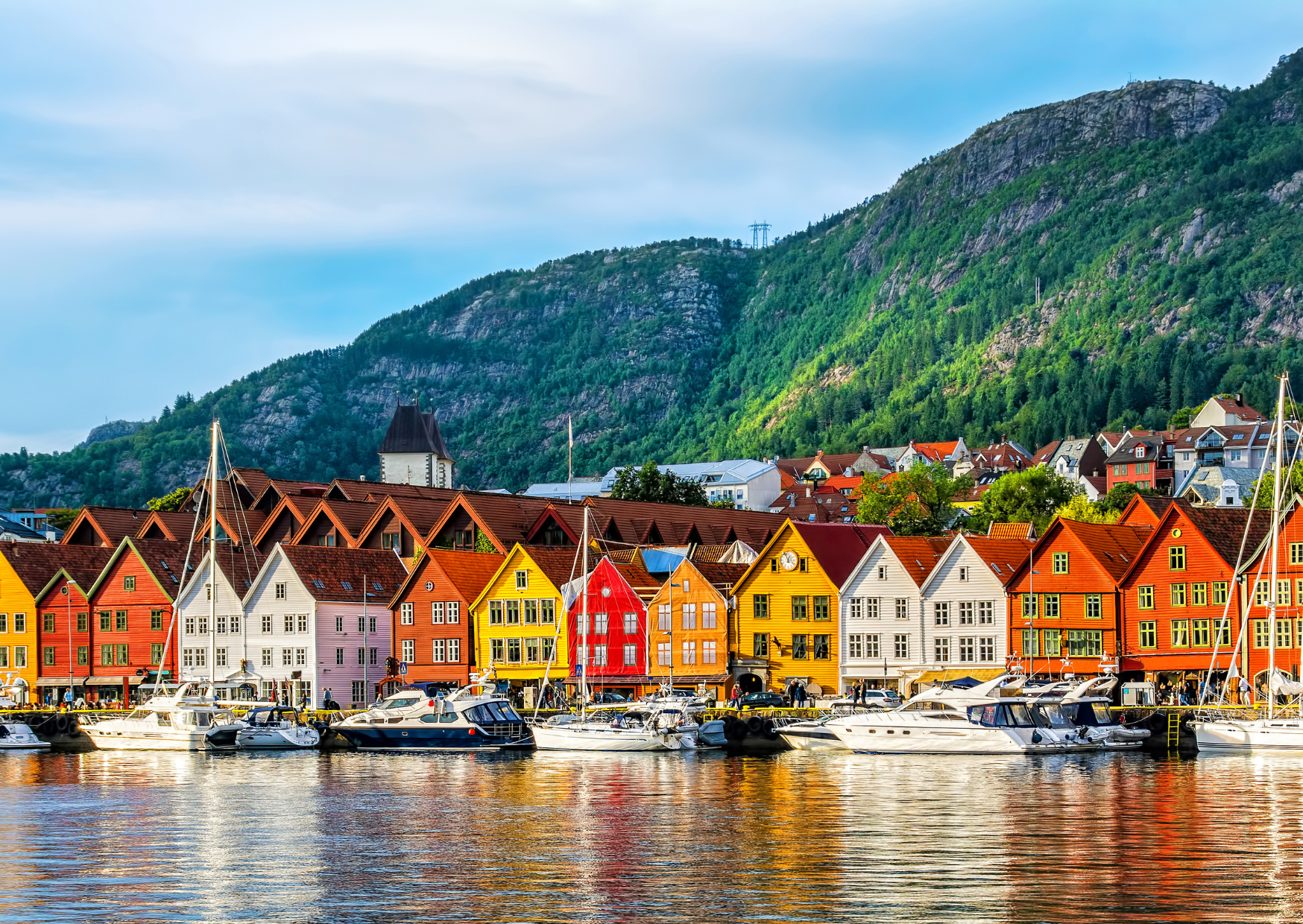
Bergen in June is sixteen degrees, the sun does not set until almost midnight, and the fjord ferry leaves on time with seats available.
The math is not subtle, and a growing number of American travelers are running it.
The Italian summer has been the default European trip for American visitors for so long that questioning it almost feels like a small heresy. Rome, Florence, Venice, the Amalfi coast, in July or August, with a passport and a credit card. The pattern is so embedded that travel agents barely have to ask.
But the conditions that made that trip work in 1995 are gone. Italy in August is now hotter, more crowded, and more expensive than at almost any point in modern tourism history. Norway in June, by contrast, has quietly become one of the most pleasant times to be in Europe.
The shift is not about Italy losing its charm. The food is still extraordinary. The art is still the art. The shift is about August specifically, and about what summer in southern Europe has become in the last ten years.
What August in Italy Actually Feels Like Now
The numbers are the part most American travelers underestimate before they arrive.
Rome’s average August high has climbed steadily and now sits around thirty-three to thirty-five degrees Celsius, with regular spikes into the high thirties and increasingly frequent days above forty. The 2023 and 2024 European heat domes pushed Rome, Florence, and Naples past forty-three on multiple days.
Florence, in a valley with poor air circulation, is consistently hotter than Rome. Sicily and the southern coast routinely hit forty-five during heat events.
These are not freak years anymore. They are the new baseline, and Italian meteorological agencies have stopped treating them as anomalies.
The crowds have followed a similar curve. Italy received around sixty-five million international arrivals in 2024, with August accounting for the densest concentration. Venice has reintroduced day-tripper entry fees on peak days. Florence has restricted short-term rentals in the historic center. The Cinque Terre has timed-entry caps on the trail network.
What this looks like on the ground is two-hour waits at the Uffizi, ninety-minute lines at the Vatican, full restaurants by seven, and Airbnb prices in central Rome that have more than doubled since 2019.
A modest hotel near the Spanish Steps that ran two hundred euros a night in pre-pandemic August now runs four hundred. A waterfront table in Positano that was a quiet luxury in 2015 is now a reservation made three months out.
The southern beaches are not an escape. The Amalfi Coast in August is parking-lot traffic on a single-lane cliff road. The ferry from Sorrento to Capri leaves with standing room only. The famous towns are essentially closed to anyone arriving without a confirmed booking.
This is not a complaint. It is a description. The Italian summer most Americans imagine is a memory that no longer matches the place.
What Norway in June Looks Like by Comparison
Bergen at the start of June sits at fifteen to seventeen degrees during the day, drops to nine or ten at night, and gets roughly nineteen hours of daylight. By the solstice the sun does not really set in the northern half of the country.
The light alone is worth the trip. Soft, low, and continuous, with the kind of long golden evenings that photographers go to Iceland for. Northern Norway, above the Arctic Circle, has actual midnight sun from late May through mid-July, with the longest stretch around Tromsø and the Lofoten Islands.
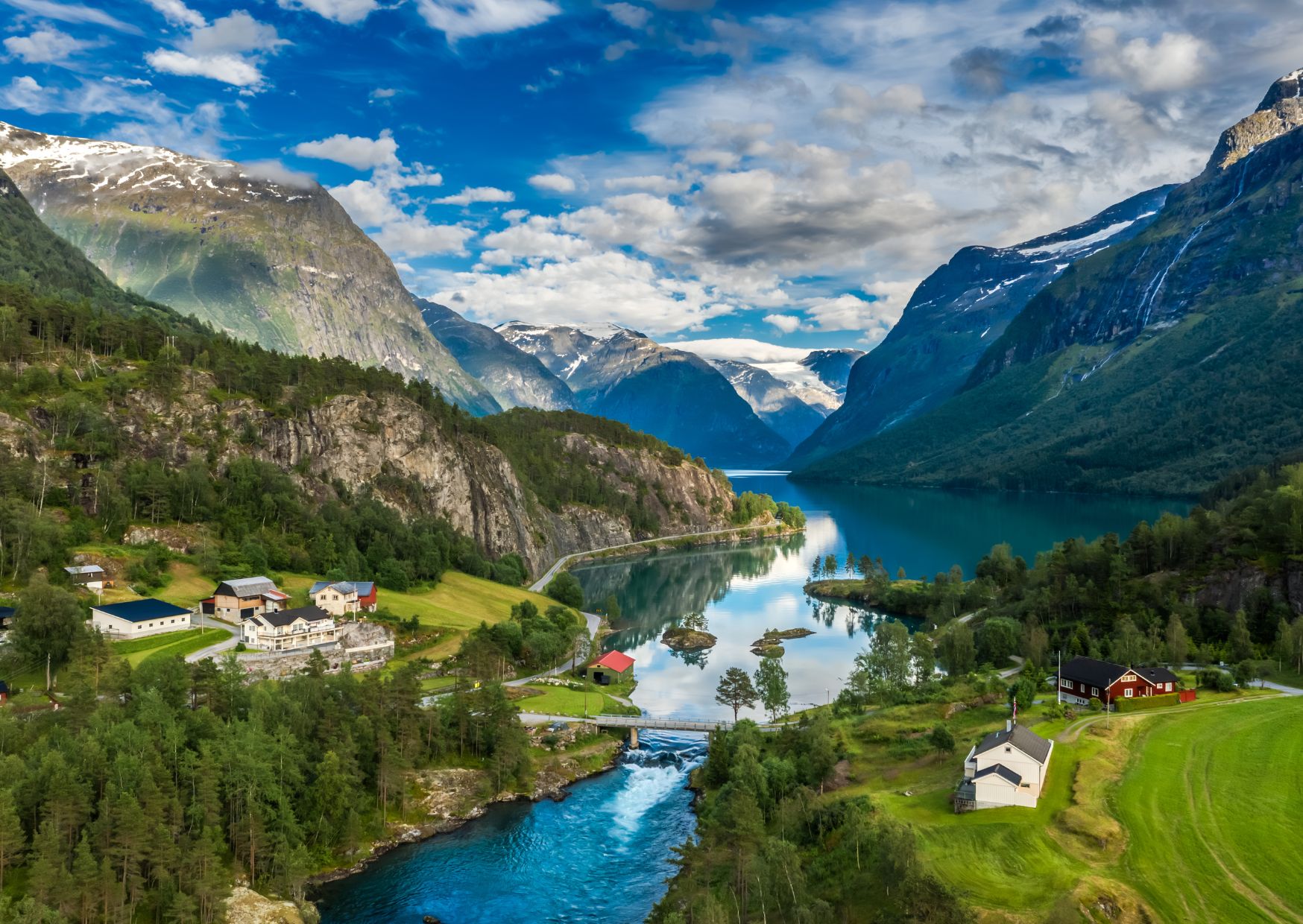
The fjords are at their best in June. The waterfalls are running hard from the spring snowmelt. The mountains still have snow on the peaks. The valleys are green. The wildflowers are in bloom.
July and August in Norway are also good, but June has two specific advantages.
The first is fewer cruise passengers. The big cruise season in the Norwegian fjords peaks in July and August, and ports like Geiranger and Flåm can see four or five large ships at once during the high weeks. June still sees cruise traffic, but the volume is meaningfully lower, and a small fjord village with one cruise ship in port is a different experience from the same village with five.
The second is price. Norwegian hotels, ferries, and tours apply summer pricing from late June through August. Early June often sits in the shoulder rate, particularly for hotels outside Oslo and Bergen. The flight prices into Oslo and Bergen also tend to be lower in early June than in July, sometimes by two hundred to three hundred dollars round trip from major US hubs.
Norway is not cheap. It is one of the more expensive countries in Europe, and that is not changing. But June Norway is cheaper than August Norway, and August Norway is cheaper than what August Italy has become.
The Cost Math Is Less Lopsided Than Americans Assume
The reflexive assumption is that Italy is affordable and Norway is not. That assumption was correct in 2010. It is no longer correct.
A useful comparison runs as follows.
A mid-range hotel in central Rome in August now averages three hundred to four hundred fifty euros a night. A mid-range hotel in Bergen or central Oslo in early June averages two hundred to three hundred euros a night.
A three-course dinner at a typical sit-down restaurant in Rome’s centro storico in August now lands around fifty to seventy euros per person before wine. The equivalent meal in Bergen runs sixty to eighty euros per person, including a beer or glass of wine.
Public transport in Rome is cheap. Public transport in Norway, particularly the long-distance ferries and trains, is not. The Bergen Railway from Oslo to Bergen runs around fifty to ninety euros depending on booking window, and the famous Flåm Railway is around forty euros each way.
The fjord ferries vary by route. A short hop on a local ferry costs ten to twenty euros. The full Bergen to Kirkenes coastal voyage on Hurtigruten or Havila costs more than most cruises but covers eleven days and most of the country.
Where Norway does cost more is groceries, alcohol, and casual eating. Where it costs less, in 2026, is lodging in popular tourist zones during early June compared to peak Italian summer.
A two-week trip in central Italy in August, hitting Rome, Florence, and Venice with mid-range hotels, typically runs an American couple between seven thousand and ten thousand dollars all in. The same couple doing two weeks in Norway in early June, hitting Oslo, Bergen, and the western fjords, runs roughly six thousand five hundred to nine thousand dollars all in.
The Norway trip is no longer the expensive one. It is the comparable one, with cooler weather and meaningfully fewer crowds.
What the Norway Trip Actually Looks Like
The standard Norway itinerary American travelers run in June clusters around three regions, and the choice depends on how much time is available.
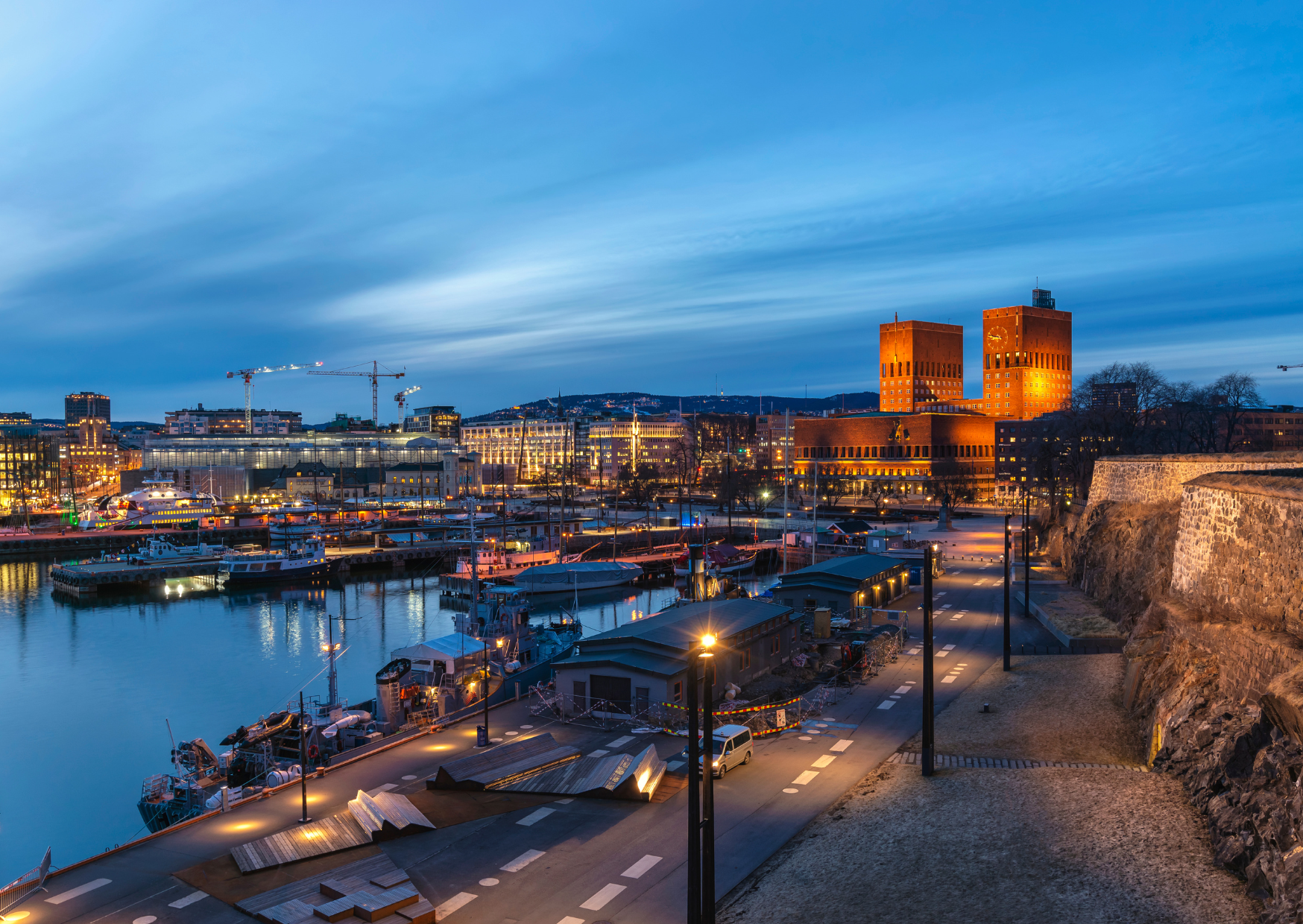
Oslo and the southern fjords is the easiest entry. Fly into Oslo, spend two or three days in the city, take the train to Bergen via the Bergen Railway, spend two or three days in Bergen and the surrounding fjord villages, fly home from Bergen. This is the seven-to-ten-day version, and it captures most of what people come to Norway for.
The western fjord region is the deeper version. Bergen as the base, then a combination of ferries and trains through Sognefjord, Geirangerfjord, and the Hardangerfjord region. Stops in small villages like Flåm, Balestrand, Geiranger, and Ålesund. This adds another four to six days.
The far north is the version for travelers who want the midnight sun and the dramatic Arctic landscapes. Fly to Tromsø or Bodø, then either rent a car for the Lofoten Islands or take the coastal voyage south or north. This adds another five to seven days and pushes the total cost meaningfully higher, but the Lofoten Islands in June are one of the more striking landscapes in Europe.
The cruise option, for travelers who want to see a lot of the country without managing transport themselves, is still useful in June. The Hurtigruten and Havila coastal routes are not standard cruises. They are working ferries that have been running the Norwegian coast for over a hundred years, stopping at thirty-four ports between Bergen and Kirkenes. The full round trip is twelve days, the one-way is six or seven, and the experience is closer to a long ferry journey than a cruise.
What Italy in May or September Solves That August Cannot
The honest version of the Italy comparison is that Italy is not the problem. August is the problem.
May and September in Italy are both excellent, with daytime temperatures in the low to mid twenties, manageable crowds, and prices roughly twenty to thirty percent below the August peak. The food is the food. The art is the art. The Tuscan light is at its best in late September.
Travelers who are committed to Italy and have flexibility on dates should be looking at the second half of May or the second and third weeks of September. Both windows give the country at something close to its early-2010s rhythm before the summer heat and the crowd density made August what it now is.
What August does not solve is the structural shift. Italy in August in 2026 is not the Italy in August of 2005. The temperatures are higher. The crowds are denser. The prices are more aggressive. The locals have largely left for their own holidays, which means many of the small family-run restaurants and shops that give Italian towns their character are closed for two to four weeks.
A traveler who insists on August and accepts these conditions can still have a good trip. A traveler who wants the Italian summer of memory needs a different month, or a different country.
Why June Specifically Works for Norway
Norway has its own seasonal logic, and not every summer month is interchangeable.
May is beautiful but unstable. The weather can turn. The high mountain passes are still snowed in. Some of the smaller fjord ferries are not yet running the full summer schedule.
July is excellent but crowded and expensive. The cruise traffic is at its peak. The hotel prices apply full summer rates.
August is also excellent and slightly less crowded than July, but the cruise volume is still high and the weather starts to shift toward the autumn pattern by late month.
June, particularly the second and third weeks, is the sweet spot. The weather is settled. The mountain passes are open. The ferry schedules are at full summer frequency. The cruise volume has not yet peaked. The hotel rates are still in shoulder pricing for many properties. The midnight sun is fully in effect above the Arctic Circle. The waterfalls are running at full volume from the snowmelt.
September in Norway is also worth considering, though by then the daylight hours have shortened, the temperatures have dropped, and the autumn weather has become less reliable. June trades the autumn colors for long days and stable conditions.
The Practical Trade-Offs to Know Before Booking
Norway in June is not Italy in any month, and travelers should know what they are choosing.
The water is cold. Norwegian beaches exist but are not swimming destinations. The fjords are beautiful from a boat or a trail, not from a towel.
The food culture is different. Norwegian cooking is improving fast in the major cities, with Bergen and Oslo both having genuinely strong restaurant scenes, but the country does not have the deep regional food culture that Italy does. A traveler whose primary motivation is eating their way through a country should pick Italy in May or September, not Norway in June.
The pace is slower. Norwegian villages are small and quiet. The activities are mostly outdoors. A traveler looking for nightlife, museums, and dense urban texture will find Oslo and Bergen pleasant but limited compared to Rome, Florence, or Naples.
The transport requires planning. The fjord region runs on a network of ferries, buses, and trains that connect well but require booking ahead in summer. The famous Norway in a Nutshell route, which combines the Bergen Railway, the Flåm Railway, a Sognefjord cruise, and a bus through Stalheim, sells out for July and August dates by April or May.
The weather can still surprise. June in Norway averages well, but a cold rainy week is possible. Travelers should pack rain gear and a warm layer regardless of the forecast.
Seven Days of June in Norway
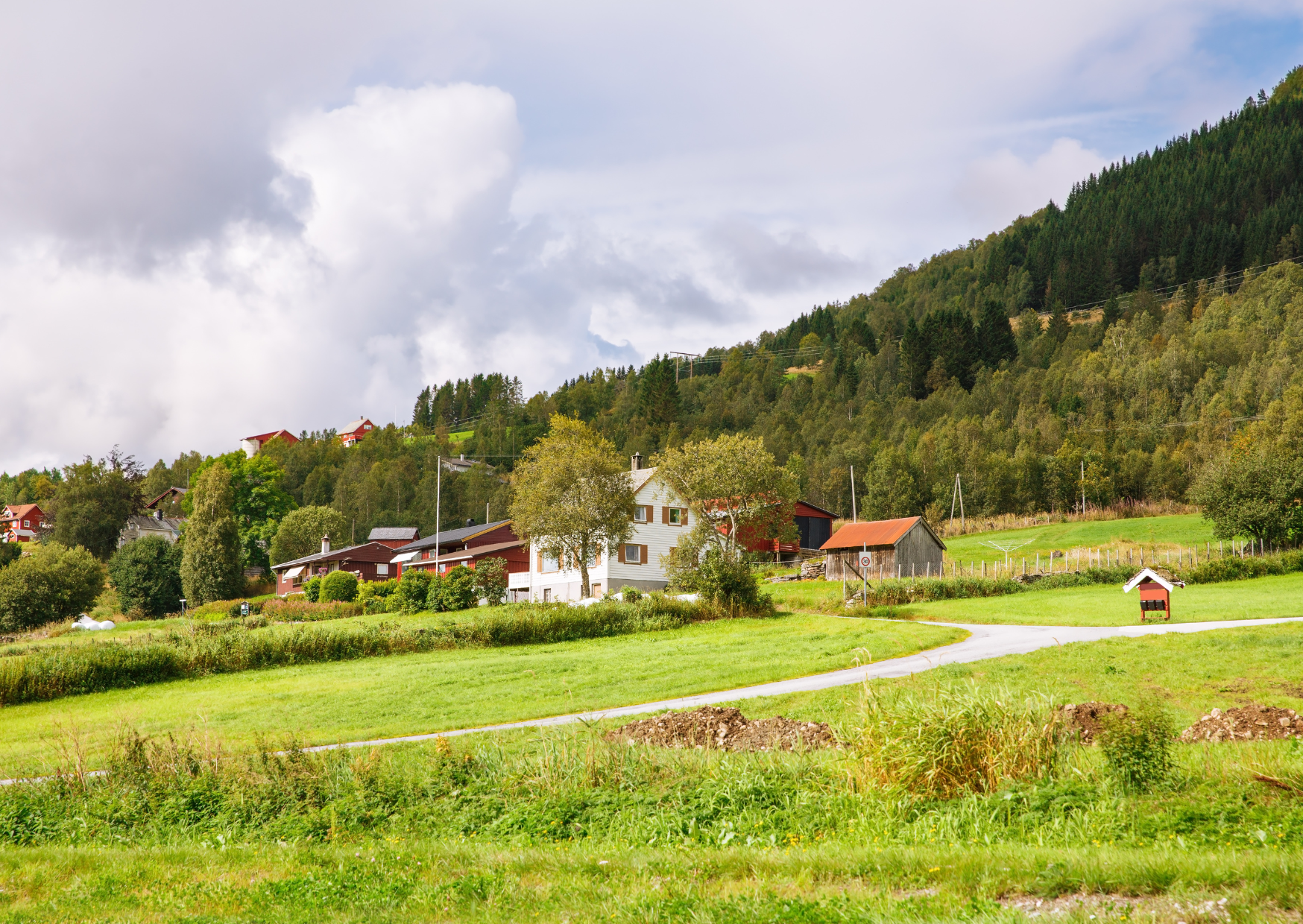
This is one possible layout for a traveler doing a first-time Norway trip in June. It assumes Bergen as the entry point.
Day 1. Fly into Bergen. Settle into a hotel in the n. Walk the old harbor. Eat dinner at a local seafood restaurant. Sleep through the long evening light.
Day 2. Bergen city day. The fish market in the morning. The funicular up Mount Fløyen for the city view. Bryggen’s old Hanseatic warehouses in the afternoon. A long dinner.
Day 3. Take the morning train to Voss. Connect to the Flåm Railway. Spend the afternoon in Flåm village. Sleep in Flåm or Aurland.
Day 4. Sognefjord ferry to Balestrand. One of the most beautiful boat rides in Europe. Stay in Balestrand. Walk the village in the long evening light.
Day 5. Bus or ferry connection toward Geiranger. Travel day, but the scenery is the point. Arrive Geiranger by evening.
Day 6. Geirangerfjord by boat. The waterfalls are at peak volume in June. Spend the afternoon on a hike or in the village.
Day 7. Return to Bergen via bus and ferry, or fly out from Ålesund or another regional airport. Pad an extra day if possible. Norway rewards a slower pace.
This is a starter version. Travelers with more time should add the Lofoten Islands or a leg of the coastal voyage. Travelers with less time should focus on Bergen and one fjord rather than trying to cover the whole western region in five days.
The Shift Is Already Happening
American visitor numbers to Norway have climbed steadily since 2022, with double-digit annual growth in 2024 and 2025. Visitor numbers to Italy are also climbing, but the Italian growth is concentrated in the shoulder months, not the August peak. The August numbers in Italy are flattening as repeat travelers shift to May, September, and October.
The savvier American traveler is already doing the math and picking accordingly. The Italian summer trip still happens, but increasingly in May or September rather than August. The Norway trip is appearing on the itinerary of travelers who would not have considered it five years ago.
The reason is not that one country is better than the other. The reason is that the conditions have changed, and the old defaults no longer match what the trip actually delivers.
Norway in June gives the traveler what August in Italy used to give the traveler twenty years ago. Long pleasant days, manageable crowds, prices that feel reasonable for what is delivered, and the sense of being somewhere worth being. The country and the month have changed. The experience has stayed roughly where it always was.
That is what the savvy travelers have noticed. The rest of the market is still catching up.

About the Author: Ruben, co-founder of Gamintraveler.com since 2014, is a seasoned traveler from Spain who has explored over 100 countries since 2009. Known for his extensive travel adventures across South America, Europe, the US, Australia, New Zealand, Asia, and Africa, Ruben combines his passion for adventurous yet sustainable living with his love for cycling, highlighted by his remarkable 5-month bicycle journey from Spain to Norway. He currently resides in Spain, where he continues sharing his travel experiences with his partner, Rachel, and their son, Han.