
Easy does not mean automatic. It means the route is real, current, named in the law, and workable for an American with the right kind of income.
A lot of Americans ask the wrong version of this question.
They ask, “What is the easiest country?”
That is usually too vague to be useful.
The better question is: what is the easiest path for the way you actually make or hold money?
A retiree living on Social Security and investment income does not need the same residency route as a remote software engineer. A freelancer with U.S. clients does not need the same route as a couple living off rental income. An entrepreneur with a real self-employed plan should not be squeezing into a passive-income category just because somebody on YouTube said it was “simpler.”
That is why the easiest paths in 2026 are not six countries arranged in a neat ladder.
They are six specific doors that still open cleanly for Americans if you fit the profile. Some are easier because the financial threshold is low. Some are easier because the process is unusually explicit. Some are easier because they were practically built for Americans in the first place.
The six that still make the most sense are:
- the Dutch-American Friendship Treaty in the Netherlands
- Portugal’s D7 passive-income route
- Portugal’s remote-work residence route
- Spain’s digital nomad visa
- France’s visitor route
- Malta’s Nomad Residence Permit
None of these is effortless.
All six are easier than the routes Americans keep trying to force when their income source and the visa category do not match.
The Netherlands DAFT Is Still the Most American-Friendly Route in Europe

For a certain kind of applicant, nothing in Europe is cleaner than DAFT.
That is not hype. It is treaty logic.
The Dutch immigration service still says Americans can apply for a self-employed residence permit under the Dutch-American Friendship Treaty, and the part that makes people stare is the capital requirement. For most business forms, the IND says the minimum substantial investment is €4,500. That is not “buy a property and park a quarter million euros” money. That is a real business-entry threshold that ordinary Americans can actually clear. The IND also says first-time treaty applicants must register with the Dutch Chamber of Commerce and make the investment within 6 months after getting the residence permit.
That is why DAFT stays at the top of this conversation.
It is not broad. It is not for retirees. It is not for somebody who wants to arrive and then “figure out a side hustle.” It is for real self-employed Americans, freelancers, consultants, and owners of small operating businesses who can build something legitimate in the Netherlands. If that is you, the route is unusually direct. The IND’s fee page currently lists the first application at €423, and the permit itself is valid for a maximum of 2 years before extension.
What makes DAFT easy is not that the Dutch government is being casual.
It is that the route is specifically designed for Americans in a way almost no other European residency path is. You do not have to wedge yourself into “person of independent means” logic if you are actually there to run a small business. You do not have to pretend you are retired if you are not. You can match the permit to the life.
That is half the battle won.
Portugal’s D7 Is Still the Best Passive-Income Door
Portugal remains the easiest serious answer for Americans living on retirement income, dividends, rents, or a pension-like monthly stream.
The official Portuguese visa portal still includes a residency visa for retirement purposes or for people living from passive income, and the means-of-subsistence rule for 2026 is still built on the national minimum monthly salary of €920. That minimum does not mean you should try to live in Portugal on €920. It means Portugal’s legal doorway for passive-income residency is still anchored to a number that ordinary retirees can understand and often reach without millionaire-level wealth.
That is what makes the D7 route so durable.
It is not the cheapest country in Europe anymore. It is not even the easiest country administratively once you are inside the system. What it still has is a clear passive-income lane that maps well onto how many Americans actually retire. Social Security. Pension. Rental income. Dividends. A mix of those. Portugal’s rule set understands that profile better than countries that implicitly expect either a huge lump sum or a work-linked permit.
The attraction here is not only the threshold.
It is the fit.
Portugal lets Americans use the kind of money they genuinely have. The country is not asking a retiree to become an entrepreneur or a digital nomad in order to get legal residence. It is asking for proof of means, the right documents, and the ability to carry that status forward into actual residence.
That is still one of the most usable retirement doors in Europe.
Portugal’s Remote-Work Route Is the Other Portugal Door Worth Taking Seriously
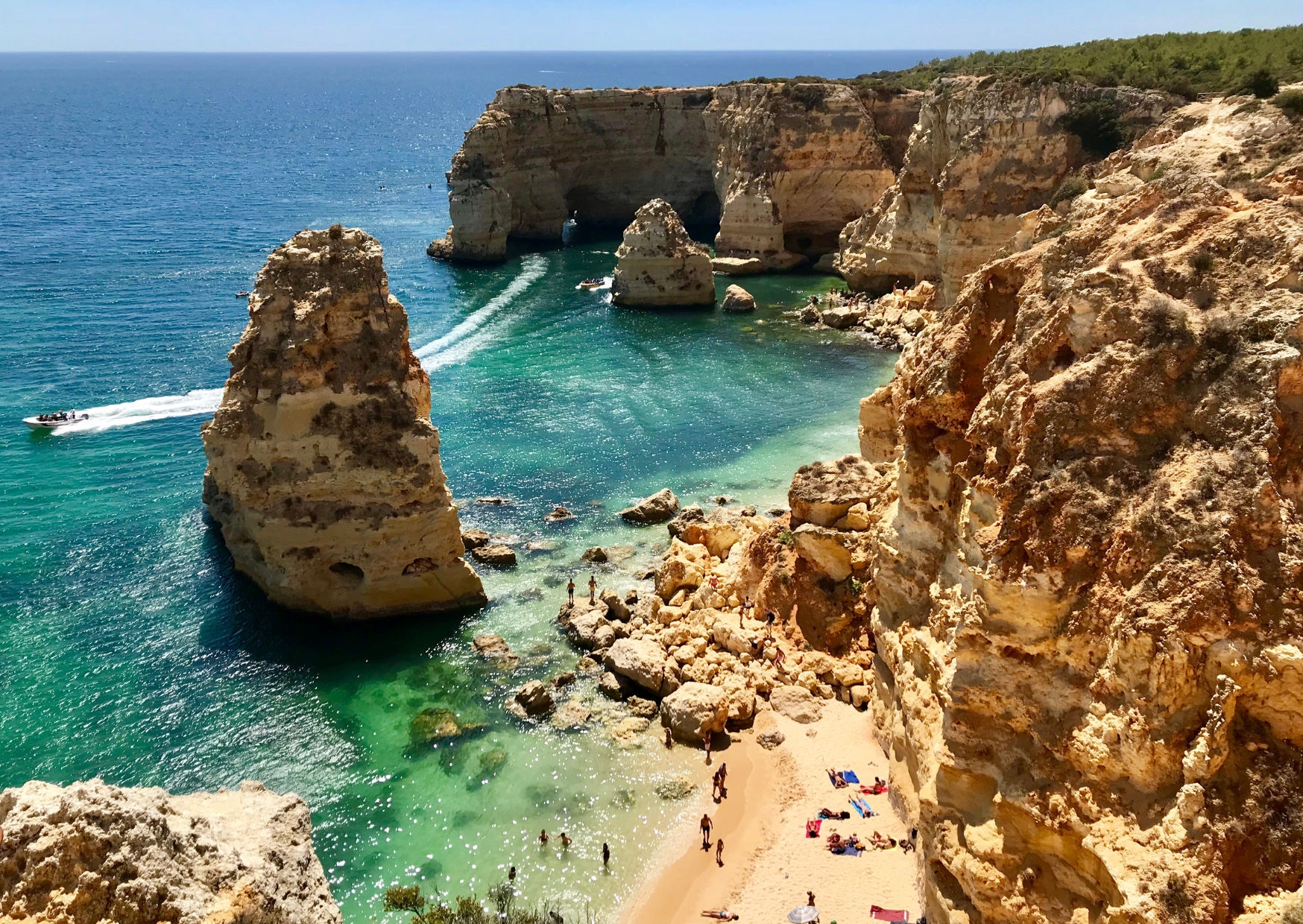
Yes, Portugal gets two spots.
That is because the country still offers two distinct lanes that work unusually well for Americans.
The visa portal explicitly lists both a temporary-stay digital-nomad route and a residence route for professional activity performed remotely outside national territory. The supporting-documentation pages also spell out that remote workers need to show the actual underlying work basis, such as a work contract or other proof of foreign remote activity. Portugal is not hiding the route behind vague startup language or a one-off experimental permit. It has a named route for people whose income comes from work done abroad by digital means.
That matters because a lot of Americans do not fit the D7 profile cleanly.
They are not retirees. They do not live off passive income alone. They have a salary, contract income, or a small foreign-client business. For those people, Portugal’s remote-work lane is often easier than trying to contort their file into a passive-income story that is only half true. If your money comes from work, use the work-shaped door. That sounds obvious, yet people keep doing the opposite because they think one visa label is “more expat-friendly” than the other.
The reason this path stays on the easiest list is not that Portugal is frictionless.
It is that the legal category exists, is stable enough to plan around, and fits a huge number of Americans who now work remotely for companies or clients outside Europe. That is a much better starting point than countries where remote work is still treated like a side note to other immigration categories.
Spain’s Digital Nomad Visa Is Easier Than Its Reputation

Spain’s digital nomad visa scared people at first because it sounded like one more glossy route with good marketing and a lot of hidden complexity.
It is now more solid than that.
The UGE page for international teleworkers still defines the route very clearly: it is for third-country nationals who move to Spain to carry out remote work or professional activity for companies located outside Spain, using only computer and telecommunications systems. UGE also makes two practical points that matter immediately. First, freelancers can qualify if they can show a professional relationship with the foreign company for at least three months. Second, Spain says Social Security registration in Spain is mandatory unless the right imported coverage applies under an international agreement.
The consular side is also explicit.
Spain’s digital nomad visa pages still require financial means of at least 200% of the monthly minimum wage, with additional percentages for family members. That makes the route easier than the non-lucrative visa for many working Americans, because the threshold is lower and the story matches the applicant’s real life. You are not pretending to be inactive. You are showing Spain that your remote work is real and legal.
This path belongs on the list because it solves a very modern American problem.
A lot of people are neither retirees nor classic entrepreneurs. They are salaried remote workers, consultants, or independent professionals whose income is already location-flexible. Spain now has a named route for that. It is not the easiest in terms of later tax and social-security complexity. It is one of the easiest in terms of matching the right permit to the right applicant.
That matters more than a lot of people think.
A country becomes much easier when it stops requiring you to cosplay as the wrong kind of migrant.
France’s Visitor Route Is Still the Cleanest Non-Working Path
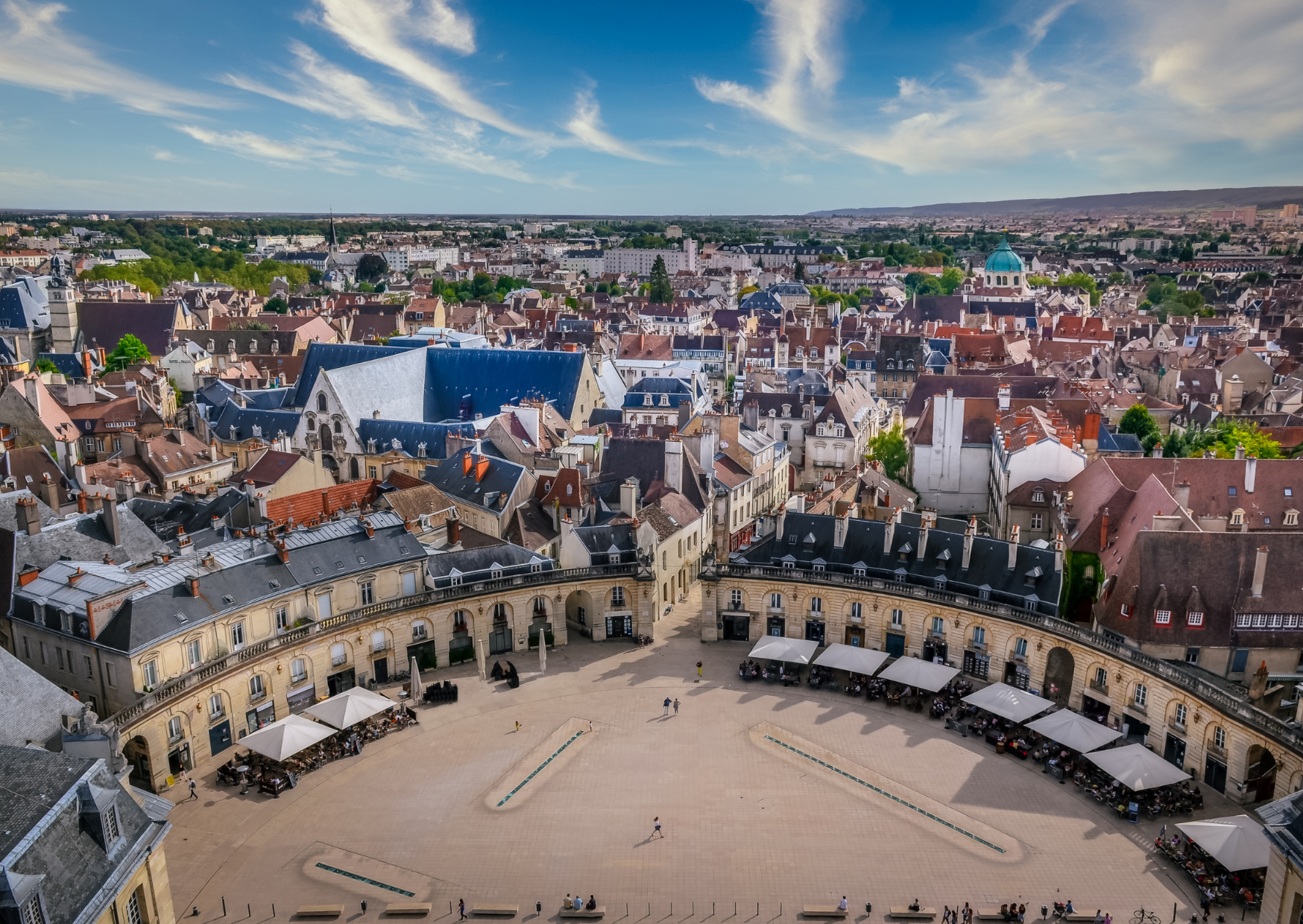
France stays underrated because Americans emotionally overprice it.
The legal path is often cleaner than the stereotype suggests.
Service-Public’s 2026 page for the carte de séjour temporaire visiteur says the route is for a foreigner who wants to stay in France for more than three months without working. It is valid for up to one year and renewable. The minimum resources for one person are currently €1,443.11 net per month for one year. That is higher than Portugal’s floor, but much lower than the number many Americans assume France must demand.
That is why France stays on the easy list.
Not because the country is easy in daily administration. Often it is not. But the legal concept is very clear. If you are self-funded and you are not planning to work, France tells you exactly what category fits you. No entrepreneurial fiction. No remote-worker contortion. No retirement-specific niche route that may or may not fit your actual money structure.
Just a straight non-working residence track with a clear monthly-resource number.
The other reason it works is that France has a long-stay logic that many Americans can actually plan around. If your money is clean, your housing is real, and you understand that the visa needs to be validated after arrival, the route is surprisingly legible. France-Visas still states that the long-stay visa equivalent to a residence permit must be validated within the three months following arrival. That is not hard so much as formal, which is a recurring theme in French immigration.
For people living on savings plus pension-like income and not needing the right to work, France is one of the easier answers in Europe.
It just does not market itself that way.
Malta’s Nomad Permit Is the Cleanest High-Earner Remote Option
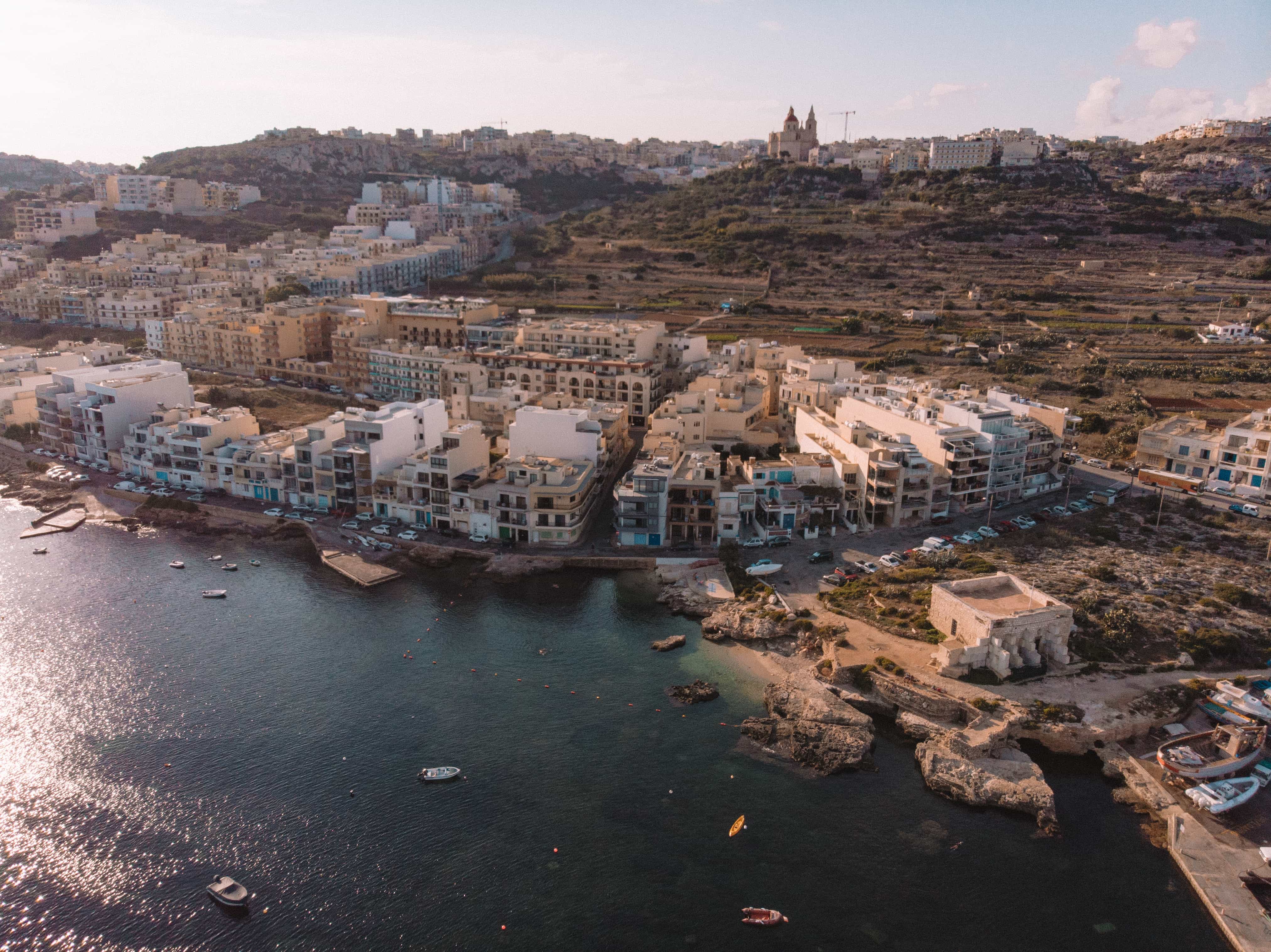
If your income is strong and fully remote, Malta is still one of the least confusing nomad-style permits in Europe.
Residency Malta’s official nomad pages are unusually explicit. Applicants must be third-country nationals, must be able to work remotely using telecoms, and must show a minimum gross yearly income of €42,000. The official checklist is also clear about the file: passport copies, CV, police certificate, three months of bank statements, work contracts or service contracts, proof of accommodation after approval in principle, and comprehensive health insurance. The permit can be renewed, and the 2026 checklist still lays out the renewal evidence in a very readable way.
That is what makes Malta easy.
Not the threshold. The threshold is not low.
The clarity is what makes it easy.
A lot of American remote workers are willing to pay for clarity. They do not want to fight with a permit that only half-recognizes remote income or treats freelancing as an afterthought. Malta says plainly who the route is for, what you need to earn, what documents to provide, and how renewal works, including the requirement to show at least five cumulative months of residence in Malta in the previous year for renewal evidence.
So Malta belongs on this list for a narrower applicant.
Not the retiree. Not the modest-budget wanderer. The American remote worker or freelancer with a real income floor who wants a named, online, high-compliance route that is not pretending to be anything else.
Ireland’s Stamp 0 Is Easy Only for the Right Kind of Retiree

Ireland is the outlier here because it is both very clear and not especially cheap.
That does not stop it from being one of the easier residency paths.
It just makes it easier for a narrower group.
Ireland’s immigration service says that a person who wants to retire to Ireland must be financially independent, and the current requirement for people of independent means is an individual income of €50,000 per year. On top of that, the person must have access to a lump sum sufficient to cover sudden major expenses, and the financial presentation must be certified by an Irish accountancy firm. The same page says all applicants must apply for Stamp 0 before arriving, and non-visa-required people still need the permission process completed before the move.
That sounds strict, and it is.
It is also very legible.
Ireland tells you exactly what it wants. €50,000 a year in independent income. A serious cash cushion. Private medical insurance. Police clearance. A health declaration. The process is formal, but not vague. For wealthy retirees who want an English-speaking European base and do not need Schengen as the center of the story, it is one of the easier routes because the file is so clearly defined.
This is not the easiest path for most Americans.
It is one of the easiest paths for the Americans who can genuinely clear it.
That distinction matters.
A route can be easy and still not be for you.
The Routes People Think Are Easy and Then Regret
A lot of pain in this area comes from trying to force the wrong route.
Retirees try to use remote-worker permits because the branding feels modern.
Remote workers try to squeeze into passive-income visas because they heard the threshold was lower.
Freelancers try to use non-working residence permits and quietly hope nobody will notice they still have clients.
That is how clean plans become messy files.
The easiest paths above all have one thing in common: the legal category matches the real money story. That is why they work. Not because the countries are generous. Not because the officers are relaxed. Because the person is walking through the right door.
That is also why some famous routes do not make this list. Italy’s elective residence route is real, but the passive-income bar and consular mood are usually stricter than people expect. Germany’s freelancer route can work, but local-office variance makes it less “easy” than it looks in broad online summaries. Croatia’s digital nomad permit is useful but more temporary and less clean as a longer settlement path than people often assume. I am not saying do not use them. I am saying they are not the first six doors I would call easy in 2026.
The Right Path Usually Shows Up in One Boring Week
If you are serious about moving, the useful first week is not spent comparing weather.
It is spent matching your income source to the correct permit.
Day 1: write down where your money actually comes from. Salary, freelance contracts, pension, rental income, dividends, business income, savings drawdown.
Day 2: cross out every residency route that requires you to lie about that money.
Day 3: decide whether you need the legal right to work, or just the right to live there without working.
Day 4: check whether the threshold is monthly, annual, gross, or net. This is where a lot of bad budgeting starts.
Day 5: look at renewal, not only first approval. A route that is easy to get and painful to renew is not really easy.
Day 6: check whether family members can be added cleanly and what extra financial burden that creates.
Day 7: ask the rude question. Do you want the version of the country that your legal route can actually support, not the version you saw in someone else’s video?
That week usually solves most of the confusion.
Not because immigration becomes simple.
Because the fantasy gets replaced by the right file.

About the Author: Ruben, co-founder of Gamintraveler.com since 2014, is a seasoned traveler from Spain who has explored over 100 countries since 2009. Known for his extensive travel adventures across South America, Europe, the US, Australia, New Zealand, Asia, and Africa, Ruben combines his passion for adventurous yet sustainable living with his love for cycling, highlighted by his remarkable 5-month bicycle journey from Spain to Norway. He currently resides in Spain, where he continues sharing his travel experiences with his partner, Rachel, and their son, Han.