
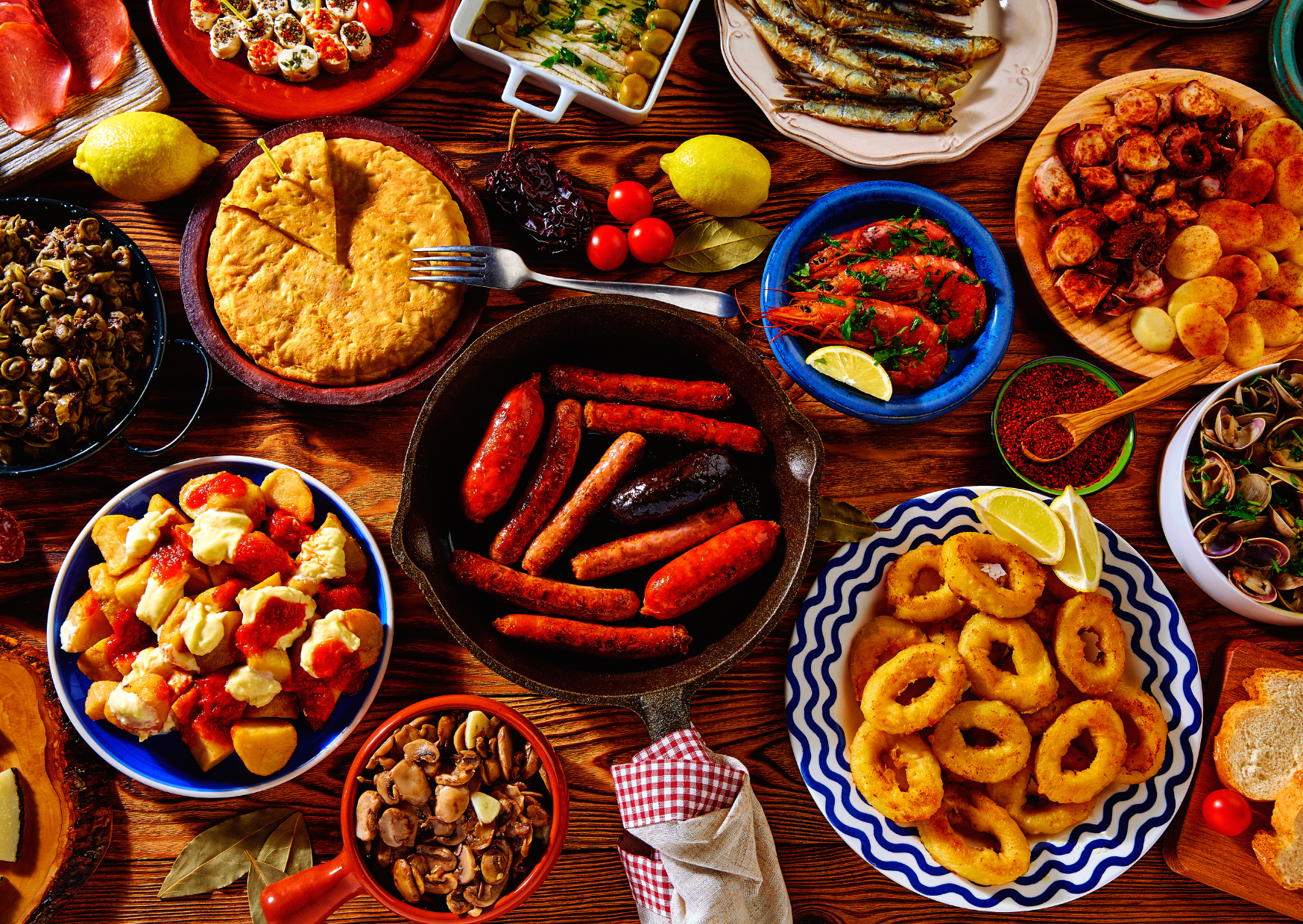
You can still eat a weekday lunch in Spain for about €12 to €15 if you sit down for a proper menú del día.
Come back at 8pm, order roughly the same amount of food from the regular menu, and the bill can land much closer to €28.
That gap is not a tourist trick.
It is one of the oldest, smartest pieces of Spanish restaurant economics still left standing. Spain’s average menú del día reached €14.2 in 2025, with some regions still lower and some big-city or tourist zones higher, but the basic formula remains intact: lunch is built to move workers, regulars, and weekday tables through a full meal at a fixed price that dinner does not even try to imitate.
The Menu del Día Is Not a Cheap Menu. It Is a Different Product.
This is the first thing Americans usually get wrong.
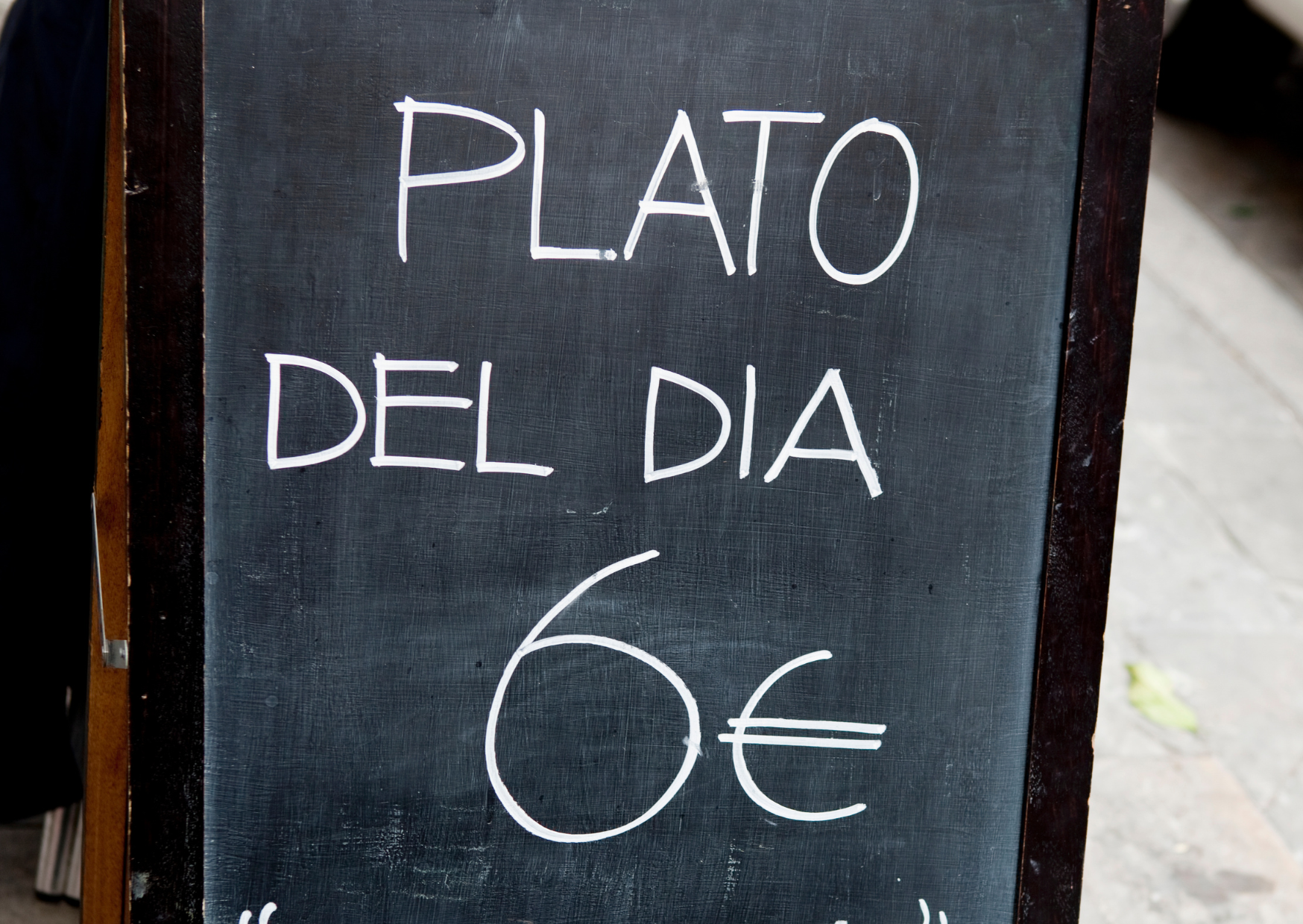
They think the menú del día is just the same restaurant offering a bargain version of lunch out of kindness, nostalgia, or national character. It is not. It is a separate product with separate economics. The standard structure is still recognizable across Spain: first course, second course, bread, a drink, and often dessert or coffee, all bundled into one weekday lunch price. Current explainers and restaurant reporting still describe it exactly that way, and Hostelería de España’s 2025 data still treats it as a distinct national format rather than just “lunch but cheaper.”
Dinner runs on a different model.
At lunch, the restaurant already knows what it is selling. A limited set of dishes. Predictable prep. Faster table turns. A customer base that often wants a complete meal, not a long event. At night, the same room moves to carta pricing, larger margins on individual dishes, more open-ended ordering, and a clientele that sits longer and orders more erratically. That is why a lunch menu at around €12 to €15 can coexist with an evening bill closer to €25 to €30 per person without anyone at the restaurant thinking this is contradictory.
So the question is not “why is lunch discounted?”
The real question is “why do Americans keep assuming lunch and dinner are the same business?”
In Spain, they are not.
The €12 Lunch Exists Because the Restaurant Knows Exactly What It Is Doing
The menú del día still survives because it is controlled.
The restaurant is not promising infinite freedom. It is offering a narrow, efficient, repeatable set meal at the hour when Spanish weekday dining still needs to work for office workers, tradespeople, nearby residents, and anyone else who wants a proper lunch without turning the middle of the day into a financial event. Idealista’s 2026 explainer still describes the menú del día as one of the practical advantages of eating out in Spain, noting that in many cities you can still find decent weekday menus around €12 to €15.
And those prices are not generous because costs are low.
They are tight because margins are tight. A current COPE economics piece on the menú del día uses a €12 menu example and notes that once raw ingredients and operating costs are pulled out, the profit left can be thin. El País and Hostelería de España’s 2025 figures point in the same direction: the national average rose to €14.2, but operators still describe the format as increasingly difficult to sustain because labor, food, and utility costs have risen faster than diners’ tolerance for price jumps.
That is why the lunch price often looks weirdly good to Americans.
It is not because Spanish restaurants forgot how to charge.
It is because the restaurant is selling volume, predictability, and weekday habit. The menu is usually built from dishes that can be prepped in quantity, plated fast, and rotated daily enough to stay interesting without making the kitchen improvise all afternoon. The customer accepts less choice. In exchange, the price drops.
That is a bargain.
It is not a miracle.
What €12 to €15 Actually Buys You at 1pm
The reason the lunch price still feels slightly unreal is that the menu is usually more complete than Americans expect.
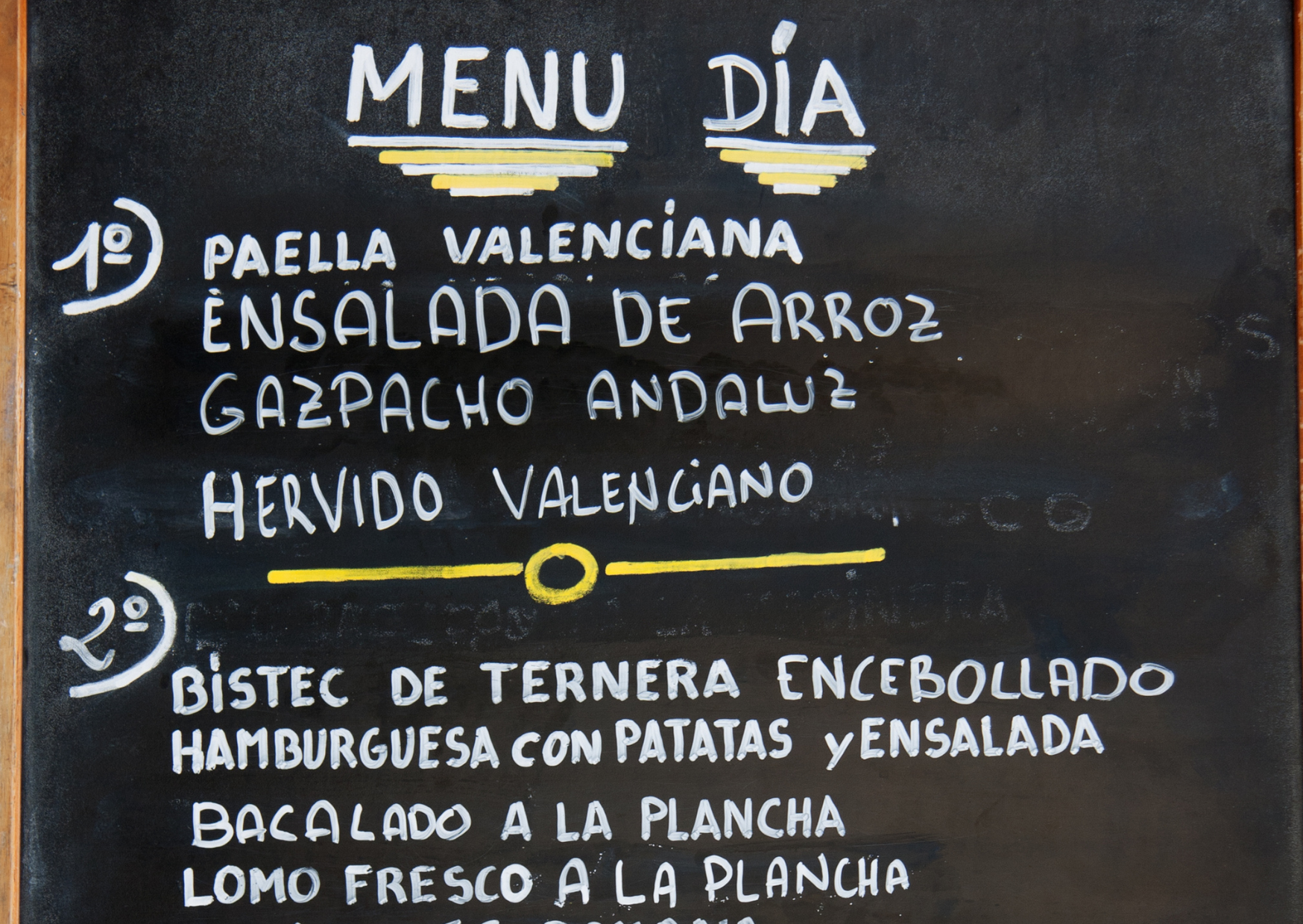
A proper menú del día still tends to include a first course, a second course, bread, a drink, and often dessert or coffee, all folded into one weekday lunch price. Current explainers still describe it that way, and the national average in Spain reached €14.2 in 2025, which means a full sit-down lunch in that range is not folklore. It is still the normal midday format in much of the country.
That is why the gap feels so sharp once dinner starts.
At lunch, the customer is buying a package. At night, the package disappears and the arithmetic changes immediately. A starter that would have been part of the menú becomes its own line on the bill. The main becomes its own line. Dessert becomes optional but separately priced. The drink is no longer quietly bundled into the structure of the meal. Even in ordinary Madrid examples, restaurants can show a lunch menu around €12.9 to €16, then move at night to a much looser pricing model where a full meal lands far higher simply because every piece is being sold on its own.
This is why the €12 to €15 lunch is not “cheap food.”
It is bundled food.
And bundled food almost always looks generous when compared with a dinner bill built dish by dish.
Dinner Costs More Because You Stop Buying a Formula and Start Buying a Night Out
The easiest way to understand the €28 evening bill is to stop comparing it to the lunch menu and compare it to what you are actually doing at dinner.
At lunch, one price buys the whole structure.
At dinner, the structure disappears. Now you are paying for individual dishes, separate drinks, maybe dessert, maybe shared starters, and much slower use of the table. A current Madrid example on TheFork shows how normal this split has become: La Corazonada lists a menú del día at €12.9, while the same restaurant’s carta puts ordinary dishes at prices like €10 for huevos rotos, €11.8 for grilled vegetables, €12 for lacón, €14.5 for beef tajine, and more once you start stacking a full meal together. Another Madrid example, Tilda Neotaberna Castiza, shows a €16 lunch menu and a €25.9 night menu.
That is the whole point.
The “same meal” at 8pm is almost never literally the same menu formula. It is the same appetite, the same number of courses, the same human expectation of a full meal, but priced through carta logic instead of menú logic. Once that happens, the bill rises fast.
One starter at €8 to €12.
One main at €12 to €16.
One dessert at €5 to €7, or another drink instead.
Bread may or may not be included. Service may stretch longer. The table may turn once instead of twice. The dinner customer is buying freedom and ambiance, not just fuel. That is why €28 is not a scam number. It is normal arithmetic.
The Menu del Día Was Built for Workers First and Tourists Second
This also helps explain why the timing matters.
The modern menú del día traces back to the mid-1960s, when Spain’s state tourism system formalized a fixed-price midday meal, originally as the menú turístico, before the format spread and settled into daily worker life. Multiple histories of the format still point to that 1960s policy background, and later reporting keeps stressing the same practical outcome: it became the default full lunch for people who could not or did not want to go home midday. The menu survived because it solved a real urban problem.
That legacy is still visible in the hour it lives in.
A proper menú del día belongs to the middle of the day, usually Monday to Friday, often starting around 1pm, sometimes 1:30, and usually ending before the evening economy begins. It is built for the lunch shift, not the night shift. Devour’s Madrid explainer, despite being tourism content, still gets this part right: the menú del día is one of the best ways to see how Spaniards actually eat on weekdays when lunch needs to be satisfying but finite.
This is where Americans often misread Spain.
They think lunch is just an earlier dinner.
It is not.
Lunch is still the meal that carries value, structure, and weekday legitimacy. Dinner can be lighter, later, more social, more improvised, or more indulgent, but it is not organized around the same fixed-price promise. The menu del día exists because the country still treats midday eating as something worth systematizing.
That is a very different restaurant culture from the one most Americans are used to.
Where You Still Find the €12 Lunch and Where It Is Already Gone
The old lunch bargain has not disappeared.
It has moved.
In cheaper regions and in outer neighborhoods of expensive cities, the menú del día can still cling to the lower end of the range. National reporting on the 2025 average showed Spain at €14.2, with some regions still around €13 to €13.4, while higher-cost regions were already closer to €15.4 to €16. That tells you exactly where the lunchtime value survives best: places where weekday local demand still matters more than prestige, tourism, or glossy central-footfall pricing.
This is why central Barcelona is such a useful warning sign.
El País reported in March 2025 that in central Barcelona, finding a midday menu below €16 had already become close to impossible in many areas. That does not mean the format is dead. It means the cheap, worker-facing version gets squeezed first in the most expensive, most tourist-exposed parts of a city. The farther you get from those zones, the more likely you are to find the older pricing logic still alive.
So the lunch bargain is still real.
It just survives best where the restaurant still needs weekday regulars more than it needs one-off evening spend.
Why 1pm in Spain Feels Cheap and 8pm Feels Normal
The lunch price only feels shocking if you arrive with U.S. restaurant instincts.
In the United States, the middle of the day is often nutritionally weak and economically random. Salad at a desk. A sandwich plus coffee. Something sad from a chain. Something overdesigned from a “healthy” place that somehow costs more than a glass of wine should. Spain still preserves a stronger cultural lane for a complete weekday lunch. The menú del día is the business model built around that habit.
At night, Spain is not charging you extra for being a foreigner.
It is charging you according to a different meal. The room is slower. The order is looser. The table time is longer. The bundling is gone. The profit has to come from the individual items again. That is why the same appetite can cost more than twice as much after sunset and still make complete sense from the restaurant’s side.
There is also a place factor.
In cheaper cities or outer neighborhoods, the lunch number can still cling closer to €12 or €13. In central Barcelona, El País reported in March 2025 that finding a midday menu below €16 was becoming hard in many central zones, while outer neighborhoods still held on to lower numbers. So the lunch deal survives best where the customer base is still regular and local enough to support it. Once the district becomes too tourist-led or too expensive, the format either rises or starts disappearing.
That is one more reason dinner and lunch diverge.
Dinner has more room to float upward with demand.
Lunch stays pinned to weekday reality for as long as the neighborhood can defend it.
Why Americans Misread the Lunch Price So Badly
A lot of Americans look at a Spanish lunch and compare it to dinner because dinner is still the mental benchmark for a “real” meal.
That is the mistake.
In Spain, lunch still carries much more structural weight than it does in the United States. The menú del día remains a weekday system for feeding people properly in the middle of the day, and restaurants price it accordingly. By contrast, evening dining is allowed to behave more like leisure, with slower tables, looser ordering, and separate margins on everything. Those are different commercial moments, not two versions of the same transaction.
That is why the Spanish lunch feels cheap only if you arrive with American restaurant instincts.
If your baseline is a random U.S. lunch made of a desk salad, a chain sandwich, or some overbuilt “healthy” bowl that somehow costs more than it should, the menú del día looks generous because it is more complete and more structured. If your baseline is dinner, the whole thing looks impossible. But the midday meal in Spain is still doing a different job, and the price only makes sense once you stop asking it to behave like nighttime hospitality.
How to Use the Menu del Día Properly
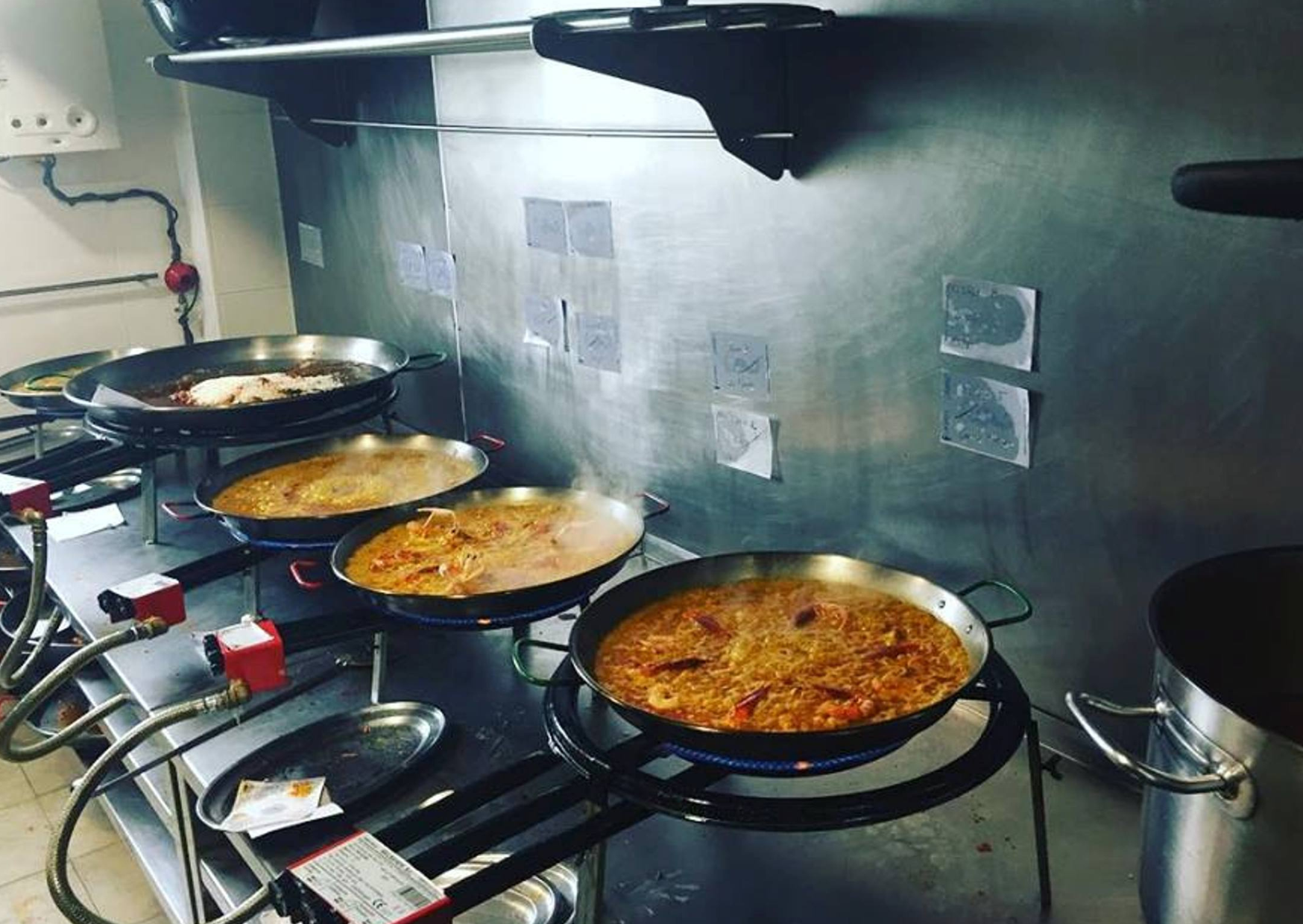
If you want the real value, use it like the country uses it.
Go on a weekday.
Go at lunch.
Do not show up at 3:45 and act surprised when the kitchen is tired of you.
Look for places where office workers, delivery drivers, builders, teachers, or older local couples are actually eating. Not because tourists are forbidden, but because the places still doing a strong menú del día for locals are usually the ones keeping the old lunch bargain honest. Devour, Idealista, and current Spanish reporting all circle the same reality: the format works best where it is still routine instead of theatrical.
And understand what you are buying.
You are not buying the best dish on the whole menu.
You are buying a complete, efficient, decent lunch at a price dinner cannot match because dinner is not trying to be that thing. That is why a midday meal can still come in around €12 to €15, while an evening meal built dish by dish lands closer to €25 to €30. It is not one restaurant tricking you twice. It is one country still preserving two different restaurant economies in the same room.

About the Author: Ruben, co-founder of Gamintraveler.com since 2014, is a seasoned traveler from Spain who has explored over 100 countries since 2009. Known for his extensive travel adventures across South America, Europe, the US, Australia, New Zealand, Asia, and Africa, Ruben combines his passion for adventurous yet sustainable living with his love for cycling, highlighted by his remarkable 5-month bicycle journey from Spain to Norway. He currently resides in Spain, where he continues sharing his travel experiences with his partner, Rachel, and their son, Han.