
A lot of people with chronic fatigue say some version of the same thing after moving to southern Spain, coastal Italy, Greece, or another Mediterranean corner of Europe. Not that they were cured. Not that the illness vanished. More that the day stopped fighting them quite so hard.
That distinction matters.
For people with ME/CFS and related fatigue-heavy conditions, the cleanest medical model is still one built around post-exertional malaise, unrefreshing sleep, cognitive trouble, orthostatic symptoms, and a very real limit on how much physical, mental, emotional, and social effort the body can absorb before symptoms spike. CDC and NICE both frame the condition around management, pacing, and staying within an individual energy limit, not around pushing through or “reconditioning” your way out of it.
So when people say life feels different in Mediterranean Europe, the interesting part is usually not the postcard stuff. It is the errand math, the walking distance, the pace of the day, the easier access to basic services, the smaller social units of daily life, and sometimes the simple fact that a tired person is no longer burning a chunk of their usable energy on parking lots, giant supermarkets, and mandatory driving. That is not a miracle story. It is a friction story. And friction matters when even grocery shopping can trigger a relapse 12 to 48 hours later.

The Illness Did Not Vanish The Daily Math Changed
This is the first thing worth saying plainly.
Moving does not cure ME/CFS. NICE states there is currently no cure, and CDC says there is no cure or approved treatment, only symptom management that may help some people more than others. That should kill the fantasy quickly, which is useful because people get hurt when they confuse a friend’s improved routine with a biomedical fix.
But symptom management is not small.
NICE’s guidance on energy management is more expansive than many people expect. It is not only about exercise. It includes cognitive activity, mobility, daily living, psychological and social demands, rest, sleep, and the effect of environmental stimulation. CDC says even ordinary activities like buying groceries, brushing teeth, or interacting with others can be enough to bring on a crash.
That means the environment around the patient is part of the illness experience whether doctors talk about it much or not.
If a person moves from a car-dependent suburb where every prescription refill, loaf of bread, and coffee requires a drive, a parking hunt, bright retail lighting, and 90 minutes of task batching, into a compact neighborhood where those same tasks are scattered in smaller chunks across the week, the body may register that as relief. Not cure. Relief.
And yes, that sounds almost insultingly mundane.
It is also where a lot of the difference lives.
A pharmacy downstairs. A bakery across the block. A ten-minute loop instead of a forty-minute expedition. A place to sit halfway home. A café where resting is normal and not treated like loitering. For a healthy person that can sound trivial. For someone managing an energy envelope, it changes how much of the day is spent on overhead instead of survival. That is an inference from current ME/CFS management guidance and from what compact urban service access changes in practice. It is not a clinical trial result, and it does not need to be to be useful.
A Mediterranean City Can Ask Less Of A Sick Body
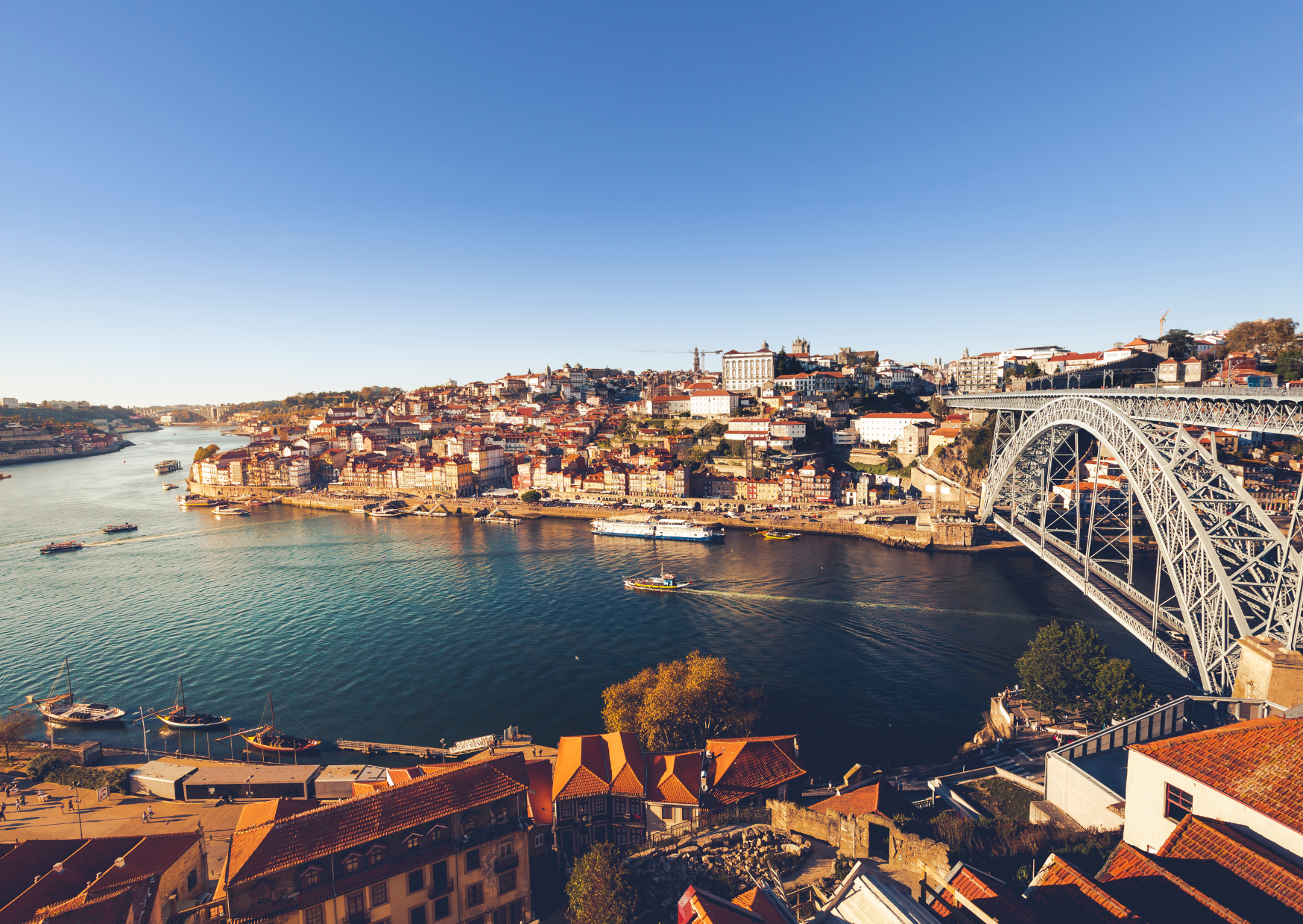
One reason patients often describe a different experience is simple geography.
The European Commission’s demography work found that a large majority of the EU population lives within a 15-minute walking or cycling distance of basic services and facilities such as schools, hospitals, banks, shops and pharmacies. Separate EU urban accessibility work says that in virtually all cities, at least 80% of the population has easy access to public transport.
That does not mean every Mediterranean city is magically easy.
It does mean that the structure of many European neighborhoods is more compatible with low-energy living than a lot of American sprawl. In the right part of Valencia, Málaga, Bari, or Thessaloniki, daily life can be handled in smaller, more interruptible pieces. In the wrong part, you get hills, stairs, cobblestones, tourist noise, and a third-floor walk-up that turns every outing into a wager.
The boring neighborhoods are often better.
Flat grids beat romance. A slightly dull block with a lift, a grocery, a pharmacy, and a bus stop usually does more for a fatigue patient than a gorgeous sea-view apartment perched above 86 stone steps. That is true whether the city is in Spain, Italy, Greece, Malta, or southern France.
There is also the question of medication access. OECD data show huge variation across countries, but they make one useful point clear: community pharmacy density can be very high in some parts of Europe. Greece, for example, reported 97 community pharmacies per 100,000 people in 2021, versus an OECD average of 28 across comparable countries. That does not prove life is easy in Greece. It does underline why some patients experience medication refills and pharmacist advice as more physically reachable in certain Mediterranean settings.
This is where the “different experience” often starts. Not with beaches. With shorter distances, smaller task loads, and fewer forced decisions before lunch.
Food Stops Being a Weekly Logistics Event

Fatigue patients do not just manage symptoms. They manage food friction.
That phrase sounds clinical, but the problem is ordinary. If cooking requires a big-box supermarket run, a car, a refrigerator stocked for a week, batch prep on Sunday, and standing upright for an hour while chopping and washing, the body pays for the meal twice.
NICE’s guidance is plain here. People with ME/CFS need adequate fluid intake and a well-balanced diet. If nausea is part of the picture, eating small amounts often can help. NICE also says there is not enough evidence to support vitamins or supplements as a cure. So the useful frame is not miracle foods. It is manageable food.
Mediterranean Europe can make manageable food more available by default.
Not because everybody there eats perfectly. They do not. But because many neighborhoods make it easier to live on simple repeating basics instead of weekend heroics. Yogurt, bread, eggs, tomatoes, lentils, chickpeas, tinned fish, soup, fruit, olives, roast chicken, rice, cooked greens, a rotisserie fallback, a corner shop for the thing you forgot. In many places, that is normal street-level life, not a special wellness system.
Research outside ME/CFS also points in a useful direction, even if it does not prove anything specific for fatigue patients moving abroad. A 2025 Frontiers paper found higher Mediterranean diet adherence was associated with lower fatigue in a general-population analysis and in people with cancer-related fatigue. A 2025 systematic review and meta-analysis in Nutrition Reviews found the Mediterranean diet significantly improved some inflammation biomarkers, including hs-CRP, IL-6, and IL-17. That is not evidence that olive oil fixes chronic fatigue. It is evidence that the diet pattern is a reasonable, non-magical background choice for people trying to reduce unnecessary load on a body that is already struggling.
The larger point is practical.
When food becomes daily maintenance instead of weekend logistics, some patients stop burning their best hours on shopping, prep, and cleanup. They buy less at once. They walk shorter distances. They sit down more often. They recover faster from the task itself.
That does not sound dramatic enough for social media.
It is still the kind of change people remember.
The Climate Can Help Until It Doesn’t
This is where people get sloppy.
Mediterranean Europe is often sold as gentle, healing, sun-soaked, and good for the nervous system. Sometimes it is. In January, a bright dry afternoon in Alicante or Cagliari can make it easier to leave the flat, sit outside, or take a short walk without the full winter punishment many people feel in colder climates.
But the same region is also where summer heat is becoming a serious health issue.
The European Climate and Health Observatory says Europe is the fastest-warming continent and that heatwaves dangerous to human health are increasing, especially in Southern Europe. The EEA also notes that heatwaves and climate-related stressors hit vulnerable groups hardest, including older people and people already in poor health.
That matters more for fatigue patients than glossy relocation pieces usually admit.
NICE explicitly tells healthcare organizations to consider sensitivities to light, sound, temperature extremes, and smells for people with ME/CFS. It also says physical accessibility and travel distance matter. Put those together and a badly chosen Mediterranean summer setup starts to look less charming. A hot top-floor flat, poor cross-ventilation, weak shutters, no air conditioning, and a steep uphill walk home can turn a theoretically “healthier lifestyle” into a week of crashes.
Noise is another quiet saboteur.
The EEA’s 2025 report on environmental noise says transport noise contributes to severe sleep disturbance for millions of Europeans and remains one of the major environmental health burdens across the region. If a patient is already dealing with unrefreshing sleep, sensory overload, or a low tolerance for evening stimulation, the wrong Mediterranean block can be brutal. A lively plaza may be fun for visitors and a disaster for someone whose symptoms worsen with poor sleep and overload.
So yes, climate can help.
But winter sun is not the same thing as summer tolerance. Fatigue patients who do well in Mediterranean Europe often do well because they learned the region’s defensive habits too: early errands, shutters closed at midday, a quiet bedroom, good airflow, strategic AC use, and no pretending August is a season for personal growth.
Healthcare Still Needs Strategy

A move can improve daily life and still leave the medical part messy.
That is normal.
CDC says there is no one-size-fits-all solution for ME/CFS management. NICE says symptoms can be managed but not cured, and it is unusually explicit about what should not be offered as cure: fixed-increment exercise programs, graded exercise therapy, and any program that automatically increases activity regardless of symptoms. NICE is equally clear that CBT is not curative. It may help some people manage symptoms and distress, but it is not the answer to the disease itself.
That matters because relocation can make people sloppy in a different way.
They assume a new country will produce a new doctor who finally “gets it.” Maybe. Maybe not. Better to build around a narrower goal: find a clinician who respects pacing, understands post-exertional malaise, does not try to fix the condition by forcing activity ramps, and is practical about orthostatic symptoms, sleep, pain, medication sensitivity, nausea, and function.
NICE also says services should adapt appointment timing, length, frequency, transport burden, and sensory environment for people with ME/CFS. That is an excellent checklist for choosing a clinic even if you never say the word checklist out loud. A doctor may be brilliant on paper and still be the wrong doctor if the appointment requires a cross-city trek, a packed waiting room, fluorescent lighting, and forty minutes upright before you are seen.
The good version of care is often very unglamorous.
A shorter route to the clinic. A pharmacy that stays open nearby. A GP who listens when you say exertion backfires. A written medication list in the local language. A rest day before the appointment and one after. A plan for flare-ups instead of bravado.
That is healthcare strategy for fatigue patients abroad. It is not inspirational. It works better.
The Apartment Matters More Than the Passport Stamp
This may be the least romantic part of the whole subject, which is exactly why it deserves attention.
People love talking about countries.
Patients should talk about apartments.
NICE specifically discusses aids and adaptations for people with moderate, severe, or very severe ME/CFS, including mobility help and home adaptations that preserve independence and quality of life. That should push anyone thinking clearly toward a simple conclusion: housing is symptom management.
A decent fatigue apartment in Mediterranean Europe is usually not the prettiest one in the listing photos.
It is the one with a lift, step-free access, a real place to sit in the shower, a quiet bedroom, effective shutters or blinds, reliable cooling, and basic services close enough that a bad day does not become a logistical crisis. The best move is often a plain block in a functional neighborhood, not the dramatic old-stone place on a hill that visitors rave about.
There is also a psychological trap here.
People move abroad because they want a different life, so they choose the apartment that looks different. The tiled floor. The balcony. The old-world charm. The steep little lane. The narrow stairs. Then six weeks later the body points out that charm is not an accessibility feature.
Sea views do not help much if getting milk costs tomorrow.
The patients who describe a genuinely better experience usually end up with homes that reduce energy leakage in ten boring ways at once. A shorter door-to-street transition. Less vertical strain. Less heat gain. Less nighttime noise. Easier medication storage. Easier laundry. Easier food fallback. Easier exits and returns.
That is when a country starts to feel good.
Not when the passport stamp lands. When the apartment stops ambushing the body.
Your First Seven Days Should Be Boring on Purpose
If someone with chronic fatigue moves to Mediterranean Europe and spends week one “making the most of it,” there is a decent chance week two gets spent in bed.
A better first week is almost aggressively dull.
Here is the version that actually helps:
- Day 1: Walk the smallest possible loop from the apartment to the nearest pharmacy, grocery, café, bench, and taxi pickup point. Not all in one run if that is too much. The goal is route certainty, not sightseeing. Build the shortest safe map first.
- Day 2: Test one ordinary errand at the coolest, quietest hour. Then log symptoms that evening and again the next day, because PEM often shows up 12 to 48 hours later and people misread that lag constantly.
- Day 3: Set three default meals you can manage half-awake. Think yogurt and fruit, eggs and toast, soup and bread, rice and rotisserie chicken, lentils and olive oil, sardines and tomatoes. You are building repeatability, not culinary identity.
- Day 4: Fix the apartment before you fix your life. Shower seat. Bedside water. Blackout plan. Cooling plan. Laundry plan. A chair near the entrance if shoes are a problem. Small things matter because small things repeat.
- Day 5: Dry-run the clinic or pharmacy route without a medical emergency attached to it. Timing, heat, stairs, waiting areas, seating, and noise all count. NICE’s own guidance treats travel burden and sensory load as part of usable care.
- Day 6: Build your heat rule. Which hours are off-limits. Which room stays coolest. When shutters close. Whether you need AC before symptoms hit, not after. Southern Europe is not the place to improvise once the flat is already hot.
- Day 7: Cancel one plan you wanted to keep because it looks like “real Mediterranean life” but costs too much energy. Maybe that is a beach afternoon. Maybe a market day. Maybe dinner at 10:30 p.m. Keep the life you can repeat. That is the version that lasts.
That first week tells you nearly everything.
If the move helps, it usually helps because the body is being asked to do a smaller, saner day. If it fails, it usually fails for equally ordinary reasons: too much heat, too many stairs, too much noise, too much distance, too much pressure to perform the move like a vacation.
The people who describe the best outcomes are often the ones who make Mediterranean Europe less glamorous on purpose.
They choose the flat block over the charming ruin.
They choose the five-minute loop over the perfect view.
They choose the smaller day over the bigger fantasy.
That is not depressing.
For a chronic fatigue patient, it can be the whole upgrade.

About the Author: Ruben, co-founder of Gamintraveler.com since 2014, is a seasoned traveler from Spain who has explored over 100 countries since 2009. Known for his extensive travel adventures across South America, Europe, the US, Australia, New Zealand, Asia, and Africa, Ruben combines his passion for adventurous yet sustainable living with his love for cycling, highlighted by his remarkable 5-month bicycle journey from Spain to Norway. He currently resides in Spain, where he continues sharing his travel experiences with his partner, Rachel, and their son, Han.