
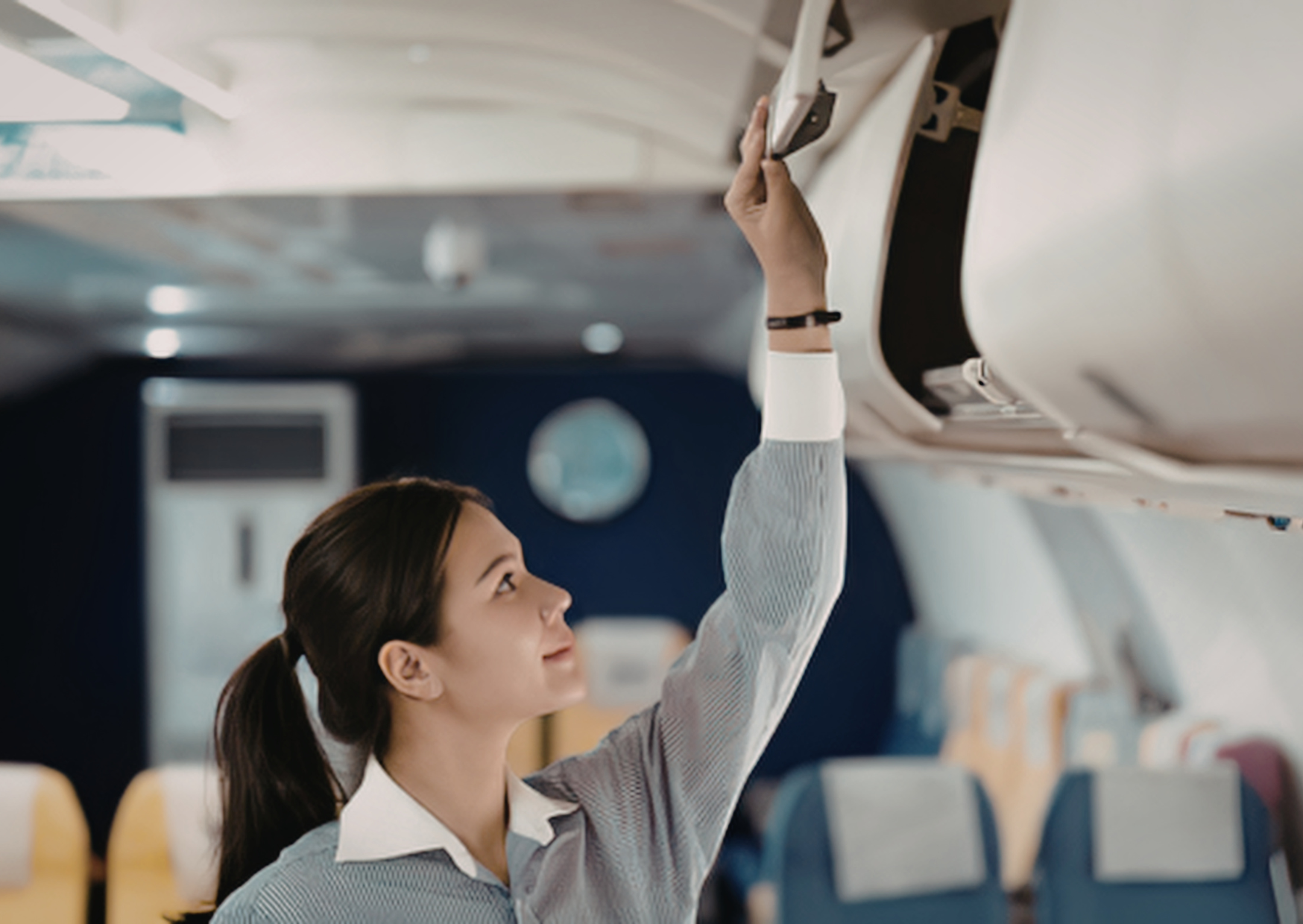
Most Americans think the trick is rolling clothes. That helps, but it is not the real method. The real method is harsher and much more useful: cut the list, build the bag in zones, wear the bulky pieces in transit, and stop treating the personal item like a random overflow purse.
A lot of Americans pack a carry-on like a smaller checked bag.
Same habits, same panic, just less room.
That is why they end up kneeling on the suitcase, bargaining with a zipper, then paying for a checked bag anyway or dragging a carry-on so overstuffed it barely survives the sizer.
Flight attendants do not pack like that because they cannot afford to.
They live out of these bags.
They repack constantly, move fast, work around tight overhead space, deal with different aircraft, and learn very quickly which habits are useful and which ones are sentimental nonsense. The result is not magic. It is a system.
That system can make a carry-on feel like it holds twice as much, not because the bag changed size, but because the wasted space disappears. The dead air goes away. The duplicate items go away. The “just in case” shoes go away. The giant toiletry fantasy goes away.
Most travelers do not have a luggage problem.
They have a bag architecture problem.
Flight Attendants Do Not Start By Packing. They Start By Cutting
This is the part Americans usually skip because it is less fun than buying new cubes.
Flight attendants are good at carry-ons because they are ruthless before the first item goes in. They do not begin with the suitcase. They begin with the edit.
That matters more than the fold-versus-roll debate.
A crew-style packing list is built around repeat wear, fast combinations, and one weather story. If the trip is four days, they are not packing four emotionally distinct identities. They are packing a narrow set of clothes that work together, can be reworn, and do not need special shoes, special bras, special skincare, and special backup plans.
That is why the bag closes.
The average leisure traveler still packs like each day might become a different genre. Nice dinner outfit. Casual day outfit. Emergency cold outfit. Maybe-gym outfit. Something for a surprise beach. Something for a museum that turns elegant somehow. Something loose for the hotel. Something nicer in case the restaurant is weirdly formal.
That is how a 22-inch suitcase fills up with bad decisions.
Flight attendants tend to think in uniforms even when they are off duty. Not literal uniforms. Visual uniforms. One color lane. One shoe lane. One jacket that works with everything. A few tops, a few bottoms, one compact extra layer, and then out the door.
That alone changes the volume math.
It also changes the mental math at the destination. People who pack like this get dressed faster because everything already belongs together. The bag is smaller, but the trip feels easier.
The discipline sounds boring until the alternative is paying baggage fees or wrestling a swollen roller down a narrow aisle while strangers study you like a cautionary tale.
The Method Is A System Of Zones, Not A Pile Of Clothes
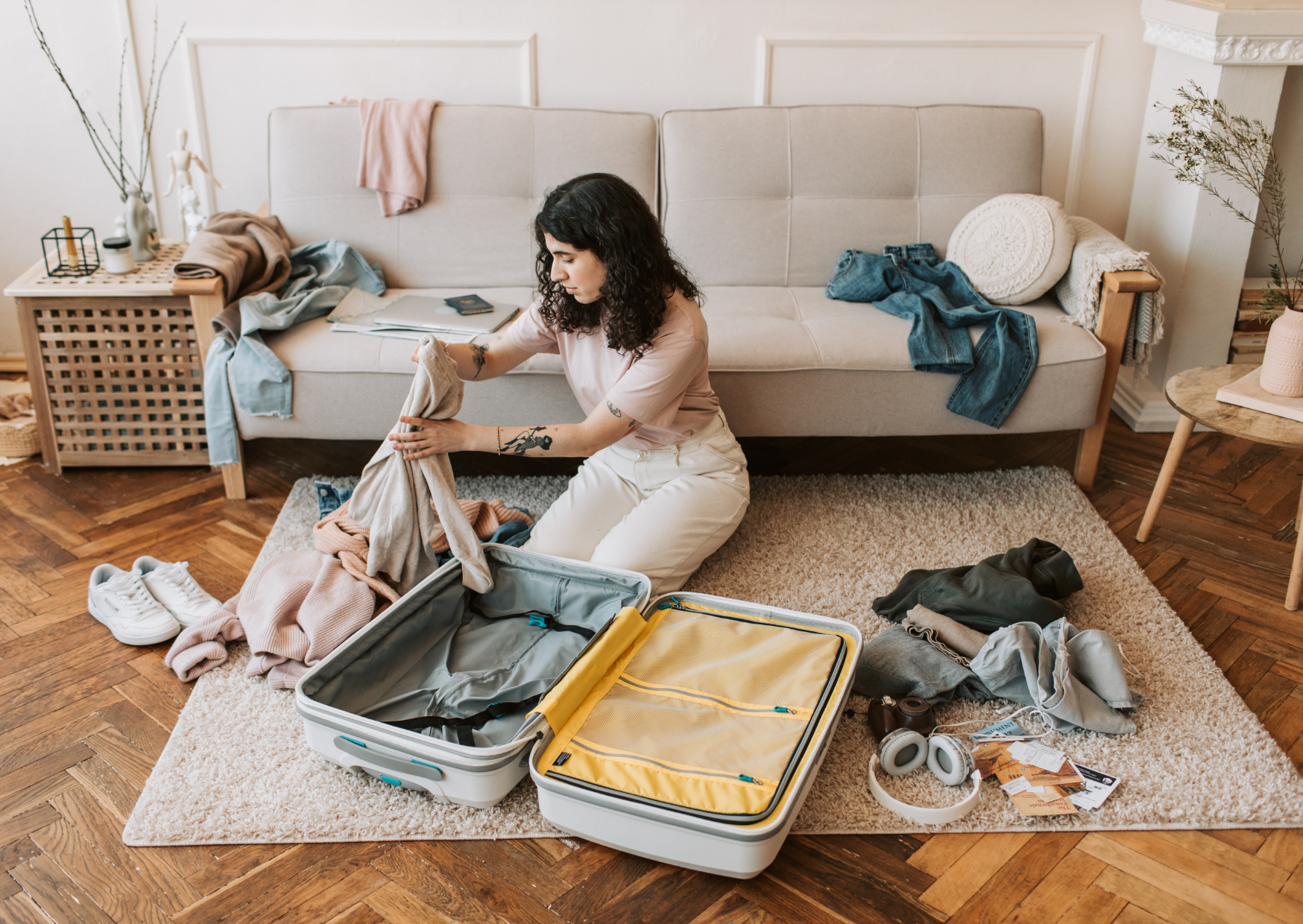
The piece most travelers miss is that flight-attendant packing is usually modular.
Not aesthetic.
Modular.
That means the bag is divided into zones before anything goes in. Clothing in one or two cubes. Underwear and sleepwear in a narrow cube. Toiletries in one predictable place. Tech in another. Shoes isolated. Dirty laundry given a home before the trip even starts.
This is why packing cubes matter more than people expect. They are not just for neat freaks. They stop the bag from becoming one large collapsing blob.
Crew interviews keep landing on the same pattern: packing cubes, compression when needed, and a repeatable internal layout. Some pack by clothing type. Others pack by outfit. Both work. What does not work is throwing clothes into the case loose and pretending organization will happen later.
It never does.
Rolling helps because it uses corners and odd spaces better than flat stacks. It also makes it easier to see what is in the cube. But rolling by itself is not the method. Rolling without structure just creates a bag full of little fabric burritos.
The useful sequence looks more like this:
- tops together
- bottoms together
- underwear, socks, and sleepwear in a thinner cube
- one small cube or pouch for workout gear or swimwear if truly needed
- toiletries at the top or edge for easy removal
- shoes bagged and pushed to the perimeter
- empty cube or laundry pouch packed from the start
That is how crew fit more, because the suitcase stops wasting interior shape.
The other gain is behavioral. A modular bag discourages overpacking because each category has a visible boundary. Once the cube is full, the answer is usually not “force in more.” The answer is “remove something.”
That is a healthier sentence than most carry-ons hear.
Shoes And Toiletries Are Where Space Goes To Die
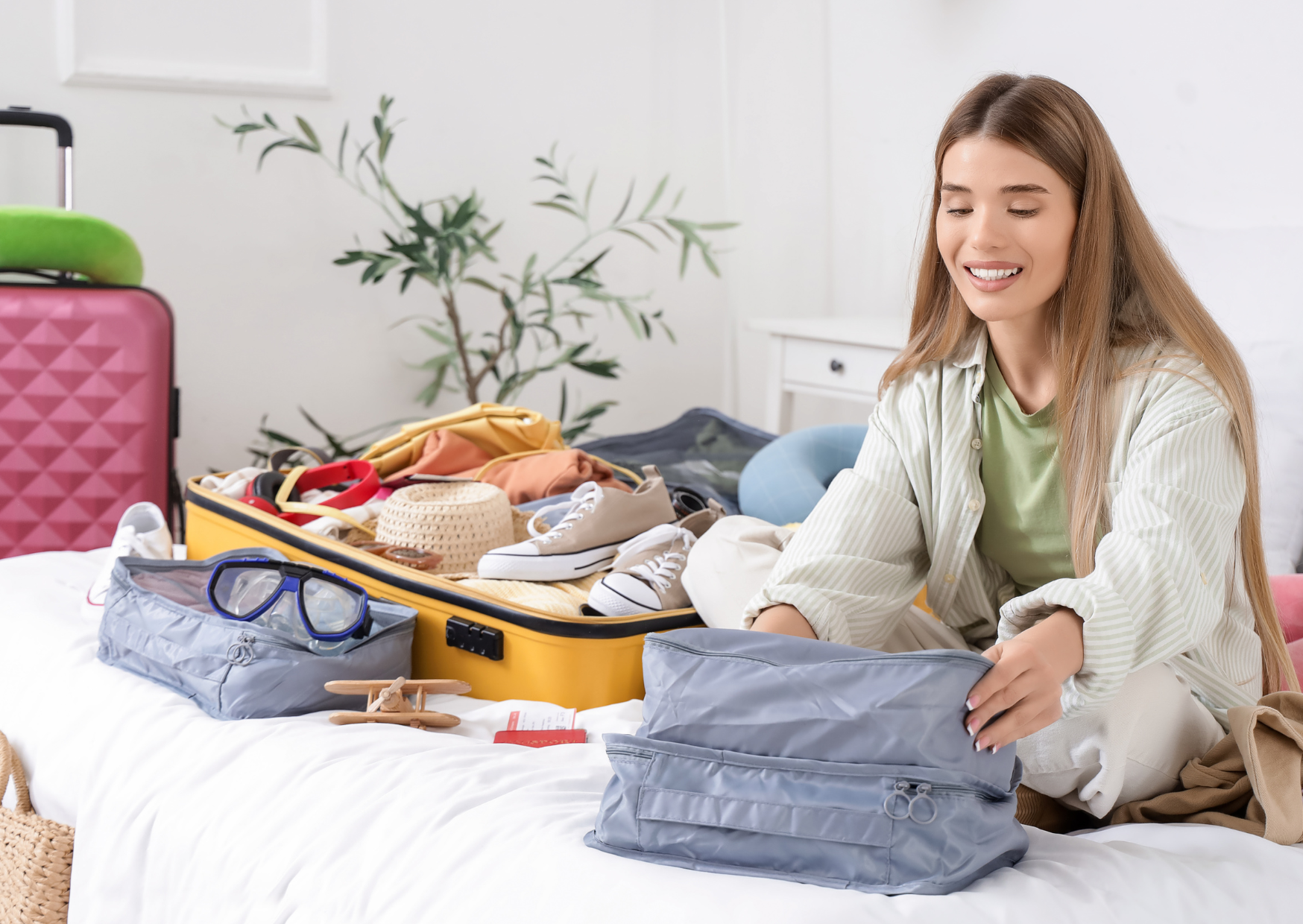
People blame sweaters.
Sweaters are not innocent, but shoes and toiletries are the real criminals.
Shoes destroy carry-on space because they are rigid, dirty, and awkwardly shaped. Flight attendants tend to be much stricter here than ordinary travelers. Two pairs total is common for a normal trip. Sometimes three if the trip genuinely requires it. One pair worn in transit, one pair packed, and then maybe one compact specialist pair if there is an actual reason.
Not a fantasy reason.
An actual one.
That usually means wearing the bulkiest shoes on the plane. Boots, sneakers, or the thick sole pair goes on the body, not into the bag. Travelers resist this because they want maximum airport comfort, but the crew logic is simpler: the largest item should not consume the suitcase if it can consume the traveler instead.
Same with outerwear.
A coat, blazer, hoodie, or heavier knit usually gets worn or carried, especially if it is the kind of piece that turns the bag from reasonable to ridiculous. This is not glamorous. It is just volume management.
Toiletries create a different kind of damage.
Americans pack bathroom routines like they are moving house.
Half-full bottles. Backup bottles. The better shampoo, the emergency shampoo, the face wash for dry climates, the nighttime cream, the daytime cream, the other daytime cream because the first one pills under sunscreen.
Then they act shocked when the liquids bag becomes a chemistry set and the suitcase smells expensive.
Crew-style packing is tighter. Travel sizes, hard limits, and container discipline. One quart bag still matters for U.S. security checkpoints, and power banks still belong in the cabin, not tossed into checked baggage as an afterthought. That means the smartest packers build the bag around the rules rather than discovering the rules mid-line.
This is also why many experienced travelers keep a ready-to-go toiletry kit instead of rebuilding one from scratch before every trip. The trip becomes lighter because the decision-making gets lighter first.
A lot of carry-on suffering is really decision fatigue with zippers.
The Personal Item Is Not Bonus Space. It Is Part Of The Plan
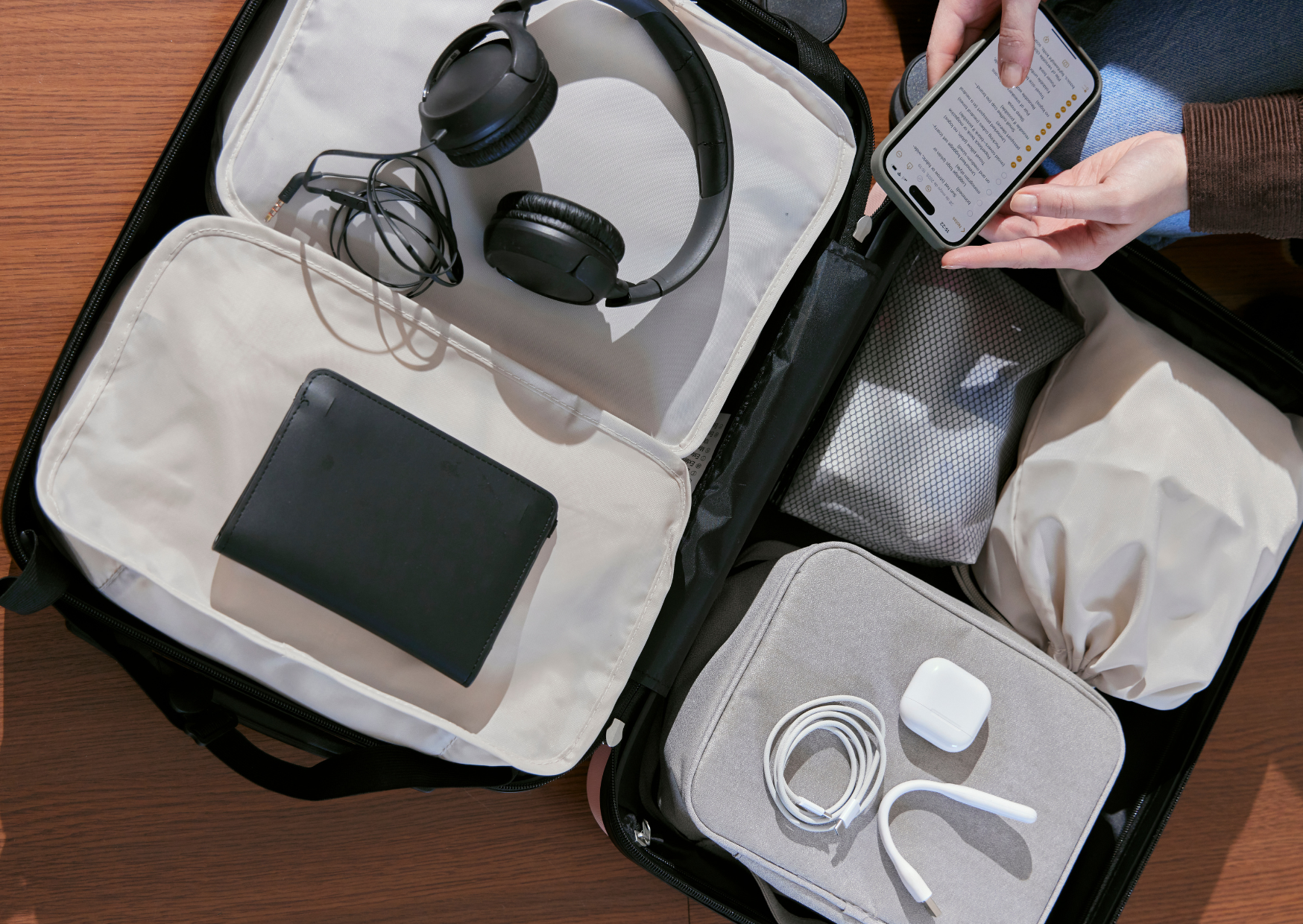
This is where Americans leave a shocking amount of capacity on the table.
They treat the personal item as a handbag, laptop sleeve, or vague overflow zone instead of building it into the system from the beginning.
Flight attendants do the opposite.
The personal item is part of the architecture. It is where the trip’s dense, valuable, or quick-access items go. Tech. documents. chargers. medication. snacks. glasses. a thin layer. jewelry case. small toiletries for the flight. sometimes the items that would make a forced gate-check annoying.
That shift matters because it protects the carry-on’s main compartment from clutter.
If the roller bag is holding clothing and larger trip essentials, and the personal item is holding dense daily-use items, both bags work better. The traveler moves faster. Security is easier. Gate-check panic drops. The overhead bag stays lighter and cleaner.
This also matters more now because bag rules are not uniform and they are getting less forgiving in certain corners of air travel. Most major U.S. airlines still cluster around the familiar 22 x 14 x 9 inch carry-on size. Many international airlines get stricter on weight, and some low-cost European fares are much less interested in your personal freedom than American travelers expect. That means the personal item is not merely a second bag. It is often the difference between a smooth trip and a fee.
The best personal items for this method are not giant tote black holes.
They are structured enough to divide essentials, soft enough to fit under a seat, and small enough that the traveler is not tempted to turn them into a third suitcase wearing lipstick.
That temptation is strong.
Resist it.
A good personal item should make the main bag smaller, not give bad habits a second apartment.
Why This Can Feel Like Twice As Much Without Breaking Physics
Nobody is actually doubling the legal volume of the suitcase.
The “twice as much” effect comes from four unglamorous improvements happening at once.
First, dead space shrinks. Rolled or tightly folded clothing inside cubes uses corners and edges better than loose folded stacks.
Second, bulk moves onto the body. The heaviest shoes, jacket, and sometimes the sweater travel outside the suitcase.
Third, duplicates disappear. When outfits share one palette and one shoe logic, the traveler stops packing clothing that demands its own support team.
Fourth, dense items migrate. Tech, medicine, papers, and in-transit items move to the personal item instead of clogging the main compartment.
That is why a carry-on can suddenly handle five or six days instead of three, or ten days in warm weather instead of five, without the traveler feeling deprived.
The bag did not become bigger.
The traveler became less wasteful.
Compression cubes can push that further, especially for soft clothing and colder-weather packing, but they also create a trap. Compression reduces volume, not weight. A traveler can win the zipper battle and still lose at the scale, especially on airlines that enforce cabin-weight limits. Flight attendants know this because many of them fly internationally and do not assume the American overhead-bin mindset travels everywhere.
That is another reason the method works. It is not just about stuffing more in. It is about building a bag that remains liftable, legal, and usable after the compression high wears off.
There is also a psychological advantage here. A tightly planned bag makes a person less likely to panic-buy at the destination. When the bag contains a clear set of outfits, one clean layer strategy, and a basic system for dirty clothes, people stop shopping to solve confusion they packed themselves into.
That is an underrated savings strategy.
What Most Americans Pack That Flight Attendants Usually Do Not
They do not usually pack clothing for imaginary situations.
They do not usually pack four pairs of shoes for a five-day trip.
They do not usually bring full-size bottles unless there is a very specific reason.
They do not usually let denim, toiletries, and cables slosh around loose like loose items in a kitchen junk drawer.
And they do not usually forget that the airport itself is part of the trip.
That last one matters.
A lot of American packing is driven by destination fantasy, not transit reality. They pack as if the only real moment is arrival. Flight attendants pack for the full chain: getting to the airport, moving through security, lifting the bag, fitting it in the bin, pulling out what matters during the flight, and walking off the plane without leaving half their life in seat pocket 22A.
That creates different decisions.
The bulkiest shoes go on the feet.
The jacket becomes wearable storage.
The charger goes where it can be reached.
The liquids come out fast.
The dirty clothes already have a future location.
The bag opens without exploding.
This is also why many experienced travelers care less about having a “beautiful” suitcase interior than a predictable one. They are not trying to impress the internet with color-coded linen sets. They are trying to get through a real travel day without digging for a power bank under six rolled T-shirts and a leaking sunscreen cap.
Function is not glamorous.
Function gets to the gate calmer.
Pack Like This On Your Next Trip And The Bag Will Behave Better
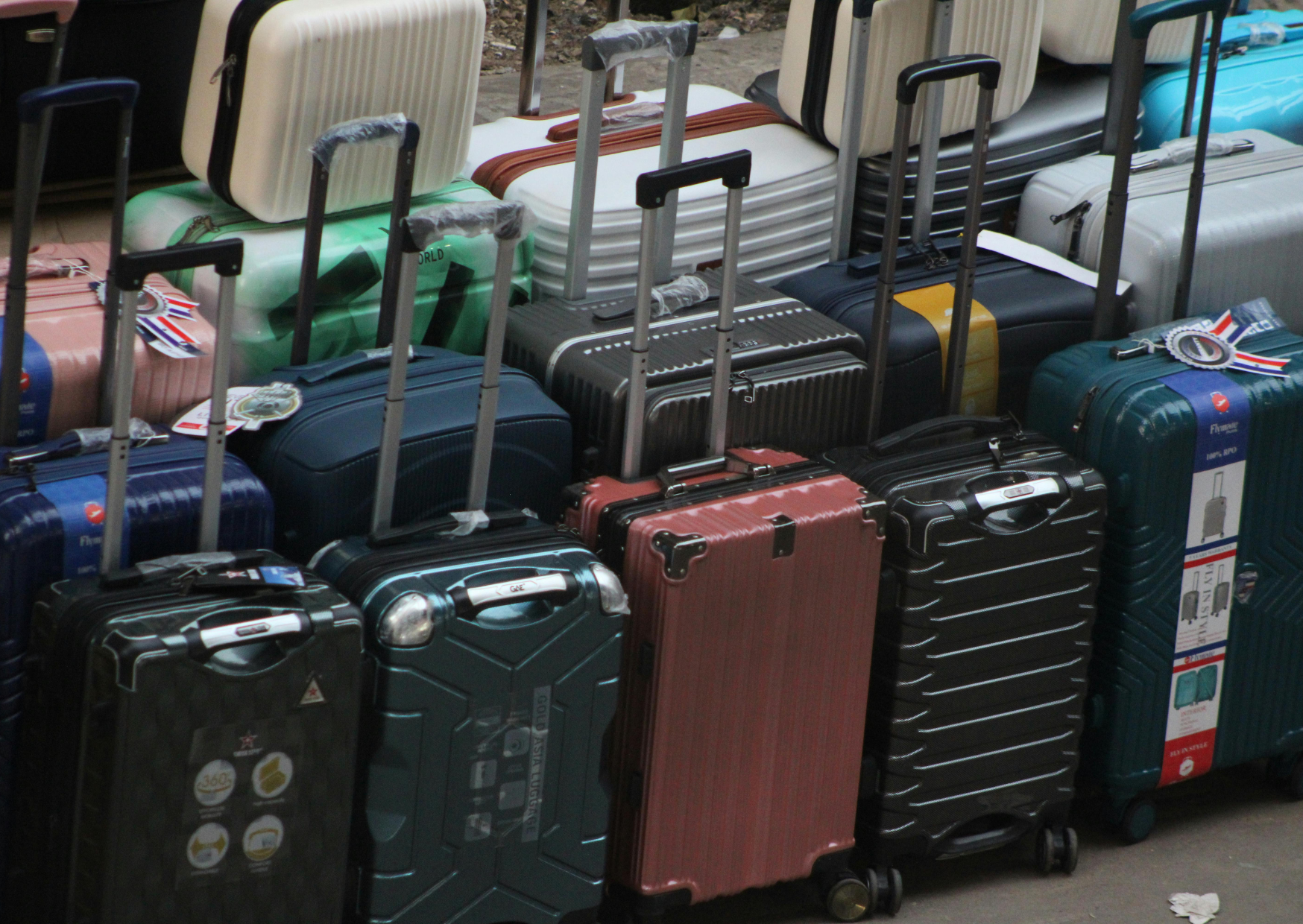
For the next flight, a practical crew-style setup looks like this:
A carry-on roller or soft bag holds clothing, shoes, and non-urgent trip items.
A personal item holds all quick-access and high-value items.
Inside the carry-on:
- one cube for tops
- one cube for bottoms
- one narrow cube for underwear, socks, and sleepwear
- one shoe bag
- one toiletry bag
- one empty laundry cube or bag
On the body:
- bulkiest shoes
- heaviest jacket or knit
- phone, wallet, passport, and boarding essentials
- any piece too awkward to justify inside the bag
The clothing rule is even simpler:
- pick one color lane
- repeat bottoms
- rewear outer layers
- cap shoes hard
- do not pack for hypothetical alternate versions of yourself
For a normal five-day city trip, that often means:
three tops, two bottoms, one sleep set, one extra layer, one packed shoe pair, underwear and socks, toiletries, and a compact workout or swim item only if it will genuinely be used.
Not “might.”
Used.
This is also where travelers overcomplicate laundry. They act as if one sink wash or one hotel laundry moment is an insult to human dignity. Flight attendants are less precious because they know the real trade. A ten-minute wash can remove the need for a second pair of jeans, an extra sweater, or three backup tops.
That is a good trade.
A bag that closes easily is a good trade.
Walking past the check-in fee screen is a good trade.
The crew method is not stylish because it is not trying to be. It is a working system built by people who got tired of their own bad packing choices faster than everyone else.
That is why it works.
The carry-on packing method flight attendants use is not one trick.
It is editing first, packing in zones, wearing the bulk, and making the personal item do real work.
Do that once properly and most travelers stop asking how to fit twice as much.
They start wondering why they ever packed the old way at all.

About the Author: Ruben, co-founder of Gamintraveler.com since 2014, is a seasoned traveler from Spain who has explored over 100 countries since 2009. Known for his extensive travel adventures across South America, Europe, the US, Australia, New Zealand, Asia, and Africa, Ruben combines his passion for adventurous yet sustainable living with his love for cycling, highlighted by his remarkable 5-month bicycle journey from Spain to Norway. He currently resides in Spain, where he continues sharing his travel experiences with his partner, Rachel, and their son, Han.