
A $100K annual salary is often seen as a benchmark for financial comfort in the U.S., but its purchasing power can vary drastically depending on the city. In Europe, where cost structures and lifestyles differ significantly, $100K can stretch further in some cities and fall short in others.
In many European cities, a $100K salary provides more comfort and financial stability than in comparable U.S. cities, allowing for a higher quality of life.
Here’s a comparison of what $100K can afford in 13 European cities versus major U.S. cities.
Read here how to pack for Europe and Best eSIM for Europe
BOOK YOUR TRAVEL INSURANCE
Two of our favorite travel insurance: Heymondo Vs Safetwing cheapest travel Insurance. You can get for $135 USD your Heymondo Travel Insurance with Heymondo discount code valid for 90 days. Read our full comparison of Genki vs Safetywing Travel Insurance Review and the comparison Heymondo vs Genki
Key Takeaways
Healthcare and Education: Europeans save significantly on healthcare and education, which are major expenses for Americans.
Public Transportation: Efficient, affordable public transit systems eliminate car-related costs.
Rent Differences: Even in Europe’s priciest cities, rent is often lower than in NYC or SF.
Quality of Life: Europeans benefit from better work-life balance, longer vacations, and cultural perks.
Quick & Easy Tips
Research Local Costs First: A high salary means little without understanding local rent, taxes, and healthcare.
Don’t Overestimate the Dollar: In some European cities, your $100K will feel like $200K in others, it might not stretch far.
Prioritize Quality of Life Over Income: Europeans often earn less but live better mimic that mindset.
Understand Tax Systems: Europe’s taxes are higher, but so are the benefits free healthcare, public transport, and education.
Choose Lifestyle Over Location: Smaller European cities often provide better value than big-name capitals.
Embrace Local Habits: Cooking at home, walking, and public transport can dramatically increase your savings.
Factor in Work Culture: Europe’s shorter workweeks can make a lower take-home pay feel far richer in quality of life.
The American belief that higher income equals higher quality of life doesn’t hold up when compared to Europe. In the U.S., high earners often find themselves trapped by inflated housing markets, expensive healthcare, and long commutes. Europeans, on the other hand, earn less but benefit from systemic stability free medical care, affordable housing options, and generous vacation time. To some Americans, this trade-off feels “socialist”; to Europeans, it’s just common sense.
Critics argue that Europe’s heavy taxation and slower pace discourage ambition. Yet, this perspective overlooks the fact that many Europeans live healthier, happier, and longer lives. The American hustle culture might produce more millionaires, but it also produces more burnout, debt, and dissatisfaction. Europeans may not chase luxury they chase balance, and that’s its own form of wealth.
This salary comparison forces an uncomfortable truth: America’s high-income dream is losing its global shine. As living costs soar and benefits shrink, $100K no longer guarantees comfort. In contrast, Europe’s model shows that you don’t need six figures to live richly you just need a society that values people over profits.
1. Berlin, Germany


Comfortable apartment in a trendy neighborhood ($1,500/month rent).
Excellent public healthcare and transport.
Dining out multiple times a week.
Key Savings:
Affordable healthcare and free education for children.
Comparison to America:
In NYC, rent alone might consume over $3,000/month for a similar space.
2. Paris, France

A cozy apartment in the city center ($2,500/month rent).
Frequent café outings and weekend getaways.
Public healthcare and subsidies for public transport.
Key Savings:
Lower child care costs and free university education.
Comparison to America:
Similar to NYC in housing costs but with better public services.
3. Madrid, Spain

A spacious apartment in a central neighborhood ($1,800/month rent).
Generous budget for dining, entertainment, and travel.
Access to free or low-cost healthcare.
Key Savings:
No hefty health insurance premiums.
Comparison to America:
In cities like Los Angeles, your $100K is stretched thin by housing and car costs.
4. Lisbon, Portugal

A large apartment in the city center ($1,500/month rent).
Dining out regularly and weekend trips along the coast.
Low-cost healthcare and utilities.
Key Savings:
Affordable public transportation and low taxes for expats.
Comparison to America:
Equivalent to living in a smaller U.S. city with room for luxuries.
5. Prague, Czech Republic

A modern, spacious apartment in the city center ($1,200/month rent).
High savings potential due to low living costs.
Great healthcare for minimal out-of-pocket expenses.
Key Savings:
Public transit is very affordable, eliminating car costs.
Comparison to America:
Comparable to living in a U.S. suburb with city-level amenities.
6. Vienna, Austria

A mid-sized apartment in a historic district ($1,300/month rent).
Access to free healthcare and world-class public transit.
Ample budget for cultural events and fine dining.
Key Savings:
Subsidized housing options for residents.
Comparison to America:
Vienna offers a much higher quality of life than NYC or SF for the same income.
7. Rome, Italy

A comfortable apartment near the city center ($1,200/month rent).
Frequent dining at local trattorias and access to free healthcare.
Low costs for fresh, high-quality food.
Key Savings:
No significant health insurance costs or student loans.
Comparison to America:
Your money stretches further in Rome compared to Boston or DC.
8. Dublin, Ireland

A mid-sized apartment outside the city center ($2,000/month rent).
Plenty for dining out and travel, despite higher living costs.
Access to free healthcare.
Key Savings:
Lower education costs for children.
Comparison to America:
Dublin is pricier than many U.S. cities but has better healthcare access.
9. Copenhagen, Denmark
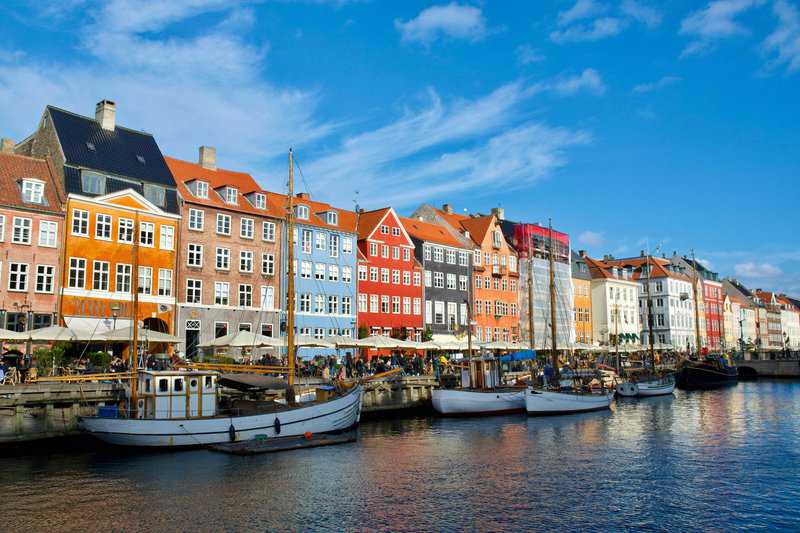
A cozy apartment in a desirable neighborhood ($2,000/month rent).
High taxes but free education and healthcare offset costs.
A bike-friendly lifestyle with minimal transportation expenses.
Key Savings:
No car costs, and childcare is heavily subsidized.
Comparison to America:
Similar to living in Seattle but with much more robust social benefits.
10. Amsterdam, Netherlands

A small but modern apartment in the city center ($2,000/month rent).
Frequent dining out and cultural activities.
Low transportation costs thanks to excellent biking and public transit.
Key Savings:
Significant savings on healthcare and education.
Comparison to America:
Comparable to living in San Francisco but with a better work-life balance.
11. Helsinki, Finland

What $100K Gets You:
A modern apartment near the city center ($1,500/month rent).
Free healthcare and education.
Budget for travel and leisure.
Key Savings:
No hidden healthcare or childcare costs.
Comparison to America:
Equivalent to living in Portland with much greater financial stability.
12. Zurich, Switzerland

A modest apartment in the city ($2,500–$3,000/month rent).
Higher taxes but unmatched quality of life.
World-class public transportation and healthcare.
Key Savings:
Salaries are higher to offset the higher costs, keeping quality of life intact.
Comparison to America:
Similar to living in NYC but with better infrastructure and safety.
13. Athens, Greece

A large apartment in the city center ($1,000/month rent).
Frequent dining out and budget-friendly travel.
Low costs for public transportation and healthcare.
Key Savings:
Affordable fresh produce and utilities.
Comparison to America:
Similar to living in a small U.S. town, but with vibrant urban amenities.
Comparison to Major U.S. Cities
New York City (NYC):
Rent for a one-bedroom apartment averages $3,500/month. Healthcare premiums, taxes, and transportation costs can eat up a significant portion of $100K.
San Francisco:
Similar to NYC, with high housing costs and a competitive job market.
Chicago:
More affordable than NYC or SF, but still pricier than most European cities.
Austin:
Growing costs of living, especially in housing, rival some European capitals.
Why You Should Pay Attention to the $100K Gap
Understanding why a $100,000 salary can feel comfortable in parts of Europe but stretched in many U.S. cities can reshape how you think about income. Salary alone does not determine lifestyle; the surrounding cost structure matters just as much. Housing, healthcare, transportation, and education expenses all influence how far a paycheck actually goes.
One major factor is housing pressure. In many American metro areas, rent or mortgage payments consume a large share of income, especially in coastal cities. In contrast, many European cities while not cheap often have smaller living spaces and more regulated rental markets, which can moderate monthly housing costs for comparable lifestyles.
Healthcare is another key difference. Many European countries operate public or heavily subsidized healthcare systems that reduce out-of-pocket costs for residents. In the United States, employer-based insurance premiums, deductibles, and surprise medical bills can significantly erode take-home comfort even at six-figure income levels.
Transportation patterns also play a role. Car ownership in the U.S. often includes insurance, fuel, maintenance, and parking costs that add up quickly. In many European urban centers, strong public transit networks allow residents to live comfortably with fewer vehicle-related expenses.
Most importantly, examining this comparison encourages smarter financial planning. It highlights how geography, policy, and lifestyle design interact with income, helping readers think beyond headline salary numbers when evaluating job offers or relocation decisions.
Why You Shouldn’t Oversimplify the Europe vs. U.S. Salary Story
At the same time, the idea that $100K always feels “rich” in Europe and “tight” in America is an oversimplification. Both regions contain enormous variation in cost of living. A six-figure salary in Lisbon or Valencia feels very different from the same income in Zurich, London, San Francisco, or New York.
Tax structure is another critical variable. Many European countries have higher income taxes and social contributions than the United States. While residents often receive more public services in return, the higher tax burden can narrow the apparent advantage depending on the country.
Lifestyle expectations also differ. American households often prioritize larger homes, more personal space, and car-based mobility. These preferences naturally raise baseline costs. Comparing budgets without accounting for lifestyle choices can create misleading conclusions.
Currency and employment context matter as well. Many European workers do not earn $100K-equivalent salaries in the first place, and local purchasing power must be evaluated relative to typical regional incomes, not just converted dollar figures.
Ultimately, the smartest takeaway is nuance. The purchasing power of $100K depends heavily on city, tax situation, housing choices, and personal lifestyle. Rather than assuming one region is universally cheaper, informed earners look closely at the full cost structure of the specific place they plan to live.
Final Thoughts
A $100K salary in America has long been seen as a financial milestone, a symbol of comfort and stability. Yet when you compare that same income to life in European cities, the illusion quickly fades. In places like Lisbon, Prague, or Valencia, $100K stretches further than most Americans can imagine offering affordable healthcare, slower-paced lifestyles, and access to world-class public transport. Meanwhile, in major U.S. cities, that figure often barely covers rent, insurance, and basic expenses.
This comparison highlights more than just cost of living it reveals two opposing systems of value. While Americans often measure success by income and possessions, Europeans tend to measure it through time, balance, and access to shared public services. The European model prioritizes collective well-being, allowing people to live comfortably without relying solely on high salaries.
Ultimately, what $100K gets you depends less on your paycheck and more on your environment. In much of Europe, money goes toward enhancing life not just surviving it. As more Americans question their cost of living and work-life balance, the dream of “earning big” is being replaced by the dream of “living better.”

About the Author: Ruben, co-founder of Gamintraveler.com since 2014, is a seasoned traveler from Spain who has explored over 100 countries since 2009. Known for his extensive travel adventures across South America, Europe, the US, Australia, New Zealand, Asia, and Africa, Ruben combines his passion for adventurous yet sustainable living with his love for cycling, highlighted by his remarkable 5-month bicycle journey from Spain to Norway. He currently resides in Spain, where he continues sharing his travel experiences with his partner, Rachel, and their son, Han.