
Last updated on November 16th, 2026 at 07:23 pm
Spain is famous for Madrid, Barcelona, Seville, and Valencia, but some of the country’s most memorable places are much smaller. Whitewashed villages in Andalusia, medieval hill towns in Castilla y León, fishing communities along the northern coast, and stone villages in the mountains can feel far more atmospheric than the big cities most visitors build their trips around.
What makes these towns special is not just that they are beautiful. Many still have the kind of compact historic centers, local markets, family-run restaurants, plazas, and everyday routines that make it easier to slow down and experience Spain at a different pace. Instead of racing between major attractions, you can spend an afternoon walking narrow streets, sitting in a square, or stopping somewhere simply because it looks interesting.
The landscapes also change dramatically from region to region. A village surrounded by olive groves in Andalusia feels completely different from a coastal town in Asturias or a fortified medieval settlement in Aragón. That variety is one of the reasons exploring Spain beyond the major cities can feel like visiting several different countries in one trip.
Smaller towns can also reveal parts of Spanish culture that are harder to notice in tourist-heavy destinations. Local festivals, meal times, neighborhood traditions, architecture, and regional food often feel more connected to the place itself. You are less likely to be surrounded by businesses built almost entirely around visitors and more likely to encounter everyday life.
The biggest surprise for many travelers is how little fame has to do with beauty. Some of Spain’s most photogenic and memorable places are not internationally famous at all. Once you start looking beyond the obvious destinations, the country becomes much bigger, more varied, and far more interesting.
Read here best things to know before visiting Spain, best Spanish food, Biggest Mistakes when moving to Spain and best breakfast in Spain
BOOK YOUR TRAVEL INSURANCE
Two of our favorite travel insurance: Heymondo Vs Safetwing cheapest travel Insurance. You can get for $135 USD your Heymondo Travel Insurance with Heymondo discount code valid for 90 days. Read our full comparison of Genki vs Safetywing Travel Insurance Review and the comparison Heymondo vs Genki
Quick Easy Tips
Rent a car to access remote areas and stop at scenic spots between towns.
Travel in shoulder season (May–June or September–October) for fewer crowds and cooler weather.
Ask locals for food and stay recommendations — TripAdvisor can’t match grandma’s advice.
Learn basic Spanish phrases — English is less common in these hidden gems.
Skip chain hotels and book a family-run guesthouse for a more immersive experience.
One controversial truth is that Spain’s major cities are not necessarily the most beautiful parts of the country. They may offer more museums, nightlife, shopping, and transportation, but smaller towns often deliver the scenery and atmosphere travelers imagine when they picture a romantic Spanish escape.
Another uncomfortable point is that some of Spain’s most famous destinations have become victims of their own popularity. Crowds, short-term rentals, inflated prices, and businesses catering primarily to tourists can make parts of major cities feel less connected to local life. Smaller towns are not immune to tourism, but many still retain a stronger sense of place.
There is also a tendency to treat small towns as day-trip accessories rather than destinations in their own right. Travelers arrive for two hours, take photographs, eat lunch, and leave. That approach can miss the best part of visiting them, which is often what happens after the day-trippers disappear and the town returns to its normal rhythm.
Another controversial idea is that “hidden gem” does not always mean undiscovered. Many of these towns are well known inside Spain and may be extremely popular during weekends, festivals, or summer holidays. What feels secret to an international traveler may already be a favorite domestic destination.
The larger lesson is that beauty is not always where tourism marketing tells you to look. Spain rewards travelers who are willing to leave the high-speed rail route, rent a car, take regional transport, or spend a night somewhere that does not appear on every first-time itinerary.
Most Beautiful Towns in Spain
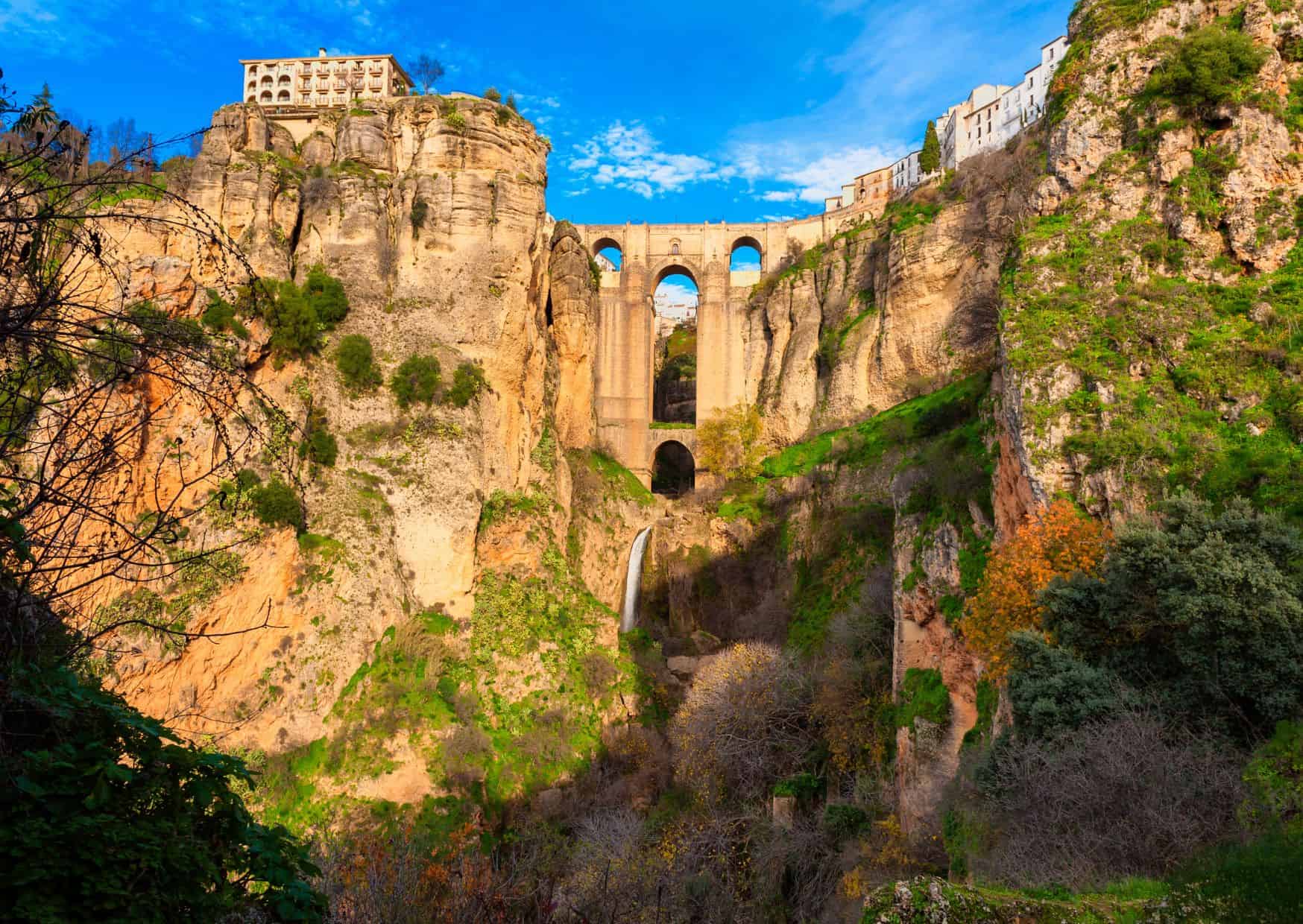
1. Ronda, Andalusia
Why Visit:
El Tajo Gorge: The town is dramatically perched above a deep gorge, offering stunning views.
Puente Nuevo: The iconic bridge spanning the gorge is a marvel of engineering.
2. Albarracín, Aragón

Why Visit:
Medieval Architecture: Known for its narrow, winding streets and pink-hued houses.
Scenic Beauty: Surrounded by hills and the Guadalaviar River, offering stunning views.
3. Cadaqués, Catalonia

Why Visit:
Artistic Heritage: Famous for being the home of Salvador Dalí.
Mediterranean Charm: Whitewashed buildings, cobblestone streets, and a beautiful coastline.
4. Frigiliana, Andalusia

Why Visit:
White Village: Known for its well-preserved Moorish architecture and whitewashed buildings.
Cultural Festivals: Hosts the Festival of Three Cultures every August.
5. Besalú, Catalonia

Why Visit:
Medieval Heritage: Features a well-preserved medieval bridge and Jewish quarter.
Historical Sites: Visit the Monastery of Sant Pere and the Micvé, a Jewish ritual bath.
6. Cudillero, Asturias

Why Visit:
Fishing Village: Known for its colorful houses cascading down a hillside to the port.
Scenic Beauty: Beautiful coastal scenery and fresh seafood.
7. Mogarraz, Castile and León

Why Visit:
Artistic Town: Known for the unique portraits of residents displayed on the walls of houses.
Historical Charm: Well-preserved traditional architecture.
8. Morella, Valencia

Why Visit:
Hilltop Fortress: Dominated by a castle offering panoramic views.
Historical Sites: Visit the Church of Santa María la Mayor and the aqueduct.
9. Sallent de Gállego, Aragón

Why Visit:
Pyrenees Beauty: Nestled in the Tena Valley, ideal for outdoor activities.
Cultural Events: Hosts the annual Pirineos Sur music festival.
10. Setenil de las Bodegas, Andalusia

Why Visit:
Unique Architecture: Houses built into and under massive rock overhangs.
Charming Streets: Explore the narrow streets and enjoy local tapas.
Why You Should Care and Follow
You should care because adding smaller towns to your itinerary can completely change the balance of a Spain trip. Big cities are exciting, but they can also be exhausting. Spending a few days somewhere quieter gives you room to slow down, walk without a checklist, and experience a different side of the country.
Following this approach can also lead to better food experiences. Regional dishes are often closely tied to specific towns and provinces, and local restaurants may focus more heavily on traditional cooking than places in tourist centers. Exploring smaller destinations can introduce you to foods you would never encounter if you stayed only in Madrid or Barcelona.
There is also a financial advantage. Accommodation, meals, parking, and everyday expenses can be more reasonable outside Spain’s most visited cities, especially if you avoid peak-season hotspots. A beautiful town can sometimes deliver a more memorable experience for less money.
Smaller towns are also ideal for travelers who enjoy photography, history, architecture, and walking. Many are compact enough to explore without complicated transportation, and their streets often reveal details that disappear in larger cities. You can move at your own pace and spend time where you actually want to be.
Most importantly, visiting these towns helps spread tourism beyond a handful of overloaded destinations. When travelers spend money in smaller communities, that can support local hotels, restaurants, shops, and guides rather than concentrating everything in the same major cities.
Why You Should Not Care and Follow Too Much
At the same time, you should not assume that every small Spanish town is automatically better than the big cities. Some are extremely quiet, especially outside peak season, and may offer limited restaurants, transportation, or activities. That can be perfect for one traveler and frustrating for another.
You should also avoid romanticizing rural life. A town that looks beautiful in photographs may have fewer services, limited public transport, and little nightlife. If you prefer museums, concerts, late-night dining, or constant entertainment, a major city may still suit you better.
There is also no reason to avoid famous destinations simply because they are popular. Madrid, Barcelona, Seville, Granada, and other major cities are famous for good reasons. The goal is not to replace them entirely but to balance them with places that offer something different.
You should not chase every so-called hidden gem either. Once a destination becomes heavily promoted online, crowds can follow quickly. Sometimes the best experiences come from choosing one or two towns that genuinely interest you rather than trying to collect dozens of them.
Ultimately, your itinerary should reflect your travel style. Small towns are wonderful if you enjoy slower travel, local atmosphere, and scenic wandering, but they are not automatically the right choice for everyone.
Final Thoughts
Spain’s most beautiful towns prove that the country is far more than its famous cities. From mountain villages and medieval fortresses to whitewashed hill towns and coastal communities, some of the most memorable places are the ones travelers almost skip.
The appeal is not only visual. Smaller towns often provide a slower, more intimate way to experience Spanish culture, where food, architecture, landscape, and daily life feel more connected to one another.
The best approach is to mix both worlds. Enjoy the energy and attractions of Spain’s major cities, then give yourself time to step away from them. That contrast often makes both experiences better.
It is also worth remembering that the most beautiful town is not always the one with the most dramatic skyline or the most Instagram-famous viewpoint. Sometimes it is the place where you spend an unplanned afternoon, eat a great meal, and realize you have nowhere else you need to be.
Ultimately, Spain rewards curiosity. The further you look beyond the obvious itinerary, the more variety you find. And for many travelers, those smaller towns become the places they remember long after the famous landmarks have started to blur together.

About the Author: Ruben, co-founder of Gamintraveler.com since 2014, is a seasoned traveler from Spain who has explored over 100 countries since 2009. Known for his extensive travel adventures across South America, Europe, the US, Australia, New Zealand, Asia, and Africa, Ruben combines his passion for adventurous yet sustainable living with his love for cycling, highlighted by his remarkable 5-month bicycle journey from Spain to Norway. He currently resides in Spain, where he continues sharing his travel experiences with his partner, Rachel, and their son, Han.