
If you are an American living in Spain on a non-lucrative visa, this Sunday’s election can feel like a small earthquake under your feet. The government may change, the immigration rhetoric has been loud, and it is easy to imagine waking up on Monday to find the ground rules of your residency rewritten. The reassuring truth is more orderly than that, and understanding why requires knowing something most expats never learn: the rules that govern your visa do not all live in the same place, and they do not all change at the same speed.
Some of what shapes your life in Spain is written into law, which changes slowly and only through parliament. Some of it lives in a regulation, a decree that a government can revise without an election. And some of it is set by an administrative decision that a minister can effectively sign on a Monday.
Sorting your worries into those three tiers is the single most useful thing you can do to read this election calmly. This piece does that sorting. It is general information, not legal or immigration advice, and the specifics can change, so confirm anything that affects you with official sources or a lawyer.
Why the Three Tiers Matter
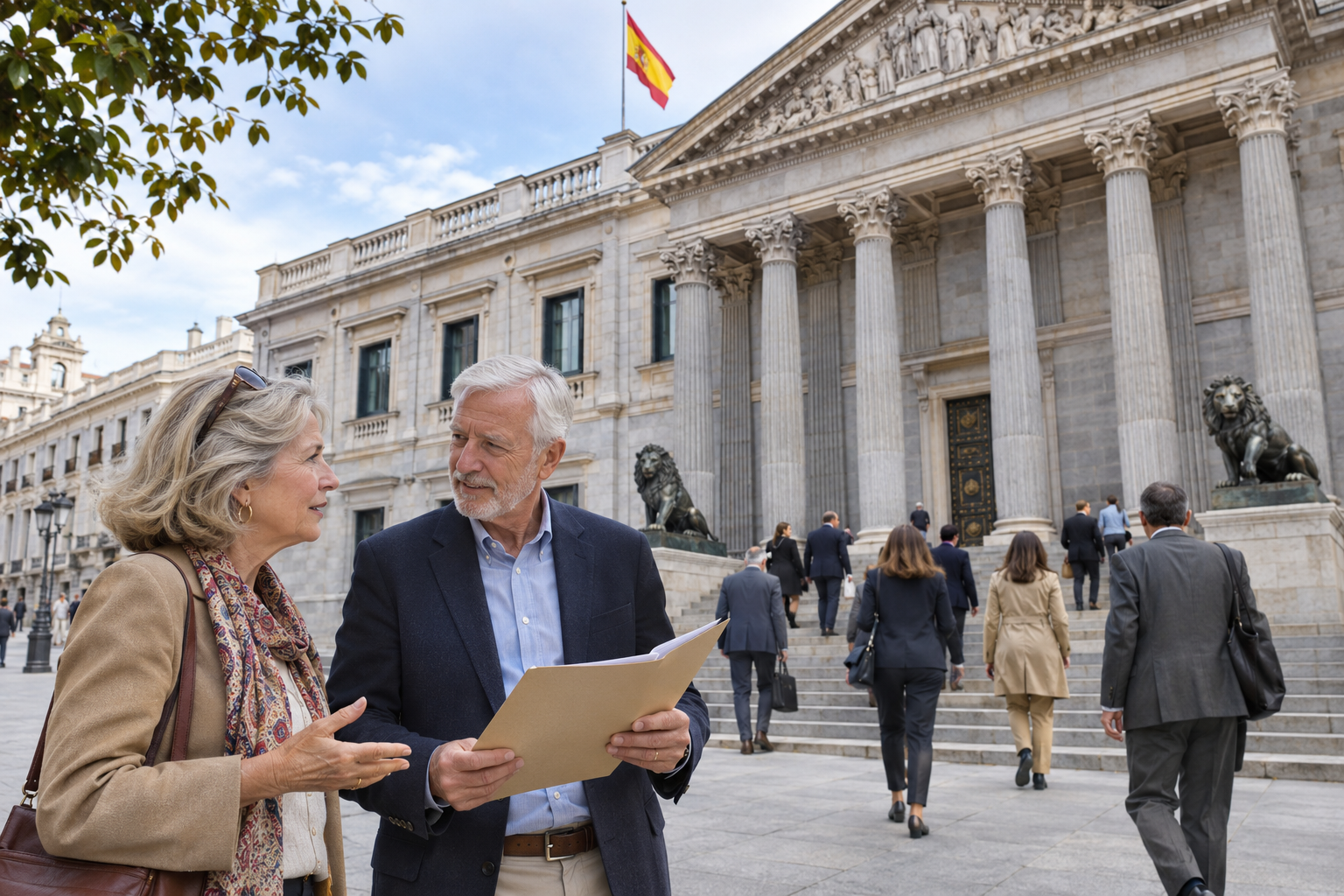
Before the detail, the concept, because it is the whole point. In Spain, as in most countries, the framework that governs foreigners is built in layers. At the top are laws passed by parliament, which are hard to change and change slowly.
Below them are regulations, the decrees that flesh out how the laws actually work in practice, which the government of the day can amend through its own process. And at the working level are administrative decisions and instructions, the day-to-day criteria that ministries and consulates apply, which can shift quickly and quietly.
An election changes who holds the pen at each level, but it does not change how fast each level moves. A new government can start signing administrative changes almost immediately, can revise regulations over months, and can only change laws through the slow machinery of parliament. So when you hear a campaign promise, the first question is not whether you like it but which tier it lives in, because that tells you how quickly and how easily it could ever reach you.
For a non-lucrative visa holder, this matters enormously, because your situation touches all three tiers. The right to live in Spain without working is anchored in law. The specific conditions of your visa live in a regulation.
And the income figure you must prove is pegged to a number that is updated administratively. Knowing which of your worries sits where turns a vague dread into a manageable map.
Tier One: The Rules Written Into Law
The sturdiest layer, the one an election changes most slowly, is the law. The existence of a residence permit for foreigners who live in Spain without working is grounded in Spain’s immigration law, the Ley de Extranjeria, which is an organic law, a category that is harder to pass and amend than ordinary legislation. Alongside it sit constitutional protections and, once you reach it, the body of European Union law that governs long-term residents, which gives rights that a single national election cannot simply erase.
Citizenship rules live at this level too, in the Civil Code, which is why the much-discussed proposal to raise the citizenship language test from A2 to B2 would require legislation rather than a stroke of the pen. That is covered in its own piece, but the principle is the same: anything embedded in law needs parliament to change it, which means drafting, debate, votes, and usually months or longer, and in the case of organic laws, reinforced majorities that a government may not even command.
The practical reassurance here is large. The fundamental right underpinning your residence, and the broad architecture of the immigration and nationality system, cannot be rewritten overnight by a new government, however it campaigned. These are the slow-moving foundations, and they do not shift on a Monday. When a proposal would require changing a law, you can file it under important but not imminent, and watch the legislative process rather than the election-night result.
Tier Two: The Rules in a Decree

The middle layer is where most of the practical detail of your non-lucrative visa actually lives, and it is the layer a government really can change without an election. The specific conditions of the visa, the documents you must provide, the income you must show, the length of each permit and the terms of renewal, are set out in the immigration regulation, the Reglamento de Extranjeria, which is a royal decree rather than a parliamentary law. A government can amend that regulation through its own procedure, and Spain did exactly that with a major overhaul of the immigration regulation that took effect in 2025.
This is the tier that should hold most of your attention, precisely because it moves faster than law and slower than a signature. The income requirement for the non-lucrative visa is the clearest example. It is set as a multiple of a Spanish index called the IPREM: 400 percent of the monthly IPREM for the main applicant, plus 100 percent more for each additional family member. Because it is a formula written into a regulation, it can be changed by changing the regulation, without any election being involved.
The key insight is that a change at this level does not require the election at all. A government of any stripe can revise the reglamento, tighten or loosen the documentation, or adjust how renewals work, through the regulatory process rather than the ballot box. So the honest message is double-edged: your visa’s conditions are more changeable than the underlying law, but that changeability exists regardless of who wins on Sunday, because it has always lived with whatever government is in office. The election changes the hand on the pen, not the fact that the pen can write here.
Tier Three: The Rules a Minister Can Sign on Monday
The fastest-moving layer is administrative, the decisions and instructions that ministries and consulates can issue almost at will, and this is where change can genuinely happen quickly after an election, or without one. The IPREM figure itself is the prime example. It is set annually, through the national budget process, and it has in fact been frozen at 600 euros a month since 2023. If and when it is revised, the income you must prove for your visa moves with it automatically, because your requirement is a multiple of that number, and no immigration vote is needed to make that happen.
Below even that are the working criteria: consular instructions on how applications are assessed, internal guidance on documentation, processing priorities, and the case-by-case discretion that consulates already exercise when they judge whether your means are sufficient. These can shift through administrative notices rather than laws or even formal decrees, which is why two applicants with similar profiles sometimes report different experiences at different consulates. This layer is the quickest to move and the least visible when it does.
The thing to understand is that this administrative layer moves regardless of which bloc wins, because every government runs the same machinery of budgets, instructions, and consular practice. A new minister can indeed adjust criteria quickly, but so could the current one, and much of what happens here, like the annual IPREM, is routine rather than political. So the fast-moving tier is real, but it is not uniquely a product of this election; it is the ordinary background hum of administration that continues whoever is in charge.
What This Means for You on Monday Morning
Put the three tiers together and the picture for a non-lucrative visa holder becomes clear and calm. The morning after the election, your residency card is still valid, your current permit is still governed by the rules that applied when it was issued, and nothing about your legal status has vanished. Spain does not retroactively strip residency because a government changed, and your existing rights are not a campaign casualty.
Changes, when they come, arrive at the speed of their tier. Anything requiring a law, like a new citizenship level, moves slowly through parliament and would not touch a status you already hold. Anything in the regulation, like the visa’s income multiple or documentation, can be revised by a government through the regulatory process, but with lead time and public drafting you can watch for.
And the genuinely fast things, like an IPREM update or a consular criterion, move on their own administrative schedule regardless of who won. Your renewal, when it comes, will be judged under whatever rules are actually in force at that time, which is why knowing your renewal date matters more than knowing the election result.
So the honest answer to what a Spanish election can and cannot change for you is this. It cannot rewrite your legal status overnight, cannot undo the law-level foundations quickly, and cannot retroactively cancel the permit in your pocket. It can, over time and through the proper processes, shift the regulation that sets your visa’s conditions and the administrative numbers you must meet, but much of that could shift under any government anyway. The election sets the direction of travel, not the ground beneath your feet on Monday.
What to Actually Watch

Because the layers move differently, the smart expat watches the right things. Ignore the manifesto as a source of fear and instead watch for enactment. For law-level changes, the place to look is the Boletin Oficial del Estado, where a bill becomes binding only once it is published as law. For your visa specifically, watch for any new version of the immigration regulation, since that is the tier where your conditions actually live and where the 2025 overhaul already showed changes can come.
For the fast-moving numbers, watch the national budget for the annual IPREM, because that quietly sets your income requirement, and watch your consulate’s own published instructions for how applications are being handled. These official sources tell you what has actually changed, as opposed to what a party said it wanted, and the difference between the two is often the difference between a headline and a rule. Following the right layer saves you a great deal of needless worry.
The general discipline is to translate every scary claim into a tier. Is it a law, a decree, or an administrative decision? That single question tells you how fast it could reach you, how hard it would be to enact, and whether it would even touch your existing status. Most of what frightens expats during an election turns out, once sorted, to be slow, conditional, or already within any government’s ordinary power.
What to Do Now
The practical steps are simple and worth taking regardless of Sunday. Keep your documents in order and know your renewal timeline, because your renewal will be judged under the rules in force at that moment, so the date matters. Keep evidence of your income and means current, since the income requirement, whatever its exact figure, is the heart of the non-lucrative visa and the thing most likely to be tested.
Do not make a rushed decision on the strength of a campaign promise, and do not assume your status is suddenly fragile, because neither reaction fits how the tiers actually work. If you have a specific concern, a renewal coming up, a change in your income, a plan to bring family, that is the moment to consult an immigration lawyer or gestor who tracks the regulation and the consular practice in real time, since they will know what has genuinely changed rather than what was merely proposed.
It also helps to keep a small buffer above the income threshold rather than meeting it to the euro, since the figure you must prove is tied to the IPREM and can be revised upward, and consulates weigh sufficiency case by case. A cushion means a routine administrative change, the kind that happens under any government, does not catch you short at renewal. The same logic applies to your paperwork: keeping income evidence, proof of means, and health cover current and well-organized protects you against a tightening of documentation far more reliably than following the election ever could. Preparation at the regulation and administrative tiers is where you actually have control.
And keep the whole thing in proportion. A snap election is dramatic, but your residency rests on layers that mostly move slowly, and the fast-moving parts move for everyone regardless of who wins. Informed and prepared beats anxious and reactive, and for a non-lucrative visa holder, Monday morning will look remarkably like Friday afternoon.
The Bottom Line
What a Spanish election can and cannot change for an American on a non-lucrative visa comes down to three layers that move at three speeds. The law, which anchors your right to live in Spain without working and sits in the organic immigration law and the Civil Code, changes slowly and only through parliament, so it cannot be rewritten overnight and does not undo the permit you already hold. The regulation, the royal decree that sets your visa’s actual conditions and its income formula, can be revised by a government through its own process, as the 2025 overhaul showed, but with lead time you can watch for, and that power exists under any government.
The administrative layer, including the IPREM figure your income requirement is pegged to and the consular criteria that assess you, can move quickly, but it moves on its own schedule regardless of which bloc wins. So the election sets a direction, not a Monday-morning rewrite. Your card stays valid, your status does not evaporate, and your renewal will be judged under the rules actually in force when it comes.
Sort every worry into its tier, watch the Boletin Oficial del Estado and the immigration regulation rather than the manifestos, keep your documents and income evidence current, and get tailored advice for any specific plan. Do that, and a dramatic election becomes what it actually is for a non-lucrative visa holder: a change of government, not a change of the ground beneath you.

About the Author: Ruben, co-founder of Gamintraveler.com since 2014, is a seasoned traveler from Spain who has explored over 100 countries since 2009. Known for his extensive travel adventures across South America, Europe, the US, Australia, New Zealand, Asia, and Africa, Ruben combines his passion for adventurous yet sustainable living with his love for cycling, highlighted by his remarkable 5-month bicycle journey from Spain to Norway. He currently resides in Spain, where he continues sharing his travel experiences with his partner, Rachel, and their son, Han.