
A Greek grandmother’s table is a landslide of vegetables: horta (wild greens) boiled and dressed with olive oil and lemon, briam (roasted summer vegetables), gigantes (baked beans), stuffed tomatoes and peppers, salads, and more, course after plant-heavy course. The traditional Mediterranean way of eating, of which the Greek village diet is a purer form than most, leans heavily on vegetables, far more than the American plate. So I set myself a Greek-grandmother target: seven servings of vegetables a day for thirty days, and I tracked the two things I could actually measure, my grocery bill and my bloodwork. The result was a grocery bill that moved in a more interesting direction than I expected and bloodwork that nudged, modestly and honestly, in a good direction.
This is one person’s month of eating a great many vegetables, with bloodwork on either end, so it is an anecdote with some numbers rather than a trial, and blood results wander for many reasons. But it was a genuinely enjoyable month that changed how I shop and cook. Here is the Greek vegetable tradition, the rule I set, what my grocery bill and bloodwork did, what the evidence says, the practical lessons, and whether I kept it up. This is a personal experiment and general information, not medical or dietary advice.
The Greek Vegetable Tradition, and the Rule I Set
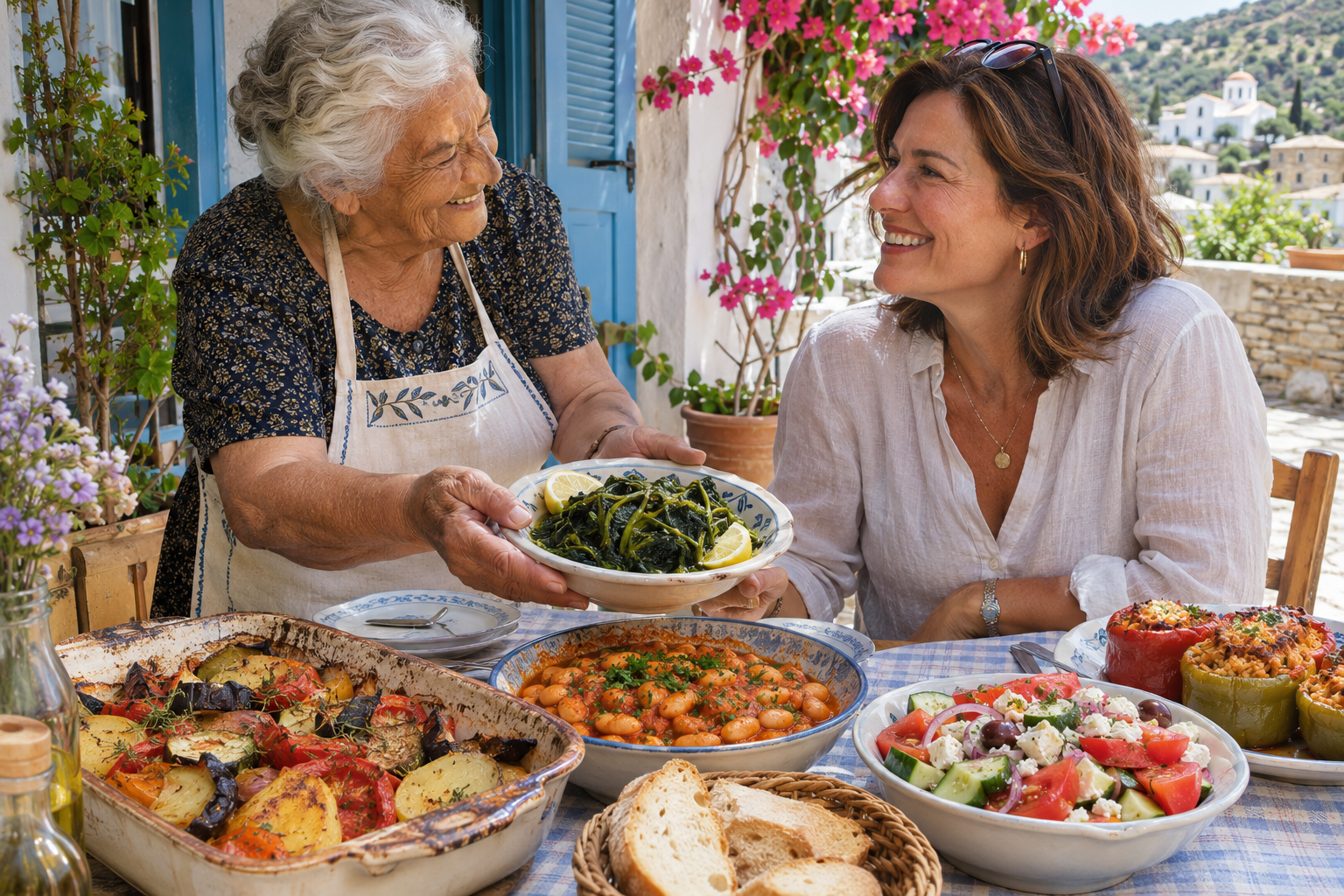
The traditional Greek and broader Mediterranean diet is strikingly vegetable-heavy, built around greens, legumes, tomatoes, peppers, eggplant, courgettes, onions, and herbs, dressed in olive oil, with meat playing a smaller and more occasional role than it does on the American plate. The archetypal Greek grandmother cooks horta, briam, bean stews, stuffed vegetables, and vast salads, so that vegetables are not a side but the center of the meal. This way of eating is one of the most consistently health-associated diets in the world.
The target of seven servings a day is ambitious by American standards, where many people struggle to reach the commonly cited five, but it is realistic within a genuinely Mediterranean pattern where vegetables anchor every meal. Hitting seven forces vegetables into breakfast, lunch, dinner, and snacks, which is exactly the shift from the American meat-and-starch default toward the Greek plant-forward one. The number was chosen to push me firmly into grandmother territory.
My rule was to eat seven servings of vegetables a day for thirty days, counting a serving roughly as a cup of raw or half a cup of cooked vegetables, spread across the day and cooked largely in the Mediterranean style with olive oil, herbs, and lemon. I had bloodwork drawn before and after, including the lipid panel and other routine markers, and I tracked my grocery spending through the month. Seven vegetables a day, Greek style, for a month, bookended by blood tests and watched at the checkout.
Week One
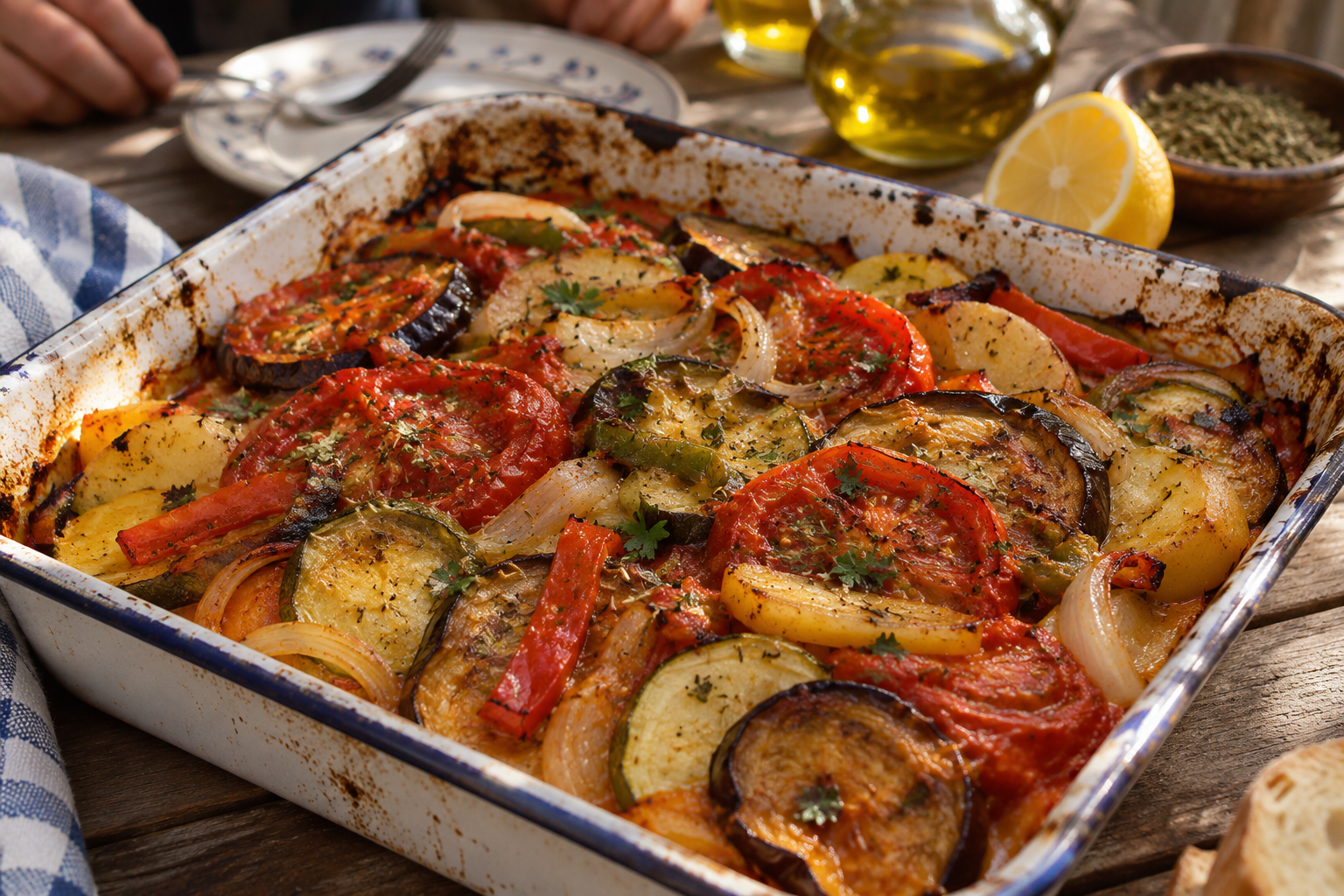
The first week was a lesson in just how many vegetables seven servings actually is, because reaching that number takes real intention, and I had to build vegetables into every meal and snack rather than treating them as an occasional side. Breakfast needed a vegetable, lunch needed two or three, dinner carried the bulk, and I snacked on raw vegetables to top up, which was a genuine change in how I structured eating. The target demanded planning from day one.
Cooking the Greek way made the volume achievable and enjoyable, because Mediterranean vegetable cookery, greens with olive oil and lemon, roasted vegetable medleys, bean stews, big salads, makes vegetables genuinely delicious rather than a chore, so I was eating them with pleasure rather than grimly. The olive oil, herbs, and lemon turned the seven servings from a dutiful quota into food I actually wanted, which was essential to sustaining it. Without the Greek flavors, seven servings a day would have been a slog.
I noticed early that all those vegetables were filling and satisfying, the fiber and volume keeping me full, which meant I naturally ate less of other things, less meat, less starch, less processed food, simply because the vegetables crowded them out. This crowding-out effect, I suspected, was going to matter for both the bloodwork and the grocery bill, since eating more vegetables meant eating less of everything else. The vegetables were quietly reshaping the whole diet, not just adding to it.
What It Did to My Grocery Bill
The grocery-bill effect was the interesting surprise, because I had assumed eating far more vegetables would cost more, and the reality was more nuanced: my spending on vegetables rose, but my spending on other things, meat, processed foods, snacks, fell, because the vegetables crowded them out, so the net change in my bill was smaller than expected. The total did not balloon the way I had feared, and some weeks it was roughly flat. Vegetables replaced costly items as much as they added cost.
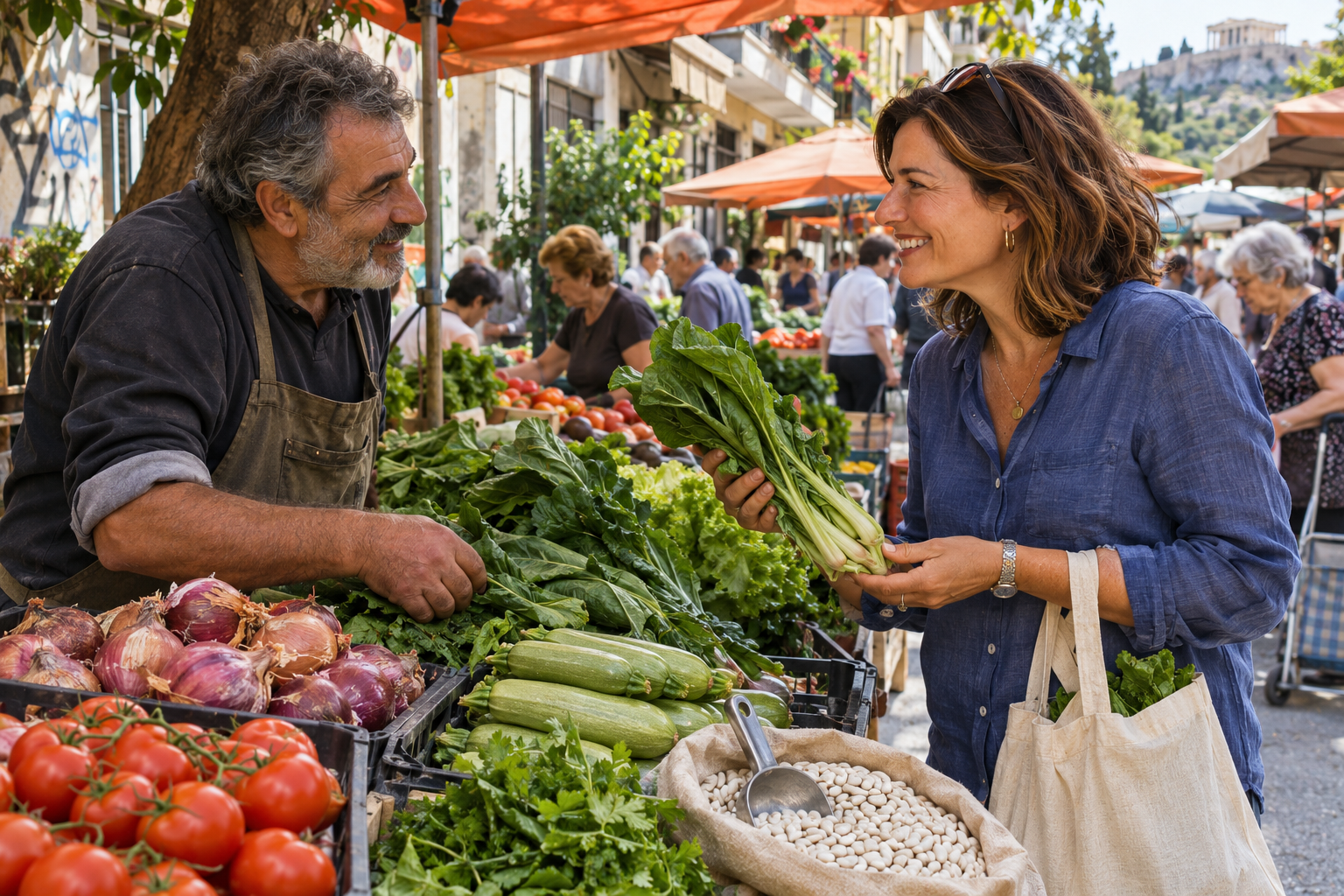
The key was what kind of vegetables and cooking, because the Mediterranean staples that anchor this way of eating, seasonal vegetables, dried beans and legumes, greens, onions, tomatoes, are among the cheapest food there is, especially bought in season and cooked from scratch. Eating like a Greek grandmother means eating cheap peasant food, not expensive specialty produce, so the vegetable-heavy diet is economical when done traditionally, with legumes in particular delivering huge nutrition for very little money. The cost depends entirely on shopping the humble, seasonal, dried-and-fresh staples rather than pricey pre-cut or exotic produce.
So the honest grocery lesson is that a seven-vegetable-a-day diet need not cost more, and can even cost about the same or a little less, if you eat the cheap seasonal vegetables and legumes at its traditional heart and cut the more expensive meat and processed foods it displaces. My bill ended the month roughly level, with its composition transformed, more produce and beans, less meat and packaged food. Eating more vegetables, done the peasant way, is not the luxury it is sometimes assumed to be, which was a genuinely useful thing to learn.
What It Did to My Bloodwork
On the bloodwork, the before-and-after comparison showed modest improvements, with my lipid panel looking a little better and some other routine markers nudging favorably, consistent with what a month of vegetable-heavy Mediterranean eating would be expected to do. The changes were small, as one month in one person will give, but they pointed in the right direction across several markers, which was encouraging. The diet seemed to be doing quietly good things to my blood.
The likely drivers are exactly what the Mediterranean diet research would predict, more fiber, more vegetables and legumes, more olive oil, and less meat and processed food, a combination repeatedly associated with better cardiovascular markers. My improvements were almost certainly the result of the whole dietary shift, not vegetables in isolation, since eating seven servings a day meant eating less of the things that push the numbers the wrong way. The bloodwork reflected a better overall pattern of eating, with vegetables at its center.
As always I have to be cautious about one month and one person, because blood markers fluctuate with many factors and a single before-and-after is suggestive at best, so I present my modest improvements as consistent with the science rather than as proof of anything. They could be partly noise, and a longer, more controlled test would be needed to say more. But the direction was good, the mechanism was plausible, and the result fit decades of evidence on Mediterranean eating, which is about as much as an honest n-of-one can claim. My numbers leaned the right way, and I hold that loosely.
What the Evidence Says
The Mediterranean diet, of which this vegetable-heavy Greek pattern is a core expression, is one of the most robustly evidence-supported ways of eating in the world, consistently associated in large studies with better cardiovascular health and other benefits, so the premise of the experiment rests on unusually solid ground. Eating lots of vegetables, legumes, and olive oil, with less meat and processed food, is about as close to a consensus healthy diet as nutrition science offers. My experiment was testing a genuinely well-founded idea.
The specific target of seven servings sits at the ambitious end of vegetable recommendations, and while the exact number matters less than the overall pattern, eating more vegetables is reliably associated with better health, and few people eat too many. The evidence supports the direction strongly, more vegetables, more plants, more fiber, even if the precise count is less important than the habit. So pushing toward seven is a sound way to ensure you are genuinely eating a vegetable-rich diet rather than just topping up.
So the evidence-based takeaway is thoroughly positive: eating a vegetable-heavy Mediterranean diet is well supported for health, economical when built on cheap seasonal vegetables and legumes, and my modest bloodwork improvements are exactly what you would hope for, even if one month proves little. This is one of the rare experiments where the tradition, the evidence, and my own results all point the same way. Eating like a Greek grandmother is, by the numbers, a genuinely good idea.
The Legumes Were the Secret Weapon
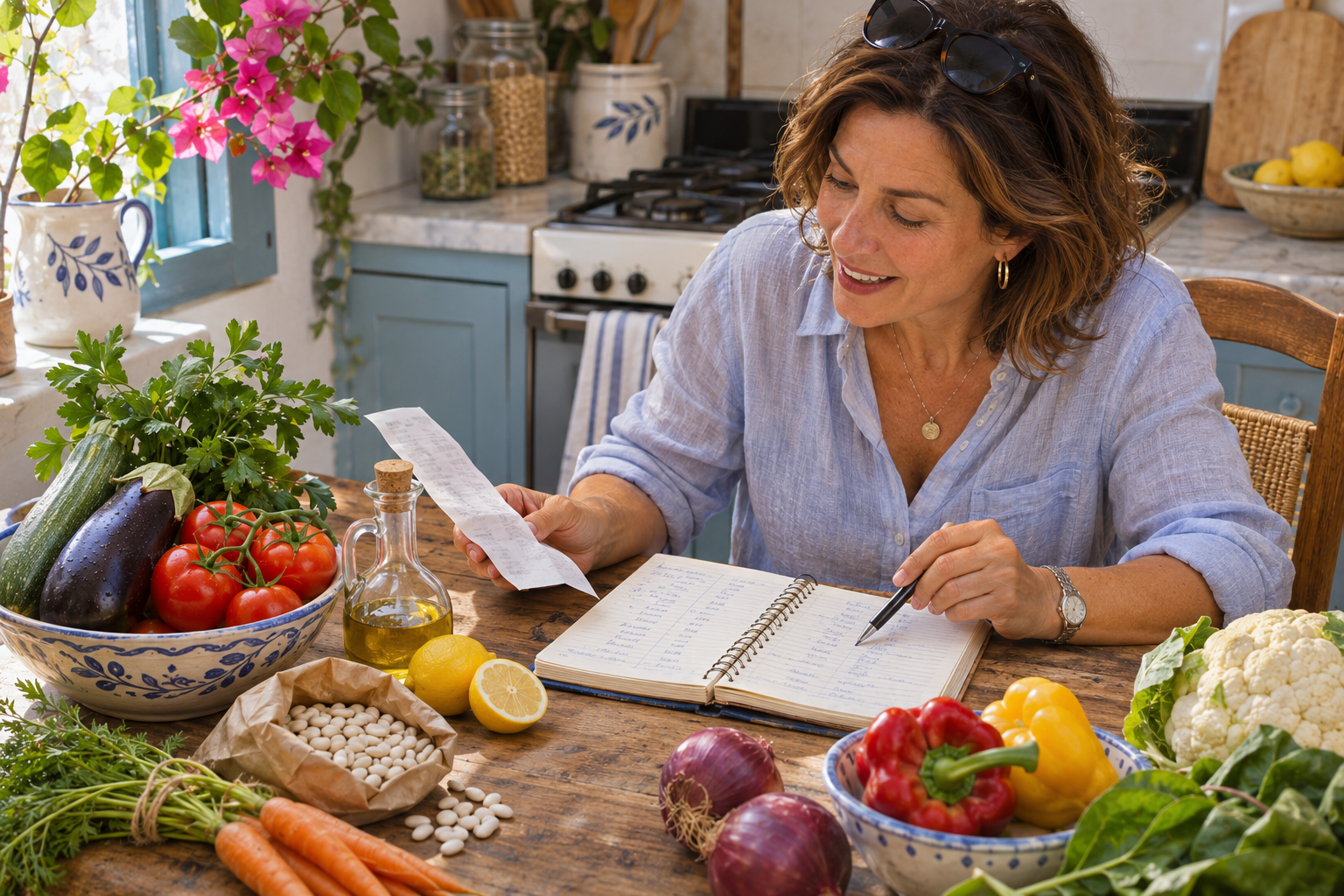
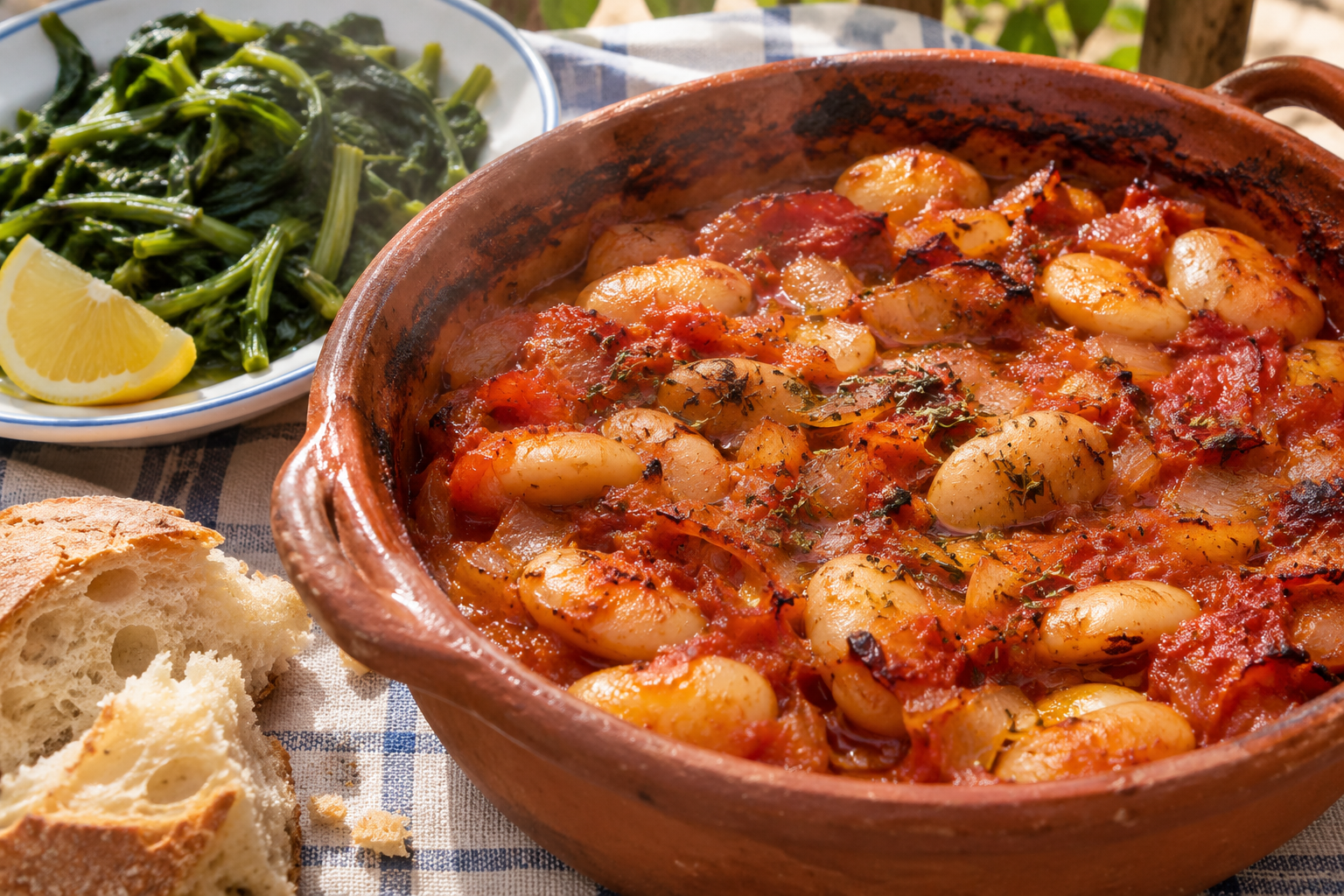
If one thing made the whole experiment work, financially and nutritionally, it was legumes, the dried beans, lentils, and chickpeas that anchor the Greek and broader Mediterranean table and that turned out to be the quiet hero of my month. Gigantes (big baked beans), lentil soups, and chickpea stews delivered enormous nutrition, fiber, and satiety for almost no money, and they counted toward my vegetable servings while filling the gap that a smaller meat portion left. The beans were what made seven servings a day both affordable and filling.
Cooking dried legumes from scratch, I rediscovered, is cheap almost to the point of absurdity, a bag of dried beans costing very little and yielding meal after meal, which is exactly why they anchor peasant diets around the world. The small effort of soaking and simmering them was repaid many times over in cost, nutrition, and flavor, and a big pot of bean stew became a staple that stretched across days. The economy of legumes is the economy of the whole Mediterranean diet in miniature.
They also solved the protein question that a vegetable-heavy diet raises, because as I ate less meat, the legumes supplied plant protein alongside their fiber, keeping me full and nourished without the cost or the saturated fat of a meat-centered plate. The Greek grandmother’s reliance on beans is not an accident but a wise adaptation, getting abundant cheap protein and fiber from the ground rather than from expensive animals. Leaning on legumes let me cut meat without feeling any lack.
So my strongest practical tip from the month, above all the others, is to make legumes the foundation, because they are what makes a vegetable-heavy diet cheap, filling, nutritious, and sustainable rather than an expensive exercise in buying fresh produce. Learn a few good bean and lentil dishes, cook them from dried, and the whole way of eating falls into place around them. The Greeks and the wider Mediterranean figured this out centuries ago, and a month of eating their way taught me that the humble bean is the real engine of the diet.
The Practical Lessons and the Verdict

The practical lessons from the month are useful. Reaching seven servings takes intention and structure, building vegetables into every meal and snack, and it is far easier and more enjoyable cooked the Mediterranean way with olive oil, herbs, and lemon than eaten plain, so the flavor is what makes the volume sustainable. Leaning on cheap seasonal vegetables and legumes keeps the cost down and the nutrition up, and makes the whole thing affordable rather than a luxury. These two lessons, flavor and cheap staples, are the keys to making it stick.
My verdict after thirty days is an enthusiastic yes, and I have kept eating far more vegetables than I used to, though I have relaxed from the strict seven-a-day count to a looser but still vegetable-centered pattern, because the diet was delicious, satisfying, economical, and apparently good for my blood. Eating like a Greek grandmother turned out to be one of the most positive and sustainable changes of all my experiments, with benefits across taste, cost, satiety, and health. It is a way of eating I am happy to continue indefinitely.
So I recommend it warmly and without the usual heavy skepticism, because here the evidence is strong and my experience matched it: eat more vegetables, cook them the Mediterranean way, lean on cheap seasonal produce and legumes, and you will likely eat well, spend sensibly, and nudge your health in a good direction. Aim high, toward seven servings, even if you land at five, and let vegetables anchor your plate the way they anchor a Greek grandmother’s. Of everything I tried, this is the one I would most readily tell anyone to adopt, and the numbers, the cost, and the pleasure all agree. Discuss any significant dietary change and your bloodwork with your doctor, but know that the direction here is as well founded as nutrition gets.
If I had to distill the month into a single piece of advice, it would be to cook from the bottom of the market, the cheap seasonal vegetables, the dried beans and lentils, the greens and onions and tomatoes, dressed in olive oil and cooked with a little care, because that humble peasant food is both the healthiest and the most economical way to eat. The Greek grandmother was never trying to follow a celebrated diet; she was feeding a family well on very little, and the health benefits came along for free. That, more than any serving count or blood marker, is the real discovery of the month, that eating extremely well and eating cheaply are not opposites but, done the Mediterranean way, very nearly the same thing. I went looking for a health experiment and found a way of eating I expect to keep for the rest of my life, which is more than I can say for any of the others.

About the Author: Ruben, co-founder of Gamintraveler.com since 2014, is a seasoned traveler from Spain who has explored over 100 countries since 2009. Known for his extensive travel adventures across South America, Europe, the US, Australia, New Zealand, Asia, and Africa, Ruben combines his passion for adventurous yet sustainable living with his love for cycling, highlighted by his remarkable 5-month bicycle journey from Spain to Norway. He currently resides in Spain, where he continues sharing his travel experiences with his partner, Rachel, and their son, Han.