
They wanted Italy, but they could not afford the Italy of the postcards, the Tuscany and the Amalfi coast that cost a fortune. So they found the other Italy, the one Americans rarely hear about, and retired to a mountain village in Abruzzo, the rugged region in the center of the country, east of Rome, where medieval stone villages sit under the Apennine peaks and a couple can live cheaply, authentically, and well. With about $95,000 in savings, two pensions, and a village home about two hours from Rome, they built exactly the Italian life they had dreamed of. Three years in, their money has held up remarkably, helped by a tax break few people know about, and they have learned the one hard truth about a mountain village that the dream never includes: the winter road.
This is an illustrative case, a composite of the Americans quietly retiring to Italy’s affordable mountain interior, offered to show both the money, including that tax break, and the hard edge of mountain life. Abruzzo is one of the best-value ways to live in Italy and a genuinely beautiful, authentic place, which is why their story is worth telling, and the winter is a real and underdiscussed cost of a village in the mountains. Here is why they chose it, how their balance looks at year three, and the winter road nobody warned them about. This is general information, not financial, tax, or legal advice, and figures and rules are illustrative and current as of 2026.
Why Abruzzo
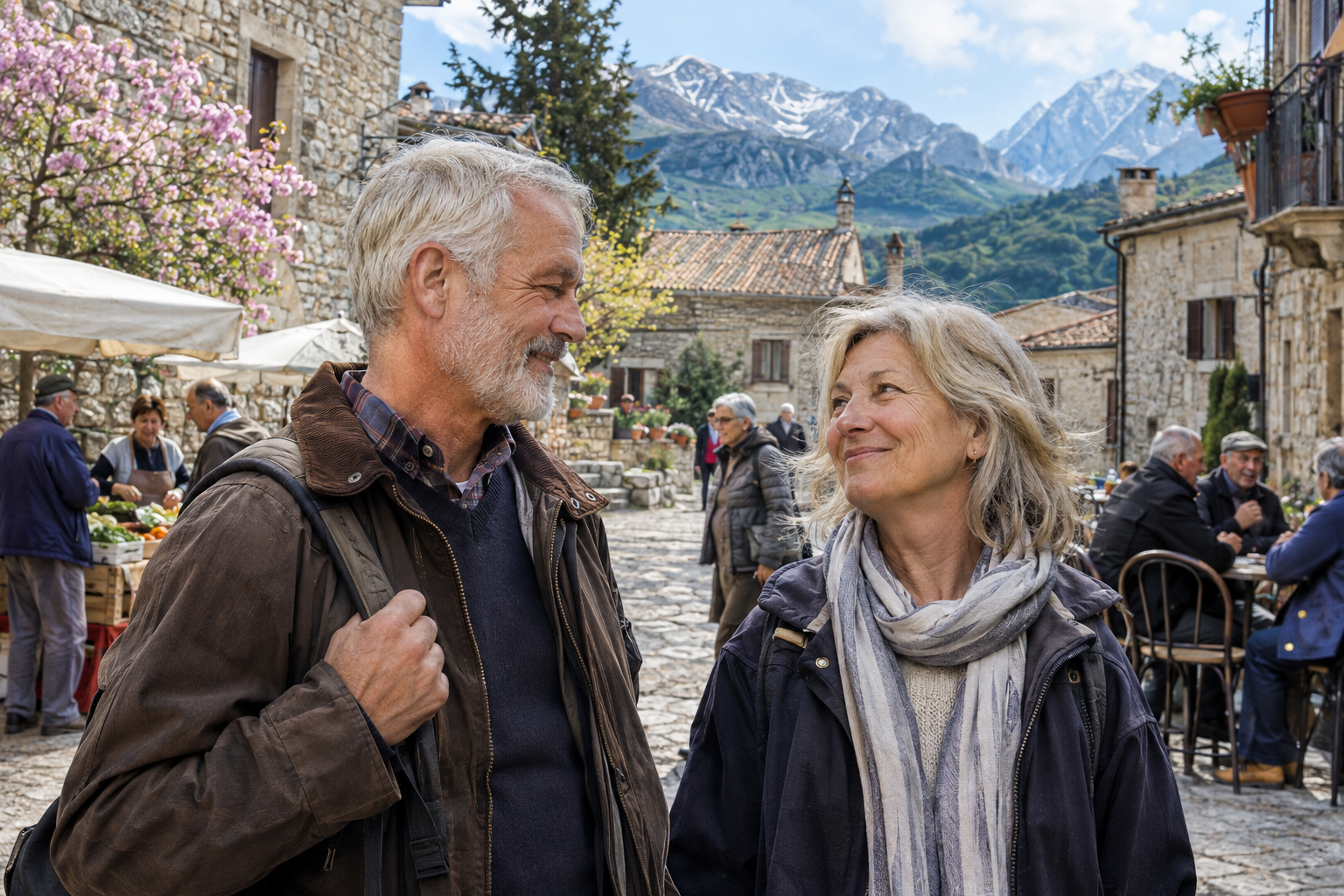
Their reasoning was that of a couple who wanted real Italy at a price they could manage, and Abruzzo answered perfectly. It is dramatically cheaper than the famous regions, with property and rents so low that the much-publicized one-euro-house towns are nearby, and daily costs well below both American and touristy-Italian levels, so their modest means stretched into a comfortable life. The affordability was the foundation, the thing that made Italy possible for a couple who could never have bought into Tuscany.
It is also genuinely beautiful and authentic, a region of mountains, national parks, hilltop stone villages, and traditional rural life, with the Gran Sasso and the Apennines as a backdrop and a slow, local, deeply Italian rhythm far from the tourist crowds. They wanted the real country, the village square and the local market and the sense of living in Italy rather than visiting it, and Abruzzo gave them that in full, an unspoiled Italy of mountains and tradition that the postcard regions have largely lost.
And crucially, it is close to Rome, about two hours away, which mattered more than it might seem. The proximity to a major city and its international airport meant they were not truly cut off, that they could reach flights home, big-city healthcare, and the wider world when they needed to, which made the remote village feel accessible rather than isolated, at least on paper. Cheap, beautiful, authentic, and within reach of Rome, Abruzzo offered the Italian dream at a fixed-income price, and they took it.
The Tax Break Few People Know About

Part of what makes their money work is a tax regime that almost no American has heard of, and it is worth explaining because it is a genuine draw for exactly this kind of move. Italy offers a 7 percent flat tax on all foreign income, pensions, Social Security, investments, everything from abroad, to new foreign retirees who move to qualifying small towns in the country’s south and center, including many villages in Abruzzo. For up to a decade, a retiree’s entire overseas income can be taxed at just 7 percent, which for a couple living on pensions is a remarkable deal.
The catch, and the reason it steers people to places like Abruzzo, is the village rule: the regime applies only to those who move to qualifying towns, generally small ones under a certain population threshold, in the eligible southern and central regions, which is exactly the kind of cheap mountain village this couple chose. So the tax break and the affordability point to the same destinations, the small authentic towns of the interior south, which is part of why Abruzzo and its neighbors have quietly become a smart choice for tax-aware retirees. The village that is cheap to live in is often also the village that unlocks the 7 percent rate.
The important honest note is that this regime has conditions and complexities, eligibility rules, the village requirement, interactions with the American tax system that always follow a US citizen, and it should never be planned around without professional cross-border tax advice. It is a real and valuable benefit, and it genuinely helped this couple’s numbers, but it is not automatic or simple, and anyone drawn to it must get proper guidance rather than assume it applies. With that caveat firmly in place, the 7 percent flat tax is one of the genuine and underappreciated financial attractions of retiring to the right Italian village.
The Balance at Year Three
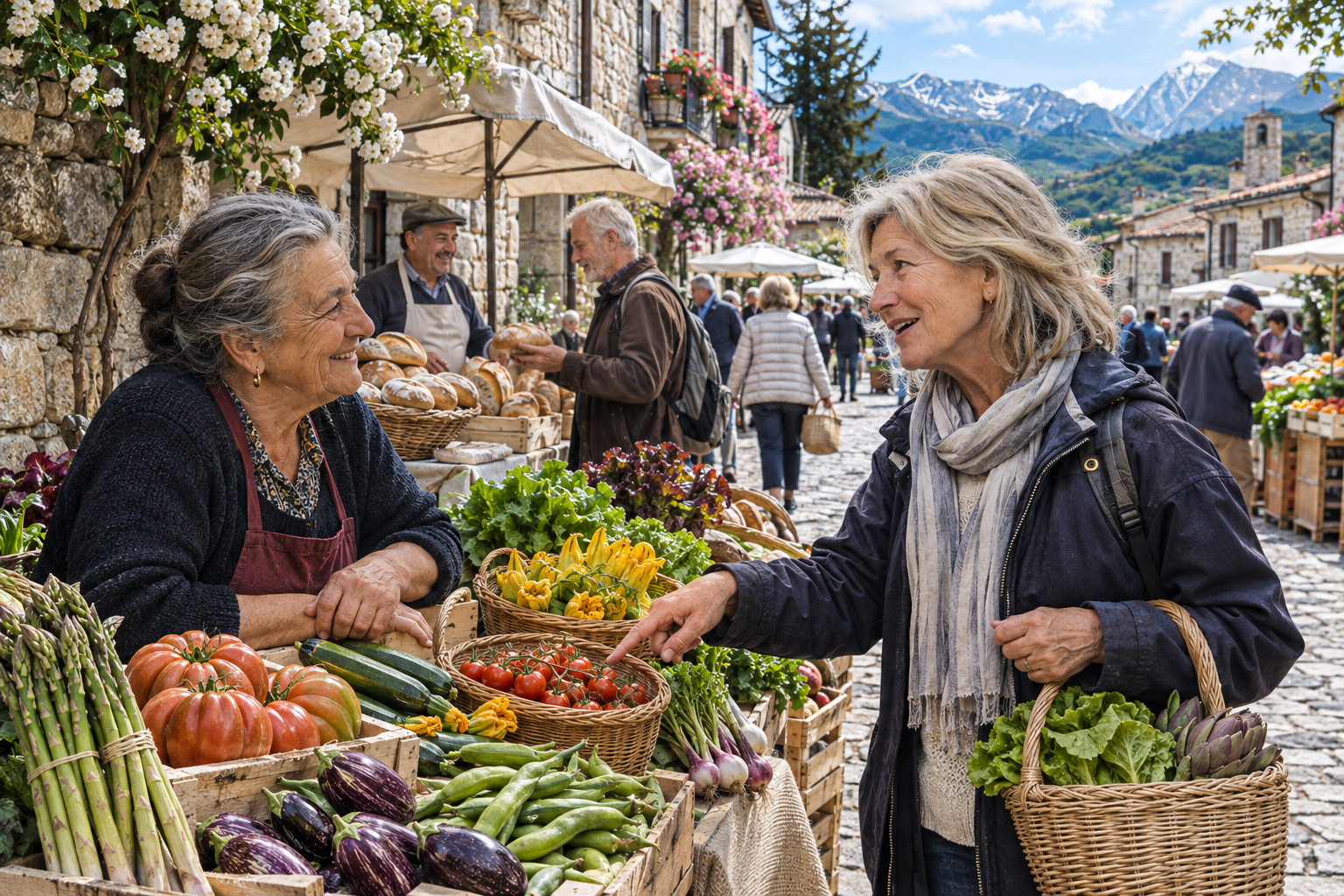
The money has held up strikingly well, which is the combined result of cheap living and the low tax. After three years their $95,000 was largely preserved, drawn down only modestly, because Abruzzo’s very low cost of living meant their two pensions covered their daily life comfortably and the favorable 7 percent tax left more of that pension income in their pockets. The two forces together, low costs and low tax, kept the savings as a cushion rather than a fund they spent down.
The comparison with a pricier Italian region makes the point. Had they chosen Tuscany or a tourist town, higher property costs, higher daily prices, and ordinary taxation would have pressed hard on their income and eaten into their savings, whereas the cheap village plus the 7 percent rate let them live the Italian dream while barely touching their capital. Their choice of the affordable, tax-favored interior was not just a matter of taste but of financial survival, and it delivered a comfortable Italian retirement on modest means with the nest egg intact.
As always, the good balance rests on their modest village life, the local markets, the cheap rural costs, the simple pleasures, rather than an imported expensive lifestyle, and Abruzzo rewards exactly that kind of living. They lived like their neighbors, cheaply and locally, and the region let that simple life be rich, which is the model that makes interior Italy such good value. For a couple content with a quiet mountain village life, Abruzzo plus the tax break delivered a genuinely affordable Italian retirement with the savings preserved, which is an excellent financial result.
The Winter Road
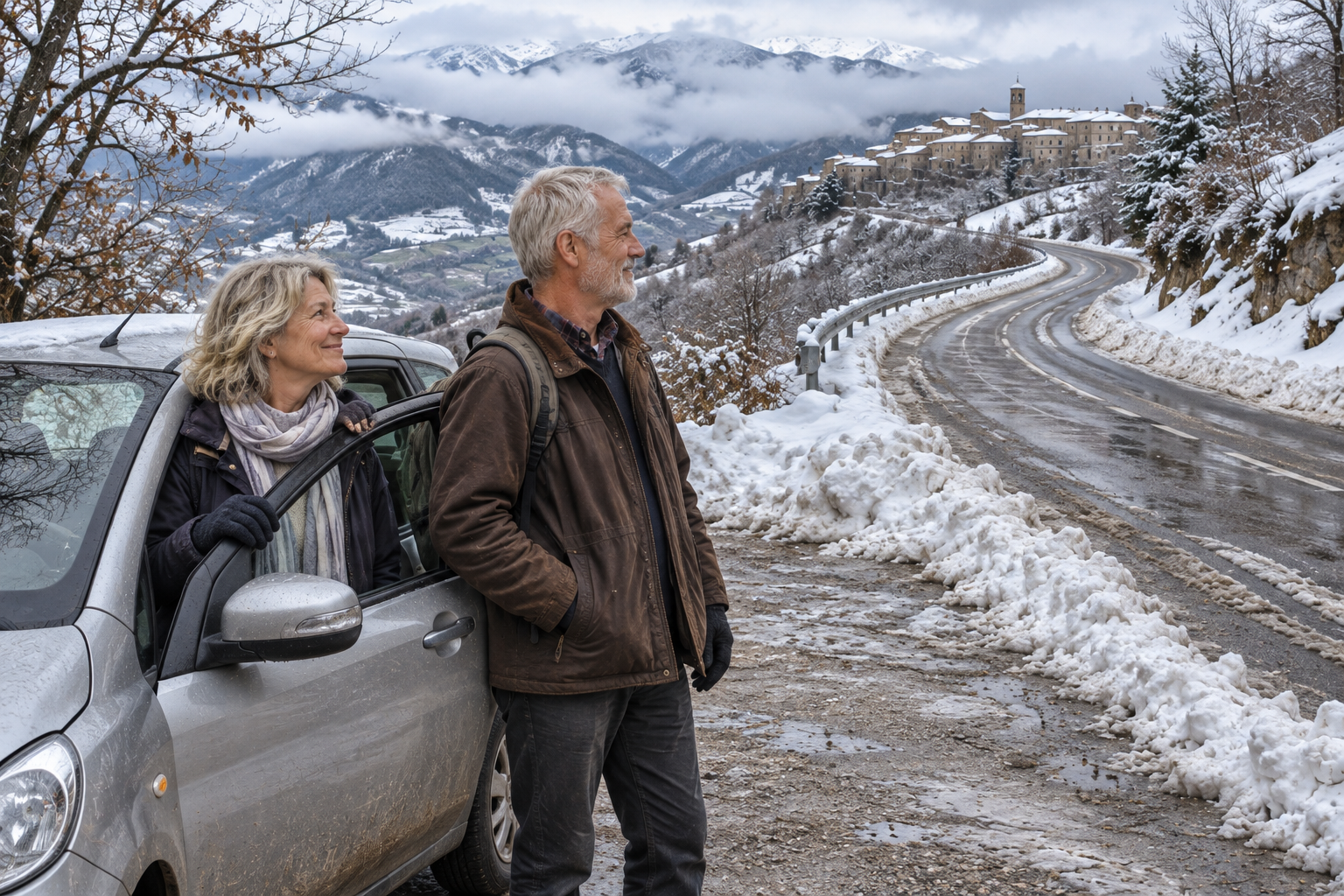
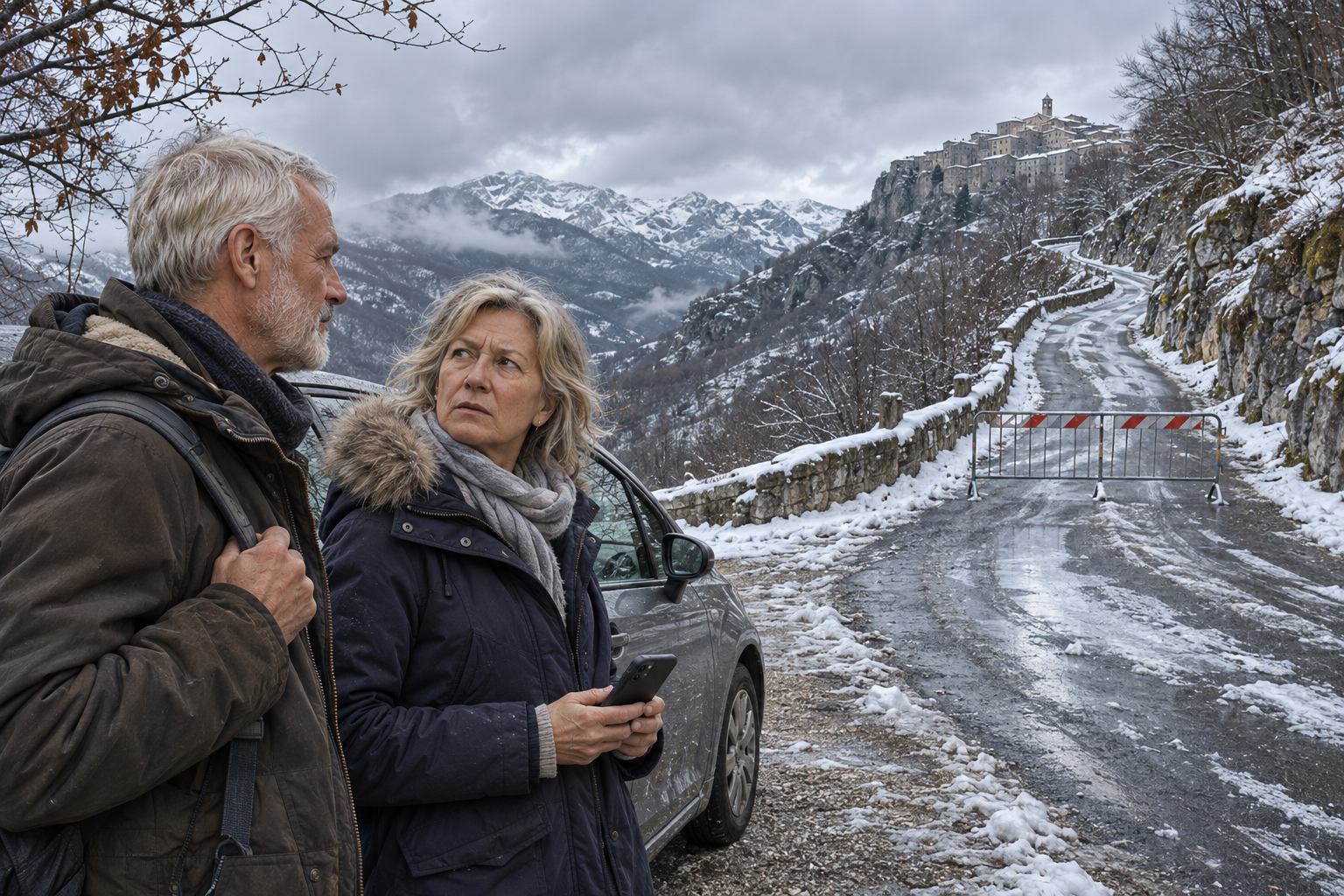
And then there is the winter, the hard truth the mountain dream never mentions. Abruzzo is mountainous, and its villages sit high among the Apennine peaks, which means real mountain winters, cold, snowy, and long, utterly unlike the mild Mediterranean Italy of the imagination. The same mountains that make the region beautiful in summer bury it in snow in winter, and the couple’s idyllic village becomes, for months, a cold and snowbound place.
The specific hard part is the road. That comforting two-hour drive to Rome, and even the shorter drives to the nearest town, hospital, and services, become difficult and sometimes impassable in winter, when snow and ice close mountain roads or make them slow and dangerous, so the accessibility that looked so reassuring on the map shrinks dramatically in January. The village that is two hours from Rome in summer can feel genuinely cut off in a hard winter week, and the couple learned that the winter road is the true measure of a mountain village’s isolation, not the summer one.
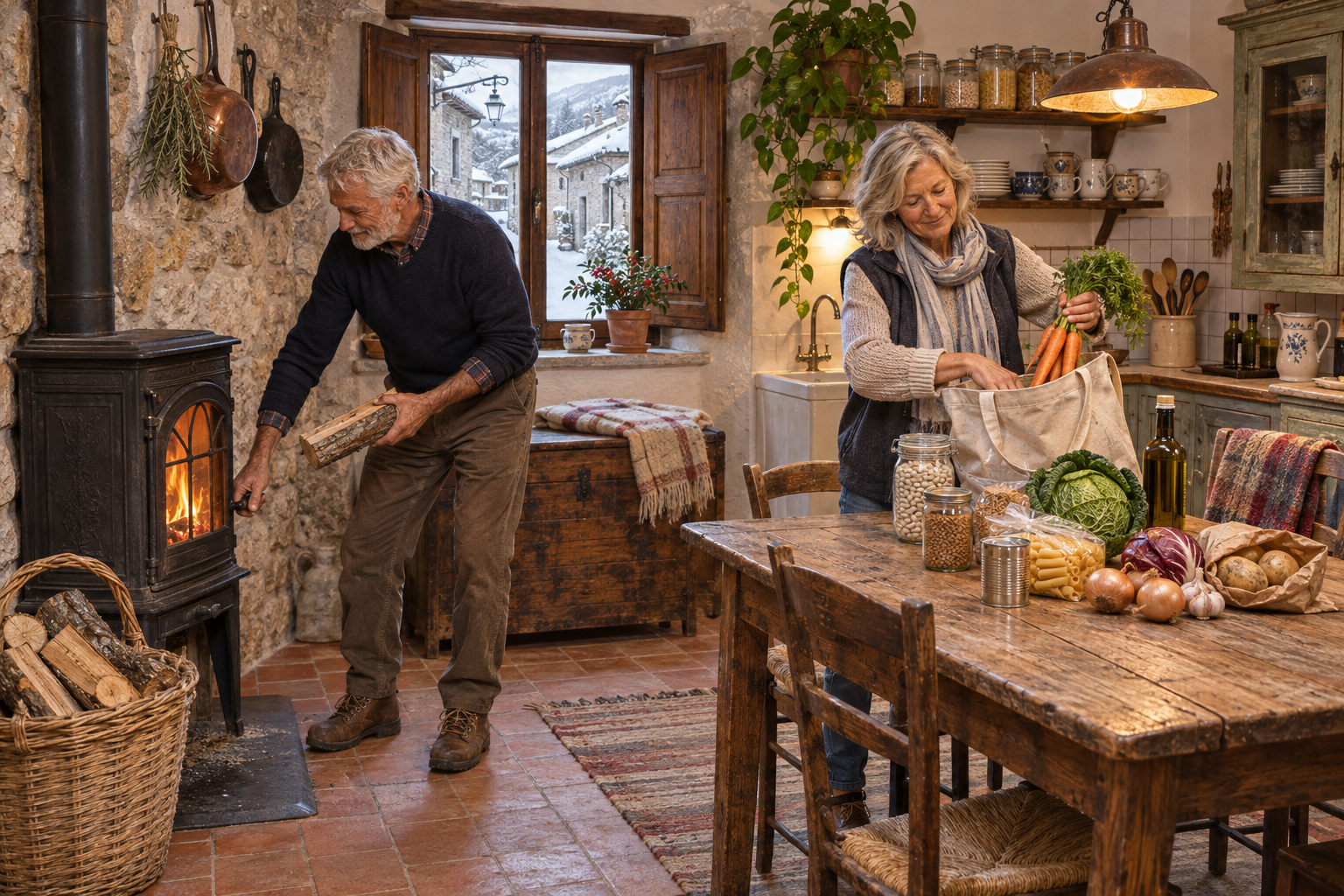
The winter also empties and quiets the village, as the cold sets in and life turns inward, so the social warmth and the bustle of the warmer months give way to a long, still, snowbound season that tests a newcomer’s resolve. They have come to manage it, stocking up, planning around the weather, accepting the slower winter rhythm, and they do not regret the move, because the other three seasons are glorious and the winter is survivable. But they are honest that the mountain winter, and especially the winter road, is the real price of the cheap beautiful village, and that anyone drawn to the Apennine dream must reckon with the season when the snow closes in and the road to Rome is no longer two easy hours.
The Caveats, Especially About Aging
Beyond the winter, the couple flags a set of caveats that matter more the longer you think about them, and the first is aging in place. A remote mountain village with bad winter roads and distance from major hospitals is a wonderful place to be a fit sixty-something and a harder place to be a frail eighty-something, when access to healthcare and the ability to get out in all weather become critical. They are clear-eyed that the village suits them now but may not suit them later, and that a mountain retirement needs an honest plan for the years when the isolation and the roads become a real problem.
The ordinary rural caveats apply in full too: they depend entirely on a car, the village has thin local services so they travel for specialist healthcare and larger shopping, and rural Abruzzo has little English, so real Italian has been necessary and the expat community is small and scattered. These are the familiar costs of authentic rural life anywhere, and the couple accepted them knowingly, but they are real, and a person unwilling to drive mountain roads, manage with less English, or live far from services would struggle where this couple has thrived.
Taken together, the caveats say that Abruzzo’s gifts, the low cost, the beauty, the authenticity, the tax break, come bundled with genuine demands, the winter, the isolation, the car dependence, the distance from care, and the long-term question of aging. The move is sound for a couple who truly want mountain village life and can handle its hard edges, now and with a plan for later, and unwise for one seduced by the summer dream without reckoning on the winter road and the years ahead. This couple reckoned honestly and chose well for their stage of life, which is exactly the judgment anyone drawn to the mountains must make.
Choosing the Right Village
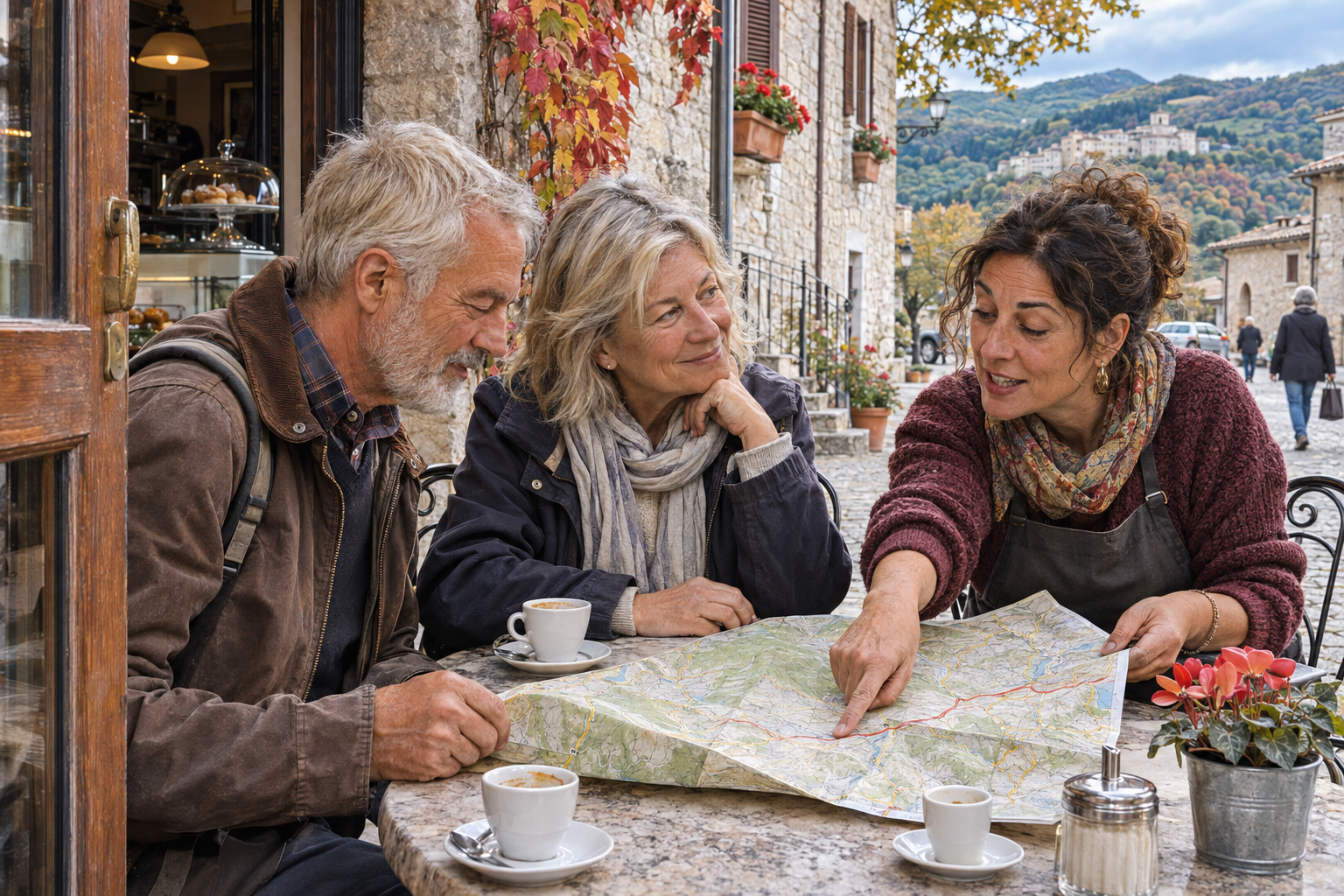
Their experience taught them that in Abruzzo, as in any mountain region, which village you choose matters enormously, and the choice is a balance between remoteness and access. The most isolated, highest, cheapest villages are the most romantic and the most affordable, but also the hardest hit by winter and the furthest from services, while a village a little lower, a little larger, or a little closer to a town and its hospital trades some cheapness and solitude for real practicality. Getting that balance right is the single most important decision in a mountain move.
They chose a village that was authentic and cheap but not the most remote, close enough to a town for services and to the main road for the drive to Rome, which has made their winters hard but not impossible and their daily life workable rather than cut off. A couple who chase the very cheapest, most isolated one-euro-house village without weighing the winter and the distance from care can find themselves trapped in beauty, so the lesson is to let practicality temper romance in the choice. And since the 7 percent tax depends on the village qualifying, the selection has to satisfy that rule too, which is one more reason to choose the specific town carefully and with advice rather than falling for the first pretty ruin. The right village is the one that balances cheapness, beauty, winter survivability, access to care, and tax eligibility, and finding it is worth real effort.
The Seasons That Earn the Winter
It is only fair to say that the hard winter buys three glorious seasons, which is why the couple stay and would choose Abruzzo again. Spring brings the mountains alive with green and wildflowers, summer is warm and bright but tempered by the altitude, cooler and more bearable than the baking lowlands, and autumn is long, golden, and spectacular across the Apennine slopes. For most of the year the village is exactly the idyll the dream promised.
That is the honest balance they strike. The winter and its road are a genuine, serious cost, worth every word of warning, but they are the price of a mountain life that is beautiful and cheap and authentic for the other nine months, and the couple judge the trade well worth it. The point is not that the winter is minor, it is that it is one hard season set against three lovely ones, and a clear-eyed newcomer should weigh both halves rather than being sold only the summer or scared off only by the snow.
What Their Story Shows
Their three years in Abruzzo offer clear lessons. The first is that the affordable, overlooked Italy is real, that a couple who cannot afford Tuscany can still live the Italian dream beautifully in the cheap authentic interior, and that regions like Abruzzo offer genuine Italy at a fixed-income price for those willing to look past the postcards. The dream is not only for the rich, it is for those who choose the right, unglamorous region.
The second is that the 7 percent tax break is a genuine and underused draw, a real financial advantage for foreign retirees willing to live in the qualifying small towns, which happen to be exactly the cheap authentic villages worth living in anyway, though it must be approached with proper professional advice and never assumed. For a tax-aware retiree, the combination of low costs and low tax in an Italian village is one of the best financial propositions in European retirement, and far too few Americans know it exists.
The third is that the mountains ask a hard price in winter and in time, that the beauty and cheapness of a high village come with real snow, real isolation, a winter road that cuts the easy link to the world, and a long-term question about aging in a remote place. The lesson is to love the mountain dream with open eyes, to research the winter as carefully as the summer, to plan for the frail years as well as the fit ones, and to choose the village only if you genuinely want its hard seasons along with its glorious ones. This couple did, and found a rich, affordable, authentic Italian retirement among the Apennines, snow, winter road, and all.

About the Author: Ruben, co-founder of Gamintraveler.com since 2014, is a seasoned traveler from Spain who has explored over 100 countries since 2009. Known for his extensive travel adventures across South America, Europe, the US, Australia, New Zealand, Asia, and Africa, Ruben combines his passion for adventurous yet sustainable living with his love for cycling, highlighted by his remarkable 5-month bicycle journey from Spain to Norway. He currently resides in Spain, where he continues sharing his travel experiences with his partner, Rachel, and their son, Han.