
Most big retirement costs at least have the decency to be visible. The car payment is sneakier, because it does not feel like a retirement cost at all, it feels like a normal part of life, the thing everyone pays, the monthly charge that has been leaving the account for as long as anyone can remember. And that is exactly the problem, because for a great many Americans the car payment never stops, it simply follows them across the line into retirement, where a monthly bill of around $700 keeps carving into a fixed income long after the paycheck that used to absorb it has ended.
Europeans, by and large, do not do this, and the difference is not really about cars at all. It is about whether you walk into retirement owing money on a depreciating machine, or owning it free and clear.
This is a specific and underappreciated piece of the retirement math, different from the general question of whether to own a car or how long to keep one. It is about the payment itself, the financing, and what it does to a budget once the income stops growing. Here is why the American car payment so rarely ends, what it costs a retiree specifically, why Europeans arrive at retirement without it, and how to make sure you do too. This piece discusses typical figures that vary and is general information, not financial advice.
The Payment That Never Retires

The heart of the American problem is not that people buy cars, everyone needs to get around, it is that Americans tend to finance cars perpetually, trading one loan for the next in a cycle that never ends. The typical pattern is to buy a new or newish car on a multi-year loan, and then, often before that loan is even paid off, to trade the car in and start a fresh loan on the next one, so the monthly payment renews itself indefinitely. The car changes, the payment stays.
The result is that many Americans have had a car payment continuously for their entire adult lives and simply expect to have one forever, never experiencing the stretch of years when a car is owned outright and nothing is owed. The payment becomes a permanent fixture of the budget, as automatic and unquestioned as the electricity bill, and the idea of not having one barely occurs to people because they have never been without it. Perpetual financing has become the default way Americans relate to cars.
With the average new-car payment now at an all-time high of around $700 a month, that perpetual payment is a large and permanent line in the budget, over eight thousand dollars a year flowing out continuously, year after year, decade after decade. During working years, when income is rising and a paycheck absorbs the hit, the payment is a drag but a manageable one. The trouble comes when the paycheck stops and the payment does not, which is precisely what happens when the perpetual car loan crosses into retirement.
What It Costs a Retiree Specifically
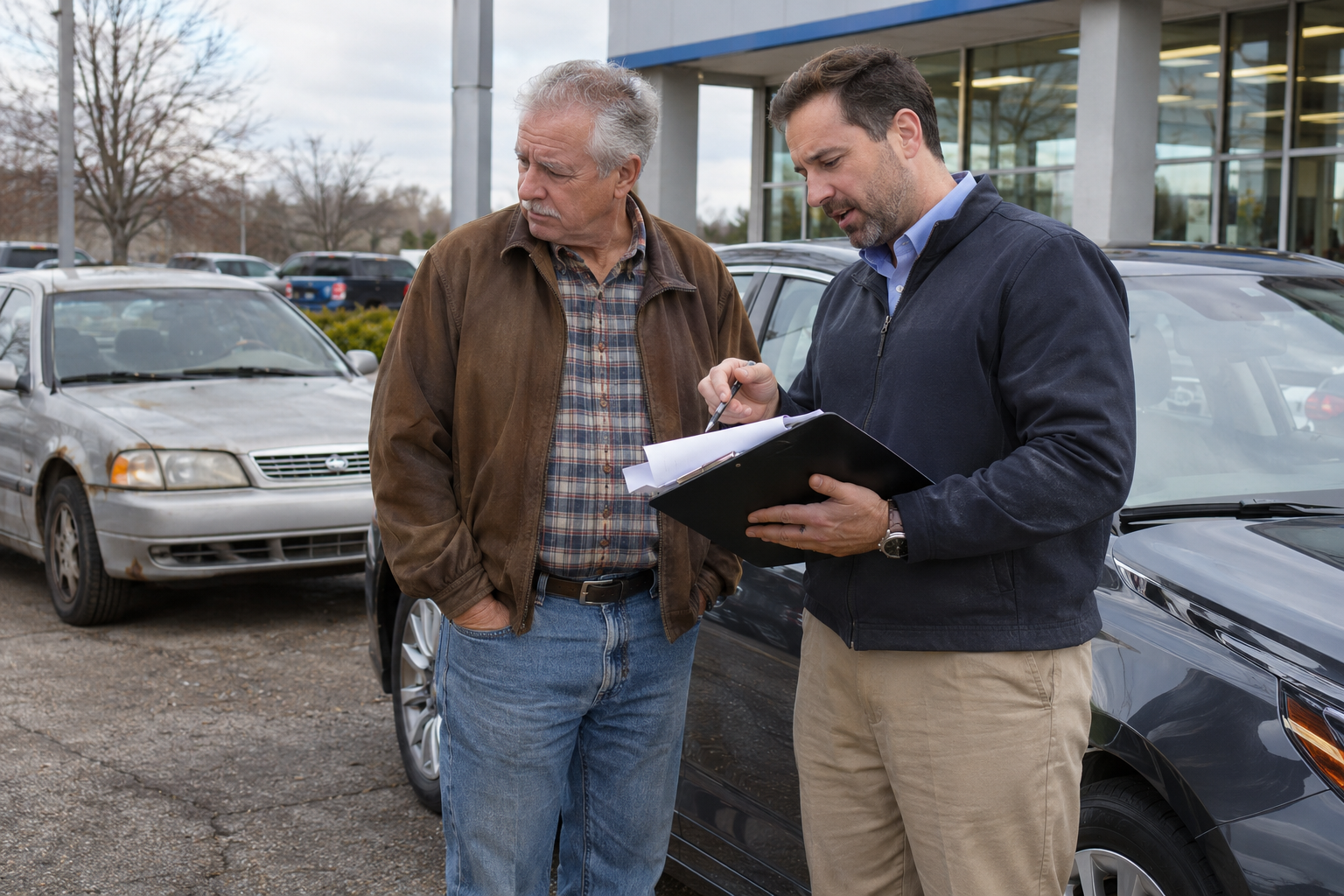
For a retiree, the car payment is a different and heavier thing than it was during working years, and the reason is the fixed income. A working person with a car payment can hope for a raise, a bonus, a better job to grow into the cost, but a retiree lives on a set amount, a pension, Social Security, a drawdown from savings, that does not grow to meet expenses, so every fixed monthly bill presses harder and permanently. A $700 payment that was a nuisance against a salary becomes a serious wound against a pension.
Put in annual terms, a $700 monthly payment is about $8,400 a year, carved out of a fixed retirement income before the retiree spends a cent on anything else, and for many retirees that figure is a substantial share of their total budget. That is money that cannot go to healthcare, to travel, to grandchildren, to the pleasures and security retirement is supposed to buy, because it is committed, every month, to a car loan. On a modest fixed income, $8,400 a year is often the difference between a retirement that feels comfortable and one that feels tight.
And because the American pattern is perpetual financing, the retiree who carries the habit in never reaches the relief of a paid-off car, instead trading into new loans and keeping the $8,400-a-year drag alive through the whole of retirement. The payment that might have ended, freeing up a large chunk of the budget for the rest of their lives, instead continues indefinitely because the habit of always having a car payment does not switch off at retirement. The single most damaging feature of the American car-payment habit, for a retiree, is precisely that it does not end on its own.
Why Europeans Arrive Without It

Europeans, broadly, come to this stage of life without a car payment, and the reasons connect to a different relationship with cars and debt that we have explored elsewhere. The short version is that Europeans are far more likely to buy a car with cash or pay off a loan and then keep the car for many years, often a decade or more, rather than trading into a fresh loan every few years. They treat a car as a durable thing to be owned outright and driven for a long time, not as a perpetually financed accessory.
The consequence for retirement is decisive. A European who bought a car outright, or paid off its loan years ago, and has driven it since, arrives at retirement owning the car free and clear, with no monthly payment eating the pension, so the fixed income is spared that $8,400-a-year drag entirely. And many European retirees, especially in walkable cities with good public transport, own no car at all, which removes not just the payment but the whole cost of ownership, a subject in its own right. Either way, the European retiree is not sending money to a car loan every month.
This is the real difference, and it is worth stating precisely because it is narrower and sharper than the general culture gap: the European enters retirement without a car payment, and the typical American enters it with one that never ends, and across a twenty- or thirty-year retirement that gap compounds into a very large sum. It is not that Europeans are cleverer about cars in some vague way, it is the specific, consequential fact that they have usually finished paying for their car before their income stops, and Americans very often have not. The payment, or its absence, is the whole point.
The Perpetual-Payment Trap

It is worth dwelling on why the American payment is so hard to escape, because understanding the trap is the first step out of it. The mechanism is the trade-in cycle, the habit of swapping the car every few years for a newer one, which keeps resetting the loan so the payment never ends, and which is actively encouraged by a car-sales culture built around keeping people in perpetual financing. The dealer would much rather roll you into a new loan than see you drive a paid-off car for ten years, and the whole system nudges toward the endless payment.
There is also a psychological trap, the way the perpetual payment makes a car feel cheaper than it is, because the monthly figure hides the total cost and the endless renewal hides the fact that you never actually own anything outright. A person focused on whether they can afford $700 a month rarely steps back to see that they have committed to that $700 more or less forever, and that the perpetual payment is a vastly more expensive way to stay mobile than buying a car and keeping it. The monthly framing disguises a lifetime commitment.
Breaking the trap means seeing it clearly, recognizing that the goal is not a slightly lower payment but no payment, reached by owning a car outright and keeping it. The European pattern is simply the trap avoided, a car bought and kept rather than perpetually financed, and the relief it produces, a stretch of years and ideally a whole retirement with no car loan, is exactly what the trade-in cycle denies its participants. The escape is not complicated, but it requires rejecting the default, which is precisely what most Americans never do.
How to Arrive at Retirement Without the Payment
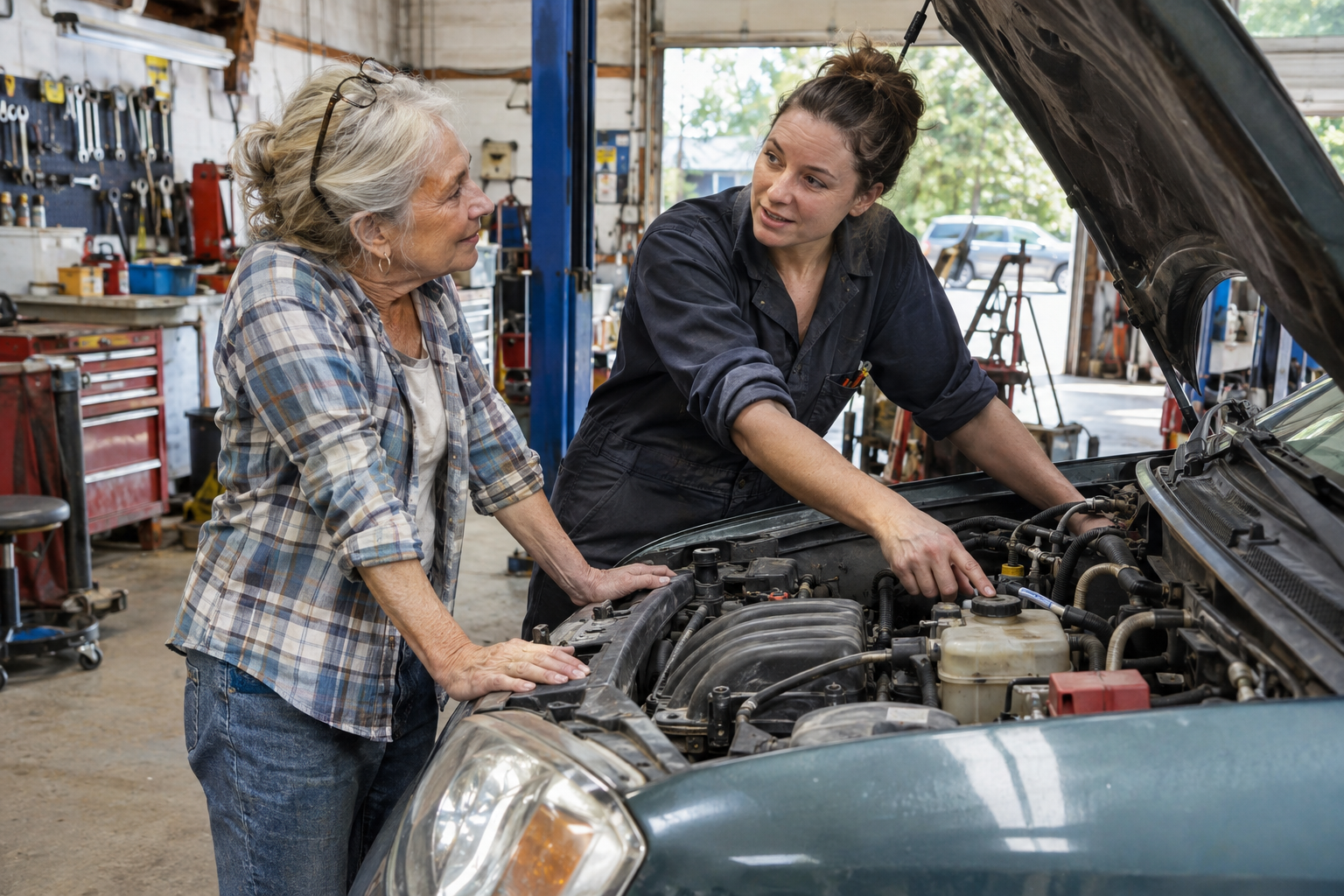
The practical path to a payment-free retirement is clear, and it starts with a decision to break the perpetual cycle before retirement arrives. The core move is to pay off your current car and then keep it, resisting the trade-in, driving the paid-off car for years as Europeans do, and enjoying the stretch of budget relief that owning a car outright provides. A reliable modern car can run well past a decade, so paying one off and keeping it turns a perpetual payment into a one-time cost followed by years of nothing owed.
For the next car, the European approach is to buy with cash, or finance briefly and then keep the car long enough to make the loan a rare event rather than a permanent condition, ideally buying a good used car outright and driving it for many years. A sensible used car bought with cash and kept for a decade costs a fraction, over time, of a perpetually financed new one, and it means arriving at or moving through retirement with no car payment at all. The aim is to make a car loan something you have occasionally, not something you always have.
And for some retirees, especially those who move to a walkable European city or a well-connected area, the cleanest answer is to go car-free entirely, removing the payment and the whole cost of ownership at once, a choice that is impractical in much of car-dependent America but entirely feasible in many European retirement destinations. However you get there, the goal is the same, to enter and spend retirement without a $700 monthly payment draining a fixed income, whether by owning outright, buying used with cash and keeping it, or shedding the car altogether. Each route ends the payment, which is the thing that matters.
The Honest Caveats
Fairness requires a few caveats, because financing a car is not always a mistake. There are situations where a car loan makes sense, when low promotional interest rates make financing cheaper than tying up cash, when a reliable vehicle is genuinely needed and cannot be bought outright, or when a person’s circumstances make a modest payment the sensible choice. The problem is not the existence of car loans, it is the perpetual, unending, trade-in-driven payment that never resolves into ownership, and a single well-chosen loan paid off and followed by years of ownership is a completely different thing.
It is also true that many Americans genuinely need a car, because American life outside a few cities is built around driving, so going car-free is not an option for everyone the way it is for a European retiree in a walkable town. The point for a car-dependent American is therefore not necessarily to abandon the car but to abandon the perpetual payment, to own the needed car outright and keep it, rather than to assume a car payment is simply a permanent fact of life. You can need a car and still refuse to have a car payment forever.
And the figures here are typical and variable, since payments, prices, interest rates, and individual situations differ widely, so the $700 is a representative average rather than everyone’s number, and the right approach depends on a person’s own finances. The durable truth beneath the variation is simply that a car payment carried into retirement is a large, permanent drain on a fixed income, that Europeans mostly avoid it by owning their cars outright, and that an American can do the same with a deliberate decision to break the perpetual cycle before the paycheck stops. The specifics vary, the principle holds.
The Bottom Line
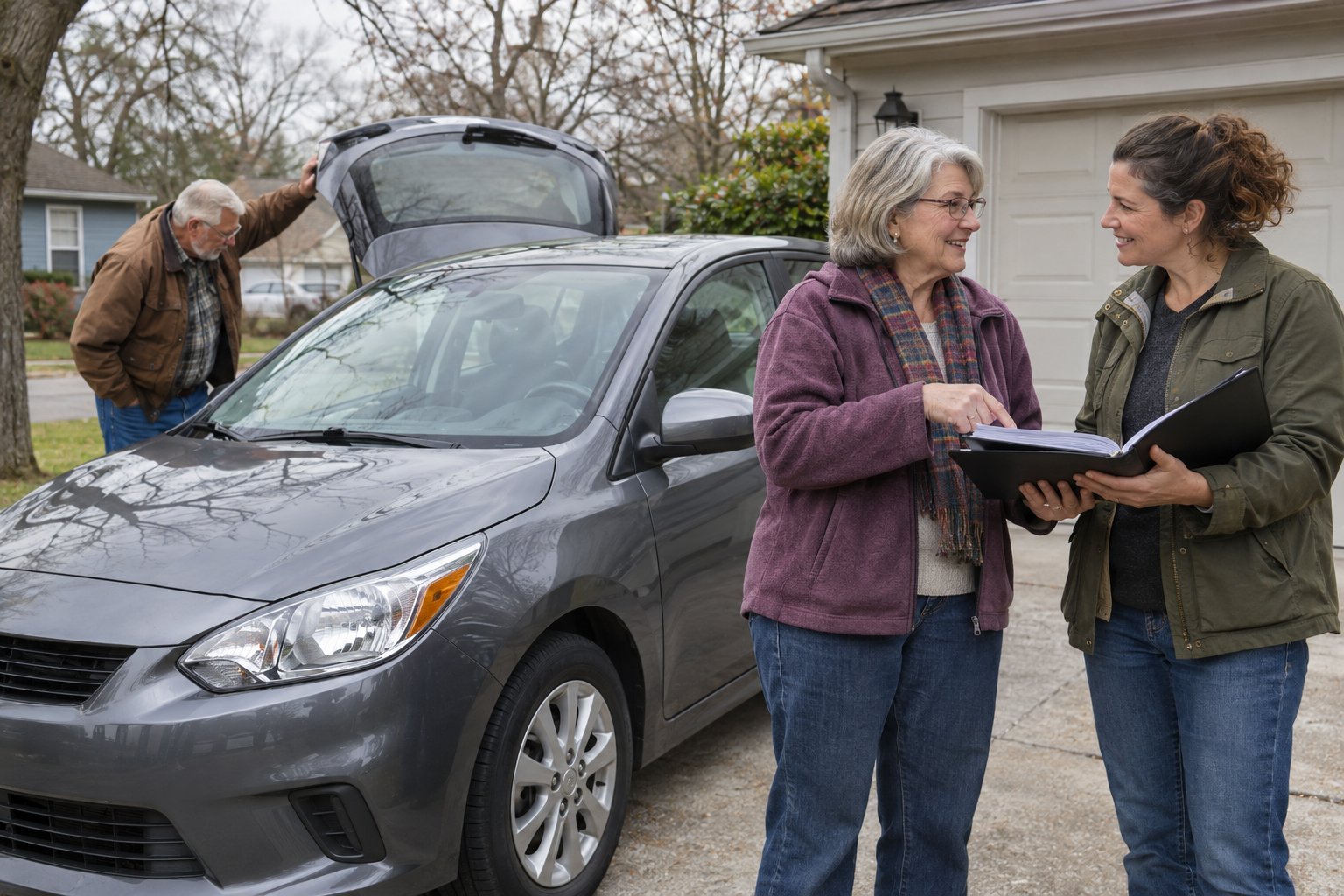
The car payment is the retirement cost hiding in plain sight, so normal and so automatic that most Americans never think of it as something that could end, and so it follows them into retirement and keeps draining a fixed income of around $8,400 a year for as long as the habit lasts. Europeans arrive at retirement without it, not through any mystery but through the simple, consequential practice of owning their cars outright instead of financing them forever, and that single difference compounds across a retirement into a very large sum.
The lesson is narrow and actionable: the goal is not a cheaper car payment but no car payment, reached by paying off what you drive and keeping it, buying your next car with cash and holding it for years, or, where you can, going car-free. The perpetual trade-in cycle is a trap that disguises a lifetime commitment as a manageable monthly bill, and stepping out of it before retirement frees a large, permanent chunk of a fixed income for the things that retirement is actually for.
So count the car payment honestly in your retirement math, and ask not whether you can afford $700 a month but whether you are willing to pay it forever, because that is what the perpetual payment really asks. The European retiree answered no, owned the car outright, and kept the $8,400 a year. With a deliberate decision made before the paycheck stops, an American can arrive at retirement the same way, owing nothing on the car in the driveway, which is one of the largest and most permanent gifts you can give your future fixed income. Of all the moves that make a fixed income stretch, ending the car payment for good is among the biggest, the simplest to understand, and the easiest to overlook, precisely because it has been there so long it stopped looking like a choice at all.

About the Author: Ruben, co-founder of Gamintraveler.com since 2014, is a seasoned traveler from Spain who has explored over 100 countries since 2009. Known for his extensive travel adventures across South America, Europe, the US, Australia, New Zealand, Asia, and Africa, Ruben combines his passion for adventurous yet sustainable living with his love for cycling, highlighted by his remarkable 5-month bicycle journey from Spain to Norway. He currently resides in Spain, where he continues sharing his travel experiences with his partner, Rachel, and their son, Han.