
Here is a scenario that plays out on Spanish beaches and in Spanish nightlife districts more often than visitors expect. You head to the beach light, in your swimsuit, with a towel and a few euros, deliberately leaving your passport locked in the hotel safe so you cannot lose it in the sand. The police, doing a routine identity check, ask to see your ID. You have none, because you left it at the hotel, exactly as the careful traveler you thought you were being.
And suddenly a relaxed beach afternoon has become something more serious, because in Spain the inability to identify yourself to the police is a genuine issue, and at the far end of it sits a fine that can reach €600 or more.
This rule catches Americans off guard because it runs against the instinct to leave valuables behind, and because the real shape of the rule is widely misunderstood, including in the scary headlines. The truth is more nuanced and more useful than the blunt claim that walking around without ID costs €600, and understanding the nuance is what keeps you out of trouble. Here is what Spanish law actually requires, where the €600 really comes from, why the beach is where tourists discover it, and how to handle both the rule and the police so a check stays a non-event. This is general information, not legal advice.
What Spanish Law Actually Requires
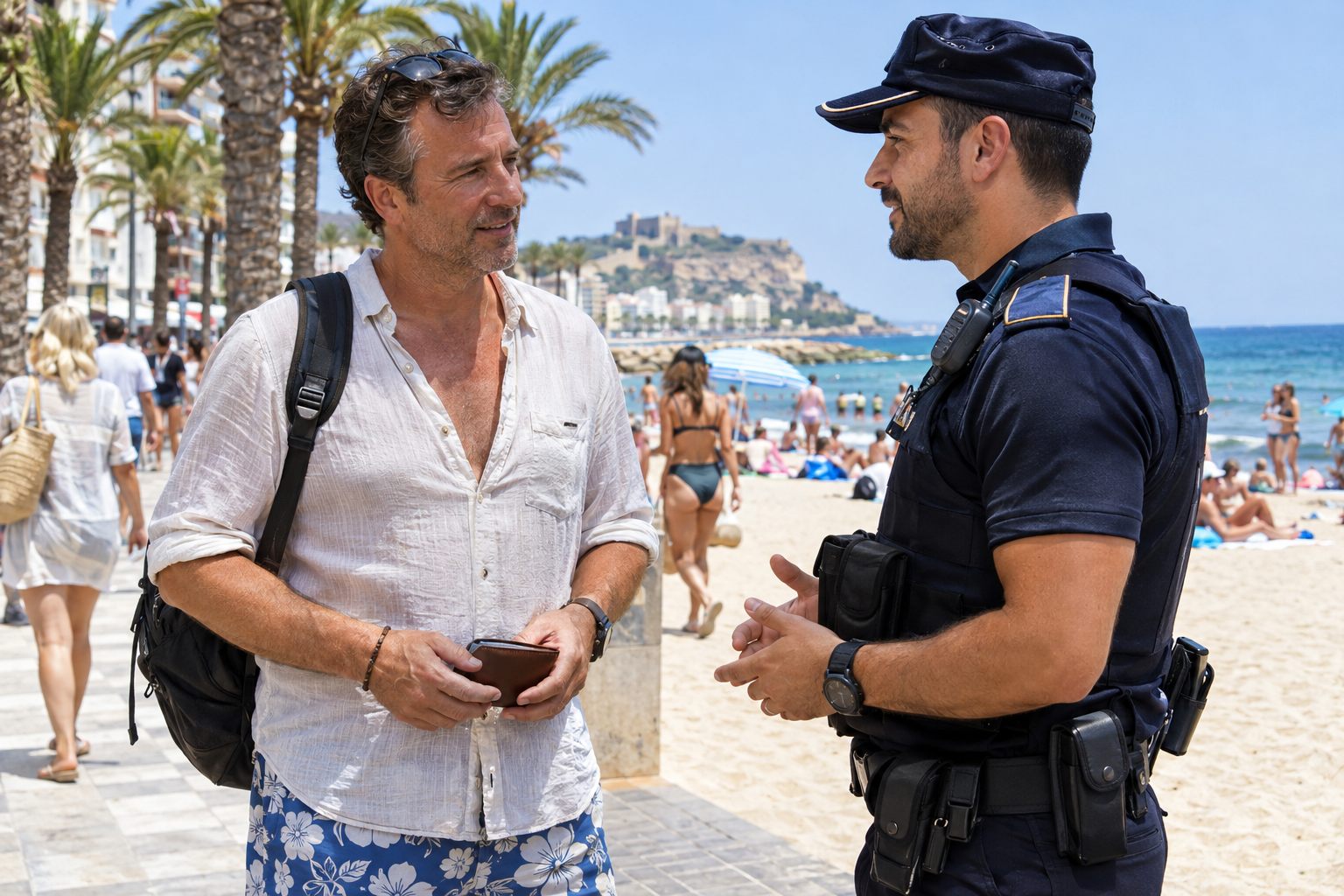
The first thing to get straight, because it is the most misunderstood, is that Spanish law does not strictly require you to carry your ID at all times, and this surprises people who have heard the opposite. What the law requires is different and more precise: you must be able to identify yourself to the authorities when they ask. Carrying the document and being able to identify yourself are related but not identical, and the distinction is the whole key to understanding the rule correctly.
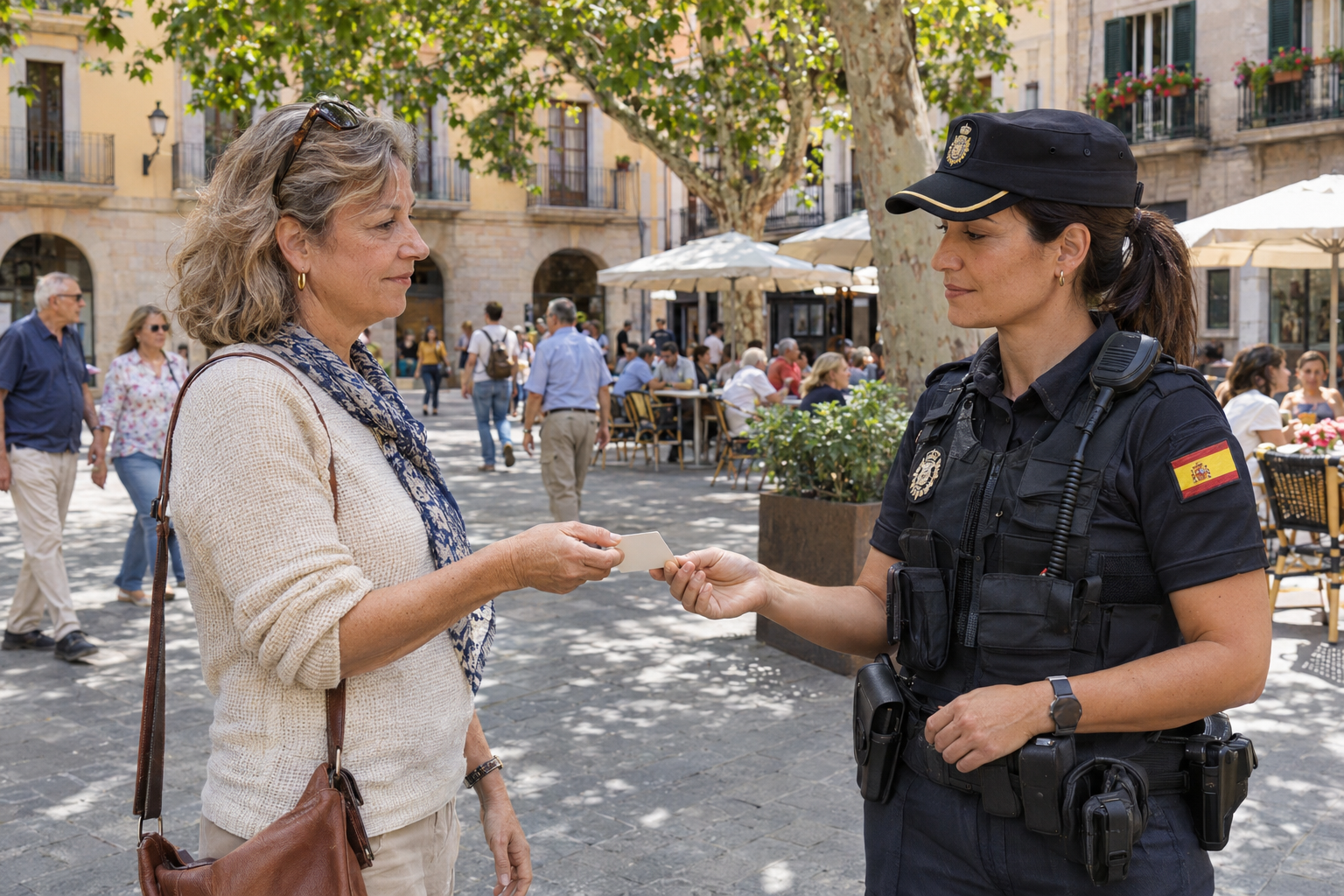
In practice this means that if a police officer asks who you are, you are obliged to establish your identity to their satisfaction, and the easiest way to do that, by far, is to produce an identity document, a passport, a Spanish ID card, or a residence card. If you have the document, the check is over in seconds. If you do not have it on you, you have not automatically broken the law simply by lacking the document, but you now have a problem, because you still have to satisfy the requirement to identify yourself, and that becomes harder without the paper that does it instantly.
So the accurate framing is that Spain has an identification requirement, not strictly a carry requirement, and the two get conflated in the warnings tourists hear. You will often read that you must carry ID in Spain at all times, and while carrying it is certainly the wise and easy course, the strict legal duty is to be identifiable on demand rather than to have the document physically on you. That subtlety matters enormously for understanding where the real risk lies and where it does not, because it means the trouble comes not from the empty pocket itself but from what happens when an officer asks and you cannot readily answer.
Residents and Tourists Are Not Quite the Same

It is worth separating two groups here, because the rule sits a little differently for a tourist passing through than for a foreigner living in Spain. Spaniards themselves carry the DNI, the national identity card, which is issued from the age of fourteen and is the document they produce without thinking, and the whole identification system is built around it. The expectation of being identifiable is simply part of Spanish civic life, absorbed from childhood.
For a foreign resident, the equivalent is the residence card, the TIE, and the expectation to be able to produce it is firmer than for a casual visitor, since a resident is a registered part of the system with a document they are meant to hold. A resident American who has gone through Spain’s immigration process carries a TIE for exactly this reason, and it is the document to have on you in day-to-day life, functioning as your Spanish ID.
For a tourist, the relevant document is the passport, and while the strict legal duty remains to identify yourself rather than to carry it, a visitor has fewer easy alternative ways to prove who they are than a resident embedded in the local system, which is part of why the beach scenario bites tourists so specifically. The passport is both precious and the main thing that identifies you, which is exactly the tension that sends people to the beach without it.
Where the €600 Actually Comes From
Now to the fine, because the headline figure is real but it does not attach where people think. You do not get a €600 fine simply for having forgotten your ID, and it is worth saying this plainly, because the common belief that leaving your passport at the hotel is itself a €600 offense is wrong. Spanish officials have said as much, that they cannot fine you merely for not carrying the document, so the forgotten ID by itself is not the thing that costs you.
What can cost you €600, and much more, is refusing to identify yourself, or being uncooperative, obstructive, or disobedient when the police try to establish who you are. Spain’s citizen security law, the one often called the Ley de Seguridad Ciudadana or informally the gag law, sets out a scale of infractions, and failing to cooperate with a lawful identification, or disobedience and resistance to the authorities, falls into its penalized categories, with minor infractions running up to around €600 and more serious disobedience reaching far higher. The fine is for your conduct toward the police, not for the contents of your pockets.
This is the crucial reframing that the scary version misses. The €600 is a real risk, but it is a risk you largely control through how you behave, because an honest, cooperative person who simply forgot their passport and does their best to help the police establish their identity is in a very different position from someone who refuses to give their name, argues, or obstructs the check. The empty pocket is an inconvenience; the bad attitude is what turns it into a fine. Understanding that the penalty lives in your conduct, not your forgetfulness, is both reassuring and practical, because it tells you exactly how to keep a check harmless: cooperate.
What Really Happens If You Have No ID

So what actually happens, in the ordinary case, if the police ask for your ID at the beach and you do not have it? Not, usually, an immediate fine, but a process, and the process is the real everyday cost of going out without identification. If you cannot identify yourself on the spot, the police have the power to take you to the nearest police station to establish your identity, holding you there as long as it takes to work out who you are, which can turn a pleasant afternoon into hours of tedious bureaucracy.
That station trip is the genuine risk most tourists actually face, far more than the dramatic €600, and it is unpleasant enough to want to avoid. Being walked or driven off the beach in your swimsuit, taken to a police station, and held while officers verify your identity through other means is a miserable way to spend a holiday afternoon, even though it ends with no fine if you are cooperative and turn out to be exactly the harmless tourist you say you are. The cost here is time, stress, and indignity rather than money, and it is entirely avoidable.
The €600 enters only if the encounter goes wrong, if you refuse to cooperate, argue, obstruct, or behave in a way the officers treat as disobedience, at which point the conduct-based penalties of the security law come into play. So the realistic picture is a spectrum: have your ID and the check is nothing, lack it but cooperate and the worst case is a tedious trip to the station to be verified, and lack it and be difficult and you have opened the door to a real fine. Where you land on that spectrum is mostly up to you, which is why the practical advice is so simple.
Why the Beach Is Where Tourists Learn It
The beach features in this so often for a reason that is almost poignant, because it is the careful traveler, not the careless one, who gets caught. Sensible visitors are told, correctly, not to carry valuables to the beach, where bags are left unattended on the sand while everyone swims and theft is a real risk, so they lock the passport in the hotel safe and head to the sand with just a towel and a little cash. They are doing exactly the prudent thing, and it is precisely that prudence that leaves them without ID when a check happens.
Spanish police do conduct identity checks in public places, including beaches and the busy nightlife areas, sometimes as routine, sometimes during specific security operations, and reports in recent years suggest checks have been stepped up in some tourist areas. A crowded summer beach is exactly the kind of place such a check can occur, and the tourist standing there in swim trunks with no wallet, no phone, and no document is suddenly unable to do the one thing the law asks, identify themselves, through no fault of character but simply because they followed the anti-theft advice too literally. The beach is where good intentions and the identification rule collide.
This is the small irony at the heart of the rule, that the visitor most likely to be caught out is the one trying hardest to be sensible, and it points straight at the solution, which is to find a way to carry identification to the beach that does not expose the precious original to loss or theft. The goal is to be identifiable without risking your actual passport on the sand, and there are easy ways to thread that needle, which turn the whole problem into a non-issue. The beach teaches the lesson, but the lesson is learnable in advance and cheaply solved.
The Checks Are Not Disappearing
Some visitors assume identity checks are a relic that no longer really happens, and that is a mistake, because if anything the checks have become more rather than less likely in recent years. Spanish authorities have stepped up identity checks in some tourist areas, and travel advice from various governments now routinely reminds visitors to carry identification in Spain precisely because the possibility of being asked is real. The check is not a theoretical hazard dredged up to fill an article; it is a live part of how Spanish public space is policed.
There are reasons the checks persist and recur, from ordinary policing and crowd management in busy tourist zones to specific security operations and events, and a visitor spending time on popular beaches and in nightlife districts is spending time in exactly the environments where checks are most likely. The summer crowds, the packed promenades, the late nightlife streets are all places the police work, and an identity check there is simply part of the landscape rather than an unlucky anomaly.
The sensible conclusion is not alarm but preparation, treating the possibility of a check as a normal feature of Spanish travel to plan around rather than a rare bolt from the blue. Because the checks are real and recurring, the small habit of being identifiable, through the original document or a photo of it, pays off not as paranoia but as ordinary prudence, the same way you would carry a little cash or know where your hotel is. The check is coming often enough that being ready for it is just good travel sense.
How to Stay Out of Trouble
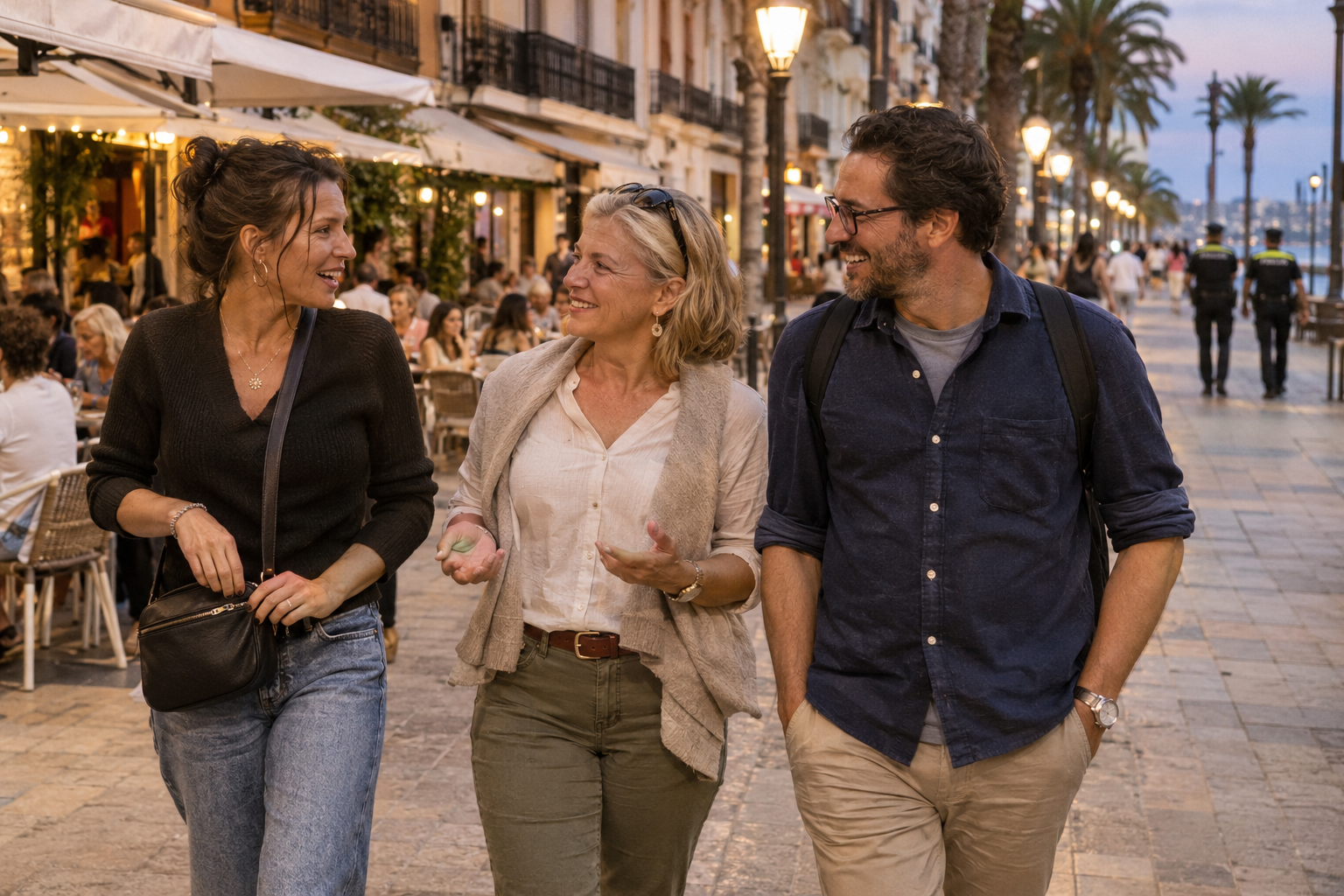
The practical advice follows directly from understanding the rule correctly, and it is simple. The easiest course for most tourists is to carry your passport, or if you are a resident your residence card, whenever practical, because having the document makes any check a ten-second non-event and removes the entire problem. Carrying it is not strictly legally required, but it is so much easier than the alternatives that it is the obvious default for ordinary days out.
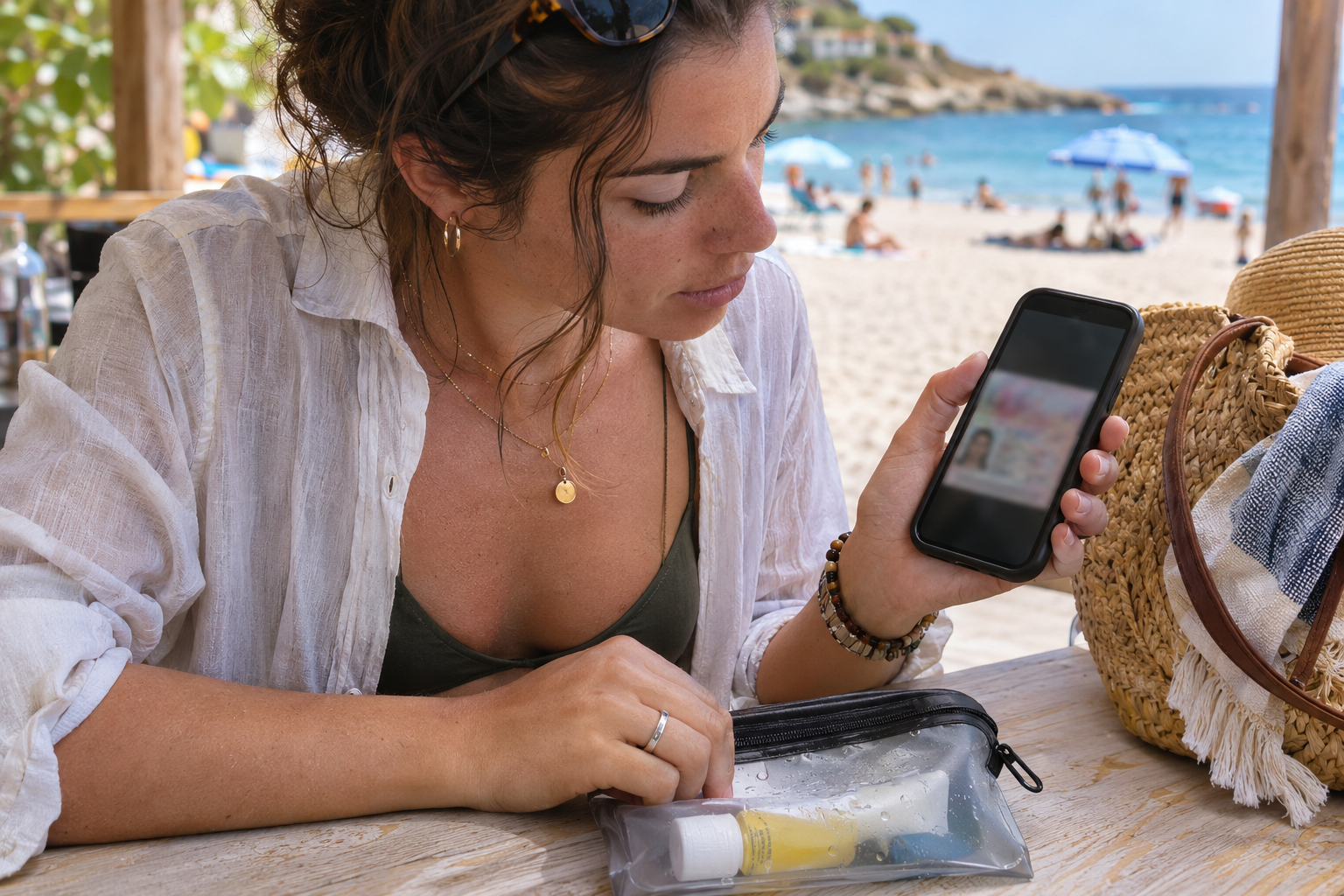
For the beach and other situations where carrying the precious original feels unwise, the smart compromise is to carry a copy or a clear photo of your passport, on your phone or on paper, which while not a perfect legal substitute for the original goes a long way toward helping the police establish your identity quickly and cooperatively, often enough to resolve a check on the spot or at least to make the process smooth. A photo of the passport photo page in your phone costs nothing, risks nothing on the sand, and dramatically improves your position if a check happens, so there is no reason not to have one. Some travelers also carry a driver’s license or a second, less critical ID to the beach, keeping the passport safe while still having something to show.
And whatever you are carrying or not carrying, the single most important rule is to cooperate fully and politely if the police ask, because, as we have seen, the serious fine attaches to obstruction and disobedience, not to the forgotten document. Give your name, explain honestly that your passport is in the hotel safe, offer the photo on your phone, and help the officers do their job, and in the overwhelming majority of cases a check ends without a fine even if you lack the original. The expensive version of this rule is reserved for people who make a check difficult, so the way to never meet the €600 is simply to carry something that identifies you and to treat any officer who asks with straightforward cooperation. Do that, and the rule Americans discover at the beach becomes just another thing you quietly got right.

About the Author: Ruben, co-founder of Gamintraveler.com since 2014, is a seasoned traveler from Spain who has explored over 100 countries since 2009. Known for his extensive travel adventures across South America, Europe, the US, Australia, New Zealand, Asia, and Africa, Ruben combines his passion for adventurous yet sustainable living with his love for cycling, highlighted by his remarkable 5-month bicycle journey from Spain to Norway. He currently resides in Spain, where he continues sharing his travel experiences with his partner, Rachel, and their son, Han.