
You are sick in Spain. Properly sick, the kind where dragging yourself to a clinic, sitting in a waiting room, and dragging yourself home again feels like more than you can manage. You mention this to a Spanish friend, who says, simply, why not just have the doctor come to you.
And you stare at them, because where you come from, doctors do not do that. The house call, in America, is a thing from old movies and your grandmother’s stories, a quaint relic that vanished decades ago. The idea that a real doctor might actually come to your home in the modern world sounds almost absurd.
But in Spain, and across much of Europe, the house call never died. The doctor coming to you is a normal, living part of how medicine works, available both free on the public system and affordably in private. Here is the reality of European house calls, how they work in Spain on both the public and private sides, and what a home visit actually costs.
The House Call That Vanished in America
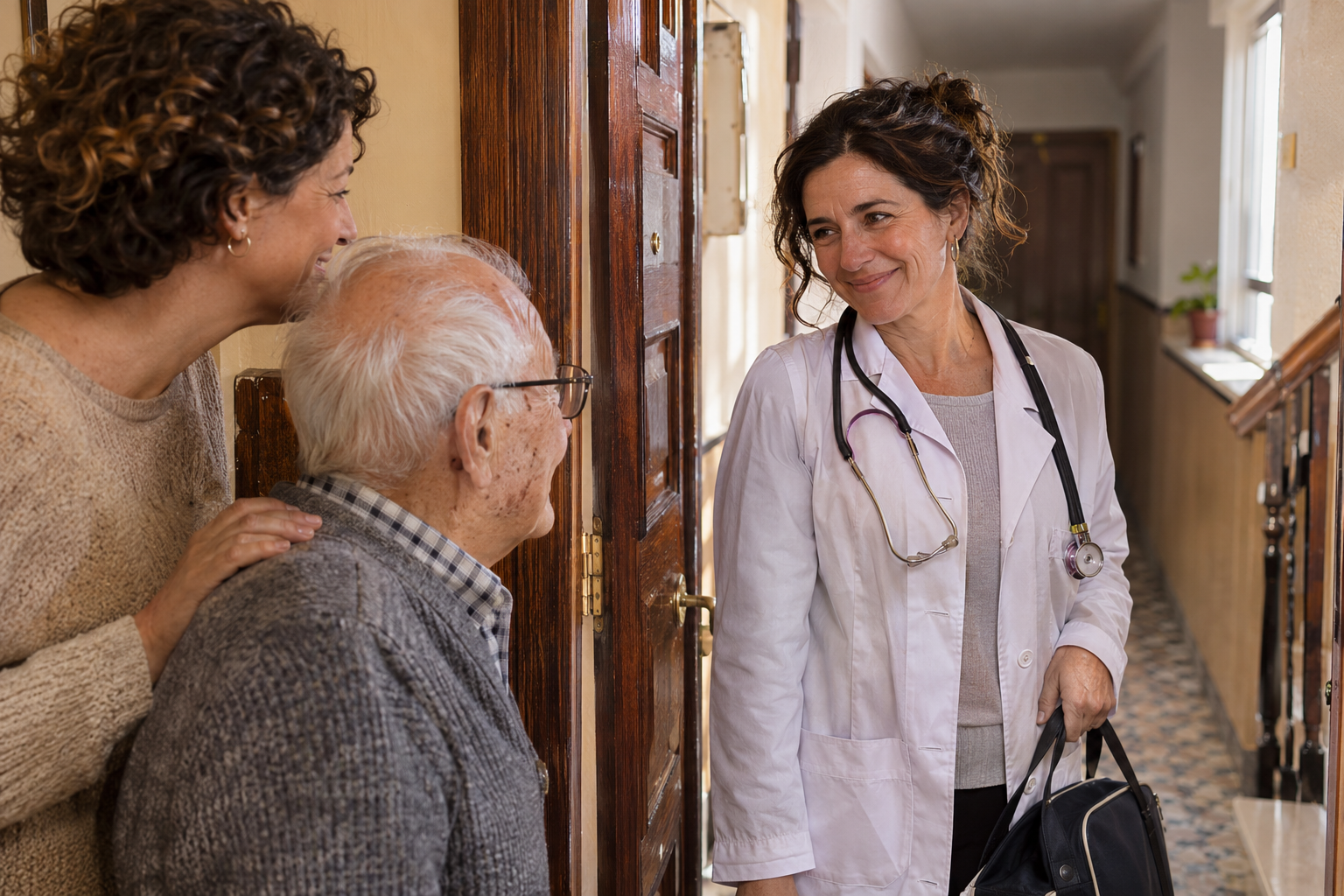
To appreciate how surprising this is to Americans, you have to remember that the house call was once completely normal in the United States too. In the early twentieth century, a doctor coming to the patient’s home was a routine part of medicine, making up a large share of all doctor-patient encounters.
Then it faded, and faded almost completely. Over the following decades, the American house call was squeezed out by the economics and logistics of modern medicine: it was seen as inefficient, hard to bill for, and a poor use of a doctor’s expensive time compared with seeing many patients in a clinic. Medicine reorganized itself around the office and the hospital, and the doctor who came to your door quietly disappeared, surviving only in nostalgia and, more recently, in pricey concierge services for the wealthy.
The result is that for most Americans, the house call is simply not part of the mental map of how healthcare works. You get sick, you go to the doctor, full stop; the notion that the doctor might come to you has been so thoroughly erased that encountering it abroad genuinely startles people. It feels like stepping back in time, except that it is not the past at all. It is simply how a lot of the rest of the world still does things.
In Spain, the Doctor Still Comes to You
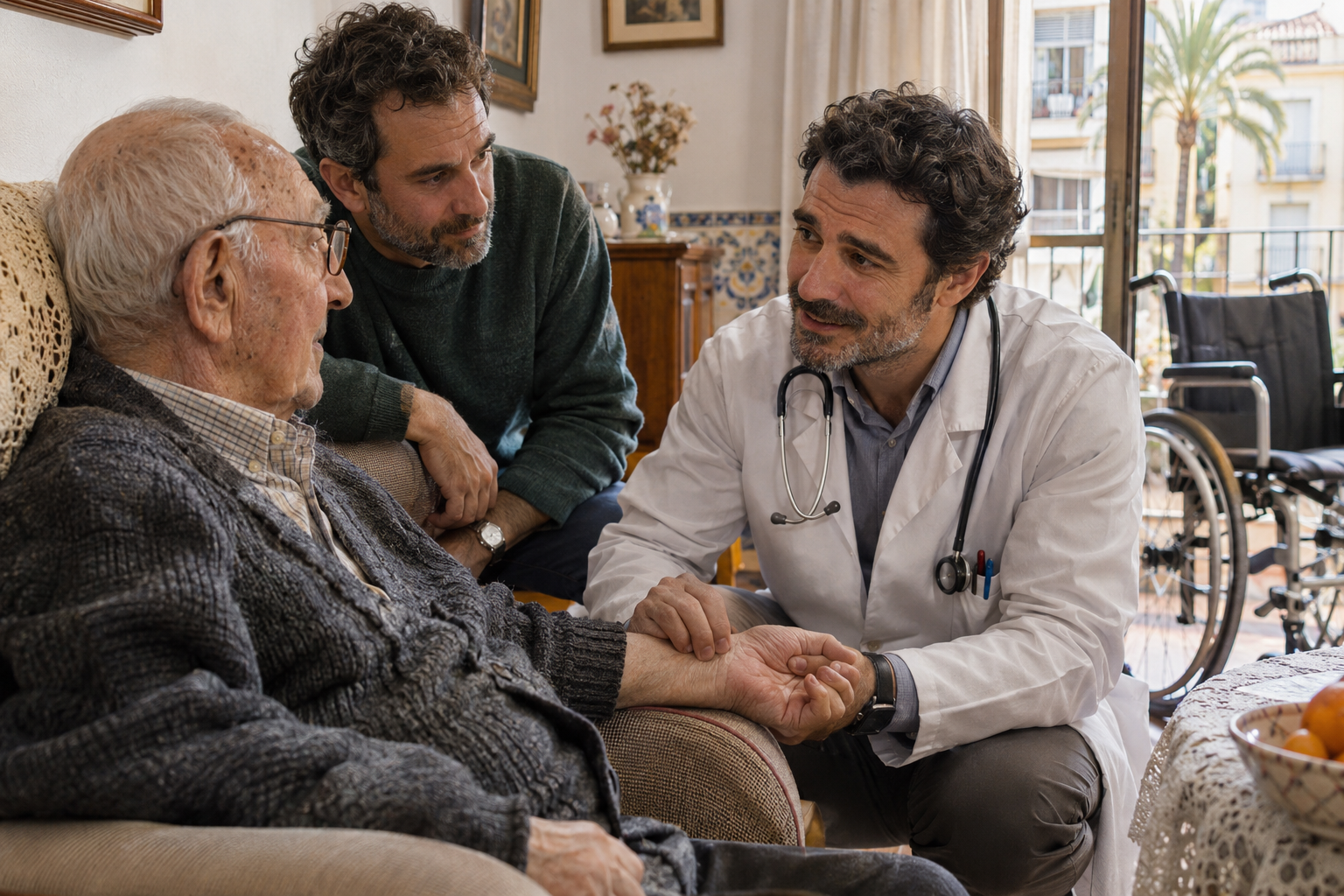
In Spain, the home medical visit, the medico a domicilio or visita domiciliaria, is an ordinary and expected part of healthcare, not a novelty. When someone genuinely cannot easily get to a clinic, the default assumption is not that they must somehow struggle in anyway, but that a doctor can come to them.
This exists on both sides of the Spanish system, which is worth understanding because they work quite differently. On one hand there is the public national health system, which provides home visits as part of its universal coverage, free of charge, for patients who need them. On the other there is the private sector, where you can simply pay for a doctor to come to your home or hotel, often the same day.
The two together mean that a house call in Spain is almost always available to someone who needs or wants one, through one route or the other. For an American used to a world where the option does not exist at all, this takes some getting used to, and it is one of the quiet ways in which being ill in Spain can feel more humane than being ill back home.
On the Public System, It Is Free
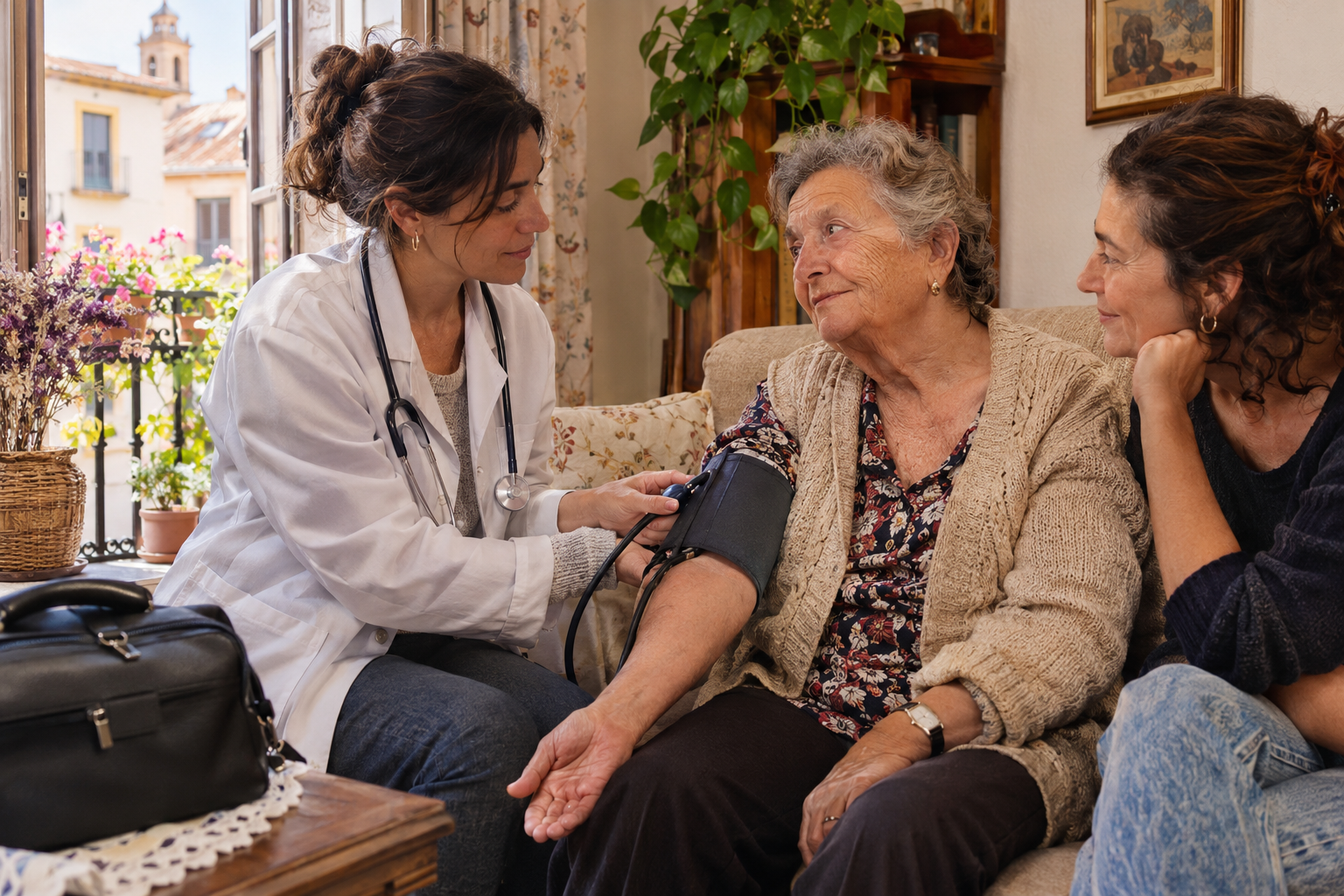
The public route is the one that most surprises Americans, because it costs nothing. Spain’s universal public health system, the SNS, includes home visits as a normal part of primary care, and for patients who qualify, there is no bill at all.
Here is how it works. Everyone covered by the public system is assigned a family doctor at a local health center, the centro de salud, and that doctor, or a nurse from the center, will make home visits to patients who genuinely cannot come in. For the elderly, the housebound, the seriously or chronically ill, and the terminally ill, the care comes to the home as a matter of course, woven into the ordinary work of the primary care team. It is simply understood that part of a family doctor’s job is to look after the people on their list who cannot make it to the clinic, wherever they happen to be.
This continuity is part of what makes it work. Because you are assigned to a particular doctor and health center for the long term, the person who comes to your home is often one who actually knows you and your history, not a stranger dispatched from an app. For an older patient managing several conditions, having their own doctor turn up at the bedside is a quietly powerful form of care.
For a vulnerable or housebound patient, this is an enormous and humane thing, and it is free. There is no charge for a public home visit, because it is part of the universal coverage that every resident is entitled to, funded through the system like everything else. The contrast with a country where the frail and the dying must somehow be transported to a medical office, or pay dearly for anyone to come to them, is stark, and it is one of the genuine strengths of the Spanish model.
Who Gets a Public Home Visit
It is worth being clear about who the free public home visit is actually for, because it is not an on-demand service for anyone with a sniffle. The public home visit is reserved for people who genuinely cannot reasonably get to the health center themselves.
That means it is aimed at the elderly, those with mobility problems, the bedridden, people with serious illnesses that make travel difficult, and patients at the end of life who are being cared for at home. A healthy adult with an ordinary complaint is expected to come into the clinic like everyone else; the home visit exists precisely to reach the people for whom that is not possible. The system makes a sensible distinction between inconvenience and genuine inability, and the free house call is for the latter.
Requesting one goes through the health center. A patient or their family contacts the centro de salud, explains the situation, and the home visit is arranged with the assigned doctor or the primary care team, with urgent out-of-hours needs handled through the primary care emergency services. It is not something you summon casually, but for the people it is meant for, it is a reliable and dignified part of their care, ensuring that being unable to leave the house does not mean being cut off from a doctor.
The Private Option, and What It Costs
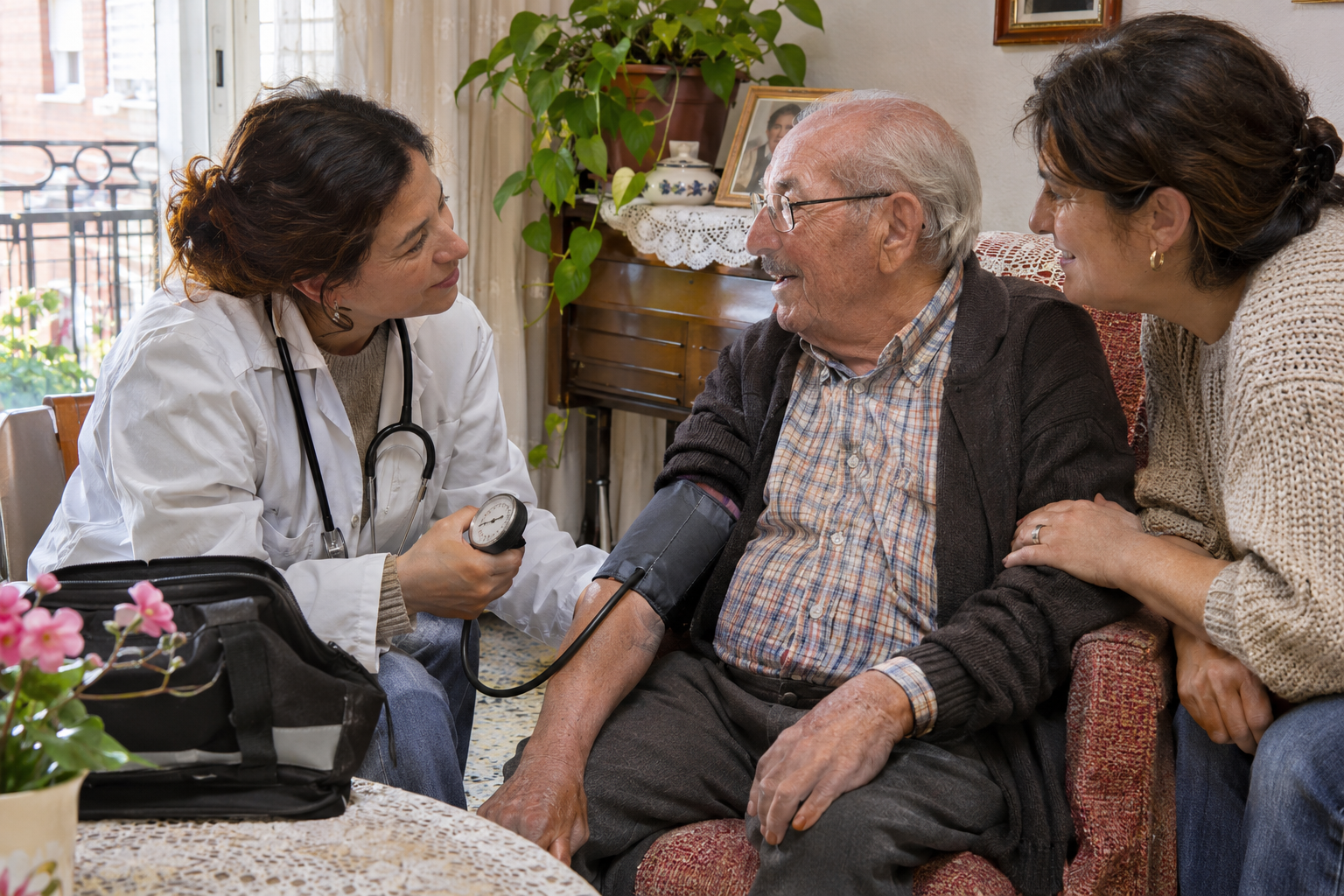
For everyone else, including tourists and those who simply want the convenience without meeting the public criteria, there is the private route, and this is where actual prices come in. In Spain, you can pay a private doctor to come to your home, hotel, or holiday apartment, often on the same day, and the cost is far lower than most Americans would guess.
A private home doctor visit in Spain typically runs somewhere in the region of a hundred and twenty to a hundred and eighty euros for a standard daytime visit, with somewhat higher prices, perhaps a hundred and fifty to over two hundred euros, for night, weekend, or holiday calls. There are English-speaking home-doctor services aimed specifically at tourists in the main cities and resort areas, bookable online, which send a licensed doctor to wherever you are staying. For context, a straightforward private clinic visit, if you can get yourself there, is cheaper still, often somewhere between fifty and a hundred and twenty euros.
These prices are also refreshingly transparent, which travelers appreciate. The home-doctor services generally tell you the full cost upfront, with no mystery bill arriving weeks later, so you know exactly what you are paying before the doctor ever knocks. For anyone accustomed to the opaque pricing of American healthcare, that clarity is almost as pleasant a surprise as the modest figure itself.
Set against the American reality, these figures are remarkable. A concierge house call in the United States, where such things exist at all, can easily run several hundred dollars, and the ordinary American simply has no affordable way to get a doctor to come to them. In Spain, a hundred and fifty euros or so brings a qualified doctor to your sickbed, and for many travelers that is money very well spent, often reimbursable through travel insurance besides. The house call is not a luxury here; it is a reasonably priced, ordinary service.
Why Europe Kept Something America Lost
Step back, and the interesting question is why the house call survived in Europe when it withered in America, and the answer says a lot about the two systems. It comes down, in large part, to how healthcare is organized and what it is optimized for.
European healthcare systems, built around universal public coverage, tend to prize accessibility and continuity of care, and keeping people well at home, out of expensive hospitals, is both humane and economically sensible within that model. A system whose goal is to look after a whole population, including its frailest members, has every reason to send a doctor to the housebound, because the alternative, letting those patients deteriorate or clog up emergency rooms, serves nobody. The home visit fits naturally into a philosophy of care that measures success by the health of the population rather than the throughput of a clinic.
The American system, by contrast, evolved around different incentives, optimized heavily for efficiency, specialization, and billable volume, and within that logic the house call simply did not pay. It is not that American doctors are less caring, but that the structure they work in squeezed out a practice that European structures preserved. The survival of the house call in Spain is, in miniature, a window into a whole different set of priorities about what medicine is for, the same priorities that make a doctor’s visit there cost a fraction of what it does in the States.
What It Means for You
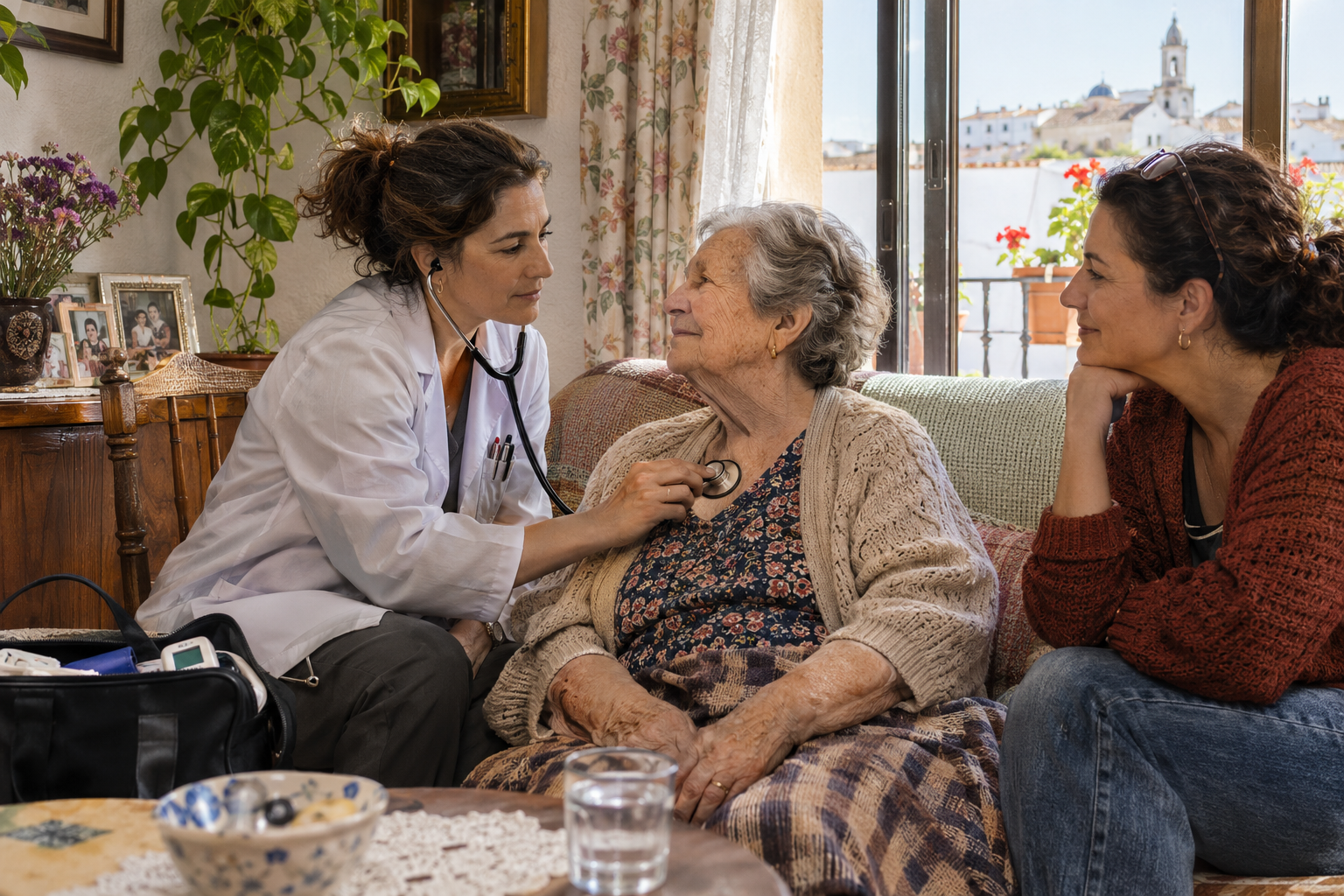
So what does all this mean in practice, if you are living in Spain or spending serious time there? It means a genuine and comforting safety net that most Americans have never experienced. If you become housebound, seriously ill, or frail, the public system will send a doctor to your home, free, as a normal part of your care, and you will not have to somehow haul yourself to a clinic to be seen.
And if you are a visitor who falls ill, a tourist laid low in your hotel, you are not stranded either. A private home doctor is an affordable phone call or online booking away, often able to come the same day, often English-speaking, for a cost that will not ruin you and that your travel insurance may well cover. Either way, the simple, old-fashioned comfort of a doctor coming to you, rather than you having to drag yourself to the doctor, is available in a way it simply is not back home.
There is something quietly civilized about it, a sense that the healthcare system meets you where you are, literally. For all the adjustments and frustrations of navigating medicine in a foreign country, this is one of the places where an American in Spain may find themselves thinking that the other way of doing things is, in this respect at least, simply kinder. The house call did not have to die; it is alive and well just across the ocean, and it may come knocking when you need it.

About the Author: Ruben, co-founder of Gamintraveler.com since 2014, is a seasoned traveler from Spain who has explored over 100 countries since 2009. Known for his extensive travel adventures across South America, Europe, the US, Australia, New Zealand, Asia, and Africa, Ruben combines his passion for adventurous yet sustainable living with his love for cycling, highlighted by his remarkable 5-month bicycle journey from Spain to Norway. He currently resides in Spain, where he continues sharing his travel experiences with his partner, Rachel, and their son, Han.