
At sixty-one, a woman retired to Madeira, the Portuguese island adrift in the Atlantic, carrying two things that seemed to have nothing to do with each other. One was a modest nest egg of about a hundred and forty thousand dollars, far less than the experts say you need to retire. The other was a lifelong fear of flying that had quietly been shrinking her world for years.
On paper, neither problem looks like something an island could solve. A small amount of money is a small amount of money, and a fear of flying is, if anything, the last reason to move somewhere you can only reach by plane.
And yet, in the ways that actually mattered to her, Madeira addressed both. This is a composite, drawn from the real experiences of Americans who have made modest, late, and slightly frightened leaps into a new life abroad, so read it as the true shape of the thing rather than one woman’s diary. It is a story about how a smaller, gentler, more local life in the right place can quietly fix problems that looked unfixable at home.
$140,000 Is Not Enough, Except Here

Let us be honest about the money first, because a hundred and forty thousand dollars is not, on its own, a retirement. In most of the United States, that sum would be gone in a handful of years, swallowed by rent, healthcare, and the ordinary high cost of American life, and no sensible advisor would call it enough to stop working on.
Madeira changes that arithmetic. On the island, a single person can live comfortably on somewhere around fifteen hundred to two thousand euros a month, with rent as the main variable, considerably less than the same life would cost back home. Combined with a modest pension or income stream, which is really what makes it work, that savings cushion stretches into a genuinely comfortable, if careful, retirement rather than a countdown to ruin.
The mild climate quietly helps the budget too. Madeira’s famously gentle weather means almost no money spent on heating in winter or air conditioning in summer, a steady saving that adds up over a year. And the island’s retirement visa route, built for people living on modest passive income, sets a low bar, recognizing that you do not need to be wealthy to settle there. The island does not make her rich; it makes her money enough, which for someone staring at a thin nest egg is the thing that matters.
That shift, from not enough to enough, is worth pausing on, because it changes everything about how retirement feels. The same sum that spelled anxiety in America spells modest comfort on Madeira, not through any financial cleverness but simply because the island costs less to live on. For a lot of people arriving with thin savings, relocating is less an investment strategy than an exchange rate on their whole life.
The Island of Eternal Spring
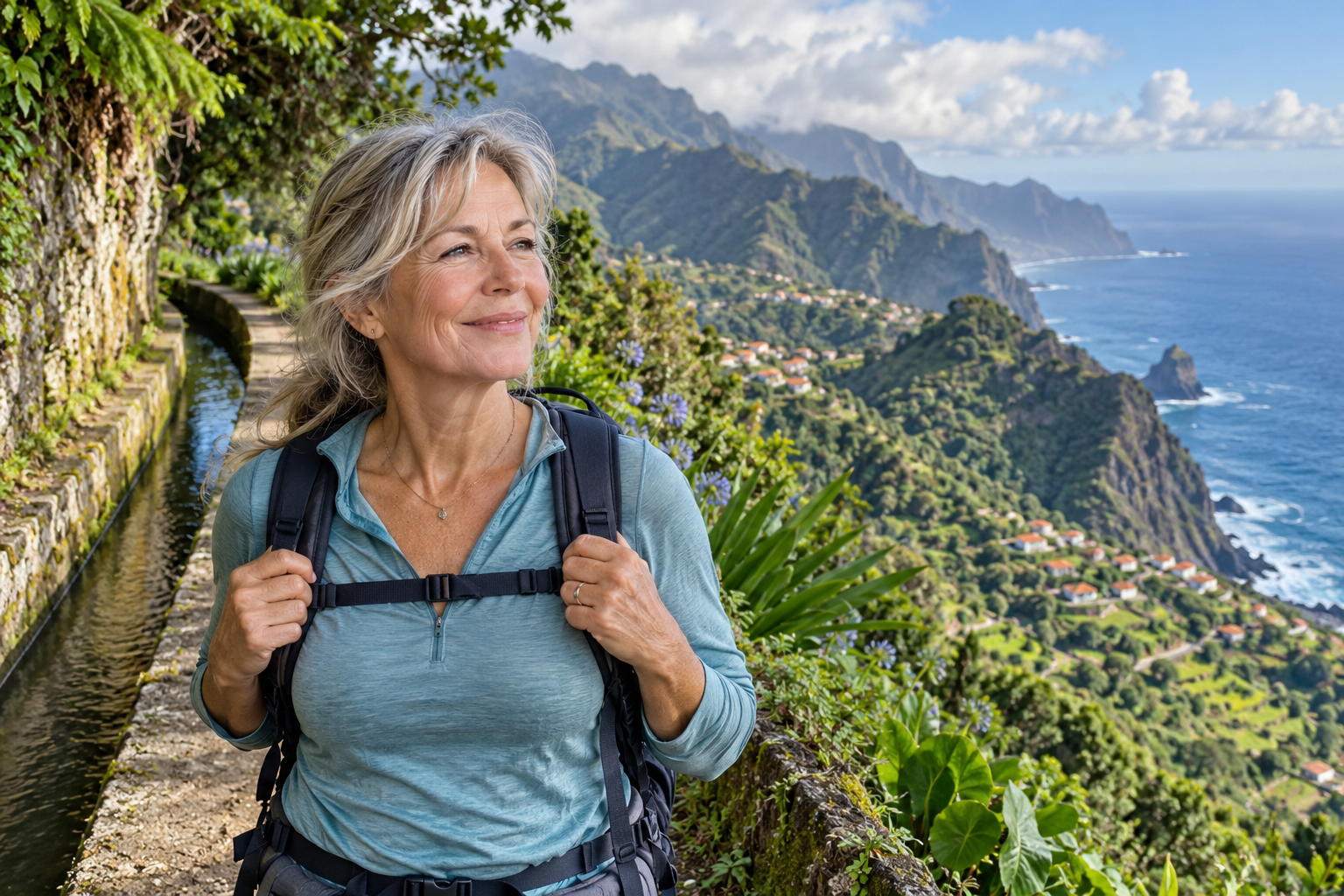
The second thing Madeira offered was a place genuinely worth being, and its signature is the climate. The island is famous for what people call its eternal spring, a mild, temperate weather that holds roughly steady all year round, without the brutal heat of a tropical island or the hard winters of the north.
For an older person, that gentleness is a gift. There are no punishing summers to hide from and no icy months to dread, just a long, even, spring-like climate that makes being outdoors a daily pleasure rather than a seasonal gamble. Madeira is lush and green and dramatic, a volcanic island of mountains and forests laced with the famous levada walking paths, and the mild weather means a retiree can actually use all of it, walking and being in nature as a normal part of life.
The pace suits it. Madeira is slower and quieter than the mainland, safe and walkable in its capital, with a growing community of foreigners who have come for the same reasons. It is the kind of place that rewards a small, local, outdoor life, which is exactly the kind of life a careful budget and a tired nervous system both happen to want. The island does not ask you to spend much or rush anywhere, and that turns out to suit a great many people arriving late and lightly funded.
There is a kind of permission in that. A place where the default life is small, outdoor, and inexpensive lets a careful retiree feel normal rather than deprived, because frugality is simply how the island lives, not a hardship she alone is enduring. The modest life is the local life, and that makes all the difference to how it feels to live it.
The Fear That Shrank Her World

The fear of flying is the part of the story that sounds like it should have ruled Madeira out, and to understand why it did not, you have to understand what a fear like that actually costs. For years, hers had been quietly making her world smaller.
It is rarely the flying itself that does the damage. It is everything the fear talks you out of: the trips not taken, the places never seen, the family on the far coast visited less and less, the slow narrowing of a life down to the places you can reach without boarding a plane. A fear of flying, left to run, does not just make flying hard; it makes the whole world recede, until your life quietly contracts to a small, safe, familiar circle, and you tell yourself that is simply what you prefer.
That shrinking is the real cost, and it is a heavy one. She had reached her sixties with a sense that her horizons had been closing for years, not because she lacked the desire to go places, but because the fear had made going anywhere an ordeal she kept declining. The fear had not just cost her flights; it had cost her a larger life, and she knew it.
The One Flight She Had to Take
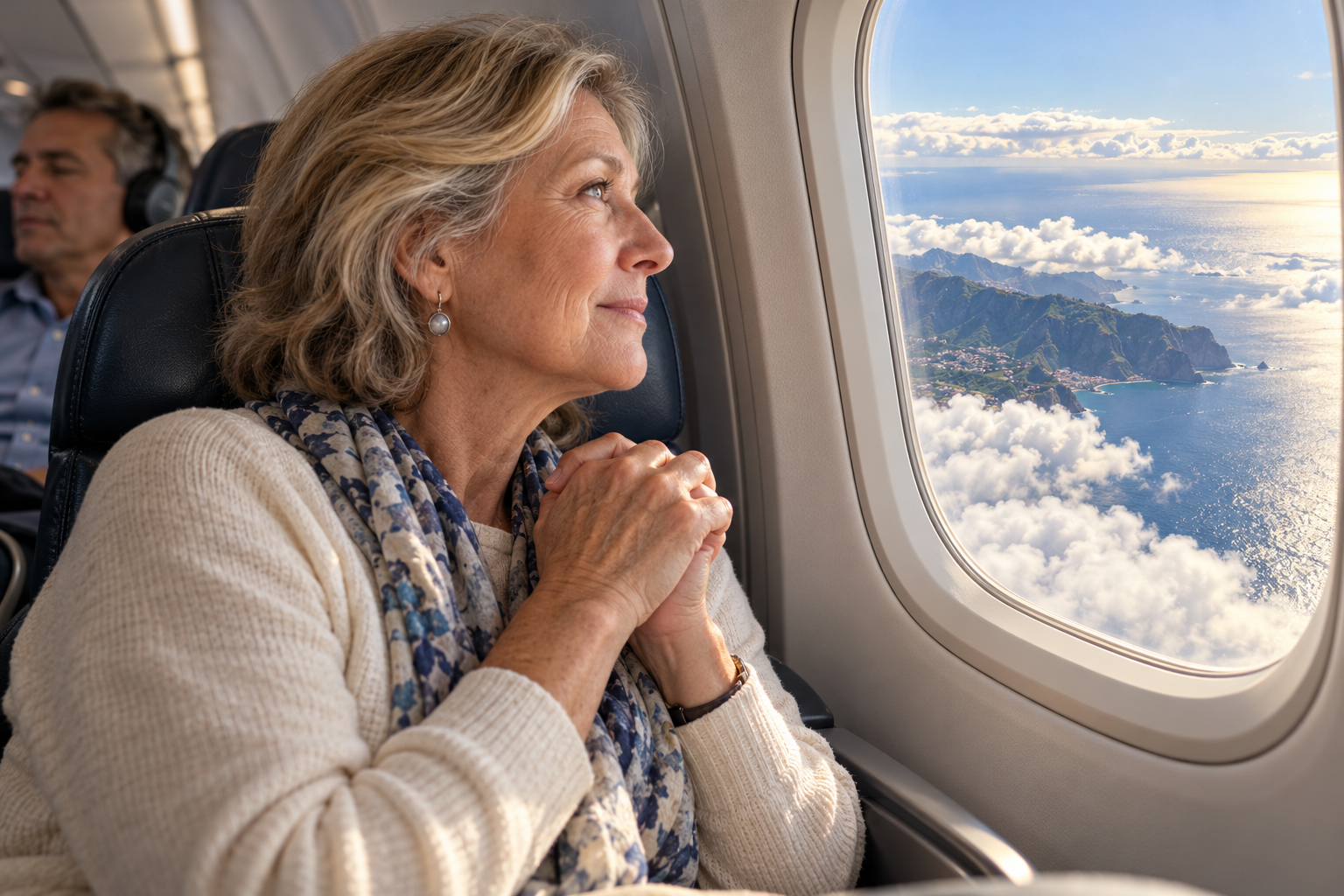
Here is where Madeira does something unexpected with the fear, almost by accident. Madeira is an island, reachable from the mainland essentially only by air, with no passenger ferry to carry you across from Portugal. To move there at all, she had to fly.
So the move forced the confrontation she had spent years avoiding. There was no way around it and no slow boat to hide on; to get to the life she wanted, she had to face the single thing she feared most and simply get on the plane. It was, by every account these stories share, genuinely frightening, the hours of dread beforehand and the white-knuckled flight itself. But she did it, because on the other side of that one flight was the whole rest of her life, and that turned out to be a reason big enough.
There is something clarifying about a fear with a prize on the far side. For years the fear had always won, because saying no cost her only things she could pretend not to want. This time, saying no meant giving up the entire plan, the island, the affordable life, the fresh start, and that was finally too much to surrender. She faced the flight not because she had conquered the fear, but because she had found something worth being afraid for.
The Island That Lets You Stay
What happened next is the quiet heart of the story, and it is why the island gets credit for fixing the fear, even though no island can cure a phobia. Once she was on Madeira, she almost never had to fly again.
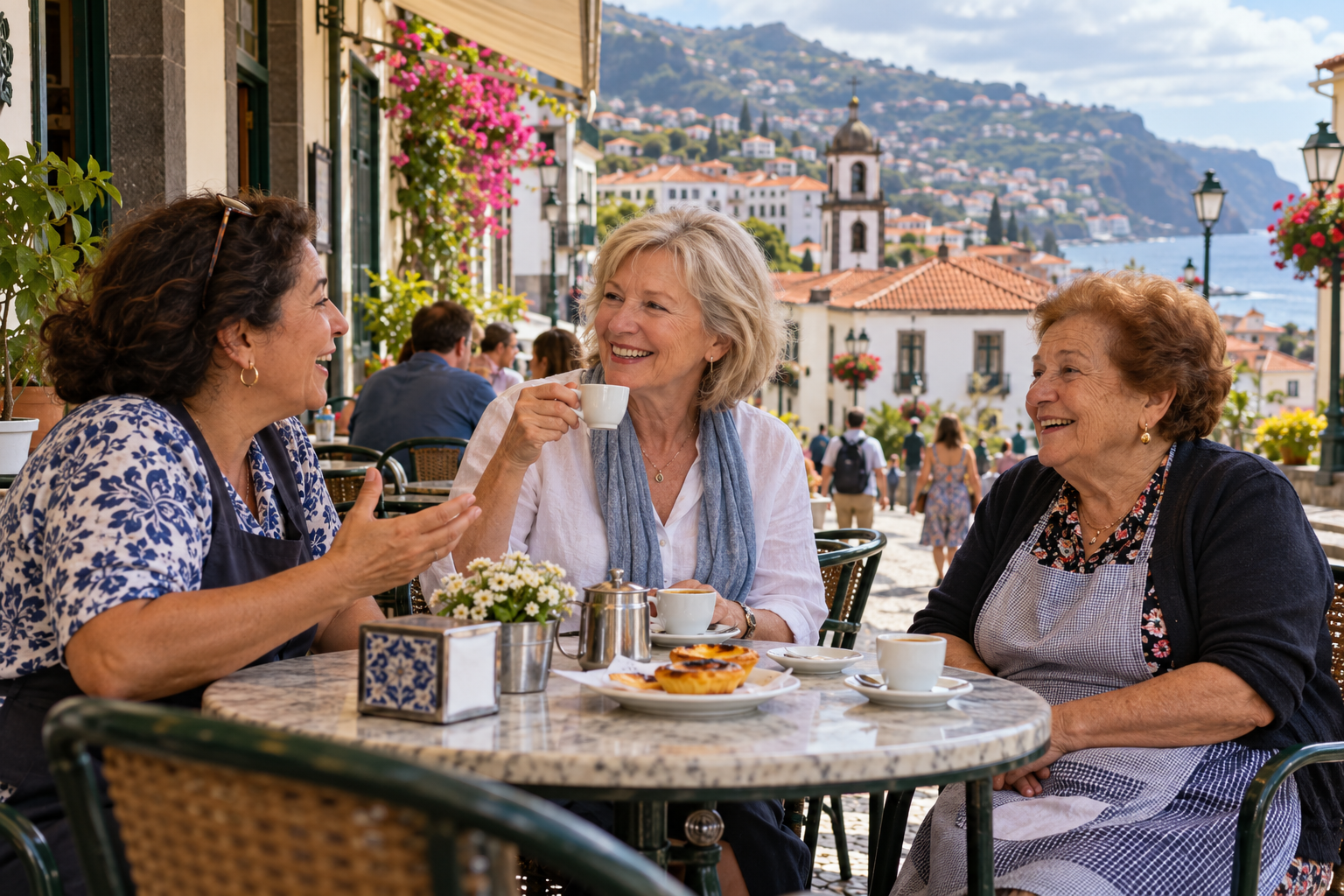
This is the gift of settling on an island and building a small, local life. Her days became walks along the levadas, the market in Funchal, coffee with the friends she slowly made, a life lived entirely within reach of her own feet and the local bus. The fear of flying, which had loomed so large when flying was a regular demand, simply stopped coming up. You cannot be ruled by a fear of something you rarely have to do, and island life rarely asked her to do it.
And having faced that one big flight and survived it, the fear loosened its grip in a subtler way too. It is a common and gentle truth about fear that confronting it, even once, even badly, drains some of its power, because the catastrophe you dreaded did not come. The fear did not vanish, but it shrank back down to a manageable size, no longer the thing that organized her whole life. The island did not perform surgery on her mind; it simply gave her a life where the fear had almost nothing to feed on, and where the one time she had fed it, she had come out the other side intact.
Honestly, It Did Not Fix Everything
It would be dishonest to end there, because the neat version leaves things out, and the honest version has real edges. The fear of flying did not disappear. She still dislikes planes, still dreads the rare trip back to see family, and still feels the old anxiety rise when a flight is unavoidable, so anyone with a serious phobia should know that an island is a way to live around a fear, not a cure for it, and that genuine, disabling fear often deserves real professional help.
The distance cuts both ways, too. The same ocean that lets her stay put also sits between her and the people she left behind, so the family she sees less is still the family she sees less, and the occasional flight home is both expensive and frightening. A hundred and forty thousand dollars, stretched as it is by Madeira, remains a thin cushion with little slack for a real emergency, and the island, lovely as it is, runs in Portuguese, so the language is a daily effort rather than the effortless English of some other havens.
None of this unmakes the story, but it rounds it out. Madeira did not wave a wand over her money or her fear; it gave her a place where a modest sum was enough and a frightening thing was rarely required, which is a quieter and more honest kind of fixing. The problems did not vanish. They stopped running her life.
The Island That Fixed Both
So, in the end, did the island fix both? In the way that counts, yes. It took a nest egg that was too small to retire on anywhere normal and made it the foundation of a comfortable, gentle life. And it took a fear that had been shrinking her world for years and gave her a place where that fear no longer held the pen.
The deeper lesson in her story is that the fix for a fear and the fix for a budget can turn out to be the same thing: a smaller, slower, more local life in a place that gives you enough. She did not conquer her fear of flying or strike it rich; she found somewhere that let a careful budget stretch and let a frightened heart settle, by asking little of her money and little of her nerves. For a certain kind of person, arriving late and lightly, that is not a consolation prize. It is exactly the life they were looking for.
If there is one thing to take from it, it is that you do not always have to fix the big problems head-on to get free of them.
Sometimes you change where you stand, and the problems that loomed so large at home turn out to be the size of the life you built around them. Madeira did not make her fearless or wealthy. It made her, in the ways she needed, enough.

About the Author: Ruben, co-founder of Gamintraveler.com since 2014, is a seasoned traveler from Spain who has explored over 100 countries since 2009. Known for his extensive travel adventures across South America, Europe, the US, Australia, New Zealand, Asia, and Africa, Ruben combines his passion for adventurous yet sustainable living with his love for cycling, highlighted by his remarkable 5-month bicycle journey from Spain to Norway. He currently resides in Spain, where he continues sharing his travel experiences with his partner, Rachel, and their son, Han.