
If you could carry only one French word into France, it would not be merci, and it would not be the famously useful s’il vous plait. It would be bonjour. This single word, meaning simply good day, is the master key to the entire country, the difference between a France that is warm, helpful, and charming and a France that is cold, dismissive, and exactly as rude as its reputation.
Say it, and doors open, waiters smile, shopkeepers go out of their way for you. Fail to say it, and you will meet the legendary French froideur, the chilly indifference that tourists complain about endlessly, almost always without realizing that they brought it on themselves. The truth that transforms a trip to France is this: the rudeness you may have heard about is a response to your own failure to say one small word. Here is the bonjour rule, how far it reaches, why skipping it turns the French against you, what it really means, and how using it changes your entire experience of the country. It is, without much competition, the single most useful thing an American can learn before setting foot in France.
What follows is the word that opens every door, why skipping it makes the French seem rude, what the greeting really means, how to actually use it, and how it transforms the whole country.
The Word That Opens Every Door

The rule is beautifully simple, and it is absolute: in France, you say bonjour first, before anything else, every single time with another person. You walk into a shop, and before you touch a single item or ask a single question, you say bonjour to whoever is there. You approach a counter, a ticket window, a market stall, and the first thing out of your mouth is bonjour. You stop a stranger on the street to ask directions, and you open not with your question but, again, with bonjour, because to the French the question without the greeting is unthinkable. The pattern never varies: person first, request second, no exceptions, no matter how rushed you feel or how small the interaction seems. The greeting comes before the request, always, and after about six in the evening it shifts to bonsoir, good evening, but the principle never changes: you greet the human being before you ask them for anything.
This is not a nicety you can skip or when your French is shaky. It is the non-negotiable opening move of every social and commercial interaction in the country, so fundamental that the French themselves do it automatically hundreds of times a day without thinking. And here is the magic of it: when you do say bonjour, the effect is immediate and often startling. The same French people tourists describe as cold will frequently become helpful, patient, even warm, because you have performed the small ritual of acknowledgment that French life runs on. The word costs you absolutely nothing and takes half a second to say, and it is, without the slightest exaggeration, the single most powerful thing you can do to make France like you. There is no other gesture so small that buys so much goodwill, which is exactly why seasoned travelers to France treat it as sacred.
It Is Not Just Shops
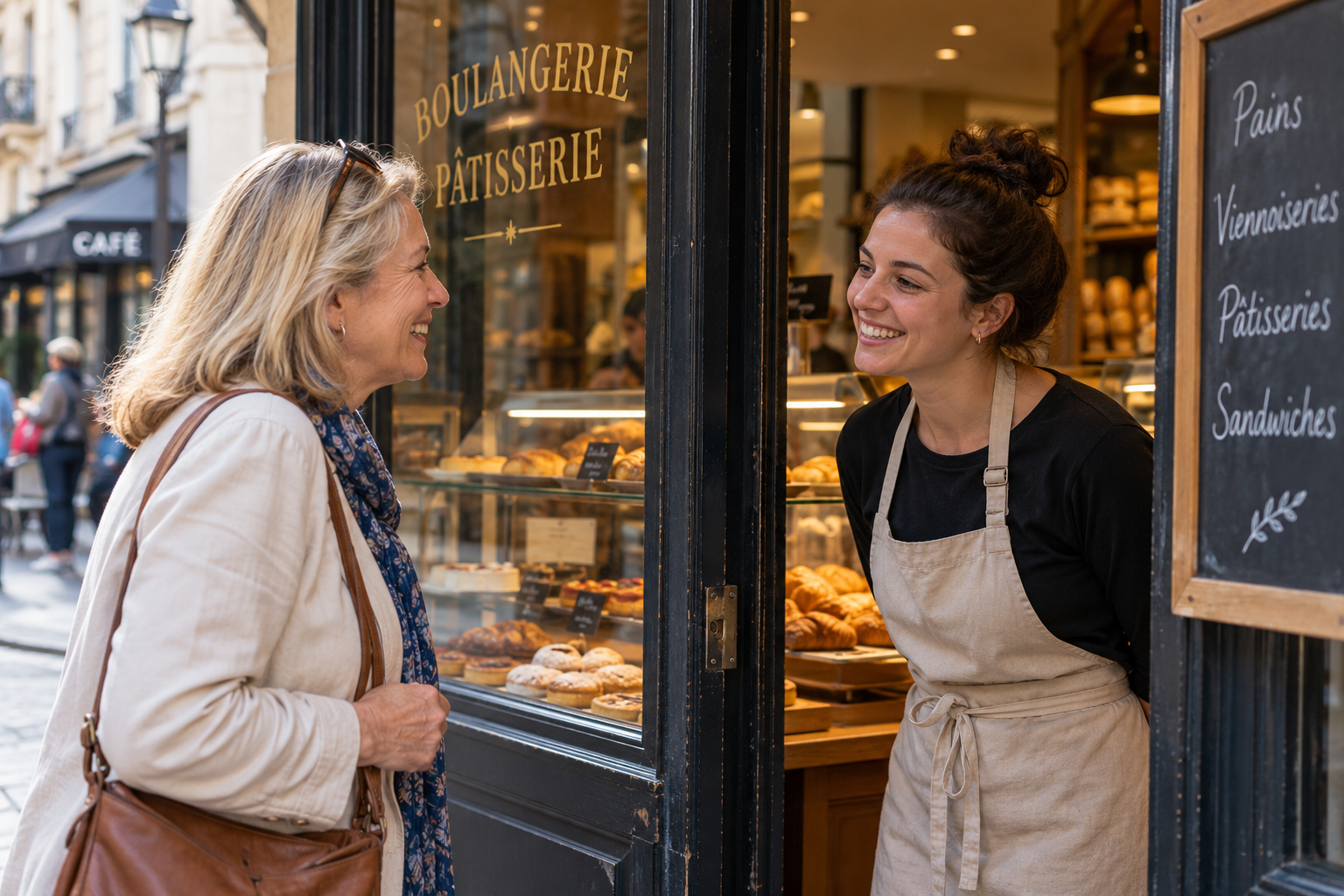
One thing that surprises Americans is just how far the bonjour rule reaches, because it extends well beyond the obvious shop-and-restaurant situations into corners of daily life where an American would never dream of greeting anyone. Step into a small elevator with a stranger in France and you say bonjour. Enter a doctor’s waiting room full of people you have never met, and the polite move is a general bonjour to the room. Get into a taxi, approach your apartment building’s concierge, pass a neighbor on the stairs, sit down in a small family restaurant near other diners, and in each case a greeting is expected. The French greet the space and the people in it, not just the person they need something from.
To an American, used to moving through public spaces in a kind of companionable anonymity, saying hello to a whole waiting room or a fellow elevator passenger can feel strange, even intrusive. But in France it is simply courtesy, an acknowledgment that you have entered a shared space occupied by other human beings whose presence you are choosing to recognize rather than ignore. Getting this right, greeting not just the shopkeeper but the room, marks you unmistakably as someone who understands how things are done, and it deepens the warmth you get back. The broad lesson is that in France the greeting is not a transaction-opener you deploy only when you want something; it is a general social lubricant applied liberally throughout the day, and the more naturally you scatter your bonjours around, the more the country opens up to you.
Why Skipping It Makes the French Seem Rude
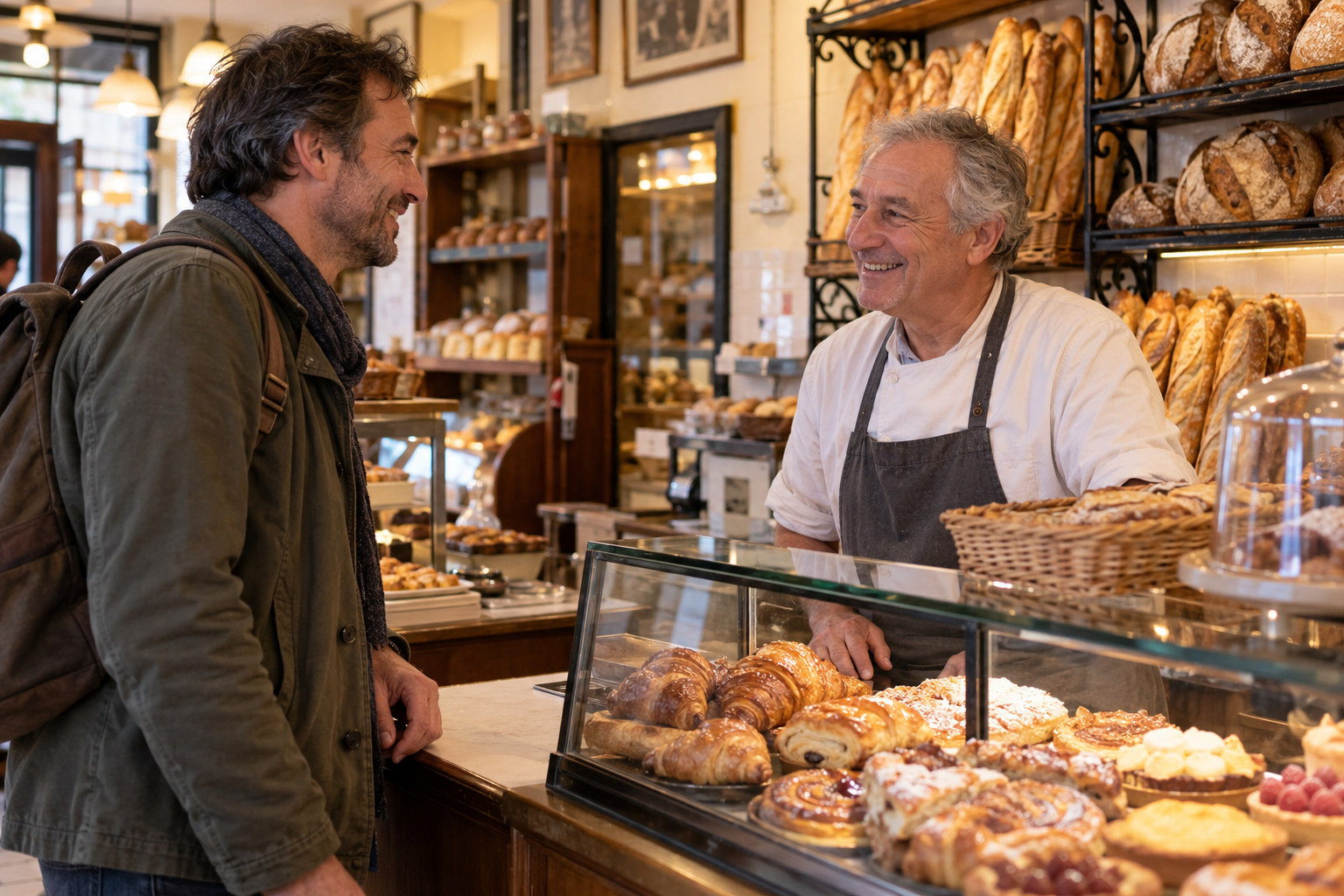
Here is the reframe that changes everything, because it explains the great misunderstanding at the heart of so many disappointing trips to France. When a tourist walks into a Parisian shop and, without any greeting, immediately asks do you speak English? or wheels straight into where is the Eiffel Tower?, what they experience next is a cold, clipped, unhelpful response, and they walk away muttering about how rude the French are. But from the French point of view, the rudeness came first, and it came from the tourist. Launching straight into a demand without so much as a bonjour is, in French culture, genuinely shocking bad manners, the social equivalent of barging into someone’s home without knocking.
So the chilly reception that follows is not unprovoked French arrogance; it is a response to what the French experience as rudeness. The tourist, without ever intending any offense, has treated the shopkeeper like a vending machine, something to extract an answer or a product from rather than a person to greet and acknowledge, and the shopkeeper, feeling that small but real disrespect keenly, responds in exactly the kind the tourist gave: coldness for coldness. It is a perfectly rational French response to what the French reasonably perceive as rude American behavior, which is the opposite of how the tourist has understood the whole exchange.
Neither side understands the other at all: the tourist walks away convinced the French are inexplicably hostile and arrogant, while the French are left thinking the tourist was inexplicably boorish and ill-mannered, and both are reacting honestly and in good faith to a simple clash of expectations that nobody ever explained to either of them. It is a tragedy of manners in miniature, repeated thousands of times a day across the country, and it turns entirely on a word. The famous rudeness of the French is very substantially a myth built on a missing word. Remove the misunderstanding by simply saying bonjour, and an enormous share of that reputed rudeness simply evaporates, because it was never really there in the way visitors imagined.
What the Greeting Really Means
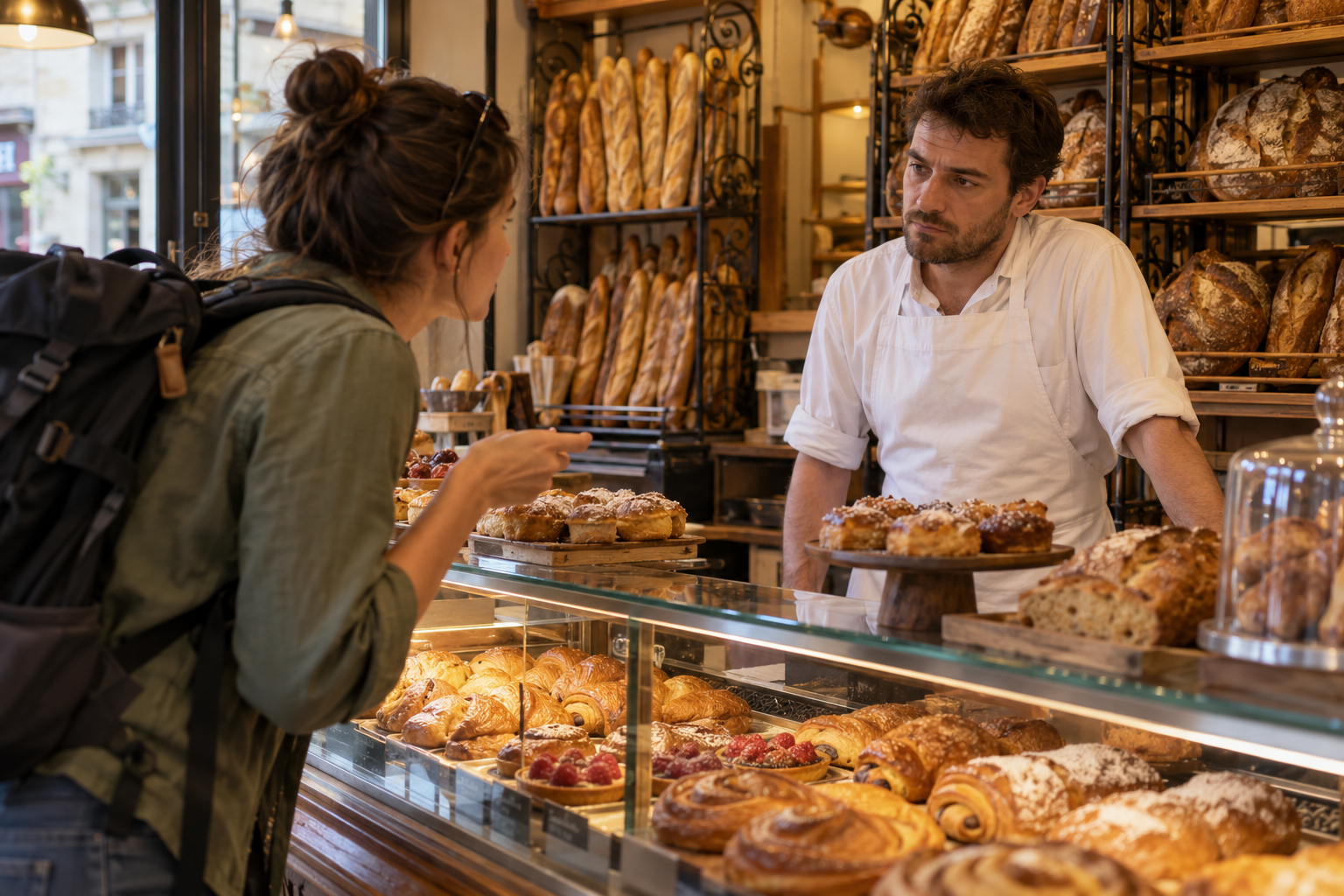
To use the bonjour rule well, it helps to understand why it matters so much to the French, because it is about something deeper than mere politeness formula. At its heart, saying bonjour is an act of acknowledging the other person’s humanity before you ask anything of them. It says, in effect, I see you as a person, not as a means to my end, and only once that recognition has passed between you is it acceptable to proceed to business. In French culture, every interaction, however brief, however purely commercial, is understood first and foremost as a human encounter between two equals who owe each other basic recognition, and the greeting is precisely the gesture that establishes that footing before any business is done. Skip it, and you have skipped the part where you acknowledged that the other person is a person at all.
This is why skipping it reads as so much worse than mere brusqueness to the French. To walk up to someone and immediately start asking for things, without first acknowledging them as a person, is to treat them as beneath notice, as furniture or machinery rather than a fellow human being, and that is genuinely insulting in a culture that places such weight on this small ceremony of mutual recognition. The bonjour is not empty etiquette; it is a tiny but real assertion of dignity, theirs and yours, a way of saying we are two people meeting, and we will treat each other accordingly. Understood this way, the rule stops feeling like an arbitrary hoop to jump through and starts feeling like what it is: a graceful, humane little custom that insists on treating even the most fleeting transaction as an encounter between people who matter. Once you truly see that, saying bonjour stops being a chore or a tourist’s defensive tactic and becomes something closer to a pleasure, a small, civilized moment of connection you get to repeat dozens of times a day. You begin to enjoy the little ritual rather than merely performing it, and the French can tell the difference.
How to Actually Use It
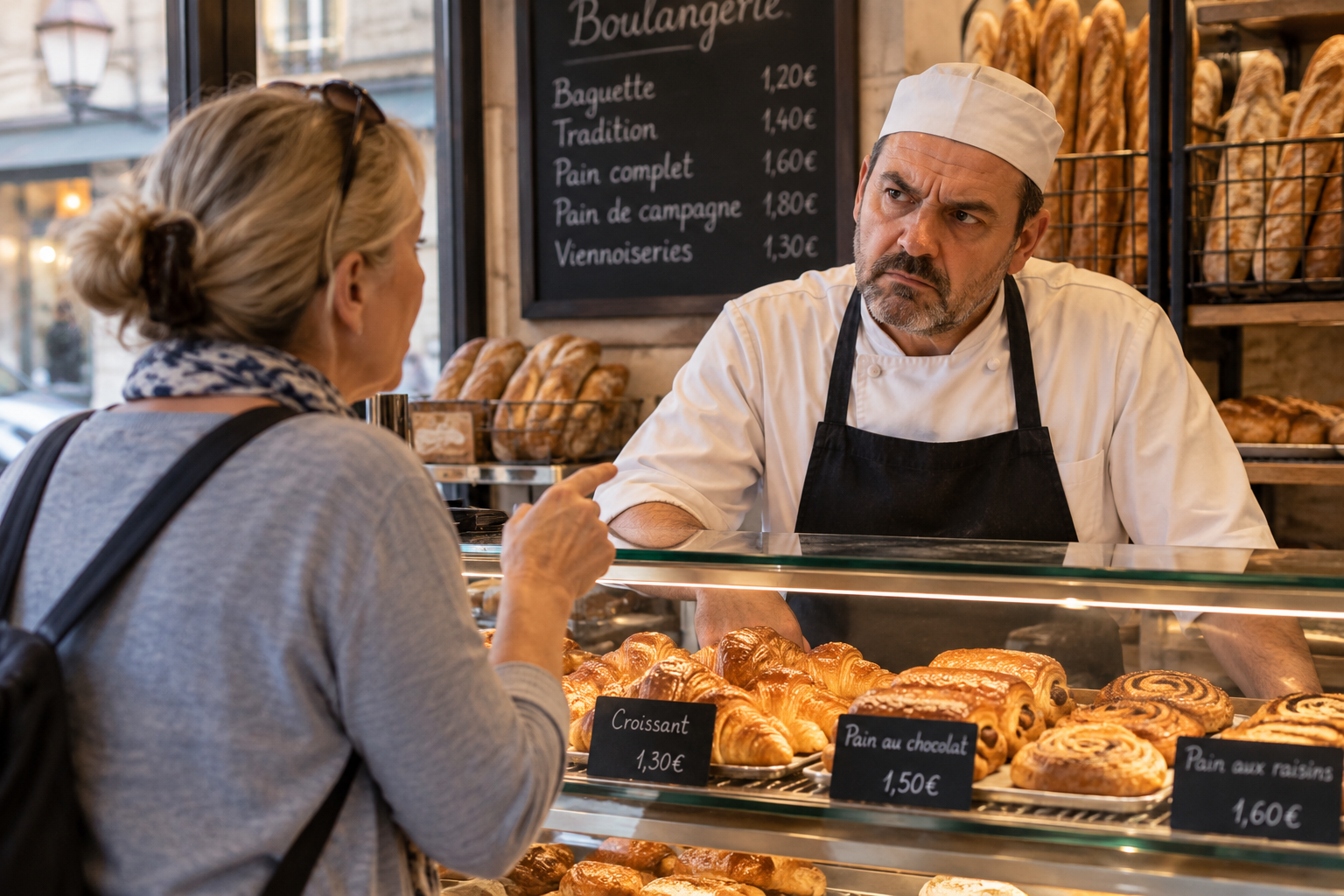
Putting the rule into practice is wonderfully easy, and you do not need to speak more than a few words of French to get the full benefit. The core habit is this: every time you enter a shop, approach a person, or begin any interaction, lead with the greeting. Bonjour madame to a woman, bonjour monsieur to a man, or simply bonjour to be safe, is your opening line in every situation, switching to bonsoir in the evening. Say it with a small smile and a bit of eye contact, and then, and only then, proceed to whatever you actually need.
The beauty is that the bonjour does the heavy lifting even if the rest of your French is nonexistent. Once you have greeted the person properly, it is perfectly fine to ask parlez-vous anglais? (do you speak English), meaning do you speak English, and you will find the person far more willing to help than if you had opened with that question cold.
The key is that parlez-vous anglais comes after the bonjour, never instead of it. Round out the interaction at the other end, too: say merci when they help you and au revoir, goodbye, when you leave, and you will have bracketed the whole exchange in exactly the courtesies the French expect. That is genuinely the entire technique, start to finish. Greet first, transact in the middle, thank and bid farewell at the end, and you will be treated, even armed with only those four or five words of French, as a gracious and welcome visitor rather than a rude one. You do not need fluency; you need the frame, and the frame is nothing more than a hello and a goodbye wrapped around whatever you actually came to say.
How One Word Transforms the Whole Country
The payoff for this tiny effort is almost absurdly large, which is why the bonjour rule is the single most valuable thing a first-time visitor to France can learn. Travelers who absorb it and start greeting everyone properly report that the France of their fears essentially disappears and is replaced by a France of helpful shopkeepers, friendly waiters, and patient strangers happy to point them in the right direction. It is the same France and the same people; the only thing that changed is one word at the start of each interaction, and that one word changed everything.
It is worth knowing, too, that this is not uniquely French but part of a broader European sensibility, especially across the Romance-language south, where the greeting before the request is simply how things are done. Walk into a shop in Spain with a buenos dias, in Italy with a buongiorno, in Portugal with a bom dia, and you unlock the same warmth you unlock in France with bonjour, so the habit you build in one country serves you across the continent.
But nowhere is the contrast sharper, or the reputation more fearsome, than in France, which means nowhere does the simple magic of the greeting pay off more dramatically. Learn this one word and build the instinct to lead with it in every encounter, and you will have solved, at a single stroke and for the price of one syllable, the single biggest avoidable problem most Americans have in France. Everything else, the food, the sights, the language, is easier once the people are on your side, and the people are on your side the moment you say hello. The country was never really rude; it was only waiting, politely, for you to say hello first.

About the Author: Ruben, co-founder of Gamintraveler.com since 2014, is a seasoned traveler from Spain who has explored over 100 countries since 2009. Known for his extensive travel adventures across South America, Europe, the US, Australia, New Zealand, Asia, and Africa, Ruben combines his passion for adventurous yet sustainable living with his love for cycling, highlighted by his remarkable 5-month bicycle journey from Spain to Norway. He currently resides in Spain, where he continues sharing his travel experiences with his partner, Rachel, and their son, Han.