
Here is a price comparison that sends thousands of Americans to the airport every single year with little in their carry-on but a dental X-ray and a treatment plan. A single crown that runs around eighteen hundred dollars at a dentist in Ohio can be had for a small fraction of that at a well-regarded clinic in Portugal, sometimes for a couple of hundred dollars. Multiply that gap across the kind of serious dental work people actually travel for, several crowns, implants, a full-mouth restoration, and the savings can run into the tens of thousands, enough to cover the flights, the hotel, a week of sightseeing, and still leave you thousands of dollars ahead of where you would have been at the dentist down the street. That is not a small discount; it is a different financial universe for the same teeth.
It sounds too good to be true, and like most things that sound that way, it is both real and more complicated than the headline. Here is why the price gap exists, why it does not mean worse teeth, where Americans actually go, how the trip itself changes the math, the catches nobody puts in the brochure, and how to tell whether flying for your teeth makes sense for you. The answer, as with most arbitrage, depends entirely on the size of the number involved.
What follows is how real the price gap is, why it is so much cheaper abroad, where people go, the catches, and how to work out whether it is worth it for you.
How Real the Price Gap Is

Start with honest numbers, because the headline pair is the dramatic end of a genuine range, not a trick. In 2026, a single US crown commonly runs between about twelve hundred and twenty-five hundred dollars, depending on the material, the city, and the dentist, so eighteen hundred dollars is a very real, middle-to-higher American price rather than an outlier. In Portugal, the same crown typically costs a few hundred dollars, often fifty-five to seventy percent below the US price, which puts a two-hundred-and-eighty-dollar crown at the low, zirconia-or-porcelain end of a real Portuguese range. The exact pair you quote will vary with the material, the clinic, and the city on each end, but the gap itself is not marketing: it shows up consistently across clinic after clinic and country after country, which is exactly why a whole industry has grown up around it.
The savings grow enormously on bigger work, which is the whole reason this is a phenomenon rather than a curiosity. Implants in Portugal run seventy to eighty percent below US and UK prices, and a full-mouth restoration or an All-on-4 case, the kind of work that can cost fifty or sixty thousand dollars in America, is where the arithmetic becomes life-changing, with total savings that routinely pay for the entire trip many times over. The context behind the demand is stark: more than a hundred and fifty million Americans have no dental coverage at all, and even those who do often find that insurance barely dents a large bill. For a lot of people, the choice is not between a cheap crown abroad and a cheaper crown at home. It is between getting the work done abroad and simply not getting it done at all, living with the pain, the gap, or the failing tooth because the American price tag put a fix out of reach. Framed that way, the plane ticket is not an indulgence; it is the thing that makes treatment possible.
Why It Is So Much Cheaper Abroad
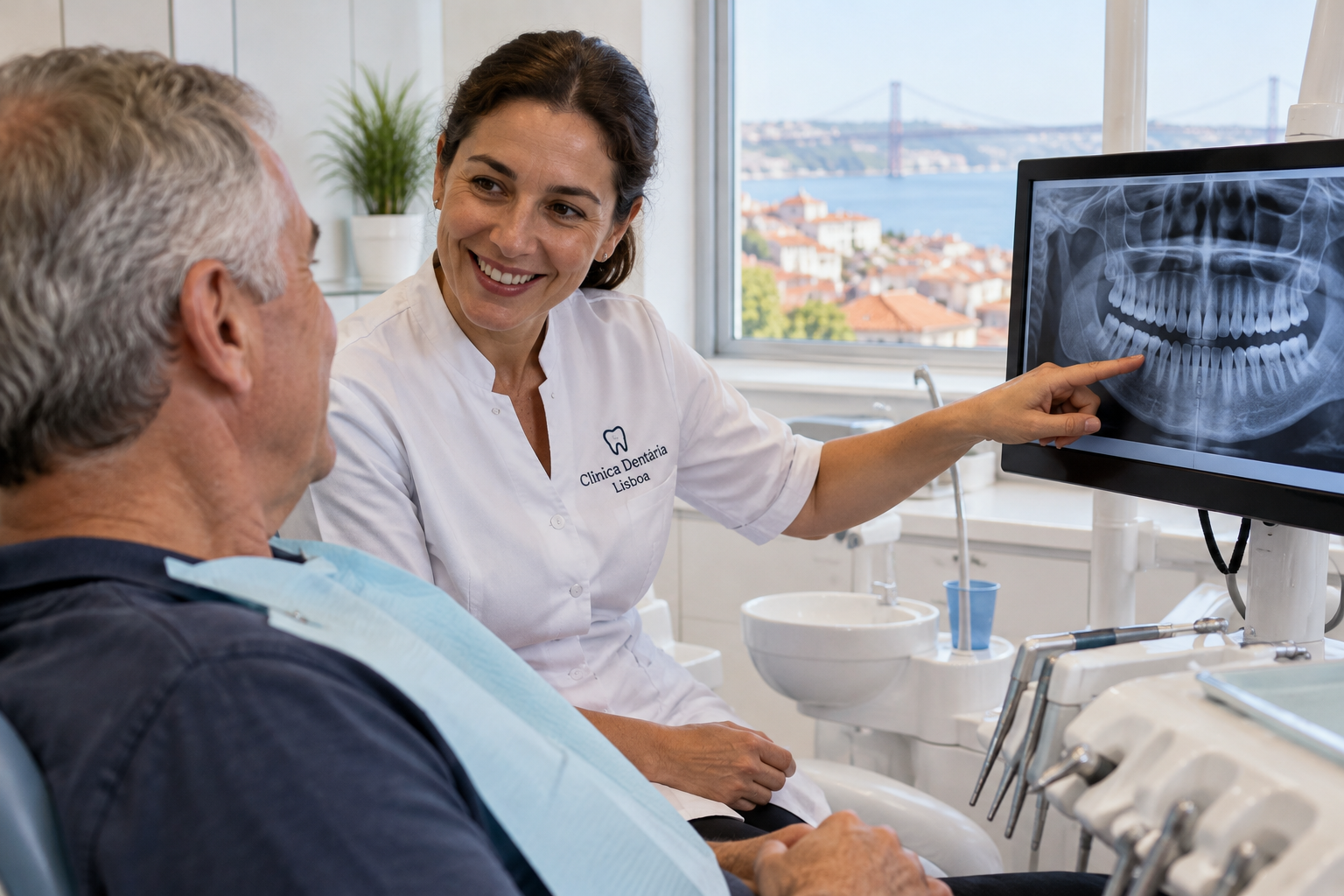
The reflexive American worry is that a price that low must mean corners cut, worse materials, or a dentist you would not trust, and that worry is mostly misplaced, so it is worth understanding where the savings actually come from. The gap is driven by cost of living and the economics of running a practice, not by quality. Labor, rent, staff, lab work, malpractice insurance, and general overhead all cost dramatically less in Portugal or Hungary than in the United States, and dentists there can charge a fraction of American prices while still running excellent, modern, profitable clinics. The American price is not high because American crowns are better; it is high because everything behind an American dental chair is expensive, and that cost lands on the patient. You are not buying a worse crown; you are buying the same crown without the American cost structure baked in.
The quality evidence backs this up. The best international clinics use the very same implant brands the top American practices use, names like Straumann and Nobel Biocare, and the same materials, zirconia, porcelain, and E-max, often made with the same CAD and CAM digital technology. Portugal in particular has built a serious reputation, home to world-renowned clinics with decades of experience treating international patients and some of the deepest expertise anywhere in full-arch implant work, and several studies rank Portuguese dental care among the best globally. Hungary, and Budapest especially, has been Europe’s dental tourism capital for years, long before it was fashionable, with a dense cluster of highly regarded, internationally accredited clinics that have treated foreign patients for decades. None of this means every clinic abroad is good, any more than every American dentist is, and there are certainly bad clinics abroad just as there are at home. But it does mean the low price is fundamentally a reflection of a different economy, not a different standard of care, and that is the single most important thing to understand before dismissing the whole idea out of hand as too cheap to trust.
Where Americans Actually Go
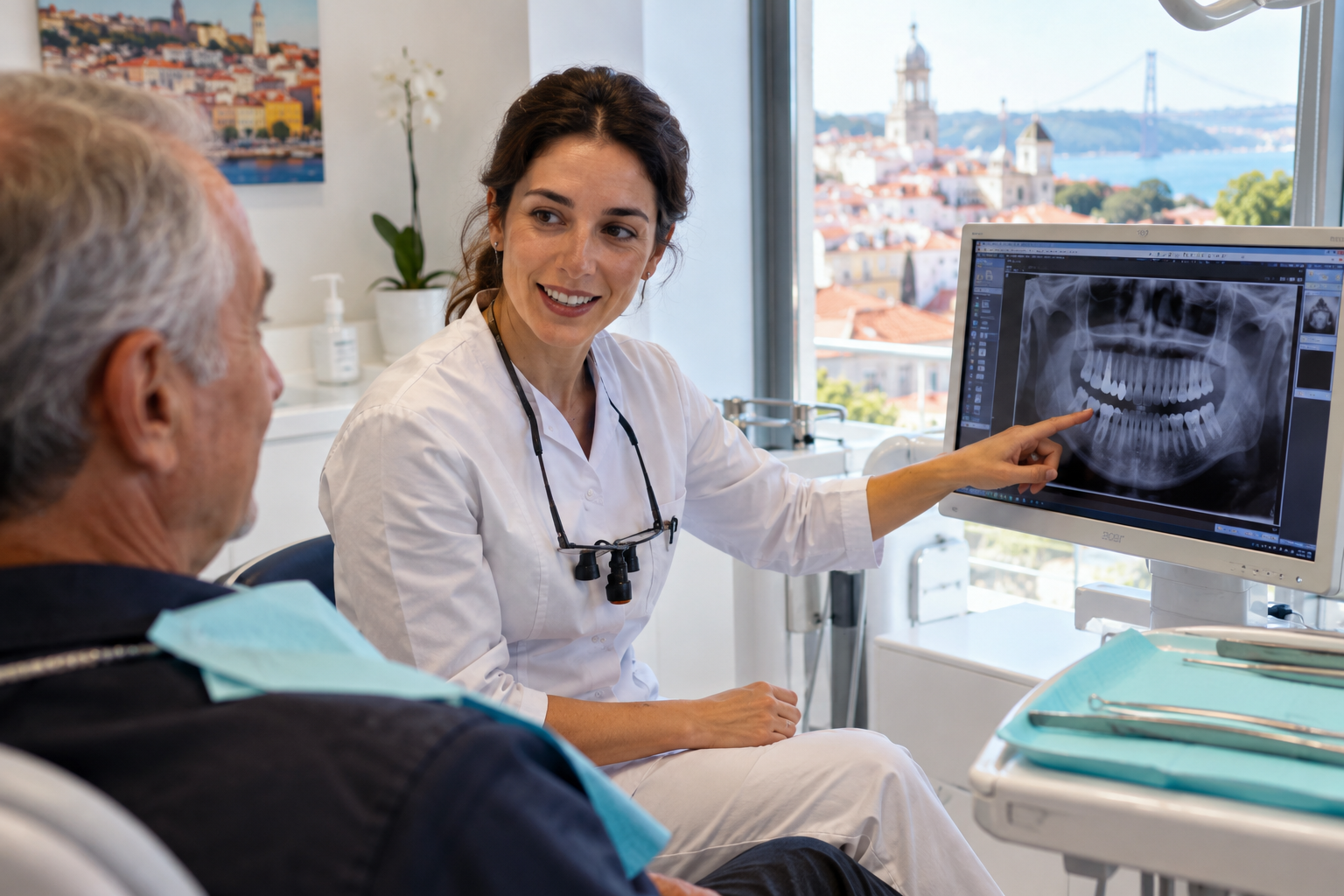
Americans heading abroad for dental work tend to sort themselves by distance and by the size of the job. For those in the Southwest who want to avoid flying entirely, Mexican border towns, Los Algodones above all, nicknamed Molar City, are the simplest trip imaginable, cheap and close and reachable by car, and they handle enormous volumes of American patients every single day. For many Americans this is the entry point to the whole phenomenon, a short drive rather than a transatlantic flight. Mexico wins on convenience and cost for North Americans, which is why it dominates for routine and mid-sized work where a flight would not be worth it.
For bigger, more complex cases, and for those willing to combine the trip with a European holiday, the calculus shifts toward Europe. Portugal has become the premium choice for serious implant and full-arch work, prized for its deep expertise, strong quality reputation, and the appeal of recovering in Lisbon or the Algarve rather than a border strip mall. Hungary remains the established European hub, especially popular with Europeans but increasingly with Americans for extensive restorations. Turkey has surged as a destination for all-inclusive full-mouth packages, where one headline price often bundles the treatment, the hotel, and the airport transfers into a single number, which is appealing for its simplicity but also the category where it pays most to check exactly what is and is not included before you commit. The pattern is clear and worth internalizing before you choose: the farther you fly, the bigger the job needs to be to justify it, so people fly to Mexico for a crown or two and to Portugal, Hungary, or Turkey for the kind of extensive, five-figure work where the savings dwarf the cost of the trip several times over. Match the destination to the size of the job, not just to the lowest headline price.
The Trip Is Part of the Deal
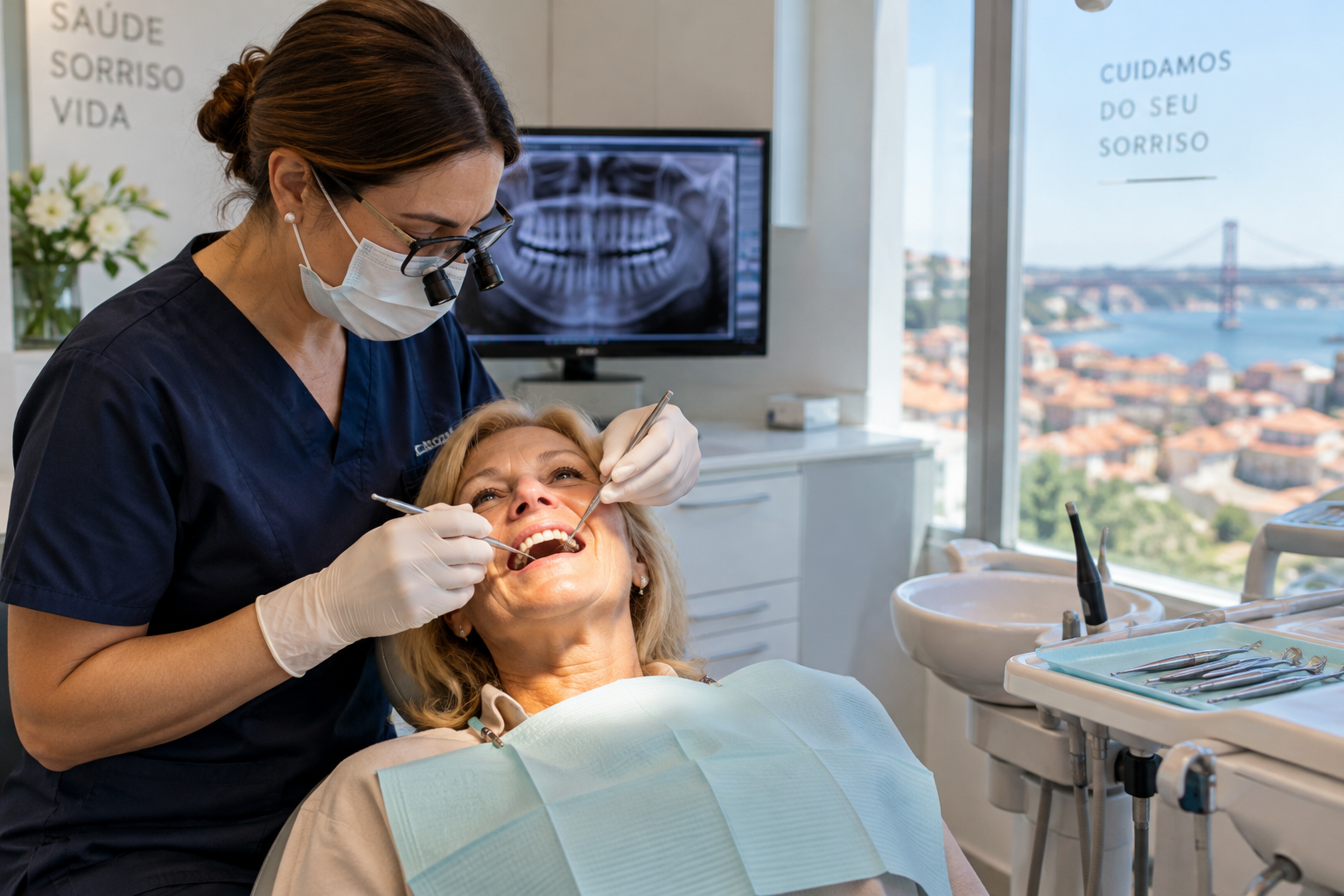
There is a quiet psychological trick that makes European dental tourism especially appealing, and it is worth naming because it changes the math in your favor. When you fly to a Mexican border town for a crown, the trip is pure cost, a grim errand you would never choose for its own sake. But when you fly to Portugal or Hungary for a full-mouth restoration, the trip is also a holiday, and the flights and hotel you were going to count against your savings are suddenly buying you a week in Lisbon or Budapest as well. The expense you were mentally filing under dental costs turns into a vacation you might have taken anyway.
This is not just rationalization; it genuinely improves the proposition. Portuguese clinics have leaned into it, with international patient programs built around treating you over a few days while you recover somewhere beautiful, and plenty of people schedule the work with deliberate gaps for sightseeing, sitting in a cafe in the Algarve between appointments rather than a waiting room back home. The dental work is the reason for the trip, but the trip is a real pleasure on its own, and that doubling-up is part of why Europe, despite being farther and pricier than Mexico, holds such appeal for the bigger cases. You are not just saving thousands on your teeth; you are getting a European holiday thrown in, and when both of those are true at once, the whole idea stops feeling like a sacrifice and starts feeling like a surprisingly good deal.
The Catches Nobody Puts in the Brochure
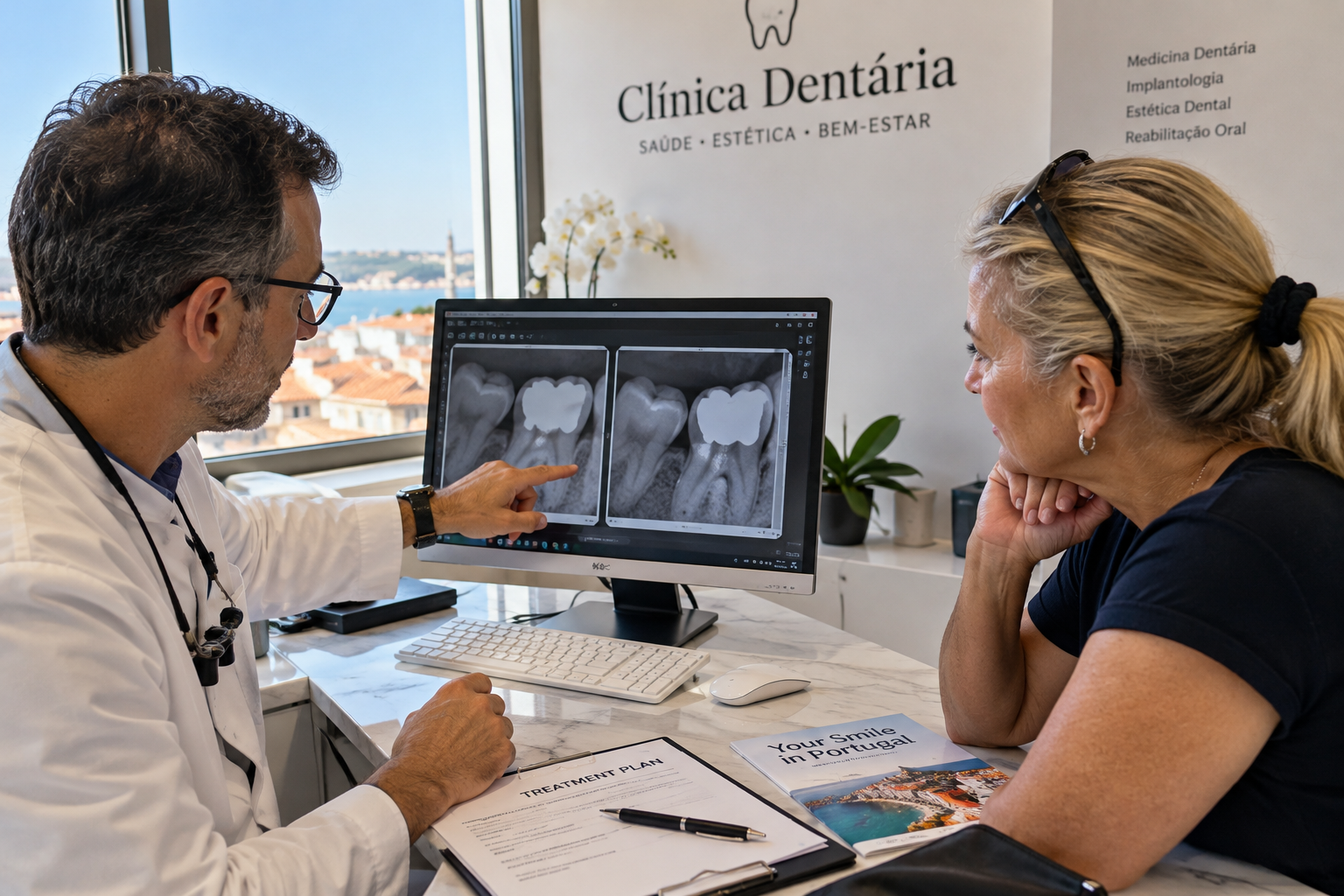
Now the honest part, because dental tourism is not free money and the glossy clinic websites skip the hard bits. The first catch is simple math: travel, flights, hotels, time off work, has to come out of the savings, which means the economics only truly work on big-ticket treatment. Flying to Portugal to save a few hundred dollars on one crown makes no sense once the airfare is counted; flying there to save twenty thousand on a full-mouth restoration makes obvious sense. The bigger and more expensive the work, the more the trip pays for itself, and the smaller the job, the harder the numbers are to justify.
The second catch is the one people underestimate most: what happens if something goes wrong. A crown or implant can fail, need adjustment, or require follow-up, and when your dentist is four thousand miles away, that is a genuine problem. A local dentist back home may be reluctant to touch, let alone warranty, another clinic’s work, and flying back is costly and slow, so you are partly on your own with any complication that arises after you land. For a healthy mouth getting routine crowns this is a small risk; for complex implant work it is a real one, and it belongs in your decision from the start.
This is why vetting the clinic matters enormously, and why serious dental tourists ask pointed questions before they commit: is the clinic internationally accredited, is the prosthetic lab in-house or outsourced, exactly what material will the crown be, is there a written warranty and how would it be honored, and can you get a fully itemized quote with every fee listed. Implant work often also requires multiple visits months apart, the implant placed on one trip and the final crown fitted on another once it has healed, which can mean two journeys rather than one and should be planned and budgeted for from the start rather than discovered halfway through. None of these catches is a dealbreaker, but every one of them is a reason to go in with eyes open, choosing a clinic on its credentials and transparency, not the lowest advertised price, because the cheapest quote is exactly where the real risks tend to hide.
Is It Worth It for You?
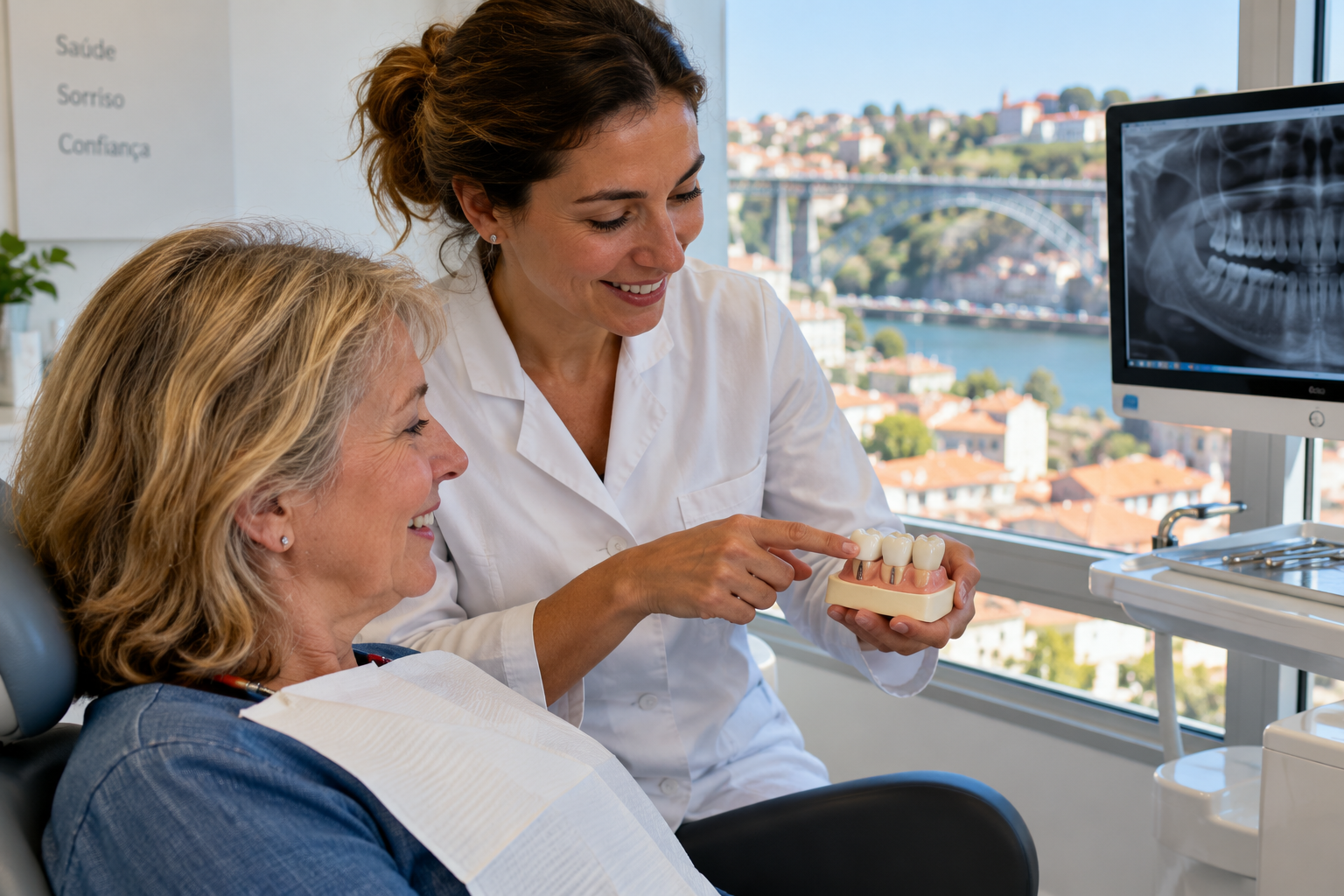
So how do you decide? The honest test is the size of your dental bill. If you need one crown or a small, routine piece of work, the savings almost certainly will not survive the cost of the flight, and you are better off staying home and shopping around locally or looking at a dental school for a discount. The math simply does not favor a transatlantic trip for a few hundred dollars of savings, and any clinic that tells you otherwise is selling the holiday, not the dentistry. For small jobs, your best savings are almost always at home, through shopping around, a dental school, or a discount plan. But if you are facing the big, uninsured numbers, multiple crowns, several implants, a full-arch restoration, the kind of five-figure estimate that makes people quietly decide to just live with the problem, then dental tourism moves from indulgence to serious financial strategy, routinely saving more than enough to cover a comfortable trip and still leave thousands in your pocket.
If that is your situation, do it properly rather than cheaply. Choose a country for both quality and logistics, favor clinics with international accreditation, real reputations, in-house labs, and clear warranties, get everything quoted in writing and itemized, plan for the possibility of a return visit, and treat the lowest price with suspicion, not excitement.
Done that way, carefully and for the right size of job, flying for your teeth is not reckless or desperate; it is a rational, increasingly common response to an American dental system that leaves vast numbers of perfectly sensible people simply priced out of their own mouths. The recklessness would be assuming the system at home is the only option. The people walking through airport security with a dental file in their bag are not, by and large, cutting corners or taking wild risks. Many of them are simply the ones who sat down, ran the numbers honestly, and realized that the plane ticket was by far the cheapest part of finally fixing their teeth.

About the Author: Ruben, co-founder of Gamintraveler.com since 2014, is a seasoned traveler from Spain who has explored over 100 countries since 2009. Known for his extensive travel adventures across South America, Europe, the US, Australia, New Zealand, Asia, and Africa, Ruben combines his passion for adventurous yet sustainable living with his love for cycling, highlighted by his remarkable 5-month bicycle journey from Spain to Norway. He currently resides in Spain, where he continues sharing his travel experiences with his partner, Rachel, and their son, Han.