
The brochure version of retiring in Spain is close to perfect: sunshine most of the year, long lunches, cheap wine, a slower pace, and a cost of living that makes an American pension stretch like magic. All of that is genuinely true, every sunny word of it, and it is why Spain has been the top European retirement destination for Americans for the better part of two decades. The brochure is not lying to you; it is just not telling you everything.
But there is a quieter story the brochures never tell, which is that a real share of the Americans who move to Spain to retire do not stay, packing up and heading home within the first few years. They do not leave because Spain disappointed them exactly, and most of them still love the place, but because of a handful of specific, predictable, unglamorous difficulties that nobody warned them about, the things that do not fit on a glossy page next to a photo of paella and a sunset. Knowing the difficulties in advance is most of the battle.
Here are five of them, not to talk you out of the dream, which is a genuinely good one, but so that if you go, you go with your eyes open and a far better chance of being one of the ones who stays rather than one of the ones quietly booking a return flight. Forewarned really is forearmed here.
What follows is the bureaucracy that never ends, the language wall and the loneliness behind it, the healthcare you have to learn to navigate, the money that is more tangled than it looks, and the pull of the people you left behind.
Reason One: The Bureaucracy Never Ends
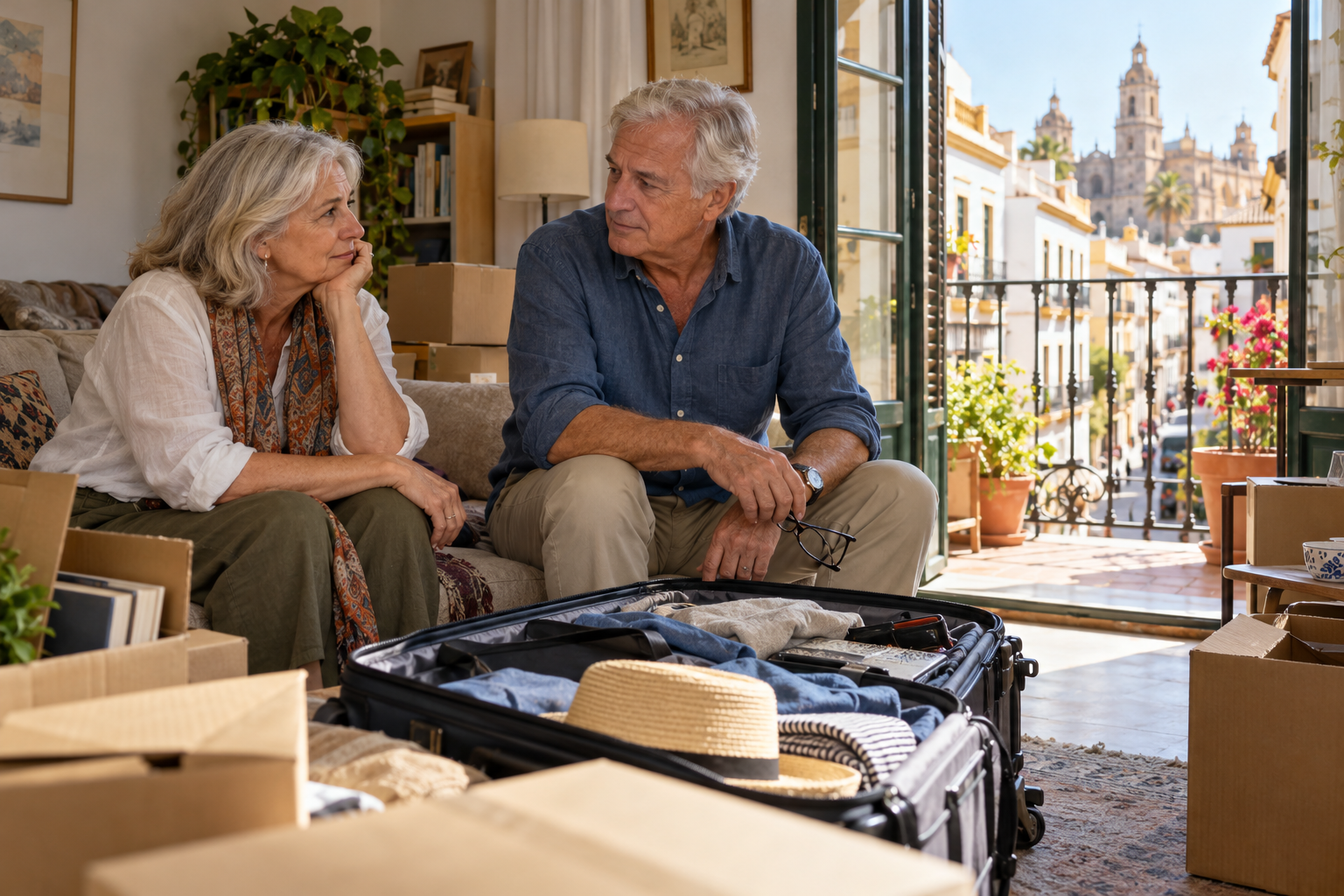
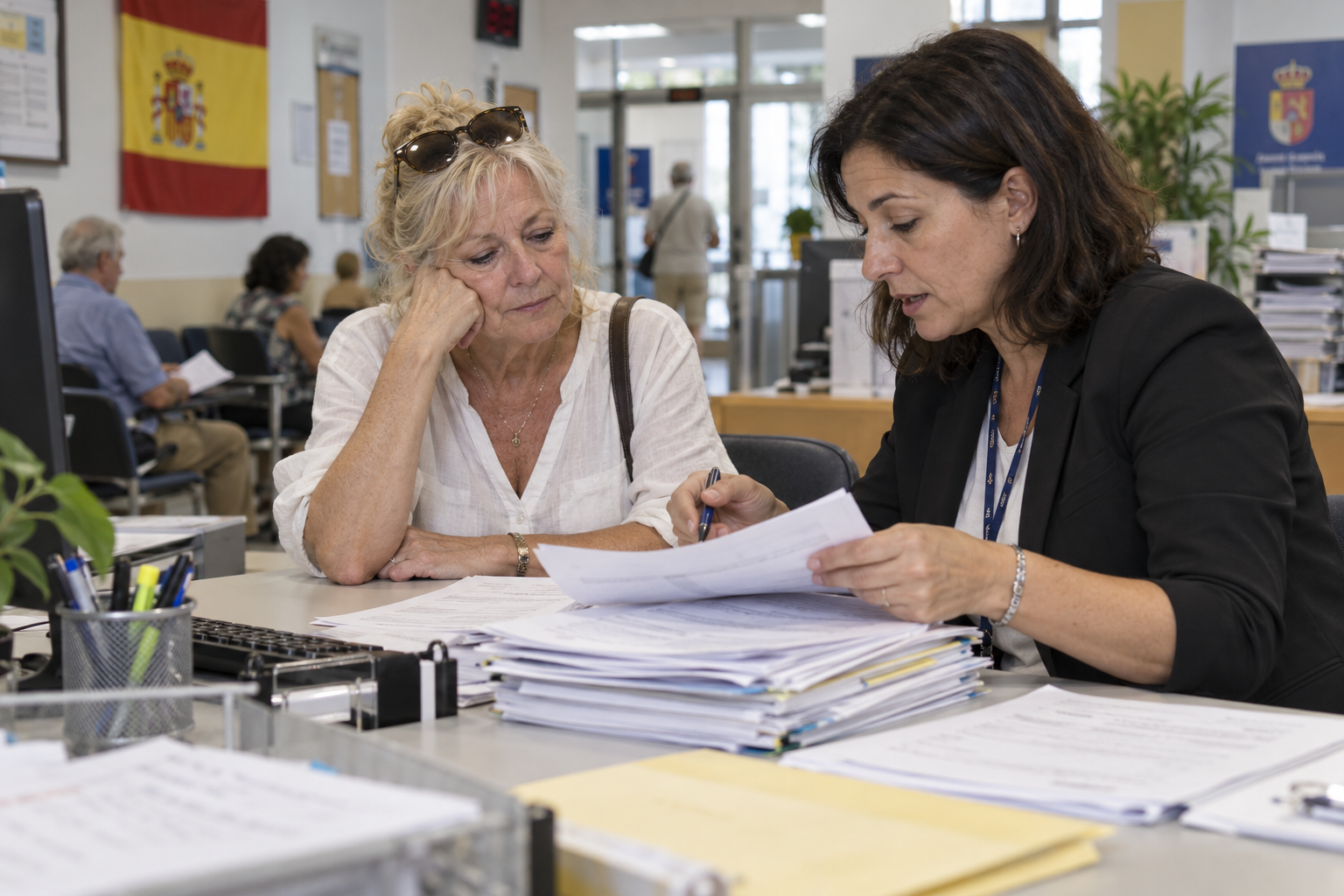
The first thing that grinds people down is the paperwork, which does not stop once you have arrived. Spain runs on a dense, slow, famously in-person administrative system, a bureaucracy that locals themselves complain about constantly, and as a foreign resident you are forever inside it, not passing through but living there. You will wrestle with your NIE, your foreigner identity number, and your TIE residency card; you will register your address at the town hall in a ritual called empadronamiento; you will renew your residency on a schedule, gather documents, book scarce appointments, and often do it all in Spanish at an office with its own hours and its own mood.
Many expats end up paying a gestor, a kind of professional paperwork fixer, simply to survive the system with their sanity intact, an ongoing cost and an admission that the bureaucracy really is too much to handle alone. That alone tells you something about the scale of it.
For a certain kind of person, organized, patient, amused by it, this is a minor and even faintly charming nuisance, part of the texture of living somewhere new. For another, very common kind, it is a slow, maddening erosion of the retirement they imagined, a sense that every few months there is another form, another queue, another thing that cannot be done online and must be done in triplicate across town.
The contrast with the relatively frictionless administrative life many Americans are used to, where so much happens online in minutes, can be genuinely demoralizing over time, a steady drip of friction that wears away at the romance. It is one of the things people cite, almost apologetically, when they decide the dream was not worth the hassle. The sunshine is real, but so is the third trip to the extranjeria office for a single stamp, the appointment you waited six weeks for, the form that was the wrong form. The brochures only ever show you the sunshine, and both are equally true.
Reason Two: The Language Wall and the Loneliness
The second reason runs deeper, because it is not really about language at all; it is about belonging. In the tourist zones and the big expat enclaves of the coast, you can get by in English more or less indefinitely, and many retirees arrive assuming that will be enough, that they will pick up the rest as they go. Some do. A great many do not, and the gap between intention and reality is where the trouble starts. Outside those bubbles, it is not. Real life in Spain, the doctor, the town hall, the plumber, the neighbors, the small daily conversations that knit you into a place, happens in Spanish, and without it a wall quietly goes up between you and the country you moved to.
That wall becomes loneliness. The retiree who cannot hold a real conversation finds that their world slowly shrinks to other English speakers, the same handful of expat faces at the same handful of places, that they are a perpetual outsider at the edge of every gathering, nodding along without following, and that the warm, sociable Spain they pictured is happening all around them in a language they cannot quite join. The country is right there, and somehow out of reach.
Learning a language in your sixties is hard and slow, and plenty of people underestimate just how essential it is to actually feeling at home rather than merely residing. The ones who thrive almost always put in the years of genuine effort to speak Spanish, treating it as the price of belonging rather than an optional extra; the ones who leave often cite a creeping isolation they did not see coming, the particular ache of being surrounded by a warm, sociable life they can see through the glass but not quite step into. Loneliness in paradise is still loneliness. It is the least visible reason on this list, because no one photographs loneliness for a relocation guide, and it is quietly one of the most powerful, because a person can endure almost any inconvenience in a place where they feel they belong, and almost no amount of sunshine in a place where they do not.
Reason Three: Healthcare Is Great, Until You Have to Navigate It

Spain’s healthcare is genuinely excellent, consistently ranked among the best in the world, and it is one of the real reasons to go. But the experience of using it as a new American retiree is more complicated than the ranking suggests, and the gap between expectation and reality trips people up. For your first years on the common retirement visa, you are required to carry private Spanish health insurance, a cost that climbs with age, and you are navigating a system whose rules, referrals, and rhythms are entirely different from the American one you spent a lifetime learning.
None of this means the care itself is worse; it is frequently better than what people left behind, and far cheaper, with no fear of a surprise bill. But different is its own kind of stress, especially around health, especially in a second language, especially when you are older and the stakes feel higher. Working out how to get a specialist referral, how the public system works once you transition into it, what your private insurance does and does not cover, and how to explain a worrying symptom accurately to a doctor in Spanish, is a real learning curve at exactly the age when learning curves feel steepest and the consequences of getting it wrong feel most serious. Health is the one area where confusion is genuinely frightening, not just annoying. People who expected healthcare to be the easy, reassuring part are sometimes unsettled to find it a source of anxiety instead, not because Spain’s medicine failed them, but because they underestimated how much of health care is really about knowing how to work a system, and theirs was suddenly gone.
Reason Four: The Money Is More Tangled Than It Looks

Here is the reason that surprises people most, because they came to Spain precisely because it was cheaper, and it is: day-to-day living costs far less than in most of the United States. The trap is that the obvious costs were never the problem. What ambushes people is the hidden financial complexity of being an American retiree abroad, the part no brochure mentions because it is boring right up until it is painful. You remain taxable by the US on your worldwide income, and become taxable by Spain too once resident, and while a tax treaty and foreign tax credits keep you from being fully taxed twice, you now file in both countries and often pay the higher Spanish rate, with the compliance handled by a cross-border accountant who does not work for free.
There are specific traps inside this that blindside the unprepared, a Roth account that was tax-free at home but is taxable in Spain, a wealth tax on your global assets that does not exist in America, reporting forms with names like Modelo 720 that carry real penalties if you miss them. Each is manageable if you know about it in advance and ruinous to morale if you discover it by accident in June of your second year. None of it makes Spain expensive in the end, and many retirees still come out comfortably ahead financially even after the taxes and the fees and the professional help. The complexity is the problem, not the cost.
But the person who budgeted only for the cheap rent and the cheap wine, and never for the tax complexity and the currency swings and the professional fees, can get a nasty shock in their second year that makes the whole thing feel more fraught than they bargained for. The money reason is real, and because it is the most fixable of all of them with a little planning, a single good conversation with the right advisor before you move, it is also the most needless and the most tragic when it is the thing that sends someone home. Nobody should lose Spain to a tax form they could have understood in advance.
Reason Five: The Pull of the People You Left

The last reason is the one that has nothing to do with Spain at all, and it may be the most common of all: you miss your people. The grandchildren growing up in photographs instead of in your arms. The aging parent whose decline you are managing across an ocean and eight time zones. The old friends, the familiar holidays, the entire web of relationships that a lifetime built in one place and that a move to Spain quietly stretches to the breaking point. No amount of Mediterranean sunshine fully replaces a Sunday with your family, a grandchild’s birthday, a hand to hold in a hospital waiting room, and for many retirees that absence grows heavier rather than lighter as the months turn into years and the video calls start to feel like a poor substitute for the real thing.
This is the reason that defeats even the people who did everything else right, who learned the language, mastered the paperwork, found their doctor, loved the life they built. It is immune to preparation in a way the others are not, because you cannot plan your way out of missing your grandchildren.
The emotional gravity of home, of the people you love and the life you built, is enormous, and a beautiful life abroad can lose to it. It is why so many returns happen not in a dramatic crisis but quietly, almost sadly, a slow realization that the trade of family for sunshine was not, in the end, one they wanted to keep making year after year. The sunshine stays lovely; it just stops being enough. The brochures sell you a place; they cannot account for the people you are leaving, and for a great many retirees, those people are the whole reason the dream has a time limit. It is no one’s failure. It is just love, exerting its pull from four thousand miles away.
So Should You Still Go?
None of this is an argument against retiring in Spain, which remains, for the right person who goes in prepared, one of the great retirements available anywhere. It is an argument against going unprepared, because every one of these five reasons is survivable, and the people who stay are overwhelmingly the ones who saw them coming. They learned Spanish before they needed it and kept at it; they made peace with the bureaucracy or hired someone to handle it; they got their tax and money house in order with a cross-border professional before they ever moved, not after the first nasty bill; and they thought long and honestly about the distance from family before they packed, often choosing a place with good flight connections and a budget that built in regular trips home. None of that is glamorous. All of it is what separates the people who stay from the people who leave.
The ones who leave, by contrast, are usually the ones who believed the brochure, who expected sunshine and cheap wine to carry them, and who met the paperwork, the language wall, the healthcare learning curve, the tax surprise, and the homesickness as a series of shocks rather than known challenges to plan around. So the honest takeaway is simple: Spain is not the problem, and it is not a trap. But the dream has a fine print, five lines of it at least, and reading that fine print before you go is the single best thing you can do to make sure you are writing the happy version of this story and not the one that ends with a return flight in year three.

About the Author: Ruben, co-founder of Gamintraveler.com since 2014, is a seasoned traveler from Spain who has explored over 100 countries since 2009. Known for his extensive travel adventures across South America, Europe, the US, Australia, New Zealand, Asia, and Africa, Ruben combines his passion for adventurous yet sustainable living with his love for cycling, highlighted by his remarkable 5-month bicycle journey from Spain to Norway. He currently resides in Spain, where he continues sharing his travel experiences with his partner, Rachel, and their son, Han.