
Here is a genuinely quiet miracle hiding in plain sight on dinner tables right across Europe: almost every country on the continent has a potato dish it treats as its own, a national treasure, a taste of home, and yet the potato is not even European. It arrived from the Americas only a few centuries ago, a strange New World tuber that Europe was at first deeply suspicious of, and then, having embraced it, proceeded to turn into a dozen completely different beloved dishes, each one claimed by a different nation as if it had been theirs forever. The same humble vegetable became crisp golden rosti in Switzerland, pillowy gnocchi in Italy, perfect frites in Belgium, comforting colcannon in Ireland, silky gratin in France, and thick tortilla in Spain, each a point of fierce national pride and none of them, originally, native at all. It is one of the great quiet ironies of the European table. Here is the potato map of Europe, the story of how a single import conquered a continent and then fractured into a dozen national identities, organized not by country but by what each place decided to do with it, which turns out to be the more revealing way to read it. It is one of the great quiet stories of European food, hiding under the most ordinary thing on the plate.
What follows is the vegetable that conquered Europe, the countries that boil it into dumplings, the ones that fry it crisp, the ones that mash and bake it, the great exceptions, and what the whole map reveals.
The Vegetable That Conquered Europe
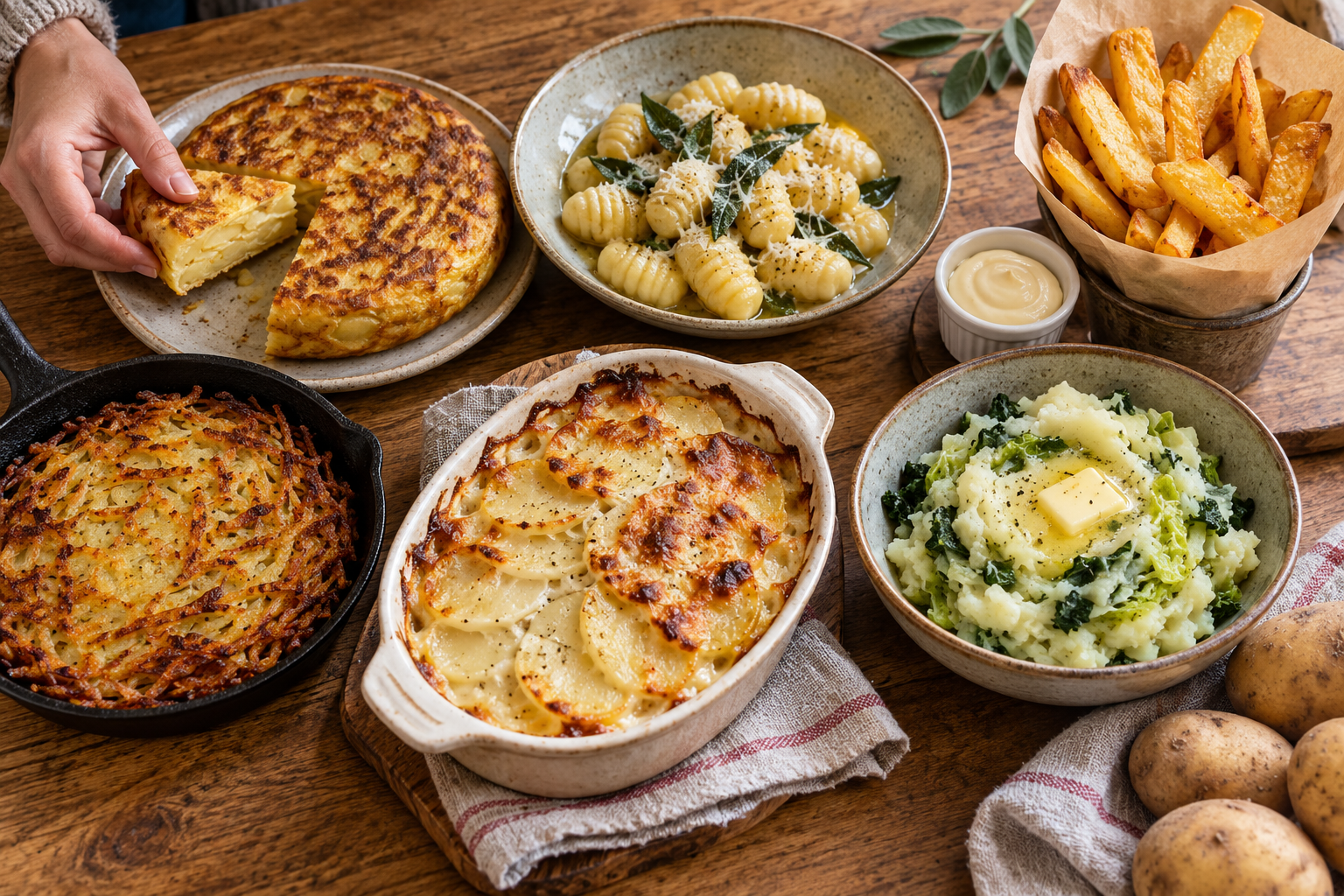
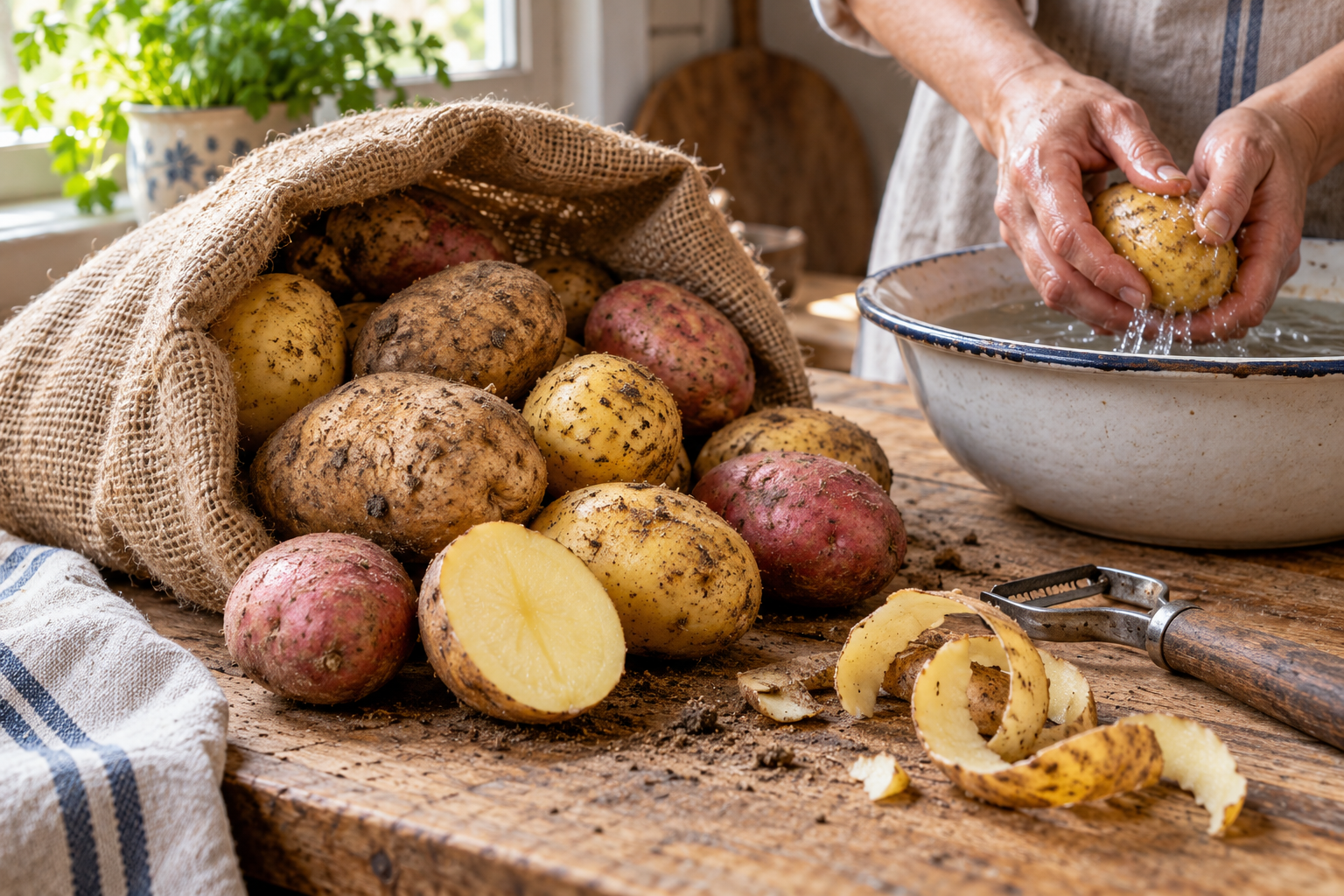
Before the dishes, the astonishing backstory, because the potato’s rise is one of the great culinary conquests in history. The potato is native to the Andes of South America, domesticated there thousands of years ago, and it arrived in Europe only in the sixteenth century, brought back by the Spanish. For a long time Europeans regarded it with deep suspicion, feeding it to livestock, fearing it was poisonous or ignoble, blaming it for disease, and refusing to eat something that grew in the dirt, came from heathen lands, and was not mentioned in the Bible. For two centuries the potato was treated less as food than as a curiosity or a threat.
It took famine, war, and the determined campaigns of kings and reformers to persuade Europe to plant and eat the potato in earnest. In France it was promoted with almost comic cunning, planted in guarded royal fields to make it seem precious; in Prussia a king ordered it grown by decree. The potato had to be sold to a skeptical continent before it could conquer it.
But once it caught on, it transformed the continent. The potato grew where grain would not, thrived in poor soil and cold climates, produced more calories per acre than almost anything else, and stored through the winter in a cellar, which made it a lifeline for the poor and a staple for everyone. Historians credit it with helping feed the population boom that remade Europe, and with sustaining whole regions through their hardest winters. No other single crop changed the continent so fast.
And here is the fascinating part: because the potato arrived everywhere at roughly the same time but was absorbed into each country’s existing cooking traditions, every nation made it over in its own image, boiling, frying, mashing, or baking it according to local taste until the foreign tuber became, in each place, a dish so native-feeling that people forgot it was ever an immigrant. The potato map of Europe is really a map of how a single ingredient meets a dozen different cultures and becomes a dozen different things, a living demonstration that there is no one right way to cook anything, only a hundred right ways shaped by a hundred different places. So let us travel it, not country by country, but by what each place does to the potato.
The Countries That Boil It Into Dumplings
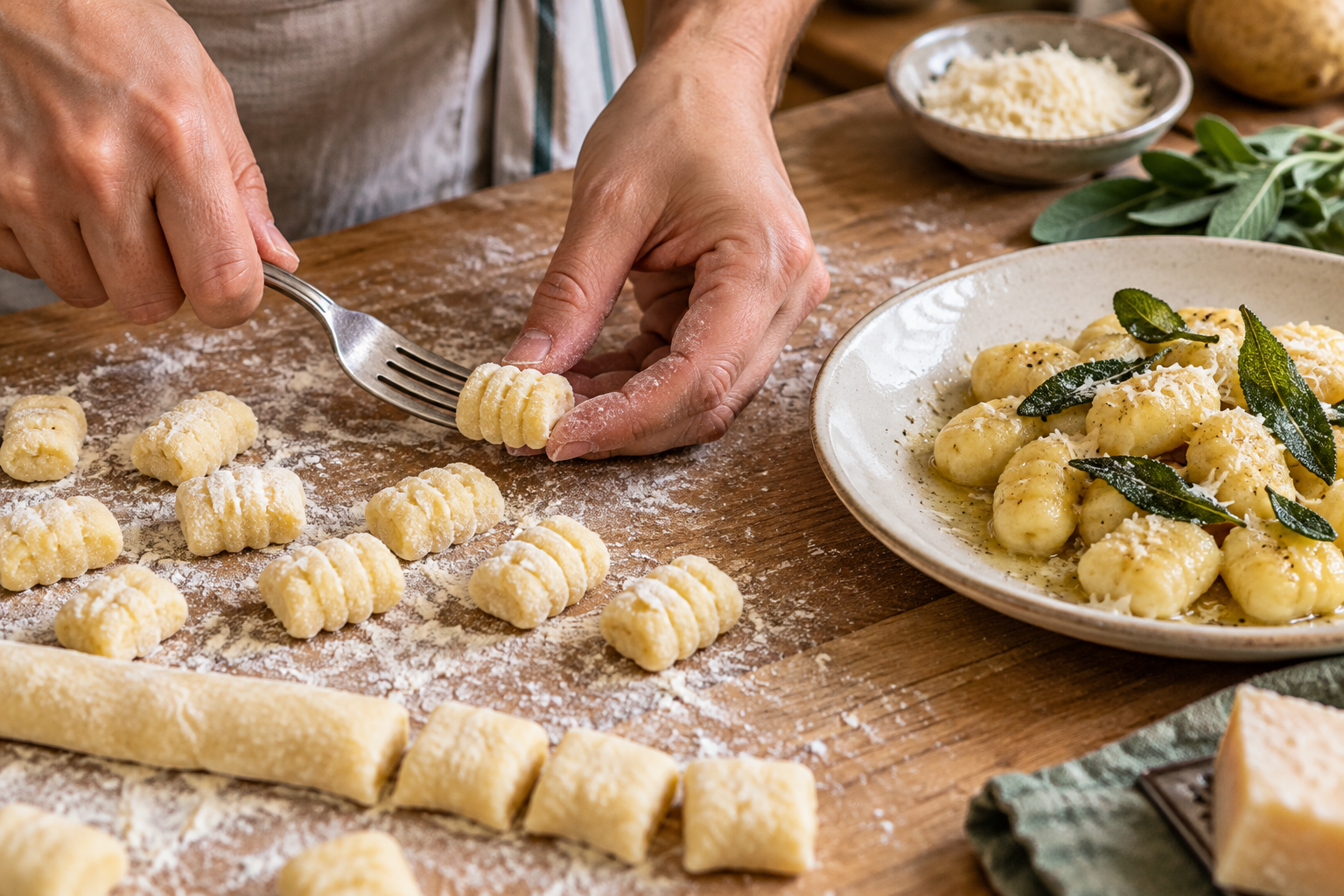
One great school of European potato cookery treats the potato not as a vegetable to be served whole but as a dough to be bound, shaped, and boiled, turning it into dumplings of every size and texture. Mash a cooked potato, work in a little flour and egg, and you have the raw material for comfort food across half a continent. The undisputed masters here are the Italians, whose gnocchi, those small, soft, pillowy potato dumplings served with butter and sage or a rich sauce, are among the most beloved potato dishes in the world, so thoroughly Italian that few stop to think they are, at heart, boiled potato. Italy took the humble tuber and made it elegant, proof that the potato could be refined as readily as it could be rustic.
Central and Eastern Europe run with the same idea in heartier, more filling form, where a dumpling is less a delicacy than the engine of a cold-weather meal. Across Germany, Austria, and the Czech lands, the Knodel, the great potato dumpling, anchors countless meals, soaking up gravy beside roast meats, a dense and comforting thing in a dozen regional variations, some bound with raw potato, some with cooked, each region insisting its texture is the correct one. In Czech kitchens the sliced bread-and-potato dumpling is as fundamental to dinner as the meat it accompanies. Poland fields its own battalion, from kopytka, the little dumplings whose name means little hooves, to the beloved pierogi ruskie, filled dumplings stuffed with potato and cheese that are a national comfort. The dumpling countries share a genius for turning potato into something soft, bound, and satisfying, a vehicle for sauce and a comfort in itself. And the fact that an Italian gnoccho and a Czech Knodel and a Polish kopytko are all, fundamentally, the same boiled-potato idea taken in different directions is the potato map at its most delightful, one ingredient and one technique arriving at a dozen national comforts.
The Countries That Fry It Crisp
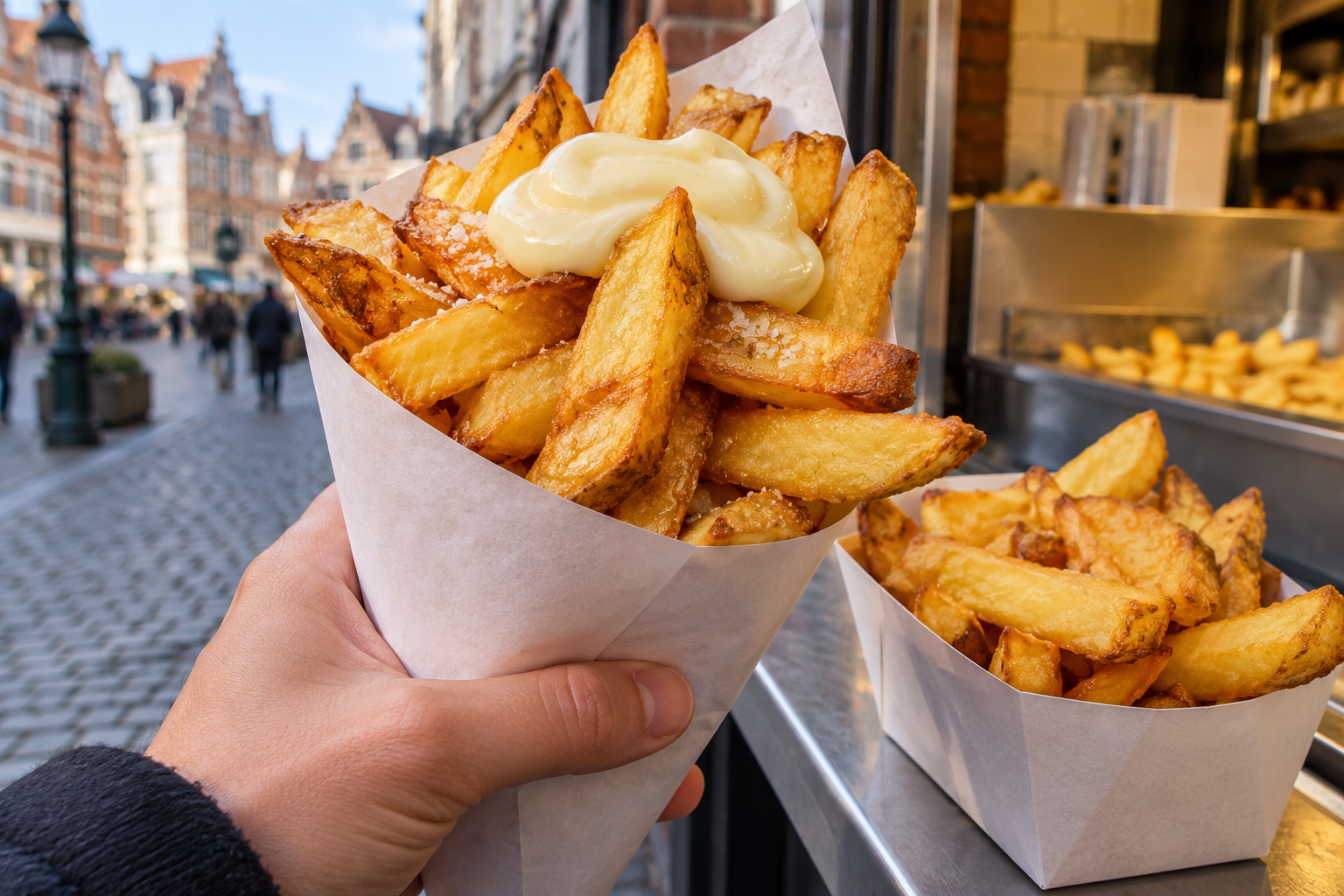
The second great school worships the potato crisp, golden, and fried, and here the competition between nations is fierce, proud, and delicious, each country sure it fries the humble tuber better than its neighbors. Belgium stakes the loudest claim, insisting, with real historical justification, that it is the true home of the fried potato, the frite, double-fried to order and served with mayonnaise, a national obsession far removed from the afterthought fries of the fast-food world. To a Belgian, the frite is not a side but a sacred art, with its own dedicated shops, the friteries, and fierce opinions about the correct fat and the proper second fry. The country that gave the world fries resents, deeply, that the world calls them French. Switzerland answers with rosti, the great crisp cake of grated potato fried until golden, once a farmer’s breakfast and now a national emblem.
The crisp-potato nations spread wide from there, each with its own angle on the eternal problem of how to get a potato as golden and shattering as possible. Germany fries its potatoes into Bratkartoffeln and griddles them into Kartoffelpuffer, the crisp potato pancakes eaten with applesauce. Spain tosses fried potato chunks in spicy sauce to make patatas bravas, the bar snack found in every tavern in the country. Sweden gave the world both the elegant hasselback potato, scored and roasted until its edges fan out crisp, and raggmunk, the potato pancake. And Britain, of course, built an entire national identity partly on the chip, the thick-cut fried potato beside its battered fish, a pairing so iconic it became shorthand for the country itself. Each of these countries took the same tuber and chased the same goal, maximum crispness, by a different route, grating or slicing or chunking, shallow-frying or deep-frying or griddling, and the result is a whole crunchy continent of fried-potato traditions, each certain its own method is the one true way.
The Countries That Mash and Bake It
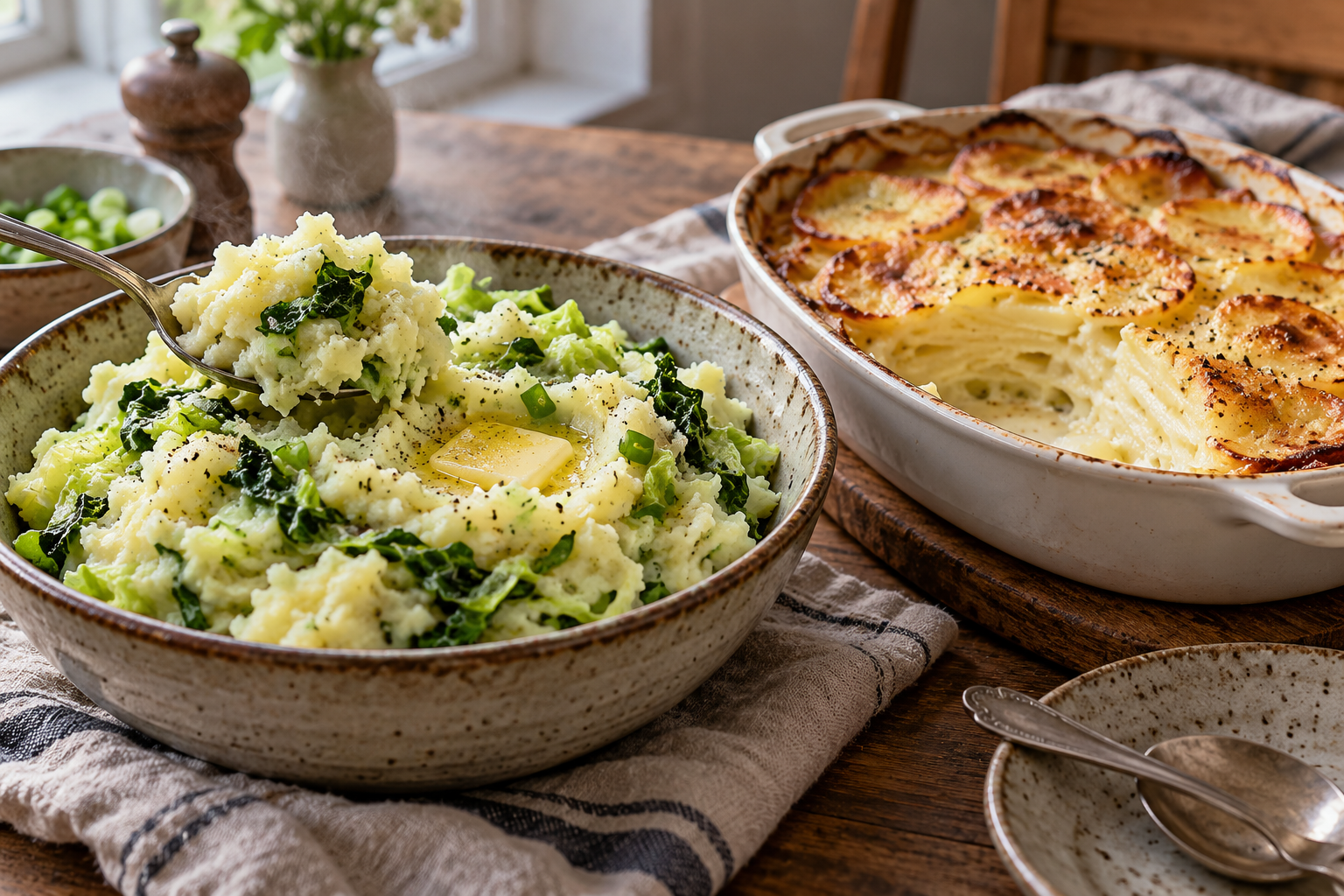
A third school prefers the potato soft, rich, and comforting, mashed or baked or layered into something warm with cream or cheese or butter, and this is perhaps the most purely comforting branch of the whole sprawling potato family. France, naturally, elevates it, with the silky gratin dauphinois, potatoes baked in cream and garlic, and with aligot, the stretchy whipped potato-and-cheese of the Auvergne that can be pulled into ribbons. The French also fold potato into hachis parmentier, their version of shepherd’s pie, and insist, correctly, that a proper puree is a thing of beauty.
The mashing school runs strong around the Atlantic and the north, in the damp, cool countries where a bowl of hot, buttery, enriched mash is one of the kindest things a kitchen can produce. Ireland, a nation whose history is bound to the potato more painfully and intimately than any other, makes colcannon and champ, mashed potato enriched with cabbage or spring onions, humble dishes of deep comfort. The Netherlands mashes potato with vegetables, kale, endive, or sauerkraut, into stamppot, topped with a fat smoked sausage and a well of gravy, the definitive Dutch winter dinner and the taste of a cold evening in the Low Countries. Britain mashes with abandon and tops its pies with it. Across this school, the potato becomes a soft, warm, enveloping thing, often enriched with cream, butter, cheese, or other vegetables, the edible equivalent of a blanket, and it is no accident that these mashed and baked potato dishes are among the most beloved comfort foods on the continent. When a European wants to be soothed, very often it is a soft potato that does the soothing, warm and buttery and undemanding, the taste of childhood and home across half the continent.
The Great Exceptions
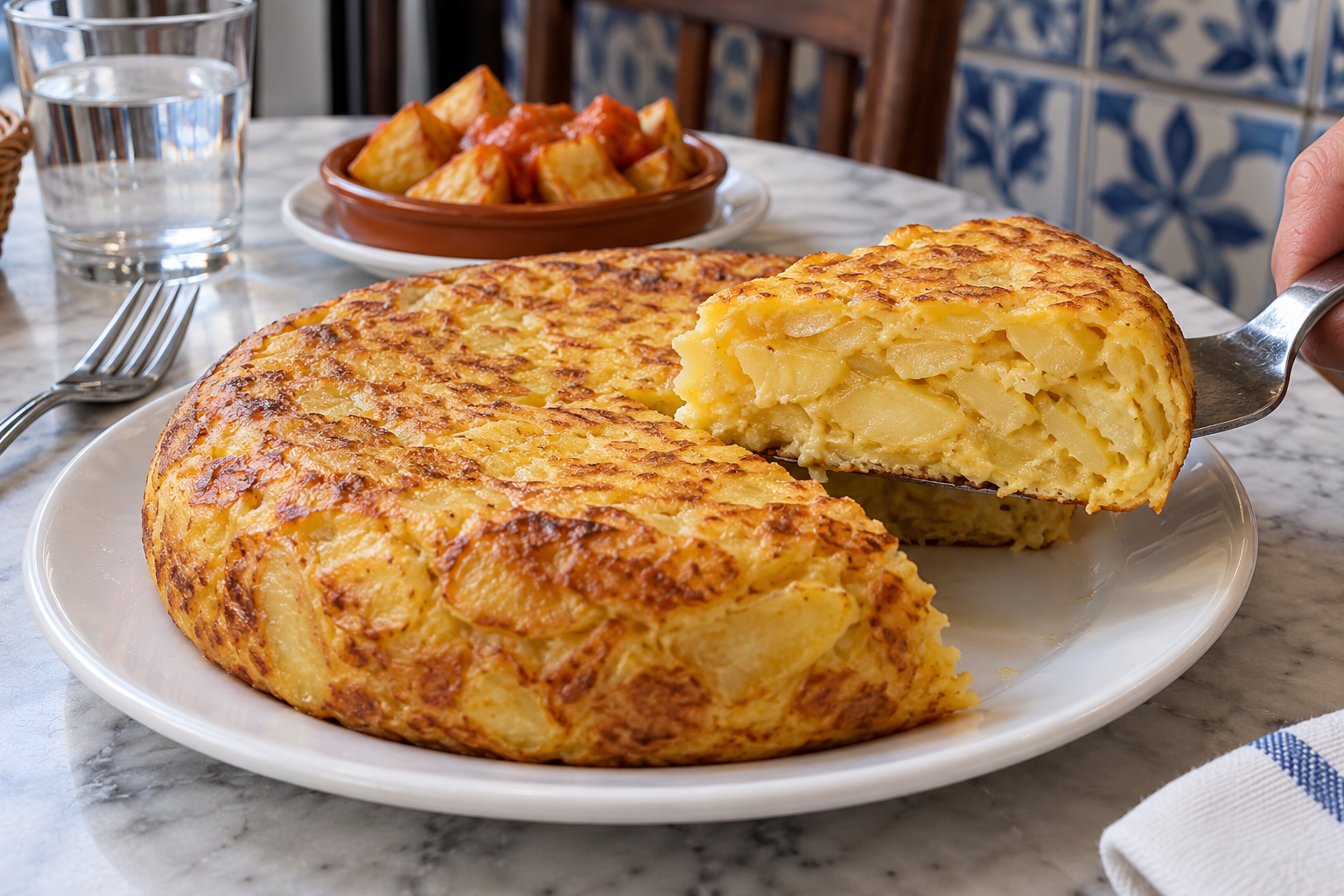
Some potato dishes refuse to fit any neat school, and they are among the most distinctive of all. Spain’s great contribution, beyond its bars full of patatas bravas, is the tortilla espanola, the thick potato omelette of eggs and slow-cooked potato that is perhaps the single most iconic dish in all of Spanish cooking, eaten at any hour, sliced into wedges, carried on picnics, argued over endlessly on the question of whether it should contain onion. It is potato bound with egg into something entirely its own, neither dumpling nor fry nor mash, and no survey of Europe’s potatoes could omit it.
Other nations have their own singular treatments, the potato dishes that belong to one place and nowhere else.
The Canary Islands boil their small potatoes in heavily salted water until the skins wrinkle and crust with salt, making papas arrugadas, served with spicy mojo sauce. Greece roasts its potatoes in lemon, oregano, and olive oil until they are soft, golden, and tangy, a side dish so good it regularly upstages the main. Portugal partners potato with its beloved salt cod in a hundred combinations, layering, frying, and baking the two together in dishes the Portuguese could reportedly eat a different way every day of the year. And nearly everywhere, the potato quietly turns up in the national soup and the national stew, thickening and sustaining, so woven into the everyday cooking of the continent that it has become invisible, the base note beneath a thousand dishes. It is in the Spanish cocido and the Irish stew and the German soup pot, doing the humble work of making a meal filling, rarely the star and always essential. These exceptions and ubiquities are the proof of how completely the potato was absorbed: it is not only the star of famous dishes but the silent workhorse of countless others, the ingredient a European cook reaches for without thinking, as if it had always been there, which, of course, it has not.
One Potato, a Continent of Dishes
Step back from the map, and the potato reveals something lovely about how food and culture actually work. A single vegetable, foreign to Europe five centuries ago and distrusted for generations, was taken up by every nation on the continent and remade, boiled into Italian gnocchi and Czech dumplings, fried into Belgian frites and Swiss rosti, mashed into Irish colcannon and baked into French gratin, bound into Spanish tortilla, each version so thoroughly naturalized that it feels eternal and indigenous. Ask any of these countries where the potato comes from, and the honest answer, the Andes, by way of a Spanish ship, would surprise half of them. The same raw ingredient, meeting a dozen different food cultures, became a dozen different beloved national dishes, which is a small, delicious lesson in how culture absorbs and transforms whatever it is given.
That is the real revelation of the potato map: not merely that Europe loves the potato, though it certainly does, but that the same humble thing can become so many different expressions of home, that an ingredient carries no fixed identity until a culture gives it one. Hand the same tuber to twelve countries and you get twelve dishes, each convinced it is the natural and obvious thing to do with a potato. To an Italian, the potato means gnocchi; to a Belgian, the frite; to an Irishman, colcannon and a whole fraught history; to a German, dumplings and fried potatoes; to a Spaniard, tortilla; and each is utterly, unquestionably, eternally theirs. The potato did not just feed Europe; it became Europe, in a dozen accents at once, which is perhaps the most European thing a humble Andean tuber could possibly have done. Trace the map, cook your way across it, and you taste not one vegetable but an entire continent’s worth of ingenuity, pressed into the most ordinary and most comforting of foods.

About the Author: Ruben, co-founder of Gamintraveler.com since 2014, is a seasoned traveler from Spain who has explored over 100 countries since 2009. Known for his extensive travel adventures across South America, Europe, the US, Australia, New Zealand, Asia, and Africa, Ruben combines his passion for adventurous yet sustainable living with his love for cycling, highlighted by his remarkable 5-month bicycle journey from Spain to Norway. He currently resides in Spain, where he continues sharing his travel experiences with his partner, Rachel, and their son, Han.