
There is one meal in Europe that time itself bends around. Across the continent, Sunday lunch is not merely a meal but an institution, a long, slow, sacred gathering of the family around the table in the early afternoon, and it holds a place in European life that Americans, with their looser and more scattered weekends, often find startling.
Nobody schedules anything against it. You do not call a European family at two o’clock on a Sunday; you do not propose a meeting, an errand, an outing, because they will be at the table, two or three or four hours deep into the meal that anchors their entire week. From a Spanish comida to an Italian pranzo to a British roast, the Sunday lunch is the one appointment that outranks all others. Here is the Sunday lunch of Europe, country by country, the meal each nation builds its week around, and why it remains the most protected hours on the whole European calendar. It is one of those traditions that, once you have sat inside it, you understand the continent a little better, and once you have gone without it, you miss more than you expected to.
What follows is why Sunday lunch is sacred, the long lunches of the south, the roasts of the north and west, what happens after the eating, and what the whole tradition offers an American.
Why Sunday Lunch Is Sacred
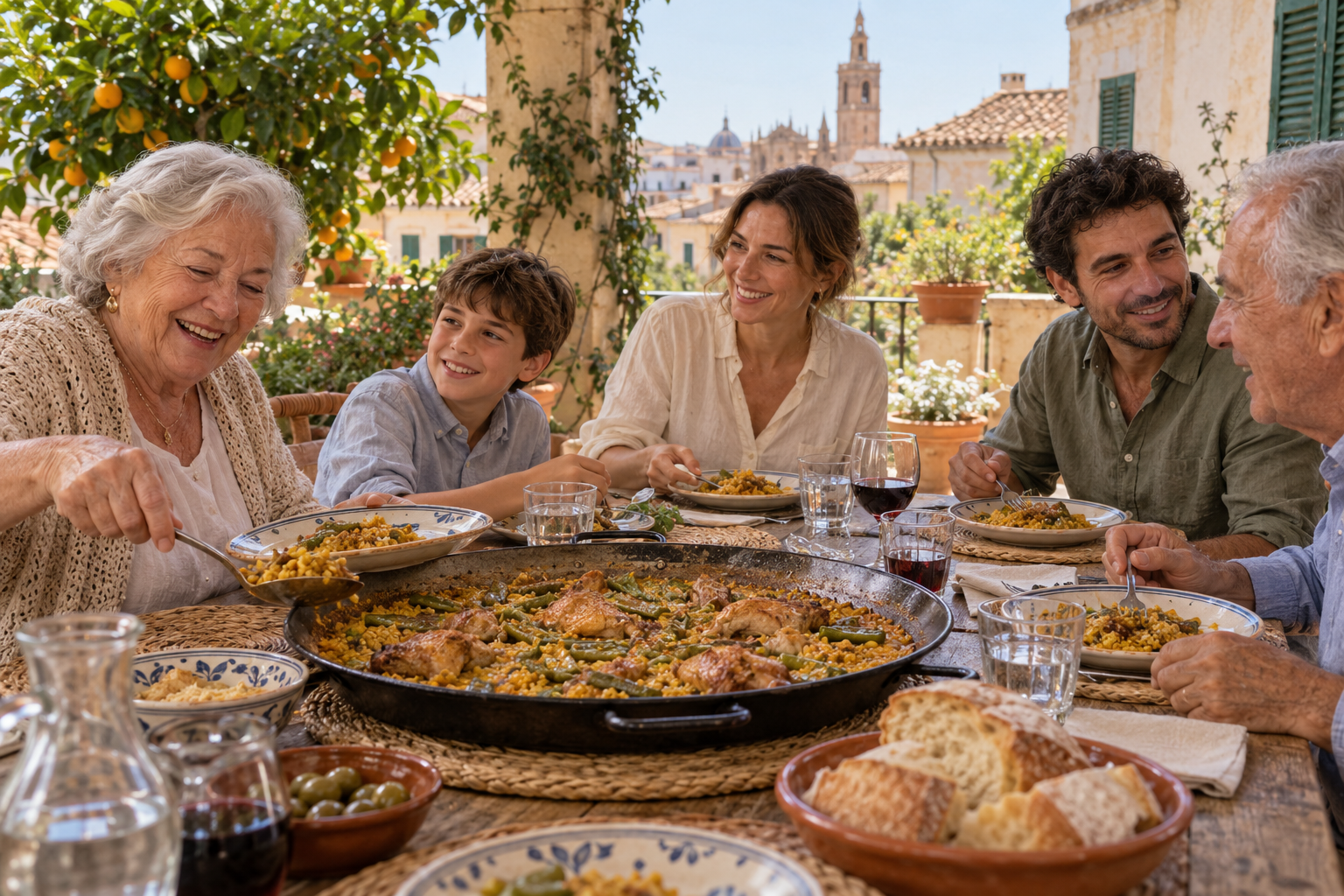
Before the country-by-country tour, it helps to understand why this one meal carries such weight, because the European Sunday lunch is about far more than food. It is, first and foremost, the great weekly gathering of the family, the fixed point when the generations come together, grandparents and parents and children and often aunts, uncles, and cousins, around a single table, deliberately and without fail. In a world that pulls families apart across the week, into work and school and separate schedules, Sunday lunch is the standing appointment that pulls them back together without fail, and that function, the weekly reknitting of the family, is what makes it sacred. It is not sacred because of the food, good as the food is; it is sacred because of who is around the table.
It is reinforced by the rhythm of the European week itself. Sundays in much of Europe remain genuinely quiet, with shops closed by law or custom, so that there is little to do and nowhere to rush, and the long lunch fills the space that commerce has vacated. Historically it followed church, the family gathering to eat together after Sunday Mass in their best clothes, and even as religious observance has faded across much of the continent, the meal has kept its central place, the ritual quietly outlasting the faith that first gave rise to it. The result is a meal protected by law, custom, and deep habit all at once, a few hours each week that European life simply holds open and defends, quietly but firmly, against the intrusions of work, commerce, and the modern habit of always being busy. To understand the European Sunday lunch is to understand something essential about how the continent values family, slowness, and the deliberate setting-aside of time, and it is why, across so many different countries with so many different languages and dishes, the same hours on the same day are treated as untouchable. The meal is different everywhere; the holding-open of the time is the same.
When the Shops All Close
It is worth dwelling for a moment on the quiet that surrounds the European Sunday, because it is the condition that makes the long lunch possible, and it is one of the sharpest differences an American notices on arriving. In much of Europe, and Germany is the strictest example, shops are closed on Sundays, not by the choice of each business but by law, the famous shop-closing rules that keep supermarkets, department stores, and most retail firmly shut for the day. Austria, Switzerland, and others hold to versions of the same, and even where the law has loosened, the custom often persists, so that a European Sunday is genuinely, structurally quiet in a way an American Sunday, with its open malls and errands, is not.
That enforced quiet is not an accident but a choice about what Sundays are for. By closing the shops, these societies remove the pull of commerce and errands and productivity for one day a week, and into the space that opens up flows exactly the thing the closures were meant to protect: time for family, rest, and the long meal. A newcomer who arrives expecting to do their big grocery shop on a Sunday afternoon quickly learns the lesson, that Sunday is not for doing but for being, and that the shuttered shops are the visible edge of a deep cultural decision to keep one day clear. The Sunday lunch sits at the center of that cleared day, and it could not be what it is without the quiet around it. Protect the day, and the meal has room to breathe; fill the day with errands, as America largely has, and the long family lunch quietly disappears, which is precisely what has happened on one side of the Atlantic and not the other.
The Long Lunches of the South
In the Mediterranean south, the Sunday lunch reaches its fullest and longest expression, an epic of several courses stretched across the whole afternoon. In Spain, the Sunday comida is the great meal of the week, often a paella shared from the pan, or a slow-simmered cocido, or a roast chicken from the local asador, the roast-chicken shops that are a genuine Sunday institution in Spain, their spit-roasted birds carried home to feed the family. The food is generous and the pace is unhurried, often beginning past two in the afternoon and running on from there, and the meal is famous for what follows it rather than ending when the plates are cleared, a feature so central it has its own name, which we will come to. A Spanish Sunday comida is less an event with a start and an end than a slow tide that fills the afternoon.
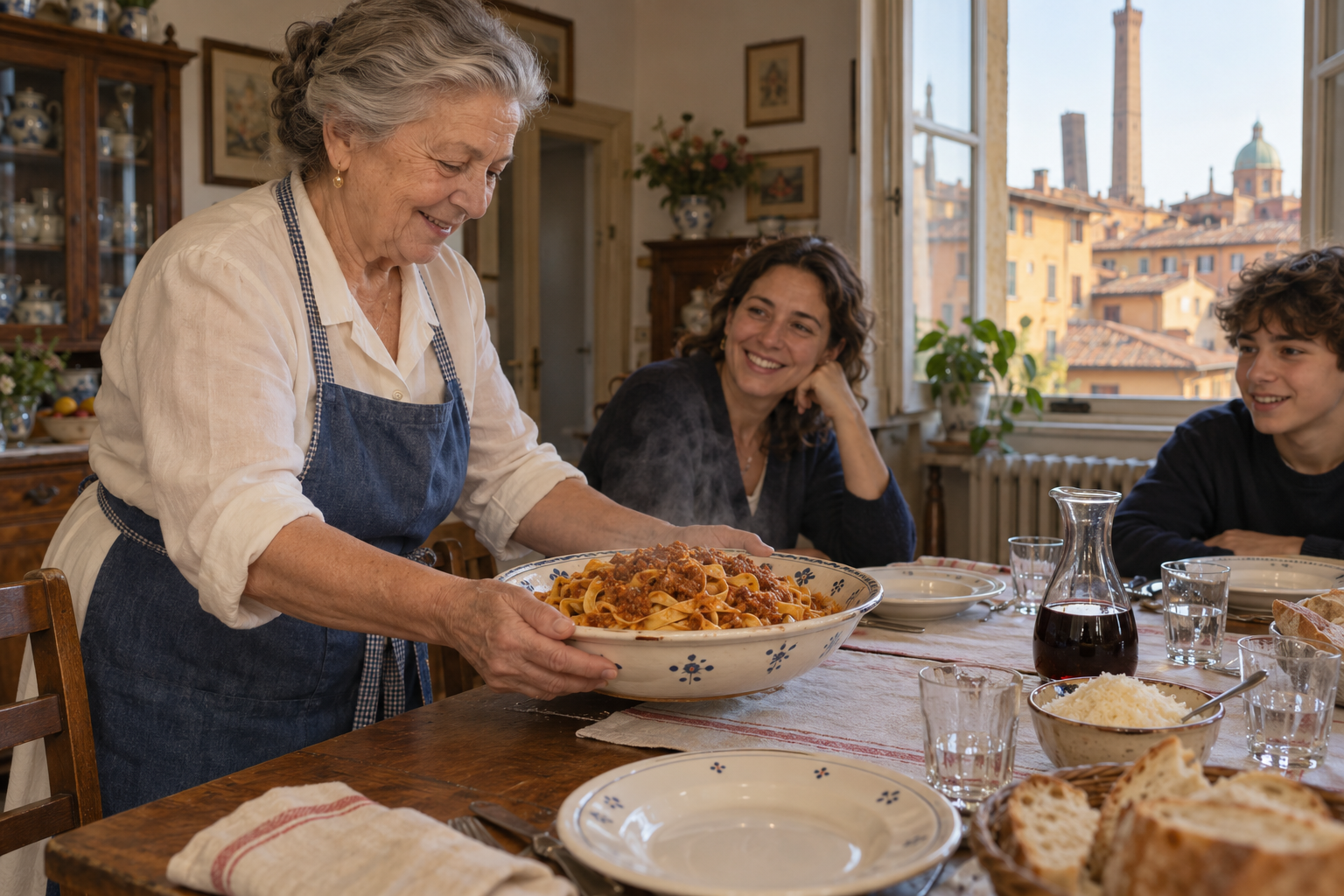
Italy may take the Sunday lunch most seriously of all. The pranzo della domenica is a cornerstone of Italian life, a multi-course marathon presided over, classically, by the grandmother who has been at the stove since morning, moving through antipasti, a pasta or risotto course, often a rich ragu simmered for hours, a meat course with its contorni, and on through salad, cheese, fruit, and dolce, each arriving in its own time over the long afternoon at the table, with wine throughout and coffee and a digestivo to close. To be invited to an Italian family’s Sunday lunch is to be shown the very heart of the culture, and to be expected to eat, and sit, and talk, and eat again, for a very long time, until the afternoon light has moved across the room and no one can quite believe how long they have been at the table. Portugal and Greece keep the same spirit, the Portuguese family gathering over a cozido, an arroz de pato, or a Sunday roast, the Greeks around a table of roast lamb, slow-baked dishes, and endless shared plates, both treating the Sunday midday meal as the warm and gravitational center of the week, the thing everything else is arranged around. Across the south, the pattern holds: many courses, many hours, many generations around one table, and no reason on earth to hurry any of it. The clock, for one afternoon, is simply switched off.
The Roasts of the North and West
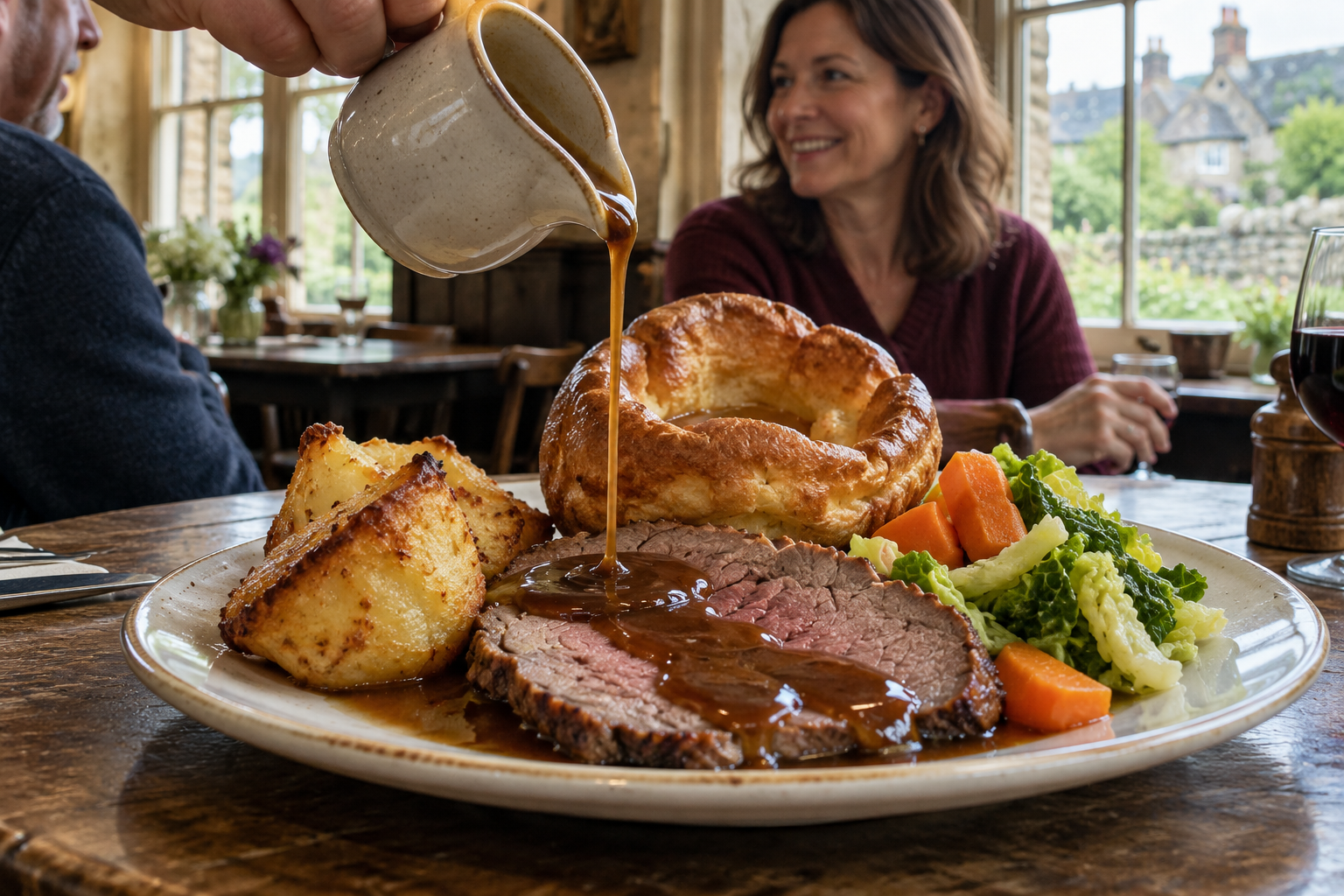
Travel north and west, and the Sunday lunch takes on a different but equally beloved form, often centered on a single magnificent roast rather than a long sequence of courses. The British Sunday roast is the most famous example, an institution as dear to Britain as any in its culture: a joint of roast meat, beef, lamb, pork, or chicken, surrounded by crisp roast potatoes, vegetables, Yorkshire pudding, and a jug of gravy, eaten in the early afternoon at home or in a pub, where the Sunday roast is such a fixture that tables are booked out week after week and the kitchens do little else. It is hearty, it is traditional, and it is defended with real passion; to a Briton, a proper Sunday roast, and the lazy, well-fed afternoon that follows it, is one of the fixed and non-negotiable pleasures of life, as much a part of the week as the weekend itself.
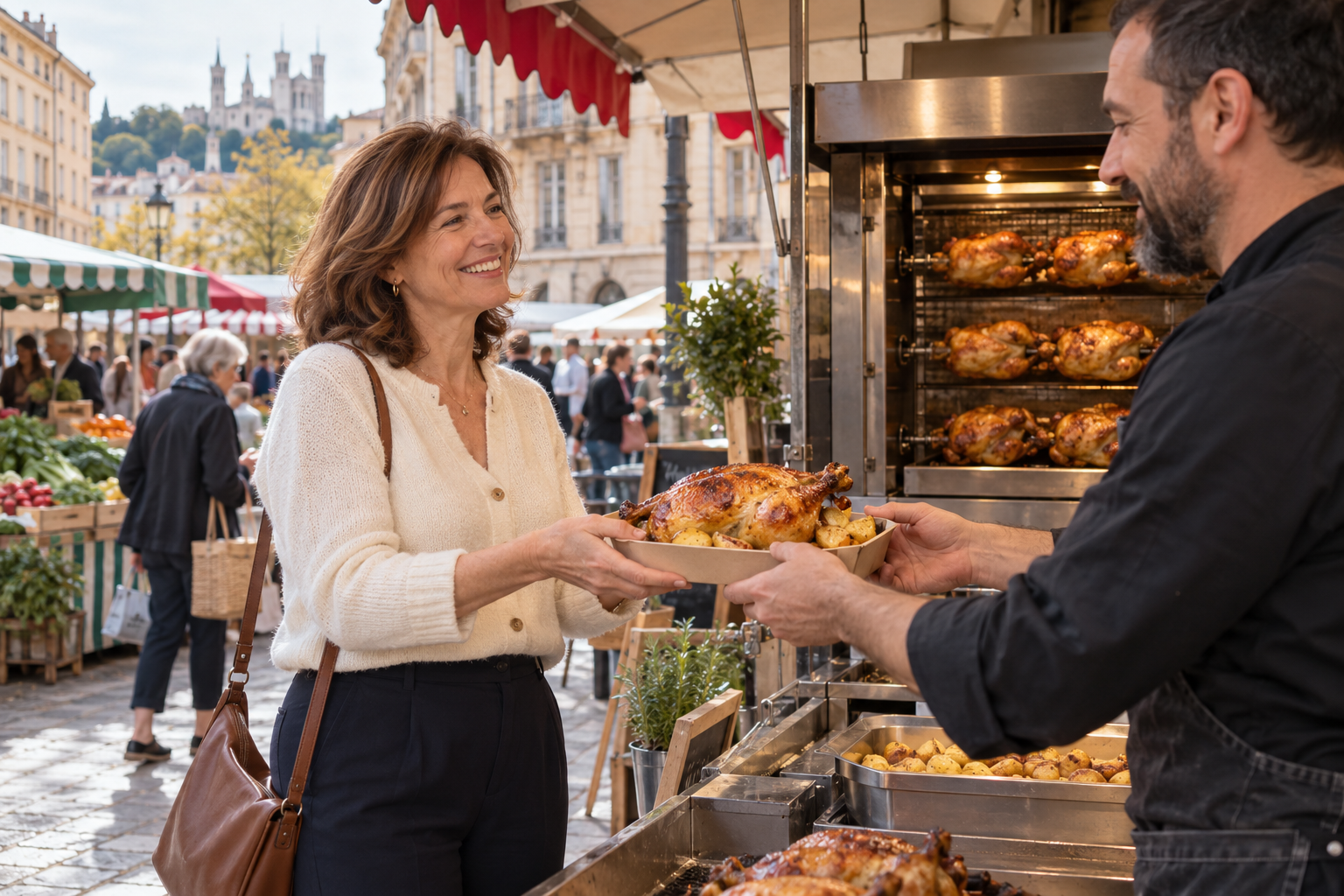
The tradition runs across the region in kindred forms. Germany has its Sonntagsbraten, the Sunday roast of braised meat with dumplings or potatoes and rich gravy, the centerpiece of a German family Sunday. France gathers for le dejeuner du dimanche, often around a roast chicken, the simple, perfect poulet roti bought from the market rotisserie or roasted at home, that is practically the national Sunday dish, followed by the salad, the cheese course, and the long, leisurely unspooling the French bring to any meal that truly matters. Poland and much of Central Europe sit down to the Sunday obiad after church, traditionally opening with a clear rosol broth and moving on to a roast with potatoes. The northern and western Sunday lunches may be built around the roast rather than the marathon of courses, and may run a little shorter than a southern pranzo, but the essential thing is identical to the south: the family gathered, the best meal of the week on the table, and the whole afternoon given over to it, unhurried and undisturbed. North or south, the form changes and the meaning does not.
What Happens After the Eating
Here is the part that most surprises Americans, and it is perhaps the truest expression of what the Sunday lunch really is: in much of Europe, and especially in the south, the meal does not end when the food is finished. The eating is only the first half; the second half is the sitting, the talking, the lingering at the cleared or half-cleared table for another hour or two, nursing a coffee or a digestif, picking at the last of the dessert, in no hurry whatsoever to get up and do anything at all, because there is, by design, nothing else to do. In Spain this has a name, the sobremesa, literally over-the-table, the cherished hour or hours of conversation that follow a meal and that Spain flatly refuses to rush, and it is at the Sunday lunch that the sobremesa reaches its fullest, most unhurried, most sprawling form, the family still talking and laughing at the table long after the food is a memory and the coffee has gone cold.
This after-meal lingering is the soul of the whole tradition, because it reveals that the Sunday lunch was never really about the food at all, or not only. The food is the occasion; the point is the time together, the long, slow, purposeless hours of a family simply being in one another’s company with nowhere else to be. An American accustomed to eating efficiently and moving on to the next activity can find the sheer duration bewildering at first, the way a European Sunday lunch can consume an entire afternoon with no agenda beyond itself. But that duration is the gift. The meal is long on purpose, protected on purpose, undisturbed on purpose, because its real function is to give the family a stretch of unhurried time together that the rest of the busy week never allows. The eating ends; the being together does not, and that is the whole point.
What It Offers an American
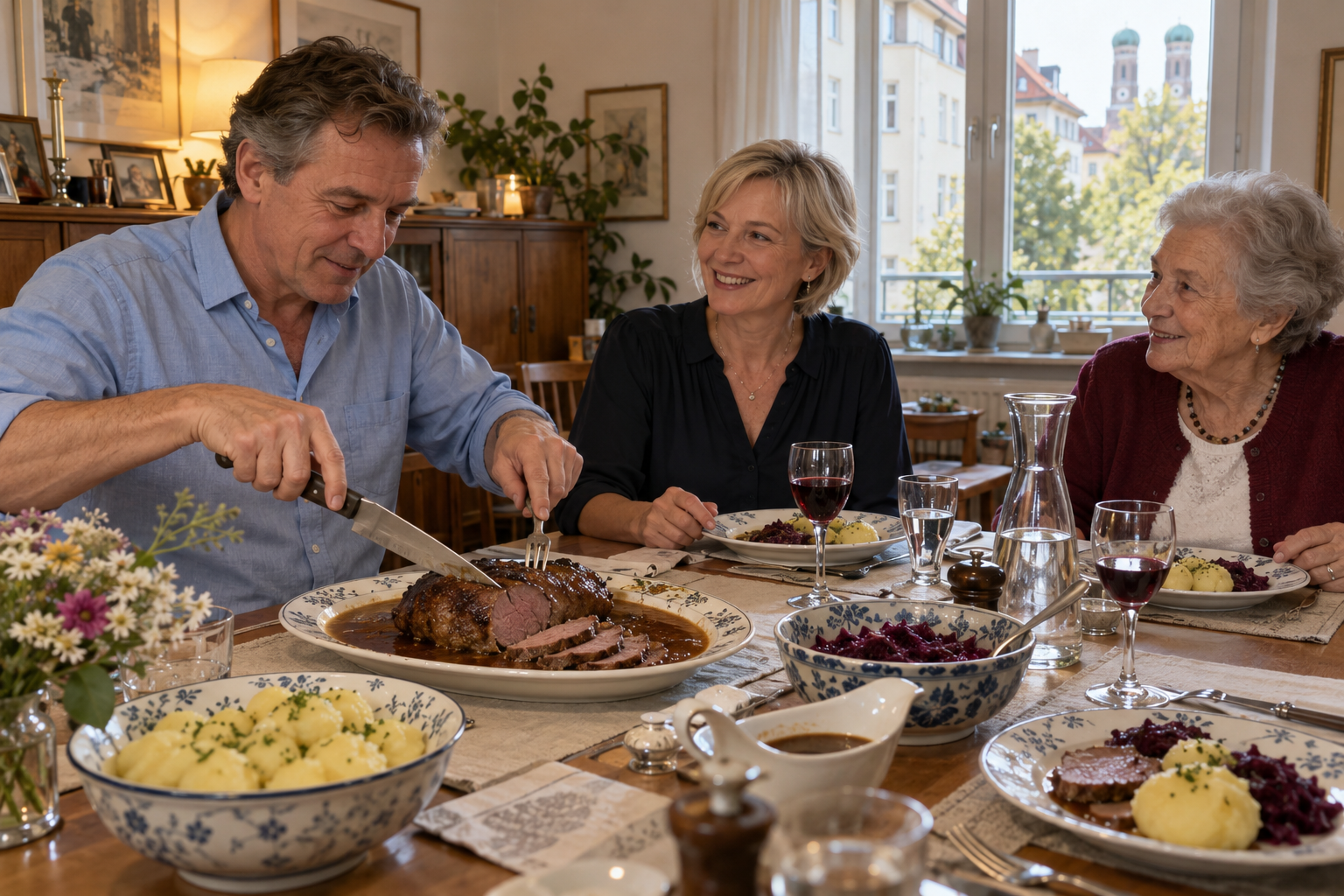
For an American looking at this tradition from the outside, or newly arrived in Europe and invited to a first Sunday lunch, there is something here worth more than a good meal. The European Sunday lunch is a standing weekly answer to a problem many American families feel keenly, the way modern life scatters everyone across their own schedules until the family rarely sits down together at all. Europe’s solution is simple and deliberate: pick one meal, make it sacred, protect it absolutely, and let nothing intrude. The result is a guaranteed weekly reunion, repeated across decades, that holds families close across a lifetime, so that children grow up with the table as a fixed point and return to it as adults, and it is one of the quiet reasons European family bonds can seem so strong, and European old age so much less lonely, to American eyes.
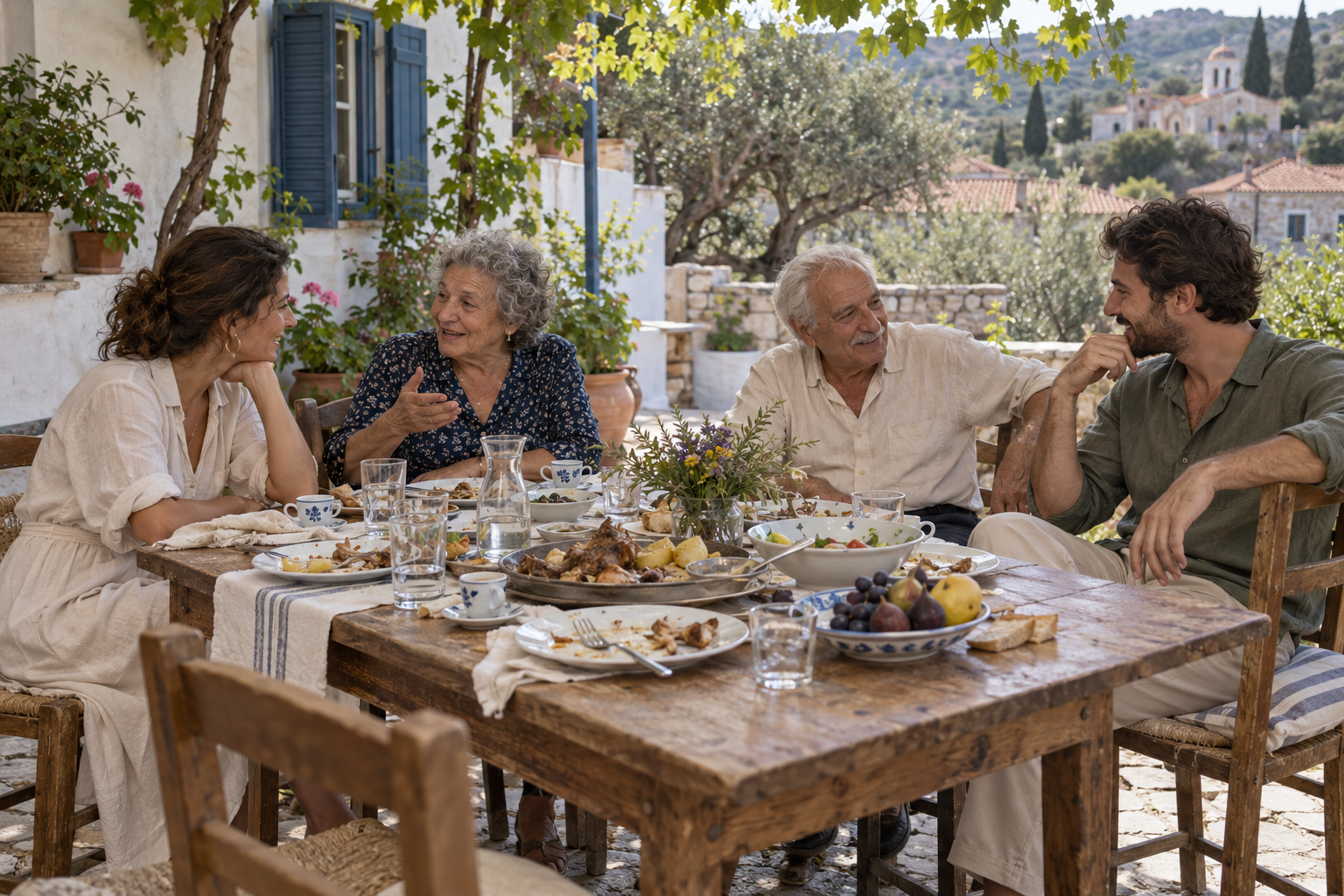
The lesson travels, even without the paella or the Yorkshire pudding. Any family anywhere can choose a meal, a Sunday lunch or dinner or whatever fits, and decide to make it the one appointment nothing is allowed to override, the hours held open for being together and nothing else. That, far more than any particular dish, is what Europe’s Sunday lunch really offers: not a recipe but a practice, the deliberate defense of a few hours each week for the people who matter most. For the American moving to Europe, being welcomed into a family’s Sunday lunch is one of the great honors and pleasures of the new life, a seat at the table that anchors the whole week. And for anyone watching from afar, it is an invitation to steal the idea outright, to build a small, fierce tradition of your own, to pick the meal and defend it against the week, and to discover what it is to have one meal a week that time itself bends around, and a table that is always, reliably, full.

About the Author: Ruben, co-founder of Gamintraveler.com since 2014, is a seasoned traveler from Spain who has explored over 100 countries since 2009. Known for his extensive travel adventures across South America, Europe, the US, Australia, New Zealand, Asia, and Africa, Ruben combines his passion for adventurous yet sustainable living with his love for cycling, highlighted by his remarkable 5-month bicycle journey from Spain to Norway. He currently resides in Spain, where he continues sharing his travel experiences with his partner, Rachel, and their son, Han.