
I have lived in Spain for years, and I will admit the thing most expats do not: my Spanish never got as good as it should have. Good enough for the shop and the school run, not good enough for the moments that matter, the ones where someone talks fast, or kindly, or in a hurry, or in the kind of official Spanish that still makes my chest tighten, and I feel the old flush of being the person who does not quite understand what is going on.
That’s when we discovered Timekettle and its new W4 Plus translator earbuds. These are earbuds you wear like ordinary headphones and translate a conversation into your ear in near real time. So the skeptic in me had a job. I have tried the apps. I know how a crutch feels. Here’s a story of our experience and how we’ve used it so far.
Learn more about the newest Timekettle W4 Plus here and get translating.
What You Actually Get
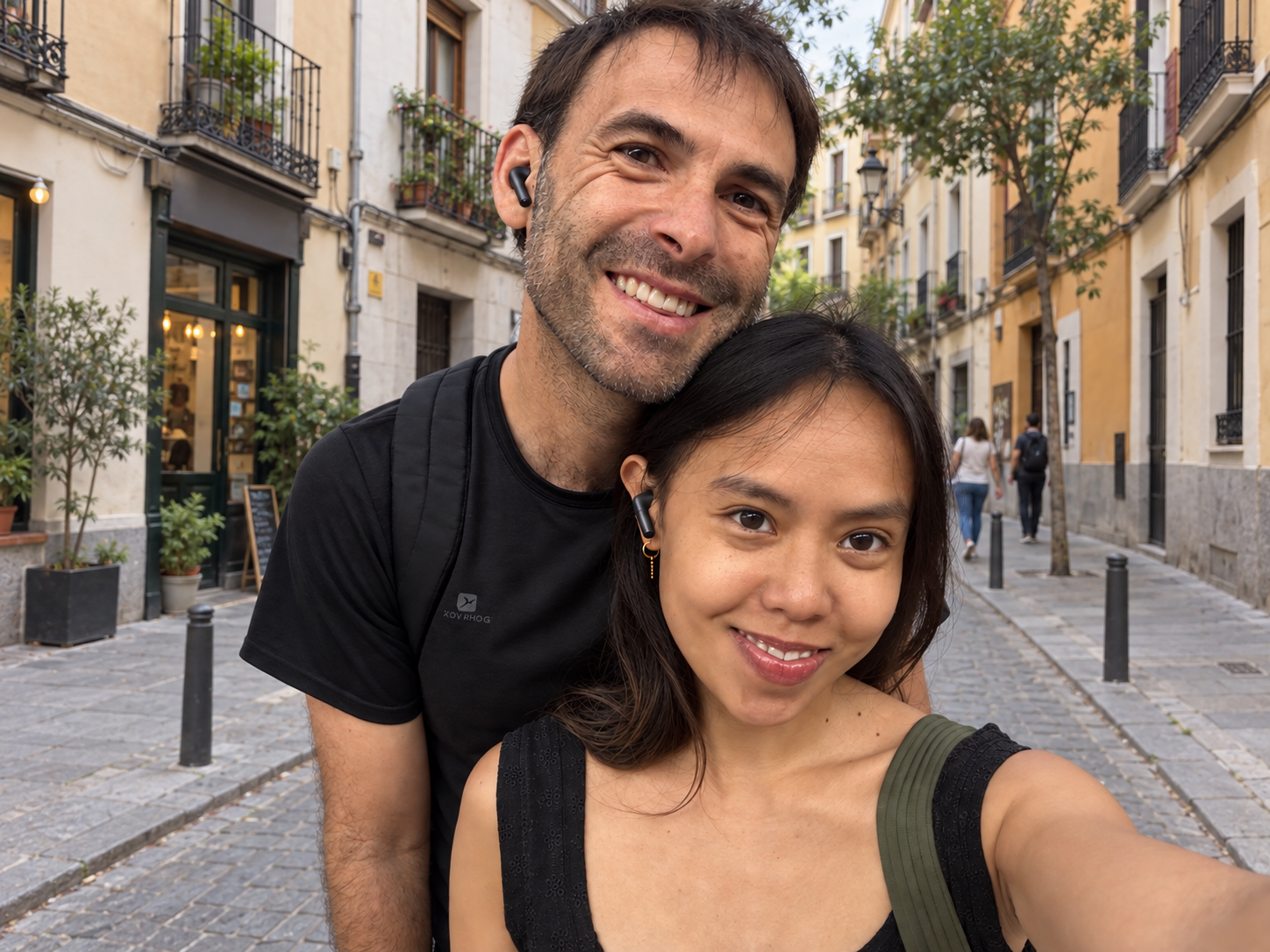
The W4 Plus is a pair of wireless earbuds that look like any other, paired to the Timekettle app on your phone, and built to do one thing ordinary earbuds cannot: translate speech in near real time. Timekettle launched them at the big IFA tech show in 2026, and the headline is that they fold several kinds of translation into one small device. There are four modes, and understanding them is the key to the whole thing. One-on-one mode has two people each wear a single earbud and hold a natural two-way conversation, each hearing the other translated. A listening mode lets you keep both earbuds in and simply hear whatever is being said to you, piped into your ears in your own language, which is the one that quietly does the heavy lifting for a traveler. There is a call mode that translates phone and video calls, and a media mode that translates foreign-language video and audio, so a show on your phone arrives with translated audio.
Under the surface it runs Timekettle’s latest translation system, supporting dozens of languages online and a smaller set of language pairs that work offline with no signal at all, which matters more than you would think. It is sold two ways, and the difference is worth knowing before you buy. There is a one-time-purchase version that permanently unlocks every feature with no recurring fees, and a cheaper version that covers the core conversation and listening modes free forever but puts the call, media, and advanced features behind a monthly subscription. For a traveler who wants everything and hates subscriptions, the one-time version is the obvious pick, and it is the one I used. One pair of earbuds, four modes, and no phone to pass across the table: that is the shape of what you are buying, and it is a genuinely different proposition from a translation app, for reasons that only became clear to me once I had worn them in the moments that usually undo me.
Setting Them Up
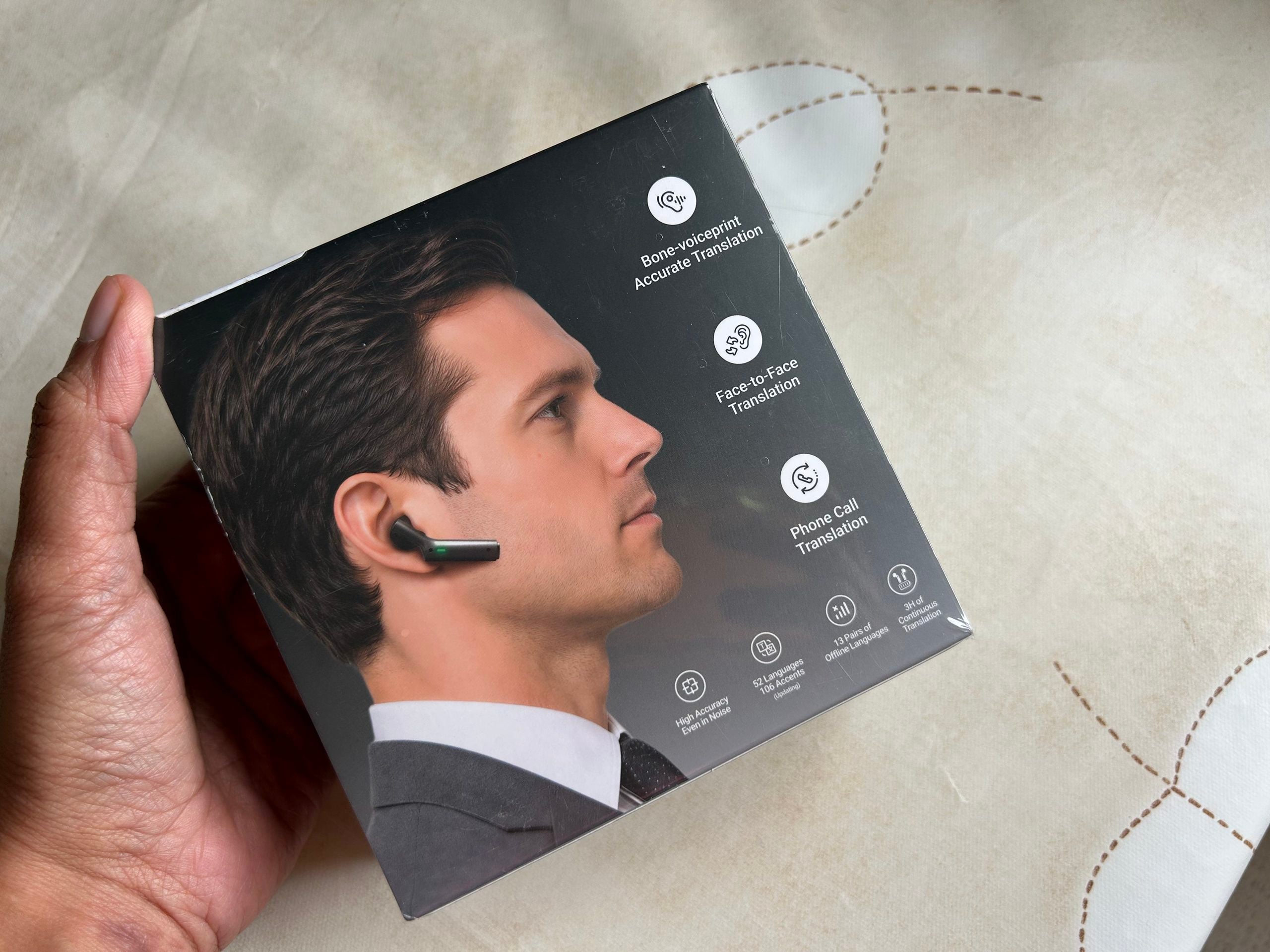
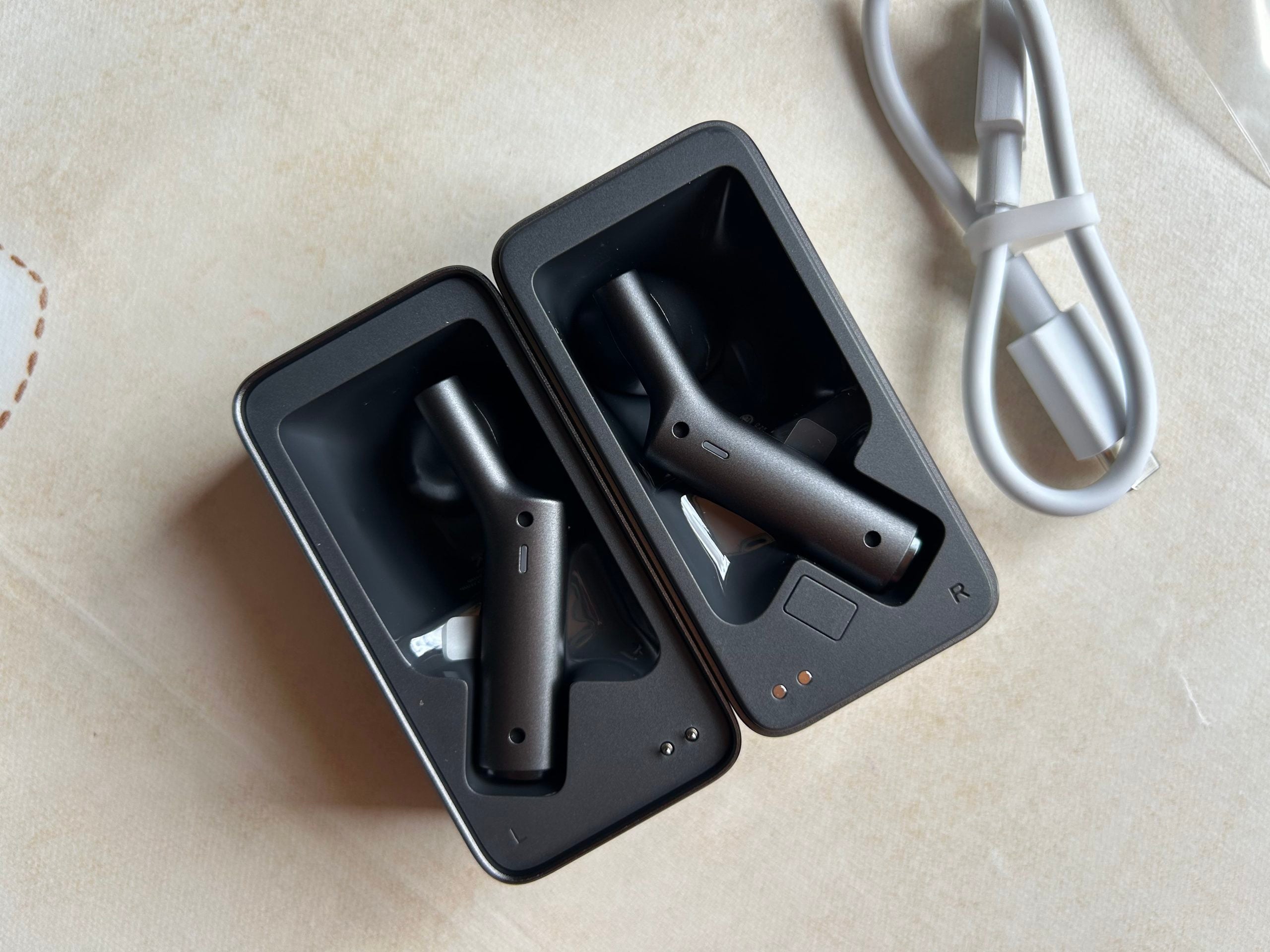
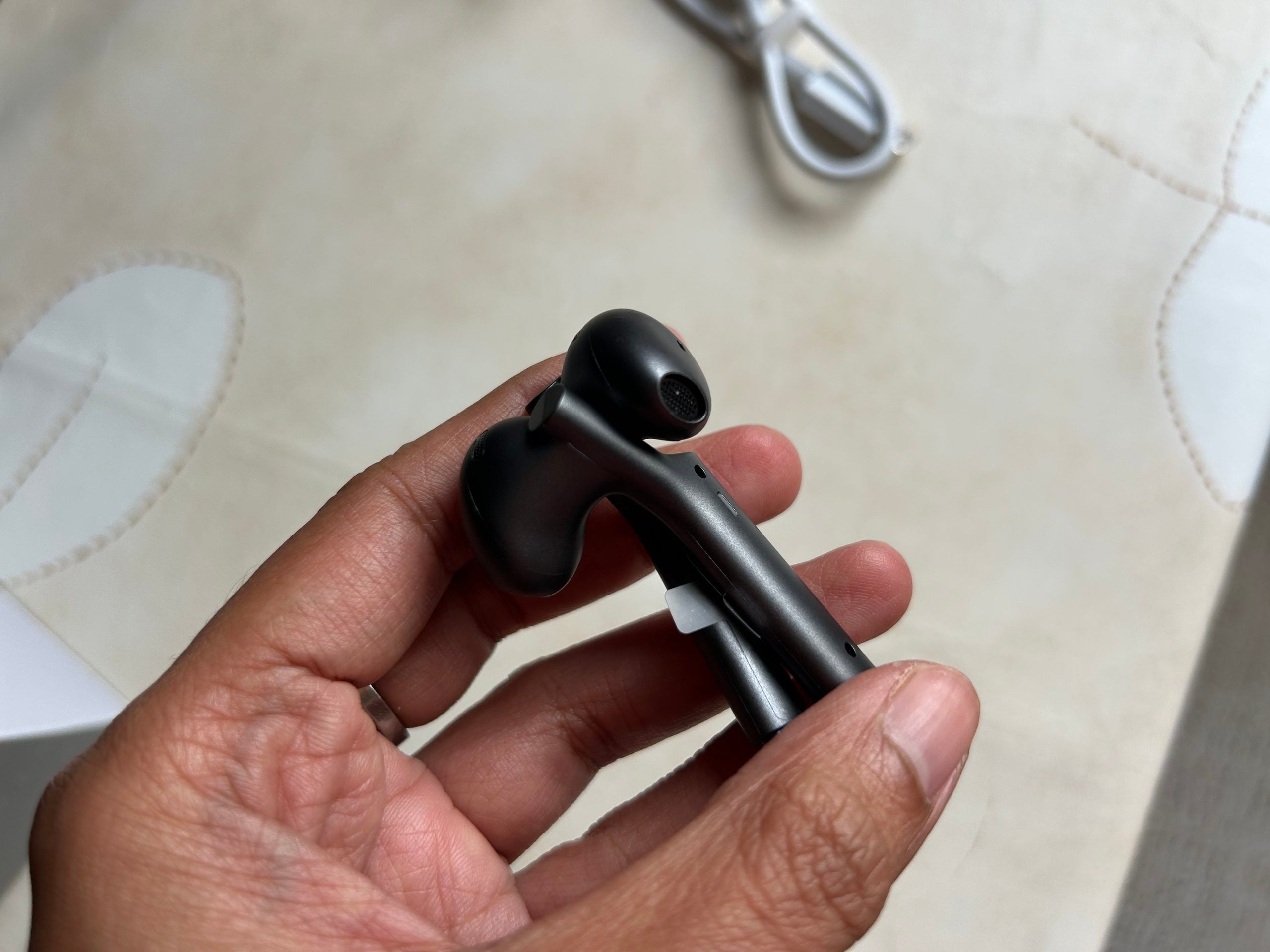
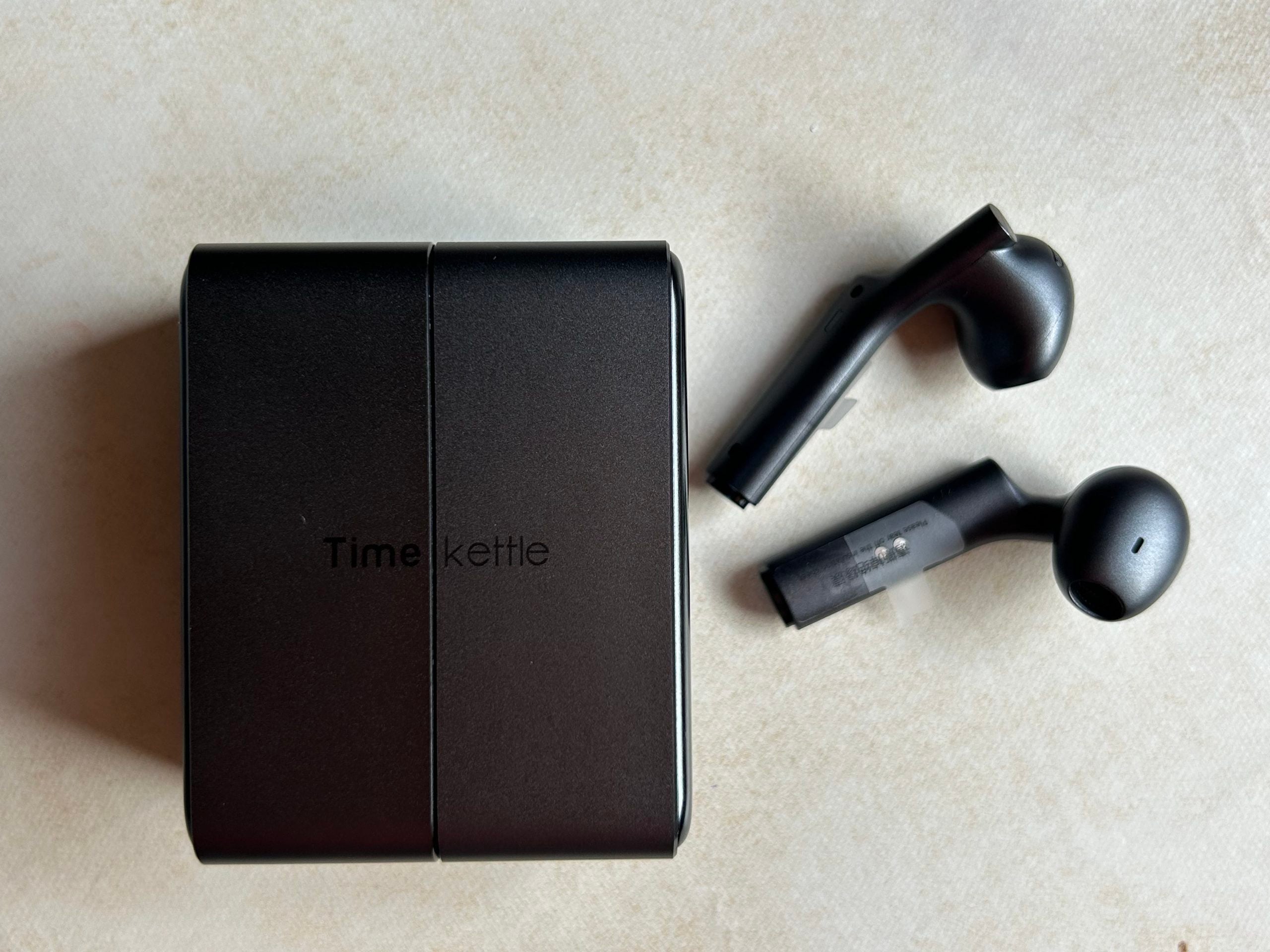
Setup is the part I dreaded and the part that turned out to be nothing. You charge the earbuds, install the Timekettle app, pair them the way you would pair any Bluetooth headphones, and choose your two languages, in my case Spanish and English, from a list in the app. The whole thing took a few minutes at the kitchen table, and then they simply lived in my bag like ordinary headphones waiting to be useful. There is nothing to insert, nothing to lose, and no monthly faff once you have the one-time version set up.
The one piece of advice I would give is to do the setup and download your offline language pair at home, on your own wifi, before you need it. That way the fiddly part happens in your kitchen with a coffee, and by the time you are standing in a restaurant or on a train you just put the earbuds in and go. I also spent ten minutes before the first real test just talking to the app and getting used to the rhythm of the translation, which made the first live conversation far less awkward than it would otherwise have been. It is the kind of tool that rewards five minutes of practice at home with a lot of confidence out in the world.
The Restaurant Test
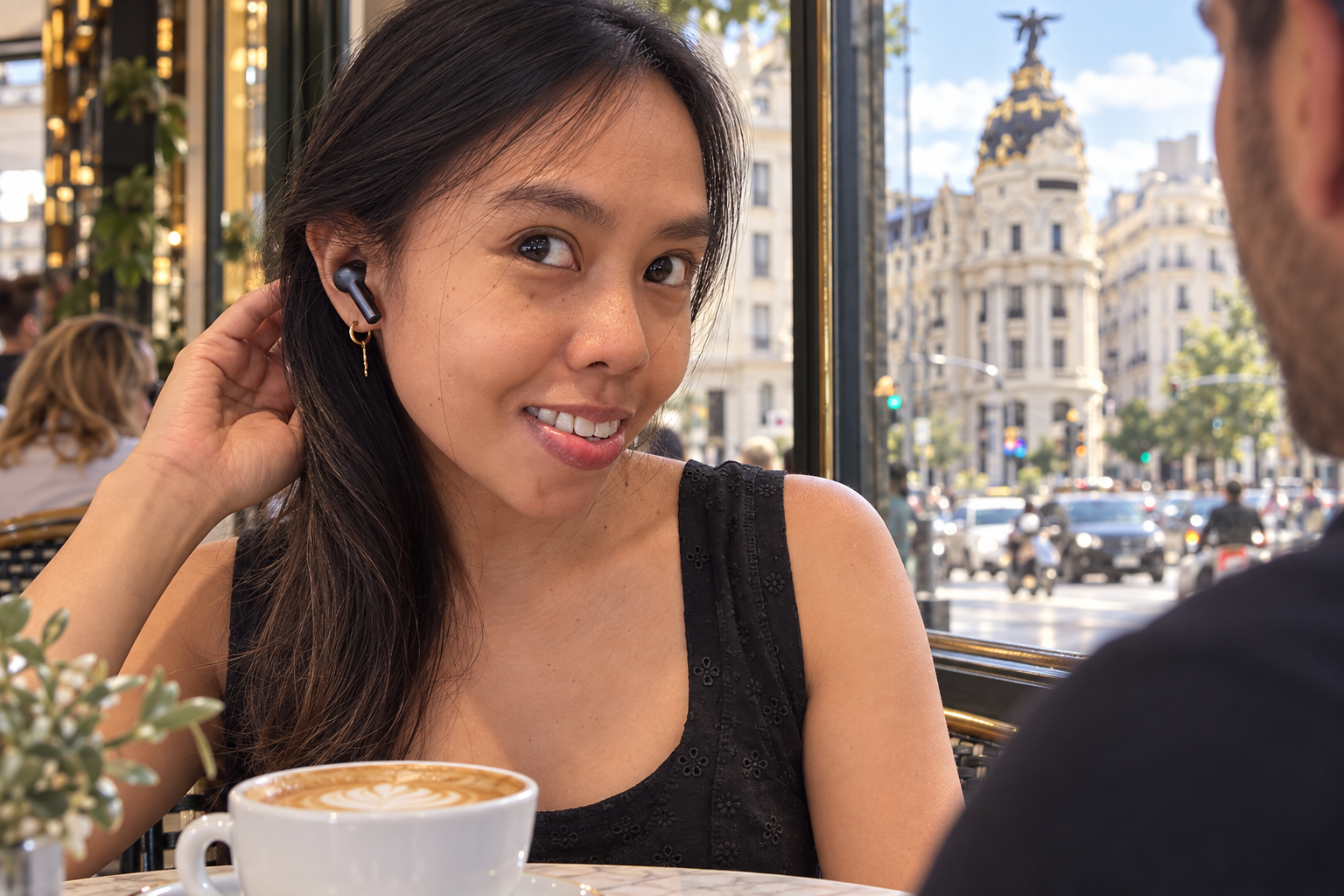
The real test came in Madrid, at exactly the kind of place that used to make me anxious: eight tables, a chalkboard menu with no pictures and no English, and a waiter standing over me with a pad and the patience that empties fast in a busy kitchen. For years that was the scene that shrank my trips, the one that kept me ordering by pointing on the safe tourist streets instead of walking into the small places with the real food. This time I kept both earbuds in and used the listening mode, and I let the waiter talk.
He read off the specials, the rabo de toro and the fish that had come in that morning, and half a second behind him the same words arrived in my ear in English.
I did not hand him anything. I did not turn a screen around. I just listened, the way you listen to a friend, and then I answered and let the app carry my reply back to him in Spanish. He never broke stride. To him I was simply a woman who understood the menu, ordered the oxtail and a glass of the house red, and got out of the way so the next table could go. That was the whole revolution, and it was almost boringly smooth, which is the highest praise I can give a gadget like this. Nobody had to notice anything, and for the first time in one of those restaurants, I did not feel like a problem the waiter had to solve.
Curious about the W4 Plus. Learn more here.
The Small Daily Crossings
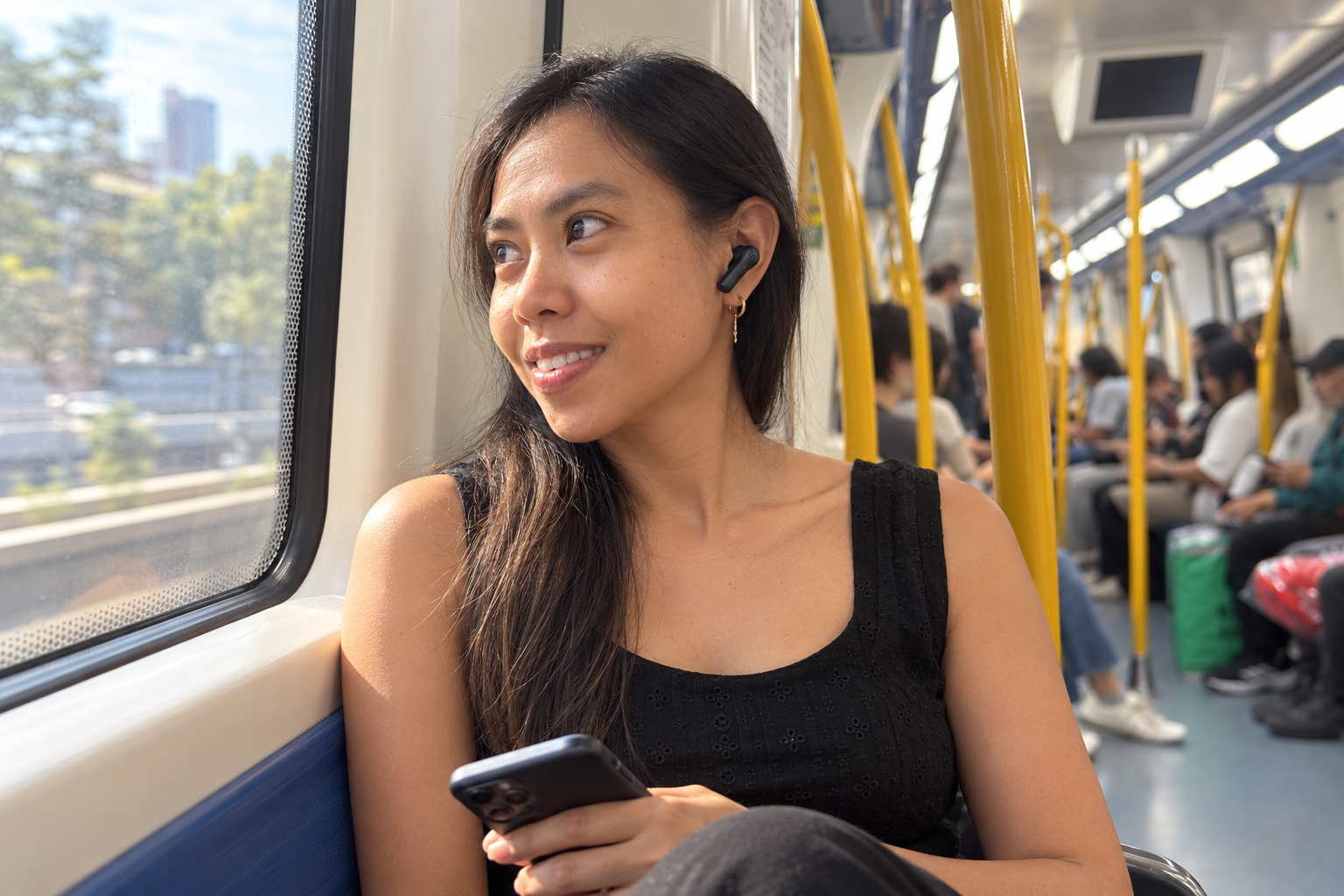
The dinner was the headline, but the real value showed up in the small stuff, the little daily crossings that a fluent person never thinks about and that had quietly fenced off a country I love. Standing on a corner with a map that had betrayed me, I asked an older man for directions and understood the whole answer, the left at the church and the bit about the street being closed for the market, instead of the usual shrug and a wrong turn. At a Tuesday market I asked the woman at the cheese stall what the hard sheep one was and whether it would survive a suitcase home, and got a small, happy lecture on curing that I would not have traded for anything.
On the regional train, where the signal dies in the hills, the offline language pair kept working, so I could read a station announcement to myself in English and stop bracing for the stop I could not pronounce. That offline capability is easy to overlook and genuinely useful, because the moments you most need help, a rural platform, a mountain village, a dead zone, are exactly where an internet-dependent app leaves you stranded. None of these exchanges were things I could not have muddled through before. The difference was that I stopped rehearsing them in my head for ten minutes first. The dread went out of the small crossings, and a trip, even in the country you live in, is mostly small crossings.
Learn more about the newest Timekettle W4 Plus here and get translating.
The Conversation I Did Not Plan For
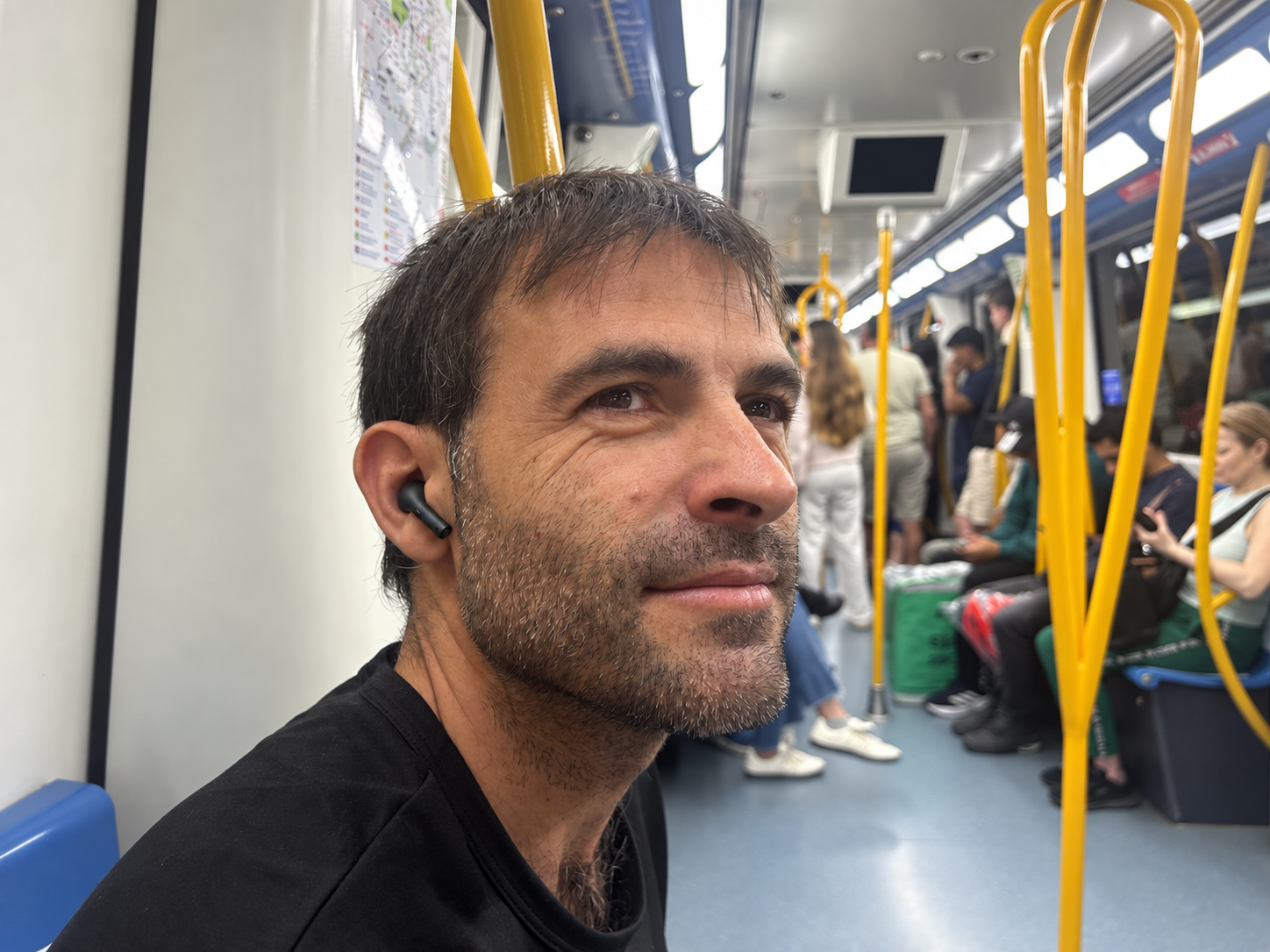
The moment I keep telling people about was not a transaction at all. It was a bench outside a church, late afternoon, when a woman about my own age sat down and said something about the light, and I answered, and then we were simply talking. Grandchildren, a son who had moved to Germany, the price of everything, the way the town empties in August. Twenty minutes on a bench with a stranger, in two languages, about nothing and everything, the kind of conversation I had been quietly missing for years without quite admitting it.
That is the conversation the pointing and the typing had always cost me, the one that does not happen when you are a problem to be solved rather than a person to be met. It is the reason a device that lives in your ears is a fundamentally different thing from a phone in your hand. The phone keeps your head down and your hands busy and the other person waiting; the earbuds give you back your hands, your eyes, and your face, so you can actually look at the person you are talking to. Those twenty minutes on the bench were worth more to me than every feature on the spec sheet combined, and they are the real reason I kept wearing the things.
What Wearing Them Is Actually Like
Now the honest part, because the limitations matter more than the shiny bits. There is a bit of delay. Someone speaks, and a half-second or so later the words land in your ear, and the first few times it feels like a slightly bad phone line. By the second day my brain had learned the rhythm and mostly stopped clocking it, the way you stop noticing subtitles once a film gets good, but it is real, and you learn to leave a small pause so you are not talking over the translation. It will not keep up with a fast, overlapping group argument; it is at its best one-to-one or with one person speaking at a time.
The battery carried a full day of dipping in and out, with the charging case topping the earbuds back up between meals, which is the realistic way you actually use them rather than hours of nonstop talking. A couple of other honest notes. The media mode, which translated a Spanish crime series on my phone into easy evening practice, needs an internet connection to work, unlike the conversation modes that run offline. And accuracy is very good but not perfect; it handles clear, normal speech beautifully and occasionally stumbles on heavy slang, thick regional accents, or someone mumbling, which is roughly what you would expect and still miles ahead of me on my own. None of this sent me back to the old way of pointing and hoping. It is simply the real shape of the tool, and knowing it going in means you use it for what it is brilliant at and forgive the edges.
Learn more about the newest Timekettle W4 Plus here and get translating.
What They Cost, and Who They Are For
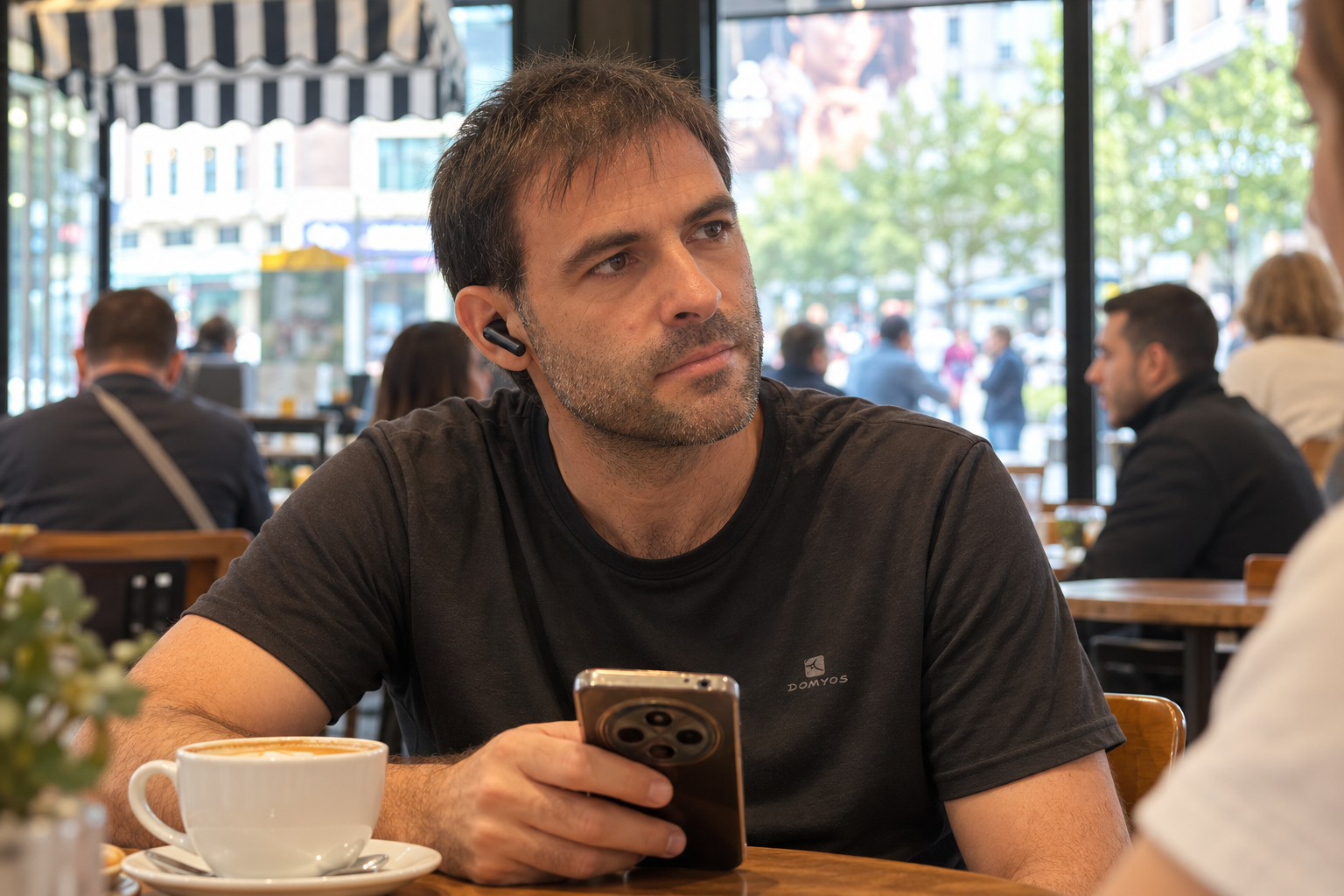
The W4 Plus runs about 379 dollars, roughly 350 euros, for the one-time version that unlocks everything with no monthly fee, with the cheaper subscription version for lighter or occasional use. That is not pocket change, and I would not pretend it is an impulse buy. But the honest way to think about the price is to ask what the language barrier has actually been costing you. For me, it had quietly fenced off half of the country I live in, the small restaurants, the real conversations, the confidence to walk in anywhere, and measured against that, the price started to look less like a gadget and more like the cost of getting a place back.
So who should buy them. Buy the W4 Plus if the language barrier genuinely holds you back, if you travel often or live somewhere you have never fully cracked the language, or if what you want is not just to complete transactions but to have actual conversations, hands free and face up. Think harder before buying if you only travel occasionally and lightly, where the free phone apps will serve you fine for a sign or a single line, or if you are a confident speaker who just needs the odd word, in which case this is more tool than you need. And if you do buy, get the one-time version unless you are sure your use will be light, because subscriptions have a way of outlasting their welcome.
The Verdict
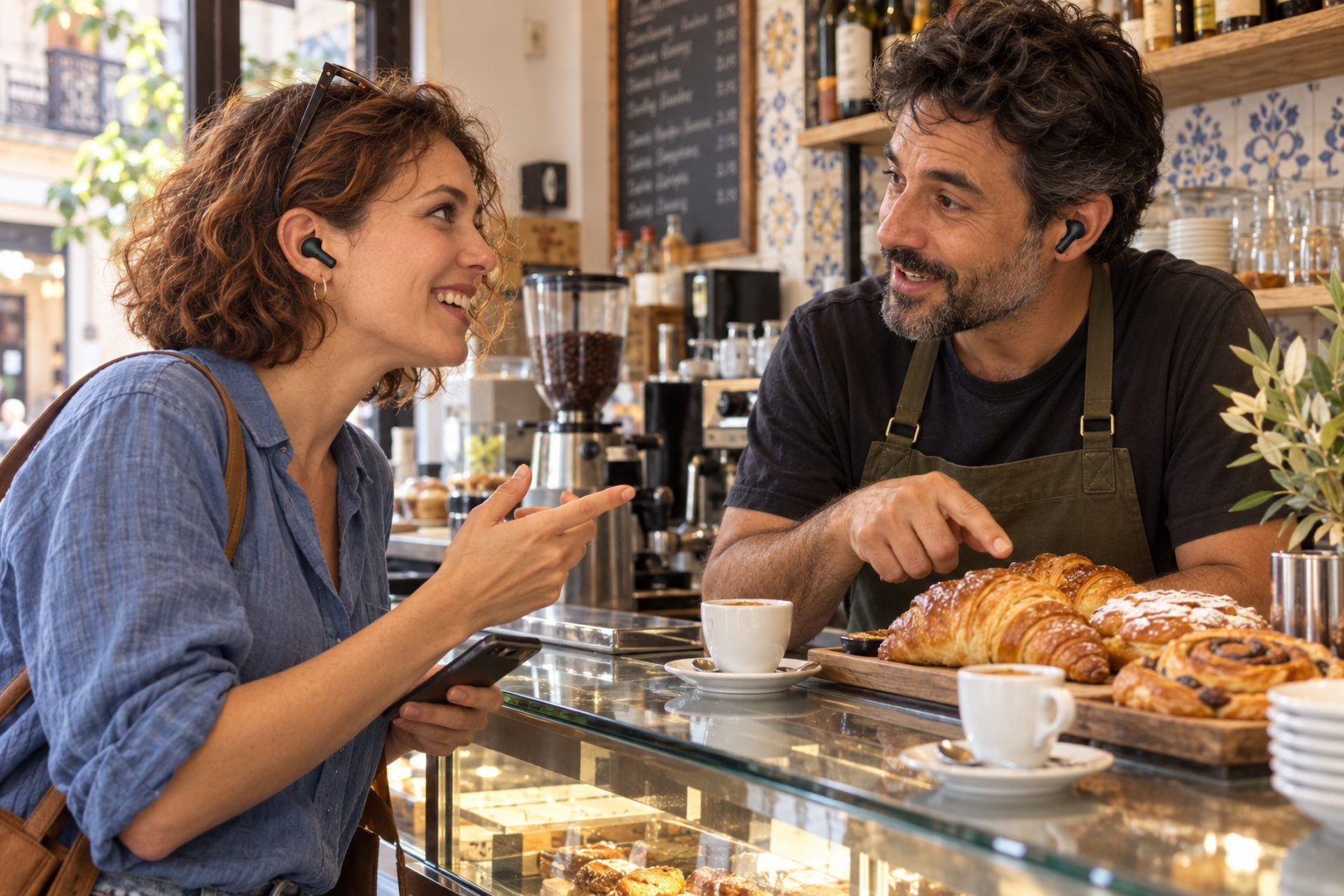

The Timekettle W4 Plus does something genuinely new for a nervous or rusty speaker: it hands back the small daily crossings and, more than that, the real conversations, without the awkward phone-passing that always marked you out as struggling. The restaurant in Ronda, the woman at the cheese stall, the twenty minutes on the bench, those are not things an app in your hand ever gave me, and the earbuds did. It is not magic, the half-second delay is real, the group settings defeat it, the media mode wants wifi, and the price is serious. But for the specific problem it solves, the quiet fence the language barrier builds around a place, it is the best answer I have found, and it earns the half-star back by simply disappearing into your ears and letting you get on with being a person. I kept wearing it long after the testing was done, trip after trip, which is the most honest verdict I can give anything, and the only one I really trust from a reviewer and real user, including myself.
Learn more about the newest Timekettle W4 Plus here and get translating.

About the Author: Ruben, co-founder of Gamintraveler.com since 2014, is a seasoned traveler from Spain who has explored over 100 countries since 2009. Known for his extensive travel adventures across South America, Europe, the US, Australia, New Zealand, Asia, and Africa, Ruben combines his passion for adventurous yet sustainable living with his love for cycling, highlighted by his remarkable 5-month bicycle journey from Spain to Norway. He currently resides in Spain, where he continues sharing his travel experiences with his partner, Rachel, and their son, Han.