
Americans tend to picture grandparents in one of two ways. There are the distant ones, who retire somewhere sunny a thousand miles away and see the grandchildren a few times a year, and there are the local ones, pressed into service as unpaid daycare, scheduled for Tuesdays and Thursdays whether they like it or not. Both models feel oddly transactional, a matter of logistics and calendars. In each, the grandparent is essentially a resource to be scheduled around, whether from a distance or up close.
Move to Europe, though, and you encounter grandparents doing something different, woven so deeply into daily family life that the question of scheduling barely arises. It is not that European grandparents help less than American ones; in many places they help a great deal more. It is that the help runs on a different logic entirely, a kind of unwritten family contract that Americans tend to find both quietly admirable and slightly foreign. So here is how the European grandparent role actually works, why it is not the scheduled babysitting Americans know, and what lies behind it. It turns out to say as much about how families are arranged, and how close they live, as about grandparents themselves.
What follows is how this differs from the American grandparent, the surprising north-south split in who helps and how much, why proximity is the whole foundation, the reciprocal family contract underneath it, and what an American can and cannot take from it.
Not the American Grandparent

To see what is different about the European model, it helps to be honest about the American one, which tends toward two poles. At one end is the grandparent who has retired far away to pursue their own independent life, seeing the grandchildren on holidays and video calls, present but peripheral. At the other is the grandparent conscripted into regular childcare, minding the kids on fixed days so the parents can work, which shades into an arrangement that looks a lot like a job, complete with a schedule and the low-grade friction that comes when family help becomes a standing obligation. Both are real, both work for many families, and both share a certain American quality of being explicit arrangements, negotiated and calendared. There is a plan, a division of labor, an understanding of who owes what to whom, all of it more or less spoken aloud.
The European pattern, particularly in the south of the continent, is neither of these, and the difference is more than cosmetic. European grandparents, where involved, tend to be involved continuously and informally, not as a scheduled service booked in advance but as a constant background presence in the life of the family, dropping in, picking up, feeding, and minding as the day requires, without much of the formal arrangement that surrounds American grandparent-care.
The care is often intense, but it does not feel like a job or a favor being called in; it feels like an extension of ordinary family life, because that is what it is. This is the thing Americans notice and struggle to name: the European grandparent is frequently doing far more hands-on childcare than the American one, and yet doing it with none of the transactional, scheduled quality that childcare has in America, which makes it look, to American eyes, less like babysitting and more like simply being family. The word babysitting implies an occasion, a booking, a beginning and an end; the European version has none of those edges.
The Surprising North-South Split

The picture gets more interesting, and more counterintuitive, when you look at where in Europe grandparents help most, because the answer defies the obvious assumption. You might expect grandparental childcare to be most common in the warm, family-centric south, and least common in the cooler, more individualist north. The reality is almost the reverse of what you would guess, and it comes down to how each region’s childcare is otherwise arranged. In northern Europe, in Scandinavia and the Netherlands, a higher share provide some childcare, but occasionally and lightly, an afternoon here, an emergency there, because abundant, affordable state childcare means grandparents are a supplement rather than the backbone.
In the south, in Spain, Italy, and Greece, fewer grandparents provide any childcare at all, but those who do provide it with an intensity that dwarfs the northern version. The figures are striking: around thirty percent of grandparents in Italy and Spain provide near-daily care for their grandchildren, compared with as little as two percent in the north, and close to half of Spanish and Italian grandparents look after grandchildren at least weekly. The reason is the mirror image of the northern one. Where the state provides little affordable childcare, as in much of the south, the childcare gap has to be filled by someone, and that someone is overwhelmingly the grandparents, who become the de facto daily childcare that makes it possible for parents, especially mothers, to work at all. So the paradox resolves into a simple logic: in the north, grandparents help sporadically because the state has the childcare covered; in the south, grandparents help intensively because it does not, and they are the system. The warmth of the southern family and the coolness of the northern one turn out to matter far less than the presence or absence of a public alternative.
Proximity Is the Whole Foundation
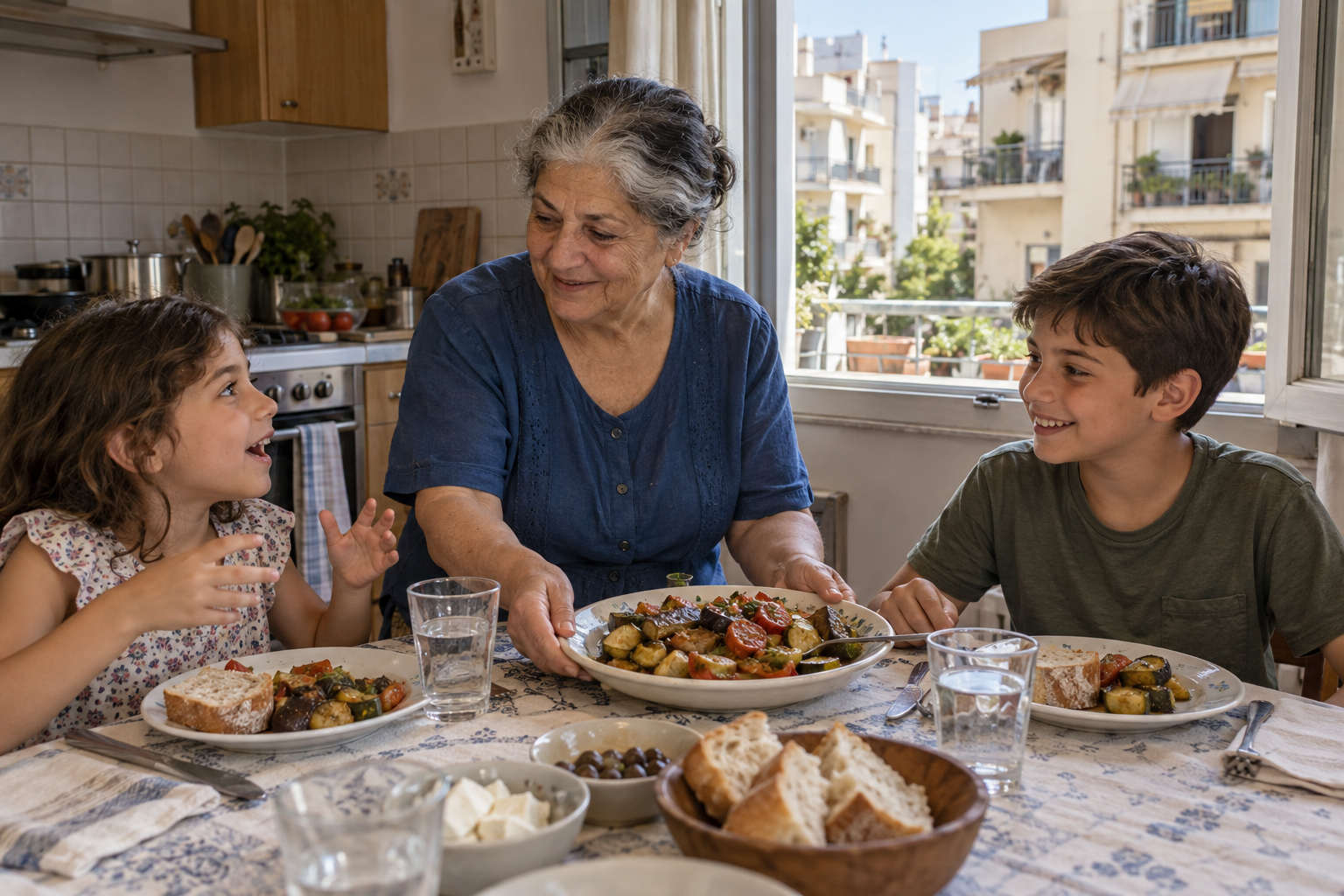
None of this intensive, informal, daily grandparent-care would be possible without the thing that quietly underpins it all, which is physical closeness. The European grandparent model, especially in its southern form, runs on proximity, on grandparents living near their children and grandchildren, often in the same town, the same neighborhood, sometimes the same building or even the same home. Multigenerational proximity, and outright co-residence, remains far more common in southern and eastern Europe than in the north or in America, with a substantial share of older people in Spain, Italy, and Greece living with or very near their adult offspring.
This closeness is what makes the whole unscheduled quality possible, because when the grandparents are ten minutes away, childcare does not need to be scheduled; it simply happens. The child is dropped at the grandparents’ on the way to work, or the grandmother collects them from school, or they eat lunch at the grandparents’ most days, not as a booked arrangement but as the natural rhythm of a family whose generations live within walking distance of one another. Nobody schedules it because nobody needs to; it is just where the child goes, the way water finds its level. This is precisely what the dispersed American family, spread across states in pursuit of jobs and space, has largely given up, and it is why the American grandparent role has to be either distant or formally scheduled: without proximity, there is no middle option, no way to be the constant informal presence that the European grandparent is. Proximity is not a detail of the European model; it is the foundation the whole thing stands on, and where it is absent, the model simply cannot exist. This is why the American family cannot simply decide to adopt it: the arrangement is downstream of a geography of closeness that most American families long ago traded away for opportunity and space.
The Reciprocal Contract Underneath
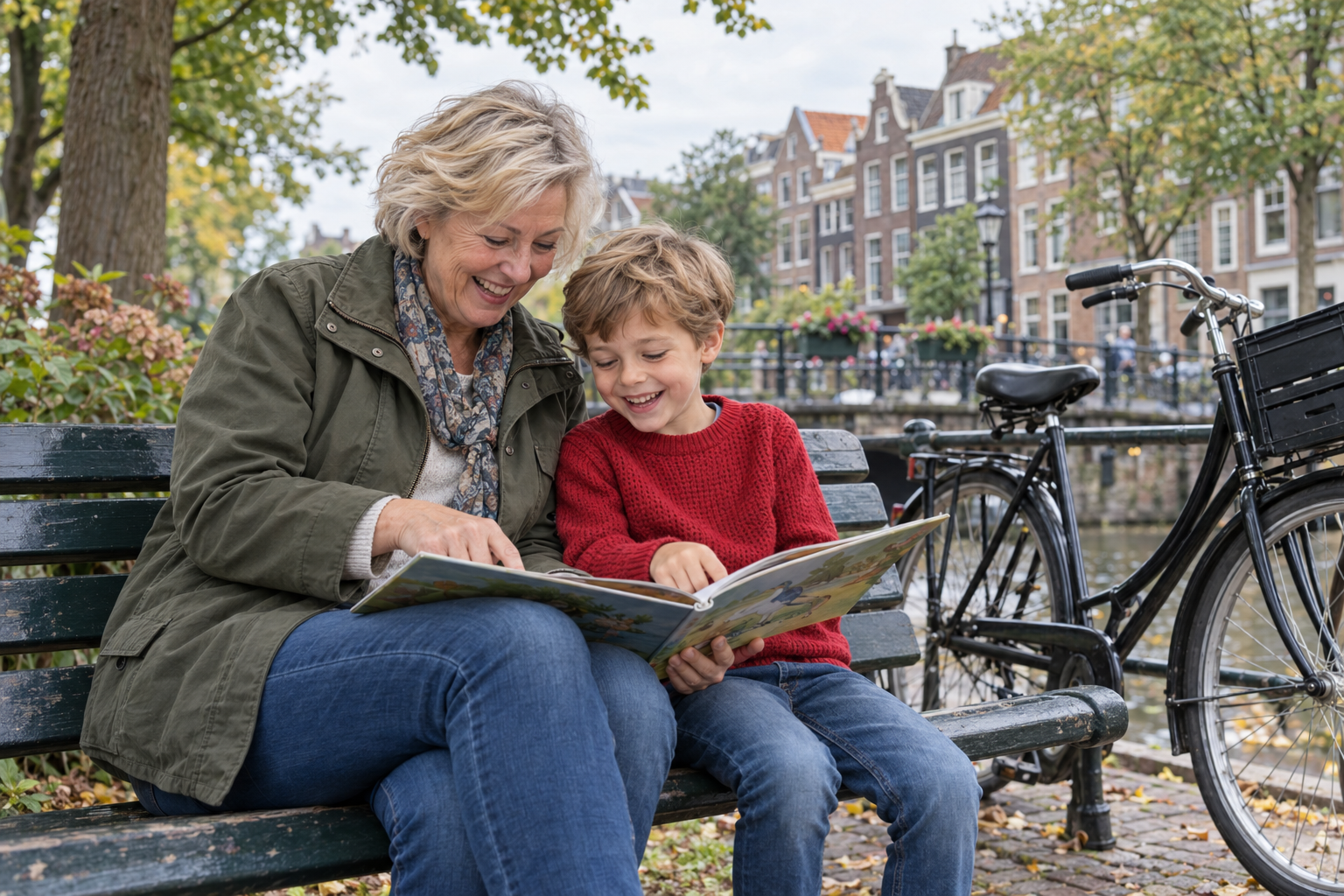
Beneath the proximity and the daily help lies something deeper, an implicit intergenerational bargain that is really the heart of the matter. The European family, especially the southern European one, tends to operate on a long, unwritten contract that runs in both directions across the generations and across a lifetime. The grandparents help raise the grandchildren, investing their time, their care, and often their money in the younger generation; and in turn, when those grandparents grow old and frail, their adult children are expected to care for them, taking them in or looking after them rather than placing them in institutions. It is the same reason nursing homes are so much less central to southern European old age than to American: the family, not the institution, is the expected answer to both ends of life. Childcare flowing down the generations and eldercare flowing back up are two halves of the same deal.
This reciprocity is what distinguishes the European arrangement from mere babysitting, and it is why the scheduled-service framing misses the point so completely. The grandmother minding her grandchildren daily is not doing a favor to be repaid or a job to be compensated; she is fulfilling her part of a contract whose other half she will call on decades later, and everyone involved understands this, usually without ever saying it aloud. It is care given in the confidence that care will return, embedded in a web of mutual obligation that binds the generations together. This is a genuinely different foundation for family life from the American one, which tends to prize the independence of each generation, the grandparents self-sufficient in their own retirement, the adult children self-sufficient in their own households, and care, when it is needed in either direction, more often purchased than assumed. Neither is simply better, but they are profoundly different, and the European grandparent who seems to give so freely is operating inside a structure of reciprocity that makes the giving make sense. What looks from outside like remarkable generosity is, from inside, simply people holding up their end of a bargain everyone was born into.
It Even Shapes Whether They Have Kids

One of the more surprising findings about all this is how far the effects of the grandparent contract reach, extending even to whether and when the grandchildren get born in the first place. Researchers studying European families have found that the availability of grandparents actually influences the fertility decisions of the younger generation, so that adult children who have willing, nearby grandparents to help are more likely to have children, and to have them sooner, than those who do not. The grandparent is not just a help after the baby arrives; the prospect of that help is part of what makes the baby feel possible at all.
This makes a certain hard sense once you see the childcare arithmetic. In a country where the state provides little affordable childcare and grandparents are the main alternative, a young couple weighing whether they can manage a child, or another child, is really weighing whether they have the support to make it work, and grandparents living nearby are the single biggest piece of that support. Where the grandparents are available, the couple can imagine coping; where they are not, the whole undertaking can look impossible. It is a striking illustration of how deeply the grandparent role is woven into the machinery of family life in these societies: it is not merely a nice-to-have that eases the raising of children who would have been born anyway, but a factor in the raising of the next generation existing at all. The grandmother down the street, in other words, is quietly part of the reason there are grandchildren for her to mind, which is about as complete an example of the intergenerational contract at work as one could ask for.
What an American Can Take From It

It would be easy to romanticize all this, and honesty requires resisting that, because the European model has real costs and is not as durable as it looks. The intensive grandparent-care of the south can be a genuine burden on the grandparents themselves, some of whom find their retirement years consumed by childcare they did not entirely choose, and the reciprocal contract can weigh heavily on adult children later obliged to care for aging parents. A duty that binds a family together can also, on a hard week, feel like exactly that, a duty, and not everyone inside the warm picture is warmed by it equally. The whole system is also under strain and quietly changing, as retirement ages rise and keep grandparents in work longer, as women’s employment reduces the pool of available grandmothers, as families shrink and disperse even in the south, and as the old assumption of proximity slowly erodes. The grandmother who is still working at sixty-five cannot mind the grandchildren the way her own mother once did, and there are fewer grandchildren, and they live further away, so the model that looks so solid is in fact slowly loosening. The European grandparent model is not a timeless idyll; it is a particular arrangement under real pressure, and its more demanding versions are not something everyone inside them would choose.
Still, there is something in it worth taking seriously, even for an American who cannot simply import it. The deepest lesson is about proximity, because almost everything good in the European model flows from generations living close enough to be part of one another’s daily lives, and that is a choice, however difficult, that an American family can weigh: whether the job that requires moving across the country is worth the grandparent relationship it makes impossible, whether retiring near the grandchildren might matter more than retiring somewhere sunny and far. The second lesson is about the quiet power of the reciprocal frame, of thinking about family care as a long, two-way contract across the generations rather than a series of transactions to be scheduled and settled. An American cannot conjure a southern European extended family out of nothing, and should not pretend the model transplants cleanly. But the questions it raises, about how close we choose to live to the people we are related to, and about what we owe each other across the generations, travel perfectly well, and are worth sitting with whether you are contemplating a move abroad or simply wondering why the grandparents you saw in Spain seemed so effortlessly woven into their grandchildren’s lives. The answer, in the end, is not that they love their families more, but that they live near them, and have quietly agreed to owe each other something across a lifetime.

About the Author: Ruben, co-founder of Gamintraveler.com since 2014, is a seasoned traveler from Spain who has explored over 100 countries since 2009. Known for his extensive travel adventures across South America, Europe, the US, Australia, New Zealand, Asia, and Africa, Ruben combines his passion for adventurous yet sustainable living with his love for cycling, highlighted by his remarkable 5-month bicycle journey from Spain to Norway. He currently resides in Spain, where he continues sharing his travel experiences with his partner, Rachel, and their son, Han.