
One of the small wonders of European life, to an American eye, is just how casually Europeans travel with their dogs. A family in Germany can pack up the car, drive through Austria into Italy, and never once wrangle a fresh pile of veterinary paperwork at a border. To an American, for whom moving a dog across even some state lines can involve certificates and checks, the sheer casualness of it is the surprising part. The dog simply comes along, carried across three countries on the strength of a single small booklet. No queue at a veterinary window, no fee, no anxious wait to see whether the paperwork will pass; the dog is simply part of the family trip, as unremarkable a traveler as the children in the back seat. That booklet is the EU Pet Passport, and it is the quiet piece of bureaucracy that turns the whole of Europe into one borderless country as far as your dog is concerned.
It is also a document most Americans have heard of vaguely and understood not at all, including the one crucial fact that they cannot simply get one for themselves. So here is what the EU Pet Passport actually is, how it lets Europeans cross borders with their dogs so easily, what changed about it in 2026, and how an American who moves to Europe eventually gets to carry one too. It is a small document that quietly explains a large difference in how freely people and their animals move around Europe.
What follows is what the little booklet is, how it actually works, the 2026 change that made it mandatory, why Americans cannot simply get one, and how you get to it once you have moved.
The Little Blue Booklet
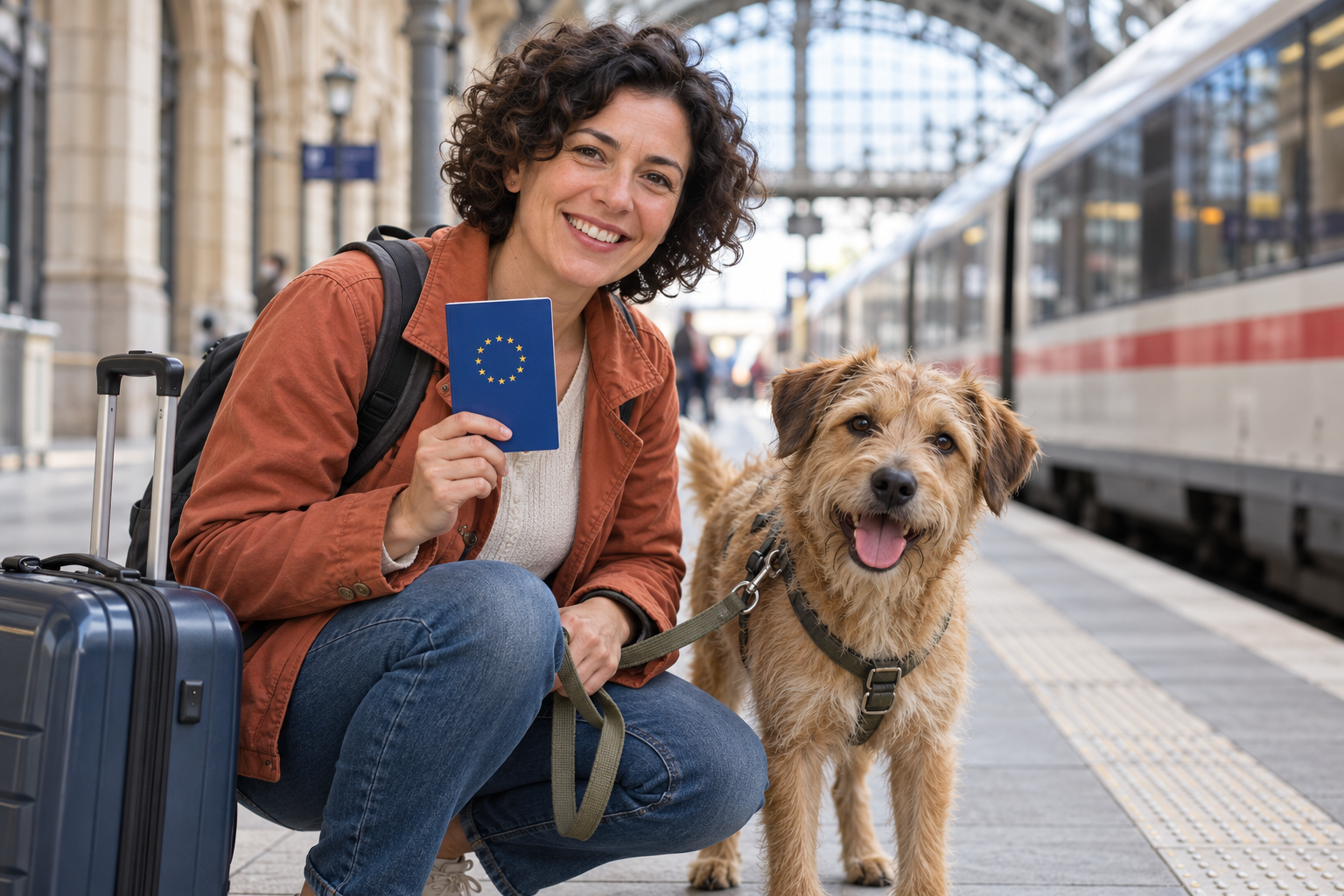
At its heart, the EU Pet Passport is exactly what it sounds like: a small, standardized booklet, blue with the gold EU stars, that serves as an official travel and identity document for a pet. It is issued by an authorized veterinarian in an EU country, and it stays with the animal for life, a permanent record that travels wherever the dog does. There is no annual passport to renew and no expiry on the booklet itself; it simply accompanies the dog from puppyhood onward, gathering entries as the years pass. Into it the vet writes the essential facts that European authorities care about: the animal’s microchip number, its rabies vaccination history, the owner’s and vet’s details, and, where relevant, any tapeworm treatment. It is, in effect, a combined identity card and health record for the dog, in a format every EU country recognizes. Where an American might juggle a stack of vet records, rabies certificates, and state paperwork, the European dog owner has one slim booklet that says everything, to everyone, in a language the whole bloc reads.
The genius of it is standardization. Because every EU member state issues and accepts the same standardized passport, a dog with a valid one can move between all of them without any further documentation, the way a person with a valid passport can cross those same borders. There is no need to obtain a fresh health certificate for each trip, no border veterinary inspection for routine travel, no repeating of paperwork every time you cross a line on the map.
The dog that is legal in France is legal in Italy and Germany and the Netherlands on the same document, without a single extra form. The passport, once properly filled in and kept current, is the single document that does it all, which is precisely why European dog owners travel with such enviable ease. The booklet is small enough to slip into a glovebox, and it quietly carries all the authority needed to take a dog from one end of the continent to the other. To an American used to the paperwork of moving a pet even between some states, the sight of a dog crossing three national borders on the strength of one little book is genuinely striking.
How It Actually Works
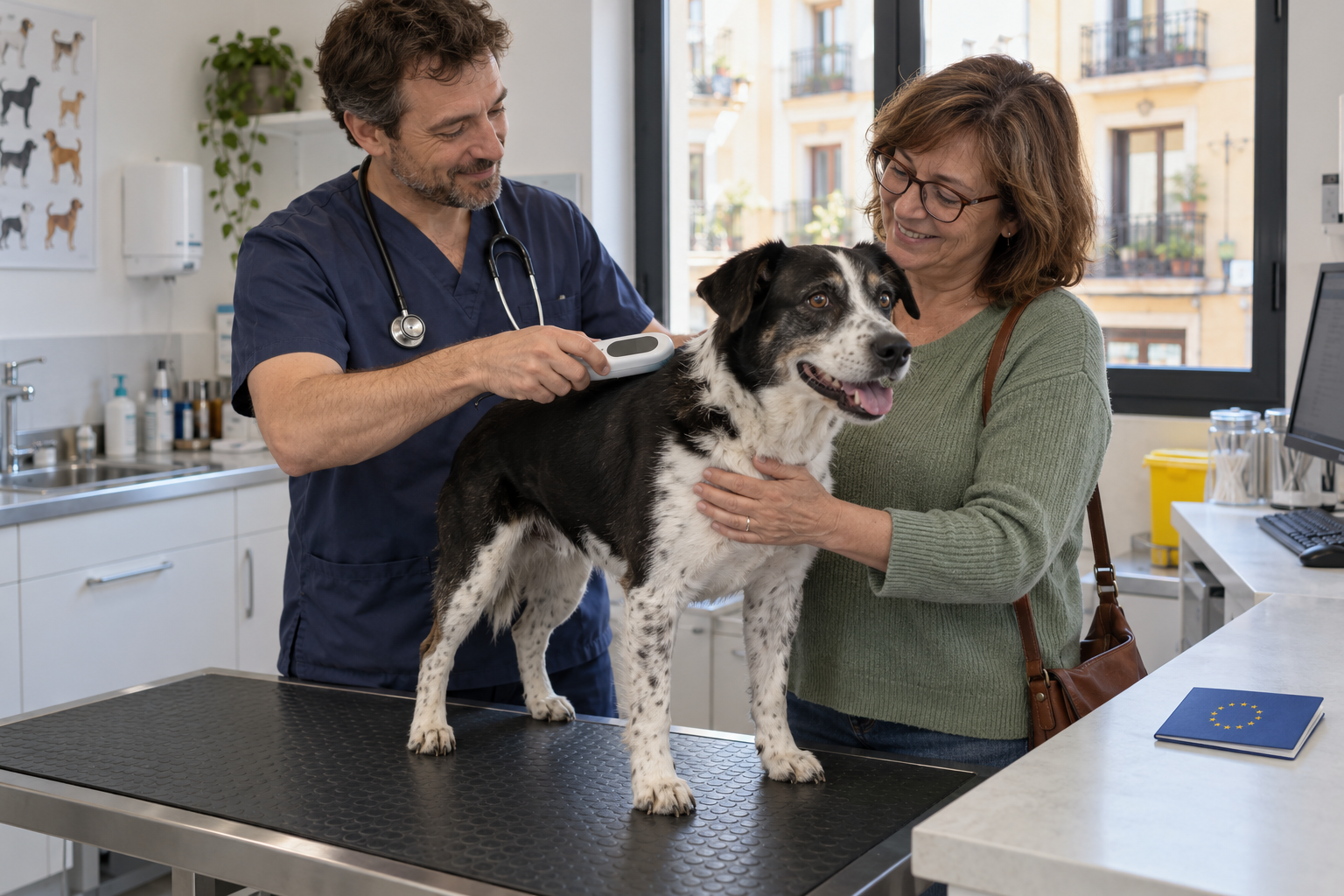
The passport itself is only as good as the veterinary steps recorded in it, and those follow a strict sequence that is worth understanding, because the order matters as much as the substance. First, the dog must have an ISO-standard microchip, the kind European scanners read, implanted and recorded. Second, and this is the step whose timing trips people up, the dog must be vaccinated against rabies, and that vaccination must come after the microchip is in place, with a first vaccination requires a twenty-one day wait before travel. Only once the microchip and a valid rabies vaccination are in order does the authorized vet complete the passport, and from then on the pet can travel throughout the EU as long as the rabies vaccination is kept up to date with boosters. Let the rabies lapse and the passport goes quiet until a booster revives it, so the one recurring duty is simply keeping that vaccination current, which any routine vet visit handles.
There is one extra wrinkle for certain destinations. A handful of countries that are free of a particular tapeworm, namely Ireland, Finland, Malta, and Norway, require tapeworm treatment shortly before entry, within a window of roughly one to five days, with the treatment recorded in the passport by a vet.
Beyond that, the system is beautifully simple: keep the rabies current, carry the passport, observe the tapeworm rule for the few countries that have it, and your dog can accompany you across Europe indefinitely. There is no annual renewal of the passport itself, no re-application, no expiry to dread; the booklet lasts the dog’s life, and only the vaccination inside it needs periodic attention. The whole design rewards getting the initial steps right, in the right order, after which the ongoing burden is minimal, essentially just remembering the rabies boosters. It is the front-loaded effort of setting the passport up correctly that buys years of effortless travel afterward. Do the microchip and the rabies vaccination properly, in that order, and you are essentially done; get them muddled, and you may find yourself starting over.
More Than Dogs, and More Than Cars
Although we have been talking about dogs, it is worth noting that the passport covers the whole trio of common pets the rules apply to, dogs, cats, and ferrets, so the cat-owning family enjoys exactly the same freedom of movement as the dog-owning one. The same booklet, the same microchip-and-rabies logic, the same border-free travel; the system does not play favorites among the animals it recognizes.
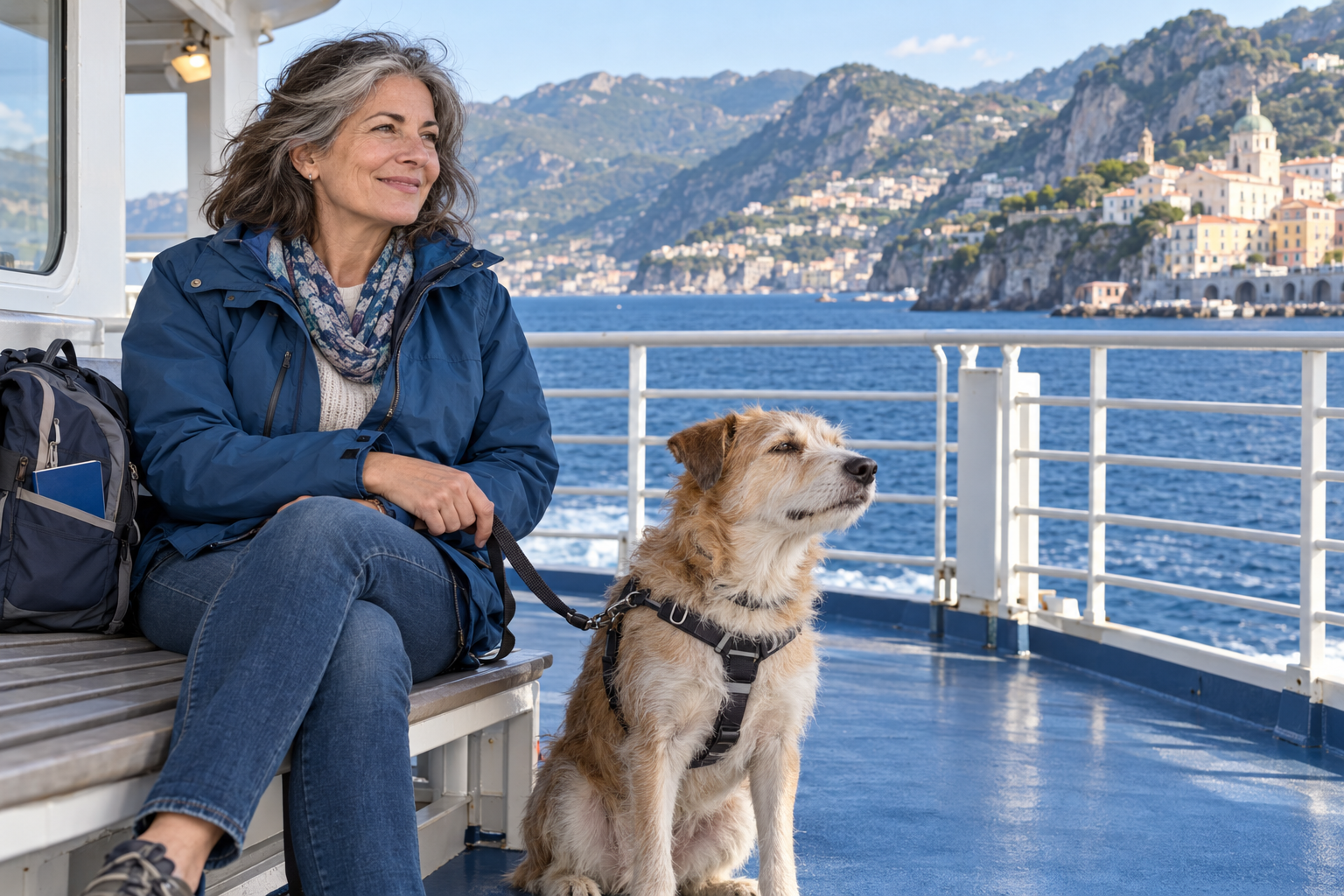
Just as important is what the passport unlocks beyond the family car, because European pets do not only travel by road. The continent’s famously dog-friendly culture means that, with a valid passport, animals can accompany their owners on much of Europe’s public transport too, on many trains, on ferries, and on flights between EU countries, subject to each carrier’s own rules about carriers, sizes, and bookings.
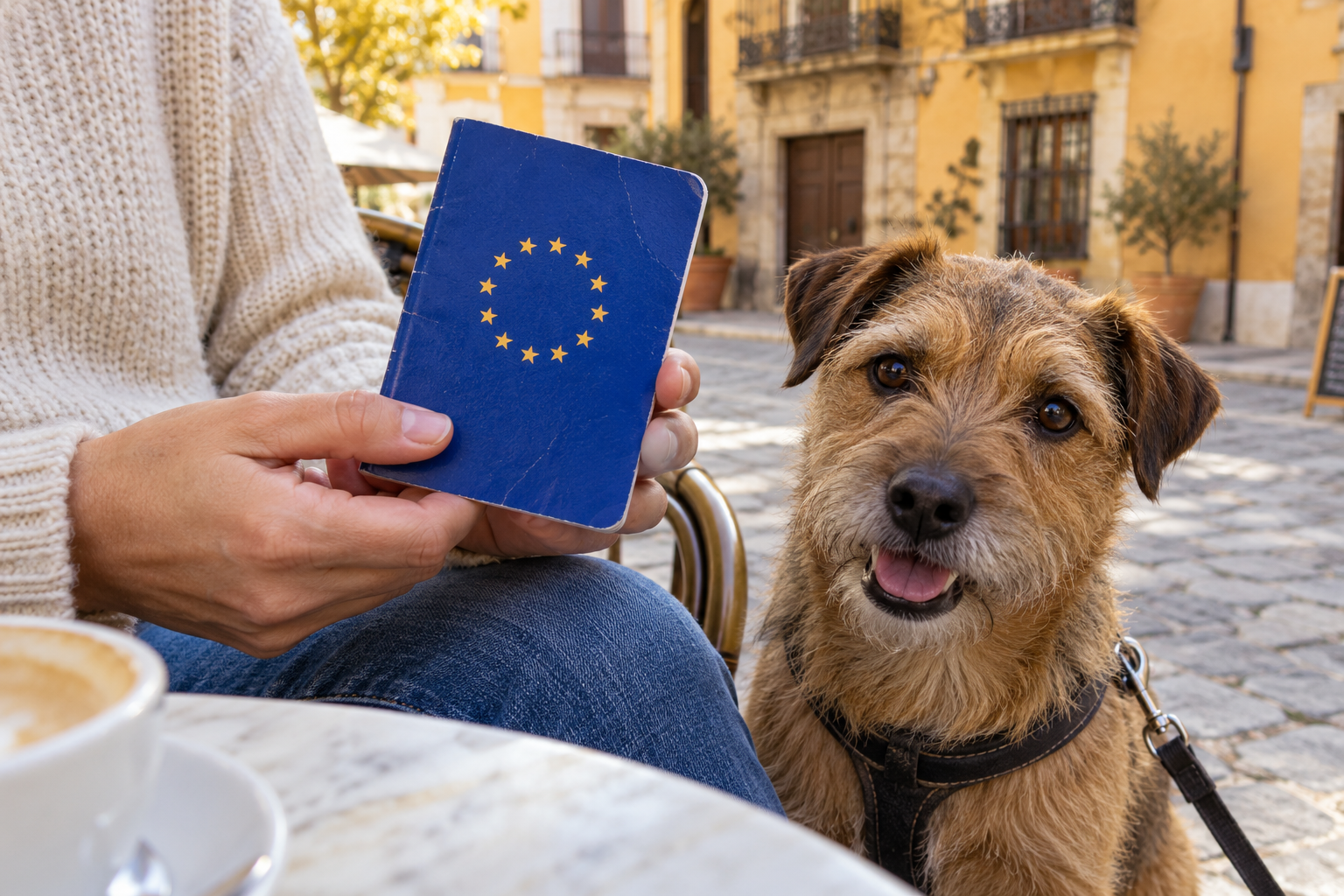
A European with a passported dog can, in principle, take the train from one country to another with the animal at their feet, or the ferry across a strait, in a way that would be far more fraught elsewhere. It is why the sight of a dog dozing under a cafe table or riding a city metro is so ordinary in Europe and so striking to a visitor. The passport is the government layer that makes the pet legal to cross the border; the transport operators then add their own practical layer on top, but the underlying legal freedom the passport provides is what makes the whole dog-friendly European travel culture possible in the first place. Without the passport clearing the legal hurdle, none of the trains and ferries and pavement cafes that welcome dogs would matter, because the animal could not have crossed the border to reach them. It is not merely a driving document; it is the key to moving a pet around the continent by almost any means.
The 2026 Change That Made It Mandatory

The passport has been around for years, but it went through a significant change in 2026 that is worth knowing about, because it tightened the whole system. As of the spring of 2026, under new EU regulations, the EU Pet Passport became mandatory for all non-commercial pet movement within the EU, where previously its use and enforcement had been somewhat uneven across member states. What had been the standard and expected document became the strictly required one. In practice this mostly formalized what careful owners already did, but it removed the grey areas that had let some travelers get by with less.
Alongside making it mandatory, the new rules brought noticeably stricter enforcement. Border officials now actively check that the documentation is in order and, in particular, that the sequence of steps was followed correctly, confirming the microchip was implanted before the rabies vaccination rather than after.
The dates in the passport are scrutinized in a way they often were not before, so a passport with the steps out of order, or with lapsed rabies cover, is far more likely to cause a problem at a border than it once might have been. None of this changes the basic ease of travel for owners who have done things properly; a correctly set-up, current passport still carries a dog across Europe with no fuss. But it does mean the margin for sloppiness has narrowed, and that getting the passport right, in the right order and kept current, matters more than ever. The system became both more universal and less forgiving at the same time. For the conscientious owner nothing much changed; for the careless one, the odds of being caught out at a border went up sharply.
Why Americans Cannot Simply Get One

Here is the part that surprises Americans, and it is the crucial thing to understand: you cannot just get an EU Pet Passport for your dog. The passport is reserved for residents of the EU. An authorized EU vet can only issue one to a pet owner who has their main residence in an EU country, which means a visiting American, or an American who has not yet established residency, is simply not eligible for one, no matter how much easier it would make their travels. This was always the design, and the 2026 rules made it explicit and strictly enforced, with EU vets barred from issuing passports to non-residents and tourists.
So what does an American use instead if the passport is off-limits? For bringing a dog into Europe from the United States, and for a visitor traveling with one, the equivalent document is the EU Animal Health Certificate, a separate certificate obtained in the United States before travel, valid for entry and for a limited period of onward EU travel, but issued fresh for each trip rather than kept for life. This is a real and meaningful difference: where the resident’s passport is a one-time setup good for years, the visitor’s health certificate is a repeated chore, obtained anew every time. It is the gap between belonging to the system and merely being admitted to it temporarily. The resident carries a key to the door; the visitor is buzzed in each time and has to ask again on the next visit. Understanding that the passport is a residents-only document, and that as a newcomer you will start out on the more cumbersome certificate instead, saves a good deal of confusion, because many Americans assume the famous EU Pet Passport is something they can acquire the moment they arrive, and it is not.
How You Get to the Passport Once You Have Moved
The encouraging end to this story is that the passport is not forever out of reach; it is simply a reward of residency, and once an American becomes resident in an EU country, the door opens. At that point, as an EU resident, you become eligible to have a vet issue an EU Pet Passport for your dog for your dog, at which point you graduate from the per-trip health certificate to the same effortless little booklet the locals use. The transition is one of the quieter pleasures of settling in Europe with a dog: the paperwork that loomed so large during the move recedes into a document you barely think about again. Your vet in your new town simply sets it up at a routine appointment, and from that day your dog is, in the eyes of the whole EU, a local.
From then on, your dog travels as European dogs do, carried across the continent’s internal borders on the strength of that single passport, free to come along on the road trip through France and Italy, the weekend across the border, the long drive to visit friends three countries away. The freedom is genuine and it is one of the underrated joys of European life with a pet, the ability to treat an entire continent as open country for you and your dog together. People who move over with a beloved dog often name this, unexpectedly, as one of the small delights of the new life, the way the animal that was such a complication to bring becomes, once settled, the easiest of travel companions.
So the full arc, for an American moving over with a dog, runs from the demanding one-time import on a health certificate, through the settling-in period, to the eventual issuing of a proper EU Pet Passport once residency is established, after which the borders effectively vanish. The hardest part is the beginning, the initial move; everything after it gets easier, until the dog is traveling as freely as any European’s. The passport is the destination, not the starting point, and reaching it is one more small sign that you have genuinely arrived.

About the Author: Ruben, co-founder of Gamintraveler.com since 2014, is a seasoned traveler from Spain who has explored over 100 countries since 2009. Known for his extensive travel adventures across South America, Europe, the US, Australia, New Zealand, Asia, and Africa, Ruben combines his passion for adventurous yet sustainable living with his love for cycling, highlighted by his remarkable 5-month bicycle journey from Spain to Norway. He currently resides in Spain, where he continues sharing his travel experiences with his partner, Rachel, and their son, Han.