
Somewhere around half past ten in the morning, all across Spain, something quietly but universally happens: work pauses, the bars fill up, and people sit down to eat again in earnest, only a few hours after their first breakfast. This is the almuerzo, Spain’s second breakfast, a genuine, sit-down mid-morning meal that has no real equivalent at all in American life and that surprises visitors who assume breakfast happens once and then you wait for lunch. Far from a furtive snack grabbed at a desk, the Spanish almuerzo is an institution, a proper, deliberate pause in the working day when construction crews, office workers, shopkeepers, and retirees alike all stop what they are doing and head out to a bar for a sandwich, a coffee, and, in many places, a small beer besides. And in some parts of Spain it has grown into something very close to a full feast. So here is what the almuerzo actually is, why Spain needs a second breakfast at all in the first place, and how one region in particular turned it into a beloved ritual genuinely worth traveling for. It is one of those everyday customs that, once you understand it, quietly reveals a whole philosophy about work, food, and time.
What follows is why Spain runs on a second breakfast, what the almuerzo actually consists of, how Valencia turned it into a feast, the surprises it holds for Americans, and what it would mean to bring the idea home.
Why Spain Needs a Second Breakfast
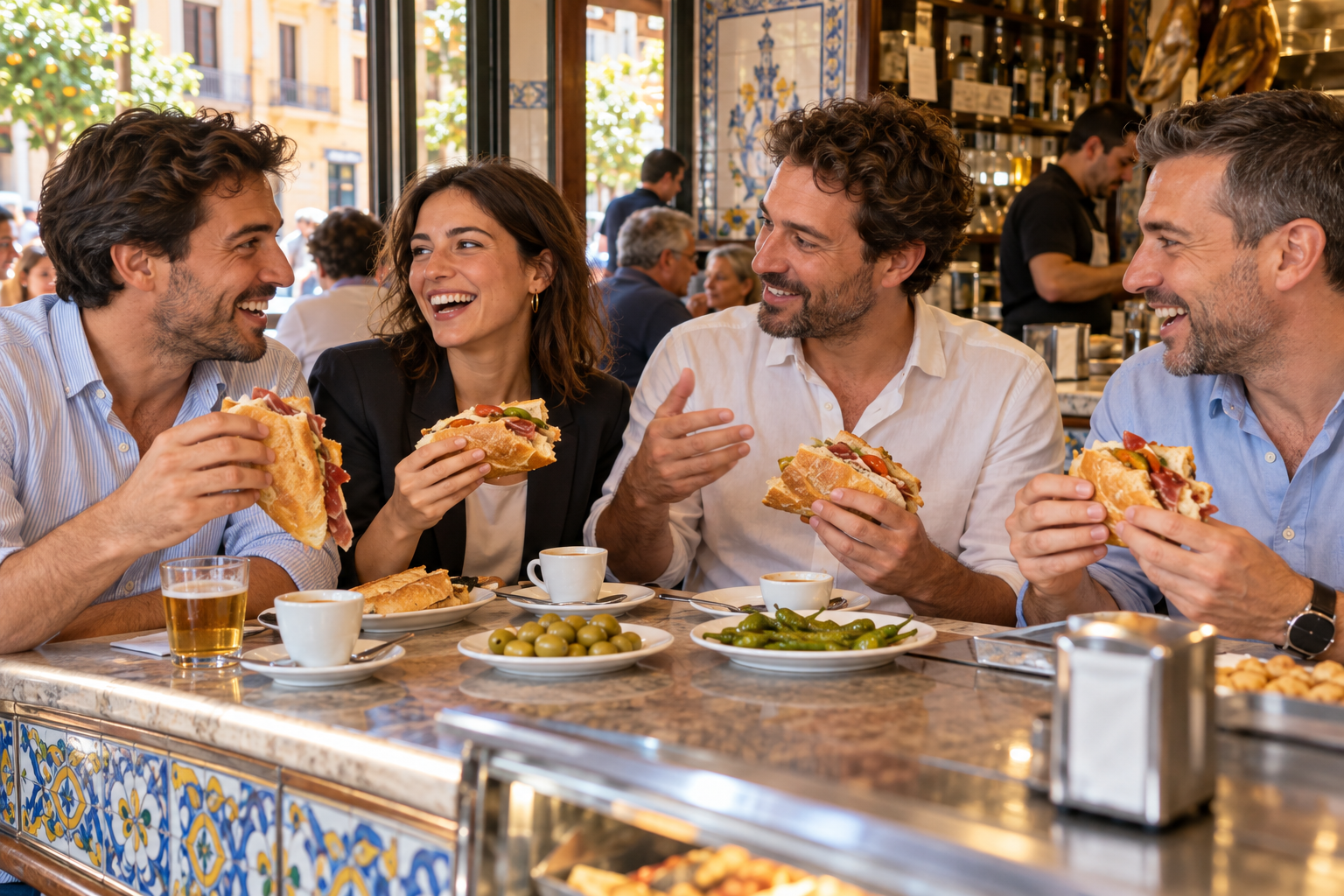
To understand the almuerzo you have to understand the shape of the Spanish day, because the second breakfast exists to solve a real problem created by the other meals. The Spanish first breakfast, the desayuno, is a light affair taken early, often just a coffee with a piece of toast or a small pastry, barely a meal at all by American standards. And Spanish lunch, the comida, the large main meal, does not happen until remarkably late, commonly around two or even three in the afternoon.
That leaves an enormous gap in the middle of the morning, stretching from a tiny breakfast around seven or eight to a major lunch some six or seven hours later, and a person doing real work simply cannot make it across that gap on a coffee and a piece of toast.
The almuerzo is the bridge. Taken in the middle of the morning, it is the meal that carries a working Spaniard from the token breakfast through to the late lunch without fading away by eleven, and once you see the timing laid out, the logic is obvious. A country that eats a light early breakfast and a very late lunch more or less has to have something substantial in between, and the almuerzo is that something. It is the meal that makes the famously late Spanish lunch possible in the first place, quietly holding up one end of a schedule that would otherwise leave everyone ravenous by noon. Far from being an indulgent extra, the second breakfast is a sensible structural response to a day whose meals are spaced further apart than an American is used to, and it fits the Spanish rhythm as neatly as a keystone. Remove it, and the whole day would sag in the middle; keep it, and the long stretch to a two o’clock lunch becomes entirely manageable.
What the Almuerzo Actually Is
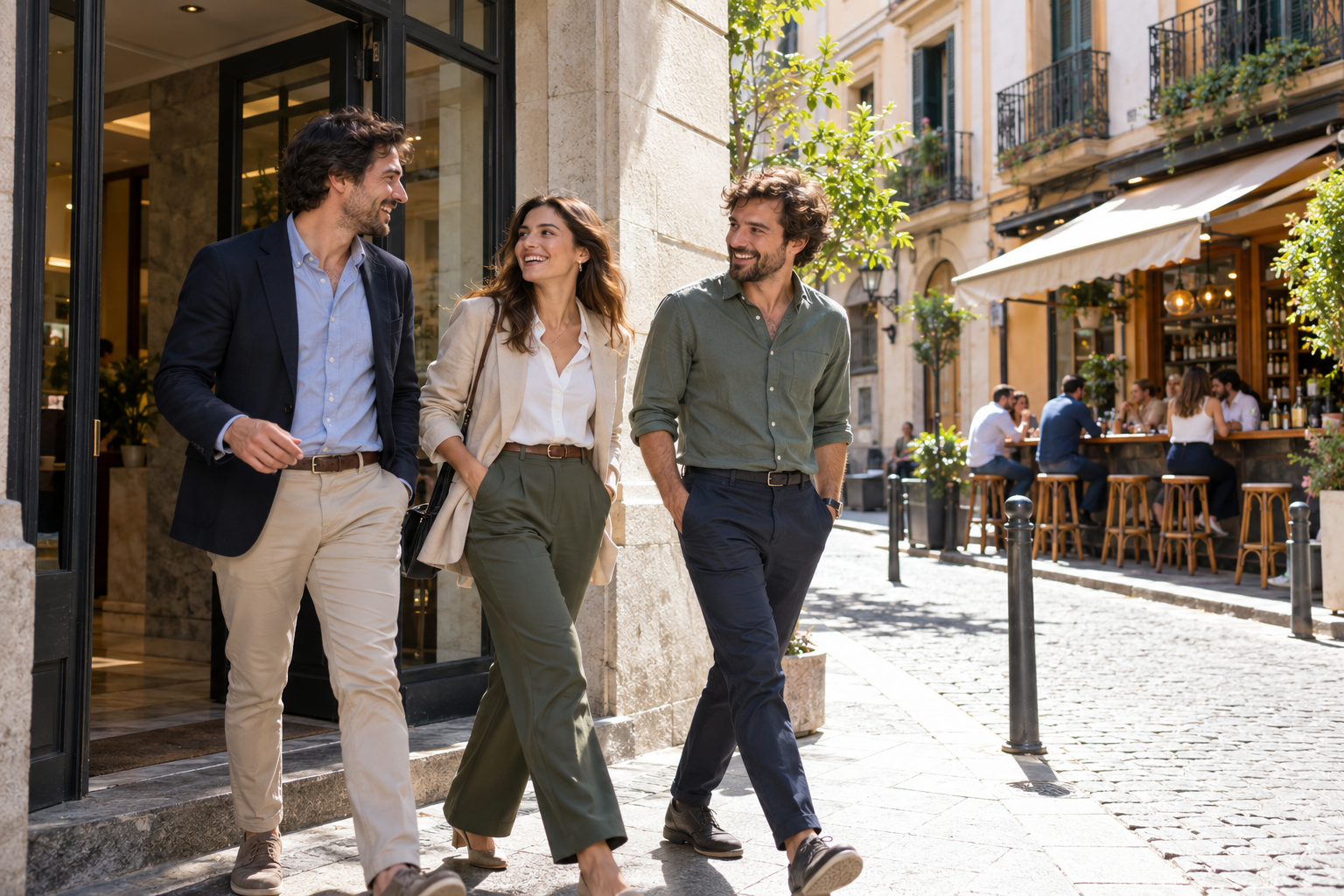
So what does this second breakfast consist of, and what does it look like in practice? At its most everyday, across much of Spain, the almuerzo is a mid-morning stop at a bar, somewhere around half past ten or eleven, for something more substantial than the first breakfast was. The classic form is a bocadillo, a sandwich on a length of crusty baguette filled with things like cured ham, sausage, cheese, or a wedge of tortilla, the thick Spanish potato omelette, washed down with a coffee. It is heartier than a snack and lighter than a meal, sitting comfortably in between, exactly the right size to quiet the mid-morning hunger without spoiling the appetite for the big lunch still hours away.
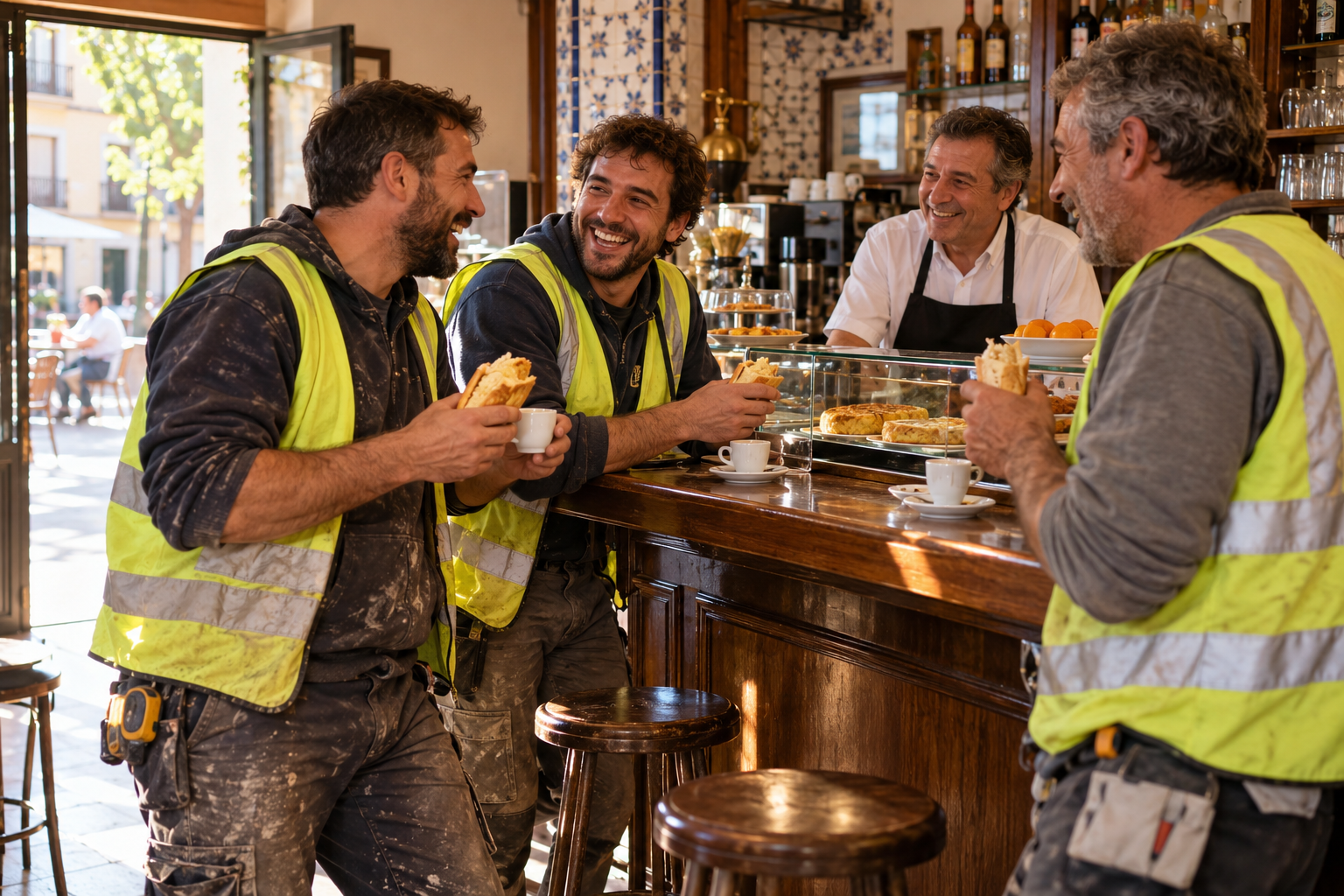
What makes it more than just eating, though, is that it is a social and communal pause, not a solitary refueling. People take the almuerzo together, colleagues heading out from the office or the building site as a group, friends meeting at the neighborhood bar, and the break is as much about the company and the conversation as the food. The bars fill with people standing at the counter, talking, catching up, arguing about football or politics, for a genuine if short break in the working morning. Walk past a neighborhood bar at eleven and you will see it full of high-vis work jackets and shirtsleeves, plates of half-eaten bocadillos on the counter, a wall of cheerful noise, the whole scene the very opposite of a grim desk lunch.
This is the crucial difference from the American mid-morning, which, if it happens at all, tends to be a coffee refill and a granola bar consumed alone at a desk while still working. The Spanish almuerzo is a deliberate stop, a stepping away from work to eat and talk with other people, and that communal, unhurried quality is exactly what makes it an institution rather than merely a snack. It reflects a wider Spanish conviction that eating is a social act to be done properly, even in the middle of a busy morning. The same instinct that produces the long lunch and the late, lingering dinner produces the almuerzo: a refusal to let food become something you do alone and in a hurry, no matter the hour.
A Meal With Deep Roots
Spain is far from alone in having a mid-morning meal, and it helps to know that the almuerzo belongs to a wide old family of second breakfasts found across Europe, which makes it feel less like a Spanish eccentricity and more like a sensible human habit that much of the world once shared. The British have their elevenses, a mid-morning cup of tea and a bite around eleven. The Germans have the Zweites Fruhstuck, literally the second breakfast, taken mid-morning. Similar mid-morning pauses turn up under local names across the continent, all answering the same need to bridge an early breakfast and a later lunch.
What these traditions share is an origin in a world of physical work and early starts. Before the eight-hour office day, farmers, laborers, and tradespeople rose at or before dawn, ate something small to get going, and worked for hours before the main meal, so a substantial mid-morning break was not a luxury but a practical necessity, the fuel that got hard physical work done. The Spanish almuerzo, and especially the hearty Valencian version, comes directly from that agricultural past, from field workers who needed real sustenance mid-morning to last until a late lunch. What is striking is that Spain has held onto the tradition so much more fully than most places, keeping a genuine, communal, sit-down or stand-up mid-morning meal alive in a modern urban working world, where in many other countries the second breakfast has faded to a hurried coffee or vanished altogether. The almuerzo is, in that sense, a living survival of an old and once widespread rhythm of the working day, one that Spain simply never gave up.
Valencia Turned It Into a Feast
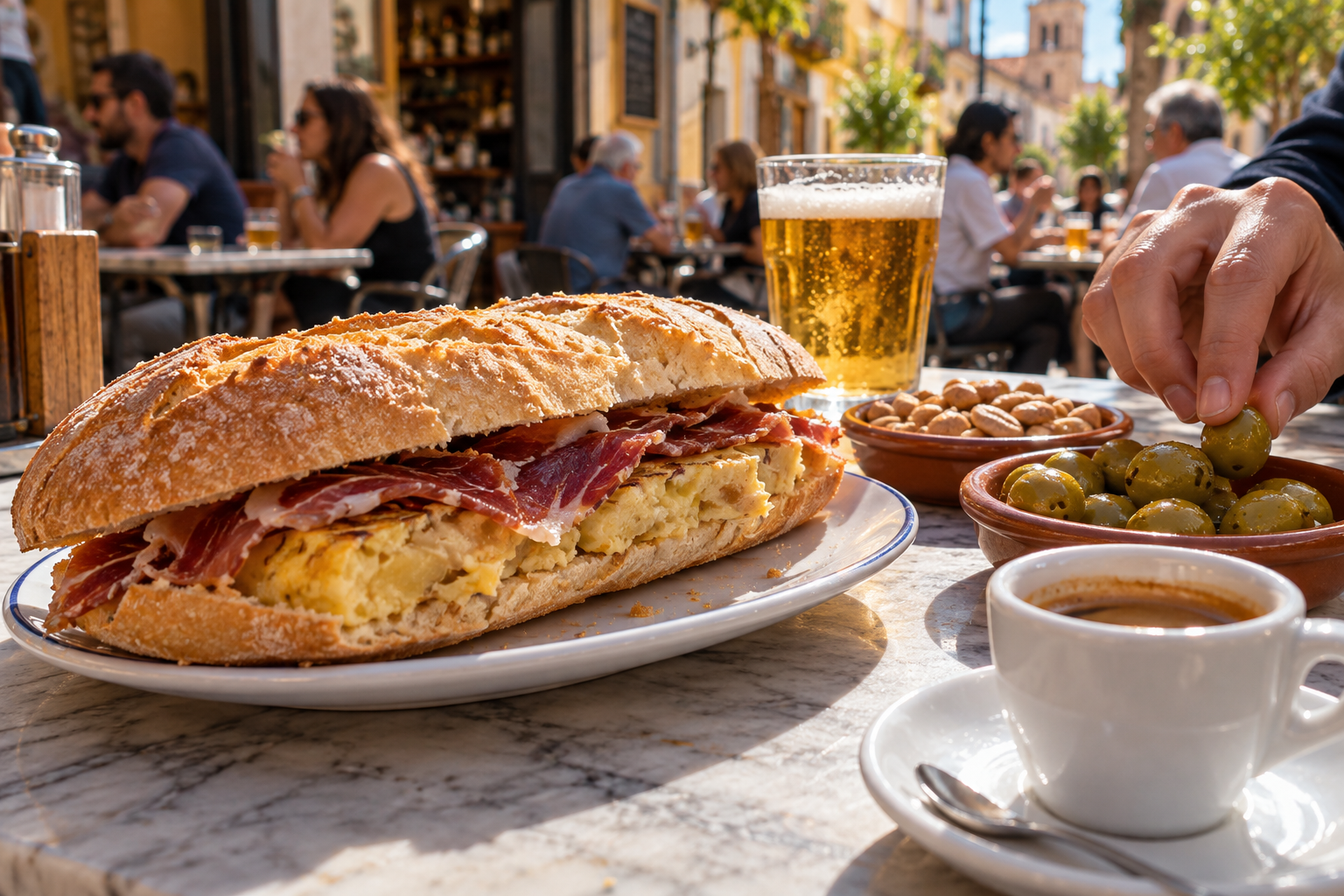
Nowhere takes the almuerzo more seriously than the eastern region around Valencia, where the mid-morning meal has been elevated into a genuine, and genuinely large, ritual with its own name and its own devoted following. In Valencian it is called the esmorzaret, a word that translates to something like little breakfast, which is a considerable understatement, because the Valencian esmorzaret is anything but little. It is a substantial mid-morning feast, and encountering one for the first time reorders your whole idea of what a second breakfast can be.
A proper esmorzaret follows a beloved sequence. You sit down, and almost immediately a picaeta arrives without your asking, a spread of nibbles like olives, peanuts, and perhaps a little salad, to start you off. Then comes the star, a serious bocadillo, often enormous, stuffed with hearty combinations that can run from cured meats and sausage to fried squid to more adventurous local fillings.
Alongside it, and this is the part that startles outsiders most, is a drink that is very often a small beer or a glass of wine rather than only coffee, because a cana with your mid-morning food is entirely normal here. And the whole thing traditionally closes with a cremaet, a small, strong coffee laced with liqueur, a little Valencian pick-me-up to send you back to work. The esmorzaret grew out of the farmland around Valencia, where laborers starting at dawn needed a proper mid-morning meal to keep going until a late lunch, and it has survived into the modern city as a cherished tradition. Far from dying out with the farms, it has become a point of regional pride, something Valencians will insist you experience and will happily spend a leisurely hour over on a weekday morning. So embedded is it that at a dedicated esmorzaret bar, when you order a coffee, the waiter may ask not whether you want a bocadillo but when, because the answer is simply assumed. There are whole bars, and even guidebooks, devoted to the esmorzaret alone, and Valencians will argue the merits of rival spots with the seriousness other people reserve for restaurants.
The Beer at Breakfast, and Other Surprises
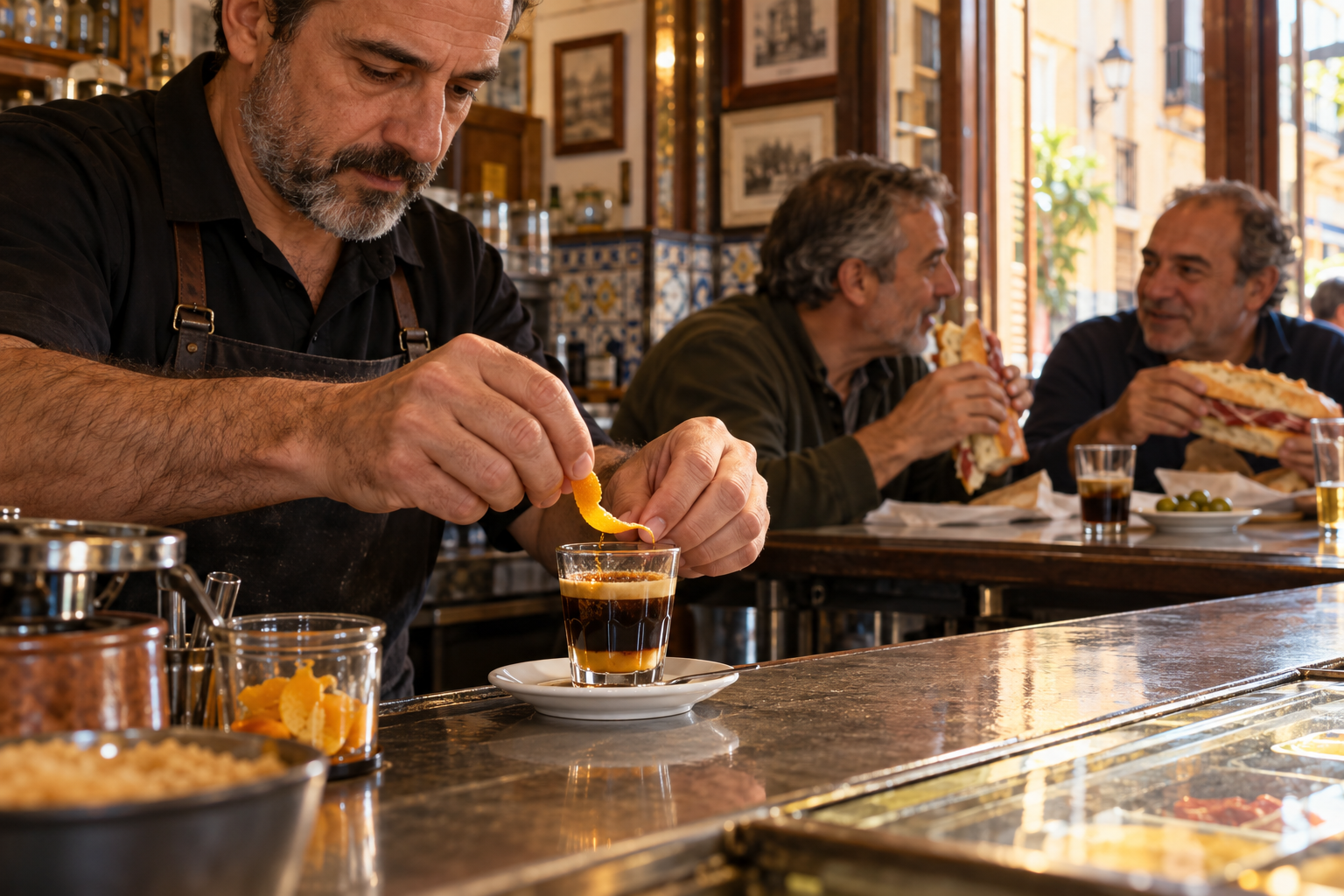
For an American, the almuerzo comes with several genuine surprises beyond simply its existence, and knowing them helps you understand and enjoy it rather than being baffled. The biggest is the drink. A small beer or a glass of wine with your mid-morning food, at half past ten in the morning, strikes most Americans as scandalous, but in Spain, and especially in the Valencia region, it is completely unremarkable, a normal accompaniment to a working-morning meal rather than any kind of day-drinking. The small beer, the cana, is simply part of the ritual, and nobody thinks twice about it. It is not about getting a drink in early but about the small pleasure of a cold beer with a good sandwich among friends, and the modest size of the cana keeps it firmly in the territory of a treat rather than a session.
Then there is the confusion of the word itself, which is worth clearing up. Almuerzo does not mean the same thing everywhere in Spain: in some regions, such as around Madrid and in the south, almuerzo can simply mean lunch, and the mid-morning meal is just called the second breakfast or the mid-morning break. It is in eastern Spain, above all Valencia, that almuerzo firmly means this mid-morning institution, so the terminology shifts with geography, which can genuinely puzzle a learner of Spanish.
A couple of other practical surprises are worth knowing: the almuerzo has its window, roughly nine to noon, and the dedicated bars that do it well will often stop serving the mid-morning bocadillos by around half past twelve as they switch over to lunch, so it is not an all-day thing. And it is traditionally eaten standing at the bar, part of its unfussy, working-morning character. None of these are difficult once you know them, but each is a small way the almuerzo does not behave the way an American might expect. Get them right, though, and you can walk into a Valencian bar mid-morning and order like someone who has done it all their life.
Bringing the Almuerzo Home
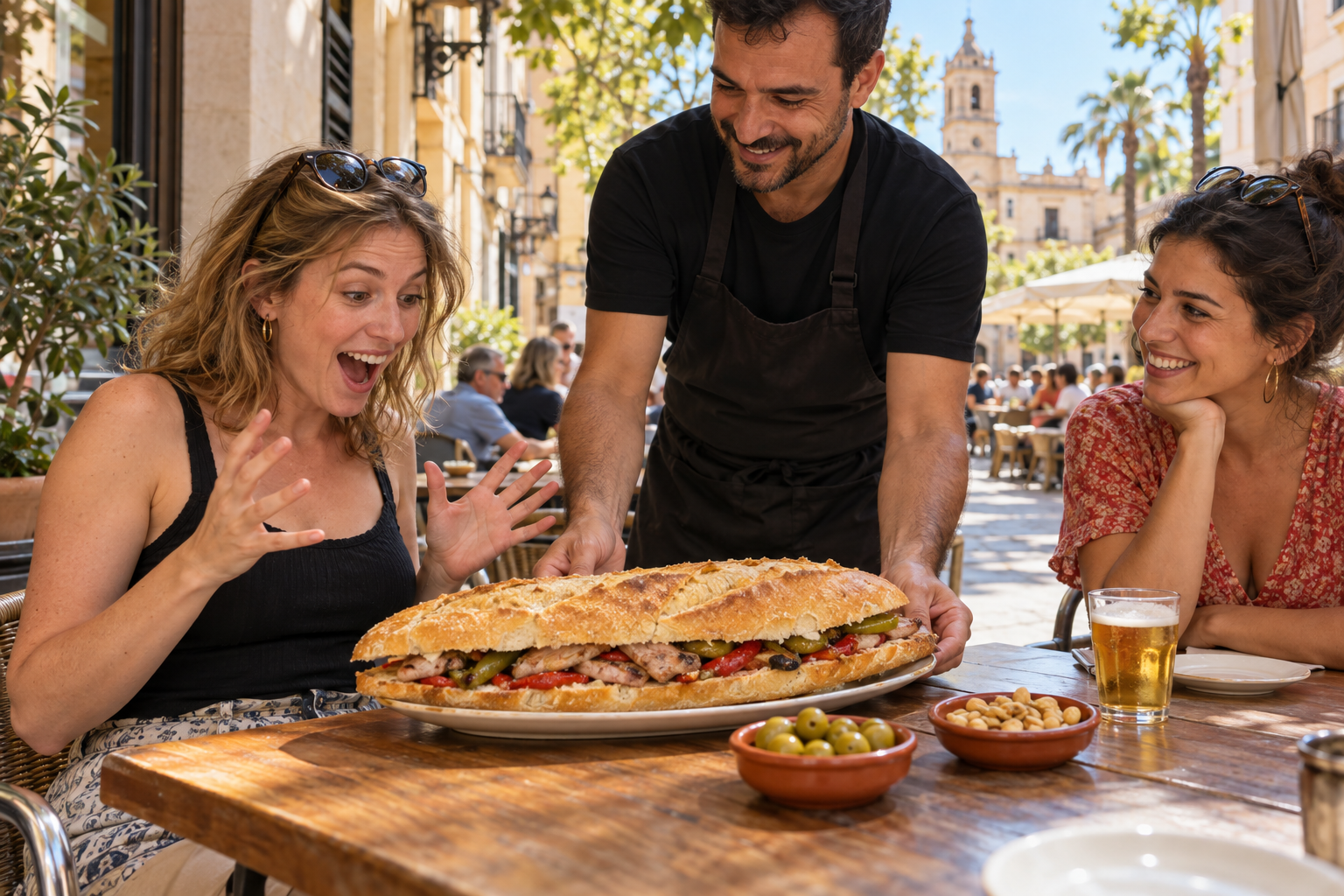
Beyond being a charming piece of Spanish culture to observe, the almuerzo carries an idea worth taking seriously, because there is something genuinely appealing about it that translates anywhere. Stripped to its essence, the almuerzo is a proper mid-morning pause: a real break from work, taken with other people, involving actual food eaten sitting or standing away from your desk rather than crumbs consumed while still typing. Set against the American mid-morning, which at its worst is a sad granola bar eaten one-handed at a keyboard between emails, the Spanish version looks not indulgent at all but genuinely civilized, a small daily insistence that even a busy morning deserves a genuine pause and a bit of human company.
You do not need to be in Valencia, or to drink a beer at half past ten, to borrow the spirit of it. The transferable idea is simply to start treating the mid-morning break as a real break, to step away from the work, to eat something proper rather than grazing at the desk, and, best of all, to do it with someone else, turning a solitary refuel into a shared pause. Even fifteen minutes, taken deliberately and in company, does something for a morning that no amount of coffee sipped at a screen ever will. In a working culture that increasingly treats lunch itself as an optional inconvenience to be eaten at the screen, the Spanish almuerzo stands as a quiet argument for the opposite, that pausing to eat and talk in the middle of the morning is not time lost but time well spent, and that people work better for having genuinely stopped. Spain has never been persuaded that skipping meals is a virtue, and the mid-morning bar full of relaxed, well-fed workers is the daily proof of it. If you find yourself in Spain, and especially in Valencia, take part in a real almuerzo at least once, standing at a bar with a fat bocadillo and a small beer at an hour that feels far too early for either.
And if you take only the idea home, let it be that the middle of a busy morning is a fine time to stop, eat properly, and remember there are other people in the room. Spain figured that out a long time ago, and half past ten, it turns out, is a very good hour to be reminded of it.

About the Author: Ruben, co-founder of Gamintraveler.com since 2014, is a seasoned traveler from Spain who has explored over 100 countries since 2009. Known for his extensive travel adventures across South America, Europe, the US, Australia, New Zealand, Asia, and Africa, Ruben combines his passion for adventurous yet sustainable living with his love for cycling, highlighted by his remarkable 5-month bicycle journey from Spain to Norway. He currently resides in Spain, where he continues sharing his travel experiences with his partner, Rachel, and their son, Han.