
The usual version of this kind of experiment runs the other way entirely. Someone moves to Spain, adopts the famously late local dinner hour, and reports how surprisingly well it suits them. I wanted to try the reverse. I already live in Spain, surrounded by people who sit down to dinner at nine or ten at night, and I decided to spend thirty days doing the opposite of what everyone around me does, eating my evening meal at six o’clock, the good, sensible, all-American dinner hour I grew up with. It seemed almost too obvious to be worth testing, the safe and healthy choice pitted against a habit I had always privately considered a little bit ridiculous.
I expected it to feel efficient and healthy, an early night’s worth of virtue while my neighbors ate at what always struck me as an absurd hour. Instead, within a week, my evenings quietly came apart, and by the end of the month I understood something about Spanish life that the late dinner had been trying to tell me all along. Here is what happened when I ate dinner at six in a country that eats at ten, and why the experiment taught me more about Spanish life than adopting the local hours ever had.
What follows is why six o’clock is an hour nobody in Spain eats, how the Spanish evening actually works, the way eating early cut me out of it, what I finally understood about the late dinner, and what the thirty days taught me.
Dinner at an Hour Nobody Else Eats

The first thing I discovered is that six o’clock is not merely early for dinner in Spain but essentially a non-hour, a time at which the machinery of the evening meal simply does not exist yet. In Spain the standard dinner hour is around nine at night, with restaurants opening their kitchens at eight or half past eight and not filling up until nine thirty or ten. Six in the evening is, by local reckoning, barely past the afternoon, the time of the merienda, the light snack that bridges the long gap between the big midday lunch and the late dinner, and certainly not a moment any adult would sit down to a proper meal.
This made the experiment strange from the very first evening. Cooking and eating a full dinner at six, I was eating entirely alone in the rhythm of the day, out of step with every person around me, none of whom were remotely ready to eat.
Going out to eat was simply impossible, since at six no restaurant kitchen is open for dinner, and the places that were serving anything were doing coffee and snacks for people still hours away from their own meal. I was, in effect, eating dinner in the middle of everyone else’s afternoon, and the sense of being out of sync was immediate and constant. Neighbors heading out as I was washing up would ask, kindly and a little puzzled, whether I had already eaten, in the tone you might use with someone who had turned up to a party at breakfast time. It is one thing to keep unusual hours in private; it is another to discover that the entire society around you is organized on a completely different clock, and that your sensible six o’clock dinner places you somewhere between the children, who do eat early, and nobody at all. I had not expected to feel the loneliness of a mealtime, but there it was on the very first night, a plate of food and an empty rhythm around it.
How the Spanish Evening Actually Works
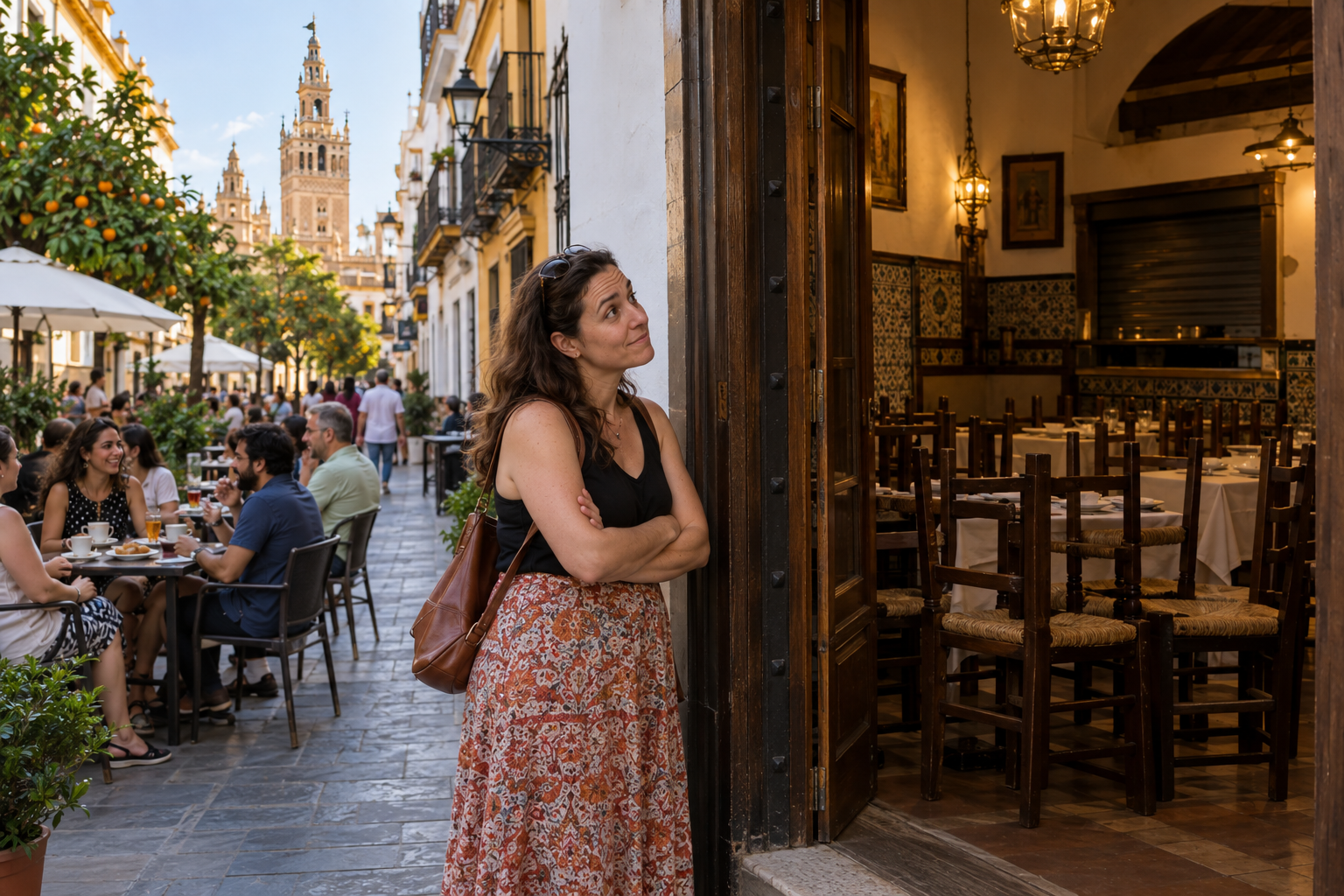
To understand why this threw my evenings into disarray, you have to understand that in Spain the evening is not the tail end of the day but its social heart, and it runs on a sequence that the late dinner anchors. The Spanish day is shifted later throughout, partly because the country sits on a clock an hour ahead of where the sun actually puts it, so that the whole rhythm slides back. Lunch, the main meal, happens around two or three in the afternoon and is long and substantial. Then comes the afternoon, the merienda around six, and only then does the evening proper begin. That snack is not an afterthought but a structural part of the day, the small bridge that carries people comfortably across the long gap from a two o’clock lunch to a ten o’clock dinner, and I had been ignoring it entirely.
And the Spanish evening is a genuinely busy, sociable stretch of time. From around eight, people come out for the paseo, the evening stroll, filling the streets and plazas; there is the aperitivo, drinks and small bites with friends; families and couples gather; and all of it builds toward the late dinner at nine or ten, which is itself often followed by the lingering conversation at the table. The whole span from early evening to late night is when Spanish social life actually happens, when people see their friends, walk, talk, and eat together, and the late dinner sits at the center of it as the main event the rest of the evening leads up to. This is the crucial thing I had never fully grasped until I removed myself from it: the late dinner is not a strange isolated habit but the keystone of an entire evening architecture, the anchor around which hours of social life are arranged. Pull it forward by three or four hours, as I had, and you do not get an earlier version of the same evening; you get no evening at all, because the whole social machine is timed to run later than you are now living.
How Eating Early Cut Me Out of It
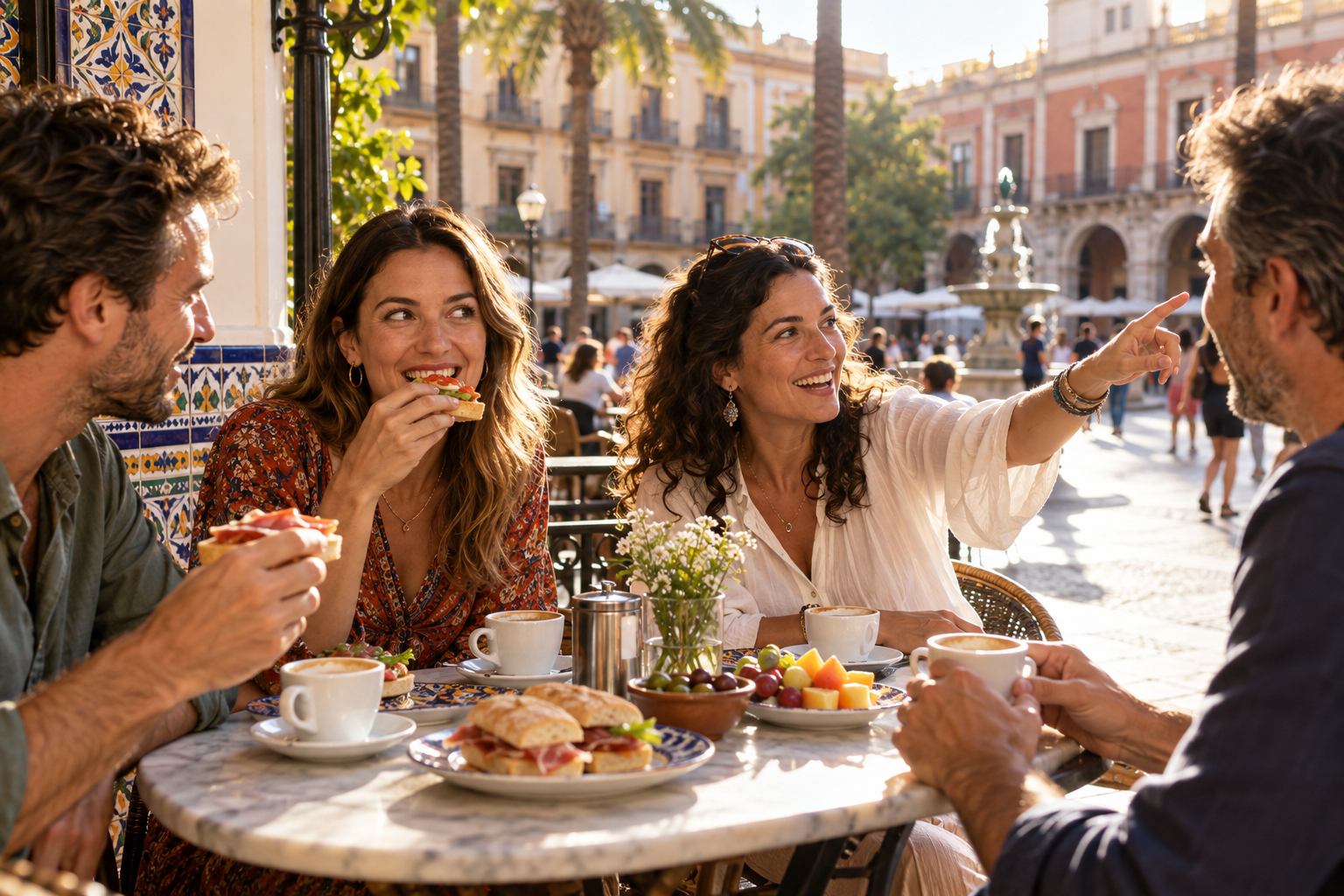
Once I was eating at six, the consequences rippled through the rest of every evening in ways I had not anticipated, and this is where things genuinely fell apart. By finishing my dinner at the hour the Spanish evening was only beginning, I had, in effect, closed my day just as everyone else was starting theirs. While my neighbors were heading out for the paseo and meeting friends for a drink before their late meal, I had already eaten, cleared up, and mentally clocked off, which left me with a long, strange, empty evening stretching ahead with nothing in it.
Worse, it cut me out of the social life those hours contain. The invitations, the casual meetings, the dinners with friends in Spain all happen in that late evening window, and by keeping American hours I was perpetually out of phase with them, done and full when everyone else was gathering, and unable to join a nine o’clock dinner without either eating twice or sitting there having already eaten. A friend’s easy suggestion to meet for dinner later in the week became a small logistical problem it should never have been, because my body was now on a schedule that no one else in the country shared.
Then there was the simple matter of hunger: a six o’clock dinner meant I was hungry again well before bed, snacking late in a way that undid the supposed virtue of the early meal. I had imagined an early dinner would give me long, calm, productive evenings, but what it actually gave me was a dead zone, hours in which I was neither part of the social world outside nor genuinely at rest, marooned by my own schedule while the real evening happened without me. My evenings had not become more relaxed; they had simply become emptier. The hours I had freed up by eating early were not a gift but a vacuum, time with nothing and no one in it, and I came to dread the long stretch between my lonely dinner and a bedtime that arrived, somehow, no earlier than before.
The Virtue That Wasn’t
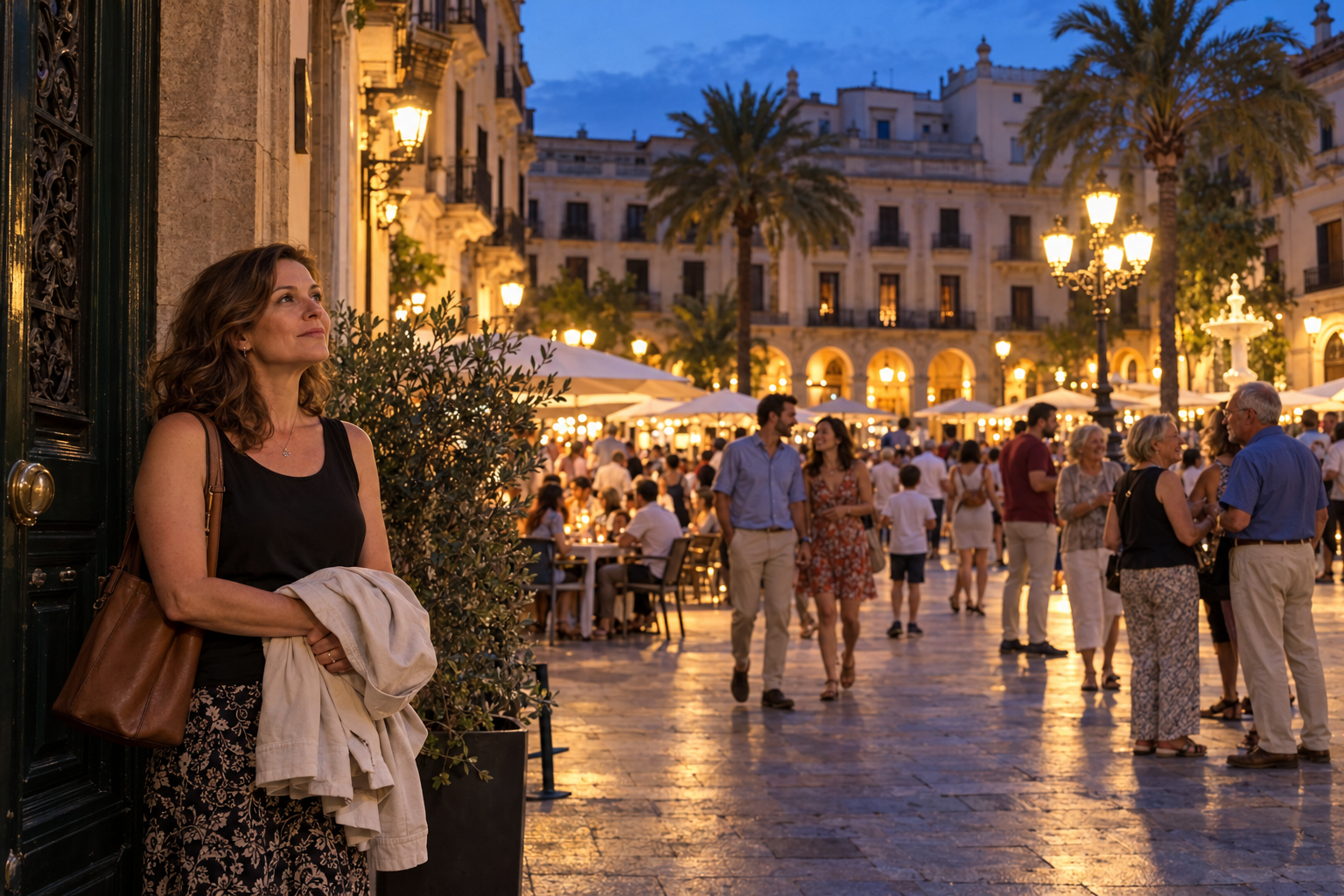
The part that stung a little was that the early dinner did not even deliver the benefits I had smugly expected from it. I had gone in assuming that eating at six was the healthy, disciplined, sensible choice, the responsible option that my late-dining neighbors were somehow failing at, and that a month of it would leave me feeling virtuous and well rested while they ruined their digestion at ten at night. It did not work out that way at all.
Because I was hungry again by nine or ten, having eaten so early, I found myself snacking through the late evening, picking at things before bed in exactly the late window I had been so pleased to keep my real meal out of, so the supposed discipline of the early dinner quietly leaked away into late-night grazing. And the emptiness of those evenings did nothing good for my mood either, since being alone and out of sync while a whole sociable evening happened around me was not restful but faintly lonely. Whatever health halo I had imagined around the early dinner turned out to be mostly illusion, undone by the snacking it caused and unaccompanied by any of the calm I had pictured. The Spanish, eating late and socially and then sleeping, were not obviously worse off than me, eating early and alone and then raiding the kitchen at eleven. It was a humbling little discovery, that the sensible-sounding habit I had carried from home was not even winning on its own terms, let alone on the terms that actually mattered.
What I Finally Understood About the Late Dinner

Somewhere in the second or third week, the thing clicked, and it reframed the whole Spanish schedule for me. I had always thought of the late Spanish dinner as an isolated oddity, a slightly baffling habit of eating at an hour that seemed to defy common sense, something to be tolerated or worked around. Living against it for a month taught me that it is nothing of the kind. The late dinner is not a quirk bolted onto Spanish life; it is the keystone that holds the entire shape of the evening together, and once you remove it, as I had, the whole structure collapses.
Eating early, I finally saw, does not simply move a meal a few hours earlier. It pulls you out of the entire social system that the late dinner organizes, the paseo and the aperitivo and the gathering and the lingering, all of which are timed around that late meal and none of which work if you have already eaten and withdrawn. The Spanish schedule that had looked to me like inefficiency, dinner absurdly late, the day stretched out of shape, turned out to be a coherent and rather beautiful arrangement in which the evening is protected as the time for connection and the late dinner is what makes that possible. My sensible American six o’clock, by contrast, was efficient in exactly the way that left me alone. I had been judging the late dinner by whether it made sense as a mealtime, when the real question was what kind of evening, and what kind of social life, it was built to create. Judged as a mealtime, ten at night is indefensible; judged as the hinge of a long, sociable, unhurried evening, it makes complete and rather enviable sense.
What the Thirty Days Taught Me
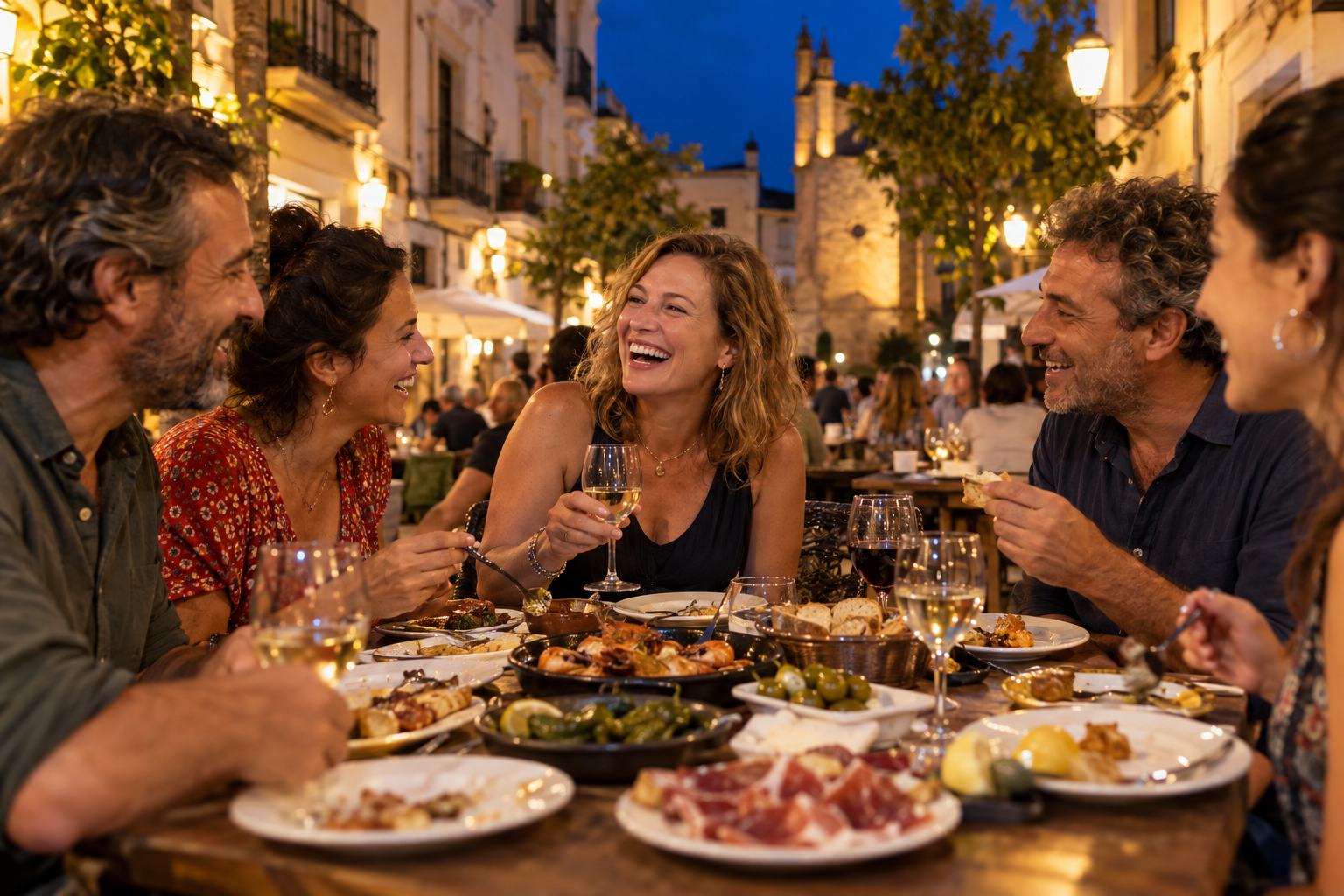
By the end of the month I gave up my early dinners with something close to relief, and I went back to eating late not out of obligation but because I had finally understood the point of it. The habit I had arrived with as obviously correct, I now saw as simply foreign, well suited to the life I used to lead and poorly suited to the one I actually have. The lesson of the thirty days was not really about food at all but about the fact that a mealtime can be a social system in disguise, and that the hour a culture eats its dinner shapes the whole architecture of how its people spend their evenings and see one another. Fighting that hour, I had not won some small victory of healthy living; I had simply exiled myself from the best part of the Spanish day. There is a difference between keeping your own habits out of stubbornness and keeping them at the cost of the life going on all around you, and by the end of the month I knew which one I had been doing.
If there is practical advice buried in the experiment, it is that when you move to a place, some local habits are worth adopting because they are the price of admission to the life around you to the life around you, and the dinner hour is one of them. The merienda, that early-evening snack I had ignored, turns out to be the clever device that bridges the gap and lets you last happily until a late dinner, and leaning on it makes the whole schedule easy rather than punishing. Once I started eating a proper afternoon snack around six, the ten o’clock dinner stopped feeling like an endurance test and started feeling like the natural reward at the end of a long, pleasant evening, which is exactly what it is meant to be.
There is a companion to this experiment, the version where someone moves the other way and adopts the nine o’clock dinner, and finds it unexpectedly wonderful, and having now run the reverse I understand exactly why that story ends happily and mine ended with my evenings in pieces. The one adopts the local rhythm and is welcomed into the evening; the other clings to a foreign rhythm and is quietly shut out of it, and the meals themselves have almost nothing to do with the difference. The late dinner works because everything else is built around it, and the surest way to feel that is to spend a month, as I did, eating at the sensible hour and slowly realizing you are the only one at the table.

About the Author: Ruben, co-founder of Gamintraveler.com since 2014, is a seasoned traveler from Spain who has explored over 100 countries since 2009. Known for his extensive travel adventures across South America, Europe, the US, Australia, New Zealand, Asia, and Africa, Ruben combines his passion for adventurous yet sustainable living with his love for cycling, highlighted by his remarkable 5-month bicycle journey from Spain to Norway. He currently resides in Spain, where he continues sharing his travel experiences with his partner, Rachel, and their son, Han.