
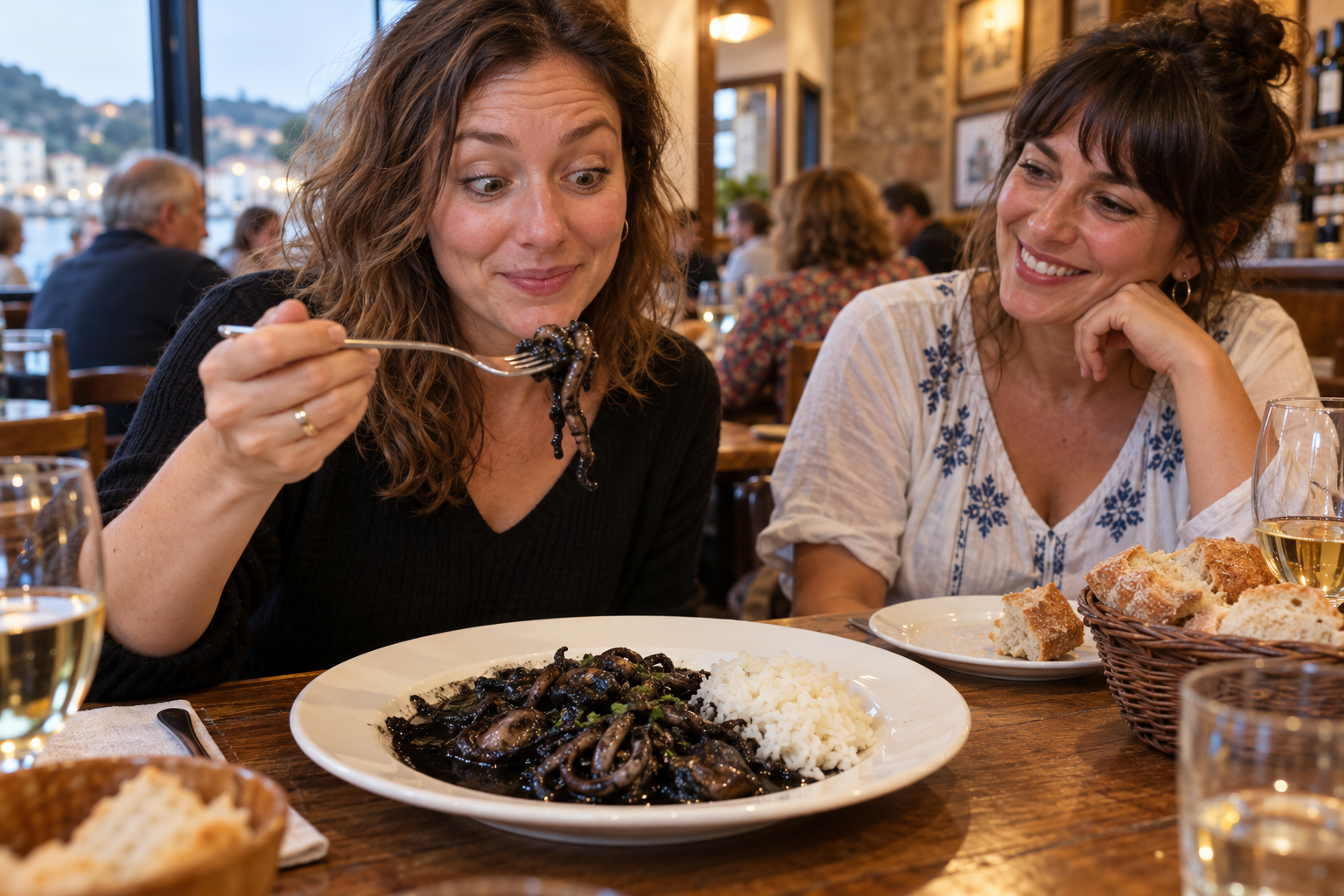
Set a plate of txipirones en su tinta in front of someone who has never seen it, and then watch their face carefully. The little squid sit in a sauce that is not brown or red but a deep, glossy, alarming black, jet black, the color of ink, because that is quite literally exactly what it is. It looks, frankly, a little frightening, and plenty of first-timers hesitate before that first bite, unsure whether they are being served something delicious or something they will regret.
It does not help that the squid themselves, tentacles and all, are not exactly shy about announcing what they are. Then they taste it, and the fear dissolves, because underneath that startling color is one of the great dishes of the Basque Country, deeply savory, briny, and sweet all at once, the kind of deep, glossy sauce that has everyone at the table quietly reaching for more bread to wipe the plate clean. This is squid cooked in its own ink, a humble masterpiece from the fishing towns of northern Spain, and it is far easier to make, and far, far more delicious, than its dramatic appearance would ever lead you to believe. Here is how to make it, and, just as importantly, how to get over the initial fear of it.
What follows is why the dish looks so alarming and why you should not care, the ink that is the whole point of it, how to get the squid tender rather than rubbery, the best way to serve it, and the full recipe.
The Dish That Looks Alarming
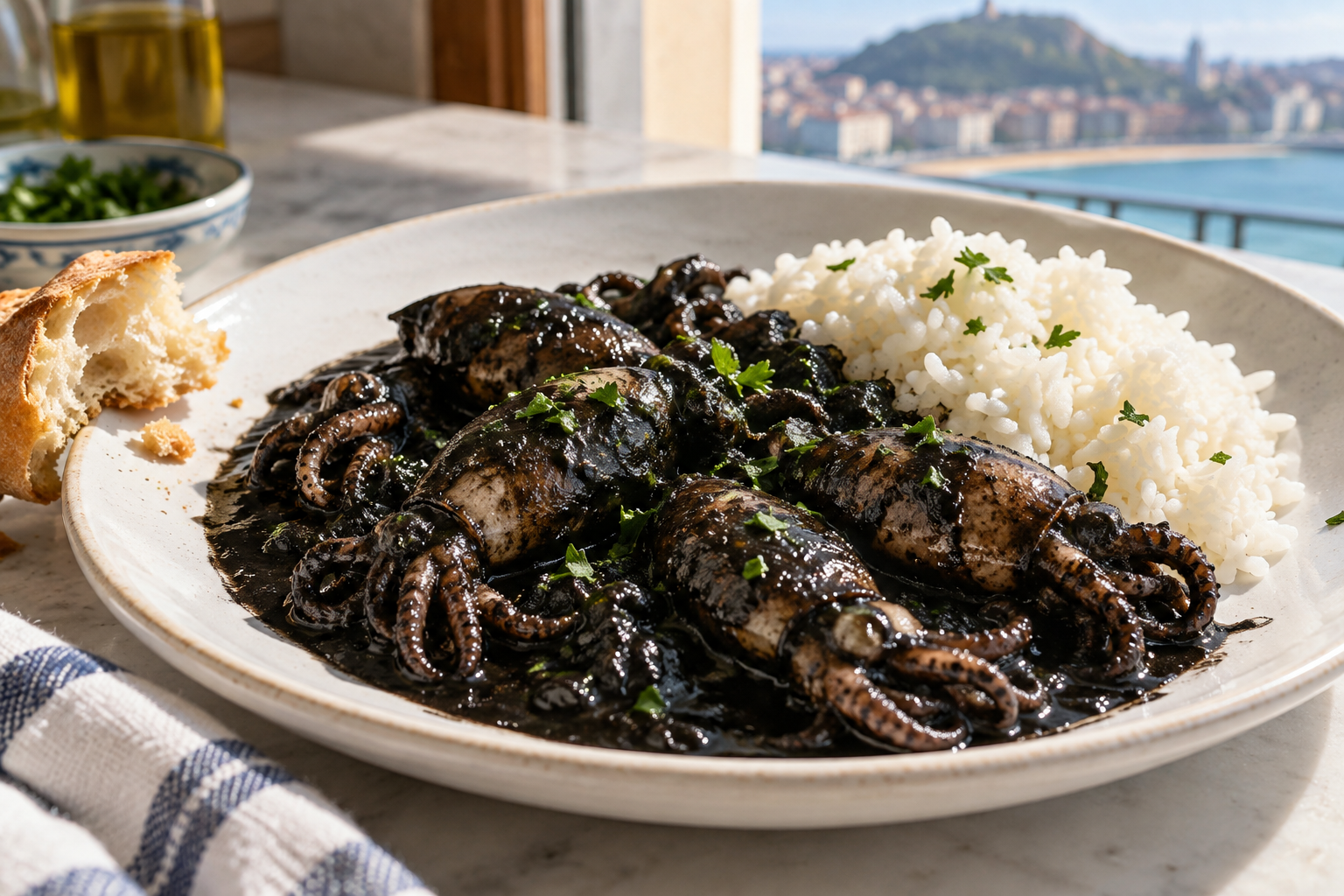
There is no getting around it: txipirones en su tinta is not a pretty dish in the conventional sense, and its jet-black sauce is the first and biggest hurdle for the uninitiated. We are trained to be wary of black food, to read it as burnt or spoiled or somehow wrong, so a plate of squid drowned in glistening black sauce triggers an instinctive unease that no amount of describing can fully talk you out of before that first taste. It genuinely does scare people, and that is part of the dish’s character and its charm.
But the color is not a warning; it is the whole promise. That black comes entirely from squid ink, the same ink the creature uses to defend itself, which the Basques long ago realized was not waste to be thrown away but a genuine treasure to be cooked with, a source of extraordinary savory, briny depth found in almost nothing else. The flavor beneath the alarming appearance is rich and complex and utterly unlike the fear that the look of it inspires, a taste of the sea rounded out by sweet slow-cooked onions, and the moment people get past the look and actually eat it, the black sauce turns, in a single bite, from off-putting to genuinely addictive. So the first thing to know about making this dish is to embrace the color rather than fight it, because that dramatic darkness is exactly what you are going for, the unmistakable sign of a sauce made properly and generously with plenty of ink. If your finished dish is merely grey or brown, you were too timid with the ink, and the fix next time is simply to add more.
The Ink Is the Whole Point
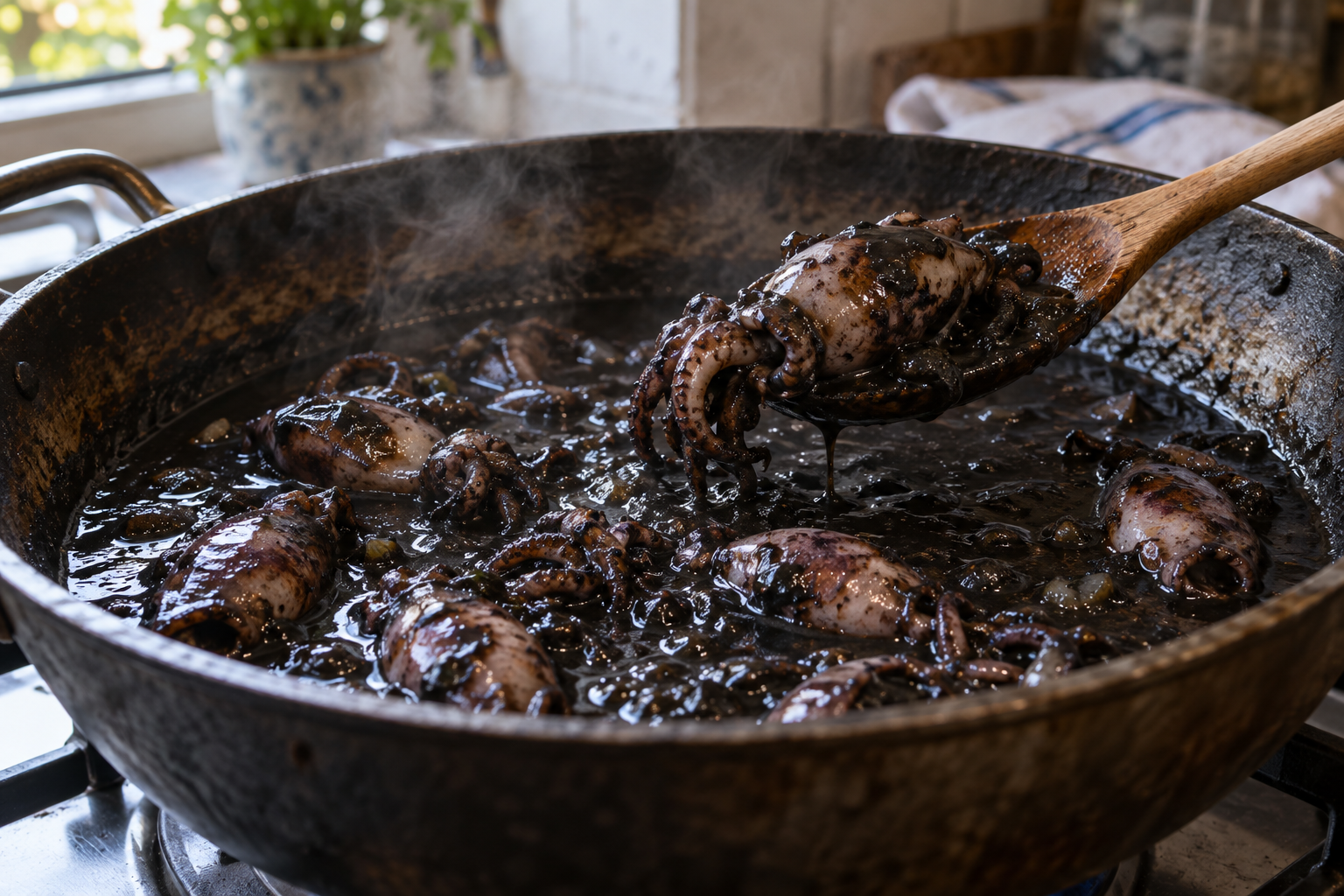
Since the ink defines the dish, it is worth understanding it, because getting it right is the difference between a real txipirones en su tinta and a pale imitation. Squid do contain their own ink, in a small sac that a careful cook can save when cleaning them, but the truth is that small squid carry very little of it, nowhere near enough to color and flavor a whole pot of sauce. This is the practical secret every Basque cook knows: you buy extra ink. It is sold in little sachets at fishmongers and many supermarkets, often frozen, and cuttlefish ink is if anything preferred for its softer, rounder flavor, so do not rely on the squid alone to blacken the sauce.
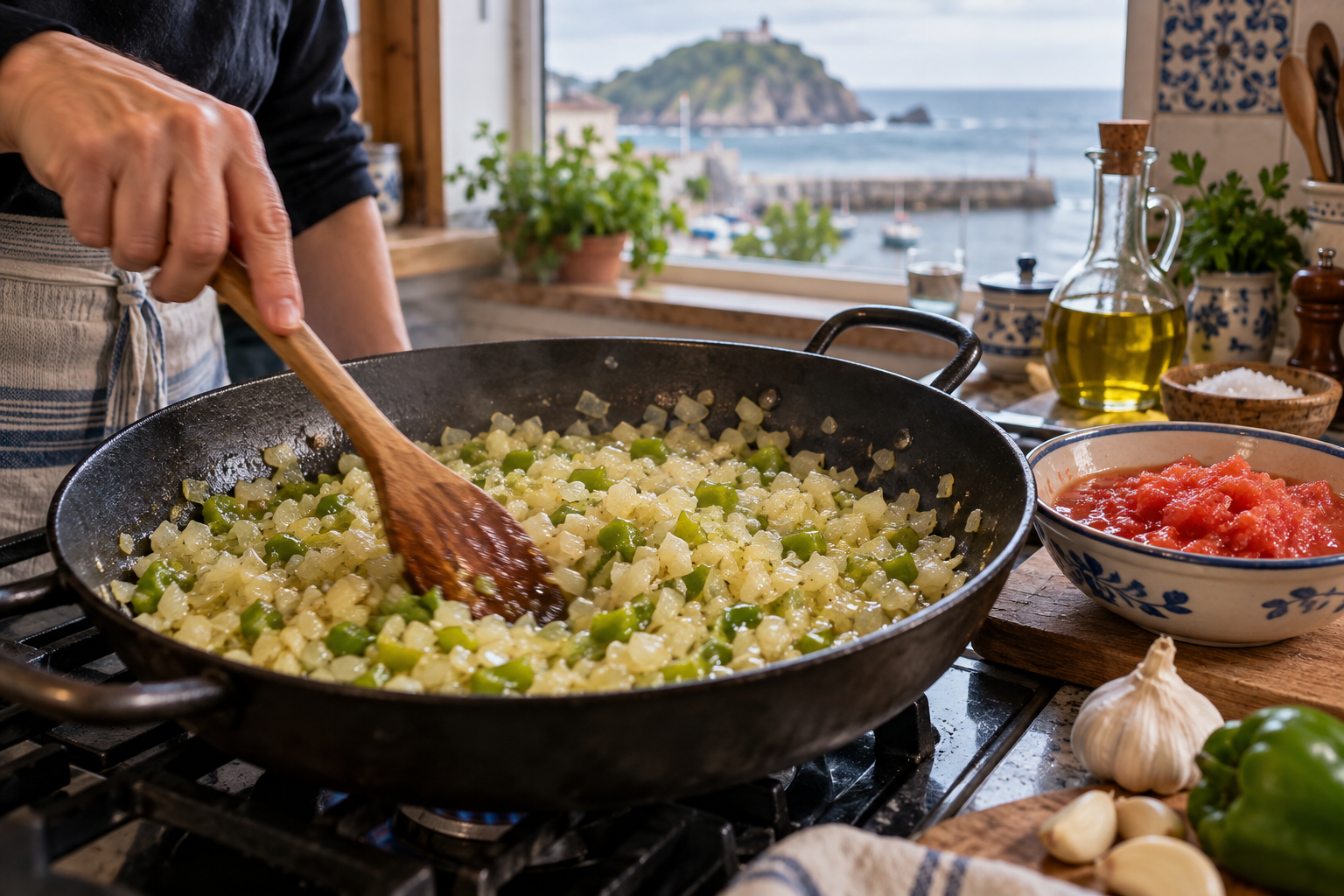
The ink does not work alone, though, and the sauce it colors is built on a foundation of slow-cooked vegetables that give the dish its body and sweetness. You begin with a sofrito, the Spanish base of onion, garlic, and green pepper cooked low and slow in olive oil until meltingly soft, to which you add tomato and cook it down further, then a splash of wine, and finally the ink. That whole mixture is then blended smooth and, traditionally, passed through a sieve, producing a silky, uniform, jet-black sauce with the consistency of a thin tomato sauce. This is the soul of the dish, the sweet, deep base of the sofrito married to the briny intensity of the ink, and it is what the squid will bathe and cook in. Get this sauce right, glossy and black and balanced between sweet and savory, and the hardest part of the dish is behind you. Everything after it is just gently cooking the squid until tender, which is far more forgiving than the sauce that carries it.
Getting the Squid Right
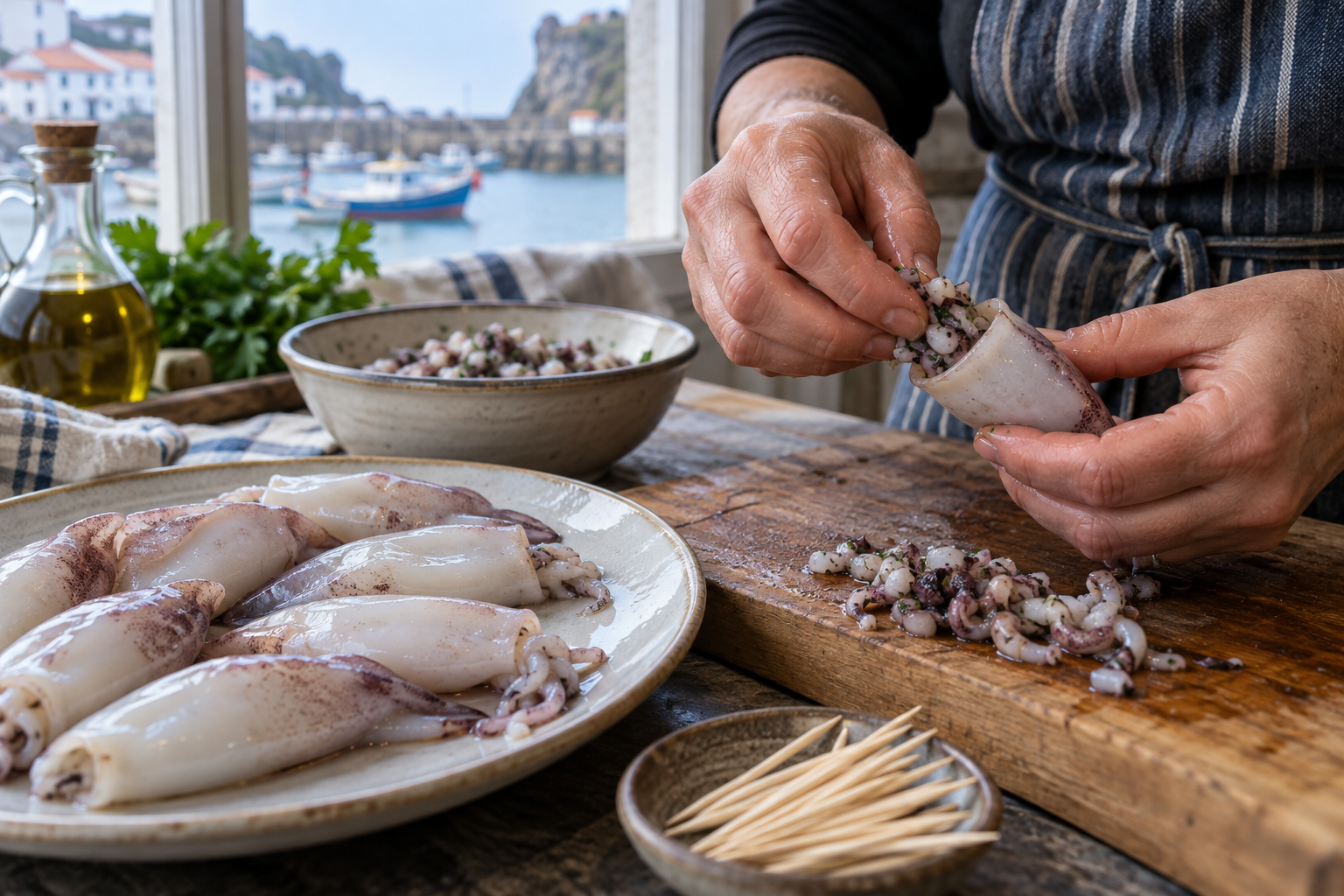
The squid itself asks for a little knowledge, because squid is one of those ingredients that punishes the careless with a rubbery, bouncy texture that has turned many people off it for life. The rule that governs all squid cookery is simple and absolute: cook it either very quickly or very slowly, but never in the unforgiving middle. A minute or two over high heat keeps it tender; a long, gentle braise of half an hour or more breaks the toughness down and returns it to tenderness. It is the in-between, a medium simmer of ten or fifteen minutes, that turns squid to rubber, so the timing here is not fussiness but the whole game. This one rule, once you know it, quietly explains every good and every bad plate of squid you have ever eaten, and it is the single most useful thing to carry away from the dish.
For txipirones en su tinta, you get the best of both approaches. The little squid are traditionally cleaned and often stuffed with their own chopped tentacles, sometimes with a little of the onion, and secured with a toothpick, which is less work than it sounds and gives a lovely result. Then they are seared briefly in hot oil to firm them up and add flavor, before being added to the black sauce and left to stew gently and slowly until they are perfectly tender. That combination, a quick sear followed by a patient braise in the ink, sidesteps the rubbery middle ground entirely and rewards you with squid that is soft and yielding rather than chewy. If you are using larger squid rather than the little ones, simply cut them into rings or squares and give them the same treatment, a sear and then a long, slow bath in the sauce.
Better the Next Day, Over White Rice
Once the squid are tender in their black sauce, the question is how to serve them, and the traditional answer could not be simpler or better: white rice. A mound of plain white rice alongside the inky squid is the classic Basque pairing, and it makes perfect sense, since the rice is the ideal blank canvas for soaking up all that intensely flavored black sauce, turning each forkful into a mix of tender squid, savory sauce, and soft rice. Triangles of bread fried in olive oil are the other traditional accompaniment, equally good for mopping, and a scatter of chopped parsley adds a welcome fleck of green against all that darkness. Whichever you choose, the sauce is really the point, so serve something plain and starchy that lets it shine rather than anything that competes with it.
There is one more piece of Basque wisdom worth following, which is that this is a dish that genuinely improves overnight. Like many braises and stews, txipirones en su tinta deepens and mellows if you make it a day ahead and let it rest in the fridge, the flavors marrying and the sauce thickening into something even richer, so it is an ideal dish to cook in advance for guests rather than fussing over it on the day itself, one less thing to worry about when people arrive. Simply reheat it gently until piping hot before serving. Made this way, given its ink and its time, this humble fishermen’s dish becomes something genuinely special, the sort of thing that converts the squeamish and delights everyone else, proof that the most alarming-looking food on the table is very often the best. Do not let the color scare you off, because on the far side of that fear is one of the finest things the Basque kitchen has to offer. It is a dish worth being brave for, and the story of how you got over the black sauce is half the fun of serving it to someone new.
Making Txipirones en Su Tinta
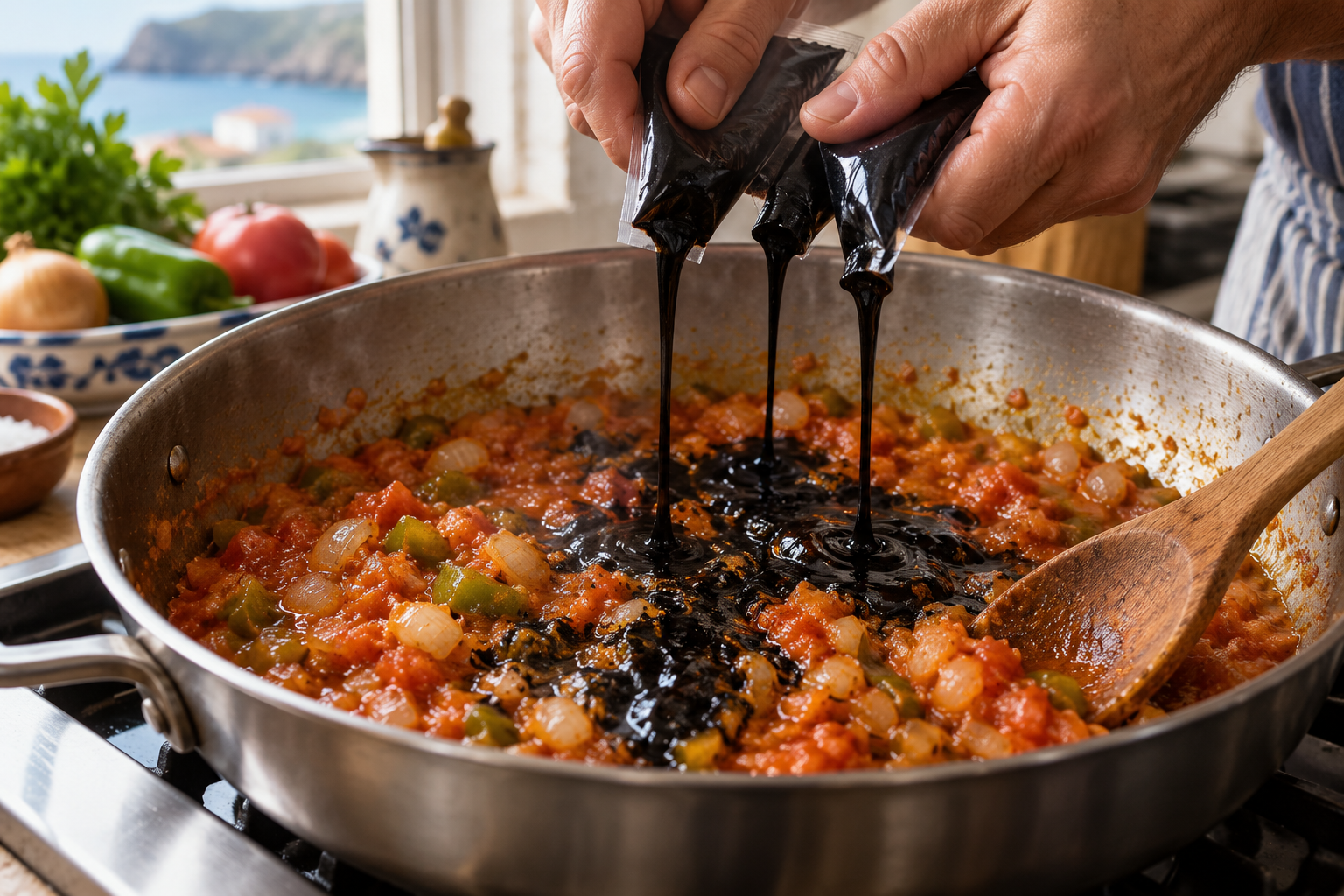
Here is a classic txipirones en su tinta, serving four. Buy extra squid ink, do not fear the black, and serve it with white rice.
Ingredients
- 1 kg small squid, cleaned, ink sacs reserved if present
- 4 sachets of squid or cuttlefish ink
- 2 onions, finely chopped
- 1 green pepper, chopped
- 3 cloves garlic, chopped
- 2 ripe tomatoes, grated or chopped
- 100 ml white wine
- 250 ml fish stock or water
- 2 slices of bread, optional, to thicken
- Olive oil, salt, and pepper
- White rice and chopped parsley, to serve
Instructions
- If stuffing, chop the squid tentacles finely and tuck them back inside the squid bodies, securing with a toothpick. Otherwise cut the squid into rings.
- Sear the squid quickly in hot olive oil, just a minute or two, then remove and set aside.
- In the same pan, cook the onion, green pepper, and garlic gently in olive oil until very soft, about 20 minutes. Add the tomato and cook down for 10 minutes more. Add the bread if using.
- Pour in the wine and let it reduce, then stir in the ink and the fish stock, and simmer for a few minutes.
- Blend the sauce until completely smooth, and pass it through a sieve for a silky texture. It should be glossy and jet black.
- Return the sauce to the pan, add the seared squid, and simmer gently on low heat until the squid is tender, about 20 to 30 minutes.
- Season to taste, scatter with parsley, and serve hot over white rice. It is even better made a day ahead and gently reheated.
And do not be put off by how it looks, since the alarming black is the whole point and the mark of a sauce made properly, so buy the extra ink, blend the sauce until it gleams, and let that dramatic color be the promise of how good the dish beneath it is.

About the Author: Ruben, co-founder of Gamintraveler.com since 2014, is a seasoned traveler from Spain who has explored over 100 countries since 2009. Known for his extensive travel adventures across South America, Europe, the US, Australia, New Zealand, Asia, and Africa, Ruben combines his passion for adventurous yet sustainable living with his love for cycling, highlighted by his remarkable 5-month bicycle journey from Spain to Norway. He currently resides in Spain, where he continues sharing his travel experiences with his partner, Rachel, and their son, Han.