
If the idea of making a pie fills you with dread, all that fussing over a special pan and crimping a perfect edge and worrying whether the crust will shrink or slump, then the French have exactly the dessert for you, and its whole genius is that it refuses to be fussy. It is called a galette, a free-form fruit tart that you make by rolling out a single round of pastry, piling fruit in the middle, and folding the edges up over it, roughly, with no pan required at all. That is genuinely the entire technique. There is no dish to line, no lattice to weave, no fiddly crimping to get wrong, and crucially, the more rustic and imperfect it looks, the better it is considered to be. A galette is a pie that has given up on perfection and become far more charming for it, and it turns a basket of autumn fruit into something that looks like it took hours, in about fifteen minutes of actual work. It is the dessert equivalent of a shrug, relaxed and unbothered, and somehow that ease is exactly what makes it so appealing on the plate. Fold, bake, done.
What follows is why the galette is a pie without the fuss, the fold-bake-done method at its heart, the fruit you can use, the two small tricks that make it great, and exactly how to make one.
A Pie Without the Fuss
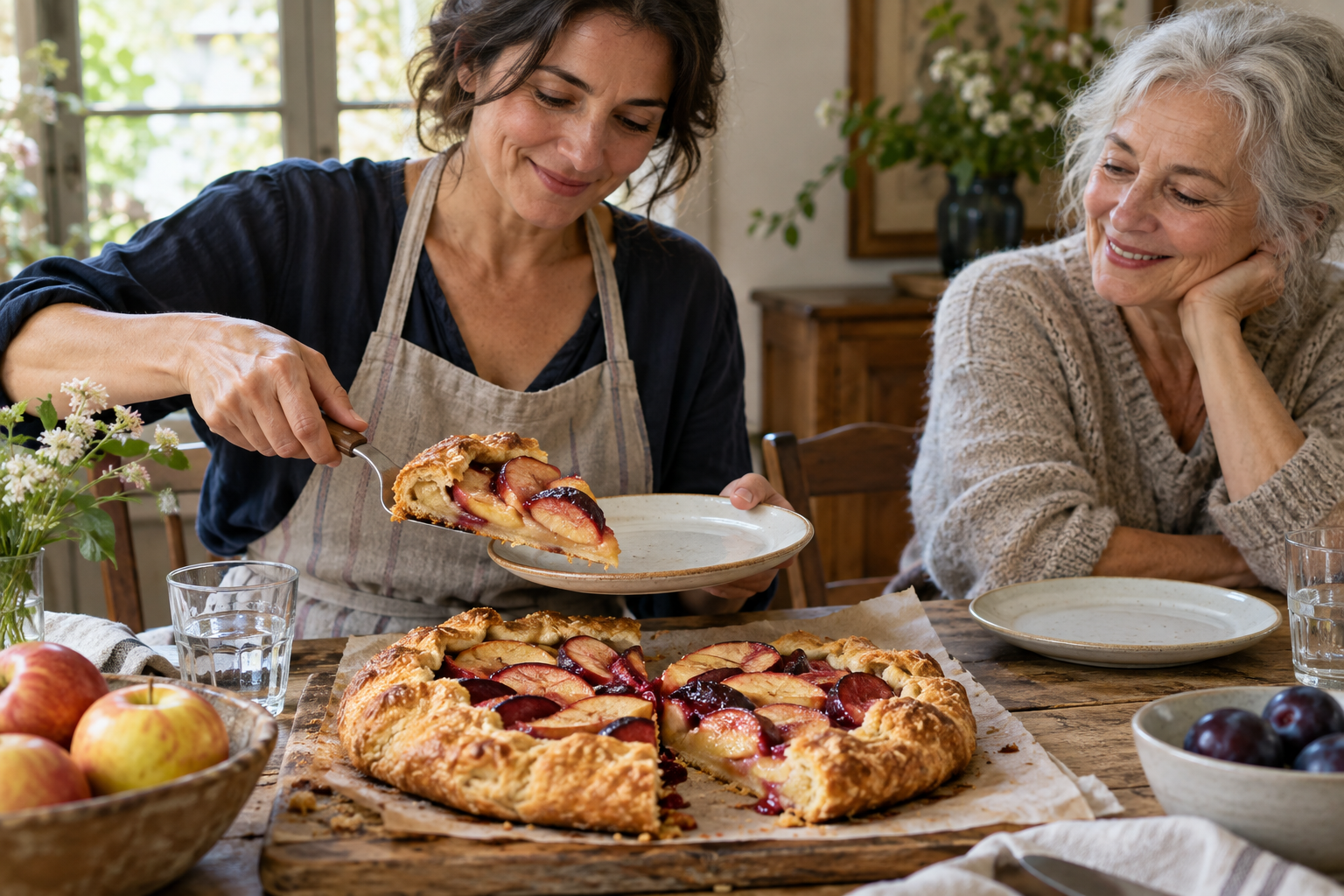
The galette is best understood as a pie that has thrown off all the rules, and understanding what it is not is the fastest way to see its appeal. A traditional pie demands a pie dish, a carefully fitted and crimped crust, often a top crust or a woven lattice, and frequently a spell of blind-baking to keep the base from going soggy, all of which is exactly the finicky work that scares people away from baking. The galette dispenses with every bit of it. You bake it flat on a sheet of parchment on an ordinary baking tray, with no dish involved at all, and instead of a neat crimped rim you simply fold the edges of the dough up and over the fruit in loose, imperfect pleats, leaving the center open to the air.
This is not a lazy shortcut so much as a whole philosophy of baking, and it happens to be a genuinely old and beloved one. In France the galette is also called a tarte rustique, a rustic tart, and the Italians make the identical thing and call it a crostata, so this free-form approach has deep roots across Europe. The rustic, handmade, slightly wonky look is not a failure to be hidden but the entire aesthetic, the mark of something made by hand rather than stamped out by a machine, which means there is genuinely nothing to get wrong. A tear in the dough is patched with a pinch from the edge, an uneven fold is called character, and a galette that looks a little rough is a galette that looks exactly right. For anyone intimidated by pastry, this is the place to start, because it is close to impossible to fail. There is no single moment where it all goes wrong, no perfect crimp to botch or lattice to collapse, just a forgiving fold that looks better the less precise you are.
Fold, Bake, Done
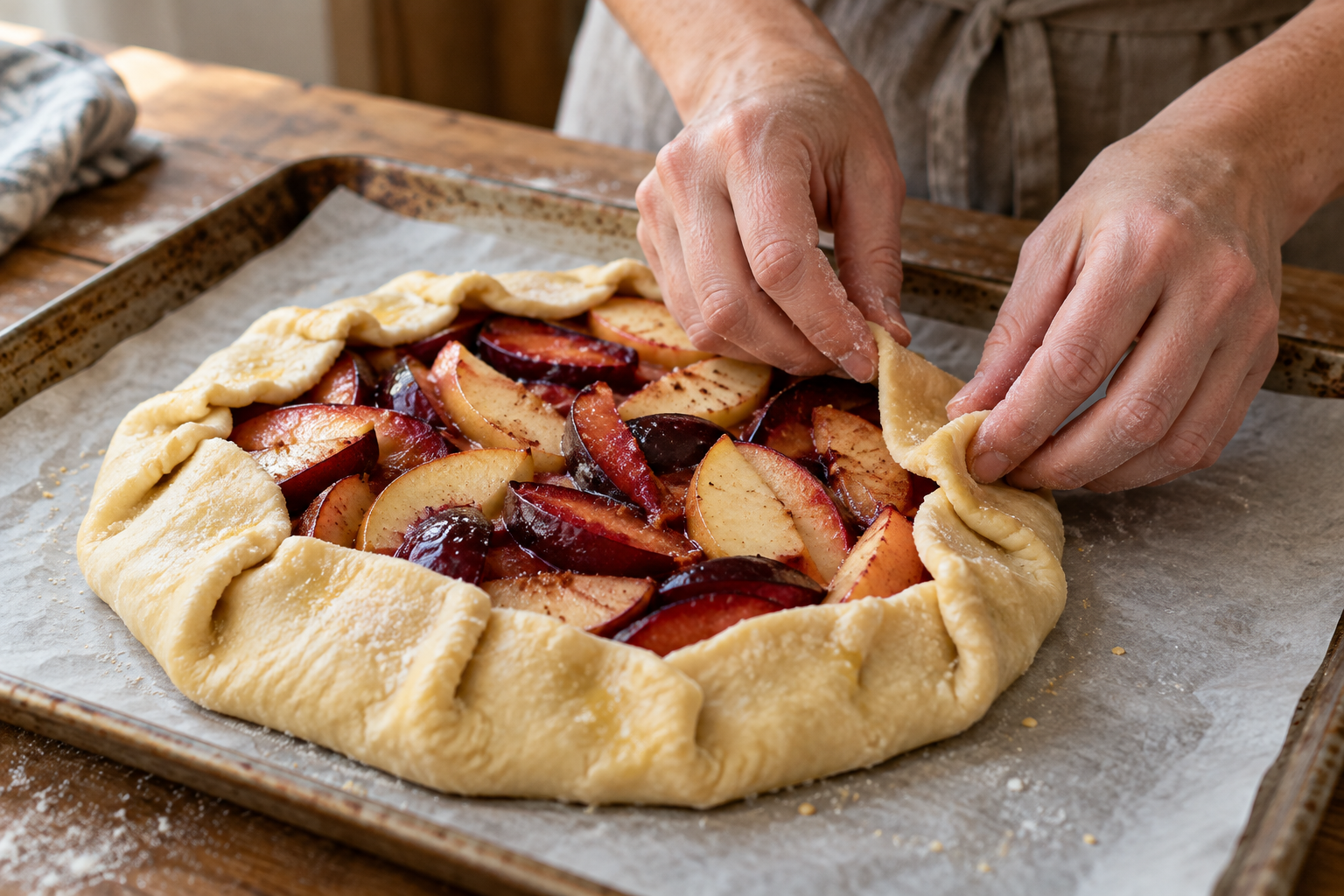
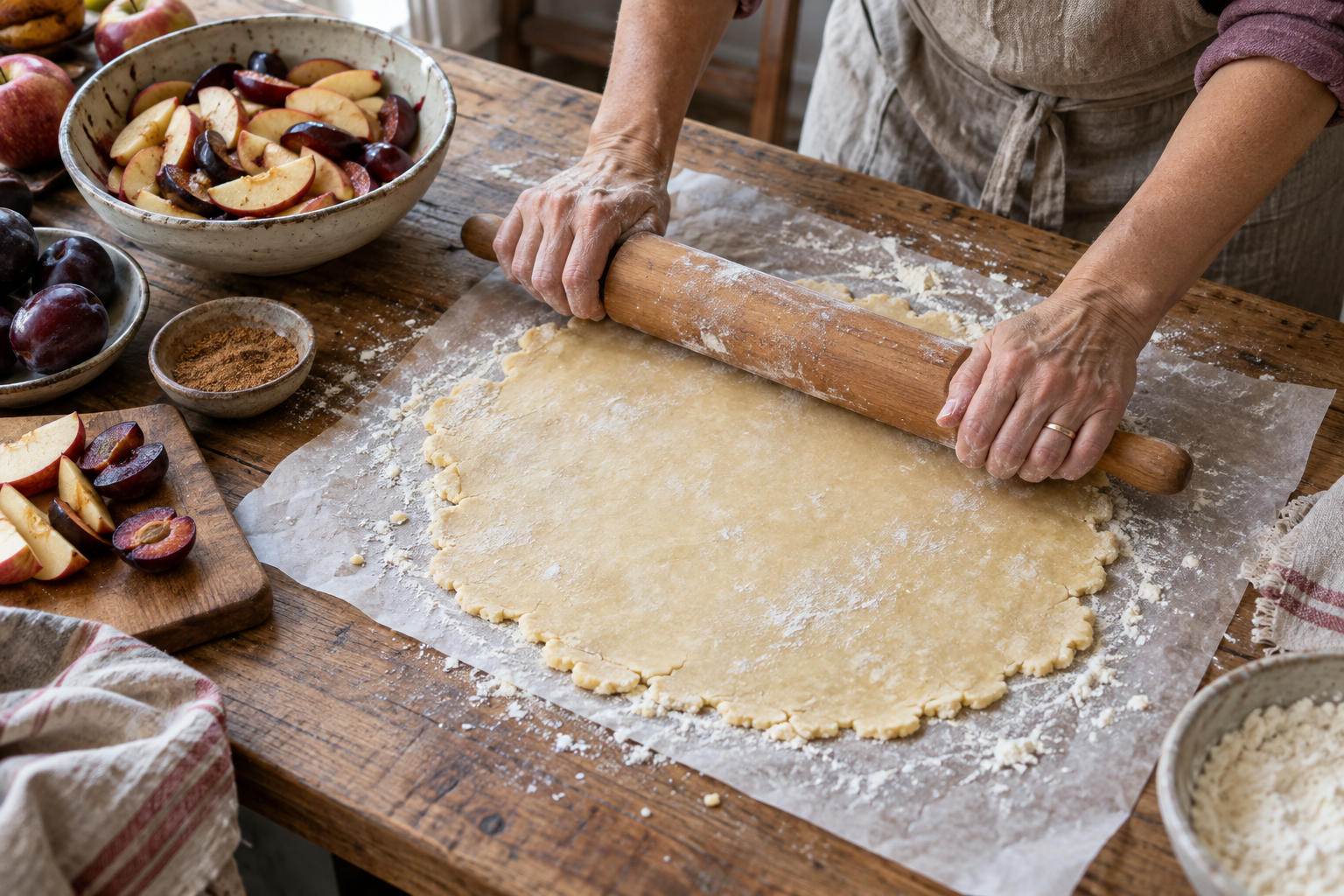
The method really is as simple as the title promises, and it comes down to three easy moves. First, you roll your pastry out into a rough circle on a piece of parchment, and it does not need to be a neat circle, just roughly round and evenly thin. Second, you pile your prepared fruit into the middle of that circle, leaving a border of a couple of inches of bare dough all the way around. Third, you fold that bare border up and over the outer edge of the fruit, working your way around and letting the dough pleat and overlap however it wants, so that the fruit is held in a loose pastry rim with its center still showing.
From there it is just a brush and a bake. You brush the folded pastry border with a little beaten egg, which is what gives it that deep golden, glossy finish, sprinkle it with a bit of sugar for sparkle and crunch, and slide the whole thing into a hot oven until the pastry is golden and crisp and the fruit is soft and bubbling, usually somewhere between thirty-five minutes and an hour depending on the fruit. That is the entire process, and it is why the galette is such a gift to the nervous or the time-pressed baker. There is no chilling of a lined pan, no par-baking, no anxious checking whether the bottom crust has set, just roll, fill, fold, brush, and bake. Fold, bake, done really is the whole of it, and the result looks and tastes like far more effort than it was. That gap between how impressive it looks and how little it asked of you is the galette’s quiet magic, and it never stops being satisfying.
Any Fruit You Like
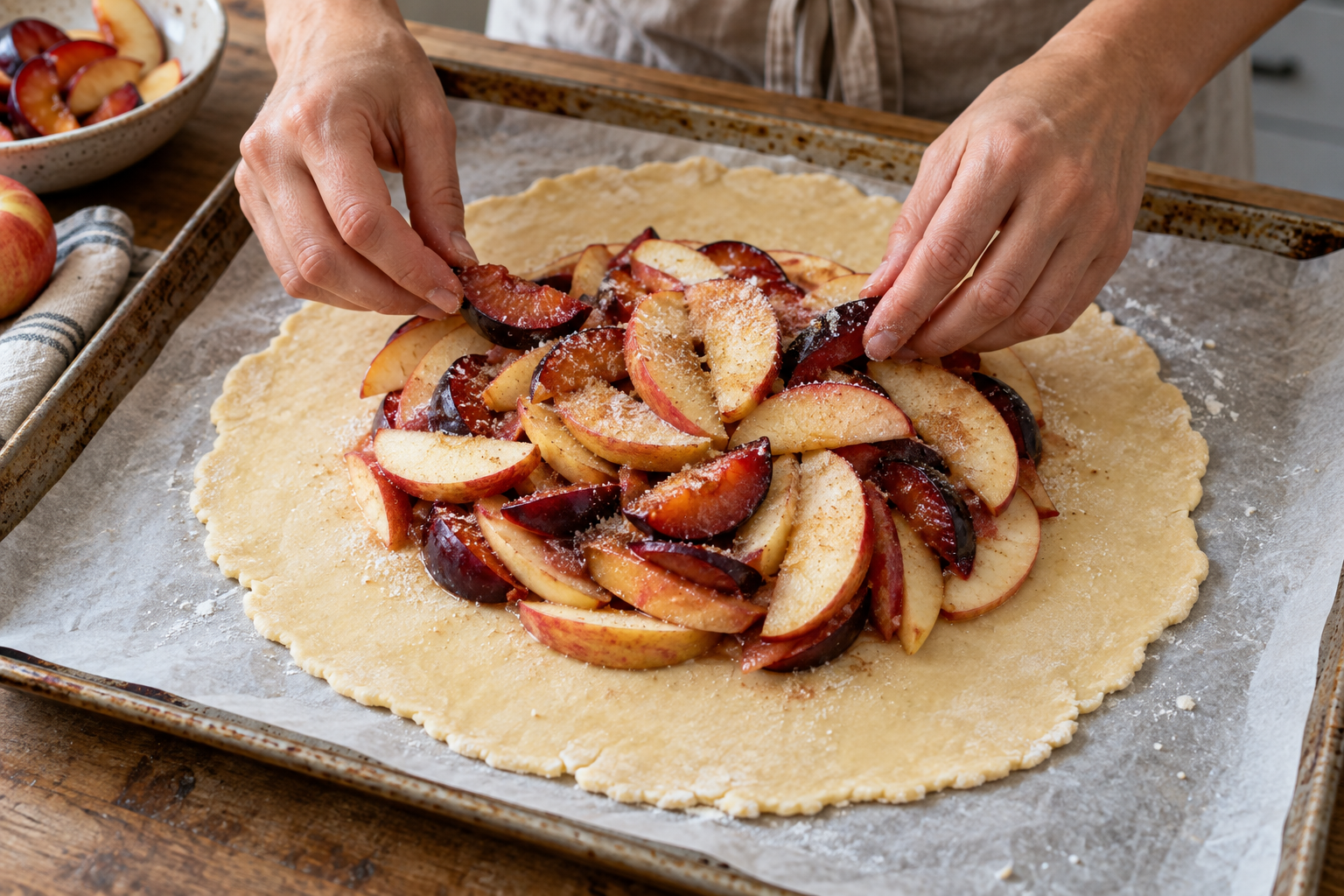
One of the truest things about the galette’s no-rules spirit is that it will happily take almost any fruit you give it, which makes it the perfect vehicle for whatever the season is offering. In autumn it is a natural home for apples, pears, plums, and figs, the fruit that defines the season, sliced and tumbled into the center with a little sugar and perhaps a pinch of cinnamon. In summer it welcomes berries, cherries, apricots, and peaches just as gladly, so a single method carries you right through the year, always ready to turn a glut of ripe fruit into dessert. Learn the galette once and you have a year-round answer to the question of what to do with fruit that is a touch too ripe to eat but far too good to waste.
There are only a couple of gentle guidelines rather than rules. Firm fruits like apples and pears should be sliced fairly thin so they soften properly in the time the pastry takes to bake, while very juicy fruits benefit from a little something to absorb their liquid, which we will come to. Beyond that, you are free to mix fruits, to sweeten to taste, to add a spice or a squeeze of lemon or none at all, exactly as the mood and the fruit bowl dictate. And if even making the pastry feels like too much on a given day, a sheet of good store-bought pastry works perfectly well, keeping the galette firmly in the category of things you can throw together on a whim. The dessert bends to what you have rather than demanding you shop for it, which is the whole rustic point. A galette is what you make with the slightly-too-soft pears in the bowl and the last of the plums, a way of catching the fruit at the very moment it needs using rather than a recipe you plan a trip to the shop around.
The Two Tricks That Save It
For something so forgiving, the galette has just two small pieces of know-how worth learning, and they are the difference between good and great. The first solves the only real problem a galette can have, which is a soggy bottom from juicy fruit. The fix is to scatter something absorbent over the dough before the fruit goes on, a spoonful or two of ground almonds being the classic and most delicious choice, though ground oats, a little flour, or a sprinkle of semolina all do the same job. That thin hidden layer soaks up the juices the fruit releases as it bakes, keeping the pastry underneath crisp instead of letting it turn to a wet mess, and it is the single tip that most reliably lifts a homemade galette.
The second trick is all about the crust, and it is what makes a galette look bakery-beautiful for almost no effort. Brushing the folded pastry border with beaten egg before baking gives it a rich, deep golden shine, and scattering a coarse sugar over that egg wash, something like turbinado or demerara rather than fine sugar, adds both a lovely sparkle and a delicate crunch to the edge. For an extra touch of professional gloss, some cooks brush the baked fruit with a little warmed apricot jam as it comes out of the oven, which makes it glisten, though that is a flourish rather than a necessity. Master those two small things, the absorbent layer underneath and the egg-and-sugar finish on top, and your rustic little tart will taste as good as it looks and look better than you would believe for the effort involved. Everything else about the galette is deliberately forgiving, so it is worth getting these two easy details right, since they are the whole difference between a good one and a great one.
Making a Fruit Galette
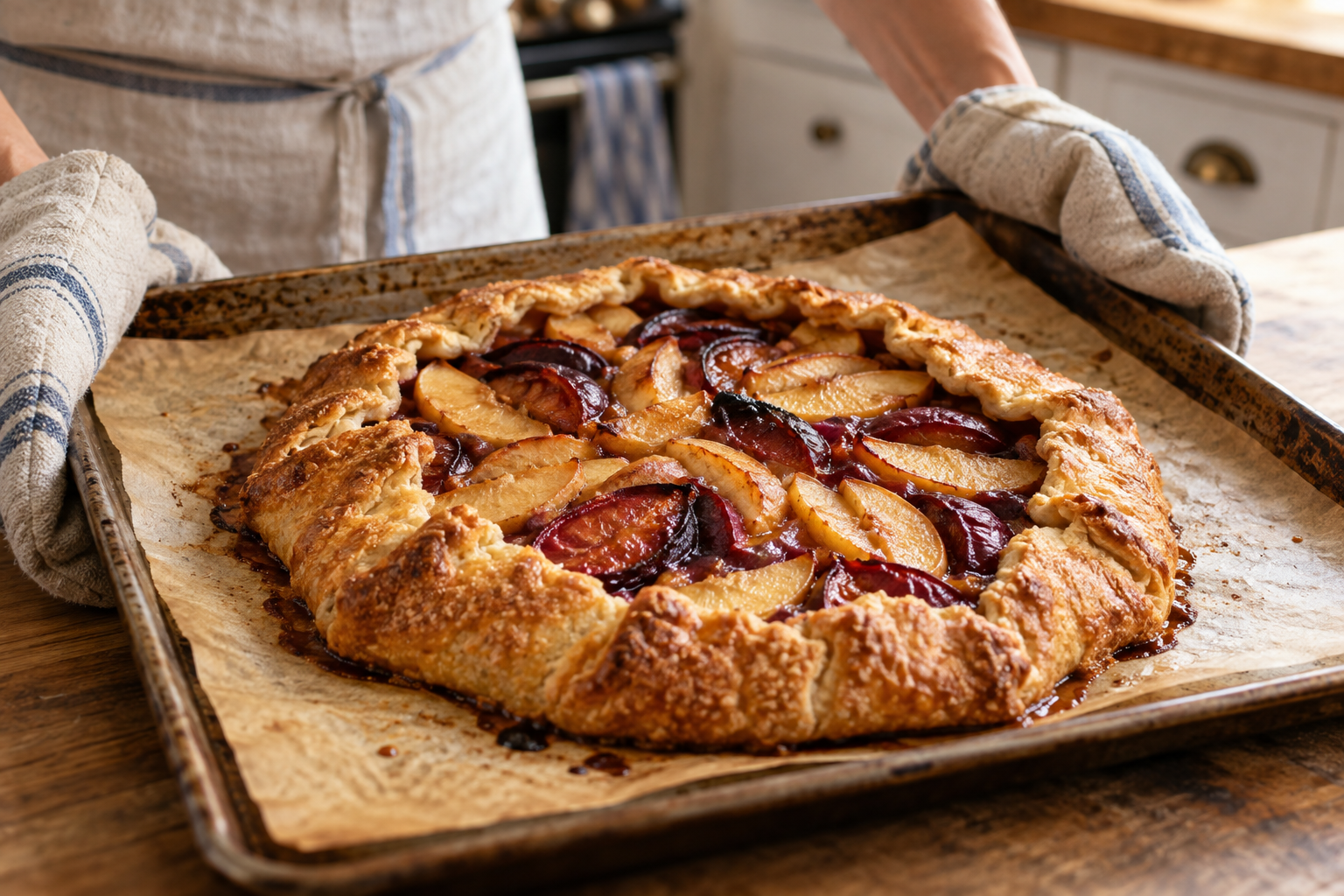
Here is a classic fruit galette, serving six to eight. Use whatever ripe fruit you have, and remember that rough and imperfect is exactly right.
Ingredients
For the pastry:
- 200 g all-purpose flour
- 120 g cold butter, cubed
- 1 tablespoon sugar
- A pinch of salt
- 3 to 4 tablespoons cold water
For the filling and finishing:
- About 500 g fruit, such as apples, pears, plums, or berries, sliced if firm
- 3 tablespoons sugar, plus extra for the edges
- 2 tablespoons ground almonds
- A pinch of cinnamon, optional
- 1 egg, beaten
- Coarse sugar, for the crust
Instructions
- Make the pastry: rub the cold butter into the flour, sugar, and salt until crumbly, then add just enough cold water to bring it into a dough. Wrap and chill for 20 minutes.
- Preheat the oven to 375 F, about 190 C. Roll the pastry out on a sheet of parchment into a rough circle about 30 cm across, and slide the parchment onto a baking tray.
- Toss the fruit with the sugar and the cinnamon if using. Scatter the ground almonds over the pastry, leaving a border of about 5 cm all around.
- Pile the fruit onto the almond-dusted center, keeping the border clear.
- Fold the bare border of dough up and over the edge of the fruit, pleating it loosely as you go, leaving the center open.
- Brush the folded pastry with beaten egg and sprinkle it with coarse sugar.
- Bake for 40 to 50 minutes, until the pastry is deep golden and the fruit is soft and bubbling. Cool a little and serve warm, with cream or ice cream.
And do not fuss over how it looks, since a galette is meant to be rough and handmade, so pleat the edges however they fall, patch any tears with a pinch of spare dough, and trust that the imperfect, homey look is precisely the charm the French are after.

About the Author: Ruben, co-founder of Gamintraveler.com since 2014, is a seasoned traveler from Spain who has explored over 100 countries since 2009. Known for his extensive travel adventures across South America, Europe, the US, Australia, New Zealand, Asia, and Africa, Ruben combines his passion for adventurous yet sustainable living with his love for cycling, highlighted by his remarkable 5-month bicycle journey from Spain to Norway. He currently resides in Spain, where he continues sharing his travel experiences with his partner, Rachel, and their son, Han.