
;

Ask an American how much their car costs and many will answer with a monthly number, because in the United States a car is something you make payments on, often for six or seven years, and often replace with a newer one the moment the last loan is paid off, if not before. Ask a European the same question and you are more likely to hear what they paid for the whole car, because they are more likely to have bought it outright, chosen something modest and used, and planned to drive it for a decade or more. That difference in how the two cultures pay for and hold onto their cars is one of the quieter but more revealing gaps between American and European money habits, and it says a great deal about how each relates to debt, status, and the humble business of getting around. Here is the car-debt culture gap, honestly laid out. It is one of those differences that hides in plain sight, so ordinary on each side of the Atlantic that neither quite realizes the other does it so differently, and yet it shapes the finances of tens of millions of households.
What follows is the scale of America’s car debt, the very different European approach, why the two diverge, the honest ways the gap is narrowing, and what an American might take from the whole comparison.
America’s Trillion-Dollar Car Habit

The numbers on American car borrowing are genuinely staggering, and they are the right place to start. Americans collectively owe well over a trillion and a half dollars on their cars, a sum second only to mortgages among household debts, and the great majority of new vehicles are bought with a loan rather than cash. The monthly payments that debt represents have climbed relentlessly, with the average new-car payment now sitting comfortably above seven hundred dollars a month, and nearly one in five new-car buyers now paying more than a thousand dollars every month just for their vehicle.
To make those payments manageable against ever-rising car prices, loan terms have stretched to lengths that would once have seemed absurd. The average new-car loan now runs close to six years, loans of seven years and beyond have become common, and a meaningful share of buyers are now financing for eighty-four months or more. Stretch a loan that long and you run headlong into a problem the industry calls negative equity, owing more on the car than it is actually worth, which affects a large share of borrowers and traps many in a cycle of rolling old debt into each new purchase.
When the time comes to trade up, the unpaid balance on the old car simply gets folded into the loan on the new one, so the debt never really ends, it just changes vehicles. The whole arrangement rests on treating a rapidly depreciating asset as something to be perpetually financed, and it is so normal in America that most people never stop to question it. The car begins losing value the moment it leaves the lot and keeps losing it every year, so financing one over seven years means paying interest on a thing worth steadily less than what you still owe, an arrangement that would look strange applied to almost anything else. That is the backdrop against which the European approach looks so different.
The Very Different European Way

Cross to Europe and the relationship with the car changes in almost every respect, starting with the decision to borrow at all. Europeans have traditionally been far more likely to buy a car with cash, or with a much shorter loan, and far more likely to buy used rather than new, choosing a modest, sensible vehicle over the biggest or newest one they can finance. The car is treated less as a statement or a lifestyle upgrade and more as a functional tool, something to be acquired sensibly and kept, which changes the entire economics of ownership. The idea of the car as an expression of identity, to be refreshed like a wardrobe, is far weaker in most of Europe than in America, where the vehicle in the driveway has long carried a heavier freight of status.
And kept it is, for a very long time. Where an American might trade up every few years, rolling the old loan into the new, a European is far more likely to run a car well into its second decade, driving it for twelve, fifteen, or more years until it genuinely wears out.
A car with well over a hundred thousand miles on it is regarded not as a liability to be offloaded but as a machine only now properly broken in, and keeping it running is treated as ordinary good sense rather than throwing money after bad. The average car on European roads is strikingly old by American standards and has been getting older, a reflection of a culture that sees no shame in an aging but reliable vehicle and no particular allure in the newest model. This combination, buying modestly and holding for the long haul, means a European often spends a large chunk of their driving life owning their car outright with no payment at all, having bought sensibly once and then simply driven the thing until the wheels nearly fall off. There is a certain pride in it, too, a quiet satisfaction in a well-kept old car that owes you nothing, which is almost the opposite of the American pride in a shiny new one that owes the bank a great deal. It is a fundamentally different financial posture toward the same everyday object, one that treats the car as something you own rather than something you rent from a lender in perpetuity.
Why the Two Diverge

The reasons behind the gap are a mix of the practical and the cultural, and they reinforce one another. The most important is car-dependence itself. American life, built around sprawling suburbs and long commutes with little public transport, makes a reliable car close to non-negotiable, and that dependence pushes people toward newer, more reliable, and therefore more expensive vehicles, financed because they must be had. When your job, your groceries, and your children’s school all require a working car every single day, the pressure to have one that will not let you down is intense, and that pressure translates directly into money spent. Europe’s denser cities and far better public transport mean a car is often more optional, or at least less central, so there is less pressure to always have the newest and most reliable model, and more room to make do with an older one.
Cost pressures push the same way. Cars themselves, along with fuel and taxes, are generally more expensive in Europe, which paradoxically encourages thrift rather than borrowing, nudging buyers toward smaller, cheaper, more economical cars kept for longer rather than large ones churned frequently. And underneath the practicalities sits a genuine cultural difference in attitudes to debt. There is, across much of Europe, a deeper wariness about borrowing for a depreciating asset, a sense that going into long-term debt for a car is imprudent in a way that many Americans simply do not feel, having grown up in a country where the car payment is a normal and permanent feature of adult life. Between the denser geography, the higher costs, and the greater debt-aversion, the European path toward buying modestly and holding long is really the natural response to the conditions, just as the American path is to its own. Neither set of drivers is more virtuous than the other; each is behaving rationally within the world it inhabits, which is worth remembering before anyone starts handing out moral marks for how a continent buys its cars.
How the Gap Is Narrowing
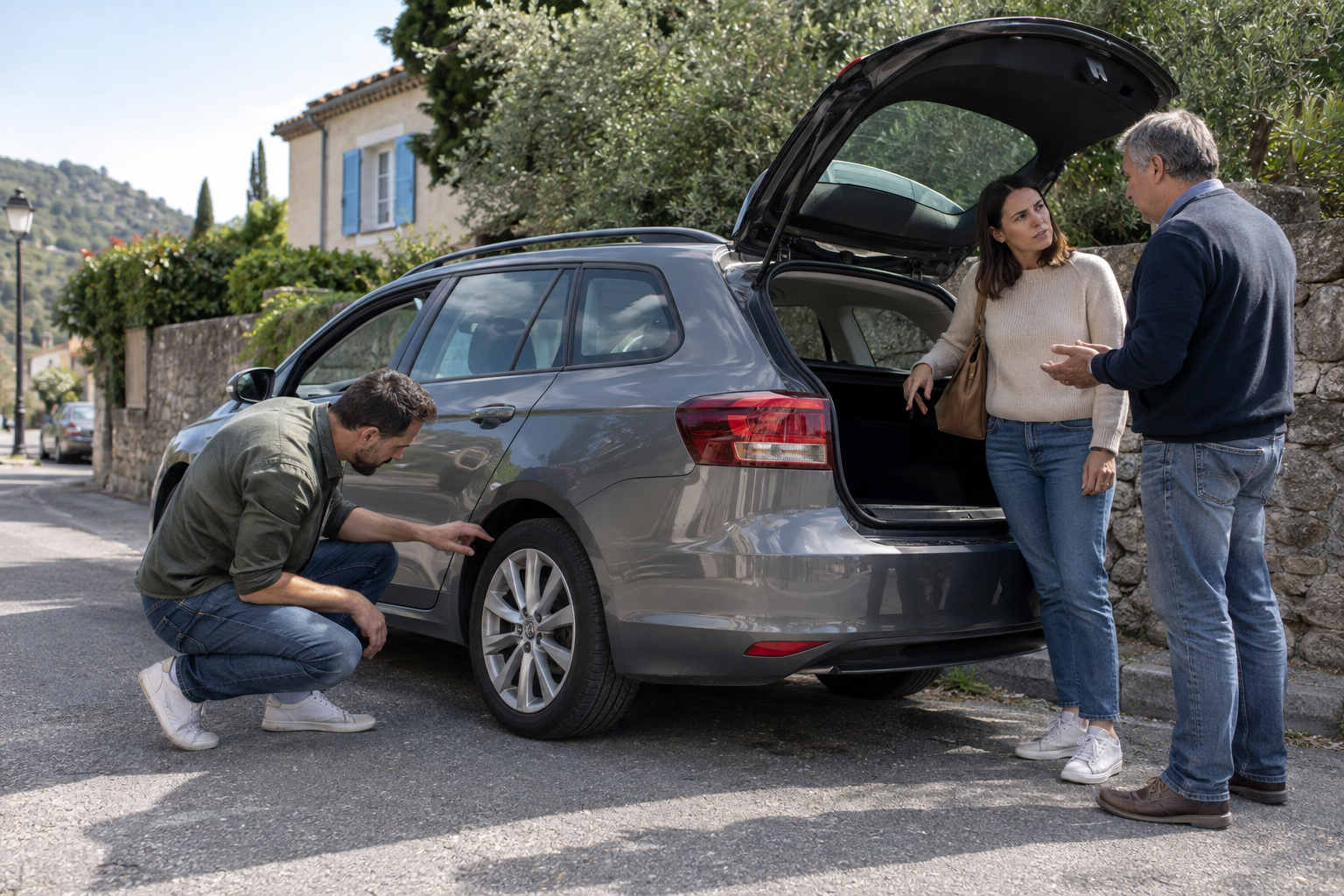
Honesty requires acknowledging that this contrast, real as it is, is neither absolute nor frozen, and the picture is more nuanced than a simple tale of thrifty Europeans and spendthrift Americans. For one thing, the American side of the story is not as one-note as the debt figures suggest. Despite all that borrowing, the majority of Americans actually drive used cars, and a large majority own their current vehicle outright, having bought used, paid cash, and held on longer than the industry would like, often out of exactly the economic caution the European stereotype celebrates. The trillion-dollar debt is real, but so is a quieter America that quietly does much the same thing Europeans do. The headlines are written by the buyers with the eighty-four-month loans, but a great many Americans are driving sensible used cars they paid off years ago, which is a useful corrective to the idea that debt is simply in the national character.
From the other direction, Europe has been drifting toward the American model. Car financing, and leasing in particular, has grown rapidly across Europe in recent years, with arrangements like personal contract purchase, which let drivers pay monthly and swap cars frequently, becoming increasingly popular, especially in wealthier markets. The old European instinct to buy outright and hold forever is being eroded by the same forces of rising car prices and clever financing that shaped American habits, and a younger generation of European drivers is more comfortable with a monthly payment than their parents were. As new cars grow more expensive everywhere, the monthly payment starts to look less like recklessness and more like the only way in, which is exactly the logic that normalized car debt in America decades ago. The gap, in other words, is closing from both ends, with thrifty Americans and financing Europeans meeting somewhere in the middle, so the contrast is a matter of degree and tradition rather than an absolute divide, and it is worth holding that nuance rather than trading in caricatures.
The Cost of the Perpetual Payment

It is worth pausing on what the American trade-up cycle actually costs, because the difference between the two approaches is not just cultural but financial, and the numbers are quietly enormous. A person who always has a car payment, rolling one loan into the next and never quite reaching the end, can easily spend the better part of a thousand dollars a month on their vehicles for their entire adult life, decade after decade, with no pause. A person who buys a sensible car outright, or pays off a modest loan and then keeps driving that same car for another eight or ten years with no payment at all, frees up that same sum for those years, and the gap between the two over a lifetime runs well into the hundreds of thousands of dollars.
That is the hidden math beneath the culture gap. The European instinct to buy once and hold long is not just an aesthetic preference for old cars; it is, whether intended or not, a wealth-building strategy, because the years spent driving a paid-off car are years in which a large monthly sum goes toward saving, investing, or simply living rather than toward a lender. The American instinct to keep a payment going, by contrast, quietly diverts an enormous stream of money toward depreciating metal across a lifetime. Neither driver may think of it in these terms, but the person with the fifteen-year-old paid-off car has, in effect, given themselves a substantial raise that the perpetual financer never sees. Once you notice that, the appeal of the European approach stops being about thrift for its own sake and becomes about what the freed money could otherwise do.
What Americans Can Take From It
For all the nuance, there is a genuinely useful lesson an American can draw from the traditional European approach, and it does not depend on living in Europe at all. The core idea, buy a sensible car you can afford, ideally with as little debt as possible, and then keep it for many years rather than trading up on a cycle, is sound personal finance available to anyone, anywhere. The habit of treating a car as a long-term tool to be used up rather than a status object to be perpetually upgraded is one of the quiet ways many people, on both continents, build wealth, since the money not spent on a permanent car payment is money freed for everything else. It is not a glamorous strategy and it will never feel as good as driving off in something new, but it is one of the most reliable financial moves available to an ordinary household.
The honest caveat is that an American cannot simply adopt the European posture wholesale, because the surrounding conditions differ. Where car-dependence is total and no train will get you to work, a reliable vehicle really is a necessity rather than an option, and buying a cheap old car that might strand you is a false economy, so the European ideal of the barely-running fifteen-year-old runabout does not always translate. The right move in a car-dependent place may be a reliable used car a few years old, bought with a modest loan and then kept for a decade, rather than either a shiny new financed one or a risky bargain, splitting the difference in a way that fits American conditions.

About the Author: Ruben, co-founder of Gamintraveler.com since 2014, is a seasoned traveler from Spain who has explored over 100 countries since 2009. Known for his extensive travel adventures across South America, Europe, the US, Australia, New Zealand, Asia, and Africa, Ruben combines his passion for adventurous yet sustainable living with his love for cycling, highlighted by his remarkable 5-month bicycle journey from Spain to Norway. He currently resides in Spain, where he continues sharing his travel experiences with his partner, Rachel, and their son, Han.