
Walk down a Spanish residential street on a blazing summer afternoon and you might think half the town had gone away, because window after window is shuttered tight, the buildings sealed and dark behind rows of lowered blinds. But the people are home, sitting inside those darkened rooms, having deliberately shut out the light and the heat in the hottest part of the day. To a visitor from a country that flings its curtains open to welcome the sun, this can look strange, even a little gloomy, a whole street choosing to sit in the dark at three in the afternoon. It is, in fact, one of the smartest pieces of everyday wisdom in Spanish life, a daily ritual of light and shade performed with a humble device called the persiana, and it is how Spain has kept cool through ferocious summers for generations. Here is why Spanish houses go dark on purpose, and the logic behind the ritual. Once you understand it, the shuttered afternoon street stops looking desolate and starts looking like exactly what it is, a whole neighborhood quietly doing something clever.
What follows is what the persiana actually is, why closing it works, the daily rhythm of the ritual, why it startles foreigners so much, and what it reveals about how Spain lives with its heat.
The Machine on Every Spanish Window
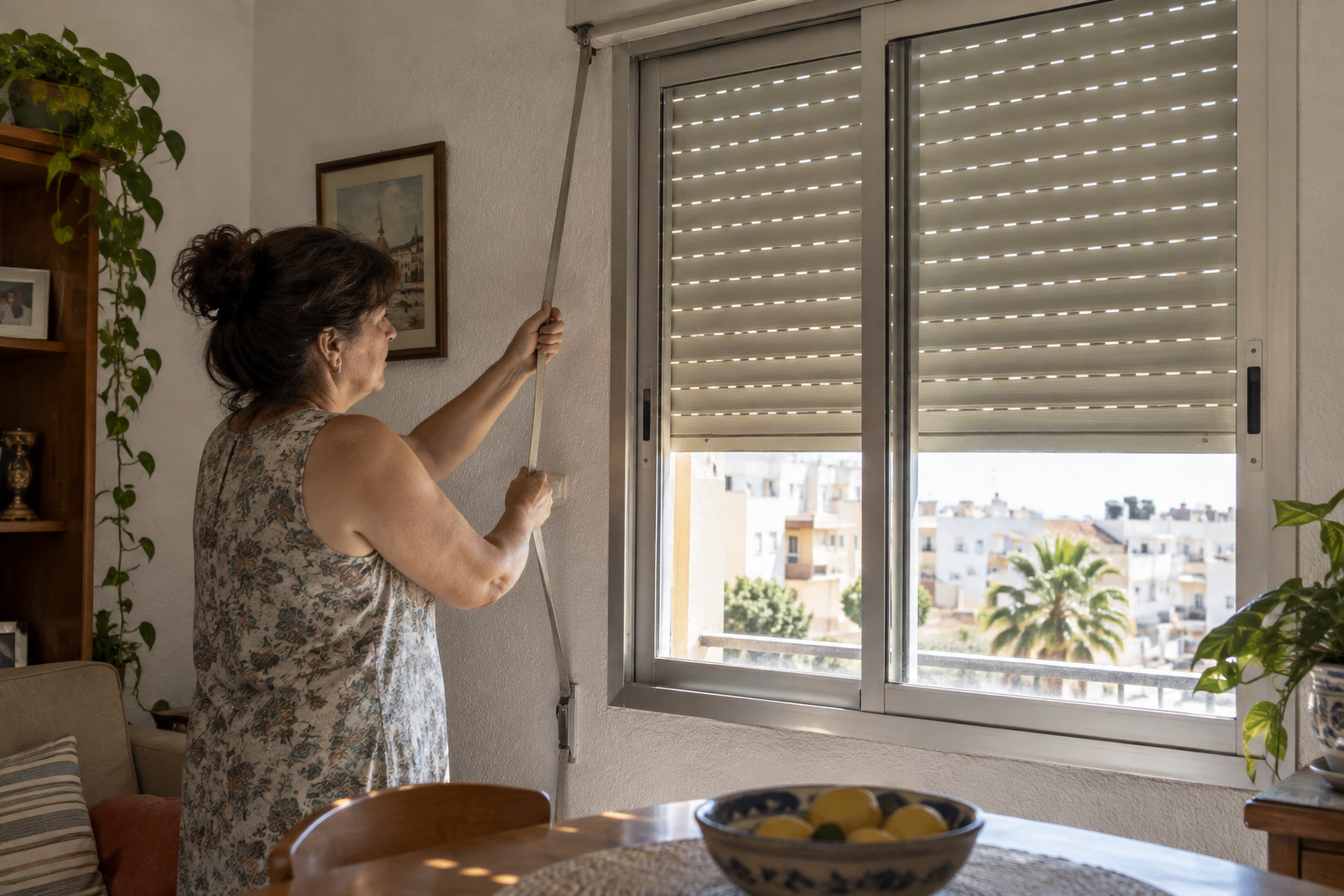
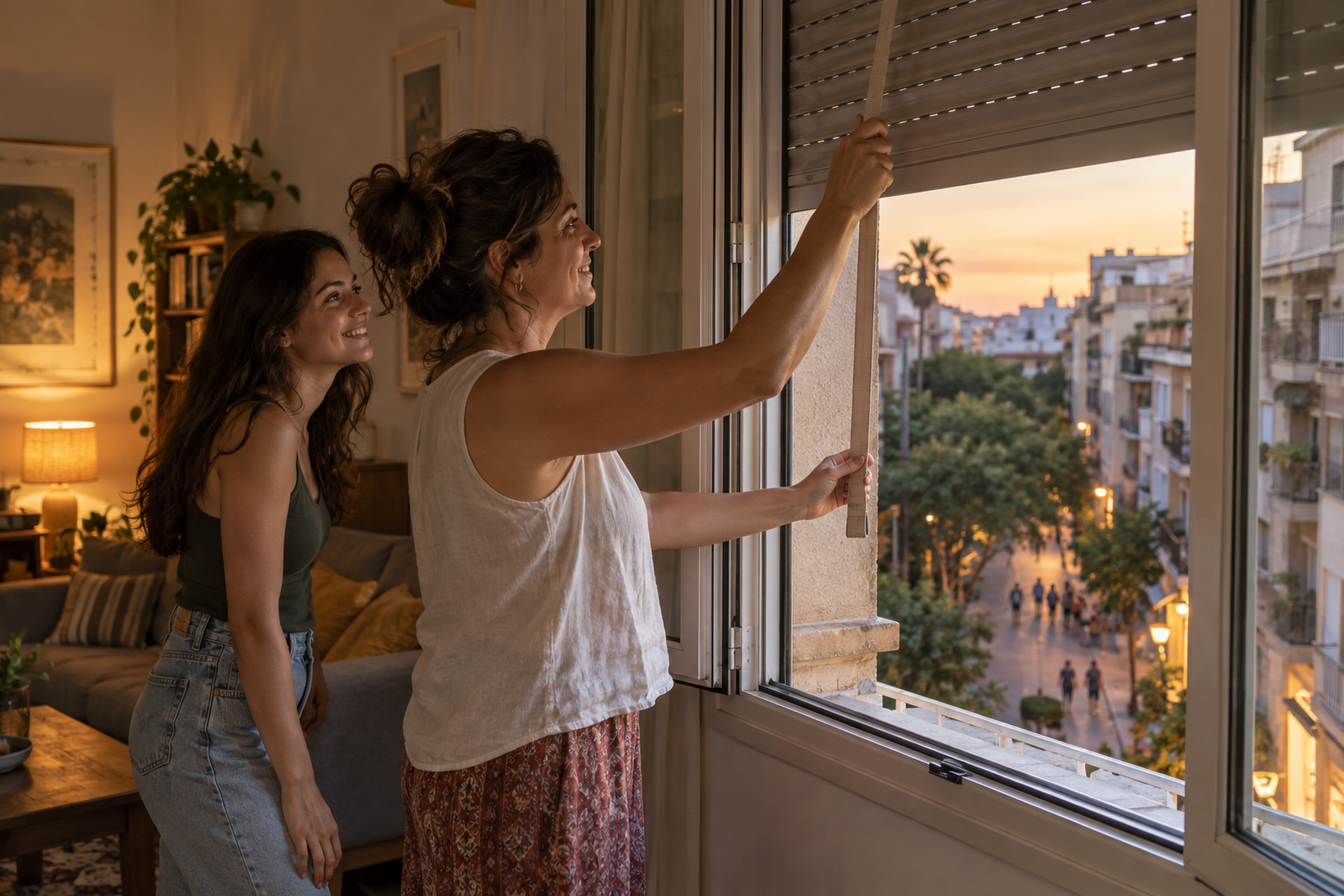
The star of the whole ritual is the persiana, the external rolling shutter that hangs outside virtually every window in Spain, and understanding it is the first step to understanding why the houses go dark. A persiana is not an interior blind or a curtain but a shutter of linked slats, usually aluminum or plastic, mounted on the outside of the window and raised or lowered from within by a strap or a cord, or in newer homes at the touch of a button. Rolled up, it disappears into a box above the window and lets in the full light. Rolled down, it seals the window behind a solid, near-lightproof barrier. Most have a middle setting too, the slats tilted to let in a little air and a thread of light while still holding off the worst of the sun, so the persiana is less an on-off switch than a dial the household adjusts through the day. That blackout quality is a bonus in its own right, since it also makes for wonderfully dark bedrooms in a country where the summer sun rises early and lingers late, but its main job in the heat of the day is to keep the sun out rather than merely to darken the room.
What makes the persiana so effective, and so different from anything most Americans have on their windows, is precisely that it sits on the outside of the glass. This is the crucial detail that the whole system turns on. An interior blind or curtain can only block sunlight after it has already passed through the window and become heat trapped inside the room, whereas the external persiana stops the sun before it ever reaches the glass, turning the heat away at the outer wall rather than letting it in to be dealt with later. That single fact of placement is what transforms the persiana from a mere window covering into a genuine tool for managing temperature, and it is why lowering one on a hot afternoon makes such a startling difference to the room behind it.
Anyone who has felt the change firsthand, a room going from stifling to bearable in the time it takes to roll the shutter down, understands at once why Spaniards treat the persiana as seriously as they do. The persiana is not decoration. It is a machine for keeping heat out.
Why Closing It Works
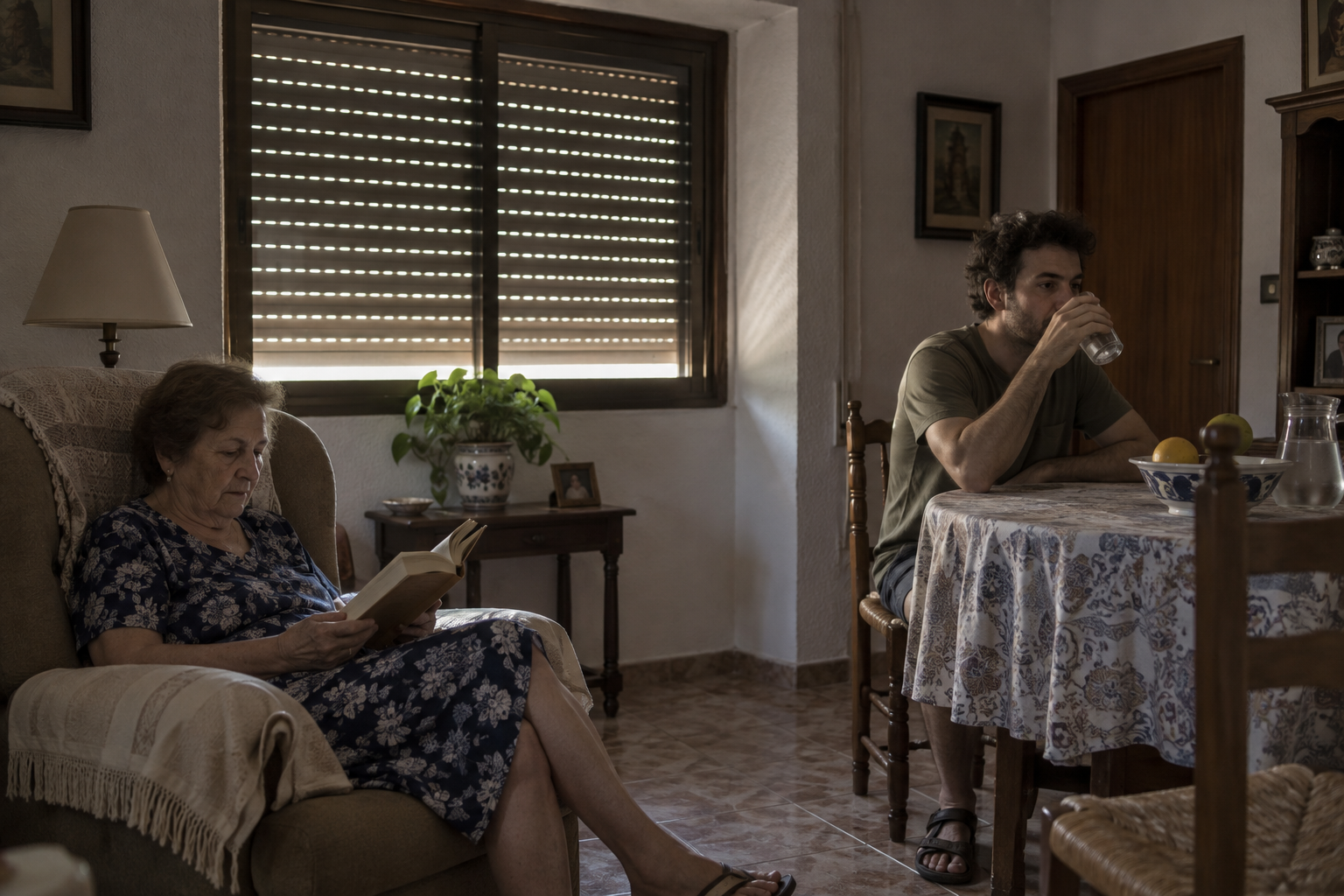
The reason a dark house stays a cool house comes down to some simple physics that Spanish homes have been built around for centuries. The enemy on a summer afternoon is the sun’s radiant heat pouring through the windows, which, once inside, is absorbed by the floors, walls, and furniture and turns a room into an oven. By lowering the persianas and closing the windows the moment the sun swings onto that side of the building, a household simply refuses to let that heat in, keeping the interior in shade and holding on to the cooler air trapped inside from the night before.
Traditional Spanish construction helps the trick along, with thick walls that absorb and release temperature slowly, so a home sealed and shaded in the morning stays cool for hours as those heavy walls give up their stored coolness gradually. The whole approach is a form of passive cooling, keeping a house comfortable through the fiercest heat without a single watt of electricity, and where it is done properly it works remarkably well, turning what would be a baking room into a dim, cool refuge. It is the opposite of the American instinct to fling everything open and then fight the resulting heat with air conditioning, and in a country of long, punishing summers and, historically, little air conditioning, it was not a preference but a necessity, a way of surviving the season that every household simply knew. Air conditioning has since arrived in many Spanish homes, but the persiana habit has not gone away, both because the machines are expensive to run in a country of high electricity prices and because the old method works so well that many families reach for the shutter long before the remote.
More Than One Layer of Defense
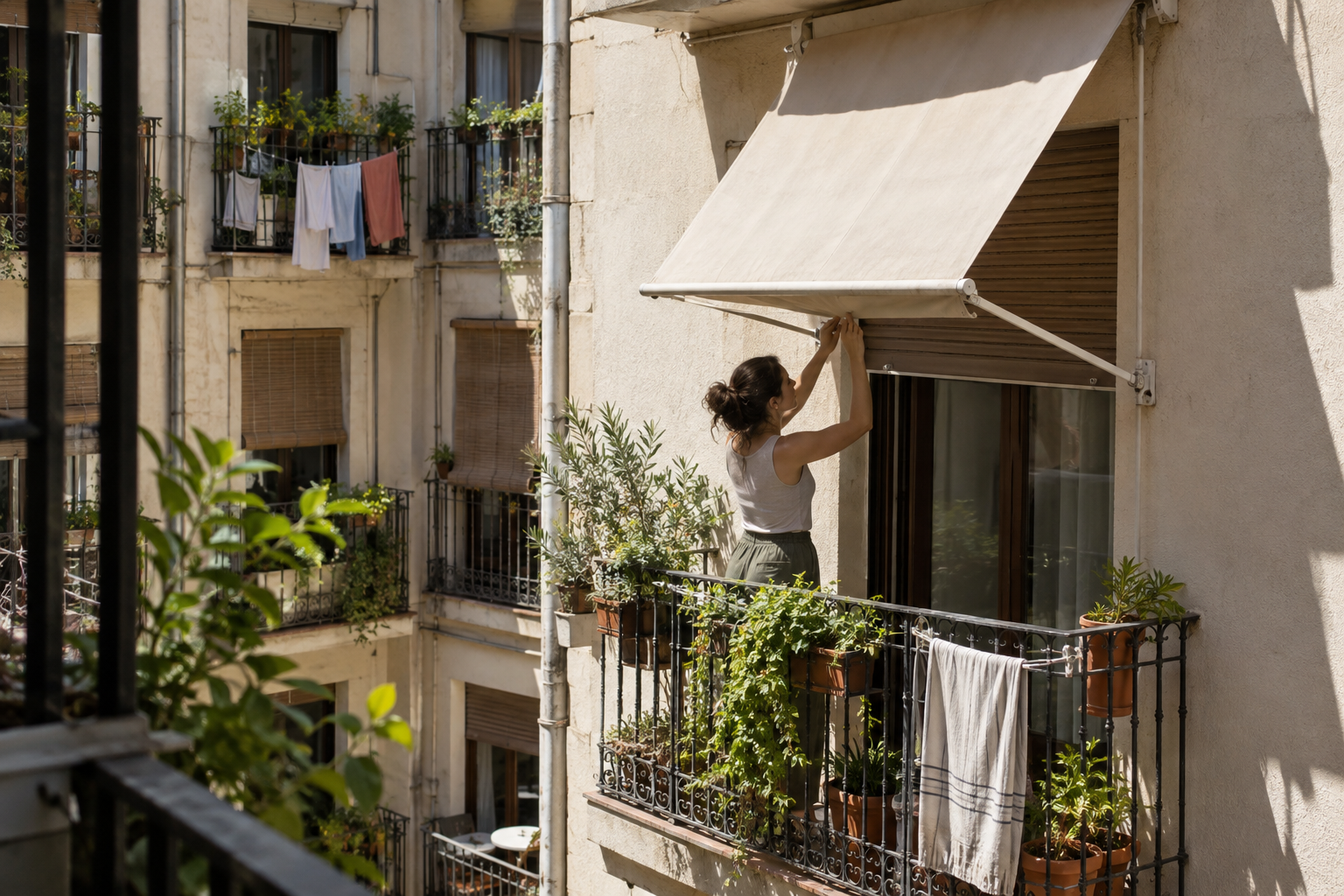
The persiana is the centerpiece, but it rarely works alone, and it helps to see it as one part of a whole layered system of passive cooling that Spanish homes deploy against the summer. The next line of defense, often mounted outside the persiana on balconies and terraces, is the toldo, a thick canvas awning that is extended in the morning to throw the whole window, and sometimes the wall itself, into shade before the sun can even begin to warm the building. Where the persiana blocks the sun at the glass, the toldo blocks it a step earlier, out at the edge of the balcony, so a home with both has two barriers between the afternoon sun and its rooms.
Behind these external defenses sit the older, structural ones. The traditional thick masonry walls of Spanish buildings act as a slow-releasing store of coolness, narrow streets and buildings set close together shade one another and keep the sun off the lower floors, and the whole layout of an old Spanish town is quietly organized to create shade and channel breezes. Inside, the household adds its own small tactics, cross-ventilating the house in the cool hours by opening windows on opposite sides to draw a through-breeze, then sealing it all up as the heat arrives. None of these tools is dramatic on its own, but stacked together, the toldo and the persiana, the thick walls and the shaded streets, the morning airing and the daytime sealing, they add up to a way of holding off the heat that a single air conditioner would struggle to match, and all of it running on nothing but attention and habit.
The Daily Rhythm of the Ritual
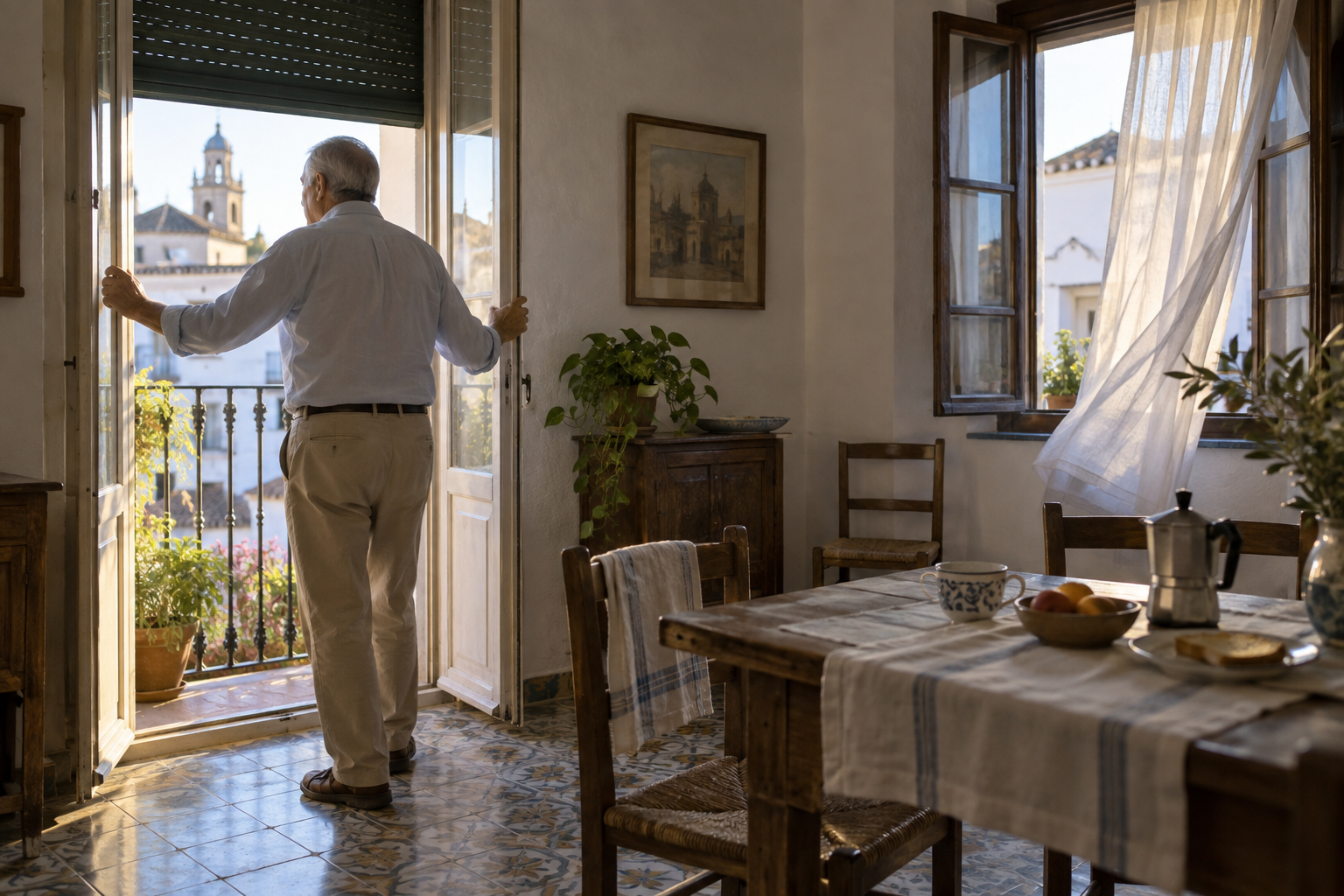
What makes it a ritual rather than a single action is that it follows the sun in a daily choreography, a sequence of small moves performed at the right hours. The rhythm begins early, because the whole system depends on capturing the cool of the night. In the early morning, while the air is still fresh, windows are thrown open to let the cool air flow through and fill the house, airing it out and banking that coolness for the day ahead. Then, at the moment the morning sun begins to strike the facade and the temperature starts to climb, the household reverses everything, closing the windows and lowering the persianas to seal the cool air in and shut the heat out.
And so the house goes dark, and stays that way through the heat of the day, the persianas down and the rooms dim and cool while the sun blazes uselessly against the shutters outside. Life carries on inside in the half-light, meals cooked and eaten, children napped, the hottest hours simply waited out in the cool, and the darkness that would strike a visitor as oppressive is barely noticed by people who have done it all their lives. This is the state a visitor stumbles on at three in the afternoon and finds so strange, the sealed and shaded house at the hottest hour, which is of course exactly when the sealing matters most. Only in the evening, when the sun has finally dropped and the outside air begins to cool below the inside, does the ritual reverse once more, the persianas going back up and the windows opening to let the cool night air flood in and start the cycle again. It is a daily dance with the sun, closing against it by day and opening to the cool by night, and once you see the logic it is rather beautiful.
Why It Startles Foreigners
For all its sense, the persiana ritual genuinely disorients people from other countries, and it is worth understanding why the reaction is so strong. Much of it comes down to a deep cultural instinct about light. In northern countries and much of America, sunlight is a thing to be welcomed indoors, associated with cheer and health and openness, and deliberately shutting it out in the middle of a bright day feels unnatural, even a little depressing, like giving up on the day. The idea of choosing to sit in a dark room while the sun shines outside runs against everything such visitors were raised to feel about light and windows. In a grey northern country you chase every scrap of sunshine you can get, so the instinct to hoard light is deeply ingrained, and it takes actually living through a Spanish heatwave to understand why a Spaniard treats the midday sun not as a treasure but as a threat to be shut out.
There is a practical unfamiliarity too, since the external rolling shutter barely exists in many countries, where windows wear only interior blinds or curtains that would never achieve the same effect, so foreigners often do not even recognize what the persiana is for. Many an expat has spent a sweltering first Spanish summer leaving the persianas up to enjoy the light, fighting a losing battle against the heat, before a neighbor gently explains that they have been doing the single most important thing exactly backward. It is almost a rite of passage, that first corrected summer, after which the new arrival becomes as devoted to the shutter as any native and cannot quite believe they ever left it up. It takes a genuine mental adjustment to accept that on the hottest days your home should be as dark as a cinema by mid-afternoon, and that this darkness is not gloom but comfort. The trick is to stop thinking of the closed persiana as shutting the day out and start thinking of it as keeping the cool in, at which point the dark room feels less like a cave and more like a refuge you are grateful for. Once the penny drops, though, and you feel the difference between a shaded room and a sunlit one on a forty-degree day, the strangeness evaporates and the logic takes over, and you find yourself lowering the persianas as automatically as any local.
What It Reveals About How Spain Lives
Beyond the practicalities, the persiana ritual is a small window onto a whole way of living with the climate rather than against it, and that is perhaps the most interesting thing about it. Spanish life in summer is organized around the heat with a kind of intelligent surrender, working with the rhythm of the sun instead of pretending it can be ignored, and the darkened afternoon house is part of the same logic that gives Spain its late meals, its evening street life, and its long tradition of resting through the worst of the day. The house goes dark at three for the same reason the streets empty and the pace slows, because the sensible response to a brutal afternoon is to retreat from it and save your energy for the cool of the evening. The darkened house and the quiet street and the late dinner are not separate curiosities but a single coherent adaptation, an entire culture arranged around the simple fact that the middle of a Spanish summer day is no time to be doing very much of anything.
There is a quiet wisdom in this that the air-conditioned world has largely forgotten, a way of staying comfortable that costs nothing, uses no energy, and simply requires paying attention to the sun and acting accordingly. As summers grow hotter and energy more expensive everywhere, this old low-tech Spanish knowledge looks less like a quaint holdover and more like something worth learning, a reminder that a well-shaded house and a bit of daily discipline can do much of what a straining air conditioner does, for free. Homeowners far beyond Spain are beginning to rediscover external shutters and awnings for exactly this reason, having found that the fanciest cooling technology is often no match for simply keeping the sun off the glass in the first place. So the next time you find a Spanish street shuttered and dark on a summer afternoon, you will know it is not deserted or gloomy but simply wise, a whole neighborhood quietly performing the same sensible ritual it has performed for generations, waiting in the cool dark for the evening to come. And if you are lucky enough to be staying behind one of those shutters yourself, you will have learned the single most useful thing about surviving a Spanish summer, which is to follow the sun’s lead and let your house go dark.

About the Author: Ruben, co-founder of Gamintraveler.com since 2014, is a seasoned traveler from Spain who has explored over 100 countries since 2009. Known for his extensive travel adventures across South America, Europe, the US, Australia, New Zealand, Asia, and Africa, Ruben combines his passion for adventurous yet sustainable living with his love for cycling, highlighted by his remarkable 5-month bicycle journey from Spain to Norway. He currently resides in Spain, where he continues sharing his travel experiences with his partner, Rachel, and their son, Han.